
If you found an egg that looks green and you're trying to figure out what laid it, here's the short answer: the most likely candidates are American robins, European starlings, Northern mockingbirds, and a handful of other thrushes and cavity-nesters. But "green" is a tricky call in the field, because a lot of what we see as green is actually blue, teal, or olive shaped by lighting, staining, or the mix of two pigments inside the shell. This guide will help you sort out what you've actually got.
What Bird Shells Are Green? Identify Green Eggs Safely

Marcus Chen
22 Mar 2026
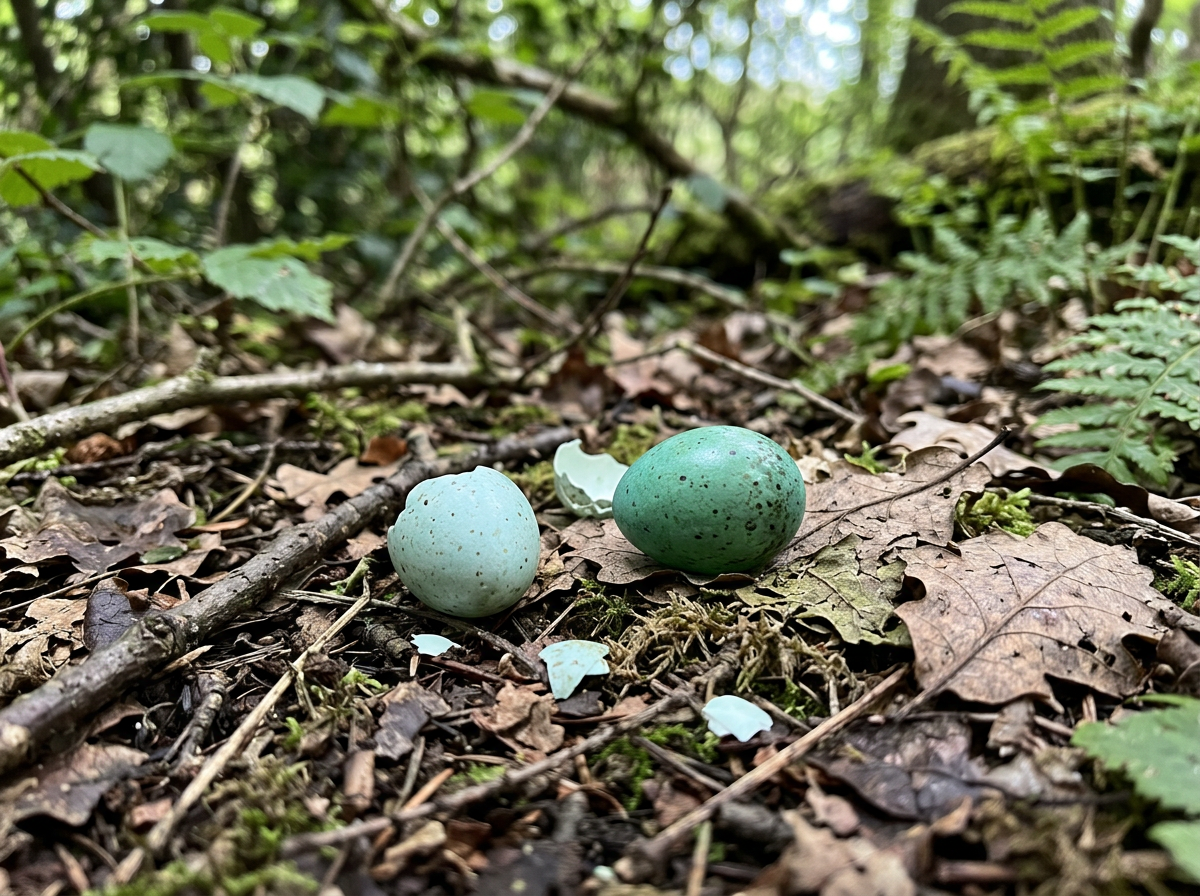
Birds that actually lay green or green-looking eggs
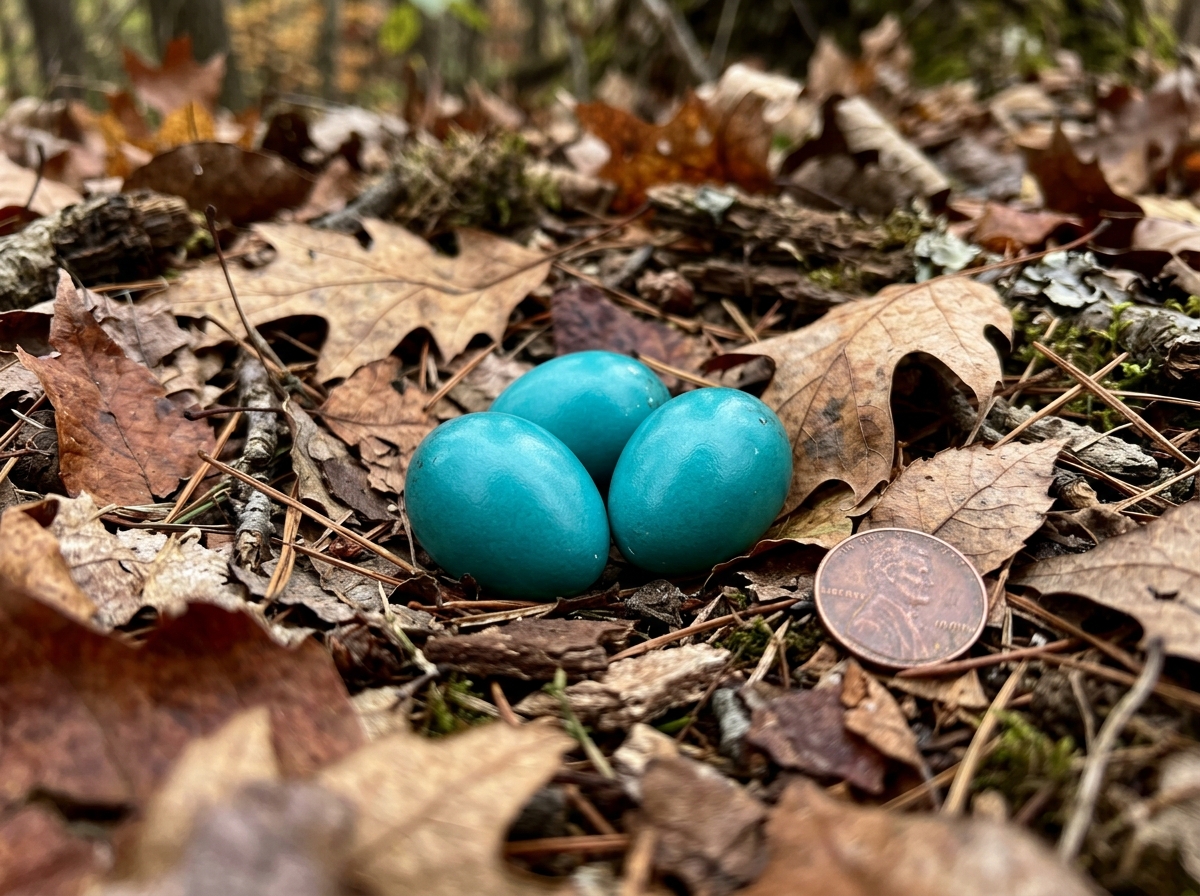
Most bird eggs that people call "green" fall into a few reliable species groups. Here are the ones you're most likely to encounter in North America and Europe, along with what their eggs actually look like up close.
American Robin
This is probably the egg most people picture when they think "green bird egg," even though ornithologists officially call the color blue. Robin eggs are a vivid blue-green (the famous "robin egg blue") caused almost entirely by biliverdin, a pigment deposited on the shell as the egg is laid. In certain lighting, especially outdoors in shade, they look distinctly green. They're smooth, unmarked, and about 1.1 inches long. If you spot an unmarked, solid-colored egg in that blue-green zone, a robin is your first guess.
European Starling
Starling eggs are a pale blue-green and are similarly driven by biliverdin. They're smaller than robin eggs (around 0.85 inches), slightly glossy, and usually unmarked. What's interesting is that research shows biliverdin concentration accounts for less than half the variation in starling egg color, meaning two starling eggs from the same clutch can look noticeably different shades. So if you find one that looks more blue and one that looks more green in the same nest, that's normal.
Northern Mockingbird
Mockingbird eggs are light blue or greenish with brown or reddish speckles scattered across the surface. That speckled look comes from a second pigment called protoporphyrin IX, which creates brownish-red tones. The combination of a blue-green base and brown spots gives them an olive or greenish impression overall. If the egg you found is speckled or blotched on a pale greenish background, mockingbird is worth considering.
Eastern Bluebird
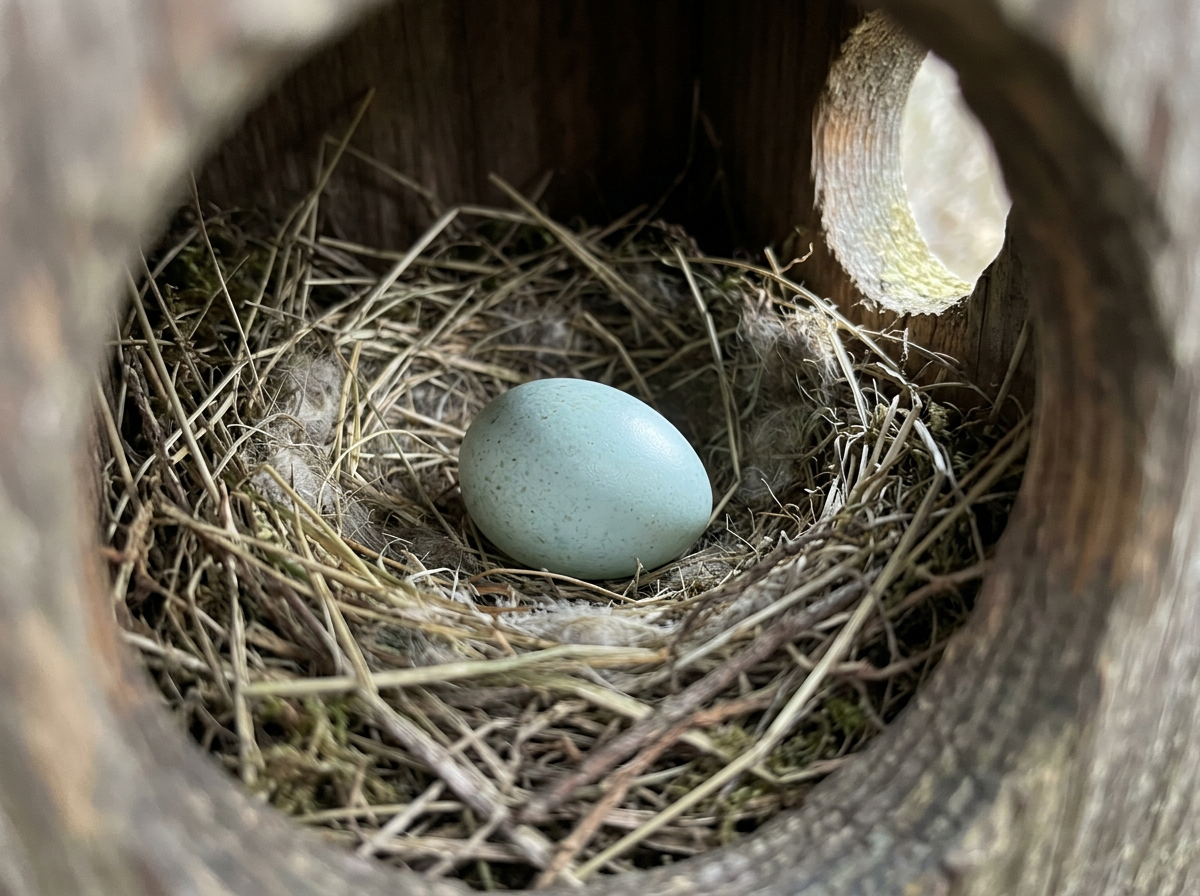
Bluebird eggs are usually described as pale blue, but they can tip toward green depending on the light and the individual bird. Cornell Lab notes they're occasionally white. They're small (about 0.8 inches), smooth, and unmarked. Found in nest boxes or tree cavities across the eastern US, they're an easy mix-up with robin eggs if you're not accounting for size.
Other thrushes and specialty birds
Several other Turdus thrushes (the genus that includes robins and European blackbirds) lay blue-green to greenish eggs using the same biliverdin-based pigment system. Emu eggs are a striking dark green, almost teal-to-forest-green, and unmistakably large. Tinamou eggs (a South American family) can be bright, almost jewel-like greens and blues caused by a slightly different pigment mechanism. And birds in the family Musophagidae (turacos, found in Africa) have feathers colored by a copper-based pigment called turacoverdin, which is one of the only true bright greens in birds, though their eggs are less often the focus of backyard finds.
True green vs blue, teal, and olive: how the color actually gets made
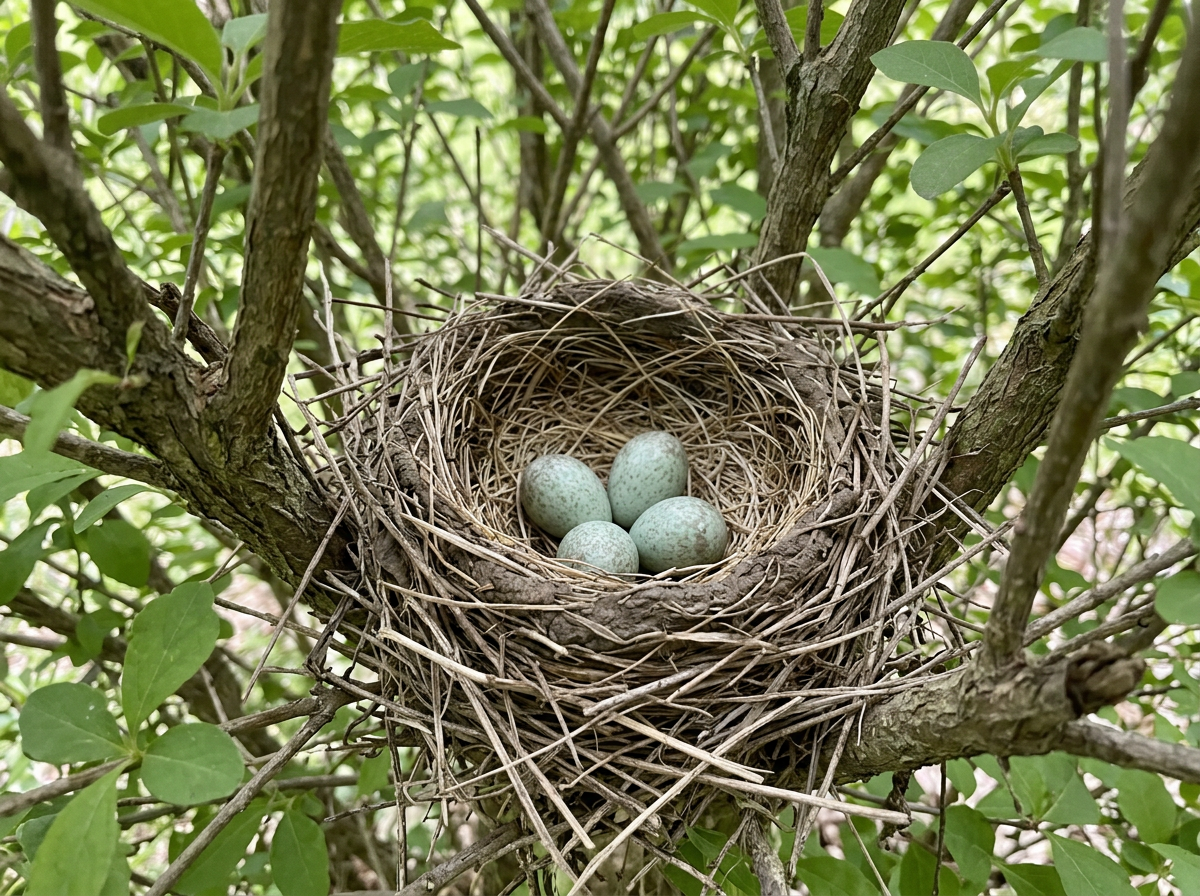
Here's the science in plain terms: bird eggshell color comes mainly from two pigments. Biliverdin (a blue-green compound) produces shades from sky blue to green. Protoporphyrin IX (a brownish-red compound) produces reddish and brown tones. The egg color you see is mostly determined by how much of each pigment is present and how it's distributed across the shell. Bird vision is also different from ours, so the colors birds perceive can be more vivid or shifted than what you see Bird eggshell color.
| Pigment | Color it produces | Example eggs |
|---|---|---|
| Biliverdin alone | Blue to blue-green | American robin, Eastern bluebird |
| Biliverdin + low protoporphyrin | Green to teal | European starling, some thrushes |
| Biliverdin + higher protoporphyrin | Olive green to olive brown | Many warblers, some sparrows |
| Protoporphyrin alone/dominant | Brown, reddish, cream | Chicken eggs, many ground-nesters |
| Turacoverdin (copper-based) | Bright, vivid green | Turaco feathers (rare in eggs) |
So when someone says an egg is "green," they could mean anything from a robin's electric blue-green to a warbler's muted olive. These are all technically green-adjacent, but they're caused by different pigment ratios, not completely different systems. The cleaner way to think about it: more biliverdin pushes toward blue, and adding protoporphyrin pulls it toward brown, with olive and green sitting in the middle of that spectrum.
Why "green" can be an illusion
I made this mistake myself early on: I found what I was absolutely certain was a green egg, took it inside, and under different light it looked unmistakably blue. Here's why that happens, and what else can trick you. In general, birds rely on their sense of smell for some tasks, but it is not a primary way to assess eggs. Birds can also have a distinct body odor, so if you are wondering what a bird smells like, it helps to know that smells can vary by species and environment. Birds also have their own waste processes, so you may wonder do a bird urinate.
- Lighting: Blue-green eggs look much greener in outdoor shade or under warm artificial light. Direct sunlight or cool white indoor lights shift the perception toward blue. Always check under multiple light sources before deciding.
- Algae and moss: Eggs that have sat in damp nests or on the ground can develop a thin green algae or mold coating. This is a surface film, not the shell color, and it can look very convincingly green.
- Soil and plant stains: Nest materials, soil, and leaf tannins can stain an otherwise pale or blue egg. A light rub with a damp cloth on a small spot will tell you if the green wipes off.
- Age and weathering: As eggshells sit exposed to sun and rain after hatching, pigments degrade. A blue-green egg can fade to a pale greenish or chalky color over weeks. Old shells on the ground are often misleadingly muted.
- Iridescence and gloss: Some eggs have a slightly glossy surface that reflects surrounding green vegetation, making a blue egg look greener in a leafy nest environment.
The key test: is the color consistent all the way through the shell surface, or does it look like it's sitting on top? True shell pigment is embedded in the shell itself (especially on the outer layer), while stains and coatings sit on the surface and can be partially rubbed or scraped away.
Quick identification checklist you can run through right now
If you have an egg or shell in front of you, work through these steps before trying to identify the species. You don't need any equipment beyond your eyes and a damp cloth.
- Check the color under two different light sources (outdoor daylight and indoor light). Note whether it looks more blue or more green under each.
- Look at the texture: is the surface smooth and consistent, or does it look filmy, powdery, or uneven in the green areas?
- Lightly dampen a fingertip and rub a small area. If green color comes off, it's a stain or coating, not the egg's natural pigment.
- Check for spots, speckles, or blotches. Solid color suggests robin, bluebird, or starling. Spotted or blotched suggests mockingbird, thrush species, or warbler.
- Estimate the size. Robin eggs are about 1.1 inches. Starling eggs are about 0.85 inches. Bluebird eggs are about 0.8 inches. Emu eggs are enormous (around 5 inches).
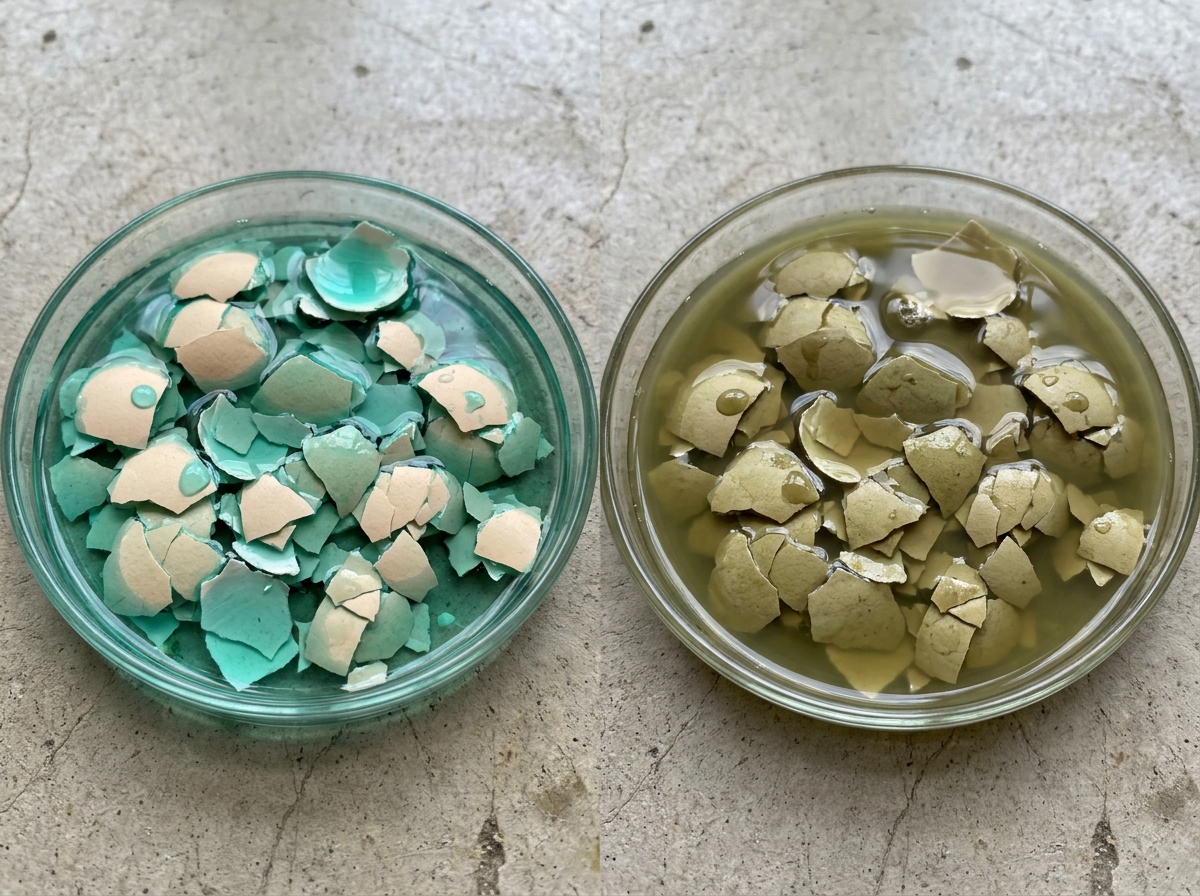
- Look at the shell itself if broken: is the inner surface of the shell also greenish? True biliverdin pigment penetrates into the shell, so the inside often has a faint color too.
- Check whether the egg (or nest) is in an active location: near a building ledge (starling), in a shrub at eye level (robin or mockingbird), or in a tree cavity or nest box (bluebird).
What to do if you find a green egg
Before anything else: in the United States, virtually all wild bird eggs are protected under the Migratory Bird Treaty Act. Handling, collecting, or disturbing them without a permit is illegal. The same legal protections apply across most of Canada, the UK, and the EU. This isn't a gray area, so the default answer is: don't touch it if you don't have to.
If the egg is in an active nest
Leave it alone. Don't move the nest, don't handle the eggs, and minimize how close you get. NestWatch specifically recommends leaving unhatched eggs in the nest until the other young fledge, rather than trying to remove or incubate them yourself. A parent bird that seems to have abandoned a nest often hasn't. Birds are sensitive to disturbance, and repeated human check-ins can actually cause abandonment.
If the egg is on the ground
If you can see a nest nearby and can safely reach it, gently placing the egg back is often the best move. Contrary to the old myth, parent birds will not reject an egg because a human touched it. If the egg is clearly abandoned, cracked, or has been on the ground for a long time, leave it where it is. Attempting to incubate a wild egg at home almost never works and is illegal without a wildlife rehabilitator license.
When to call someone
If you find an egg in a situation that seems genuinely unusual (a nest that's been disturbed by a predator, a nest near construction, or an egg that keeps getting pushed out), contact your local wildlife rehabilitator or your state/provincial wildlife agency. They can give you legal, species-specific guidance. Don't try to care for it yourself. Reference.com and most wildlife agencies are clear on this: improper incubation attempts usually result in the egg not hatching, and even if it does, raising a wild bird without a permit is a separate legal issue.
Common mix-ups and how to confirm what you've got
A few specific situations cause the most confusion, and it's worth knowing them in advance so you don't spend an hour going in circles.
"Is this green or blue?" (Robin vs bluebird vs starling)
All three use biliverdin as their main pigment, so they occupy the same blue-green color zone. Size is your fastest separator: robin eggs are noticeably larger than bluebird and starling eggs. Location matters too. Starlings nest in cavities but are extremely common in urban and suburban areas. Bluebirds favor open fields and nest boxes in rural or semi-rural settings. Robins build cup nests in shrubs, trees, and on building ledges almost everywhere.
Olive or mottled eggs: thrush family and warblers
Olive-colored eggs with blotches or streaks often belong to thrushes or wood warblers. These get their olive look from biliverdin and protoporphyrin combining in the shell. The mottling pattern, blotch shape, and size are your best clues here. If the egg is heavily streaked rather than spotted, that narrows it further toward certain warbler species. Matching the egg to a regional field guide by color, size, and pattern together is much more reliable than going on color alone.
Is it stained or naturally green?
The damp-cloth test mentioned in the checklist above is the most practical field test. For a more definitive answer, look at the inside of a broken shell. If the greenish color extends to the inner shell surface, the pigment is embedded in the calcite layers of the shell itself, which is characteristic of true biliverdin pigmentation. If the inside is white or chalky and only the outside looks green, you're probably looking at an algae film, soil stain, or nest material transfer.
Mottling, texture, and coatings that change the picture
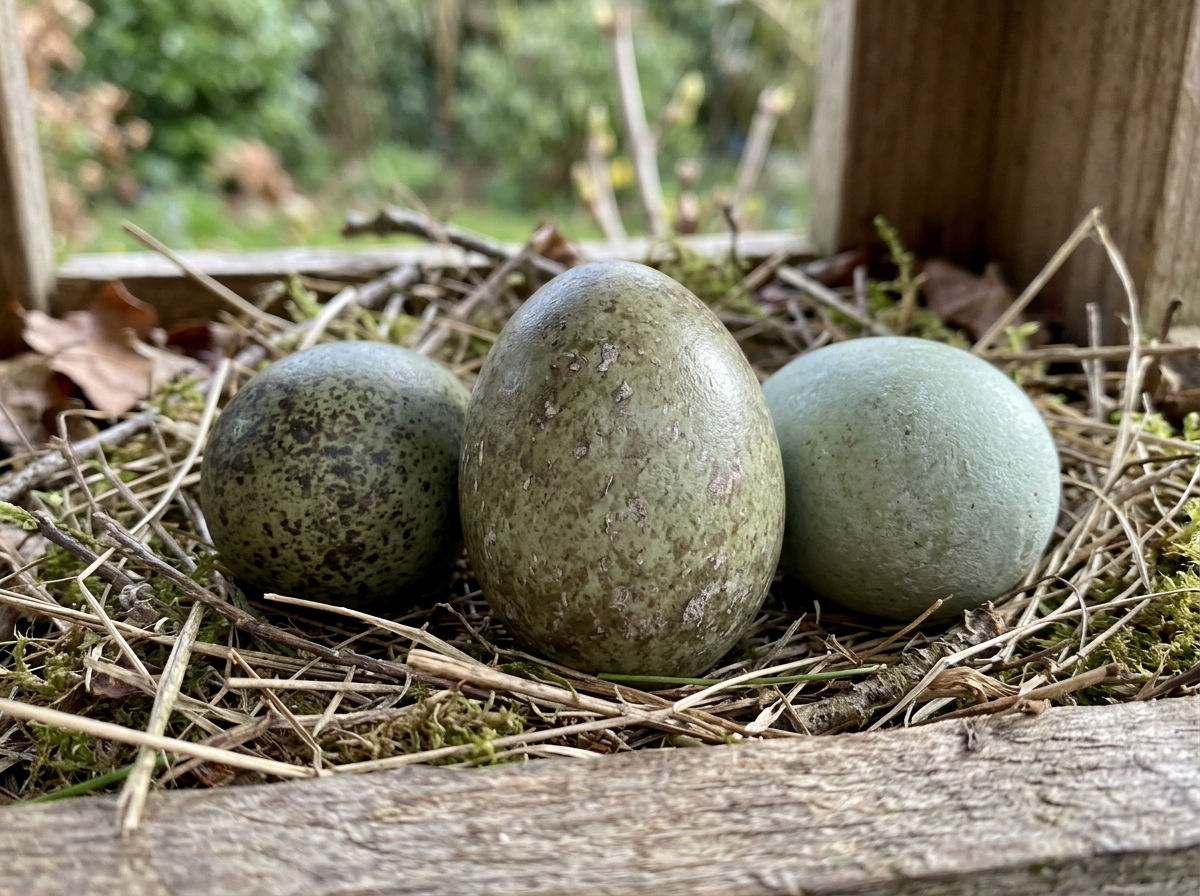
Some eggs have a waxy or chalky surface coating that alters how color reads to our eyes. Tinamou eggs, for example, are famously glossy, which makes their already vivid colors look even more saturated. A dull, chalky surface can make the same underlying pigment look more muted or gray-green. If you're photographing the egg for identification, try to take one photo in direct soft daylight and one in shade, and note the texture of the surface in your description. That context helps enormously when running it by a local birding group or naturalist.
The bottom line: green bird eggs are real, they're fairly common, and in most cases you're looking at biliverdin pigmentation from a robin, starling, bluebird, or thrush relative. However, if you're asking specifically why bird red blood cells have a nucleus, that's a separate feature of bird physiology. But lighting, staining, and age mean that "green" in the field often needs a second look. Run through the checklist, check size and location, and if you're unsure, your local birding club or a photo posted to a community like iNaturalist will usually get you a confident ID within hours.
FAQ
If I see an egg that looks green in my yard, how can I tell whether it is a real shell color or something that got stained on top?
Check whether the green is uniform when you tilt the egg under soft light, and whether it appears embedded rather than sitting on a film. If you have a safe way to view it without moving the nest, look for rub-off smudges, patchy staining, or green that only appears on the outer surface. The article’s damp-cloth approach helps, because surface coatings and soil stains often smear or lighten, while pigment embedded in the shell should remain consistent.
What measurements matter most if I’m trying to separate robins, starlings, and bluebirds from a “green” egg photo?
Length is the fastest separator in this group. Use a nearby object for scale (like a ruler you keep out of the nest area), because robin eggs are noticeably larger than starling and bluebird eggs. Also note whether the egg is smooth and unmarked versus speckled, since mockingbird-type markings typically include reddish-brown flecks on a pale base.
Can two eggs in the same “green” nest be different shades, and does that mean they came from different species?
Yes. For starlings especially, the same clutch can show noticeable shade differences because biliverdin concentration accounts for less than half of the variation. That means a nest can contain eggs that both read as greenish to blue-green without implying different species. Pattern type still matters, but shade alone is not always decisive.
Is it ever legal or advisable to incubate a wild egg you found, if you think the parent bird abandoned it?
In general, no for both legality and practicality. Wild bird eggs are protected under the Migratory Bird Treaty Act in the US, and incubation attempts usually fail. Even if a nest appears abandoned, parents often return, and handling can worsen disturbance. The safer path is to leave it alone and contact a licensed wildlife rehabilitator if the situation is truly unusual.
What should I do if the egg is on the ground after I found it, or it looks cracked?
Leave it where it is unless a wildlife professional instructs otherwise, and do not try to incubate it yourself. If it is cracked or clearly out of the nest for a long time, the chances of successful hatching are very low. Then the next step is contacting your local wildlife agency or rehabilitator, because permits and species-specific guidance apply.
Does the egg’s “green” meaning change if I’m in the UK, Europe, or a different region than North America?
Yes, but the core logic stays the same. The pigments and the blue-green to olive spectrum are consistent, while the likely species list changes by region. Use local habitat and nesting behavior, for example cavity-nesters in urban areas versus open-field nesters, and rely on a regional field guide or local birding club when you can.
How can I improve my odds of getting a correct ID from a photo without handling the egg?
Include context in the frame (nest material, location type such as tree cavity or nest box, and whether it is speckled or unmarked). Also, take two lighting angles if possible, one in direct soft daylight and one in shade, and describe surface texture as dull, glossy, or chalky. This helps distinguish true pigment from algae film or soil staining and reduces “green versus blue” confusion from lighting.
If the eggshell is waxy or very glossy, does that mean it is definitely a specific species like tinamou?
Not necessarily. Glossiness changes how saturated colors appear to your eyes, so a glossy surface can make many underlying pigments look more intense, even if the species is not tinamou. Use gloss as a clue to surface coating or how color reads, then confirm with size, pattern (none versus speckled), and location or nest type before narrowing to a species.
What’s a good rule of thumb if I am not sure whether the egg belongs to a thrush versus a bird like a robin?
Use pattern and size together. Thrush and some warblers are more likely to show olive tones with blotches or streaks, while robin and many biliverdin-based cavity and open-cup nesters tend to be more solid, unmarked, and more consistently blue-green. If you see heavy streaking rather than spots, that is a particularly useful narrowing detail for many warbler-type identifications.
Next Articles
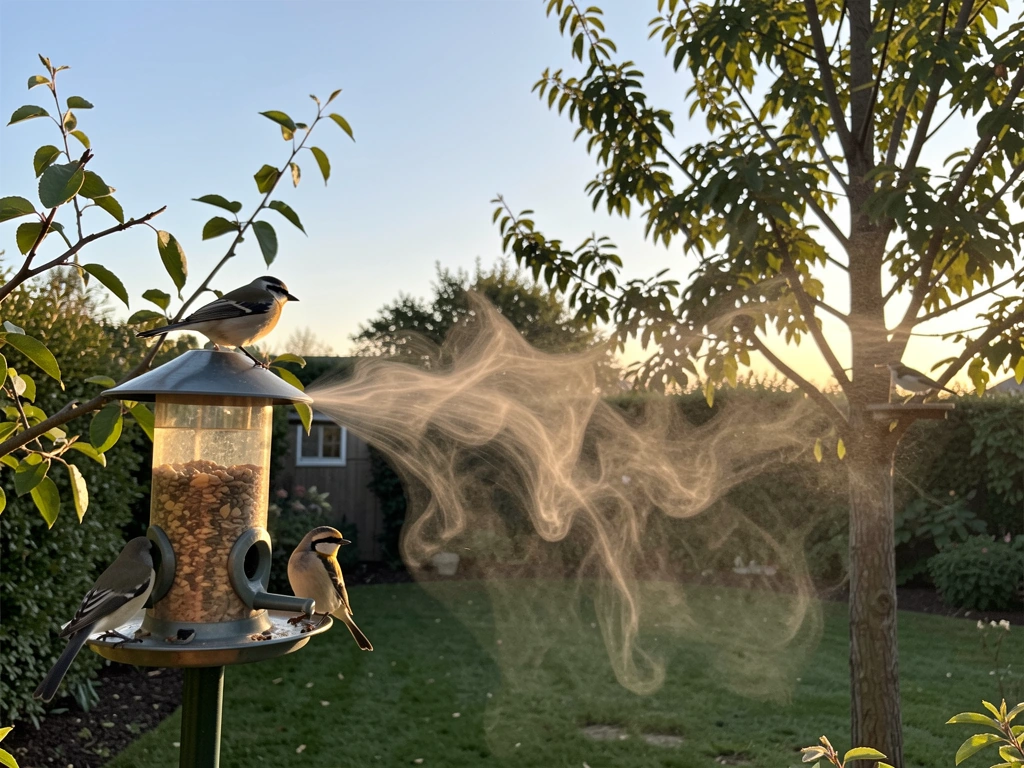
Can Bird Smell Food? What Birds Smell and How to Use It
Can birds smell food? Learn how bird scent detection works, limits, myths, and practical tips to attract or deter birds.
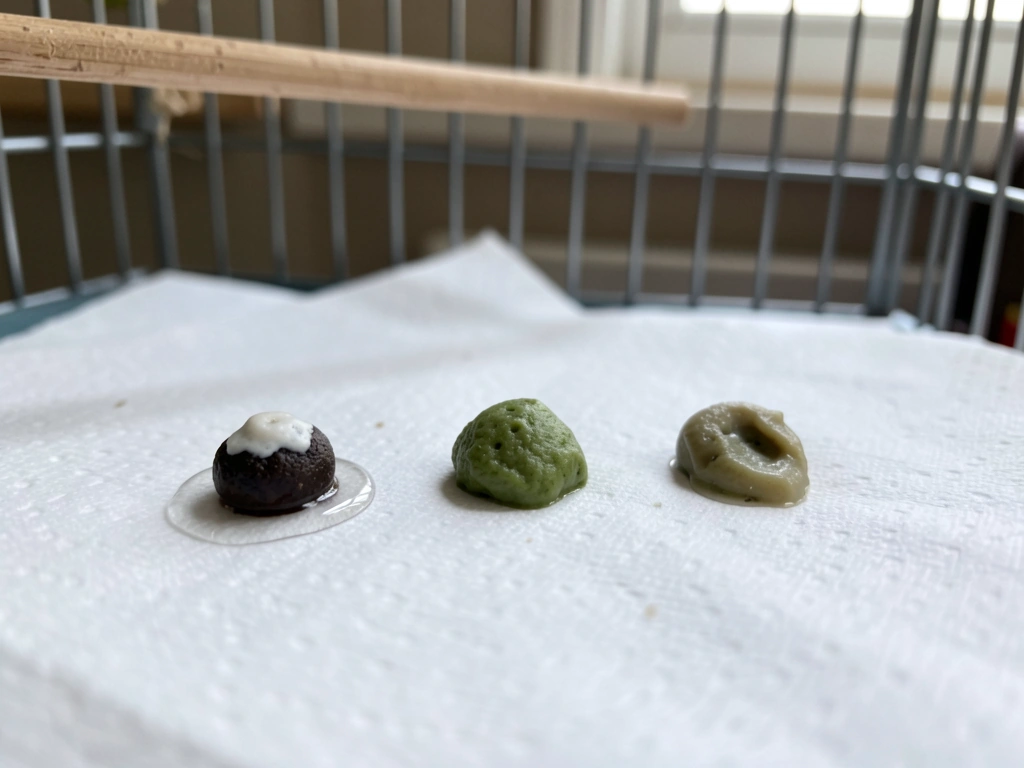
Does a Bird Urinate? How Bird Urates Work and When to Worry
How birds excrete urates instead of liquid urine, how droppings should look, and vet red flags to watch.
Does Surakav Bird Change Color? Causes and What to Do
Find out if a Surakav bird’s color change is normal (age, seasons, molt) or a health red flag, and what to do.