Quick answer: yes, birds see color, and then some
Yes, birds absolutely see color. In fact, they see color better than you do. While humans have three types of color-detecting cells (called cone cells) in their eyes, most birds have four. That fourth cone type lets them see into the ultraviolet range, light that is completely invisible to us. So if you've ever wondered whether your backyard cardinal looks as vivid to a passing bird as it does to you, the short answer is: it looks even more vivid, and probably in ways you literally cannot imagine.
I had the same question when I first started watching birds and noticed how much color seems to matter to them, bright feathers, colorful berries, vividly marked eggs. It seemed like too much of a coincidence that birds would evolve such elaborate color displays if they couldn't actually see them. Turns out, that instinct was exactly right.
How bird color vision works vs. human vision
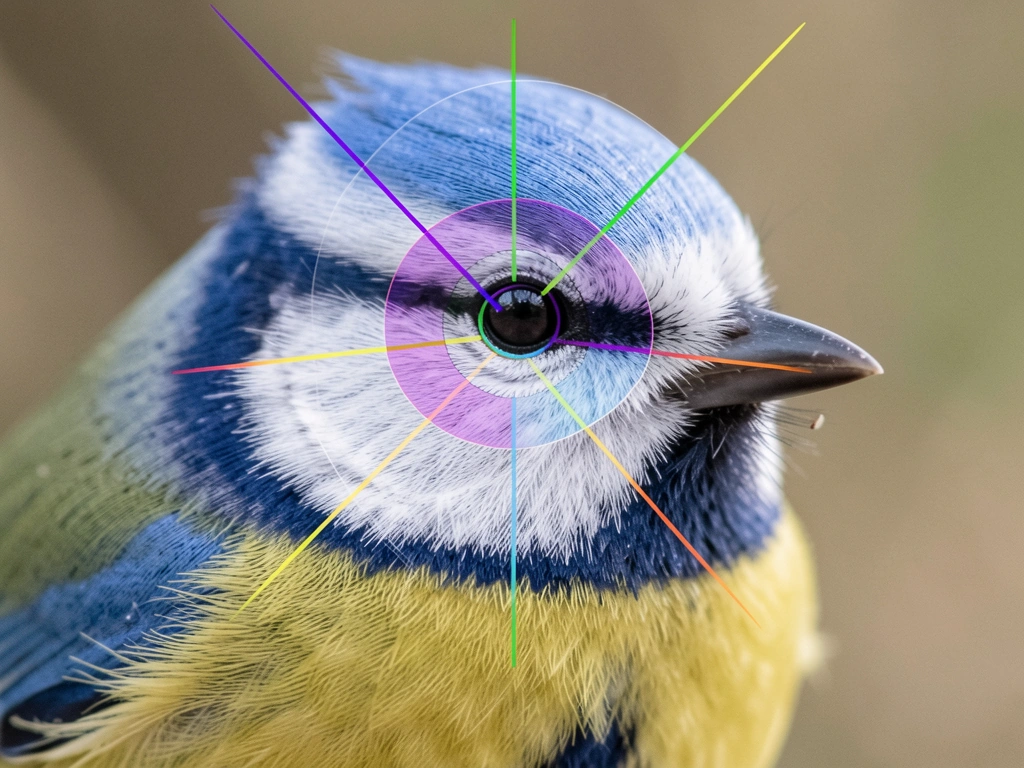
The key difference comes down to cone cells, the photoreceptors in the retina that detect color. Humans are trichromats, meaning we have three cone types sensitive to red, green, and blue light. Birds are tetrachromats: they have a fourth cone type that is sensitive to ultraviolet light (roughly 300–400 nm wavelength). Birds need both UV-sensitive photoreceptors and ocular media that transmit UV for ultraviolet vision. This isn't a small upgrade. It means birds are processing color information through four independent channels at once, allowing them to distinguish colors that appear identical to us.
Research published in the Journal of Experimental Biology in 2015 showed that birds can discriminate colors using these multiple cone channels based on something called receptor noise, essentially, the limit of how finely the eye can detect differences between similar shades. This chromatic discrimination (distinguishing hues) is separate from achromatic discrimination (detecting brightness or contrast). Birds do both, but their color discrimination is genuinely impressive, not just a side effect of being good at spotting contrast.
Birds also have oil droplets inside their cone cells that act like color filters, sharpening the distinction between neighboring wavelengths. Think of it like having a built-in lens filter on each color channel. This makes their color resolution even finer than the raw number of cone types would suggest.
| Feature | Humans | Most Birds |
|---|
| Cone types | 3 (trichromat) | 4 (tetrachromat) |
| UV sensitivity | No | Yes (~300–400 nm) |
| Oil droplet filters in cones | No | Yes |
| Color channels processed simultaneously | 3 | 4 |
| Color discrimination ability | Good | Superior to humans |
| Visible spectrum range | ~400–700 nm | ~300–700 nm |
What colors and light types birds can actually detect
Birds can detect everything in the human visible spectrum (roughly 400–700 nm, from violet to red) plus ultraviolet light down to around 300 nm. The UV sensitivity varies by species. Birds are generally grouped into two categories: VS birds (violet-sensitive), whose fourth cone peaks around 400 nm at the edge of human vision, and UVS birds (ultraviolet-sensitive), whose fourth cone peaks closer to 360 nm, well into true UV territory. Most songbirds fall into the UVS category.
A landmark study published in Nature in 1992 showed that UV vision in zebra finches is behaviorally relevant for mate choice, meaning the birds were actively using UV signals to evaluate potential partners, not just responding to brightness cues. This was an important finding because it confirmed that UV sensitivity isn't just a passive anatomical feature; birds genuinely use it to make real decisions.
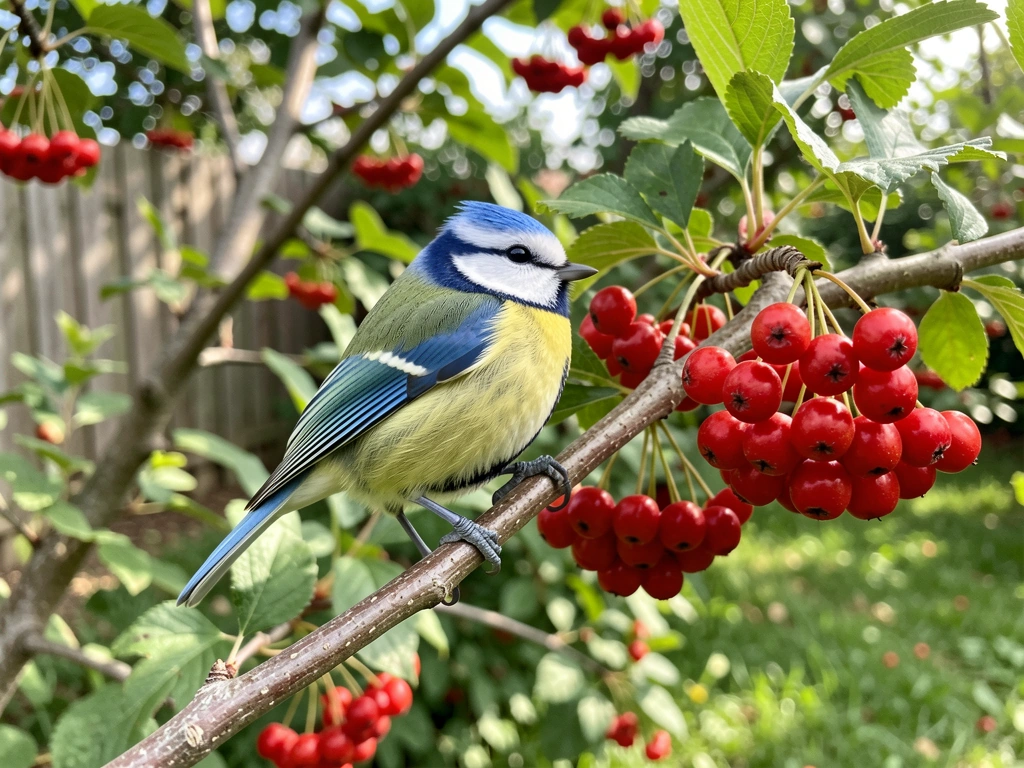
What does UV look like to a bird? Honestly, we can't know for certain because we can't experience it ourselves. But it's fair to say that feathers, berries, and eggs that look plain or uniform to us may have striking UV patterns or contrasts that are completely obvious to a bird. Feathers can also look green to birds in ways that depend on how the light interacts with pigments and UV patterns what bird shells are green. Blue tits, for example, have a crown patch that reflects UV strongly, something you'd never know just by looking at them with your own eyes.
What about colors birds might see less well?
This is where a common myth gets corrected. Some people assume birds are especially tuned to red because red feeders and flowers seem to attract hummingbirds. But hummingbirds visit red flowers largely because of learned association and the fact that many high-nectar flowers happen to be red, not because red is some uniquely hypnotic color to birds. Most birds see the full color spectrum just fine. The color of your feeder matters less than its placement, cleanliness, and the food inside it.
Why birds use color vision in the wild
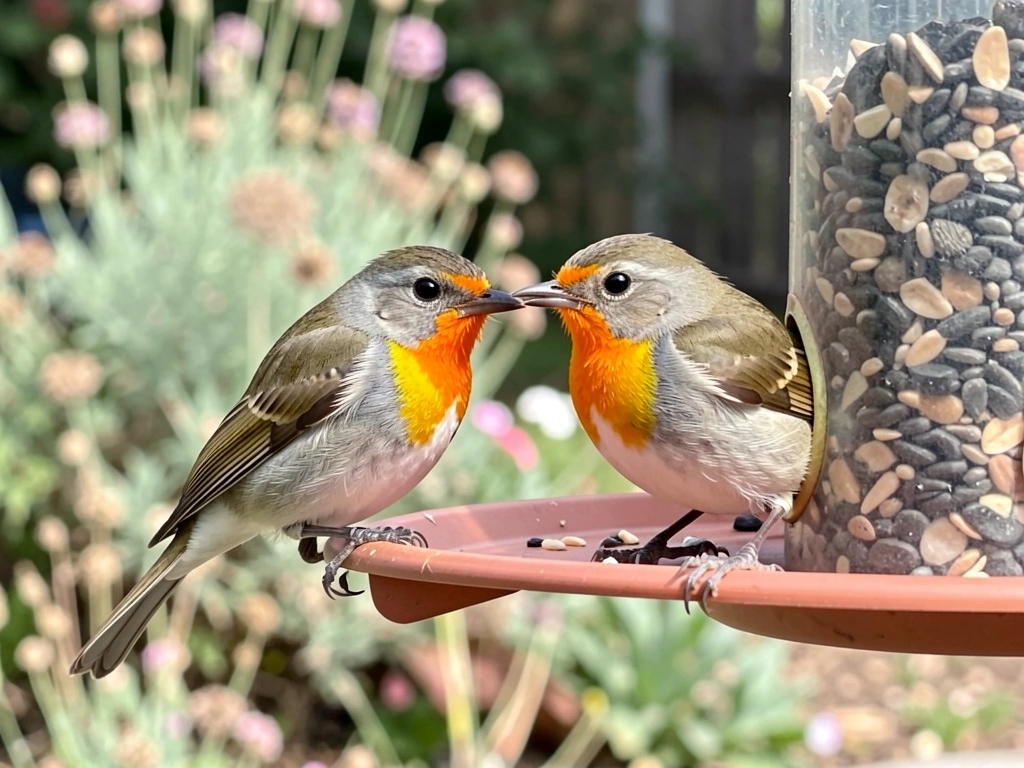
Color vision isn't just a cool biological party trick for birds, it drives some of their most important behaviors. Here's where it actually shows up in real life:
- Mate selection: Brightly colored plumage signals health and genetic quality. A 2021 study in Behavioral Ecology found that blue tits show mutual mate preferences based on carotenoid-linked coloration, meaning both males and females are actively reading color signals when choosing partners. Carotenoids are the pigments behind yellow, orange, and red coloration — birds can't synthesize them internally and have to get them from their diet, so vivid carotenoid coloration is an honest signal of how well a bird is feeding.
- Finding food: Many ripe fruits and berries stand out against green foliage in colors birds can distinguish easily. UV reflectance on fruit surfaces may also signal ripeness in ways invisible to mammals but obvious to birds.
- Recognizing their own species: Birds use color patterns to identify members of their own species, particularly during breeding season when plumage is at peak vividness.
- Navigation and environmental reading: There's ongoing research into whether certain lighting cues, including UV components of skylight, play a role in orientation and navigation, though this is still an active area of study.
- Detecting predators and rivals: Unusual coloration or disrupted patterns can signal danger. Some prey species use coloration to blend in, and predatory birds use their sharp color discrimination to pick them out.
The carotenoid-plumage research is particularly interesting because it demonstrates that birds aren't just responding to 'bright vs. dull' as a proxy for quality, they're distinguishing genuine chromatic information. That's true color vision doing real biological work.
How to observe bird color perception today (no lab equipment needed)
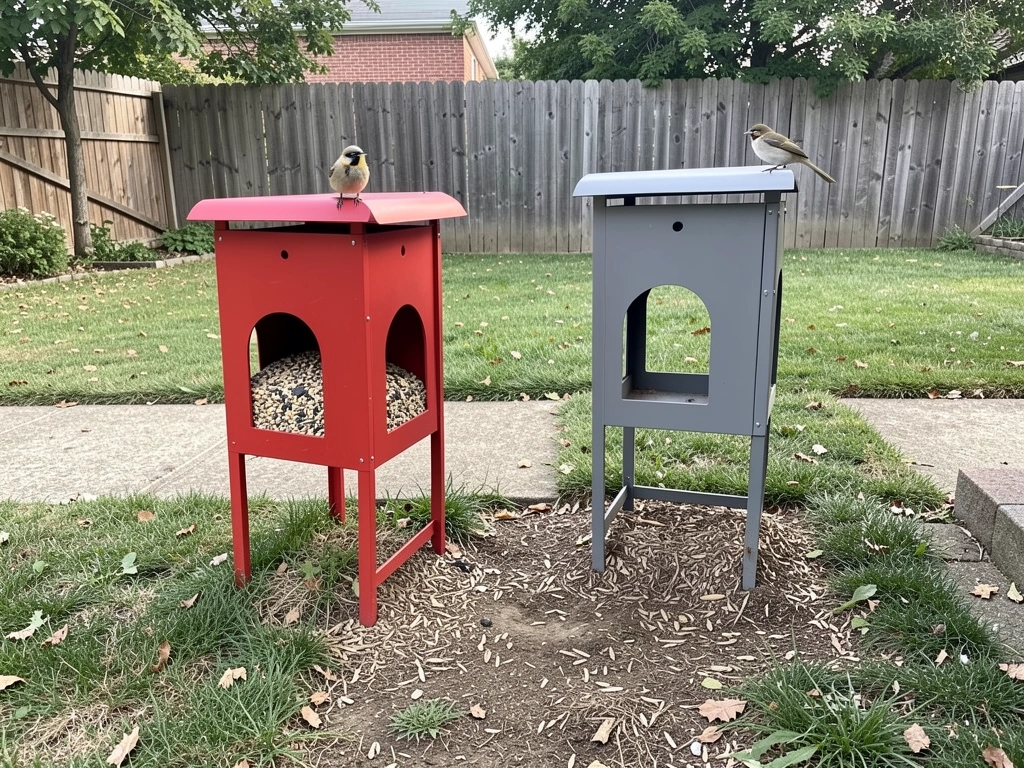
You don't need a spectrometer or a university lab to start seeing evidence of bird color vision in action. A few practical ways to observe it directly:
- Set up feeders in different colors and watch for preference patterns. While feeder color isn't the biggest factor in bird attraction, some studies suggest birds do notice it. A red or yellow feeder may draw initial attention more quickly than a grey or brown one in the same location — watch for which gets visited first when you put out a new feeder.
- Plant native berry-producing shrubs and watch which fruits birds go for first. Ripe berries often change color, and birds typically go for the ripe ones — evidence they're reading chromatic ripeness cues, not just responding to size or location.
- Watch courtship displays up close if you can. Male birds with carotenoid-based plumage (bright orange or yellow) actively display those patches toward potential mates. The intensity of the patch, which reflects how well the bird has been feeding, influences mate choice in a way you can observe directly even without UV equipment.
- Compare bird behavior at different times of day. In early morning and late evening (the 'golden hours'), lighting shifts heavily toward warmer wavelengths. Birds are often most visually active during these periods — partly because of temperature and insect activity, but also because many species have excellent low-light color sensitivity and this is prime feeding and social display time.
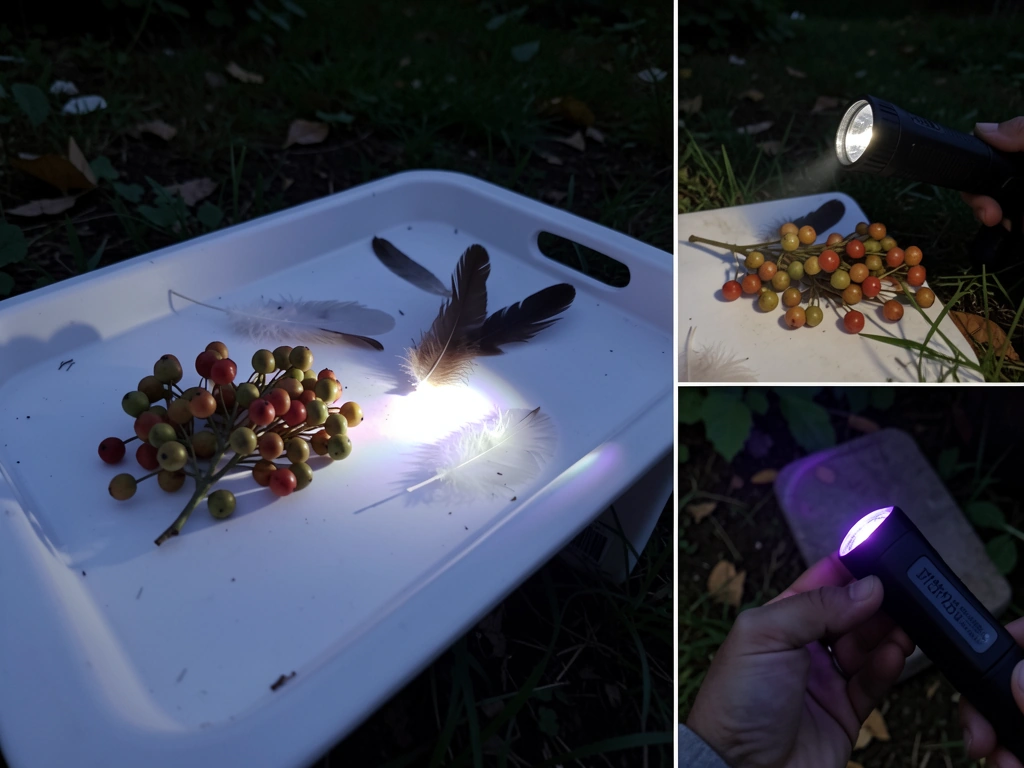
- Look for UV-reflecting surfaces using a UV flashlight (around $10–20). While your eyes won't see the UV reflection, you can check whether surfaces you assume look plain (like certain feathers, eggs, or berries) have properties that would likely appear vivid to a bird's UV-sensitive eye. It's a rough but accessible way to start thinking in four color channels.
- Watch for species-specific color responses. House finches (males with red heads) get more attention from females when their red is more saturated — you can observe males competing and females evaluating displays. This is carotenoid-based color discrimination playing out in real time at your feeder.
One thing worth noting: when you observe birds reacting to color, they're almost certainly integrating color with contrast, movement, and shape simultaneously. Don't assume a bird 'chose' something purely based on color, but color is genuinely one of the signals in the mix, and it's often the one that stands out most in experiments designed to isolate it.
Common myths and misconceptions about bird color vision
Myth: Birds see the world like we do, just maybe a bit sharper
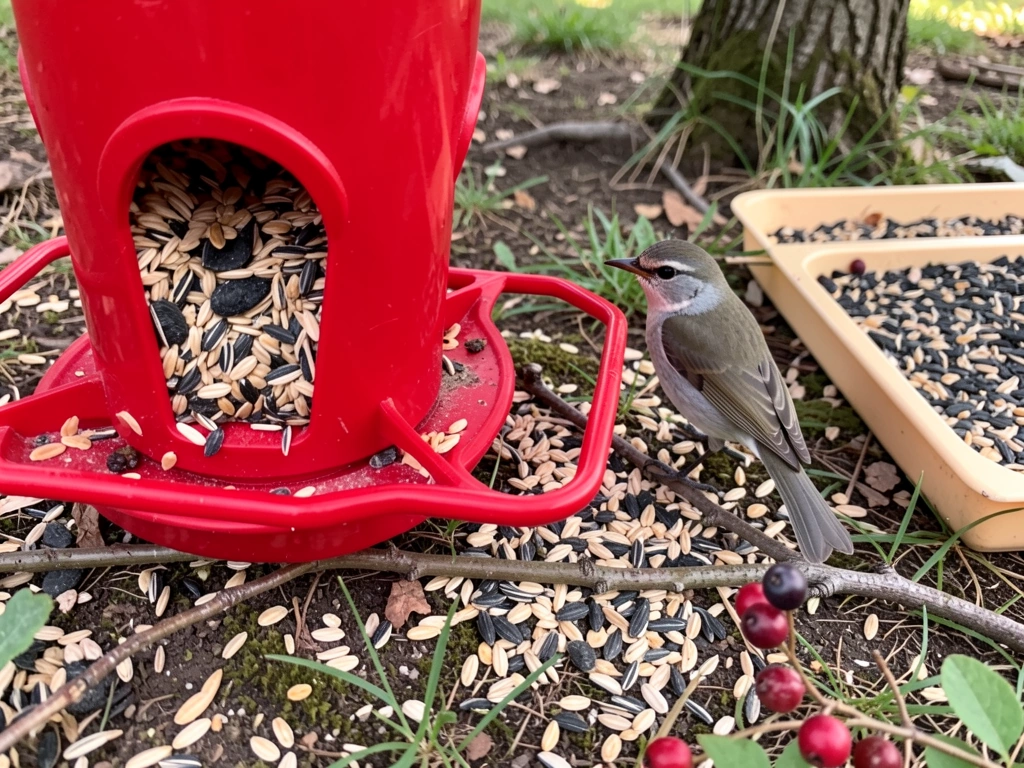
This is probably the most common underestimate. The fourth UV-sensitive cone type genuinely adds a dimension of color experience that has no equivalent in human vision. It's not like seeing a slightly more saturated version of our world, it's more like having an entirely extra axis of color information. How birds actually experience this is a genuinely open question in animal cognition, but the behavioral evidence is clear: they use UV information to make real decisions.
Myth: Birds are especially attracted to the color red
The red-feeder, red-flower association is real in hummingbirds, but it's largely a learned behavior and an ecological coincidence, not a sign that red is some uniquely powerful color for birds in general. Most bird species respond to a combination of color, contrast, and food reward. If you paint your feeder red but fill it with the wrong seed, the birds won't come back.
Myth: If a bird ignores a colorful object, it must not be seeing the color
Birds constantly process color alongside shape, movement, and UV signals (though their sense of smell is more limited than ours, a topic worth exploring separately), and learned experience. You can also explore how a bird's sense of smell affects what it notices in the world, even though it is generally more limited than ours can bird smell. You might even be curious how birds use smell, since it can affect what they notice in the world. A bird that ignores a brightly colored feeder isn't color-blind, it may simply not recognize the feeder as a food source yet, or the color may be signaling something irrelevant or even alarming in context. Give it time, and watch whether familiarity changes the response.
Myth: All birds have the same color vision
They don't. Vision varies significantly across species. Nocturnal birds like owls trade color sensitivity for light sensitivity, with far more rod cells (which detect light and dark) than cone cells. Some species, like certain birds of prey, have exceptional spatial resolution (sharpness) but may differ from songbirds in how many cone types are expressed. If you're curious about a specific species, look up whether it's classified as VS or UVS, that'll tell you a lot about the range of its color detection. For a deeper dive into which specific birds can see UV light, that's a topic with some fascinating species-by-species variation worth exploring on its own.
Myth: Color is the only visual signal birds use, or the main one
Color and brightness (achromatic contrast) work together in bird vision. You might also wonder whether birds urinate, and the short answer is yes, though it works differently than in many mammals. Bird red blood cells are also unusual because many birds keep a nucleus in their red blood cells, unlike mammals Bird red blood cells have nucleus. Bird red blood cells are also unusual because many birds keep a nucleus in their red blood cells, unlike mammals is bird blood purple. Research distinguishes between chromatic discrimination (true color difference) and achromatic discrimination (light vs. dark contrast). Both matter. A bird spotting a predator or a ripe berry is using both channels at once. So when you're watching birds in the field, don't assume a behavioral response is purely about color, it's usually a mix, and scientists use carefully controlled experiments to tease apart which cue is doing the work.
What this means for you practically
If you're a birder or someone who just wants to attract more birds to your yard, understanding their color vision gives you a real edge. Use colorful native plants that produce berries and flowers, especially ones with known UV reflectance (many native wildflowers have UV patterns invisible to us but vivid to birds). A laboratory study found that ultraviolet reflection from bilberries and other berries attracts and influences foraging birds, showing UV cues are relevant to feeding behavior UV reflectance in berries can affect foraging behavior. Don't obsess over feeder color, but do pay attention to the color of the food itself, fresh, vivid berries and bright seeds like sunflower and safflower are more likely to catch a bird's eye than faded, old food.
If you're just satisfying curiosity, the core takeaway is this: when you look at a brilliantly colored bird and think 'wow, that's vivid,' the bird looking back at you is seeing something even richer than you are, a version of the world with an extra color dimension layered on top of everything you can see. That's a genuinely remarkable thing to sit with the next time you're watching birds at a feeder.