Most birds can see ultraviolet light, and that is not a vague generalization. Dozens of species have been confirmed through retinal measurements, behavioral experiments, and spectral analysis of their feathers. The short answer to which birds see UV: the majority of songbirds (passerines), barn swallows, European starlings, blue tits, zebra finches, robins, and many more. But the longer answer is more useful, because not every bird sees UV equally, and knowing the difference helps you understand what you are actually watching when you see birds interact, choose mates, or forage.
Which Bird Can See Ultraviolet Light? UV-Seeing Species

Marcus Chen
22 Mar 2026
What UV vision actually means in birds
UV stands for ultraviolet, the band of light just below what human eyes can detect. We top out at roughly 400 nm (nanometers), which is where violet light sits. Ultraviolet runs below that, from about 300 to 400 nm. Birds can see into that range because of two key biological differences from us: they have a specific cone cell in their retina whose light-sensitive pigment (called SWS1, or short-wavelength-sensitive 1) peaks in the UV band, and their eye's internal structures (the cornea and lens) actually transmit UV rather than blocking it. Human lenses absorb UV before it ever reaches our retina, which is why we are effectively UV-blind. Bird lenses do not do that.
Researchers classify UV-seeing birds into two physiological camps. Birds in the UVS (ultraviolet-sensitive) group have an SWS1 pigment that peaks at roughly 355 to 380 nm, squarely in the UV range. Birds in the VS (violet-sensitive) group have that same cone type, but its peak is shifted to around 402 to 426 nm, just into the visible violet range. UVS birds are the true UV seers. VS birds have reduced UV sensitivity by comparison, though they still pick up some UV-adjacent wavelengths. This distinction matters when someone claims a species can see UV: you want to know which group they fall into.
Which bird species have actually been proven to see UV
The evidence comes from three types of research: direct retinal measurement (microspectrophotometry, which measures what wavelengths each cone absorbs), electrophysiology (recording nerve responses to UV light), and behavioral experiments (showing birds make decisions based on UV cues). Here are the species with the strongest documented evidence.
Well-confirmed UVS species
| Species | SWS1 λmax (approx.) | Type of Evidence | Key Finding |
|---|---|---|---|
| European starling (Sturnus vulgaris) | ~362 nm | Retinal measurement, behavioral | UVS cone confirmed; used in early landmark UV experiments |
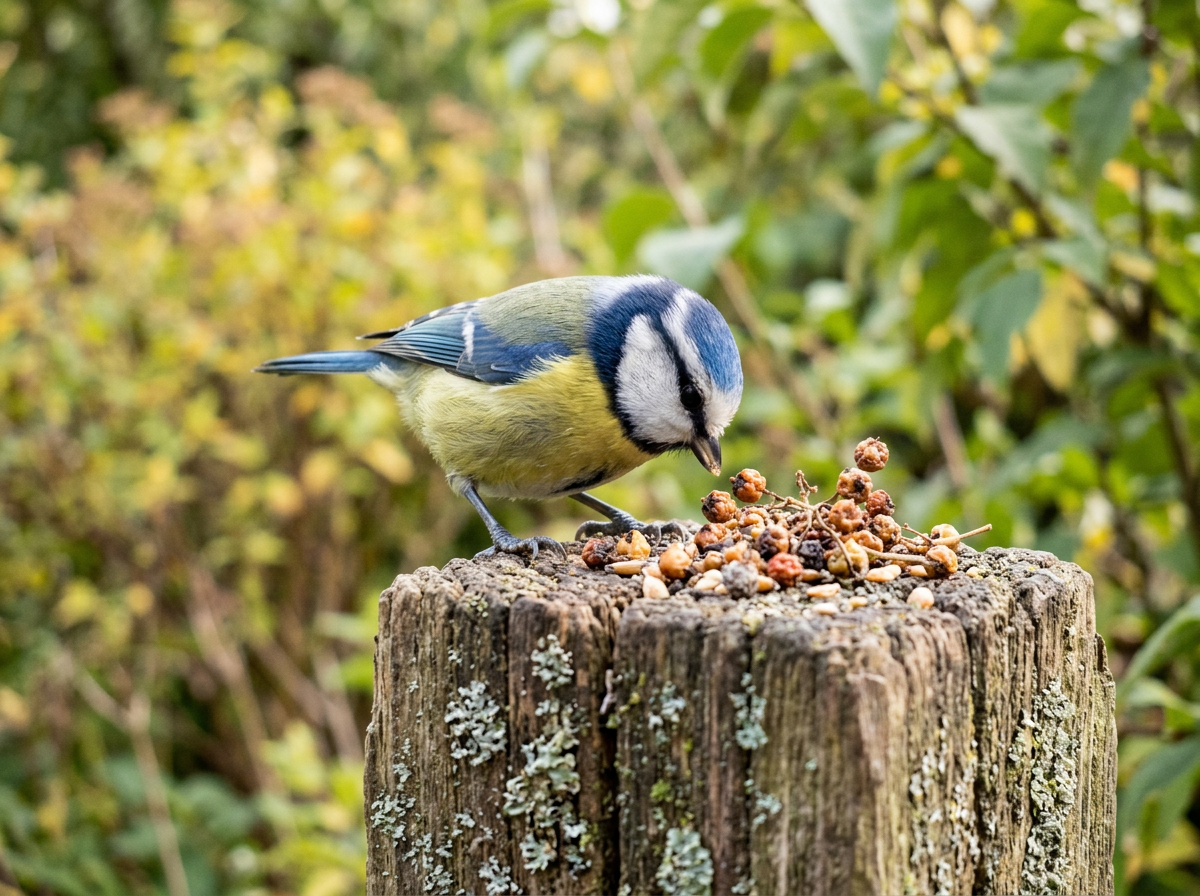
| Eurasian blue tit (Cyanistes caeruleus) | ~355–370 nm | Retinal measurement, behavioral | UV crest brightness directly influences mate choice |
| Zebra finch (Taeniopygia guttata) | ~370 nm | Microspectrophotometry | Distinct UV cone type measured alongside blue, medium, and long-wavelength cones |
| Pekin robin / Red-billed leiothrix (Leiothrix lutea) | ~355 nm | Retinal measurement | Among the lowest SWS1 λmax values recorded, strongly UVS |
| Barn swallow (Hirundo rustica) | UVS group | Plumage reflectance + field study | Males reflect ~8–9% more UV from dorsal iridescent plumage than females |
| European robin (Erithacus rubecula) | UVS group | Behavioral/orientation experiments | Shown to orient under monochromatic UV light, confirming functional UV use |
| Estrildid finches (family-level) | ~370–373 nm | Microspectrophotometry | UV-sensitive cone peak measured across multiple species in the family |
Beyond these individually confirmed species, the broader passerine (perching bird) order is the group most associated with UV sensitivity. Passerines make up the largest bird radiation on Earth, and research into their SWS1 evolution shows UV sensitivity is the ancestral state for many lineages. That means if you are watching a songbird in your backyard, odds are good it has some degree of UV vision.
Groups with reduced or uncertain UV sensitivity
Raptors are frequently cited as having reduced UV sensitivity compared to typical UVS passerines. Their SWS1 tuning tends toward the VS class, which means their short-wavelength cone peaks further into visible violet rather than true UV. Some shorebirds and waterfowl also fall into the VS category. The takeaway: do not assume every bird sees UV. Group membership and direct evidence matter.
How to tell if a bird's plumage has UV patterns
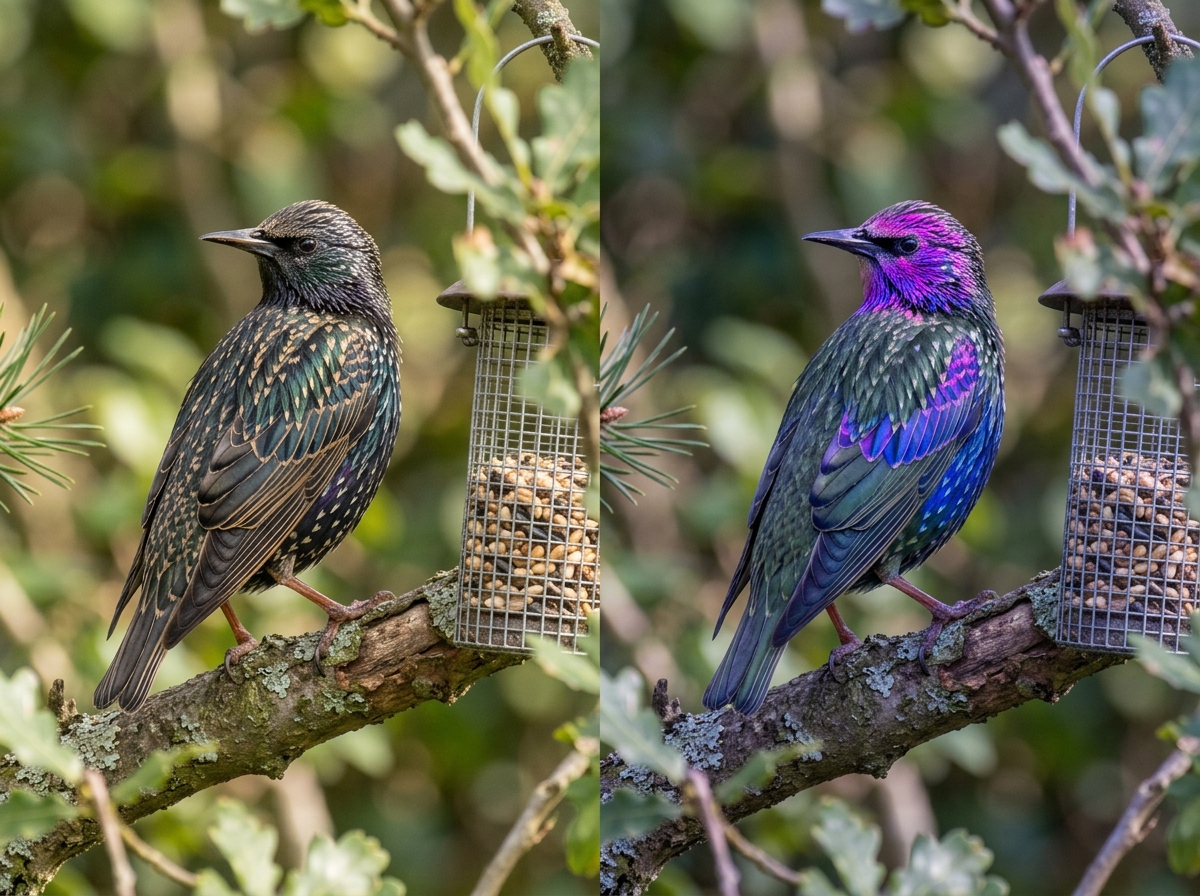
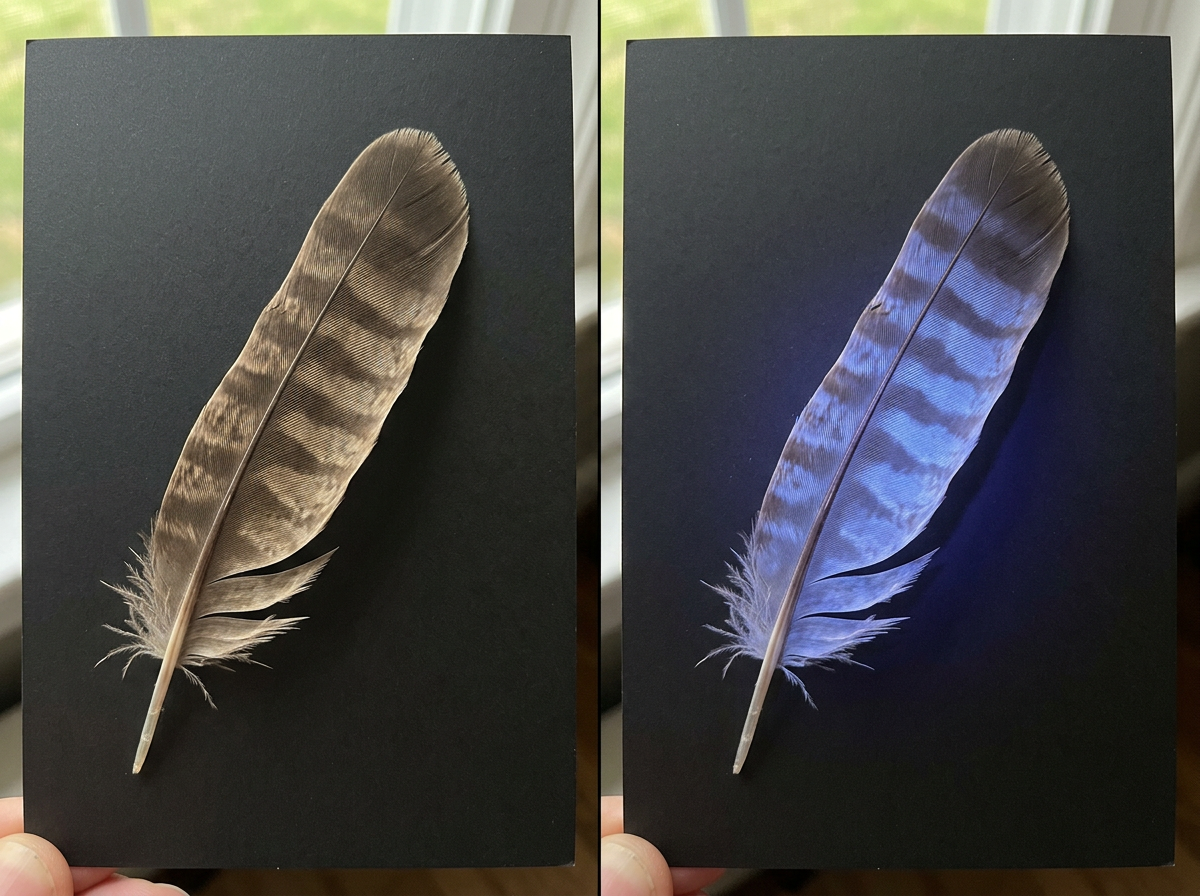
This is where it gets genuinely interesting, and a little humbling for those of us used to trusting our own eyes. A feather patch can look dull gray or muted brown to a human and simultaneously be blazing with UV reflectance that a blue tit or starling can read clearly. UV coloration and visible coloration are not the same thing, and you cannot reliably infer one from the other just by looking.
Structural coloration, the kind produced by feather microstructure rather than pigments, tends to be a strong predictor of UV reflectance. Iridescent, glossy, or shimmery feathers are good candidates. The blue tit's pale blue crown crest, which looks subtly blue-white to humans, is actually bright in UV and has been experimentally shown to drive mate preference. When researchers reduced the UV reflectance of the crest by applying a UV-blocking compound, it reversed normal correlation patterns in breeding outcomes.
Structural coloration, the kind produced by feather microstructure rather than pigments, tends to be a strong predictor of UV reflectance. In barn swallows, dorsal iridescent plumage reflects strongly in UV, and in a multi-year study adult males reflected about 8, 9% more UV than adult females, linking UV structural coloration to sexual selection-relevant signals [Structural coloration, the kind produced by feather microstructure rather than pigments](https://academic. oup. com/beheco/article-pdf/13/6/728/9731747/bhec-13-06-728.
pdf). Iridescent, glossy, or shimmery feathers are good candidates. The blue tit's pale blue crown crest, which looks subtly blue-white to humans, is actually bright in UV and has been experimentally shown to drive mate preference. When researchers reduced the UV reflectance of the crest by applying a UV-blocking compound, it reversed normal correlation patterns in breeding outcomes.
How to observe and record UV vision in practice
You cannot see UV yourself, but you can capture it. Here is what actually works and what does not.
The basic imaging pipeline
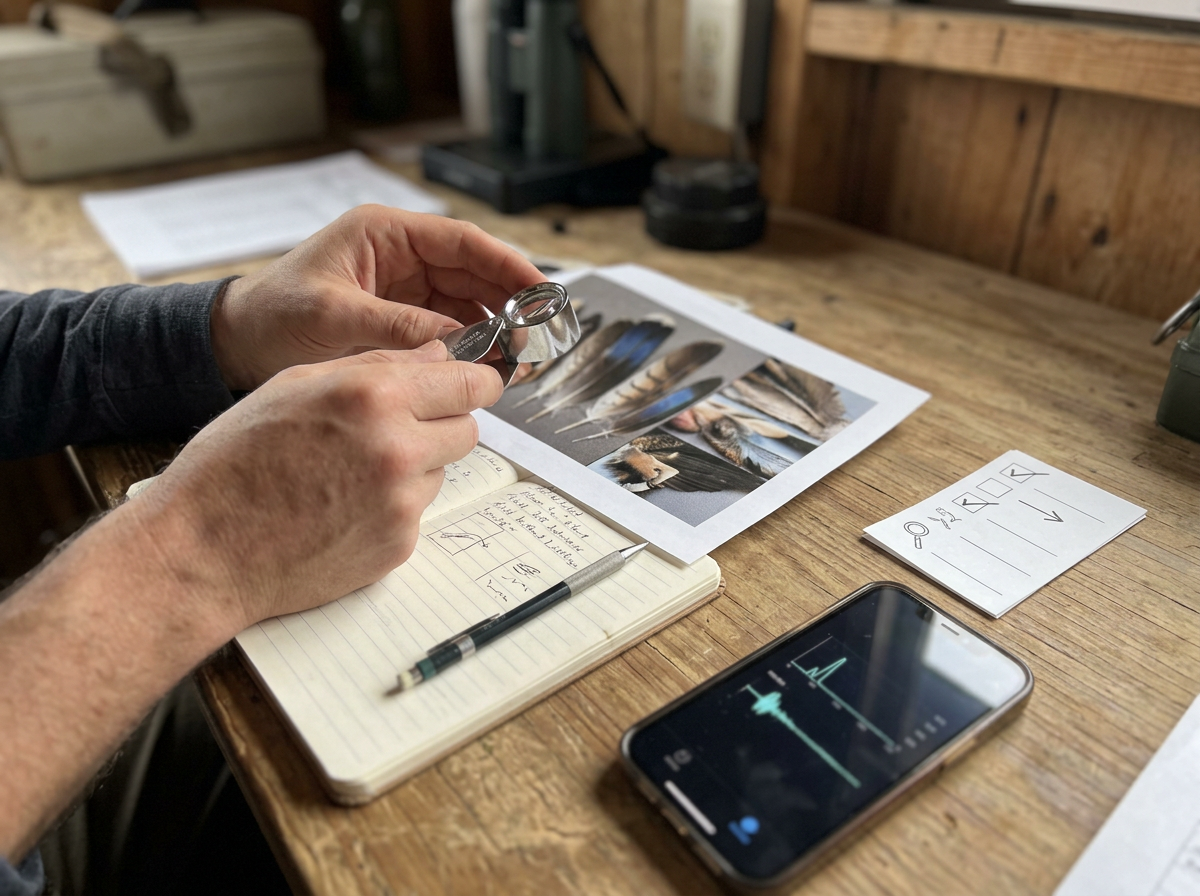
A working UV photography setup needs three things: a UV-capable sensor, UV-transmitting optics (lens and filters), and a UV light source or access to natural daylight UV. Standard consumer cameras block UV at the sensor with an internal UV/IR cut filter. To work around this, you either need a camera that has had that filter removed (sometimes called a full-spectrum converted camera) or one that is natively UV-sensitive. Then you add a UV-pass filter to the lens, which blocks visible and infrared light while allowing UV through. The resulting image shows you what the UV-reflective patches on a feather actually look like, something you can then compare to a standard visible-light photo of the same feather.
DIY vs. proper spectroscopy
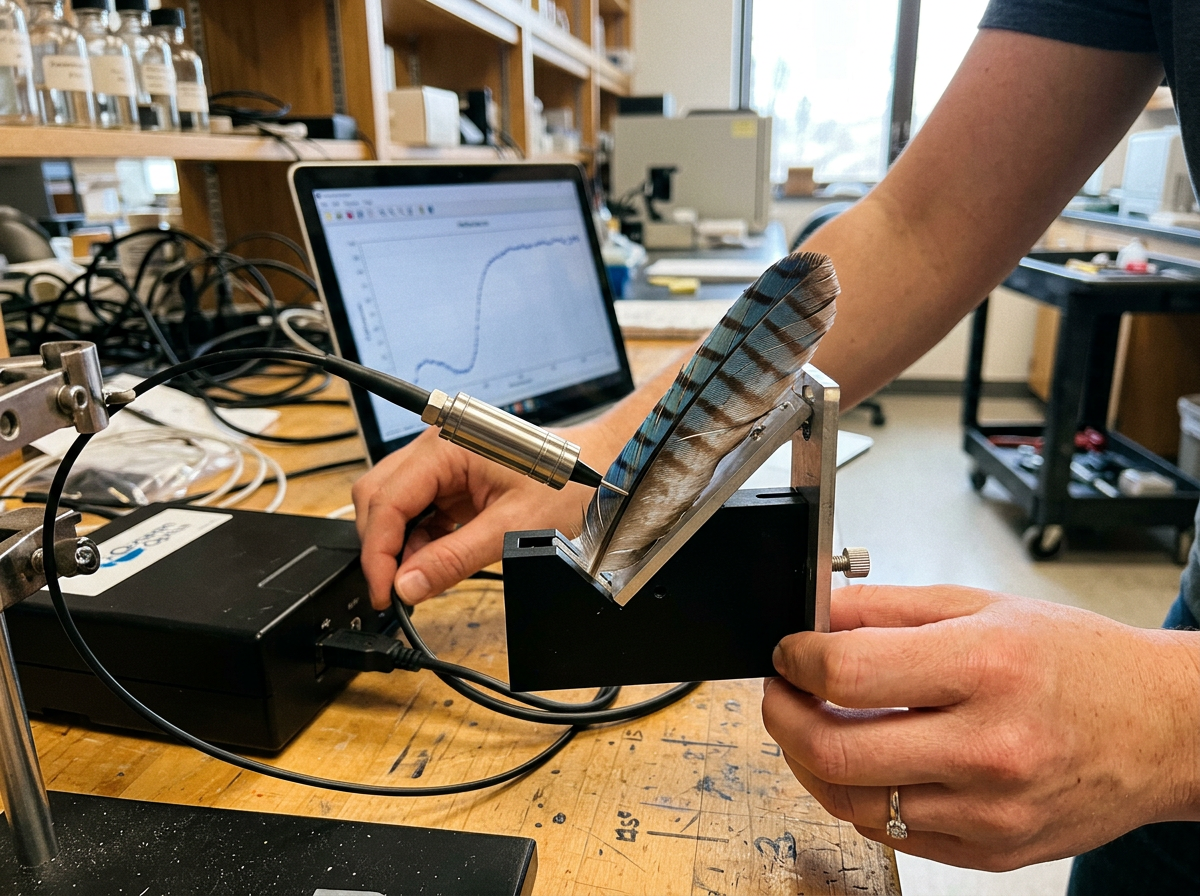
Consumer UV photography is conceptually valid but qualitatively limited. You will see which patches glow relative to others, but you will not get wavelength-specific reflectance measurements. For that, researchers use a spectrometer connected to a fiber optic probe held against the feather. This gives you a full reflectance curve from 300 to 700 nm, which is the gold standard. If you are a birder or amateur naturalist, UV photography is a fun and genuinely informative tool. If you are trying to make a scientific claim about a species, you need the spectrometer.
- Get a full-spectrum converted camera or a UV-sensitive sensor body (some used research cameras are available secondhand).
- Fit a UV-pass filter on the lens, such as a Baader U-filter or similar, which passes wavelengths below about 400 nm.
- Shoot in bright midday sun outdoors, where natural UV is strongest, or use a UV-emitting lamp (blacklight style, but with UV-A/UV-B output).
- Photograph the bird or feather in both UV-only mode (filter on) and visible light (filter off, or use a standard lens).
- Compare the two images. Patches that appear bright in UV but dim in visible light are where the UV signal is concentrated.
- For serious verification, send feather samples to a lab or university ornithology department for spectrometric analysis.
Common backyard birds and what to watch for
If you are in North America or Europe watching birds at a feeder or in a park, here are the species most likely to have documented or strongly suspected UV vision and UV plumage signals.
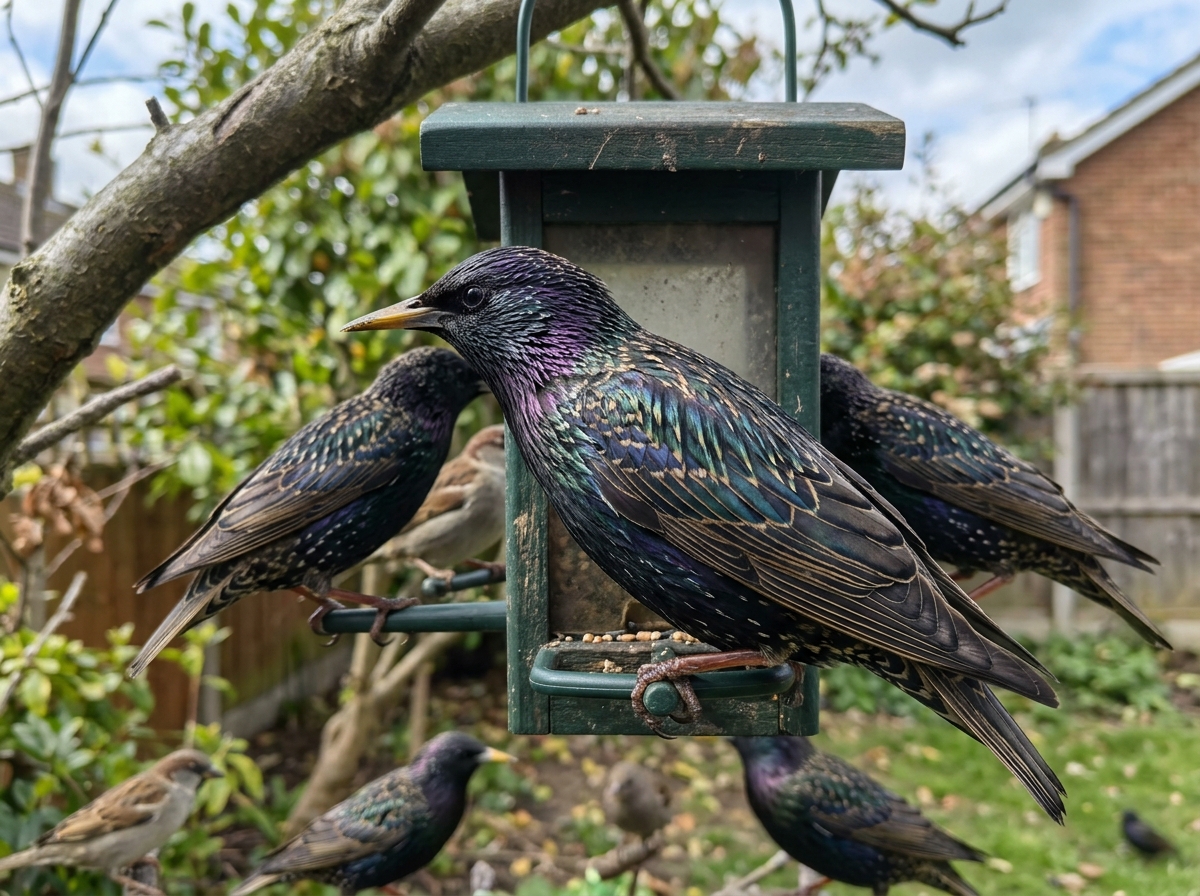
- European starling: iridescent glossy plumage with documented UV sensitivity in the retina; that green-purple sheen you see is only part of what they see in each other.
- Barn swallow: dorsal iridescent feathers show measurable UV reflectance differences between males and females, making UV a probable mate-assessment cue.
- Blue tit (European gardens): UV crest brightness is one of the most thoroughly studied avian UV signals; if you are in Europe, these are your best backyard UV subject.
- American goldfinch: while direct UVS cone data is less published for this species specifically, finches as a family have documented UVS cone types around 370 nm, and their bright plumage almost certainly carries UV components.
- Zebra finch (common in aviaries): directly measured UVS cone at ~370 nm; if you keep or breed these birds, their mate preferences may include UV signals you cannot see.
- House sparrow: passerine, likely UVS-capable; UV signals in plumage have been discussed in the context of badge size and condition signaling, though this species sits closer to the VS boundary in some analyses.
- European robin: behavioral experiments confirm UV-functional vision; also a classic subject for studies of magnetic compass orientation, where UV light plays a role.
What to actually watch for behaviorally: pay attention to interactions where birds seem to be assessing each other in ways that do not map to what you see. If you are wondering whether birds urinate, the answer is that they typically excrete waste as a waste-and-urine mix rather than producing urine the way mammals do do birds urinate. A male that looks identical to you may be signaling strongly to a female via UV reflectance.
Preening directed at iridescent or glossy patches, and mate choice that seems puzzling based on visible plumage alone, are often places where UV is doing work you cannot perceive. This connects naturally to broader questions about how birds perceive color overall, which is a fascinating area if you want to go deeper.
Birds that can detect UV are part of the broader question of whether a bird can see color overall, because their cone tuning changes how they interpret wavelengths how birds perceive color overall.
Myths, limitations, and how to verify claims
Myth: all birds see UV
P, This one gets repeated a lot, and it is an oversimplification. While UV sensitivity is widespread in birds and is thought to be the ancestral state for many lineages, some birds fall into the VS (violet-sensitive) class with reduced UV sensitivity. Raptors in particular tend toward the VS classification. Saying all birds see UV is like saying all mammals smell well: true enough to be useful as a generalization but wrong enough to cause real errors when applied to specific species. But the ability can bird smell varies by species and context, so look for evidence rather than assuming it is the same for every bird smell well.
Myth: if it looks blue or purple to you, it reflects UV
Human-visible color and UV reflectance are not reliably correlated. Although UV colors can look different to birds, some species can show UV signals in ways that may be described as seeming like purple to us, but the key is what their eyes detect is bird blood purple. A feather can look bright blue to you and reflect almost nothing in UV, while a feather that looks muted gray or brownish to you could be strongly UV-reflective. Researchers explicitly warn against extrapolating from human color experience to avian UV perception. The only way to know is to measure.
Myth: UV photography proves a bird sees UV
A UV-bright patch in a photograph tells you the feather reflects UV. It does not tell you the bird perceives it. To understand why, it helps to know how bird blood biology supports UV-related perception bird perceives it. To confirm perception, you need evidence about the species' SWS1 cone tuning or a behavioral experiment. A UV-reflective patch on a raptor (VS-class) may simply not be visible to that bird at all. The photography and the physiology are separate questions. In birds, color changes can be driven by how UV-sensitive cones read feather reflectance, which may make plumage appear to shift even when visible colors look the same UV sensitivity and feather reflectance.
How to verify a UV-vision claim for a specific species
If someone tells you a species sees UV and you want to confirm it, here is what to look for in the evidence. The strongest proof is a measured SWS1 λmax in the 355 to 380 nm range from microspectrophotometry or molecular opsin analysis. Microspectrophotometric retinal measurements in European starlings identified a cone class with visual pigment λmax close to about 362 nm [measured SWS1 λmax in the 355 to 380 nm range](https://research-repository. uwa.
edu. au/en/publications/visual-pigments-oil-droplets-and-cone-photoreceptor-distribution-). The next best is an electroretinogram or electrophysiological recording showing a UV response peak. After that, a controlled behavioral experiment where the bird discriminates or responds to UV-only illumination (as European robins did in orientation studies) is solid confirmation.
Spectrometric plumage data showing UV reflectance is supporting evidence for a UV signal but not proof of UV perception on its own.
One honest note: the science here is still filling in gaps. Well-studied species like blue tits, starlings, and zebra finches have robust multi-method evidence. For many backyard species, especially outside Europe, the data is thinner and researchers are still working through which lineages are definitively UVS versus VS. If you find a claim about a species and cannot find retinal or behavioral data behind it, treat it as probable-but-unconfirmed rather than settled fact. That kind of careful thinking is exactly what separates useful knowledge from bird-trivia noise.
FAQ
If a bird species is a “passerine,” does that guarantee it can see ultraviolet light?
Not guaranteed. Passerines as a group often show ultraviolet-sensitive cones as an ancestral trait, but individual species can fall in the VS (violet-sensitive) camp or show reduced UV sensitivity, meaning some UV cues may be weak or effectively unavailable for perception.
Can I assume raptors see less UV than songbirds based on feather appearance?
No. Raptors often have short-wavelength tuning closer to VS (less true UV), but their feathers can still look dramatic in human-visible light. UV perception depends on eye physiology, so a UV-bright patch in humans might not be useful to a VS-class bird.
What’s the practical difference between UVS and VS birds for what I might observe?
UVS birds can use UV-only differences more reliably, while VS birds may rely more on violet or UV-adjacent wavelengths. Behavior that seems “UV-specific” (like discrimination using UV-only illumination) is therefore more likely in UVS species than in VS species.
If I take a UV photo of feathers, does a bright UV patch mean the bird can perceive it?
It means the feather reflects UV (or at least UV-pass wavelengths), not that the bird perceives it. To support perception, you need UVS/VS cone tuning evidence for that species, or a behavioral test showing discrimination based on UV cues.
Why do some UV photos look more informative than others, even with the same camera?
UV-pass filters and lighting conditions matter a lot. Glare, insufficient UV illumination, and incorrect exposure can change which feather areas “pop,” so relative brightness in your image can mislead without consistent setup and careful capture of the same subject angles.
Can a full-spectrum converted camera alone replace a spectrometer for “science-quality” claims?
Not fully. A UV-capable photo can show relative contrast, but it usually does not give wavelength-specific reflectance curves. For claims like “this species reflects UV strongly between 320 and 360 nm,” you need spectrometry (reflectance curves), not just images.
What should I look for in evidence before trusting a claim that a particular bird sees UV?
Prefer direct retinal or opsin evidence for UVS tuning (SWS1 λmax in the true UV range), then electrophysiology showing UV response, then controlled behavioral discrimination using UV-only or UV-filtered conditions. Plumage reflectance data alone is only supporting evidence.
Why can two feathers look similarly colored to me but different in UV?
Humans perceive visible wavelengths, but UV brightness can come from microstructure and patterning that humans cannot read. Structural coloration can create strong UV reflectance even when the visible pigment or scattering looks dull or gray to you.
Are there simple backyard experiments that can hint at UV without lab equipment?
You can do limited, non-confirming tests by changing only the wavelengths available, such as using UV-attenuating materials versus UV-pass compatible lighting, and observing consistent behavioral shifts (mate choice, inspection, preening). However, these still do not prove perception without controlling for non-UV differences.
If data are missing for my local species, should I treat “UV seeing” as established?
Treat it as probable-but-unconfirmed if you cannot find multi-method retinal, electrophysiology, or controlled behavioral evidence. The pattern in well-studied species supports UV sensitivity as widespread, but your local species may be VS, and assumptions can lead to wrong conclusions.
Next Article
What Bird Shells Are Green? Identify Green Eggs Safely
Learn which birds lay truly green eggs, how green stains or lighting mimic color, and how to handle found eggs safely.