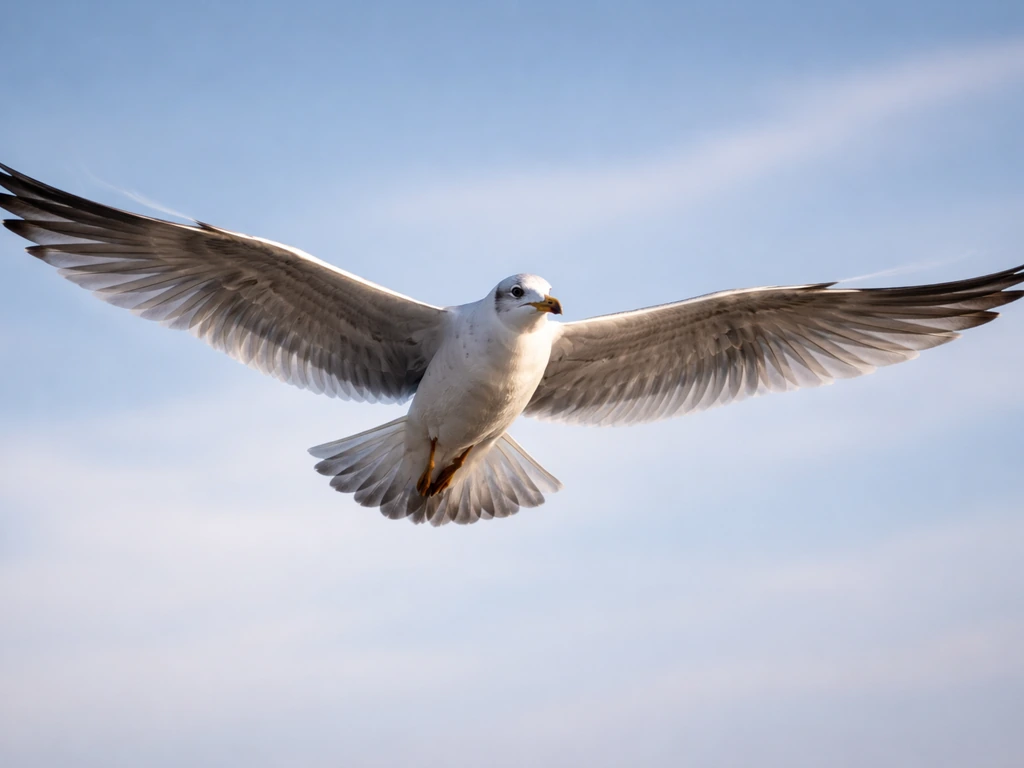
A bird wing is built from four major biological materials working together: bone, muscle and tendon, skin and connective tissue, and feathers. A bird clutch refers to the group of eggs laid by a bird during a single nesting attempt what is a bird clutch. The feathers get all the attention, but without the lightweight skeleton underneath and the powerful muscles driving it, feathers would just be decorative. Strip a wing down layer by layer and you get a remarkably engineered structure where every material has a specific job in keeping the bird airborne.
What Are Bird Wings Made Of? Materials and Structure for Flight

Marcus Chen
28 May 2026
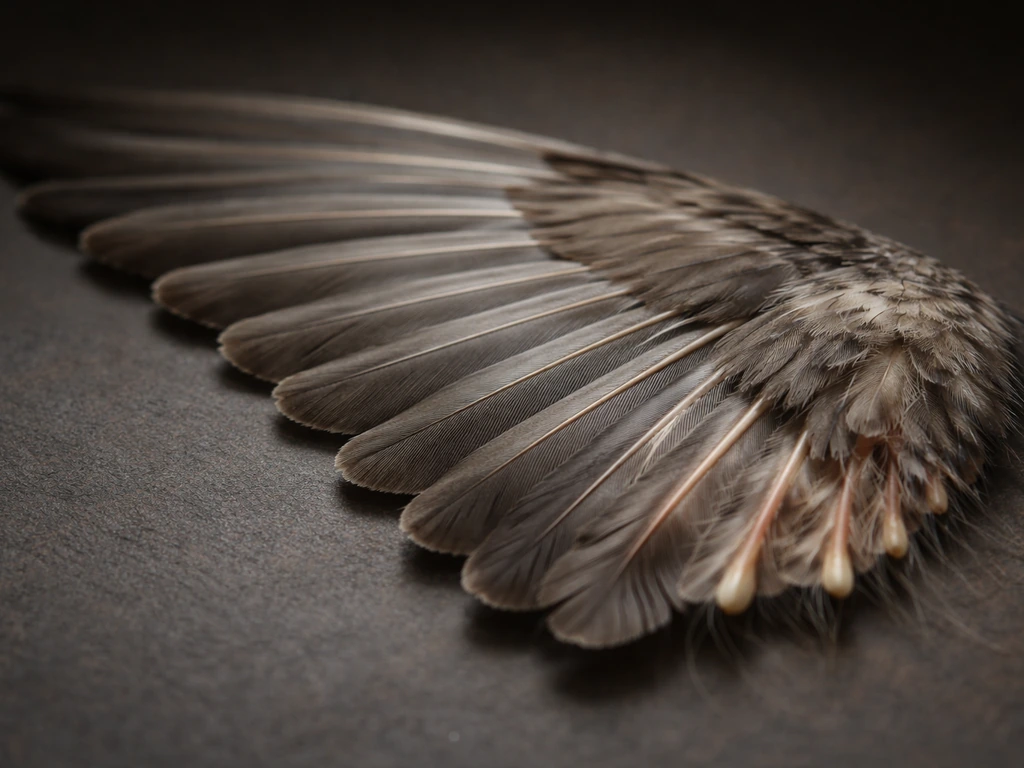
Big-picture components of a wing
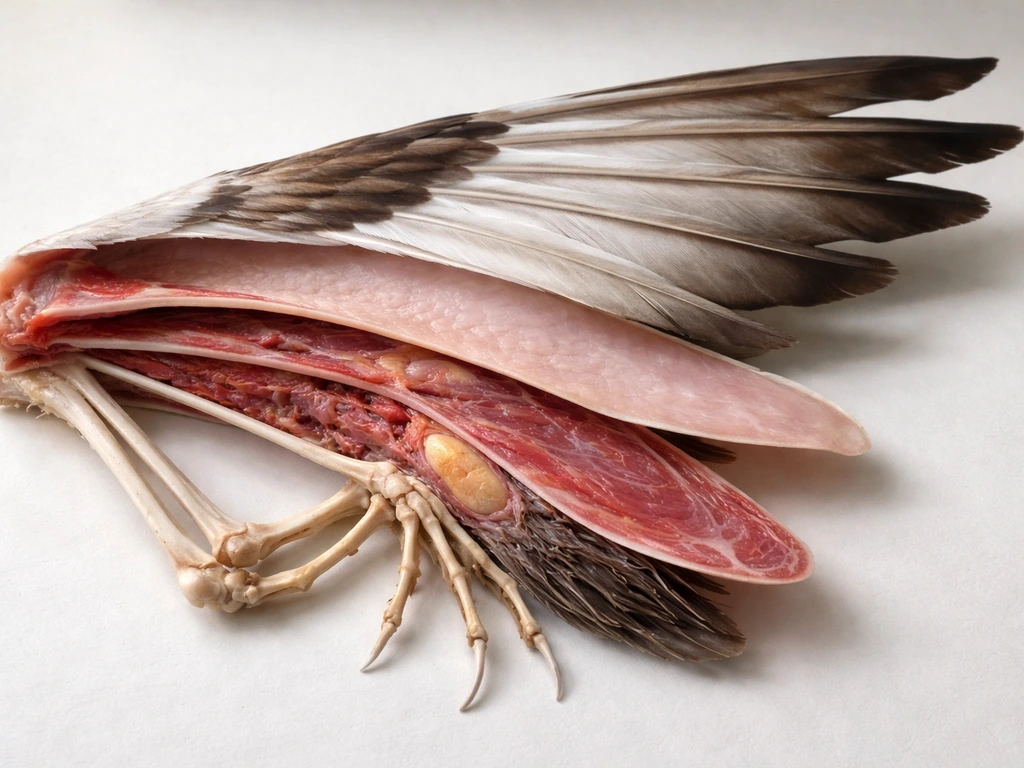
Think of the wing as four nested systems. The innermost layer is the skeleton, which gives the wing its shape and acts as the lever arm for all movement. Wrapped around that are muscles, which generate the force for flapping, and tendons and ligaments, which transmit and coordinate that force. Over everything sits the skin, which anchors the feathers and ties the whole structure together. The feathers themselves are the outermost layer and the aerodynamic surface that interacts directly with air. Each layer is made of distinct biological materials, and understanding what those materials are helps explain why birds can fly at all.
Wing bones: what they're made of and how they support flight
Bird wing bones are modified forelimb bones, the same basic set mammals have in their arms and hands, just heavily reworked over millions of years. The major bones are the humerus (upper arm), the radius and ulna (forearm), and then a fused wrist-and-hand bone called the carpometacarpus at the tip. That fusion is one of the key differences from a human hand: several small wrist and hand bones have merged into a single rigid unit, which reduces weight and stabilizes the wingtip under aerodynamic loads.
Avian bone tissue is similar to other vertebrate bone in that it is mineralized collagen, but many flight bones in birds are pneumatized, meaning they have internal air spaces connected to the respiratory system rather than being solid or marrow-filled throughout. This dramatically cuts weight without sacrificing stiffness. The joints between the humerus, radius/ulna, and carpometacarpus allow the wing to flex and extend during the stroke cycle, and research on wing morphing in birds like pigeons shows this flexion is tightly coordinated across the elbow and wrist simultaneously rather than each joint moving independently.
There is also a small separate digit near the carpometacarpus called the alula (sometimes called the thumb). It supports a small tuft of feathers on the leading edge of the wing that the bird deploys at slow speeds to prevent stalling, something like the leading-edge slats on an airplane wing. The alula is structurally distinct from the fused carpometacarpus rather than being part of it.
Feathers: the main wing 'material' and their structure
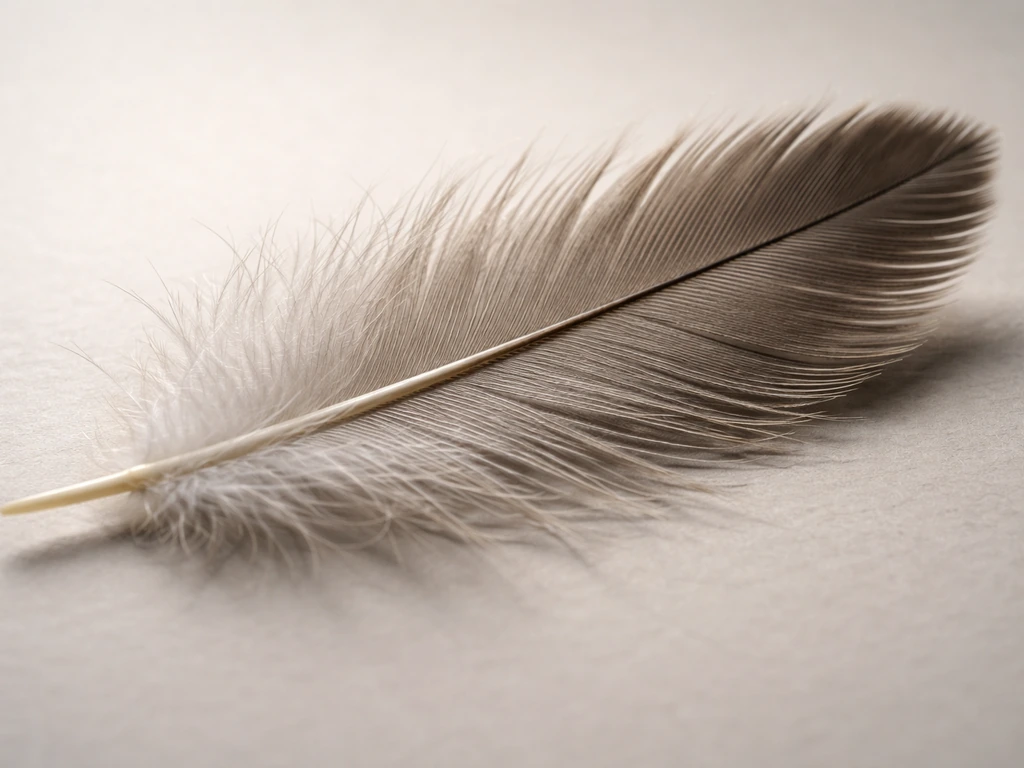
Feathers are made of keratin, the same protein that makes up human fingernails and hair. But the way that keratin is assembled into a feather is extraordinarily sophisticated. Each feather grows out of a small pit in the skin called a follicle. Wikipedia describes the feather as being formed in follicles in the epidermis (outer skin layer), with a tubular central shaft (rachis) and a hollow basal calamus (quill) that anchors into the follicle Each feather grows out of a small pit in the skin called a follicle.. At the base of the feather is a hollow, tubular section called the calamus, or quill, which is embedded in the follicle and anchors the feather to the skin. Above the calamus, the shaft continues as the rachis, the central spine that runs the length of the visible feather.
Branching off both sides of the rachis are barbs, which are like the tines of a comb. Each barb in turn has smaller projections called barbules, and many of those barbules carry tiny hooks that interlock with the barbules of neighboring barbs. This hook-and-zipper system is what creates the smooth, unified vane surface of a flight feather. When the hooks pull apart (say, when a feather gets ruffled), a bird can rezip them by running the feather through its bill during preening. Research into feather microstructure shows the rachis and barbs have a tough outer cortex with an internal architecture specifically designed to resist cracking under the aerodynamic loads of flight.
| Feather part | What it's made of | What it does |
|---|---|---|
| Calamus (quill) | Hollow keratin tube | Anchors feather in follicle |
| Rachis | Solid/cortexed keratin shaft | Central spine supporting the vanes |
| Barbs | Keratin branches off rachis | Form the flat vane surface |
| Barbules | Smaller keratin projections on barbs | Interlock via hooks to seal the vane |
| Hooks (hamuli) | Tiny hooked keratin structures on barbules | Create aerodynamic continuity across the vane |
Skin, connective tissue, and tendons/ligaments
The skin covering a bird's wing has two layers: the epidermis on the outside and the dermis beneath it. The epidermis is where feather follicles develop, forming as projections that push down into the dermis. The dermis itself is made of dense connective tissue, primarily collagen fibers, and it is heavily involved in anchoring the feather follicles. Dermal papillae, small nipple-like projections of the dermis, extend up into the base of each hollow calamus to physically secure the feather in place.
Running through the wing alongside the bones are ligaments (connective tissue connecting bone to bone) and tendons (connecting muscle to bone). One ligament along the forearm does something particularly clever: when the elbow straightens during the downstroke, this ligament automatically pulls the wrist into extension at the same time, coupling the two joints mechanically. That means the bird doesn't have to independently control wrist opening during flight; it happens as a built-in consequence of elbow extension. In many birds, the wing folds by tucking the elbow and wrist as the shoulder and muscles coordinate the upstroke and downstroke how bird wings fold. Studies measuring range of motion across dozens of bird species found that extension limits at wing joints are set mostly by the skeleton itself, not by soft tissue constraints.
Muscles and how wing motion is built into the anatomy
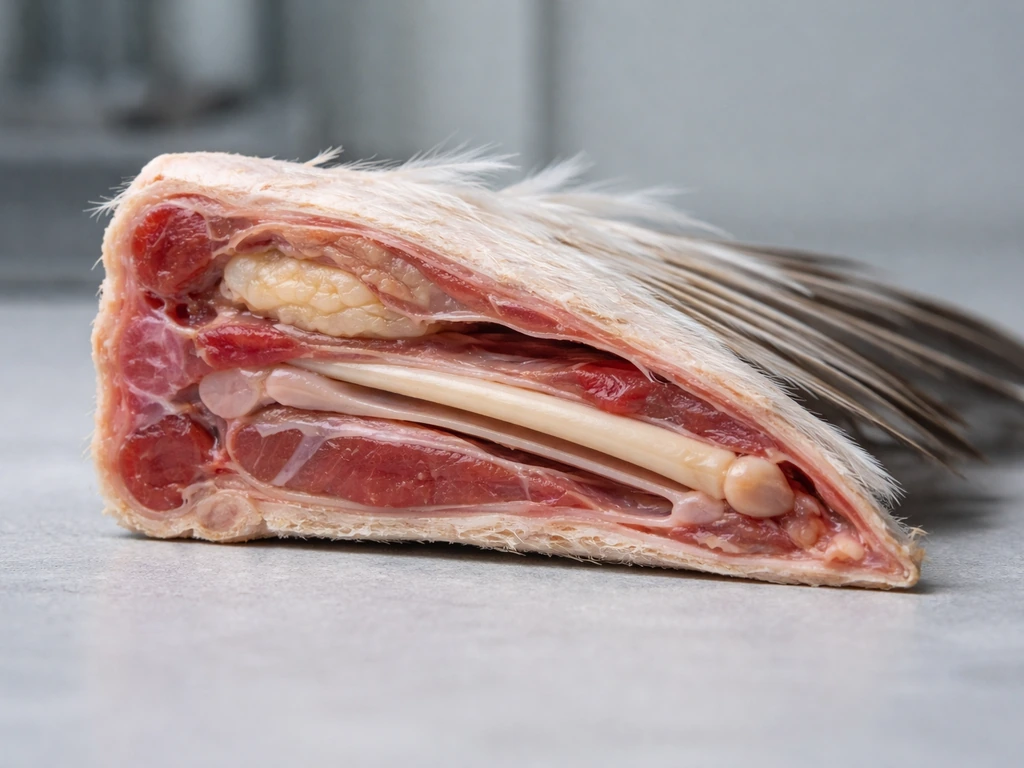
The two muscles that do the heavy lifting for flight are the pectoralis and the supracoracoideus, and both originate on the sternum (breastbone), specifically on the keel, that prominent ridge you can feel on a roast chicken. The pectoralis is the bigger of the two, sometimes making up around 10 percent of a bird's entire body mass, and it drives the downstroke by pulling the humerus downward and forward. In the cited anatomical work summarized in Harvard DASH, the pectoralis is reported to span roughly 8 to 11 percent of body mass and its activity is linked to pronation and acceleration during parts of the downstroke pectoralis activity is associated with pronation/acceleration during parts of the downstroke. It attaches to the deltopectoral crest on the humerus, which is a bony ridge near the top of the upper arm bone.
The supracoracoideus is roughly one-fifth the size of the pectoralis and handles the upstroke, but its routing is genuinely interesting. Its tendon travels up from the sternum, passes through a small opening in the shoulder called the triosseal foramen (formed by the junction of three bones), and then loops over to attach on the top (dorsal) surface of the humerus. This pulley-like arrangement means a muscle sitting below the shoulder can pull the wing upward, which solves what would otherwise be a serious mechanical problem. The supracoracoideus is especially active during slow flight and hovering, when precise upstroke control matters most. If you are considering trimming, you will also need to know how often to clip bird wings safely and appropriately for the species.
Smaller muscles throughout the wing handle finer movements like rotating the humerus, adjusting the wrist, and controlling individual feather groups. The feather follicles themselves also have tiny dermal muscles attached that can adjust feather angle for fine aerodynamic tuning.
Why wing materials differ: feather types and their roles
Not all feathers on a wing are the same material in a functional sense, even though they are all keratin. The wing carries several distinct feather categories, and they occupy different zones because they serve different purposes.
- Flight feathers (remiges): Long, stiff, asymmetrically shaped pennaceous feathers attached to the bones of the hand and forearm. Primary feathers (on the hand/carpometacarpus) drive thrust; secondary feathers (on the forearm) generate most of the lift. Their stiffness and asymmetric vane shape are directly tied to aerodynamic performance.
- Alula feathers: Small stiff feathers on the thumb digit, deployed at low speeds to smooth airflow over the leading edge and prevent stalling.
- Contour feathers (coverts): Shorter feathers that overlay the base of the flight feathers, filling gaps and smoothing the wing's aerodynamic profile.
- Down feathers: Found closer to the body, these lack the interlocking barbule hooks of flight feathers and instead trap air for insulation rather than interacting with airflow.
The structural difference between a flight feather and a down feather comes down to those barbule hooks. Flight feathers have them in abundance, creating a sealed, rigid vane that pushes air efficiently. Down feathers lack them, leaving a loose, fluffy structure that traps warm air next to the skin. Contour feathers are somewhere in between: they have some interlocking structure but are shorter and more flexible than remiges. Understanding this material difference is why bird wing anatomy is a lot more nuanced than just 'covered in feathers.'
How to see this for yourself
If you want to anchor these concepts in something real, a found feather (legally collected from native species in the US is restricted, but a chicken or turkey feather works perfectly) is a great starting point. Run your finger across the vane to feel the stiffness, then pull a section apart and watch how easily the barbules separate, then stroke it back together to feel them rezip. That's the hook system in action. For the skeletal layer, museum natural history collections often have avian skeletal displays where you can clearly see the humerus, radius, ulna, and the distinct fused carpometacarpus region. Wing diagrams in avian anatomy textbooks will label each bone group, which helps when reading more detailed material about how bird wings work mechanically or how they fold. If you compare those labeled parts and their connections, you can get a clear mental model for how do bird wings work mechanically how bird wings work mechanically. Feather sensitivity and wing folding mechanics are closely related topics that build directly on understanding these basic materials.
The core terms worth knowing before diving deeper are: rachis, calamus, barbs, barbules, carpometacarpus, pectoralis, and supracoracoideus. Those seven words will unlock the vast majority of avian wing anatomy literature without needing a veterinary degree.
FAQ
Are bird wings made of the same materials as human arms and hands?
They share the same broad limb blueprint, modified forelimb bones, and similar connective tissues, but the key differences are the fused carpometacarpus (a rigid, stabilized wrist-and-hand unit) and the pneumatized internal air spaces in many flight bones, which cut weight while keeping stiffness.
Do bird wings contain any true “wood-like” or non-living material?
No. The structural framework is living tissue, mineralized collagen bone, cartilage and connective tissues, and keratin-based feathers. Even “hard” parts like the quill and rachis start as living structures grown from follicles.
What part of the wing is actually responsible for lift, feathers or bones?
Lift comes from aerodynamic interaction at the feather vane, but the ability to generate lift depends on the whole mechanical system. Bones provide shape and lever arms, muscles provide power and timing, and skin and connective tissues anchor and coordinate the outer aerodynamic surface.
How can a bird keep feathers aligned if they are made of keratin, which is flexible?
Flight feathers form a unified vane because barbules have tiny hooks that interlock, creating a sealed structure. When the feather gets ruffled, those hooks can separate, and the bird can rezip them during preening by using its bill.
Why are some wing bones hollow, what is pneumatization used for?
Pneumatized bones contain internal air spaces connected to the respiratory system. This reduces mass, which improves flight efficiency, while maintaining enough structural rigidity for the wing joints to flex through the stroke cycle under aerodynamic loading.
Is the alula made from the same fused wrist-and-hand structure as the carpometacarpus?
No. The alula is a small separate digit near the carpometacarpus. It is structurally distinct, and it carries a leading-edge feather tuft that helps prevent stalling at slower speeds.
How does a bird wing fold if the joints are constrained by bone and tissues?
Joint motion is set largely by the skeletal structure, and soft tissues work with that baseline. In many birds, ligaments help couple movements across joints during the stroke cycle, and the elbow and wrist are tucked so the shoulder and muscle timing supports the upstroke and downstroke.
Do all feathers on a wing have the same structure and function?
No. Even though they all are keratin, feather categories differ. Flight feathers have extensive interlocking barbule hooks for a rigid vane, down feathers lack those hooks for insulation, and contour feathers fall in between with intermediate flexibility.
What keeps the wing from “flopping around” during flight?
Stability comes from multiple layers working together: the fused carpometacarpus stabilizes the wingtip region, ligaments and tendons transmit force and coordinate joint angles, and the skin-anchored follicle bases secure feather alignment.
If I find a feather, can I tell whether it is a flight feather just by looking?
Often you can use a quick mechanical check: flight feathers generally feel stiffer along the vane, and when you gently separate barb sections you should see barbules that interlock readily when pressed or re-stroked together. Down feathers usually feel fluffier and won’t form the same tight sealed vane.
What bird-wing material details matter most if I’m studying wing “engineering” or mechanics?
The most useful terms are the ones tied to structure and force transfer: rachis and calamus for feather architecture, barbs and barbules for aerodynamic surface integrity, and carpometacarpus plus the main flight muscles (pectoralis and supracoracoideus) for how movement is generated and controlled.
Next Article
How Do Bird Wings Work? Anatomy, Lift, and Flight Control
Learn how bird wings work: anatomy, lift from airflow, muscle and joint control, plus real causes of poor flight.