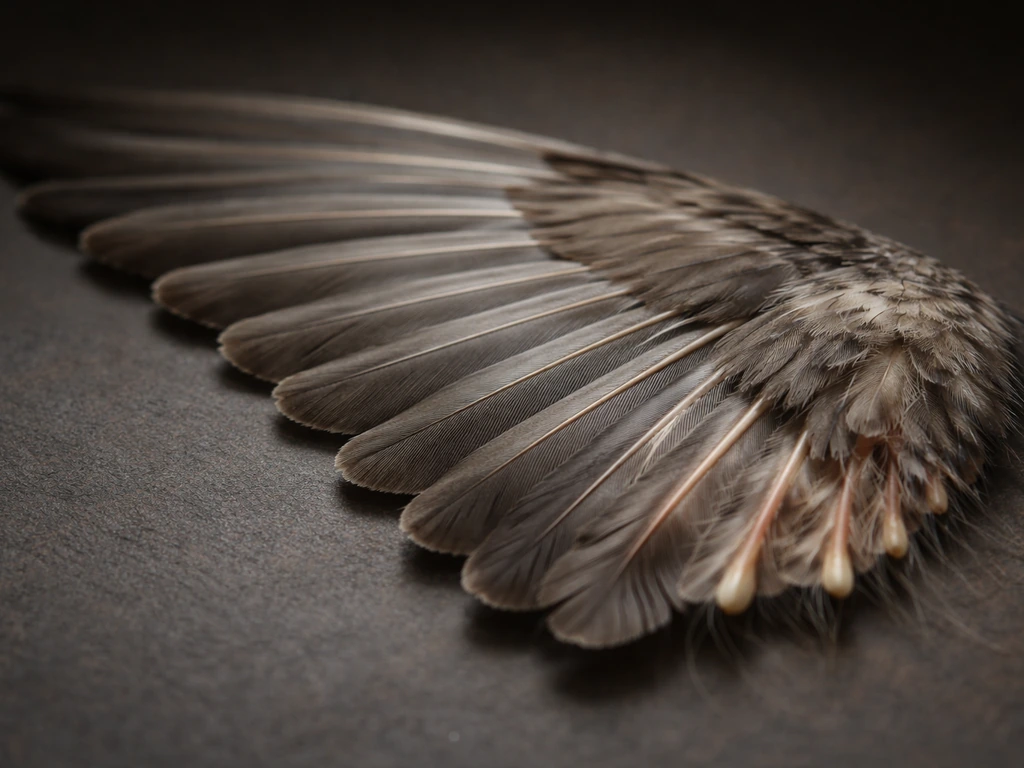
A bird clutch is the full set of eggs a female bird lays in one nesting attempt, all destined to be incubated together. So if a robin lays four eggs in her nest over four consecutive days, those four eggs are one clutch. It sounds simple, and it mostly is, but the term gets tangled up with words like "brood" and "laying" often enough that it's worth walking through the whole picture from first egg to fledgling.
What Is a Bird Clutch? Eggs, Incubation, and Care

Marcus Chen
16 Jun 2026
What a clutch actually is
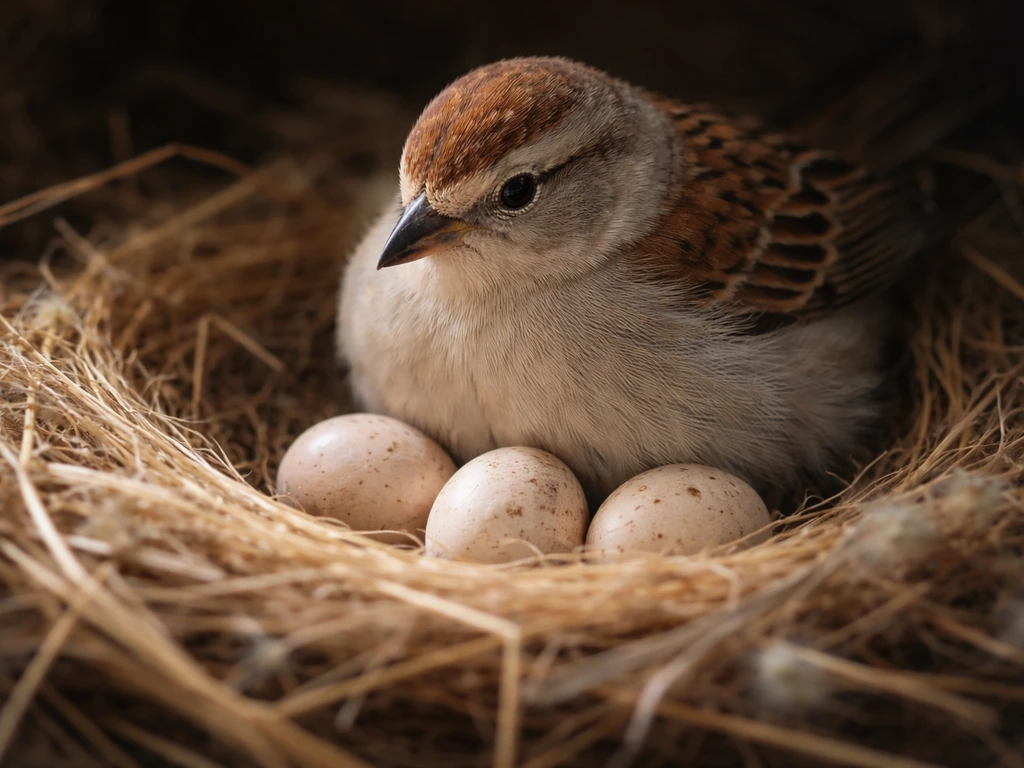
The word clutch, in strict biological terms, refers to the total number of eggs laid by a female bird in a single nest attempt. Some glossaries phrase it as "the number of eggs produced or incubated at one time," and that captures it well. The eggs are laid over a short span, usually one per day in most songbirds, and together they form one reproductive event. A female doesn't necessarily lay them all at once like a batch of cookies coming out of an oven; she deposits them sequentially, but the whole group counts as a single clutch.
It's worth noting what a clutch is not. It's not the nest itself, which is just the structure that holds the eggs. It's not the chicks after they hatch. And it's not the same as a brood, which I'll come back to at the end. Think of the clutch as the egg phase of a single reproductive attempt, and you'll have it right.
Why birds bother with clutches at all
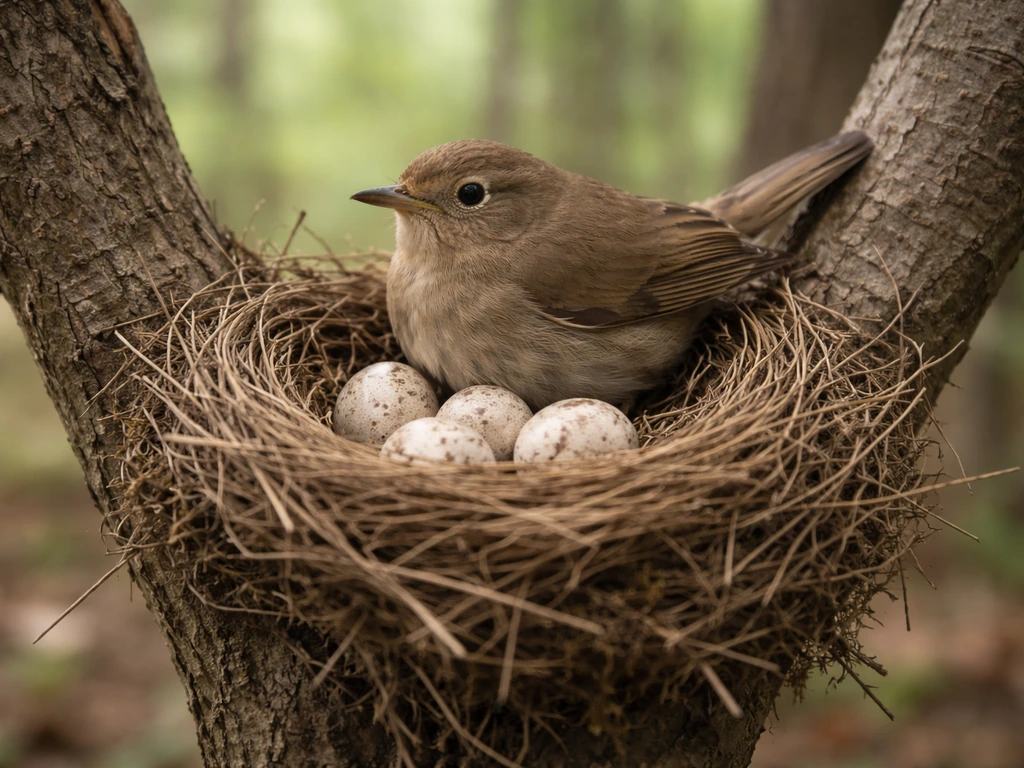
Birds don't lay clutches out of habit. The clutch strategy is a finely tuned reproductive investment rooted in life-history tradeoffs. Every egg a bird produces costs energy: energy to form the yolk and albumen, to shell it, to incubate it, and then to feed the hatchling inside it. More eggs means more potential offspring, but it also means greater strain on the parent, a higher chance some eggs won't develop properly, and less individual attention per chick.
Biologists frame this as optimal reproductive investment, the idea that natural selection doesn't simply push birds to lay as many eggs as possible but instead favors a clutch size that maximizes the number of offspring that actually survive to reproduce. This life-history framework summarizes the core tradeoff behind clutch size: producing more offspring has benefits, but it can also carry costs like reduced future reproduction and increased mortality of parents and young optimal reproductive investment. A female that exhausts herself raising eight chicks poorly may produce fewer grandchildren than one who carefully raised four. That tradeoff is the engine behind clutch-size evolution across bird species.
Ecological factors play a huge role too. Prey availability, habitat seasonality, and climate all shape how many eggs a bird can realistically support. In species where the male supplies food during incubation, his ability to forage affects how large a clutch the female will attempt. Longer day length in summer gives parents more foraging hours, which is part of why many birds time their breeding to peak food availability.
How many eggs are actually in a clutch
Clutch size varies enormously across bird groups, ranging from a single egg in some species to more than a hundred in others. For most backyard birds in North America, though, you're looking at a much narrower range. American robins typically lay 3 to 5 eggs per clutch. Blue jays lay 2 to 7. Eastern bluebirds average 4 to 6. These numbers aren't fixed; they shift depending on the age and health of the female, food availability that season, and where the nest is situated.
Even within a single species, the same female may lay a smaller clutch early in the season and a larger one later when conditions improve, or vice versa. Researchers have also found that very large clutches can actually reduce the oxygen available to embryos inside a nest, which acts as a natural ceiling on how many eggs a bird can productively incubate at once. So it's not just a matter of "lay more, get more."
| Species | Typical Clutch Size | Incubation Period |
|---|---|---|
| American Robin | 3–5 eggs | 12–14 days |
| Blue Jay | 2–7 eggs | 17–18 days |
| Eastern Bluebird | 4–6 eggs | 13–16 days |
| Red-cockaded Woodpecker | 2–5 eggs | 10–12 days |
| Snowy Plover | 3 eggs | 25–31 days |
Where the clutch goes: nests and incubation
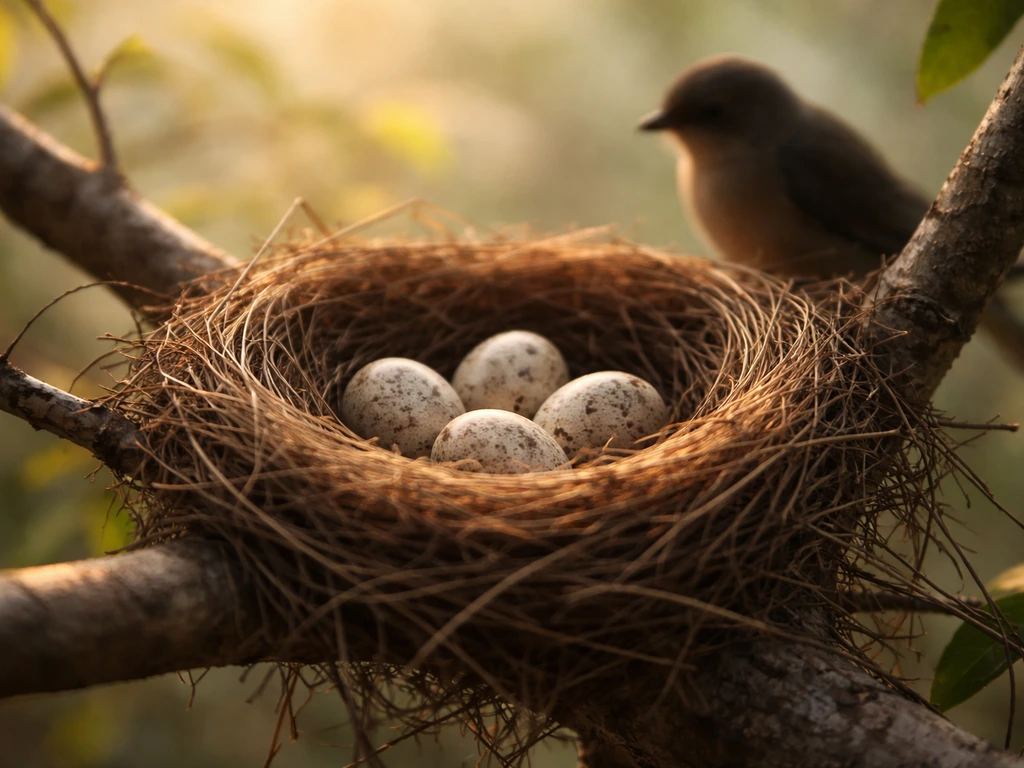
The nest is the container for the clutch, and birds have evolved an impressive range of structures to hold their eggs. Researchers have classified bird nests into seven broad types: scrapes (shallow depressions in the ground), platforms, cups, simple domes, domed nests with entrance tunnels, and two categories of cavity nests (excavated by the bird itself or appropriated from another source). Each type reflects different tradeoffs around predator access, insulation, and the local environment.
Once the clutch is complete, or sometimes before the last egg is laid, incubation begins. Incubation is simply the process of keeping the eggs warm enough for embryos to develop, typically around 37–38°C (99–100°F) in most birds. Bird wings work by generating lift and thrust through coordinated motion, with bones, muscles, feathers, and airflow all playing key roles how do bird wings work.
Parents do this by pressing a bare patch of skin called the brood patch directly against the eggs. Bird wings made of feathers, but they are supported by bones and strong connective tissue, so if you are curious what makes up birds' bodies beyond the nest area, see what bird wings are made of what are bird wings made of.
Bird wings fold in a coordinated way so the body can stay streamlined during flight and rest how do bird wings fold. Bird wings and other body parts can also be sensitive to temperature and pressure changes during breeding brood patch. That bare patch is no accident: the bird loses feathers in that spot during breeding season, and the underlying skin becomes highly vascularized to transfer body heat efficiently.
How consistently a parent sits on the clutch, called incubation constancy, matters a lot. Research comparing species has tracked what percentage of observation time a parent actually attends the nest. Some birds sit almost continuously; others take regular breaks. The key is keeping egg temperature stable enough for development without letting eggs chill or overheat. In some species both parents share incubation duties; in others, only the female incubates while the male brings food.
What's happening inside the egg
From the outside, an incubating clutch looks completely still. Inside, a lot is happening very quickly. Fertilization actually occurs before the egg is even laid, while the egg is moving through the oviduct and before the shell is secreted around it. By the time you see the egg in the nest, the embryo has already begun developing.
Once incubation starts in earnest, the embryo goes through a rapid sequence of stages. In the first day or two, cells divide and the embryo undergoes gastrulation, the process that establishes the basic body plan and the three primary tissue layers that will become skin, gut, and nervous system. Over the following days, the heart begins beating, limb buds appear, and the beak takes shape.
Toward the end of incubation, the embryo repositions itself with its beak pointing toward the air cell at the blunt end of the egg. It pierces the air cell, starts breathing with its lungs for the first time, and then uses a small temporary structure called the egg tooth on the tip of its beak to chip through the shell in a process called pipping. Hatching follows within hours to a day.
The full incubation period varies widely by species, from about 10 days in some woodpeckers to over 25 days in shorebirds like the Snowy Plover. Environmental conditions, specifically how consistently the parent maintains nest temperature, can affect both how long incubation takes and how many eggs in the clutch successfully hatch.
After the clutch hatches: chicks and parental care
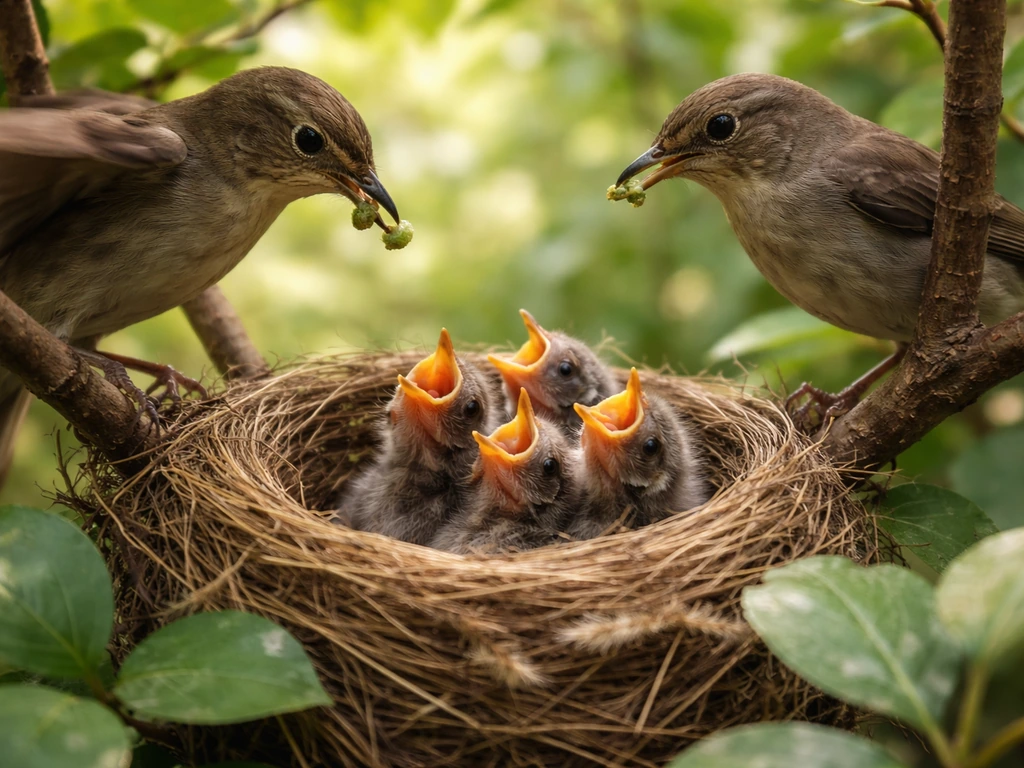
Once the eggs hatch, the clutch becomes a brood. Cornell's NestWatch curriculum glossary defines brood as “the young of a bird that are hatched or cared for at one time” and clutch as “the total number of eggs laid by a female bird in one nest attempt,” and it also defines fledging [Cornell's NestWatch curriculum glossary defines brood and clutch](https://academics. lmu. edu/media/lmuacademics/cures/urbanecolab/module11/CornellNestWatchCurriculum2018.
pdf). This is one of the most important distinctions to lock in: the clutch is the eggs, the brood is the hatchlings. The care strategy that follows hatching depends heavily on whether the chicks are altricial or precocial. Altricial chicks, like those of most songbirds, hatch helpless, blind, and naked, and need weeks of intensive feeding and brooding (being kept warm by a parent) before they can leave the nest.
Precocial chicks, like ducks and shorebirds, hatch covered in down and are mobile within hours.
In altricial species, the nestling period after hatching can be substantial. Red-cockaded woodpecker chicks, for example, fledge 24 to 27 days after hatching. During that time, parents make dozens of feeding trips per day and remove fecal sacs from the nest to keep it sanitary. In some cooperatively breeding species, helpers beyond the breeding pair also assist. The demands of raising a brood are so significant that many species that lay multiple clutches per season give themselves several weeks of recovery between each one.
Some birds do raise more than one clutch per breeding season. Bluebirds are a well-known example, producing multiple broods from successive clutches in a single summer. Each new clutch is a fresh nest attempt, sometimes in the same nest box and sometimes in a different location.
Clutch, brood, and laying: sorting out the confusion
These three terms trip up a lot of people, and honestly, even some older bird books use them loosely. Here's a clean breakdown:
- Clutch: the group of eggs laid by a female in one nesting attempt. It's an egg-phase term.
- Brood: the group of young hatched and cared for at one time from that clutch. It's a chick-phase term.
- Laying: the physical act of depositing eggs. A female "lays" one egg at a time, but those eggs together form a clutch.
- Incubation: the period between laying and hatching when parents keep the eggs warm.
- Brooding (after hatching): confusingly, this word also describes when a parent covers and warms newly hatched chicks, separate from incubating eggs.
The place where people most often get tangled is using "brood" and "clutch" interchangeably. They refer to the same reproductive event but at different stages. The clutch is what you're counting when you peek at a nest and see eggs. The brood is what that clutch becomes after those eggs hatch. A bird can have two broods in a season, which means it completed two separate clutches, successfully hatched both, and raised the chicks from each.
One other beginner surprise: incubation doesn't always start the moment the first egg is laid. In many species, the parent waits until the clutch is complete before sitting consistently, so that all the eggs develop at roughly the same rate and hatch close together. In a few species, incubation begins with the first egg, which means chicks of different ages end up in the same nest, and the youngest may not survive if food is scarce.
Watching clutches in the real world
If you're watching a backyard nest or following a bird box, you can apply all of this directly. Count the eggs once the female appears to be done laying (when she's sitting consistently rather than checking in briefly). That count is the clutch size. Mark the date incubation seems to begin in earnest, then use the species' typical incubation period to estimate a hatch window. Most songbirds incubate for around two weeks, though that varies considerably, so looking up your specific species on a resource like Cornell's NestWatch will give you a much more accurate timeline.
Resist the urge to check the nest too frequently during incubation. If you are considering clipping a bird's wings, timing and frequency matter, so it is important to understand how often to clip bird wings. Disturbances can cause some parents to abandon the clutch, especially early in the season. If you do need to check, brief and calm visits are far less disruptive than lingering. Once you hear peeping or see eggshell fragments in or below the nest, hatching is underway, and the clutch is officially becoming a brood.
FAQ
Is a bird clutch the same thing as the number of eggs in a nest at any given moment?
Not always. A clutch is defined by the specific laying attempt, so if eggs appear after the clutch is complete (for example, a second attempt in the same nest), those later eggs belong to a new clutch even though they may be in the same container.
If a parent abandons the nest, does that still count as a clutch?
Yes. Clutch refers to the egg-laying event itself, regardless of whether the eggs successfully hatch. However, from a practical standpoint you may not know the full clutch size if eggs are removed or destroyed early.
How can I tell whether incubation has started with the first egg or after the clutch is complete?
Watch attendance patterns. If the bird begins sitting tightly immediately after the first egg appears and keeps that pattern, incubation likely started early. If the bird does brief checks at first and then stays consistently once the last egg is laid, incubation is probably delayed to synchronize hatching.
What if eggs hatch on different days within the same nest, does that mean multiple clutches?
Usually no. In species where incubation starts with the first egg, embryos develop at different rates and hatch at slightly different times within a single clutch. Multiple clutches are more likely when you clearly see eggs being added over an extended period across separate laying bouts.
Does the clutch size always match the number of eggs I find in the nest?
Often, but not guaranteed. Eggs can be missing due to predation, trampling, weather exposure, or egg removal by the parents. Also, some birds may abandon part of a laying sequence, so the nest contents may undercount the clutch that was originally produced.
Can two different bird species use the same nest and create confusion about clutches?
Yes. Some species reuse nests or nest in close proximity, and a nest box can accumulate eggs from more than one attempt. The cleanest way to avoid confusion is to note the species identity of the egg-laying adult and whether eggs appear as a single compact laying sequence versus separate additions.
Why do some birds have very large clutches, but not all eggs hatch successfully?
Large clutches can exceed what the parent can incubate evenly, especially if nest temperature control is inconsistent. Temperature gradients, oxygen limits inside the nest, and variable embryo viability can reduce hatch numbers even when the clutch size is high.
Is it ever appropriate to move eggs or relocate a clutch?
Generally no. Interfering with eggs can cause chilling, abandonment, or injury, and it can also violate wildlife protection rules in many areas. If you suspect a nest needs help (for example, severe disturbance or injury), contact a licensed wildlife rehabilitator rather than attempting relocation.
How often should I check a backyard nest when I am trying to estimate clutch size and hatch timing?
Keep visits minimal and brief. If you want to estimate clutch size, count eggs only after the bird appears to stop laying and start sitting consistently. For timing hatch, use a species-typical incubation period, then avoid repeated checks because disruption increases abandonment risk.
Does a clutch always lead to one brood, or can part of the clutch fail while others hatch?
A single clutch can result in multiple outcomes, some chicks may hatch while others do not. The term “brood” refers to the hatchlings that emerge from that clutch, so a reduced brood size can come from egg or embryo mortality during incubation.
Next Article
What Are Bird Wings Made Of? Materials and Structure for Flight
Bird wing materials include bones, tendons, skin and feathers built from quills and vanes for lift and control.