SEO Title: What Does a Yellowhammer Bird Look Like? Yellowhammer / Emberiza citrinella, IOC World Bird Names notes that Accepted scientific name and family: the Yellowhammer is Emberiza citrinella (Order Passeriformes, family Emberizidae); 'Yellowhammer' is the standard English common name in IOC/Clements/HBW checklists Yellowhammer / Emberiza citrinella — IOC World Bird Names. Visual ID Guide Meta Description: Learn what a yellowhammer looks like, plumage, size, bill shape, and how to tell males, females, and juveniles apart in the field. (157 characters)
What Does a Yellowhammer Bird Look Like: Field ID Guide

Marcus Chen
19 Jul 2026
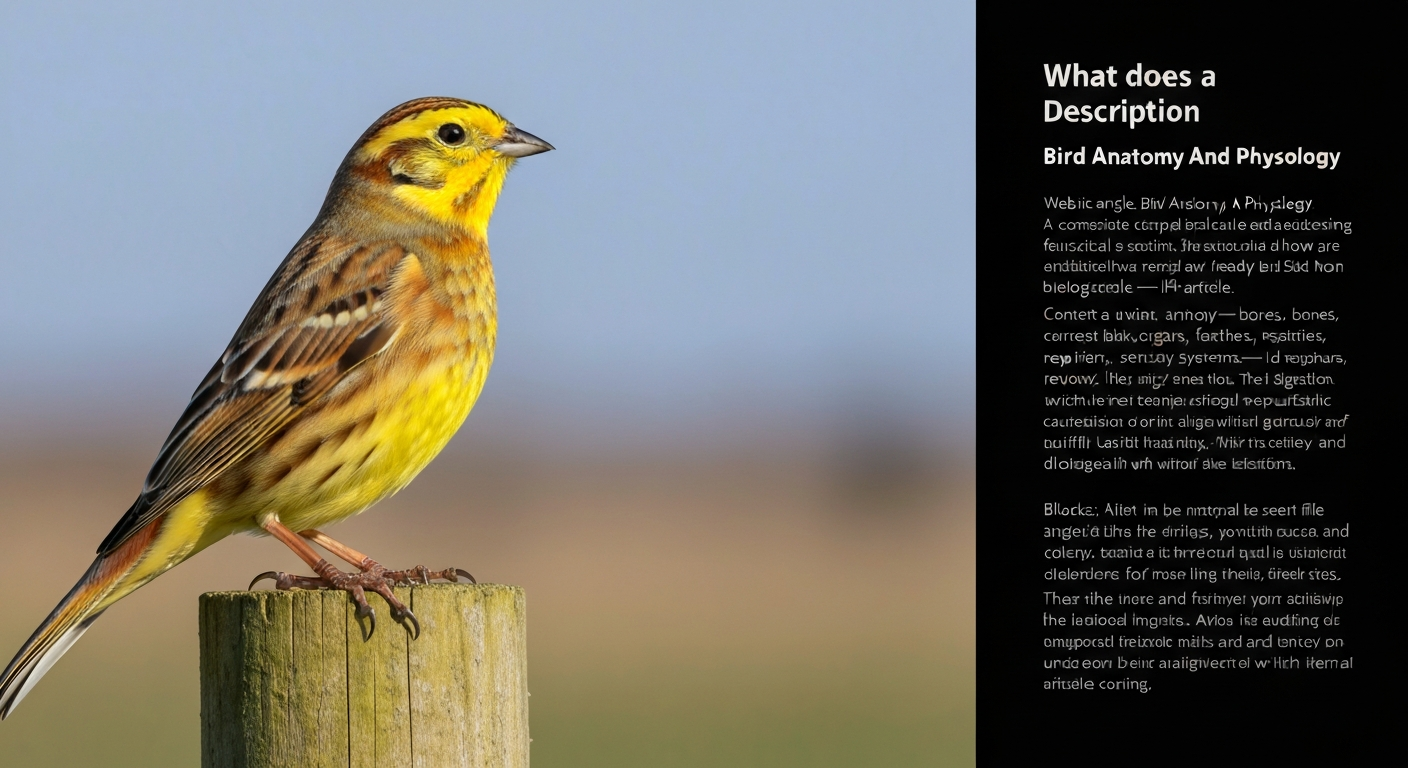
The yellowhammer (Emberiza citrinella) is a medium-sized bunting with a bright lemon-yellow head and underparts, heavily streaked brown upperparts, a distinctly rufous (chestnut-orange) rump, and white outer tail feathers that flash in flight. Males are the showiest, but even females carry a warm yellow wash under all that streaking. If you are in the UK or Europe and spot a sparrow-sized bird sitting on a hedgerow wire with a yellow face glowing like a small lamp, you have almost certainly found one.
ID at a Glance
Quick visual summary before we get into the detail. These are the field marks to lock onto first.
- Bright lemon-yellow head and underparts (adult male, strongest in breeding season)
- Heavily streaked brown and grey upperparts with a chestnut-rufous rump — the rump is the single best field mark
- White outer tail feathers visible as the bird takes off or fans its tail
- Two pale wingbars formed by pale tips on the greater and median coverts
- Short, stout conical bill — classic seed-eater shape
- Females and juveniles: same body plan, duller yellow, more streaking on crown, breast, and flanks
- Typical posture: upright on a wire, fence post, or low bush in open farmland or hedgerow habitat
Quick-Reference Measurements
| Measurement | Range | Typical / Mean |
|---|---|---|
| Total length | 16–16.5 cm | ~16 cm |
| Wingspan | 23–29.5 cm | ~26 cm |
| Body mass | 20–36.5 g | ~25.9 g (BTO mean) |
To put that in perspective, a yellowhammer is roughly the size of a house sparrow but feels slightly longer-bodied and longer-tailed in the field, which is part of what gives it that distinctly upright, alert look when it perches.
Adult Male Plumage in Detail
The adult male in full breeding condition is one of the most immediately recognizable farmland birds in Europe. The head is predominantly bright lemon-yellow, often with fine dark streaking on the crown and some olive or greenish suffusion around the ear coverts and nape, the exact pattern varies individually and by subspecies. The throat is yellow, the breast and belly are yellow with a variable chestnut wash or streaking on the flanks. That streaking can be subtle or bold depending on the individual and season.
The back and scapulars are chestnut-brown with dark streaking, think the warm brown tones of a sparrow but with more contrast. The wings show two pale wingbars where the greater and median coverts have pale tips. The tertials (the innermost flight feathers that sit folded against the body) are dark brown with paler edges, creating a neat panel effect. The rump, the patch just above the tail, is bright rufous or chestnut, and this is the key mark to remember because it immediately separates the yellowhammer from the similar-looking Cirl Bunting.
The tail is longish for a bunting, dark brown with the outer feathers noticeably white. This white flash is easy to catch as the bird flies away from you, which is often the view you get when you startle one from a hedgerow (I speak from experience). Outside the breeding season, the male looks duller, fresh post-moult feathers have dark fringing that obscures the yellow, and the bird appears more washed-out and streaky. For more on identifying molting birds and the visual signs to watch for, see the guide what does a molting bird look like. As those fringes wear away through winter and spring, the yellow becomes progressively more vivid, so a February male looks quite different from a May male.
Adult Female Plumage in Detail
The female yellowhammer is genuinely tricky, I will be honest, I misidentified my first one as some kind of large sparrow. She follows the same basic body plan as the male but with the saturation turned way down. The yellow is present but muted, especially on the face and underparts, and is overlaid with heavy dark streaking on the crown, breast, and flanks. The head pattern is less clean: where the male has a broadly yellow face, the female shows a more broken pattern with brown streaking throughout the crown and a less distinct supercilium (the pale stripe above the eye).
The upperparts, rump, and tail structure mirror the male's closely, the rufous rump and white outer tail feathers are still present and are your most reliable anchors for a field identification. The wingbars are also visible, though slightly less crisp. The overall impression is a brown, heavily streaked bird with a yellowish tinge rather than the male's dominant yellow-with-brown-streaking pattern. Separating females from first-winter birds and juveniles requires care and ideally a prolonged, close view.
Juvenile and First-Year Birds
Fresh-from-the-nest juveniles are the most confusing age class. They are heavily streaked all over, with little or no obvious yellow, and could initially be mistaken for a young reed bunting or even a juvenile dunnock at a glance. The overall plumage is duller brown with dark streaking on the upperparts and a streaked, buff-white underside. The rufous rump is still present and is worth checking even on juveniles.
Most yellowhammers undergo a partial post-juvenile moult not long after fledging, replacing the head, body feathers, and some wing coverts. The result is a first-winter plumage that looks much like an adult female: some yellow returns on the face and underparts, but the bird remains generally duller and more streaked than an adult male. Ageing non-breeding birds in the hand relies on subtle feather-wear patterns, covert tip colour, and primary moult traces, this is genuine specialist territory and even experienced ringers check the published ageing criteria carefully. This kind of feather detail connects directly to the biology of how and when birds replace their plumage, which is worth exploring in detail if you are new to the concept of molting.
Precise Size and Body Proportions
Published measurements place the yellowhammer at 16–16.5 cm in total length, with a wingspan ranging from 23 to 29.5 cm. Body mass typically runs 20–36.5 g, with the BTO recording a mean of approximately 25.9 g for British birds. These figures show that even within a single species there is meaningful variation, a bird near the top of the weight range is nearly double the mass of one at the bottom, reflecting seasonal fat loading and individual condition.
| Body feature | Description | Field relevance |
|---|---|---|
| Overall length | 16–16.5 cm | Sparrow-sized but longer-tailed, looks elongated in the field |
| Wingspan | 23–29.5 cm | Moderate, provides direct flight with slight undulation |
| Body mass | 20–36.5 g (mean ~25.9 g) | Lightweight seed-eater; condition varies seasonally |
| Tail length | Relatively long for a bunting | Adds to the slim, elongated silhouette; white outer feathers flash in flight |
| Bill length | Short, stout | Conical seed-cracker; depth-to-length ratio typical of Emberizidae |
There are also recognized subspecies differences worth knowing if you travel. The British and Irish form (E. c. caliginosa) is slightly smaller and darker than the nominate continental form (E. c. citrinella) and carries a slightly greenish tint to its yellow. The eastern subspecies E. c. erythrogenys is paler, less streaked, and shows whiter flanks and a brighter crown. These differences are subtle but real, and they matter if you are looking at a bird far outside its typical range.
Why Is the Yellowhammer Yellow? Pigments and Feather Structure
This is the part I find genuinely fascinating from a biology angle. The yellowhammer's yellow colour is produced primarily by carotenoid pigments deposited in the feather barbules during feather growth. Carotenoids are organic pigments that birds cannot manufacture themselves, they absorb them from their food, primarily from plant material and invertebrates that have themselves fed on plants. The specific pigments involved are xanthophylls and related compounds that absorb shorter wavelengths (violet and blue) and reflect longer wavelengths (yellow and green), which is why the feathers appear yellow to our eyes.
But pigment alone does not tell the whole story. Research has demonstrated that the microstructure of feather barbs and barbules also modulates the final colour and brightness, the microscopic arrangement of cells scatters and reflects light in ways that can enhance or mute the pigment signal. Both the concentration of carotenoids and the feather's physical structure contribute to what you actually see. This also means that yellow plumage brightness in buntings is partly condition-dependent: a bird that has had better food access and is in better physiological shape can deposit more carotenoid pigment, producing a more intensely yellow male. So the brightness of a male's head is not purely decorative, it is a genuine signal of his health.
Seasonal colour change in the yellowhammer does not involve a second moult into breeding plumage. Instead, the adult undergoes one complete post-breeding moult each year (taking roughly eight or more weeks), growing fresh feathers with darker fringing. Those fringes physically wear away through abrasion over winter and spring, progressively revealing the brighter yellow beneath. It is a neat mechanism, brighter colour through feather wear, not a new coat of paint.
Sexual Dimorphism and Why It Exists
The yellowhammer shows clear sexual dimorphism, males are significantly more yellow and less streaked than females. This pattern is extremely common in seed-eating passerines and is generally explained by sexual selection: females are attracted to more brightly coloured, higher-condition males, so males with more vivid yellow plumage have a reproductive advantage. Females, by contrast, benefit from being cryptic, a duller, heavily streaked female sitting on a nest in a hedgerow bottom is much harder to spot than a bright yellow one would be.
Notable Anatomical Features and How They Work
The Bill: a Precision Seed-Cracker
The yellowhammer's bill is short, stout, and conical, the classic shape of a seed-eating passerine. This is not incidental. A conical bill with a relatively deep base gives the bird mechanical leverage to crack and husk small seeds efficiently. The bill's depth-to-length ratio concentrates biting force at the culmen (the ridge of the upper bill), allowing the bird to work through seed husks that would be inaccessible to a finer-billed insect-eater. For more on bill mechanics and feeding adaptations, see bill law larva insect bird pupa stage. Yellowhammers forage primarily on the ground or in low vegetation, picking up grass seeds, grain, and weed seeds, and the bill is shaped precisely for that job.
Wings and Flight
The wings are moderate in length and relatively pointed for a passerine, supporting a direct flight style with slight undulation. Yellowhammers are not long-distance migrants in most of their range (British birds are largely resident), so their wings are not built for high-efficiency long-haul travel the way a warbler's are. In flight, watch for the undulating trajectory and the white outer tail feathers, both are useful field cues when you cannot see the bird's colours clearly.
Tail Structure and Posture
The tail is relatively long for the bird's body size, which contributes to the slim, slightly elongated silhouette that distinguishes it from stockier buntings at a distance. The outer tail feathers are white, a structural feature, not a trick of the light, and are composed of feathers with reduced melanin pigmentation in the outer vane. In posture, yellowhammers tend to sit upright on prominent perches (fence posts, wire, or the tops of gorse bushes) during the breeding season, which is when singing males are most conspicuous.
Habitat and Range: Where to Find One
Knowing what a bird looks like is only half the job, knowing where to look seals the identification. The yellowhammer is a bird of open farmland, hedgerows, scrubby hillsides, and woodland edges across Europe and western Asia. In the British Isles it is most associated with mixed farmland with intact hedgerows, especially where there are field margins with seed-bearing weeds and stubble fields in winter. It has been introduced to New Zealand and is well established there. The breeding range extends from the British Isles east across Europe to central Russia and south to northern Iberia and the Balkans.
One important name-confusion note: in parts of North America, particularly the American South, 'yellowhammer' is a regional folk name for the Yellow-shafted form of the Northern Flicker (Colaptes auratus). That is a woodpecker with yellow shafts on the flight feathers, a completely different bird in a completely different family. If you are reading a North American source and see 'yellowhammer,' check which bird they mean.
How to Tell It Apart from Similar Species
| Species | Rump colour | Yellow on head/underparts | Key separation |
|---|---|---|---|
| Yellowhammer (Emberiza citrinella) | Rufous/chestnut | Strong (male) or moderate (female) | Rufous rump + white outer tail feathers |
| Cirl Bunting (Emberiza cirlus) | Grey-brown or olive | Present but different head pattern (male has black throat) | Grey-brown rump is the clearest single mark |
| Pine Bunting (Emberiza leucocephalos) | Rufous (similar) | Very little or none — whitish/rufous head | Lack of yellow on head; different face pattern |
| Reed Bunting (Emberiza schoeniclus) | Brownish-grey | None | Bold white supercilium, very different head pattern |
| Ortolan Bunting (Emberiza hortulana) | Brownish | Olive-grey head, yellow throat | Pale eye-ring, pink bill, different face pattern |
The single most useful separation mark in any light or season is the rump colour. Get a view of the rump, if it is clearly rufous/chestnut and the bird is the right size and shape, it is almost certainly a yellowhammer. Cirl Bunting, the species most often confused with yellowhammer in the UK, has a conspicuously grey-brown rump that stands out clearly even in poor light. Female and juvenile separations between these two species deserve extra care in late summer, which is genuinely tricky field identification.
Song as a Confirming Field Mark
If you can hear the bird, identification becomes much easier. The male's song is traditionally rendered as 'a little bit of bread and no cheese', a series of repeated thin notes accelerating into a drawn-out terminal phrase. It is delivered persistently from a prominent perch through spring and early summer, and once you have heard it a few times it is very recognizable. The contact call is a sharp 'twick' or 'tswit.' Voice is particularly useful when separating yellowhammer from Cirl Bunting (whose song is a dry rattle without the terminal wheeze) or Pine Bunting, where plumage overlap in eastern Europe can create real confusion.
Suggested Photo Views for Field Guides and Articles
If you are illustrating a yellowhammer identification article or recording your own sightings, these are the angles and conditions that best capture the diagnostic features:
- Adult male perched on a fence post or wire in spring: shows the full yellow head, streaked upperparts, and rufous rump flush in natural light. Alt text suggestion: 'Adult male yellowhammer perched on a post showing bright yellow head and rufous rump.'
- Bird in flight, rear view: the white outer tail feathers and rufous rump are most visible. Alt text: 'Yellowhammer in flight showing white outer tail feathers and chestnut rump.'
- Adult female close-up: emphasizes the streaking pattern on the crown and breast, and the muted yellow tones. Alt text: 'Adult female yellowhammer showing heavy streaking and pale yellow underparts.'
- Juvenile or first-winter bird: shows the heavily streaked, duller plumage useful for age-class comparison. Alt text: 'Juvenile yellowhammer with streaked brown plumage and minimal yellow coloration.'
- Bill close-up: the short, stout conical bill in profile. Alt text: 'Close-up of yellowhammer bill showing conical seed-eating morphology.'
Putting It All Together in the Field
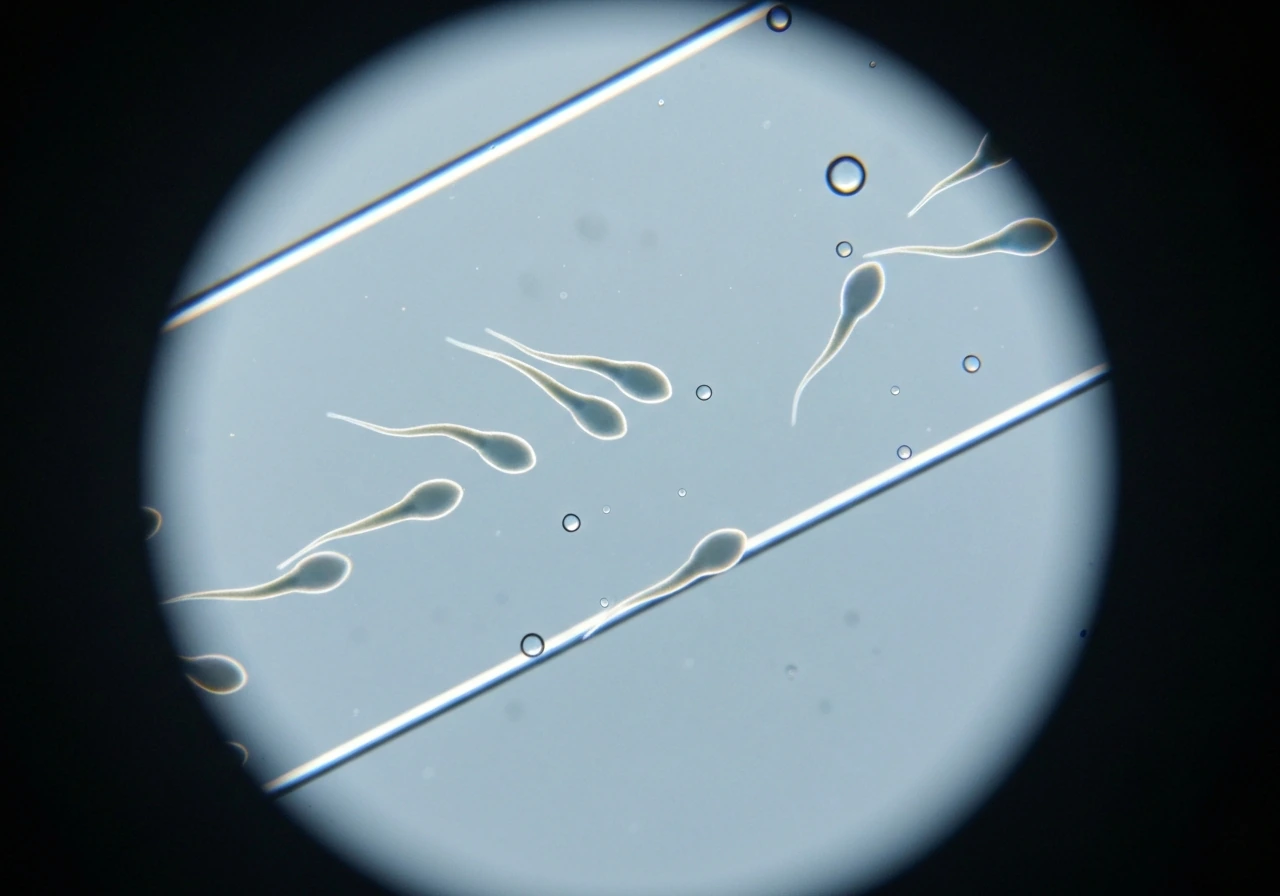
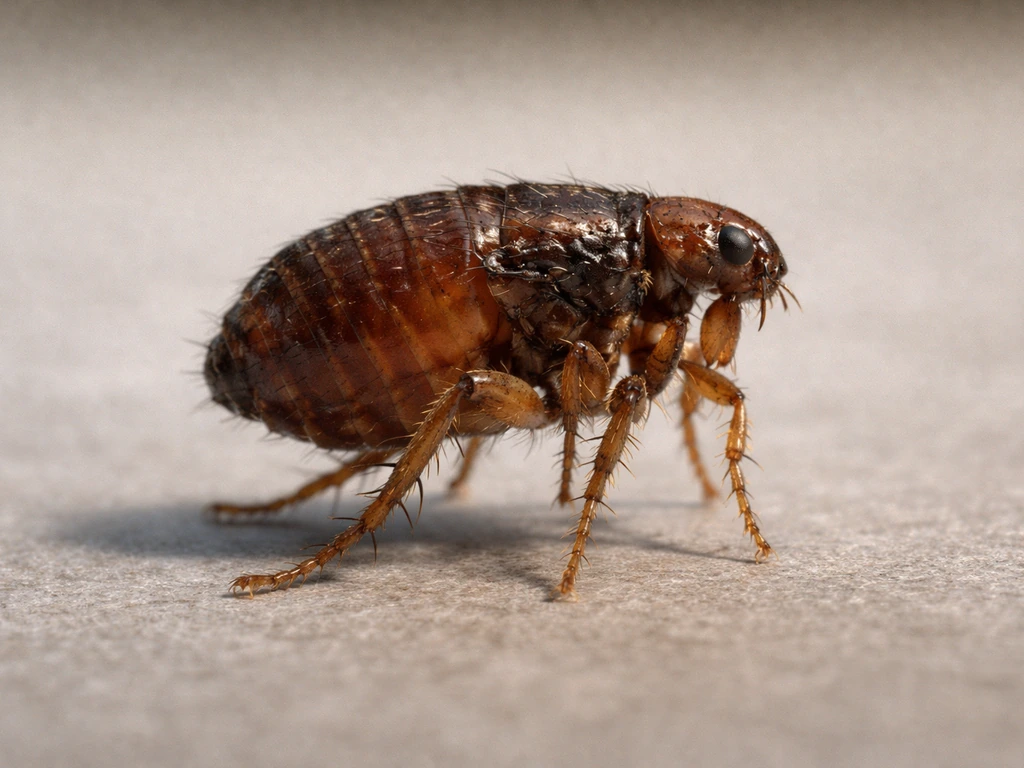
When you are actually standing at a hedgerow in January trying to decide what you are looking at, the practical checklist is short: rufous rump, white outer tail feathers, yellow wash on the face and underparts (even in a female or first-winter bird), and conical bill. If you inspect nests or nestboxes for parasites, see what do bird fleas look like for quick identification tips. If you are in farmland habitat in Europe and all four of those align, you have your bird. For help identifying similar common species, see our guide on what does a thrush look like (bird) for clear photographs and field marks. Song in the breeding season removes almost all remaining doubt. The layered biology behind that bright yellow head, dietary carotenoids, feather microstructure, annual wear cycles, and condition-dependent signaling, makes the yellowhammer one of the more instructive examples of how avian coloration actually works, which is why it keeps showing up in the research literature on feather pigments and sexual selection. For related information on avian reproductive biology, see our guide on what does bird sperm look like.
FAQ
What is the accepted scientific name and family of the Yellowhammer?
The Yellowhammer is Emberiza citrinella, a passerine in the family Emberizidae (order Passeriformes). 'Yellowhammer' is the standard English name in IOC/Clements/HBW checklists.
ID at a glance — what does a Yellowhammer look like in the field?
A medium‑small bunting with a bright yellow head and throat (adult male in breeding plumage), streaked brown/grey upperparts, rufous/chestnut rump and flanks, white outer tail feathers visible in flight, and two pale wing‑bars. Females and juveniles are browner and more streaked with reduced yellow.
How do adult males, females and juveniles differ in plumage?
Adult breeding males: vivid yellow head, throat and underparts, streaked brown upperparts, chestnut rump and noticeable wing‑bars. Non‑breeding/worn males: yellows can be dulled by feather wear and darker tips. Females: overall browner, more streaked, weaker head/yellow facial pattern and paler throat. Juveniles: dullest — heavy streaking, little or no bright yellow; after a partial post‑juvenile moult they resemble non‑breeding females.
What are the precise size and body measurements of Yellowhammer?
Typical total length c.16–16.5 cm; wingspan roughly 23–29.5 cm; body mass reported about 20–36.5 g with mean values around 25–26 g (ranges from published sources such as EoL/BTO).
What notable anatomical features help identify and explain the Yellowhammer’s behaviour?
Short, stout conical bill adapted for cracking seeds; relatively long tail with white outer feathers visible in flight; compact wing with two pale wing‑bars formed by tips/edges of greater and median coverts. These structures reflect seed‑eating and low/ground foraging behaviour.
What pigments and feather structures produce the Yellowhammer’s yellow coloration?
Yellow coloration is primarily produced by deposited dietary carotenoid pigments (xanthophylls) in feather barbs. Feather microstructure (barb/barbule arrangement and pigment distribution) modifies brightness and hue. Both pigment deposition and microstructure control the observable yellow (see internal pages on /anatomy/feathers, /anatomy/pigments). Scientific studies show carotenoids and microstructure jointly determine yellow plumage intensity.