A thrush is a medium-sized, round-headed songbird with a spotted or streaked breast, a short straight bill, and an upright posture that makes it look like it's constantly paying attention. Most thrushes you'll spot in North America or Europe are about 6 to 9 inches long, olive-brown or reddish-brown on top, and pale with dark spots or smudges underneath.
What Does a Thrush Look Like Bird? Identify by Sight

Marcus Chen
28 Apr 2026
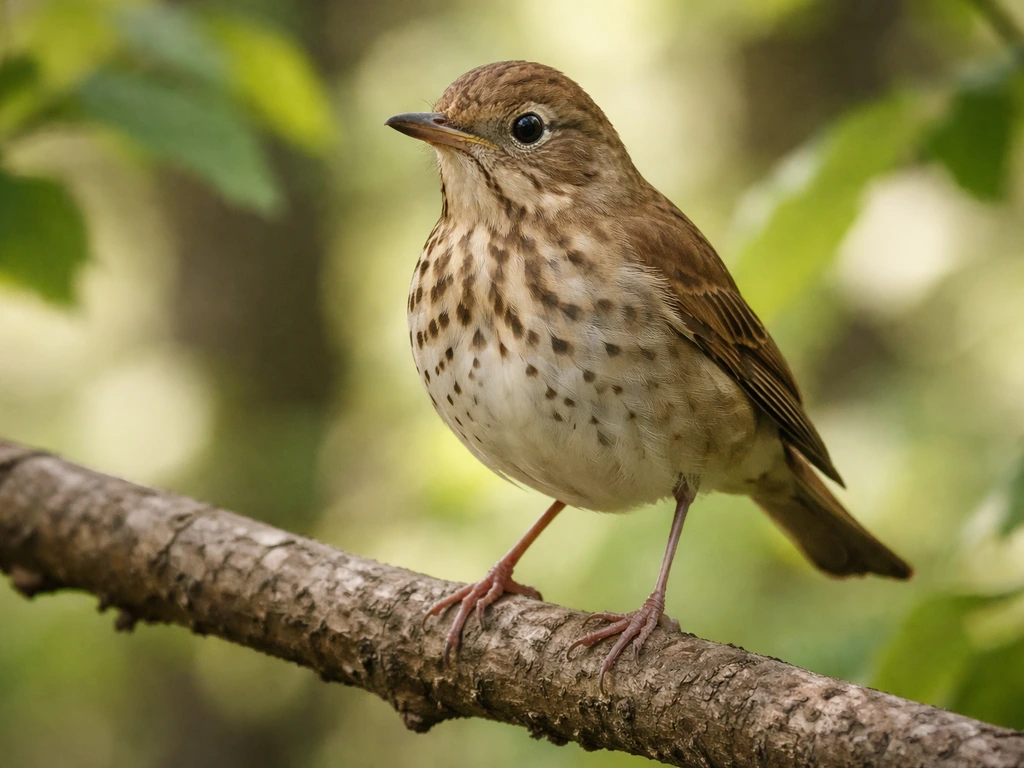
The Audubon Field Guide describes the Veery as having a warm tawny-brown upper body with very little or no spotting on the chest, plus a pale, plain-looking face Veery has a warm tawny-brown upper body with very little or no spotting on the chest, and a pale, plain face. That spotted chest is the single most reliable first clue you're looking at a thrush.
Bird fleas, by contrast, are tiny, wingless insects that can be hard to notice without close inspection first clue.
What kind of bird a thrush actually is
"Thrush" isn't one species. It's a family-level group called Turdidae, which includes hundreds of species spread across the globe. The genus Turdus alone contains around 103 to 105 species (including the American Robin, which most people don't realize is technically a thrush). Then there are the North American "spotted thrushes" in the genus Catharus, which includes about 13 species like the Hermit Thrush, Swainson's Thrush, and Gray-cheeked Thrush. There's also the Wood Thrush in its own genus (Hylocichla), plus many other genera worldwide. When most people in the U.S. or Canada say "I saw a thrush," they usually mean one of these spotted, forest-floor birds.
So if you're trying to ID a bird you saw today (late April 2026), it helps to know which region you're in. Hermit Thrushes, for example, are mostly gone from the eastern U.S. by the end of April. Swainson's Thrushes are just beginning to move through. That seasonal context can immediately narrow your options before you even look at the feathers.
Body shape and size: what to check first
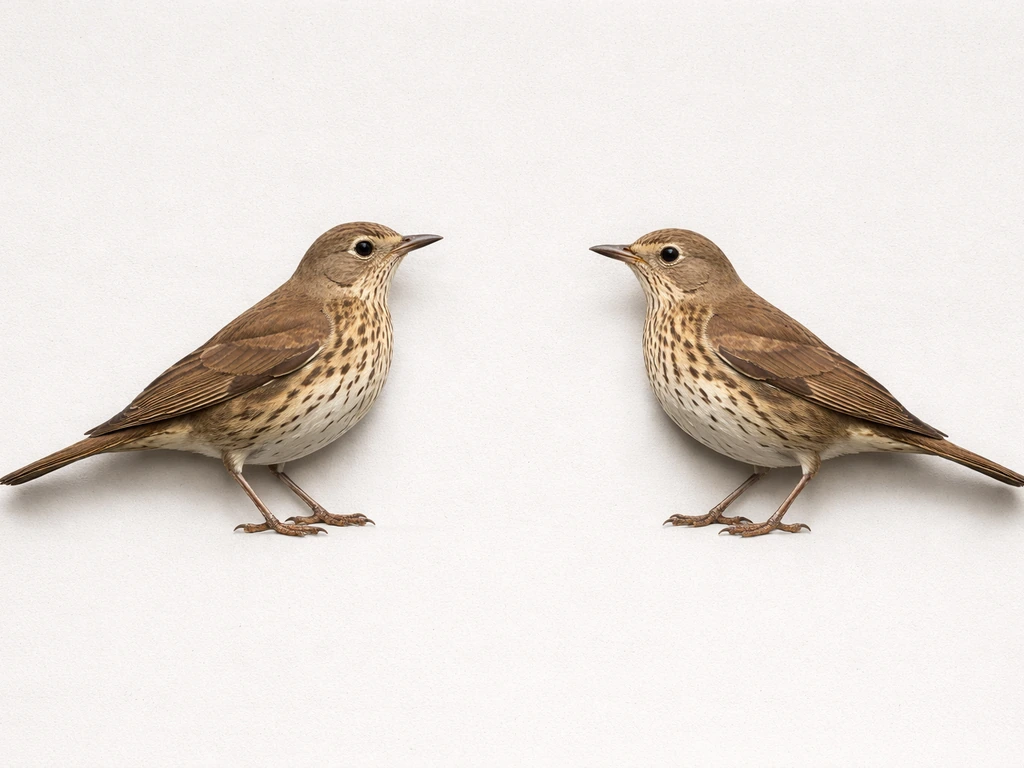
Thrushes have a distinctive silhouette once you know what to look for. Think rounded head, compact body, fairly long wings, and a medium-length tail. The bill is short and straight, designed for picking up invertebrates and berries rather than cracking seeds. North American Catharus thrushes sit in the 6.3 to 6.7 inch (16 to 17 cm) range. Wood Thrushes are a bit chunkier, closer to 7.5 to 8 inches. European species like the Song Thrush or Mistle Thrush push closer to 8 to 9 inches.
Posture is honestly one of the most useful things to clock in the field. Thrushes frequently pop upright to scan for food or danger, giving them an alert, nearly vertical stance. That's different from the more horizontal, hunched posture you'd see in warblers or sparrows. If you see a mid-sized, spotted-breast bird standing bolt upright on the forest floor or a low branch looking around like it owns the place, that posture alone should put "thrush" near the top of your list.
Plumage patterns: the markings that matter most
The spotted or streaked breast is the defining visual feature of most thrushes people encounter. But not all spots are equal, and knowing the difference actually helps you narrow down the species.
- Wood Thrush: Bold, round, dark spots on a bright white breast. The spots extend well down the flanks. Upperparts are warm cinnamon-brown. This is the most dramatically spotted of the North American thrushes.
- Hermit Thrush: Smudged, softer-looking spots on a pale breast. The key standout feature is the reddish-orange tail, which contrasts noticeably with the browner back. Rich brown upper body overall.
- Swainson's Thrush: Spotted chest with a pale underside. Look for the bold buffy eye-ring that extends in front of the eye, creating what birders call "spectacles." Olive-brown to rust-brown upperparts and dull pink legs.
- Gray-cheeked Thrush: Similar spotted chest, but the facial area is notably plain. There's no sharp eye-ring (just a faint or indistinct one), and the face looks grayish rather than warm buff. This is one of the trickier ones to ID.
- Song Thrush (Europe/UK): Warm brown upperparts, creamy-white underparts with neat arrow-shaped dark spots arranged in rows. A tidier, more organized spot pattern than many North American cousins.
- Mistle Thrush (Europe/UK): Larger and paler overall, white underparts with rounder spots, and a white outer tail. Has a bolder, slightly fierce look compared to the Song Thrush.
One thing worth knowing: a bird's plumage can look different depending on its age and what stage of molt it's in. Younger birds sometimes retain juvenile feathers with pale shaft streaks or worn tips that don't match the clean adult pattern you'd see in a field guide. So if a bird mostly looks like a thrush but something seems slightly off, age and molt timing could explain it rather than it being a different species entirely.
Male vs. female: how much does sex change the look?
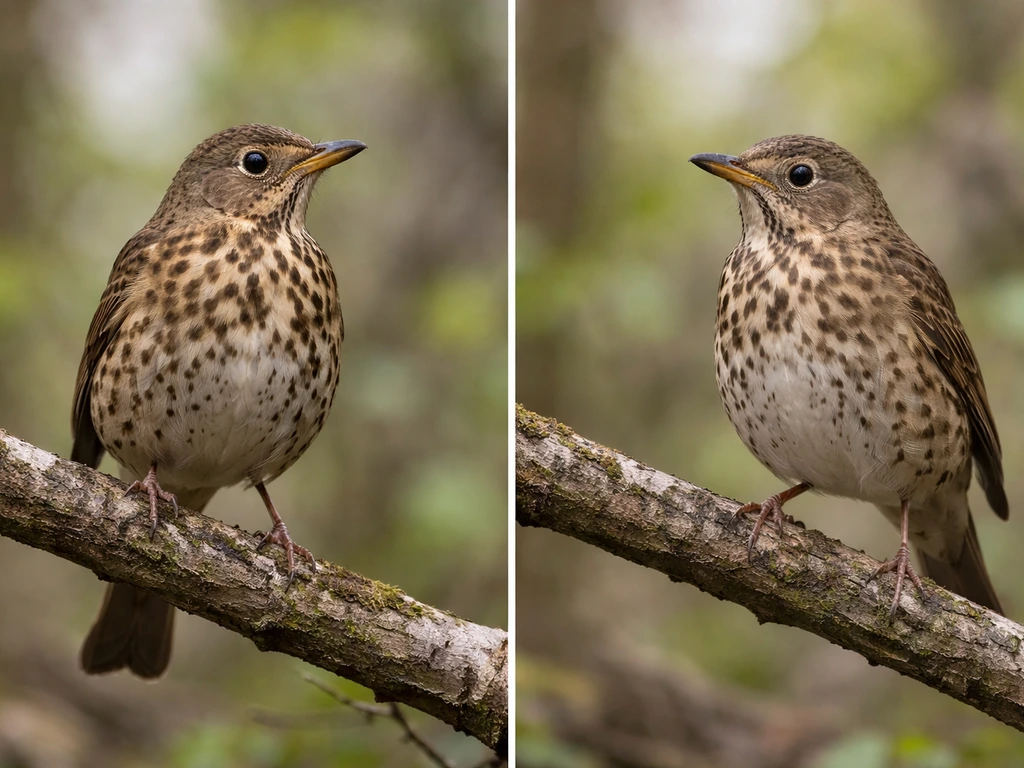
For most thrushes, honestly, the sexes look very similar in the field. Unlike robins (where the male has a darker head) or many warblers (where males are dramatically brighter), the spotted Catharus thrushes and many Turdus species show minimal visible difference between males and females. Both sexes carry the same spotted breast and similar upperpart coloration. You typically can't tell them apart just by looking.
Where differences do exist, they tend to be subtle: slightly richer color saturation in males, or marginally different spotting density. In some Turdus species, males can have a more orange-yellow bill, like the male Common Blackbird (another Turdidae member). But for the spotted thrushes most North American birders encounter, assume the sexes look alike unless you have a specific species reason to look for a difference. A female Hermit Thrush, Swainson's Thrush, or Wood Thrush looks essentially the same as the male in the field.
Is it actually a thrush? Separating thrushes from lookalikes
A spotted breast sounds specific until you realize a few other bird groups also have spots. The main ones that cause confusion are the Ovenbird (a warbler), Veery (technically also a thrush, but easily confused with others), and in some cases juvenile robins or certain pipits. Here's how to sort them out.
| Bird | Size | Breast pattern | Bill | Posture/behavior | Key difference from thrush |
|---|---|---|---|---|---|
| Catharus thrush (e.g., Hermit, Swainson's) | 6–7 in | Spotted, pale background | Short, straight | Upright, hops on forest floor | This IS the thrush — use eye-ring and tail color to separate species |
| Wood Thrush | 7.5–8 in | Bold dark spots on white | Short, straight | Upright, pops up frequently | This IS a thrush — bolder spots and cinnamon back are distinguishing |
| Ovenbird | 6 in | Streaked (not spotted) | Thin, warbler-like | Walks with bobbing gait | Walks rather than hops; streaked vs. spotted; orange crown stripe |
| Veery | 6.5–7 in | Faint spots, washed-out | Short, straight | Forest floor, upright | Technically a thrush (Catharus fuscescens); very faint spotting, warm tawny-brown overall |
| American Robin (adult) | 9–11 in | No spots (brick-red breast) | Medium straight | Runs and stops on lawns | Much larger; red-orange breast, no spots on adults — juvenile has spots but larger overall |
| European Starling (juvenile) | 8–9 in | Spotted/streaked brown | Long, pointed | Walks; flocks | Bill is much longer and pointed; walks rather than hops; stocky and short-tailed |
| Hermit Thrush vs. Gray-cheeked Thrush | Both ~6.5 in | Both spotted | Both short | Both upright forest floor | Hermit: reddish tail, buff eye-ring. Gray-cheeked: no sharp eye-ring, gray face |
The Ovenbird trips up a lot of beginners (myself included, embarrassingly). It walks with a distinctive bobbing stride rather than hopping, it has a striped crown with an orange center, and its breast markings are streaks running lengthwise rather than round spots. Once you see those differences side by side, it's obvious, but in a quick forest glimpse it can look "spotty and brown" just like a thrush.
For separating similar thrushes from each other, don't rely on any single mark. Birding experts consistently emphasize using a package of features: eye-ring shape and color, tail color relative to back, breast spot sharpness, overall facial tone, and flank color. The Hermit Thrush's reddish tail is often described as fairly reliable, but in bad light or a quick sighting it can be hard to see. If tail color is uncertain, check whether the eye-ring is buff and prominent (Swainson's) or faint and gray-toned (Gray-cheeked) or moderate with a warm face (Hermit).
Your field checklist for thrush ID
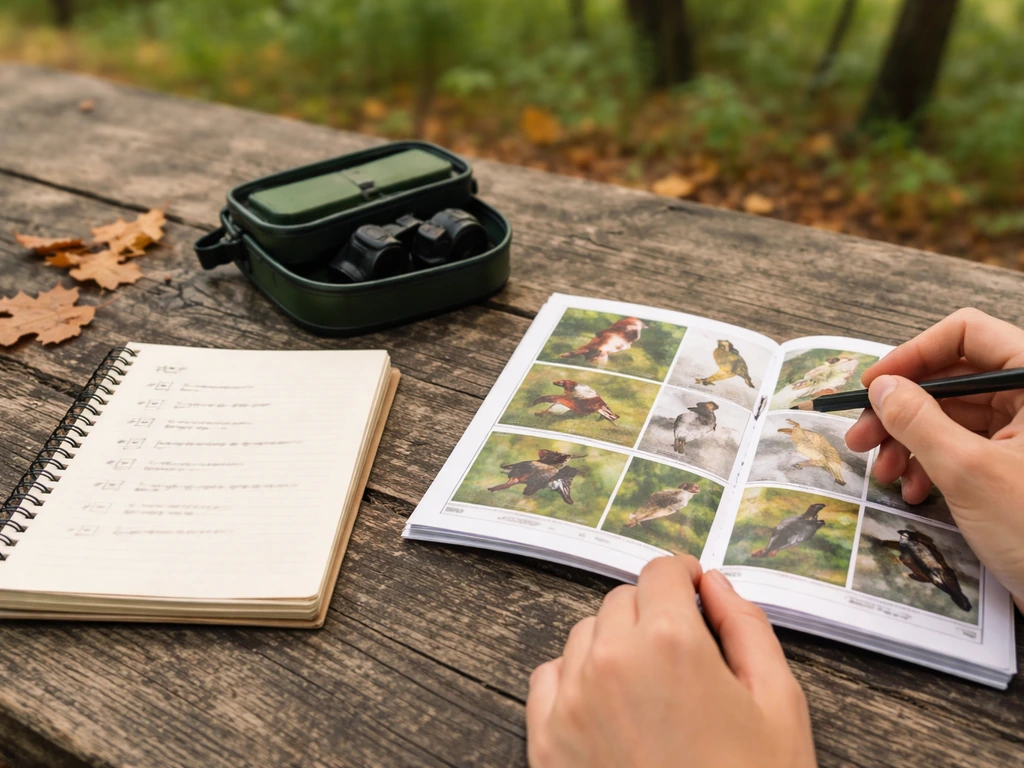
When you're in the field or reviewing a photo, go through these in order. It takes about 30 seconds once you get the habit down.
- Note the size: Is it sparrow-sized (too small for most thrushes), robin-sized (probably a larger thrush or robin), or in between (6–8 inches, which fits most spotted thrushes)?
- Check posture: Is it standing upright on the ground or a low perch, hopping rather than walking? Upright hops = strong thrush signal.
- Look at the breast: Are there spots or streaks? Spots on a pale background = classic thrush. Bold round spots = Wood Thrush. Smudged softer spots = Hermit. Faint spots with tawny wash = Veery.
- Check the face: Is there a visible eye-ring? If yes, is it buff/golden (Swainson's, strong) or faint (Gray-cheeked, weak)? Or no real ring but a warm face tone (Hermit)?
- Look at the tail vs. the back: Does the tail look richer/redder than the back? That contrast = Hermit Thrush signature.
- Note the bill: Short and straight (thrush) or long and pointed (starling) or thin like a toothpick (warbler)? This rules out most lookalikes fast.
- Record the habitat and behavior: Forest floor? Leaf litter? Singing from a high perch? Thrushes typically forage on the ground in wooded areas and sing from elevated positions. Note the location type (dense forest, woodland edge, garden).
- Take a photo if you can: Even a blurry photo that shows breast pattern and face is more useful than memory alone. Photograph from the side if possible to capture tail color and eye-ring in the same frame.
- Note the date and region: Migration timing matters a lot for thrush ID. Late April in the eastern U.S. means Hermit Thrushes are mostly gone and Swainson's are beginning to move through. Knowing this immediately narrows your options.
What to do after you've seen it
If you got a decent look but still aren't sure of the species, the most useful next step is comparing your notes or photo against species-specific ID guides for your region. Cornell Lab's All About Birds and Audubon's field guide are both free online and let you filter by region, which immediately cuts down the list to thrushes actually present in your area at this time of year. eBird is also excellent for checking what species other birders have reported nearby in the past two weeks, which gives you a real-time sense of what's actually around rather than what's theoretically possible.
It's also worth knowing that a bird's appearance can shift subtly through the season as feathers wear or as younger birds replace their juvenile plumage with adult feathers. If a bird looks mostly right but has some scraggly or inconsistent feathering, that's often a normal age-related molt pattern rather than a sign you've found a mystery species. The biology of feather molt is genuinely complex, and even experienced birders get briefly stumped by a bird mid-molt. Bird molting refers to the natural process where birds shed old feathers and grow new ones, often on a seasonal schedule feather molt.
If you're in North America right now and you saw a mid-sized, upright, spotted-breast bird hopping on the forest floor, the most likely candidates are Swainson's Thrush (if you're in late April migration window), Wood Thrush (increasingly present in eastern forests through spring), or Hermit Thrush (possible but timing-dependent).
If instead you mean a yellowhammer, its look is quite different from these thrush candidates, so start by comparing the bird’s color and markings to typical yellowhammer features what does a yellowhammer bird look like. If you’re wondering what bird sperm looks like, that’s not something you can identify in the field, and it requires microscopic observation rather than visual bird ID.
Larva and pupa stages are often part of insect life cycles too, including many birds' prey bird sperm. Larva and pupa stages are common in insect life cycles, and those stages matter for how insects develop. Get the eye-ring and tail color, and you'll almost certainly have your answer.
FAQ
Can a thrush still be identified when it is in poor lighting or blurry?
Yes, and it changes how they look. In dim forests, olive or reddish-brown upperparts can appear grayish, and the pale, spotted underparts may seem washed out. If the breast spots look faint, rely on posture (upright, alert), bill shape (short and straight), and the eye-ring tone rather than the spotting intensity alone.
Why does a bird look partly like a thrush, but the pattern doesn’t match perfectly?
In many cases, yes. A bird can look like a thrush, especially if it has a spotted or streaked chest, but juvenile plumage often looks “off” due to worn tips and uneven feather growth. Check whether the wing coverts and tail look like they are mid-transition (scrappy feathers), which points to age or molt rather than a totally different species.
Can I tell whether a thrush is male or female from a photo?
You can, but it is harder without good views. Thrush sexes are usually visually similar in the field, so focus on subtle cues only when you have clear close-ups. If you do not have sharp detail of bill color, eye-ring, and spotting density, assume it could be either sex rather than forcing a gender call.
Does “thrush” always mean the same bird family, or can the name be confusing?
They are not the same thing. Thrushes are a bird family, while “thrush” is sometimes used loosely in everyday language for unrelated animals. In practice, bird ID should be based on the bird’s body plan (rounded head, short straight bill, upright posture, spotted breast) and context (perching or foraging on forest floor), not on name alone.
If the breast spots are hard to see, what field clues can still confirm it’s a thrush?
Listen for behavior cues, not just appearance. Many look similar at a glance, but their foraging style and location can help: Catharus thrushes often feed on or near the forest floor, while some look-alikes (like Ovenbirds) may show a distinctive walking bob and a more patterned face. If you are unsure, note whether it is hopping or walking and whether it regularly moves through leaf litter.
What’s the biggest mistake people make when identifying a thrush?
Avoid over-relying on the breast markings. Some thrush-like birds have spots, others have streaks, and lighting can blur the difference. A better decision aid is the “set of features” approach: eye-ring presence and color, tail color relative to the back, breast spot sharpness, facial tone, and flank color.
How does time of year change which thrush species I should expect to see?
Yes, and the season can explain it. Early or late in migration, you might see different species than the “usual” ones, and feather wear can make underparts appear more ragged. Use date and region first to narrow which thrush species are actually plausible, then confirm with the eye-ring and tail cues.
What photo angles matter most if I’m trying to identify a thrush from an image?
A partial photo is still useful if it captures the right angles. Focus on getting either the head (eye-ring and facial tone) or the tail (color compared to the back). A shot that only shows the body without the tail and face often leaves you stuck between multiple species.
Can molt make a thrush look like a different species?
Yes, but expect uncertainty. If the bird is actively molting, feather gaps and mismatched new versus old plumage can create patterns that don’t align with “textbook” examples. When molt is suspected, treat the ID as provisional and confirm with multiple traits that are usually stable (bill shape, posture, and basic eye-ring tone).
How accurate is it to estimate a thrush’s size by eye?
Usually, yes. Many thrushes are in the 6 to 9 inch range, but the exact size is tough to judge in the field. Instead of trying to guess inches, compare to nearby landmarks like a hand span, low branch thickness, or the size relative to a known bird at the same perch (like a sparrow or robin).
Next Articles
What Is Bird Molting? Signs, Causes, and What to Do
Learn what bird molting is, the signs to spot, why it happens, and how to care for a molting bird safely.
How Much Weight Can an Osprey Bird Carry: Numbers & Limits
How much weight can an osprey carry: typical prey 0.5–2 kg (≈30–100% body mass); anatomy, flight limits and evidence.
How Much Weight Can a Bird Carry Payload Limits Explained
Realistic payload ranges for different birds plus a method to estimate how much weight they can carry safely.