The true statement about bird respiration is almost always the one that says air flows in one direction through the lungs during both inhalation and exhalation, and that gas exchange happens in the lungs (specifically in tiny tubes called parabronchi), not in the air sacs. That combination, unidirectional airflow plus air sacs acting as bellows rather than gas exchangers, is the core fact that separates birds from every mammal and is the basis for nearly every correct answer on a worksheet or quiz about avian breathing.
Which of the Statements About Bird Respiration Is True?

Marcus Chen
29 Jun 2026
How bird respiration actually works
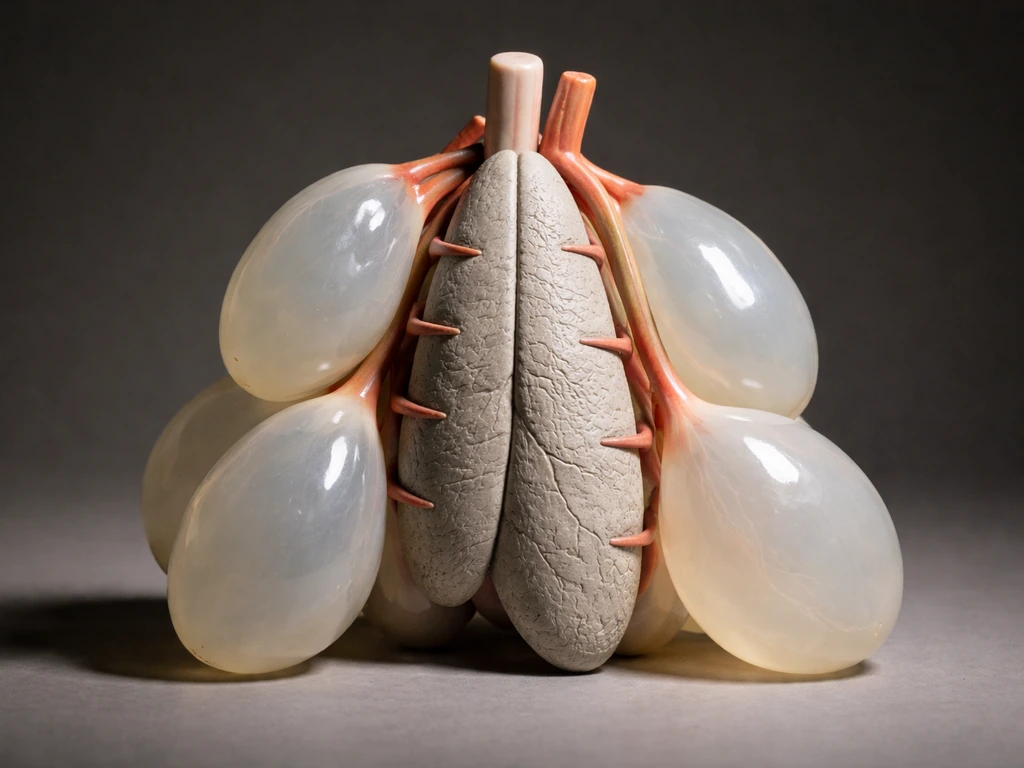
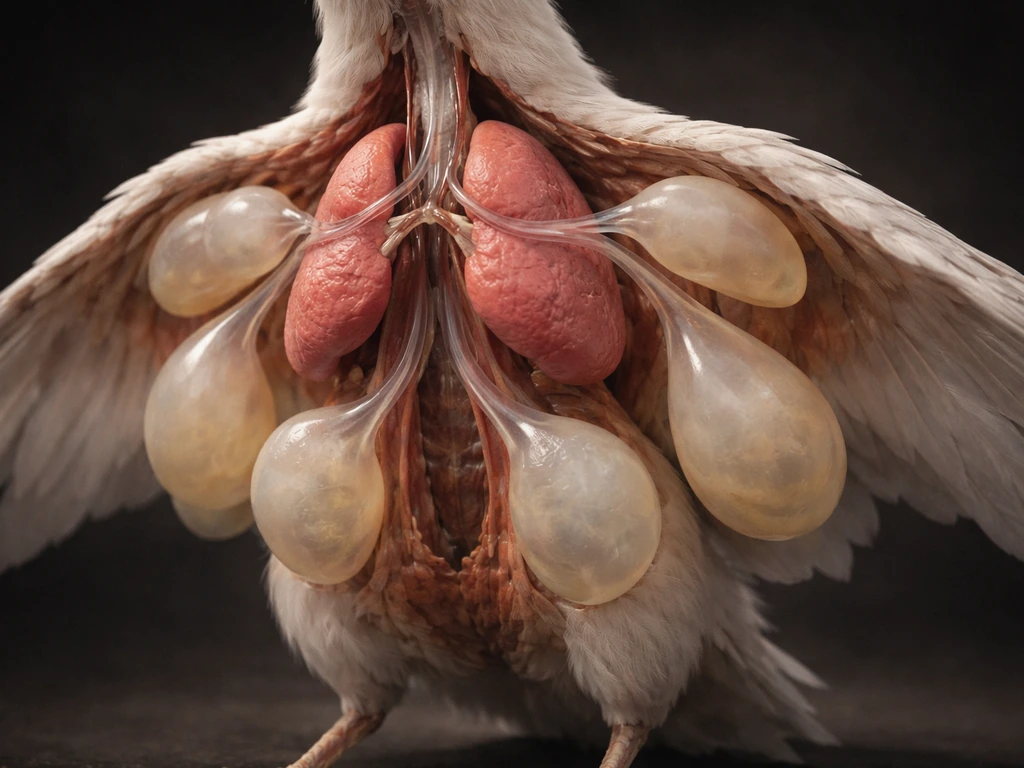
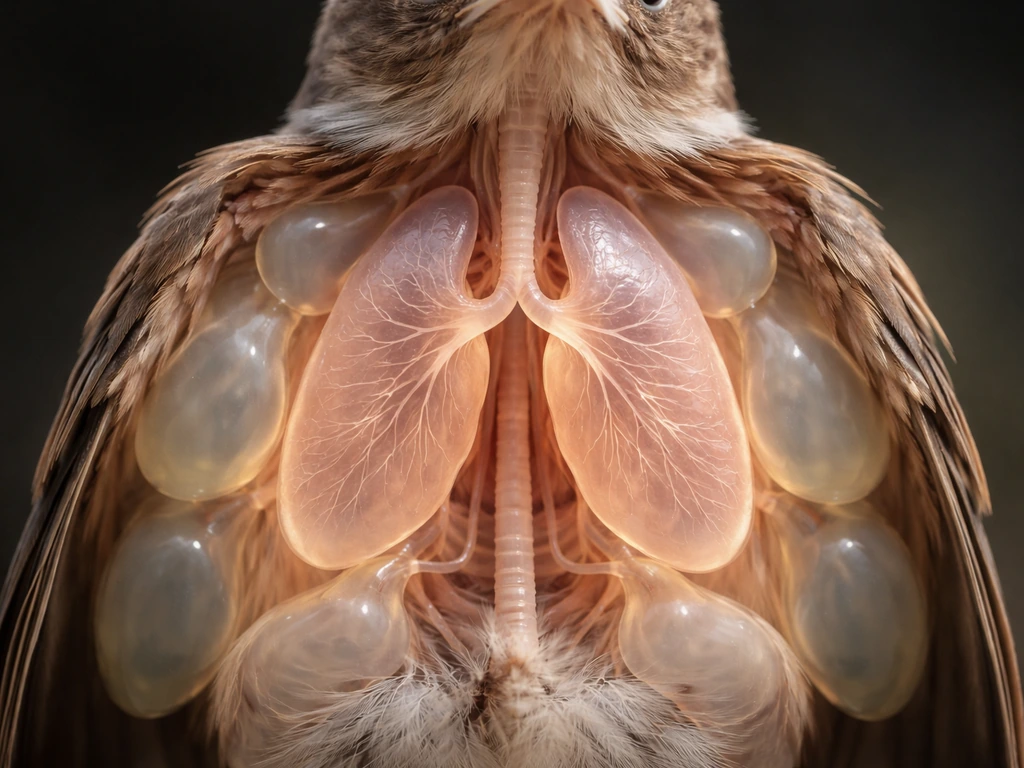
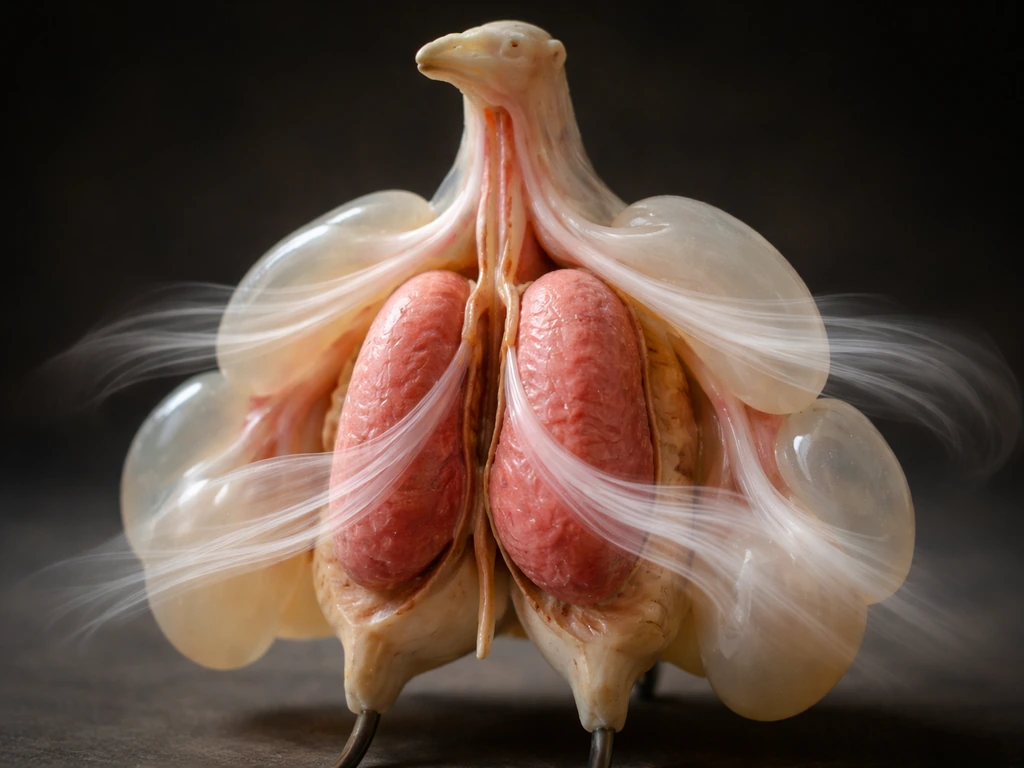
Birds breathe using a two-part system: a rigid lung that handles all the gas exchange, and a set of air sacs that act purely as pumps. Birds’ respiratory system is made up of a rigid lung and a series of air sacs that move air through it. Most birds have nine air sacs total, split into a cranial (front) group and a caudal (back) group.
The air sacs take up roughly 90% of the total respiratory volume, while the lung itself is only about 10% by volume. That might sound backwards, but the air sacs are essentially hollow balloons with almost no blood supply, so they do next to nothing in terms of absorbing oxygen. Their whole job is to push fresh air through the rigid lung in a controlled, continuous stream.
The lung, meanwhile, is physically rigid and bound to the ribs. It cannot expand and contract the way a human lung does. Instead, it stays open and lets air flow through it constantly, driven by the bellows action of those air sacs. This separation of jobs (ventilation handled by air sacs, gas exchange handled by the lung) is the design principle that makes the whole system unusually efficient.
The path air takes: through the lungs and air sacs
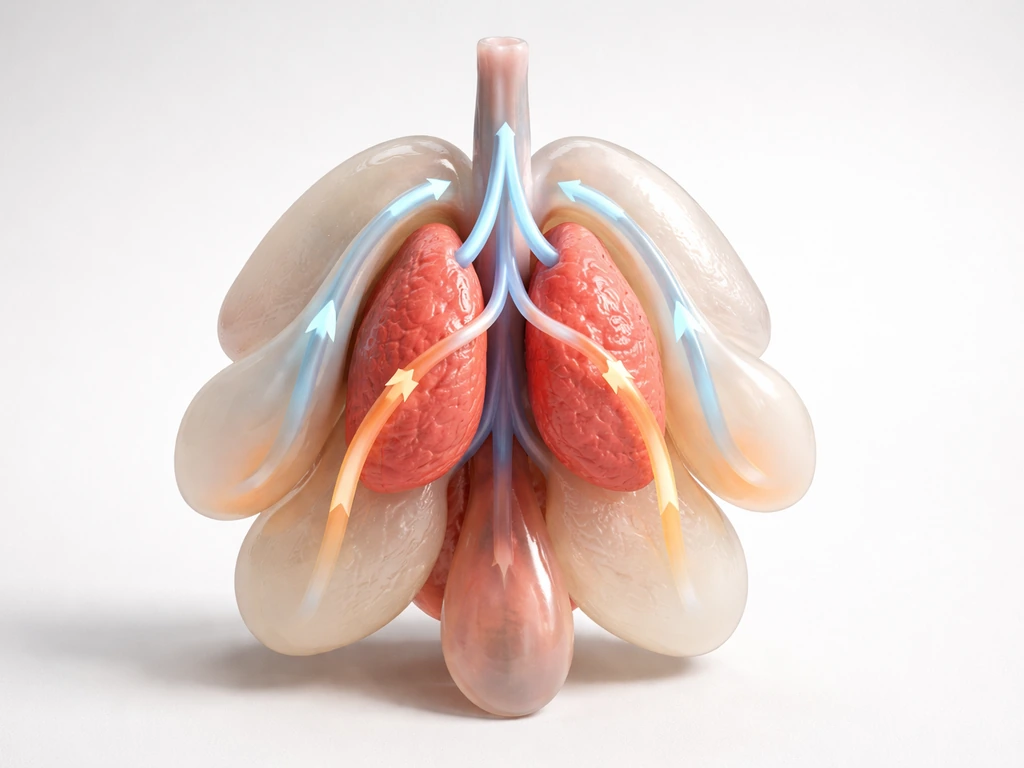
This is where the two-cycle system becomes important, and it is also where most quiz questions are aimed. If you are wondering how a bird can produce visible smoke-like exhalations, the same ventilation and airflow design helps explain how gases move through the system produce smoke. When a bird breathes in, fresh air does not go straight to the gas-exchange surface. Most of it flows past the lung and into the caudal air sacs at the back.
Meanwhile, some air that was already held in those caudal sacs from the previous breath flows through the lung. When the bird breathes out, the caudal sacs compress and push that air through the lung again, while the used air exits from the front (cranial) sacs. A single bolus of air effectively spends two full breath cycles inside the system before leaving.
The key takeaway for any quiz is this: fresh air reaches the gas-exchange surface during both inhalation and exhalation, not just during one phase. That is directly opposite to how human lungs work, where gas exchange happens mainly during inhalation when the alveoli are newly inflated with fresh air. In birds, the air sacs stagger the delivery so that the parabronchi (the tiny rigid gas-exchange tubes in the lung) are being aerated throughout the entire breathing cycle, continuously and always in the same direction, from the back of the lung toward the front.
What the two-cycle path looks like, step by step
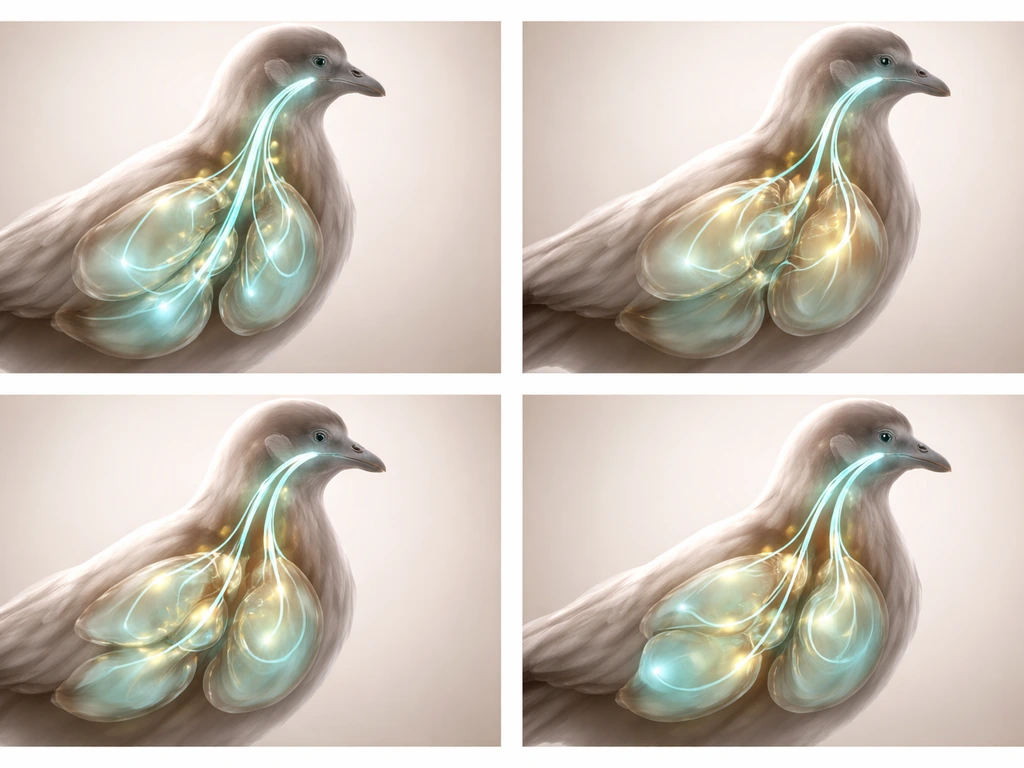
- First inhalation: fresh air enters the trachea and flows primarily into the caudal air sacs; air already in caudal sacs from the previous cycle flows through the parabronchial lung toward the cranial sacs.
- First exhalation: caudal sacs compress and push that fresh air through the parabronchial lung; air from the cranial sacs exits the body via the trachea.
- Second inhalation: a new batch of fresh air enters the caudal sacs; the air that just traversed the lung moves into the cranial sacs.
- Second exhalation: cranial sacs compress and the air leaves the body. The original bolus has now completed two full cycles and exits.
Throughout all four of those steps, airflow through the parabronchi runs in the same direction (caudal to cranial, meaning back to front) during both inspiration and expiration. That consistency is the defining feature of avian respiration and the fact that examiners love to test.
Gas exchange: what cross-current means and why it matters
Inside the parabronchi, gas exchange works on a cross-current principle. Air flows lengthwise through the parabronchial tube, and blood flows inward (centripetally) through surrounding capillaries at roughly right angles to the air stream. Because the blood approaches the air at multiple points along the tube rather than running parallel to it, the system can extract oxygen more efficiently than a simple parallel-flow arrangement would allow.
The practical result is that the oxygen level in a bird's blood leaving the lung can actually be higher than the oxygen level in the exhaled air. That sounds counterintuitive, but the geometry of the cross-current system makes it possible. Mammalian alveoli use a more equilibrium-based exchange: the blood and air reach roughly the same partial pressure of oxygen before the blood moves on. The avian cross-current arrangement avoids that equilibrium ceiling, which is a real advantage for birds flying at high altitude where oxygen is scarce.
Common statements about bird respiration: true or false, and why
Quiz and worksheet questions about bird respiration almost always test a small cluster of concepts. Here is how to evaluate each one.
| Statement | True or False | Why |
|---|---|---|
| Air flows in one direction through the bird lung during both inhalation and exhalation. | True | Unidirectional, caudal-to-cranial airflow through the parabronchi is maintained continuously across both phases of the breathing cycle. |
| Air sacs in birds are the primary site of gas exchange. | False | Air sacs are avascular (almost no blood supply) and act as bellows. Gas exchange occurs in the parabronchi of the rigid lung. |
| Birds breathe like mammals, using a tidal in-and-out airflow through the lungs. | False | Mammalian ventilation is tidal (bidirectional). Bird lung ventilation is unidirectional, driven by air sacs, not by the lung expanding and contracting. |
| Fresh air reaches the gas-exchange surface of a bird's lung during both inhalation and exhalation. | True | The two-cycle air-sac system staggers delivery so the parabronchi receive fresh air throughout the entire breathing cycle. |
| Bird lungs use cross-current gas exchange, which is more efficient than mammalian alveolar exchange. | True | Blood flows at right angles to air in the parabronchi, creating a cross-current arrangement that avoids equilibrium ceilings and extracts more oxygen. |
| Air sacs in birds act as bellows to ventilate the rigid lung. | True | The air sacs expand and contract to drive airflow through the non-expandable parabronchial lung, functioning purely as mechanical ventilators. |
| A bolus of air passes through a bird's respiratory system in a single breath cycle. | False | Each parcel of air spends approximately two full breath cycles in the system before being exhaled. |
| The bird lung is rigid and does not expand during breathing. | True | The avian lung is bound to the ribs and remains rigid. Volume changes happen in the air sacs, not in the lung itself. |
Birds vs mammals: the ventilation difference in plain terms
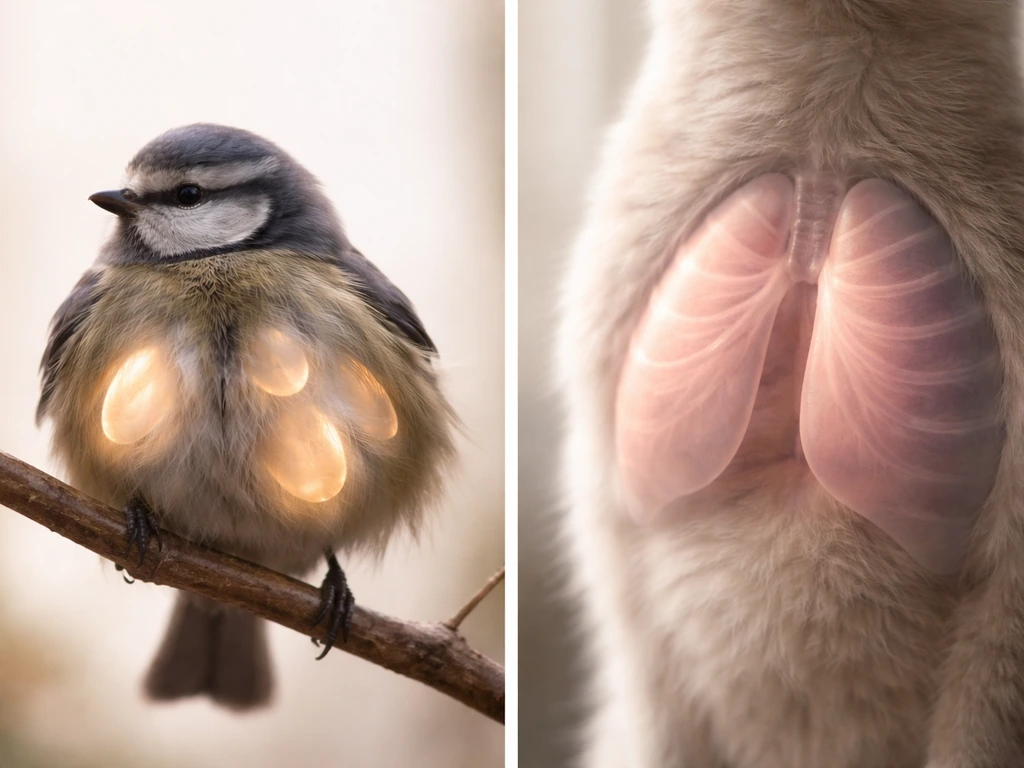
In mammals (including humans), the lung does two jobs at once: it expands to pull in fresh air, and it is also the place where gas exchange happens. The same structure ventilates and exchanges. That means gas exchange is coupled tightly to breathing rhythm, and airflow through the alveoli reverses direction with every breath.
In birds, those two jobs are given to completely different organs. The air sacs handle ventilation, and the rigid parabronchial lung handles gas exchange. Because they are separate, the lung can be kept in a constant state of fresh-air exposure without waiting for a new inhalation to refresh it. This decoupling is why birds can sustain efficient oxygen uptake during both phases of the breathing cycle, and why their system handles high-altitude, high-exertion flight far better than a mammal lung of comparable size would.
| Feature | Birds | Mammals |
|---|---|---|
| Airflow direction through lungs | Unidirectional (one-way, caudal to cranial) | Tidal (in and out, bidirectional) |
| Gas exchange site | Parabronchi in rigid lung | Alveoli in expandable lung |
| Ventilation mechanism | Air sacs act as bellows | Lung itself expands and contracts |
| Ventilation and gas exchange | Separated into different structures | Coupled in the same structure |
| Gas exchange type | Cross-current | Near-equilibrium (concurrent-like) |
| Breath cycles per air bolus | Approximately two | One |
| Lung volume changes during breathing | None (lung is rigid) | Large (lung inflates and deflates) |
How to evaluate any set of statements about bird respiration
If you are looking at a worksheet, quiz, or multiple-choice question right now and need to pick the correct statement, run through this checklist mentally. Any statement that aligns with the points below is almost certainly correct, and any statement that contradicts them is almost certainly false.
Quick checklist
- Does the statement say airflow through the lung is unidirectional? That is true.
- Does the statement say air sacs do gas exchange or absorb oxygen? That is false. Air sacs are avascular bellows.
- Does the statement say birds breathe like mammals with tidal (back-and-forth) lung airflow? That is false.
- Does the statement say gas exchange happens in the parabronchi (or simply 'in the lung')? That is true.
- Does the statement say fresh air reaches the gas-exchange surface during both breathing phases? That is true.
- Does the statement say the lung is rigid or non-expandable? That is true.
- Does the statement say birds use cross-current gas exchange? That is true.
- Does the statement say a single breath delivers air to the exchange surface and it exits immediately? That is false. Two cycles are needed.
A reusable reasoning template
When you read a statement, ask yourself three questions in order. First: where does it say gas exchange happens? If the answer is the air sacs, it is wrong. Second: what does it say about airflow direction? If it says bidirectional or tidal, it is wrong for birds. Third: when does it say gas exchange occurs during the breathing cycle? If it limits exchange to only inhalation or only exhalation, it is wrong. A correct statement will place gas exchange in the lung (parabronchi), describe airflow as unidirectional, and allow exchange during both phases of the cycle.
Worked example: choosing between two competing claims
Suppose you are given these two options: (A) 'In birds, air sacs perform gas exchange and allow unidirectional airflow,' and (B) 'In birds, unidirectional airflow through the rigid lung is maintained by the bellows action of the air sacs. ' Run the checklist. Statement A says air sacs perform gas exchange, which is false (air sacs are avascular). It also bundles a true fact (unidirectional airflow) with a false one, making the whole statement false.
Statement B correctly identifies the lung as the site of [unidirectional flow and correctly names air sacs as the bellows driving it](https://www. tandfonline. com/doi/abs/10. 2989/OSTRICH.
2008. 79. 2. 1.
575). Statement B is true. This pattern, one correct concept paired with one incorrect one in the wrong statement, is extremely common in exam design, so always check every claim within a single statement, not just the first phrase.
A few things worth keeping in mind
Some sources use slightly different terminology, referring to the gas-exchange tubes as 'tertiary bronchi' rather than parabronchi. They mean the same structure. Also, while the two-cycle model is the standard teaching framework and is accurate as a general rule, real airflow in a bird's respiratory system is a bit messier than a clean two-step sequence, especially in the cranial air sacs, where some mixing occurs. The core principles (unidirectional flow, air sacs as bellows, cross-current exchange) are well established, but scientists still debate some of the finer details of exactly how air distributes between sac groups in different species and breathing conditions.
If you want to go deeper on any of these mechanisms, the topics of how bird lungs work and why bird lungs are more efficient than mammalian ones cover the structural side and the evolutionary advantages in more detail. If you are specifically wondering how do bird sleep, it helps to understand how their respiratory system can keep oxygen flowing even when they are at rest how bird lungs work. Understanding what organs make up the full respiratory system of a bird also helps visualize how all of this fits together physically.
FAQ
If a question says “birds breathe like mammals” and pairs that with unidirectional airflow, is it still considered true?
Usually no. Unidirectional airflow alone is not enough, the statement must also correctly place gas exchange in the rigid lung (parabronchi) and not in the air sacs. If it claims birds share the mammal pattern where lung tissue both ventilates and exchanges, that part makes the statement false even if airflow direction is right.
Can I trust a choice that only mentions “gas exchange in the lungs” but doesn’t mention airflow direction?
Often it is incomplete and may be test-wrong. Many quiz items require the combination, gas exchange in parabronchi plus unidirectional airflow during both phases. If airflow direction is omitted, the answer might be defensible scientifically, but on exams it is commonly treated as incorrect because they are checking the defining feature.
What if the worksheet uses “tertiary bronchi” instead of “parabronchi,” does that change the answer?
No. In most classroom contexts those terms refer to the same gas-exchange tubes in the bird lung. The safe move is to accept the terminology switch as long as the statement still says gas exchange occurs in those lung tubes, not in air sacs.
How should I handle statements that say “air exits from the back and enters the front” (or similar wording)?
Check the implied direction through the gas-exchange tubes. For birds, the hallmark is airflow through the parabronchi running consistently from caudal to cranial (back to front) during both inspiration and expiration. If a statement reverses that direction, it is typically false for the worksheet concept.
Is it possible for a quiz to claim gas exchange happens in the air sacs but still get the airflow direction correct?
Yes, and that specific combination is a common trap. Air sacs are essentially avascular bellows, so if the statement assigns oxygen transfer to the air sacs, it should be marked false even if it also says unidirectional flow is present.
If a statement says air sacs “absorb oxygen” or “extract oxygen,” how do I decide quickly?
Treat it as false. Oxygen uptake is described as happening in the parabronchi via the cross-current arrangement with blood capillaries around the tubes. The air sacs move air and help keep a continuous flow pattern, they do not do the gas exchange work.
Do birds always have the same number of air sacs, and would that matter for a “true statement” question?
Many sources teach nine air sacs, but some species vary slightly and quiz questions usually do not hinge correctness on the exact count. If the statement is about what is happening physically (site of gas exchange, unidirectional flow, cross-current exchange), that is more important than whether it says “nine” versus a different small number.
Why might a statement mention “two full breath cycles” for one bolus of air, is that required?
It is usually not required to be exactly phrased that way to be counted as true. The key exam points are that air sacs create a staggered flow so fresh air reaches the gas-exchange surface during both inhalation and exhalation, and that airflow through the parabronchi stays unidirectional. If a choice captures those ideas, it is likely correct even if the “two-cycle” detail is missing or described differently.
Could an answer be marked true if it says air sacs do “some gas exchange” but not all of it?
Typically no. Most teaching models and exam questions treat air sacs as having minimal to no gas exchange because they have little blood supply. If the statement explicitly credits them with oxygen or CO2 exchange in any substantial way, it conflicts with the core model used for the true/false decision.