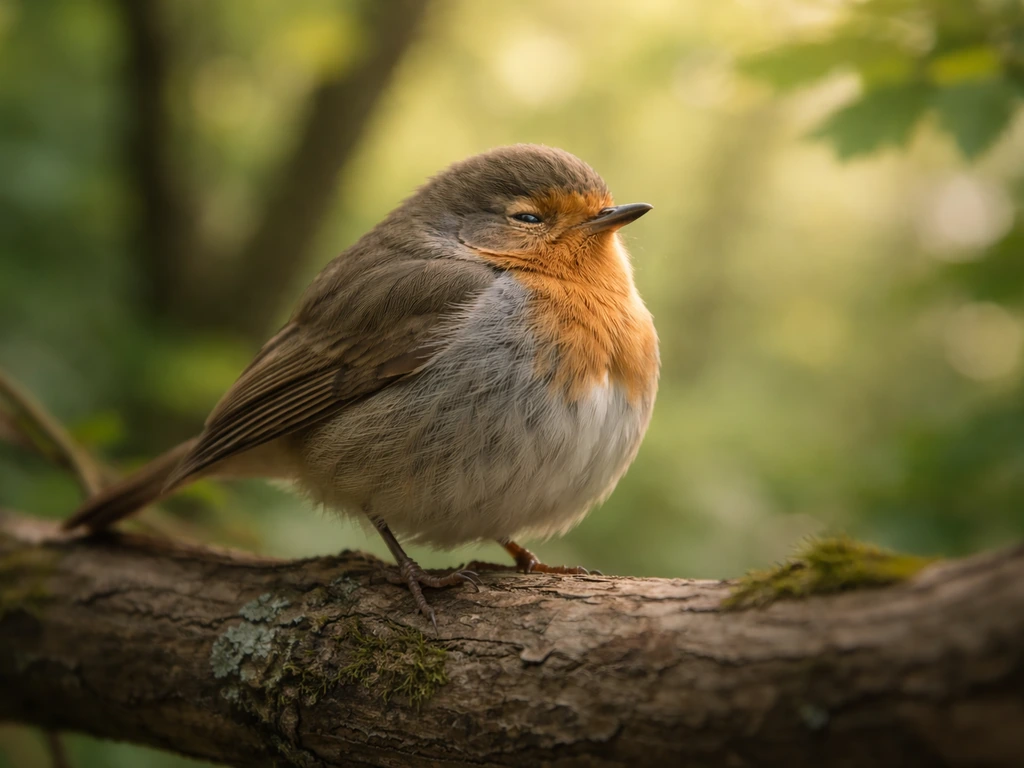
Bird lungs work by pushing air in one direction through rigid, tube-like structures called parabronchi, where oxygen is pulled out continuously rather than in pulses. A set of air sacs (nine of them, arranged front and back around the lungs) act like bellows that drive this airflow, so fresh air passes over the gas-exchange tissue on both inhalation and exhalation. That continuous, largely unidirectional flow is why birds get far more oxygen per breath than mammals do, which matters enormously when you're a sparrow climbing 100 feet in seconds or a bar-headed goose cruising over the Himalayas.
How Do Bird Lungs Work? Airflow, Gas Exchange, Myths

Marcus Chen
9 Jun 2026
What 'bird lungs' actually means (it's more than just lungs)
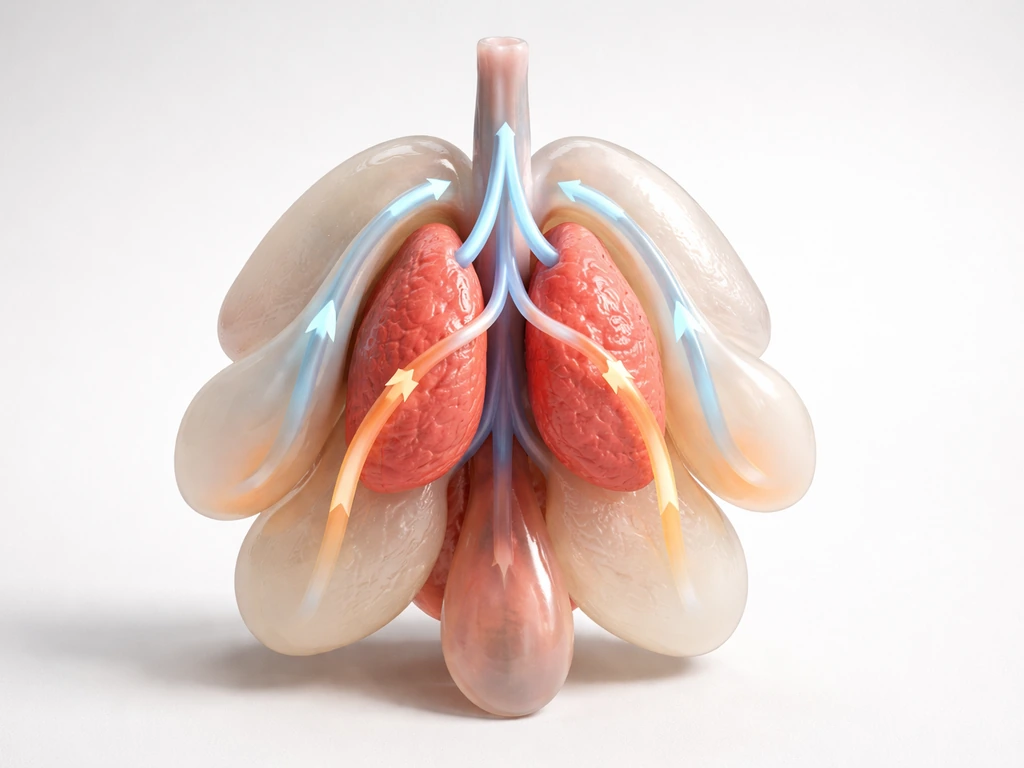
When most people picture lungs, they picture two balloon-like sacs that inflate and deflate. Bird lungs don't really do that. The lungs themselves are relatively small, stiff, and bound tightly against the ribs and vertebrae. They don't expand much at all. Instead, the breathing work is done by a connected set of thin-walled air sacs that do expand and contract, pumping air through the rigid lungs like a bellows pumping air through a furnace.
So when someone says 'bird lungs,' they're really talking about the whole respiratory system: the lungs themselves plus the nine air sacs. The lungs handle gas exchange. The air sacs handle ventilation. These two jobs are essentially uncoupled, which is unusual and genuinely clever from an engineering standpoint. A review and modeling summary likewise notes that ventilation and gas exchange are functionally uncoupled, with airflow largely driven by air sacs while gas exchange occurs in rigid parabronchi bound to surrounding structures ventilation and gas exchange are essentially uncoupled. The air sacs have almost no blood vessels of their own, so almost no oxygen absorption happens in them. They're just very efficient pumps.
The nine air sacs are grouped into two sets: the caudal (posterior) group, which sits toward the bird's tail end, and the cranial (anterior) group near the front. Air moves from one group to the other across the lung, and the direction it takes through the lung tissue is what makes the whole system so effective. If you're looking at a diagram of avian anatomy, the air sacs are the large, pale, balloon-like pouches surrounding the compact dark lung tissue on either side.
How airflow actually moves through a bird's body
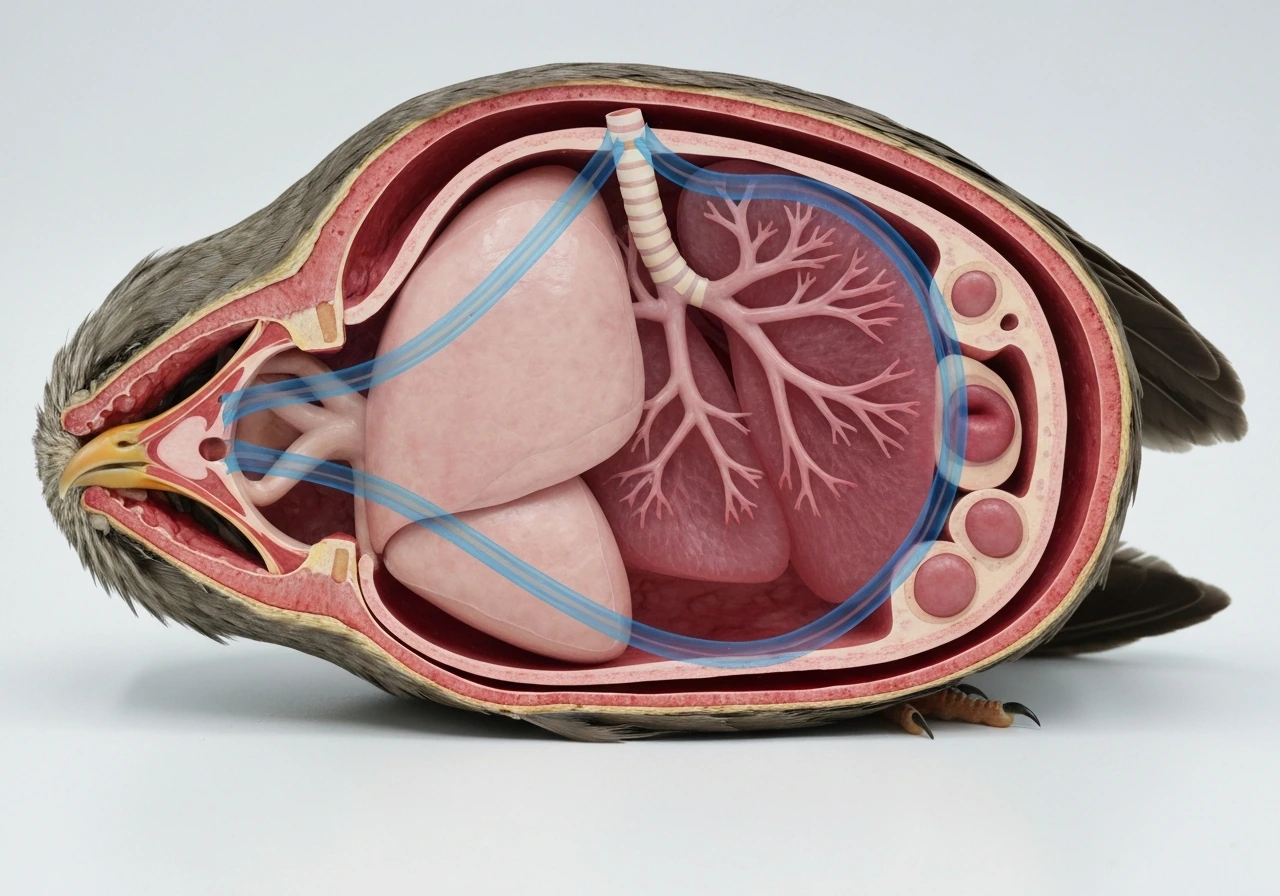
This is the part that surprised me when I first learned it. In mammals, each breath is a complete in-and-out cycle: air goes in, oxygen is absorbed, and stale air comes back out the same way. In birds, it takes two full breathing cycles (two inhalations and two exhalations) for a single parcel of air to complete its journey through the system. The result is that fresh air is passing through the gas-exchange tissue during both halves of the cycle, not just one.
Here's how that plays out step by step. On the first inhalation, incoming air bypasses the lungs almost entirely and flows straight into the posterior air sacs. On the first exhalation, that same air gets pushed forward through the lungs, passing through the gas-exchange tissue for the first time. On the second inhalation, the now-partially-processed air moves into the anterior air sacs. On the second exhalation, it's pushed out through the trachea and beak. At every stage in this cycle, the parabronchi (the gas-exchange tubes in the lung) always have air flowing through them in the same direction, from the back of the lung toward the front.
- First inhalation: fresh air flows into the posterior (caudal) air sacs, largely bypassing the lung
- First exhalation: air from the posterior sacs is pushed through the parabronchi in the lung, where gas exchange happens
- Second inhalation: air from the lung moves into the anterior (cranial) air sacs
- Second exhalation: air from the anterior sacs exits through the trachea
The key takeaway is that the direction of airflow through the lung tissue stays the same regardless of whether the bird is breathing in or out. That's the 'unidirectional' part you'll see mentioned in explanations of why bird respiration is so efficient.
Where the actual oxygen exchange happens
The gas exchange happens inside the parabronchi, which are essentially narrow, rigid tubes running through the lung tissue. Think of them as a bundle of thin straws packed side by side. Air flows down the central channel of each parabronchus, but the real action happens in the microscopic air capillaries that branch off from the walls of those tubes. These air capillaries are tightly entwined with blood capillaries, separated by an extremely thin barrier, and that's where oxygen and carbon dioxide are traded between air and blood.
The arrangement of airflow versus blood flow is described as cross-current exchange. The air moves axially along the parabronchial tube (lengthwise), while blood flows roughly perpendicular to that, inward toward the exchange tissue from the outside of the lung. This geometry means blood at different points along the parabronchus is always encountering air with a slightly different oxygen concentration, which keeps the diffusion gradient favorable across the whole surface rather than equalizing early and stalling out. Cross-current exchange doesn't extract quite as much oxygen as the theoretical countercurrent maximum, but it consistently outperforms the tidal (in-and-out) system mammals use.
Walking through the full breathing cycle
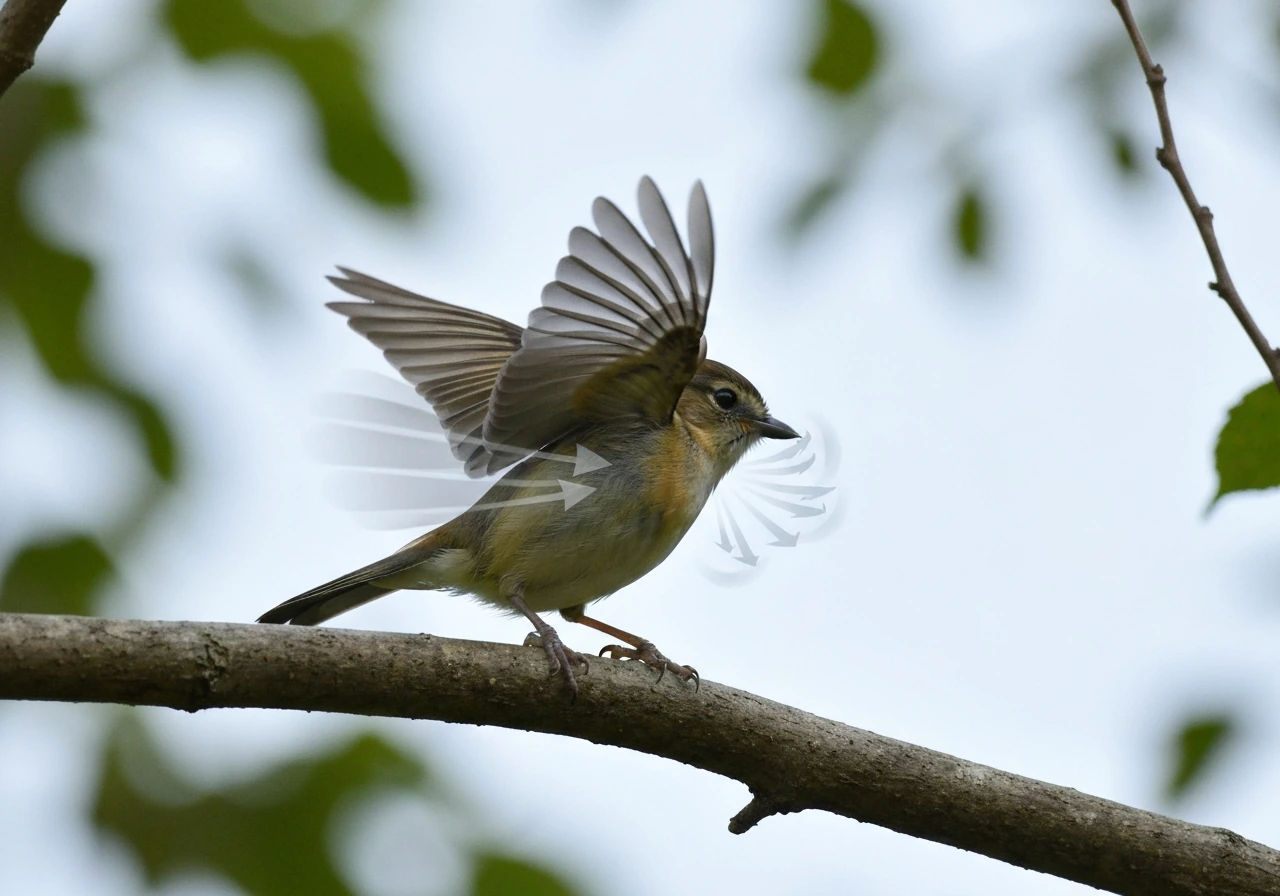
One thing that trips people up is matching the airflow movement to the muscle movements happening in the bird's body. Birds don't have a diaphragm (more on that below). Instead, they expand and contract the chest and abdominal wall to change the volume of the air sac system. When the bird inhales, the air sacs expand and draw air in. When it exhales, the air sacs compress and push air through the lung. The lungs themselves stay mostly fixed in volume throughout.
During flight, the wing muscles' movement actually assists the breathing cycle. Each downstroke can help compress the air sacs, and each upstroke can help expand them. This mechanical coupling means a flying bird isn't fighting itself to breathe harder: the very motion of flying contributes to ventilation. Scientists are still working out the exact details of how tightly synchronized this is across different species, so I'd be cautious about anyone who presents it as a perfectly solved question.
At rest, birds breathe at a wide range of rates depending on body size. Smaller birds breathe faster, larger birds breathe slower, much like mammals. A pigeon at rest might take around 25 to 30 breaths per minute. What makes each breath more productive than a mammal's is the efficiency of the gas exchange itself, not necessarily the rate.
Why this design is so good for flight
Flying is metabolically expensive. A bird's flight muscles need a continuous, high-volume oxygen supply that would overwhelm a mammal-style respiratory system at the same body weight. The avian lung design handles this through three features working together: rigid lungs, unidirectional airflow, and cross-current gas exchange.
The rigidity of the lungs matters more than it might seem. Because the lungs don't need to expand and contract, they can be packed tightly against the skeleton, which keeps the bird's center of mass stable and compact during flight. Flexible, expanding lungs would shift the body's weight distribution with every breath, and at 40 wing beats per second in a hummingbird, that would be a real aerodynamic problem.
The continuous oxygen extraction means birds can sustain aerobic effort at altitudes where mammals (including humans) would be struggling. Bar-headed geese migrate over the Himalayas at elevations above 7,000 meters, where oxygen is less than half the concentration found at sea level. Their respiratory system keeps extracting oxygen efficiently even at those extremes, partly because the cross-current system never fully equilibrates the way a mammalian lung does at low oxygen partial pressures.
| Feature | Bird lungs | Mammal lungs |
|---|---|---|
| Lung volume change | Minimal (rigid) | Large (flexible/elastic) |
| Airflow direction | Largely unidirectional | Bidirectional (in and out same path) |
| Air sacs | Yes, 9 sacs drive ventilation | No air sacs |
| Gas exchange mechanism | Cross-current | Mixed pool / tidal |
| Diaphragm | Absent | Present |
| Breaths needed per air parcel | Two full cycles | One cycle |
| Efficiency at high altitude | High | Drops significantly |
Clearing up the common misconceptions
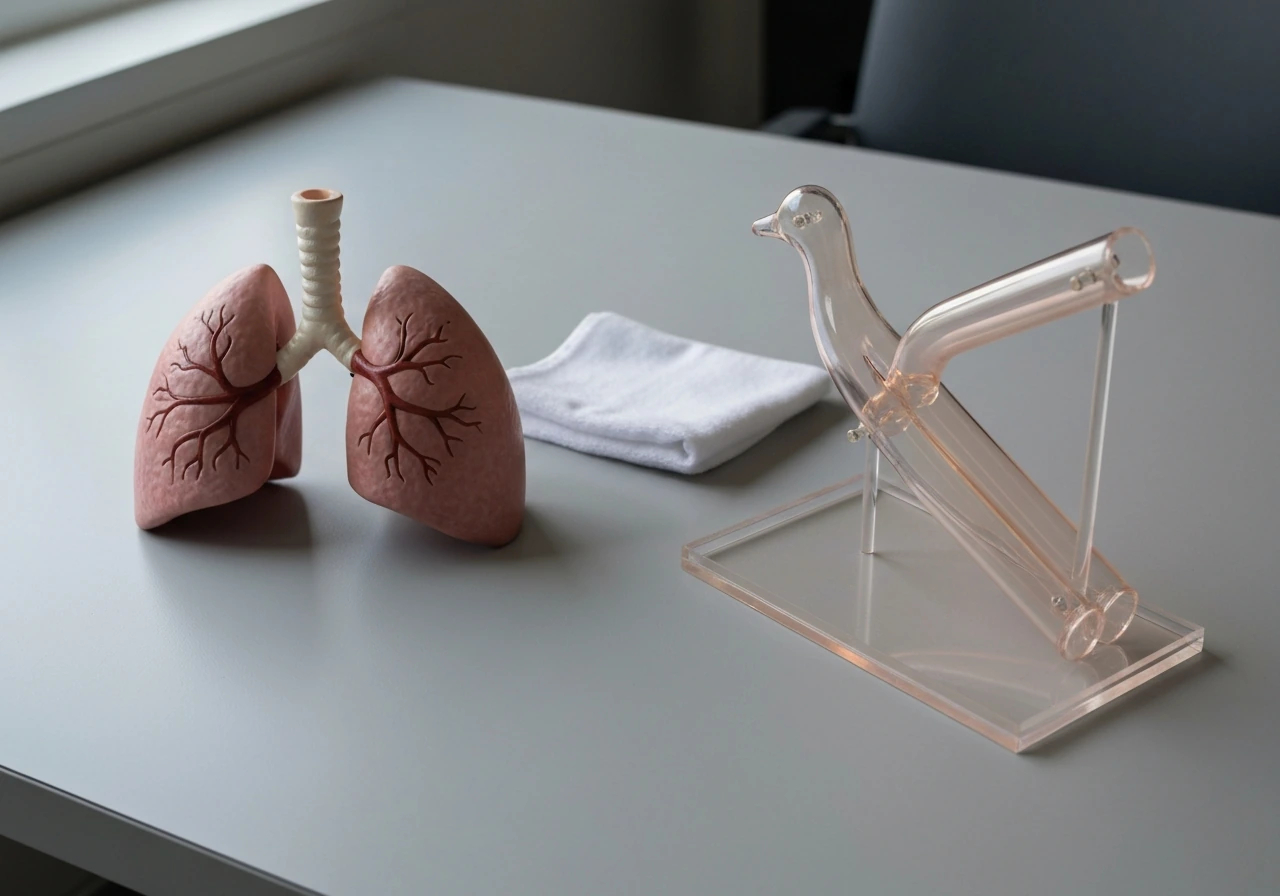
Do birds breathe the same way as mammals?
No, and the difference goes deeper than just anatomy. The fundamental mechanics are different. Mammals use tidal ventilation: air flows in, pools in the alveoli where gas exchange happens, and then flows back out the same path. Birds use flow-through ventilation: air travels a one-way route through the parabronchi, and gas exchange happens continuously during that transit. The practical result is that birds extract significantly more oxygen per unit of air moved. It's not a small efficiency difference; it's a structural redesign of the whole process.
Do birds have a diaphragm?
No. Mammals use the diaphragm as the primary muscle for breathing. Birds don't have one. Instead, they rely on the intercostal muscles (between the ribs) and abdominal muscles to change the volume of the air sac compartments. There is a thin membranous partition in birds that's sometimes called a diaphragm in older texts, but it doesn't function the way a mammalian diaphragm does and isn't homologous to it. If you see a claim that birds have a diaphragm, it's usually this thin membrane being loosely mislabeled.
Do the air sacs absorb oxygen?
No, and this surprises a lot of people. The air sacs have very few blood vessels, so almost no gas exchange happens in them. Britannica explains that bird air sacs have an avascular design, so they mainly ventilate while the lung is where gas exchange occurs in the parabronchi almost no gas exchange happens in them. They function purely as ventilation pumps and air reservoirs. All the meaningful oxygen absorption happens in the parabronchi of the lung itself. The air sacs are a delivery system, not an exchange surface.
Are bird lungs just smaller mammal lungs?
Structurally, no. Mammalian lungs have alveoli: tiny dead-end pouches where air pools and gas exchange happens. Bird lungs have parabronchi: through-tubes where air flows continuously. The internal architecture is genuinely different, not just scaled differently. If you looked at a cross-section of each under a microscope, you would not mistake one for the other. This is also why bird lungs are more efficient, a topic worth exploring in its own right if you're curious about how exactly the numbers compare.
What to look for if you want to understand this more deeply
If you're working through a diagram of the avian respiratory system, here's what to locate in order: start with the trachea, follow it to where it splits into two primary bronchi, then find where those bronchi connect to the posterior air sacs (they almost bypass the lung). Then look for the parabronchial tissue in the lung itself, running between the posterior and anterior air sac connections. That pathway is the core of the whole system.
- Trachea: the main airway from beak to lungs, same basic role as in mammals
- Primary bronchi: branch from the trachea and pass through the lung to reach the posterior air sacs
- Parabronchi: the narrow gas-exchange tubes running through the lung, where oxygen is actually absorbed
- Posterior air sacs (caudal group): the first destination for fresh inhaled air
- Anterior air sacs (cranial group): the holding space before air exits on the second exhalation
- Air capillaries: microscopic branches off the parabronchi where air meets blood capillaries
The concepts that will do the most work for you going forward are unidirectional airflow, parabronchi as rigid through-tubes, and cross-current gas exchange. Once you have those three ideas, the rest of the details (like exactly how many air sacs there are or which respiratory muscles birds use) will slot into place much more easily.
Related questions about what organs make up the full respiratory system, how a bird's breathing mechanics differ from other animals, and exactly why bird lungs are more efficient than mammal lungs are all worth following up on if this sparked more curiosity. Related questions about sleep, including how do bird sleep, are worth following up on if this sparked more curiosity.
Bird respiratory systems are typically described by their lungs, air sacs, trachea, and associated airways what organs make up the full respiratory system.
FAQ
How do bird lungs get enough fresh oxygen if air keeps flowing one direction?
Fresh air is delivered because each breath moves air into different air sac compartments, so the lung tissue sees newly arriving gas on both parts of the breathing cycle. The key is that the air sacs act like pumps that continually feed the parabronchi with air that has not yet fully equilibrated.
Do birds ever “hold their breath,” and if so, what happens to airflow?
They can slow ventilation and reduce airflow, but their system does not rely on stopping and restarting the way tidal systems do. If movement stops, the one-way flow advantage fades because the parabronchi are no longer being continuously refreshed by the air sac cycle.
Is the trachea involved in the one-way effect through the lung?
The one-way effect is mainly across the lung tissue through the parabronchi directionality. The trachea serves as the main airway for routing air between the front and back parts of the air sac system, but the “always same direction through the lung” feature is tied to how air is driven across the lung itself.
Where does most oxygen exchange actually occur in a bird respiratory system?
Most exchange occurs in the parabronchi and their tiny air capillaries that are closely paired with blood capillaries. The air sacs have very little blood supply, so even though they are large and move lots of air, they are not the primary exchange sites.
How does cross-current exchange change when a bird breathes faster?
When ventilation rate rises, air arriving at the lung tissue is refreshed more often, helping maintain diffusion gradients. However, gas exchange is still limited by how long blood spends near exchange tissue and by diffusion across the thin barriers, so faster breathing does not automatically equal proportionally higher oxygen uptake.
Do young birds (or chicks) use the same airflow pattern as adults?
In broad design, yes, the rigid lung and air sac arrangement is shared, but the proportions and ventilation demands can differ. Chicks often have lower metabolic rates and different breathing patterns, so the “two-cycle” journey of a parcel of air can feel more or less obvious depending on how frequently they ventilate.
What is “dead space” in birds, and does their design reduce it?
Dead space is the air volume that does not participate in exchange. Birds reduce how much air is wasted by pushing air through the lung so exchange can occur during both inhalation and exhalation, but the airways before the lung still represent some non-exchanging volume.
Why do claims that birds have a diaphragm keep showing up online?
Because birds have a membranous partition sometimes loosely labeled as a diaphragm, but it does not function as the main breathing muscle the way the mammalian diaphragm does. In birds, breathing volume changes are driven primarily by intercostal and abdominal muscles that move the air sacs.
How do flying and breathing connect, and can it fail during severe fatigue?
Wing beats can assist compression and expansion of air sacs, improving ventilation efficiency, but synchronization can vary by species and conditions. During extreme fatigue or after injury, the respiratory system may still work but ventilation may become less mechanically aided.
If air is continuously moving, do birds have an increased risk of drying out their airways?
Continuous airflow does increase the amount of air moving through the system, so hydration and mucus management become important. Birds often rely on specialized airway lining and behavioral factors (like resting posture and airflow adjustments) to keep airways from becoming overly dry.
How is bird respiration affected at high altitude compared with mammals?
At low oxygen partial pressure, birds maintain effective extraction because their cross-current geometry keeps diffusion gradients favorable along more of the exchange surface. Mammalian tidal systems tend to approach more equilibration during each cycle, which can reduce efficiency when oxygen is scarce.
If I only remember one diagram, what labels should I focus on?
Focus on the trachea, the primary bronchi, the posterior and anterior air sac connections, and the parabronchial tissue within the rigid lung between those connections. If you can trace air from the posterior air sacs through the parabronchi toward the anterior side across the two-cycle pattern, most other details become easier to place.
Next Article
How Do Bird Sleep? What It Looks Like and Where They Roost
How birds sleep, where they roost, and what normal resting looks like, including eye posture and partial-brain sleep.