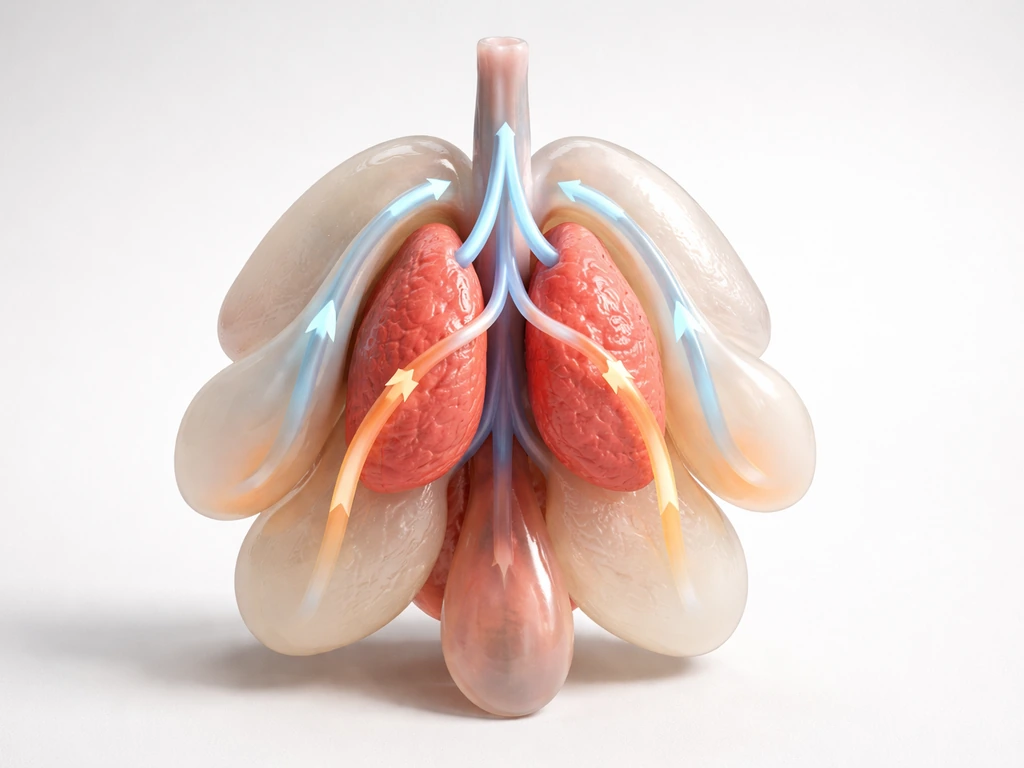
Yes, birds absolutely have lungs. Every bird species, from a hummingbird to an ostrich, breathes through a pair of lungs. What makes birds interesting is that their lungs work nothing like yours or mine. Instead of expanding and contracting like balloons with each breath, a bird's lungs are relatively rigid and fixed in place. The real breathing muscle in the system is a network of air sacs that surround the lungs, pump air through them, and create a one-way airflow that is far more efficient than the back-and-forth tidal breathing mammals use. This same respiratory airflow system is also relevant when you wonder how smoking birds produce smoke-like wisps smoking bird produce smoke.
Does a Bird Have Lungs? How Bird Breathing Works

Marcus Chen
14 Jun 2026
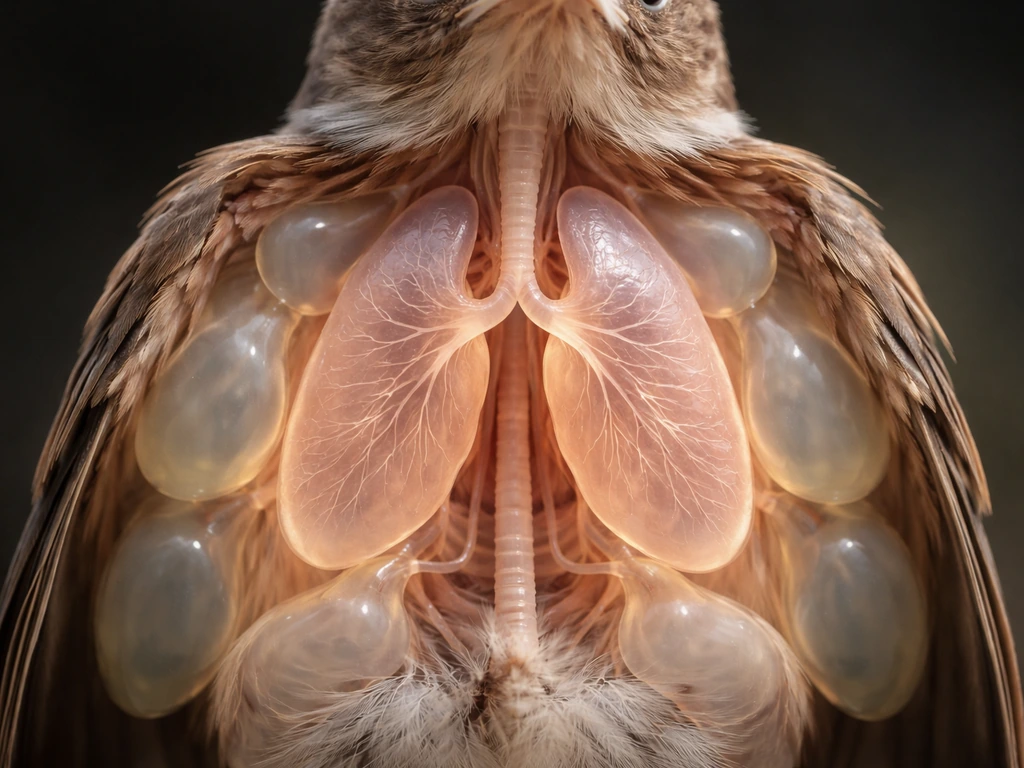
Bird respiratory anatomy: lungs and air sacs are a team
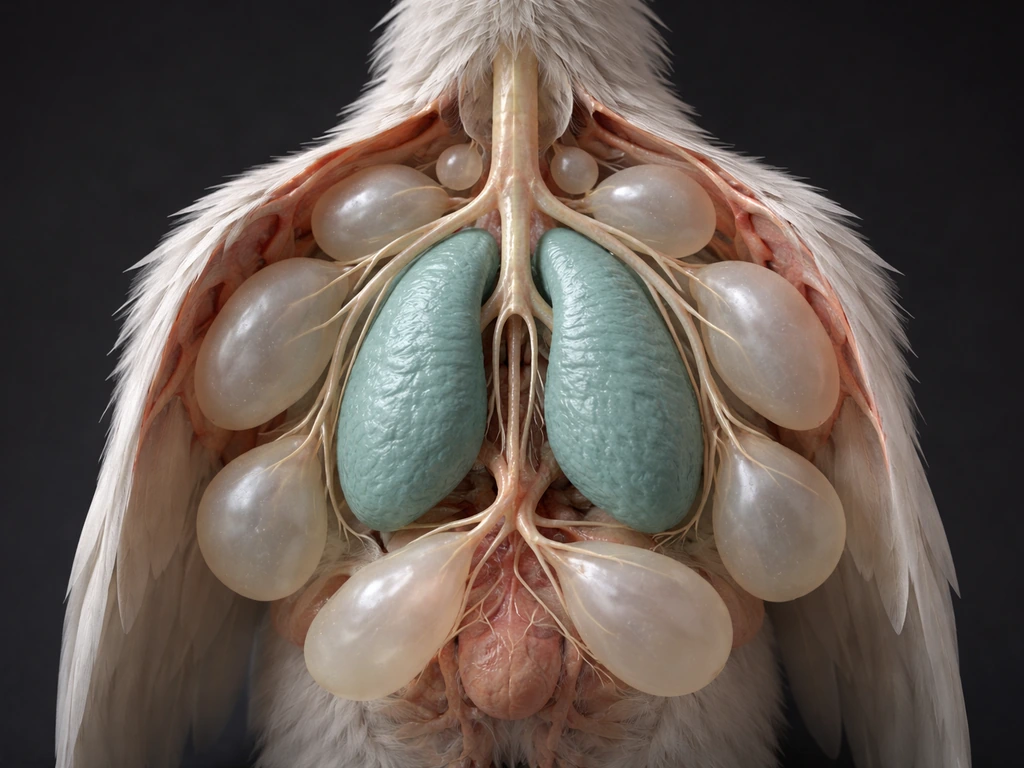
A bird has two lungs, but they look and behave very differently from mammalian lungs. In mammals, the gas-exchanging surface is made up of tiny balloon-like chambers called alveoli that inflate and deflate. Birds don't have alveoli. Instead, the gas-exchanging surface inside a bird's lung is built around structures called parabronchi (think of them as tiny parallel tubes where oxygen and carbon dioxide actually swap between air and blood). The lung itself is compact, rigid, and does not expand during breathing.
Surrounding and connected to these lungs is a system of air sacs. Together, the lungs and air sacs work as the bird respiratory system to move air and enable oxygen uptake. Most birds have nine of them: one unpaired interclavicular sac (which actually wraps around the syrinx, the bird's voice box) plus four pairs of sacs called the cervical, cranial thoracic, caudal thoracic, and abdominal air sacs. These sacs do expand and contract with each breath, acting as the bellows that push air through the rigid lung. Crucially, the air sacs themselves are not where gas exchange happens. They are ventilators, not exchangers. The lungs handle the actual oxygen uptake; the air sacs handle the pumping.
The cleanest way to think about it: the lungs are the factory, and the air sacs are the conveyor belt system that keeps fresh air moving through the factory at all times.
How airflow actually moves through a bird's body
This is the part that genuinely surprised me when I first looked it up. In a bird, a single breath of air takes two full inhalation-exhalation cycles to make it all the way through the system. It is not a simple in-and-out. Here is the sequence:
- First inhalation: Air enters through the trachea and travels past the lungs into the caudal (rear) air sacs, which expand to receive it.
- First exhalation: The caudal air sacs compress, pushing that air forward into the lungs, where gas exchange happens as air moves through the parabronchi.
- Second inhalation: The air (now partially depleted of oxygen) moves from the lungs into the cranial (front) air sacs.
- Second exhalation: The cranial air sacs compress, pushing the used air out through the trachea and beak.
The remarkable result of this sequence is that air flows through the parabronchi in the same direction during both inhalation and exhalation, always moving from the caudal group of air sacs toward the cranial group. In particular, the review uses explicit “outward” versus “inward” terminology to describe the parabronchial lumen (outward) and the venous side (inward), emphasizing that the gas-exchanging surface lies within the parabronchi rather than the air sacs. This is called unidirectional airflow, and it means the gas-exchanging part of the lung never sits waiting with stale air between breaths. Fresh air is always moving through. Aerodynamic properties of the airway junctions help maintain this directionality without any valves, which researchers find surprisingly elegant.
Inside each lung, the pathway air follows runs from the primary bronchus (the main airway entering the lung) into two sets of secondary airways: the ventrobronchi branching off the front portion and the dorsobronchi branching off the rear portion. The parabronchi connect these two sets like rungs on a ladder, and it is along those rungs that oxygen crosses into the bloodstream.
Why this system is so much more efficient than mammal lungs
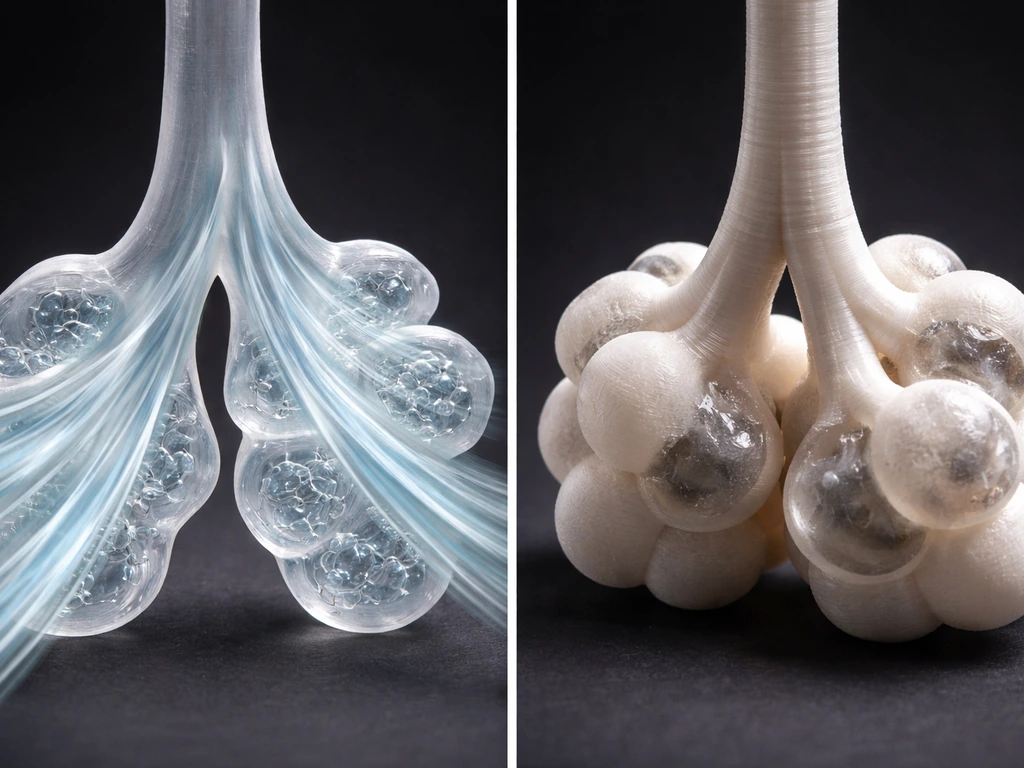
Mammalian breathing leaves a significant amount of stale air sitting in the lungs after each exhalation. This residual air dilutes the fresh incoming oxygen before it ever reaches the exchange surface. Because of the unidirectional flow-through system, birds do not have this problem. Fresh air passes continuously over the gas-exchanging parabronchi, so the bird's lungs are more completely ventilated than mammalian lungs at any given moment.
This matters enormously for flight. Flying is one of the most metabolically expensive activities in the animal kingdom. A hovering hummingbird, for example, burns oxygen at a rate many times higher than it does at rest. Birds cannot afford inefficient gas exchange when their muscles are demanding that much fuel. The parabronchial, unidirectional system delivers oxygen more reliably and completely under high-demand conditions than the alveolar, tidal system in mammals could.
There is also a counterflow element worth knowing about. The blood flowing through capillaries around the parabronchi runs in a direction that maintains a favorable oxygen gradient across the entire length of the exchange surface, so gas transfer stays efficient even when oxygen levels in the air are lower than they would be at sea level. This helps explain how birds can fly at extreme altitudes where mammals struggle to breathe.
How breathing changes between rest and activity
A resting bird breathes at a calm, steady rate. To understand how do bird sleep, it helps to see how their breathing slows down and stays unidirectional when they are at rest How breathing changes between rest and activity. The system still maintains unidirectional airflow through the lungs, but the overall ventilation volume is modest. The moment a bird becomes active, things change quickly. Studies on songbirds show that respiratory rate during calling climbs roughly 35 percent higher than during quiet breathing, and wing-flapping activity produces its own changes in how air sac pressure cycles play out. The basic anatomy of the system stays the same, but the air sacs pump harder and faster to meet demand.
Flight introduces an interesting mechanical coupling too. The movements of a bird's sternum and ribcage during the wingbeat cycle can interact with the breathing rhythm, essentially letting the act of flapping wings assist ventilation. This means that in some cases, the faster a bird flies, the more efficiently it can also breathe, which is a neat biological feedback loop.
It is worth noting that the neopulmo, a region of the lung found in more derived bird species, can have slightly bidirectional airflow in some circumstances, unlike the strictly unidirectional paleopulmo region. Scientists still have open questions about exactly how much variation exists across species and activity states. The big picture of unidirectional flow through the main parabronchi is solid, but the details at the edges are still being worked out.
Lungs vs air sacs at a glance
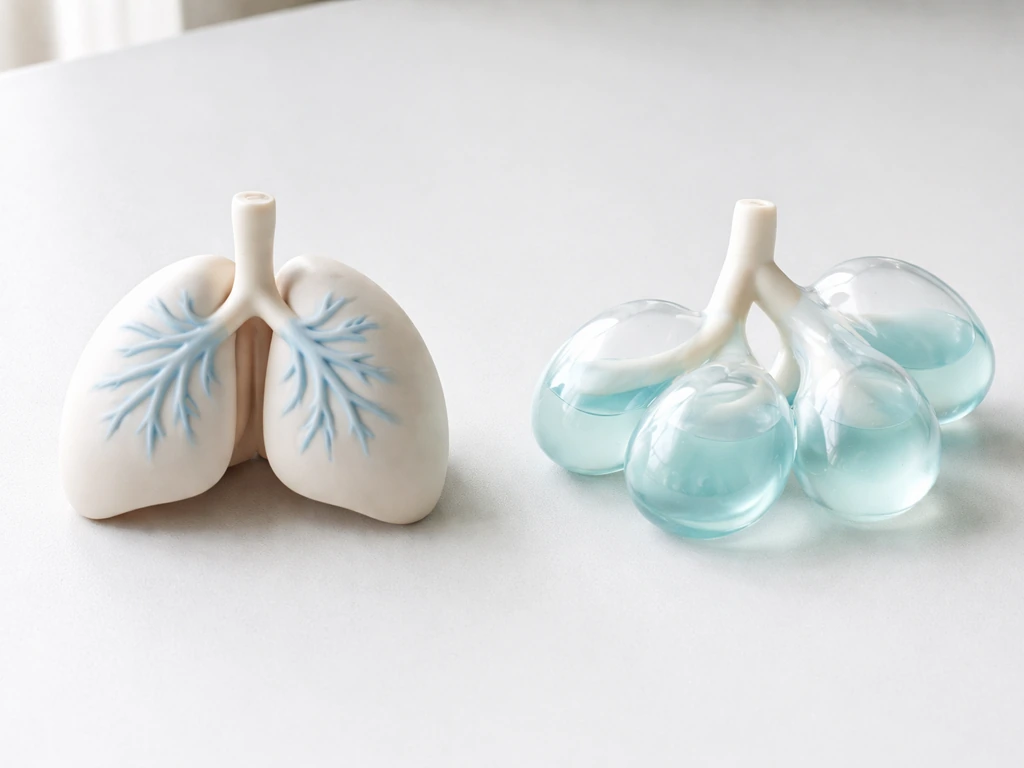
| Feature | Lungs (parabronchi) | Air Sacs |
|---|---|---|
| Primary role | Gas exchange (oxygen in, CO2 out) | Ventilation (pumping air through the lungs) |
| Structure | Rigid, compact, non-expandable | Thin-walled, flexible, expandable |
| Number | 2 (one on each side) | 9 in most species |
| Location | Anchored to the ribcage/spine | Distributed through chest and abdomen |
| Air movement | Unidirectional, continuous flow | Expand on inhalation, compress on exhalation |
| Gas exchange happening here? | Yes | No |
Key terms and a simple way to picture how it all works
If you want to confidently understand bird respiration from here, these are the terms worth keeping in your head:
- Parabronchi: the tiny parallel tubes inside the lung where actual gas exchange happens. Think of them as the working core of the bird lung.
- Air sacs: the nine expandable chambers (interclavicular, cervical, cranial thoracic, caudal thoracic, and abdominal) that act as bellows to keep air moving.
- Unidirectional airflow: air always moves through the parabronchi in one direction, during both inhalation and exhalation, unlike the back-and-forth tidal breathing in mammals.
- Gas exchange: the process where oxygen passes from air into the blood and carbon dioxide passes from the blood into the air, happening specifically in the parabronchi.
- Pulmonary airflow: the movement of air through the lung itself, driven by the coordinated expansion and compression of the air sac groups.
A simple mental image that helps: picture a river (the airflow) flowing through a filtration plant (the parabronchi). On either side of the plant are two reservoirs (the caudal and cranial air sac groups). The caudal reservoir fills up during the first inhale, then drains through the plant during the first exhale. The cranial reservoir catches the used water, then drains it out entirely during the second exhale. The river through the plant always flows the same direction, and the plant is always busy, never sitting idle waiting for the next wave.
From here, the natural next questions to explore are how bird lungs compare in detail to mammalian lungs, what organs make up the full avian respiratory system beyond the lungs and air sacs, and why bird lungs are considered more efficient at high altitude and during sustained flight.
If you still wonder how does a bird breathe from the outside view, the next step is to compare the whole airflow pattern and respiratory mechanics in more detail how birds breathe. The full avian respiratory system includes lungs, air sacs, and the pathways that move air through the bird avian respiratory system includes lungs and air sacs.
If you are wondering how do bird lungs work in practice, keep in mind that their rigid lungs rely on air sacs and one-way airflow to keep fresh oxygen moving through the exchange surface. Those topics build directly on everything covered here and will fill in the remaining gaps in a complete picture of how birds breathe.
FAQ
Do birds breathe in and out the way mammals do, or is it different?
It is different. Even though birds still inhale and exhale, their air does not simply go in and out the lungs. A single “breath” takes two inhalation-exhalation cycles to fully pass through the lung and air-sack system, which helps keep airflow through the gas-exchange tubes essentially one-directional.
If bird lungs are rigid, what actually expands and contracts?
The lungs themselves are relatively fixed, the air sacs do most of the volume-changing work. Air sacs expand and contract to push air through the lung’s pathways, like bellows that ventilate a factory that stays in place.
Where does oxygen exchange happen, in the lungs or in the air sacs?
Oxygen exchange happens in the lungs, specifically along structures such as the parabronchi. The air sacs primarily act as ventilators to move air through, they do not serve as the main gas-exchange surface.
How many lungs do birds have, and does the number match what you might expect?
Birds typically have two lungs, but they are compact and not built like mammalian alveolar lungs. The efficiency comes from how those lungs are ventilated by the connected network of air sacs, not from stretching lung tissue.
Can the airflow direction change in birds, like reversing airflow between inhalation and exhalation?
In the main lung regions, airflow is generally unidirectional during both inhalation and exhalation. Some more derived lung regions can show more complex, less strictly one-directional behavior under certain conditions, so variation exists at the edges of the system.
Why don’t birds waste oxygen the way mammals can with “stale” air?
Because the airflow is organized so fresh air keeps moving through the gas-exchange region rather than sitting and mixing with older air. Mammals leave more residual air in their lungs between breaths, which can dilute incoming oxygen.
How does this breathing design help birds at high altitude?
Birds benefit from a favorable oxygen gradient across the exchange surface and a system that maintains efficient transfer when ambient oxygen is lower. That combination helps explain why some birds can function at elevations where mammals struggle.
Does a bird’s breathing slow down during sleep, and does unidirectional airflow stop?
Birds can reduce overall respiratory rate during rest or sleep, but the unidirectional flow concept through the main exchange pathways is still maintained. The main change is how strongly and how often the air sacs pump air, not a complete switch to bidirectional breathing.
Do wing flaps actively help a bird breathe?
They can. In some cases, movements of the sternum and ribcage during wingbeats can mechanically couple to the breathing rhythm, improving how ventilation lines up with activity. This is one reason respiration can scale quickly during flight.
Do birds always breathe faster during activity, or can it change in other ways?
It often accelerates, but the pattern can be more complex than “faster equals more oxygen.” For example, calling in songbirds increases respiratory rate, and wing-flapping changes how air-sack pressures cycle. The system adapts by changing pumping dynamics to match oxygen demand.
Next Article
How Do Bird Lungs Work? Airflow, Gas Exchange, Myths
Learn how bird lungs and air sacs drive unidirectional airflow, gas exchange, and myths like breathing without a diaphra