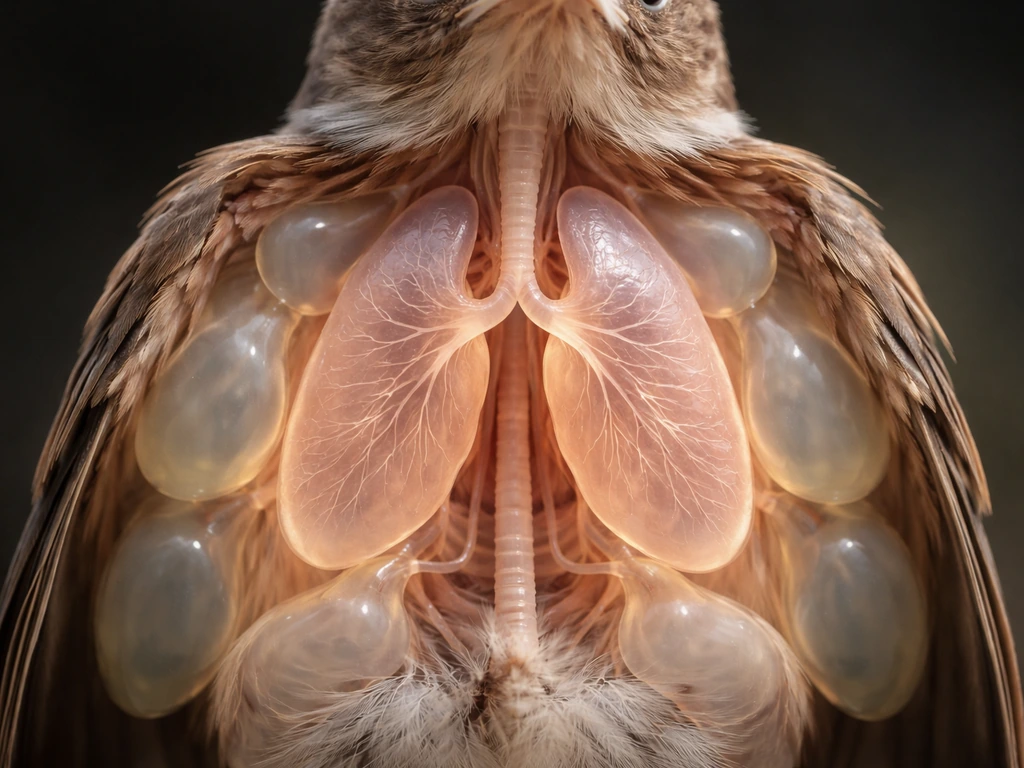
Birds breathe using a system that is genuinely different from anything in your own chest. Bird sleep varies by species, but most birds reduce activity and use rest states that still keep their breathing system ready to function. Instead of lungs that fill and empty like balloons, birds have relatively rigid lungs connected to a set of air sacs that act like bellows. This arrangement pushes air through the lung in one direction, during both inhalation and exhalation, so gas exchange never stops. The result is one of the most efficient respiratory systems among all air-breathing vertebrates, and it's the reason a pigeon can sustain hard flapping flight while you'd be gasping at the same effort.
How Does a Bird Breathe The Lung and Air Sac System

Marcus Chen
17 Jun 2026
Bird breathing basics
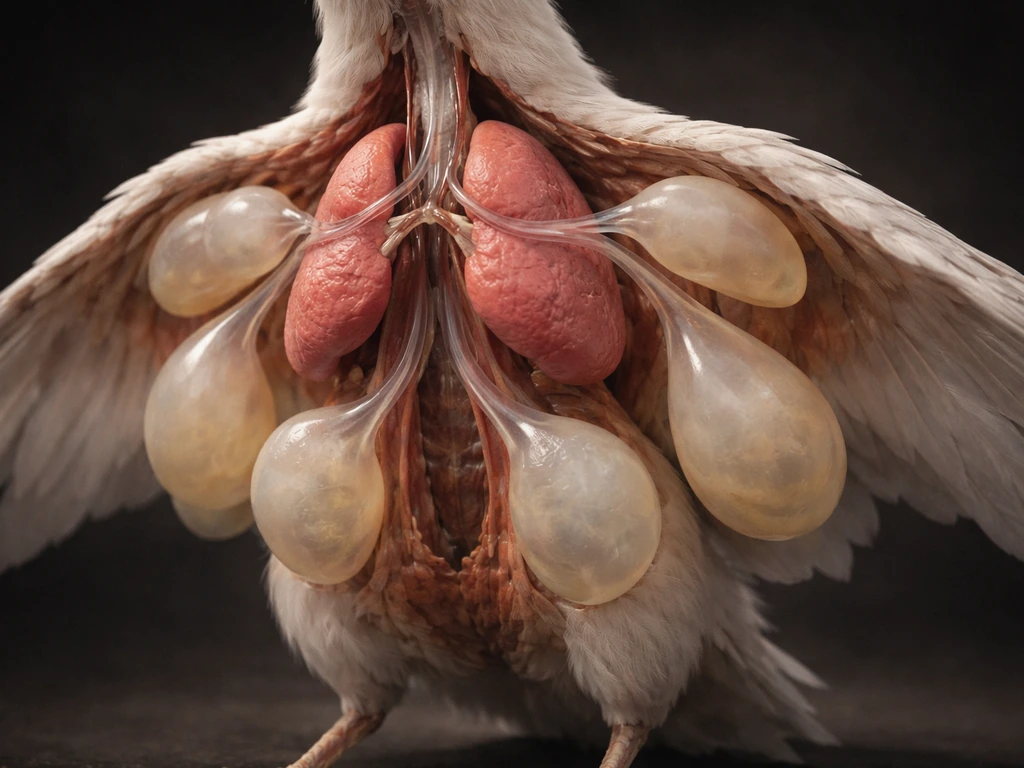
The core idea is this: in mammals, a single breath fills the lungs, oxygen moves into the blood, carbon dioxide moves out, and then you exhale the same air back the way it came. That back-and-forth is called tidal ventilation. Birds don't do it that way. Their lungs are mostly rigid and don't expand much. Instead, a connected network of thin-walled air sacs inflates and deflates to move air, and the actual gas exchange happens in specialized tubes inside the lungs called parabronchi (think of them as tiny, blood-vessel-lined channels running through the lung tissue). Air flows through those channels in one direction regardless of whether the bird is breathing in or out.
The practical upshot is that bird lungs see a nearly continuous supply of fresh air. Because bird lungs move air in a nearly continuous way, they avoid the stale-air problem that limits efficiency in mammals bird lungs see a nearly continuous supply of fresh air. There's no moment equivalent to the end of your exhale when stale air sits in your lungs waiting to be pushed out. That's a meaningful efficiency advantage, especially for flight.
What birds use to breathe
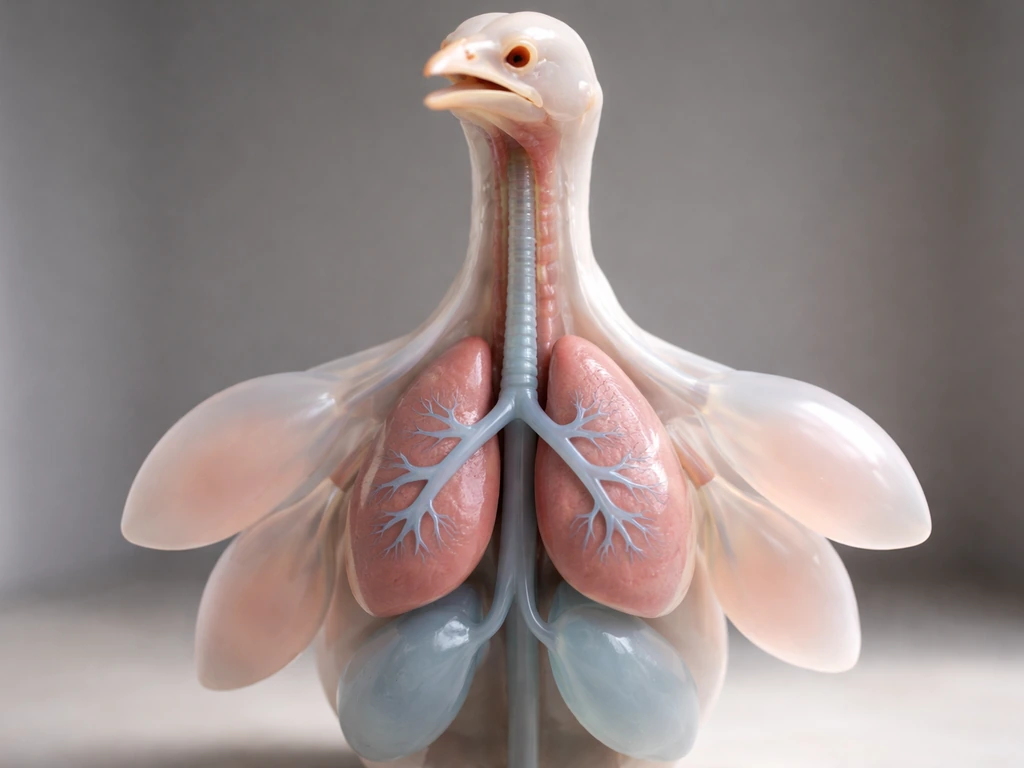
The avian respiratory system has more moving parts than a mammal's, which is part of why it works so well. Here's what's in the system: Birds have a specialized respiratory organ system made up of the trachea, lungs, and air sacs that work together to move air efficiently.
- Nostrils and beak: air enters here, just as you'd expect.
- Trachea: the airway running down the neck, similar in concept to a mammal's windpipe.
- Lungs: relatively small, rigid organs where gas exchange actually happens, via the parabronchi. Bird lung gas volume is actually smaller than in a mammal of comparable size.
- Air sacs: nine thin-walled sacs (in most bird species) arranged around the lungs and into the body cavity. They hold no meaningful blood supply and do essentially no gas exchange themselves. Their job is ventilation, acting as bellows to drive airflow. The total respiratory system gas volume in birds is about twice that of a similarly sized mammal, largely because of these sacs.
- Parabronchi: tiny tubes running through the lung where air capillaries and blood capillaries are packed together and gas exchange occurs.
A mistake I made early on was assuming the air sacs must be where oxygen gets absorbed, since they're so large. They're not. The air sacs are purely mechanical. The lungs, specifically the parabronchi inside them, are where oxygen crosses into the blood. This distinction matters and comes up again under misconceptions below.
Unidirectional airflow: from trachea to lungs to air sacs
Here's where bird respiration gets genuinely interesting. A single parcel of air that a bird inhales doesn't exit the body on that same breath. It takes two full breath cycles, meaning two inhalations and two exhalations, to pass all the way through the system. The air sacs are divided into two functional groups: the caudal (rear) air sacs and the cranial (front) air sacs. Air moves through them in a specific sequence.
- First inhalation: fresh air travels down the trachea and primary bronchus into the caudal (rear) air sacs.
- First exhalation: that air moves from the caudal air sacs into the parabronchi in the lung, where gas exchange begins.
- Second inhalation: the now-used air moves from the lung parabronchi into the cranial (front) air sacs, while a new batch of fresh air again enters the caudal air sacs.
- Second exhalation: the used air exits from the cranial air sacs out through the trachea and beak, while the newest air continues cycling through.
Throughout all four of those phases, air in the parabronchi is always flowing in the same direction: caudal to cranial, or back to front. That's the unidirectionality. The air sacs expand and contract to create the pressure gradients that drive this, but there's an additional mechanism called aerodynamic valving, where the geometry of the airway junctions themselves prevents air from flowing backwards through the gas-exchange regions. Research has shown that even when specific air sacs in chickens were blocked, the unidirectional flow pattern in the lung persisted, which suggests the valving is built into the airway structure itself and isn't solely dependent on the air sacs pushing air.
How gas exchange works in bird lungs
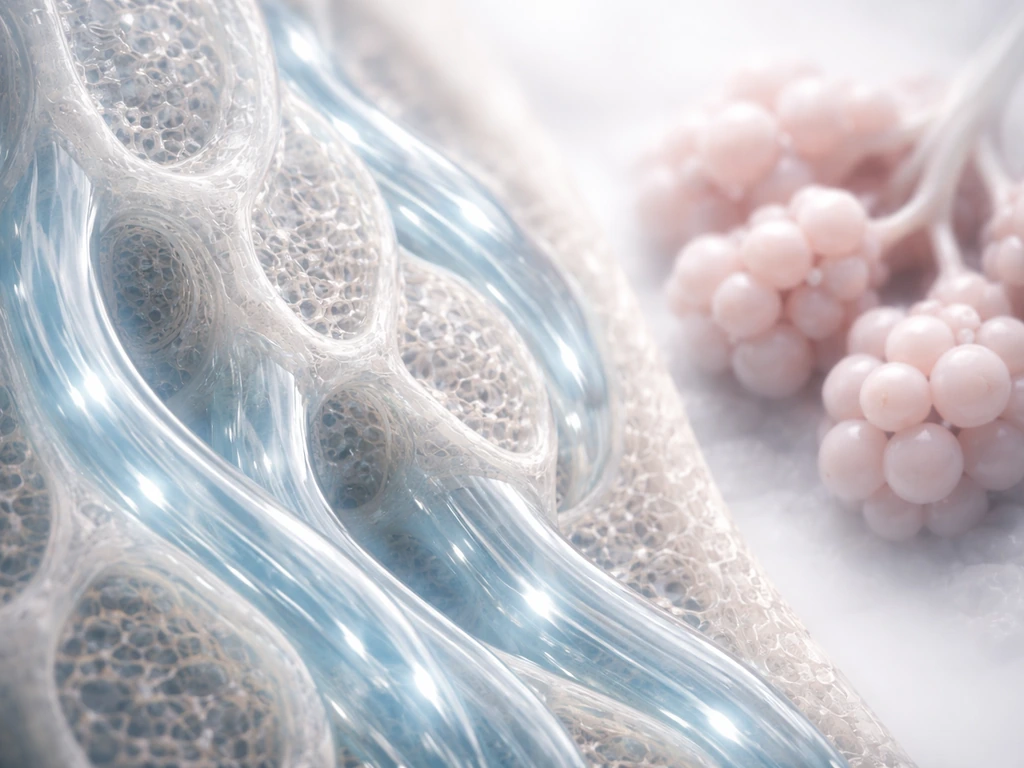
In your lungs, oxygen and carbon dioxide exchange happens in tiny dead-end sacs called alveoli. Blood arrives, picks up oxygen, drops off carbon dioxide, and moves on. The air in the alveolus is a mix of fresh and spent gas, which limits how much oxygen can transfer on any given breath. If you are comparing claims, the key is to check which statements match how avian airflow and gas exchange are actually set up which of the statements about bird respiration is true.
In bird lungs, the exchange happens in the parabronchi, and the arrangement is different. Air flows through the parabronchial tube in one direction, while blood flows through capillaries in the surrounding tissue in a roughly perpendicular direction. In particular, parabronchi are perfused along their entire length, which supports a cross-current model where air and blood flow are treated as orthogonal. Physiologists call this cross-current gas exchange. Because the blood doesn't run parallel to the airflow, it can pick up oxygen at multiple points along the parabronchus rather than equilibrating with a single mixed-air pool. The result is that blood leaving the bird's lung can actually carry more oxygen than the air leaving the lung, something that isn't physically possible with a mammalian alveolar setup.
The structural features supporting this efficiency are a large total respiratory surface area, high pulmonary capillary blood volume, and an extremely thin blood-gas barrier where diffusion happens. All three of those factors push diffusion rates up. The avian lung-air-sac system is genuinely considered the most complex and efficient gas exchanger among all air-breathing vertebrates, and that efficiency has a structural explanation, not just a behavioral one.
What changes during flight vs. rest
Flight is metabolically brutal. The oxygen demand during sustained flapping flight is enormous, and the respiratory system has to scale up to match it. In pigeons, ventilation increases roughly 20-fold during flight compared to rest. Interestingly, birds achieve this mainly by breathing faster rather than by taking dramatically deeper breaths. It's rate, not volume, that drives the increase.
Even at peak ventilation during flight, pigeons are moving about 2.5 times more air than their metabolism strictly requires for oxygen delivery alone. The extra airflow serves a second function: evaporative cooling. Birds don't sweat, so moving large volumes of air over moist respiratory surfaces is a major way they shed the heat that intense muscle activity generates.
The timing and routing of airflow through the lung and air-sac compartments also shifts with behavior. Studies measuring airflow patterns in songbirds have shown that calling, wing flapping, and resting each produce measurably different ventilation patterns. The basic unidirectional flow is preserved, but the rate, timing, and distribution across compartments all adjust dynamically to match what the bird is doing.
Common questions and misconceptions about bird breathing
"Air sacs are just extra lungs"
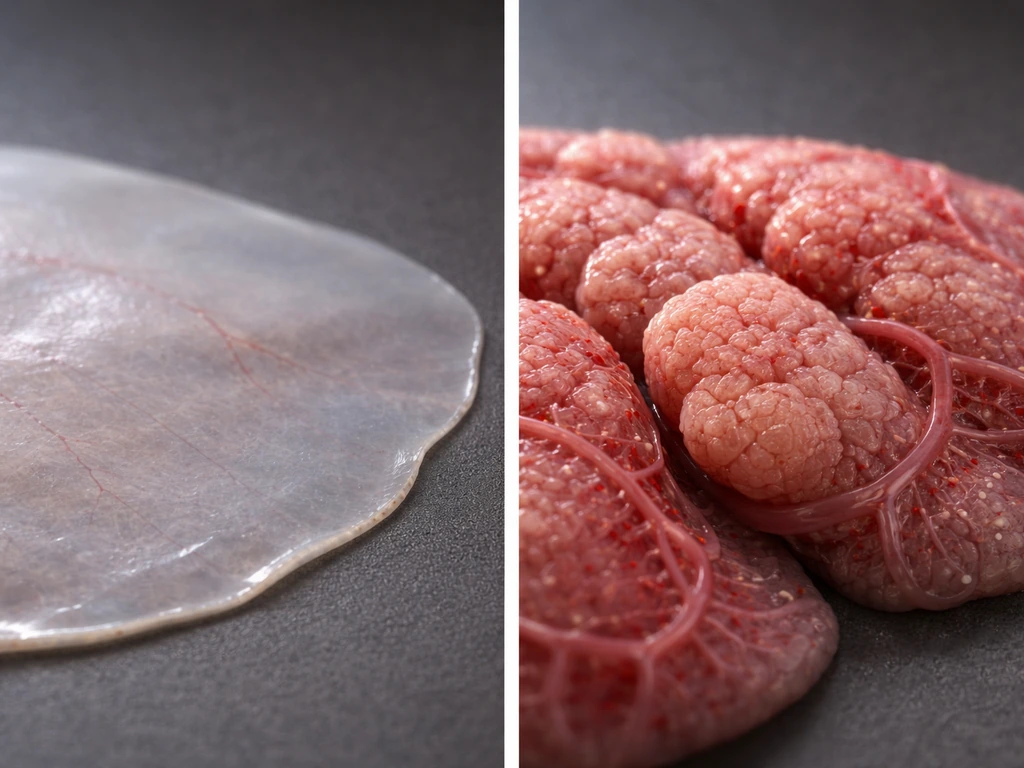
This is the most common mix-up. Air sacs are thin, membranous, and have almost no blood supply. They can't absorb oxygen in any meaningful amount. Their role is purely mechanical: they create the pressure gradients that move air through the actual gas-exchange tissue in the lungs. Calling them "extra lungs" would be like calling your diaphragm a lung.
"Birds only absorb oxygen when they inhale"
Not true. Because air flows through the parabronchi in one direction during both inhalation and exhalation, gas exchange continues throughout the entire breath cycle. There's no off phase. This is one of the key functional advantages over mammalian tidal breathing.
"Unidirectional flow means air only goes one way through the whole bird"
The unidirectionality specifically describes airflow through the parabronchi in the lung. The overall path of air through the body is a loop: in through the beak, into caudal air sacs, through the lung, into cranial air sacs, and back out through the beak. If you're also asking how smoking bird produce smoke, remember that the airflow and routing concepts from bird breathing are what determine how gases move through the body before any combustion or smoke formation can occur loop. That loop takes two full breath cycles to complete, and the important one-way segment is the passage through the gas-exchange region of the lung.
"Air sacs are responsible for the unidirectional flow"
This is more nuanced than it sounds. The air sacs do act as bellows to drive airflow, but aerodynamic valving at airway branch points also plays a major role in keeping air from flowing backwards through the parabronchi. The unidirectional behavior is a property of the airway geometry as much as it is a result of air-sac pumping. Research blocking individual air sacs in birds showed the unidirectional lung flow remained intact, which challenged the simpler "air sacs do everything" explanation.
"Bird lungs work the same way as mammal lungs, just smaller"
The structure is genuinely different at the tissue level. Mammals have alveoli, which are dead-end sacs. Birds have parabronchi, which are open tubes supporting through-flow. The gas-exchange geometry is different (cross-current vs. the pool-mixing scenario in alveoli), and the functional outcome is different too: birds can extract more oxygen per unit of lung volume, which matters a great deal when you're powering flight muscles.
Where to go from here
If the air-sac system sparked your curiosity, the logical next question is what organs specifically make up the full respiratory pathway, and how bird lungs are structured internally to support parabronchial flow. The difference in efficiency between avian and mammalian gas exchange is also worth exploring in more depth, particularly the cross-current model and why it outperforms the alveolar approach. And if you're curious whether birds have lungs in the traditional sense (they do, just not quite the kind you'd picture), that's a useful entry point into the structural side of avian anatomy.
FAQ
Do birds have lungs like mammals, or is it something completely different?
They do have lungs, but they are not balloon-like. Bird lungs are mostly rigid and are organized around parabronchi (through-flow gas-exchange tubes), while the air sacs mainly provide pressure changes and route air through the system.
If air passes through for two breath cycles, where does the air go during the first exhale?
Yes, birds can still “exhale,” and air does leave the body. However, the air that entered needs about two breathing cycles to traverse the full path, so you are not getting a perfect swap of old air for new air on every exhale.
During sleep or rest, does the one-way, continuous gas exchange stop or slow in birds?
When birds rest or sleep, they generally lower activity and ventilation rate, but the one-way airflow through the lung’s parabronchi is still maintained. So gas exchange can slow down, yet it does not switch into a mammal-style pause-and-start pattern.
Does “one-way breathing” mean the bird’s whole airflow path always goes in the same direction?
A bird can inhale and exhale without having the direction of airflow through the gas-exchange region reverse. The “one-way” claim refers to the airflow within parabronchi, not necessarily to the overall loop path from beak to air sacs and back out.
What happens to one-way airflow if the air sacs cannot pump strongly, like in injury or disease?
Aerodynamic valving depends partly on airway branch geometry, which helps prevent backflow through the gas-exchange regions. If air-sac pumping weakened, unidirectional lung flow would likely be reduced in strength or efficiency, but the structural feature helps preserve directionality.
Why do birds often boost breathing rate during flight instead of just taking deeper breaths?
Birds can increase oxygen delivery largely by speeding up breathing rather than taking much larger breaths. That distinction matters because deeper breaths alone would require more lung expansion, which bird lungs do not do the way mammal lungs do.
How can a bird’s blood leave the lung with more oxygen than the air leaving the lung?
Because the bird lung exchanges across a through-flow tube (parabronchi) and uses cross-current blood flow, the limiting step is not the same as in alveoli with mixed pooled air. The air leaving the lung can be more “spent” than the blood leaving it, which is counterintuitive if you assume alveolar mixing.
If the air sacs are large, why don’t they do most of the oxygen absorption?
Not usually. Air sacs have little blood supply, so they are not the main sites for oxygen pickup. The key exchange is in the parabronchi, where blood is positioned to exchange with flowing air.
What exactly reduces the stale-air limitation in bird breathing?
The practical answer is that the system is built to avoid the “stale air” problem that occurs when air is trapped and mixed in mammalian lungs during tidal breathing. Birds do not create an end-of-exhale dead interval in the same way, so gas exchange continues throughout the breath cycle.
Why does bird breathing look different when a bird is flying, calling, or resting?
Wing flapping, calling, and resting each change ventilation patterns, including how airflow is distributed across compartments and how timing shifts. The overall routing principles stay the same, but the rates and partitioning adapt to the bird’s immediate metabolic and thermal needs.
Next Article
Does a Bird Have Lungs? How Bird Breathing Works
Yes, birds have lungs, but air sacs drive a flow-through breathing system for efficient oxygen exchange in flight.