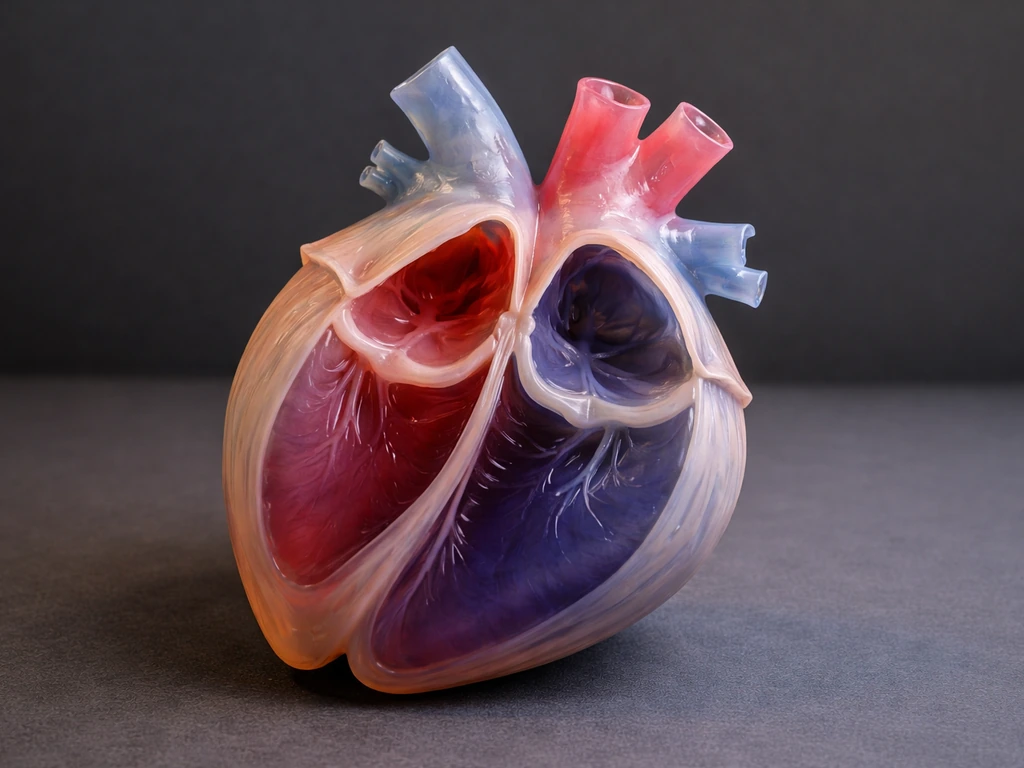
Birds have exactly one heart. It is a four-chambered organ (two atria and two ventricles) that works a lot like a mammal's heart, pumping blood through two completely separate circuits: one to the lungs, and one out to the rest of the body. No bird species has two hearts, and none has ever been found with anything other than this single, compact, high-performance pump.
How Many Hearts Does a Bird Have? One Heart Explained

Marcus Chen
11 Jul 2026
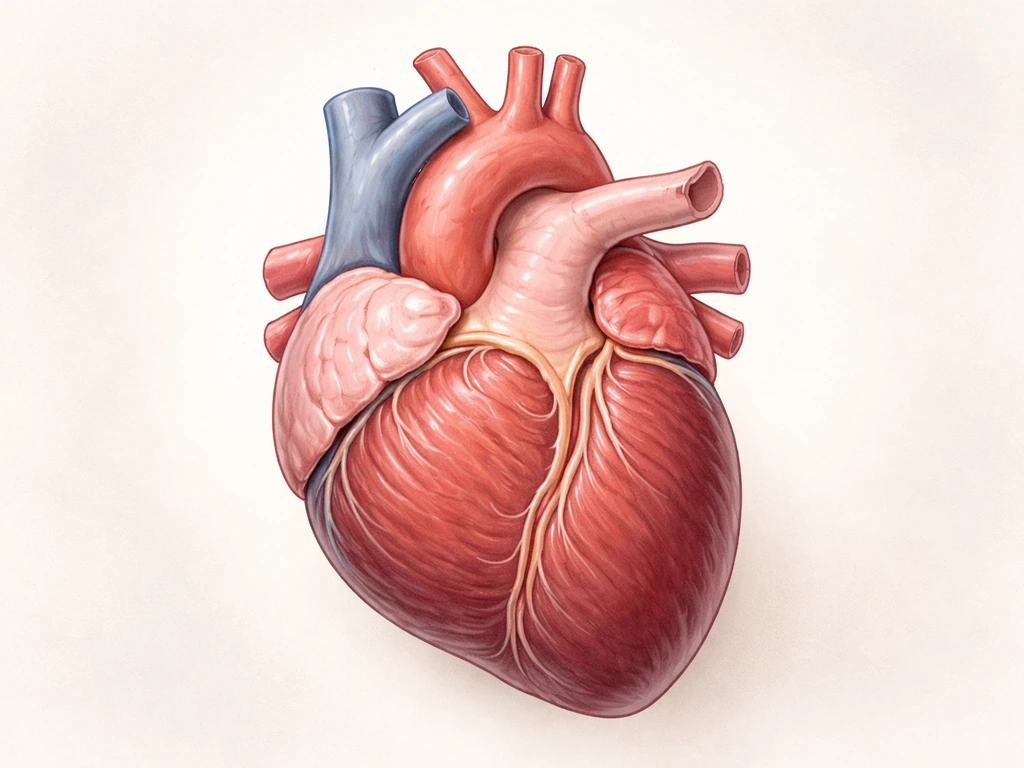
One heart, not two (or more)
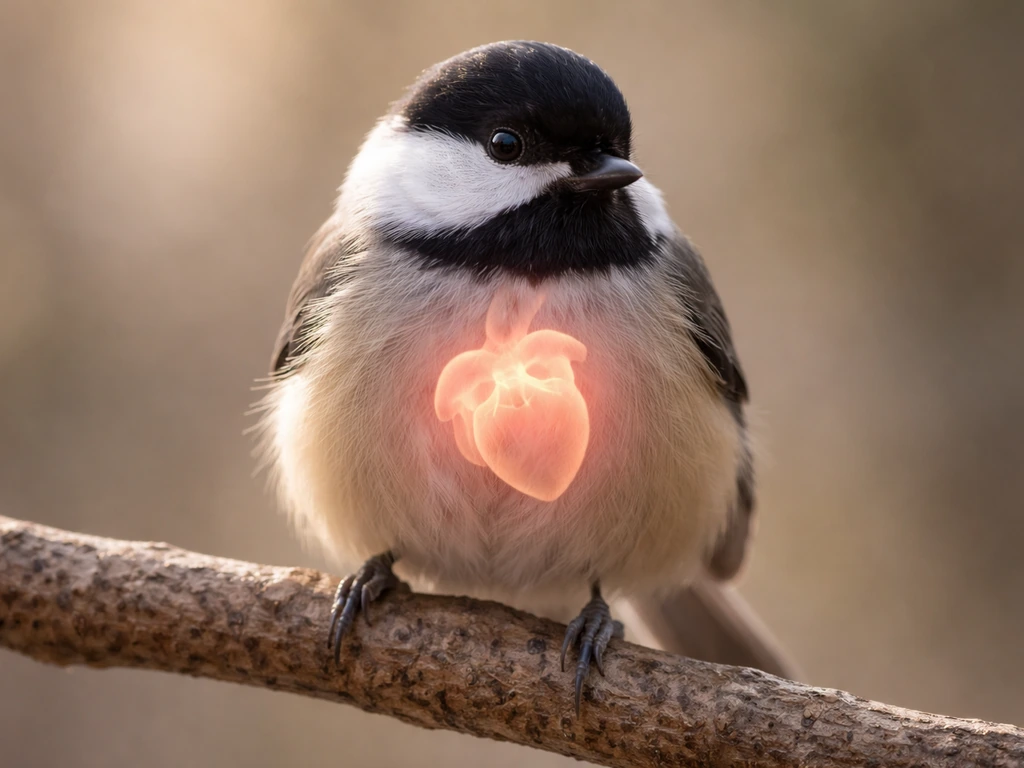
I get why the question comes up. Birds have famously fast metabolisms, some species have resting heart rates over 1,000 beats per minute, and the demands of powered flight are intense enough that it feels like one heart might not cut it. But every bird studied, from a hummingbird to an ostrich, has a single heart. If you are wondering about a different body system too, you might also ask how many stomachs a bird has, since birds digest food differently than mammals how many stomachs does a bird have. The "extra" work gets handled not by having more hearts but by having a very efficient four-chambered one that beats incredibly fast and pushes a large volume of blood per stroke relative to body size.
The confusion sometimes comes from mixing up "chambers" with "hearts." Fish have a two-chambered heart (one atrium, one ventricle). Most reptiles and amphibians have three chambers. Mammals and birds both arrived at four chambers, which is the most efficient design vertebrate evolution has produced. That distinction, four chambers inside one heart, is worth holding onto because it clears up most of the misunderstanding behind the question.
What a bird heart actually looks like inside
Crack open any vertebrate anatomy textbook and the avian heart diagram will show four clearly labeled spaces: the right atrium, the right ventricle, the left atrium, and the left ventricle. The whole organ is enclosed in a tough fibrous bag called the pericardial sac (or pericardium), which holds it in place and provides a small cushion of fluid so it can beat without grinding against surrounding tissue.
The left ventricle is noticeably the largest and thickest-walled of the four chambers. That is not an accident. It is the chamber responsible for pushing oxygenated blood out through the aorta to every tissue in the body, and during active flapping flight it works harder than almost any other structure in the bird. Research on birds with unusually small left ventricles (like tinamous, a group of ground-dwelling birds) shows they tire out fast and build up more lactic acid during flight, which is direct experimental evidence that left ventricular size and output are the limiting factor in avian flight endurance.
How blood flows through the four chambers
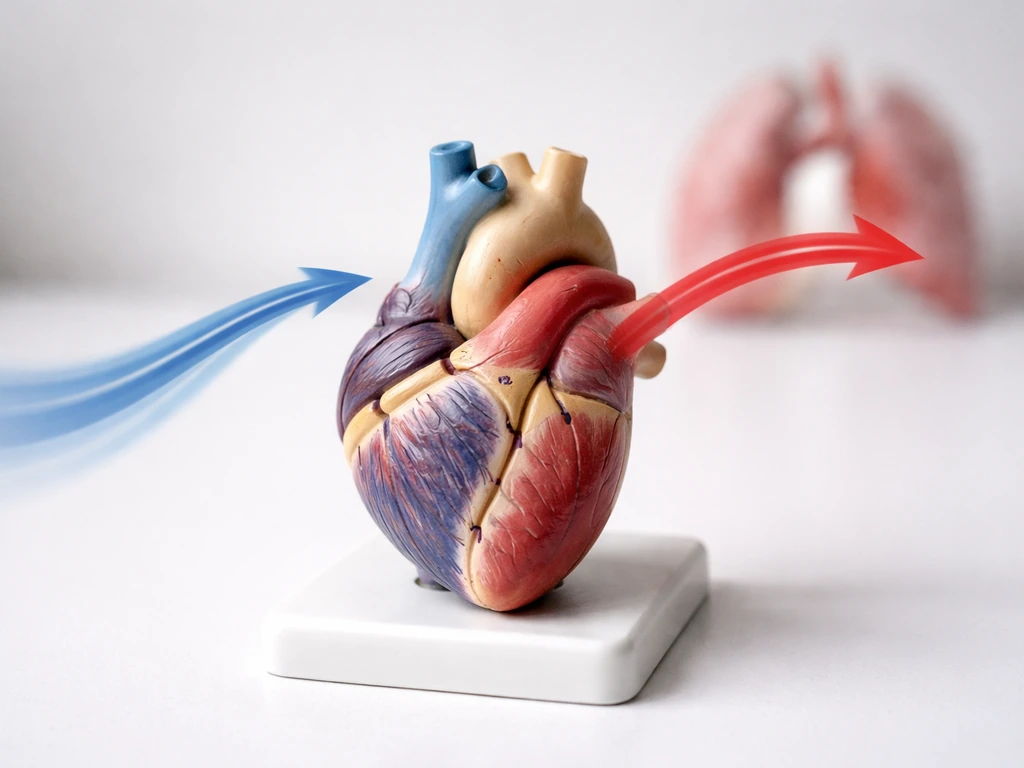
The path blood takes through a bird's heart is a tidy loop that repeats with every heartbeat. Blood enters the right atrium, goes to the right ventricle and then through the pulmonary arteries to the lungs, and after oxygenation returns via the pulmonary veins to the left atrium and left ventricle, then exits through the aorta to the systemic circulation a tidy loop that repeats. Here is the sequence, step by step:
- Deoxygenated blood from the body arrives at the right atrium.
- It moves down into the right ventricle, which squeezes it out through the pulmonary arteries toward the lungs.
- In the lung capillaries, carbon dioxide is shed and fresh oxygen is picked up.
- Oxygenated blood flows back via the pulmonary veins into the left atrium.
- It drops into the left ventricle, the thickest chamber, which pumps it out through the aorta to the entire body.
- After delivering oxygen to muscles and organs, the blood returns deoxygenated to the right atrium and the cycle repeats.
The critical design feature here is that the right and left sides of the heart are completely separated by a wall called the septum. Oxygenated and deoxygenated blood never mix. This is the key upgrade over a three-chambered heart (like most reptiles have), where some mixing does occur. Keeping the two streams separate means every cell in the bird's body gets the richest possible oxygen supply, which matters enormously when you are asking those pectoral muscles to flap a thousand times per minute.
Where the bird heart sits in the body
The heart is tucked into the cranioventral part of the coelomic cavity, which is the bird's main body cavity (birds do not have a separate diaphragm-divided thorax and abdomen the way mammals do). It sits slightly to the right of the body's midline and is in close contact with the sternum (the keel bone) at the front. The lungs lie on either side. Birds also have a distinctive respiratory system with multiple air sacs and a flow-through set of lungs, not two separate sets like humans The lungs lie on either side..
If you are looking at a ventral-view diagram (the view from the belly side, which is the most common orientation in textbooks and anatomy atlases), the heart appears as a cone-shaped structure near the top-center of the chest cavity, with the broad base of the cone toward the head and the pointed apex angling slightly downward. You will typically see the pericardial sac labeled around it, and the major vessels (aorta, pulmonary arteries) emerging from the top. The NCSU avian anatomy guide, for example, labels the pericardial cavity, external jugular vein entry points, and the auricle tips of the atria, which are the small ear-like flaps visible on the surface of the heart.
Why birds ended up with this heart design
Powered flight is one of the most energy-expensive activities any animal can perform. A bird cruising at speed can consume oxygen at rates that would floor a resting mammal of similar size. Delivering that oxygen from the lungs to the flight muscles fast enough requires a cardiovascular system with no bottlenecks. The same kind of size-and-flow constraints show up in the way birds squeeze through tiny gaps, so you may wonder how small of a hole a bird can fit through Delivering that oxygen from the lungs to the flight muscles. The four-chambered heart solves this by running two separate, efficient circuits simultaneously. There is no detour, no mixing, no wasted pumping capacity.
Birds and mammals both evolved four-chambered hearts independently, which is a classic example of convergent evolution: two lineages arriving at the same solution because the problem (high aerobic demand) was the same. Reptiles, by contrast, mostly get by with three chambers because their lower metabolic rates and ectothermic (cold-blooded) lifestyle do not demand the same oxygen throughput. blank" rel="noopener noreferrer">Aortic arch development and routing can change during embryology, which helps explain differences in how major vessels are organized across vertebrate lineages, including avian circulation. Birds are endothermic, meaning they generate their own body heat, and that alone adds a massive baseline oxygen cost even before they take flight.
Research framing this as the "heart-size hypothesis" shows that larger relative heart size (and especially larger left ventricular volume and stroke output) predicts aerobic flight capacity across species. Birds with bigger hearts for their body size can sustain longer, faster, or more powerful flight. The heart is not just a passive pump here; it is one of the primary performance limiters.
Misconceptions worth correcting

A few wrong ideas float around on this topic, and they are worth naming directly so you can confidently dismiss them: If you are wondering about bird breathing anatomy, you may also be asking related questions like how many chambers or "holes" a bird's heart has how many holes does a bird have.
- "Birds might have two hearts because they need so much oxygen." No. More hearts would not solve the oxygen delivery problem nearly as well as a larger, more efficient single heart does. Nature opted for better, not more.
- "Four chambers means four hearts." This is the most common mix-up. Chambers are compartments inside one heart, separated by valves and walls. One organ, four rooms.
- "Birds and reptiles have the same heart." Close but not quite. Most reptiles have three chambers (two atria and one ventricle, with that ventricle partially divided). Birds have four fully separated chambers, which is a functionally significant upgrade.
- "A faster heartbeat means a different heart structure." Hummingbirds and sparrows beat much faster than eagles, but all have the same four-chamber blueprint. Speed is a matter of physiology and size, not a different type of heart.
- "Fish also have four-chambered hearts." Fish have two chambers (one atrium, one ventricle), which is why they are less efficient at delivering oxygen and why they cannot sustain the aerobic output that birds can.
How to verify this for yourself
If you want to double-check this or go deeper, here are the most reliable routes to confirming the anatomy: Since the number of ribs varies by species, a good anatomy reference can give you a more exact count for the bird you are studying.
- Search for "avian heart anatomy diagram" or "bird cardiovascular system labeled" in Google Images. Look for diagrams that show the four chambers with labels: right atrium, right ventricle, left atrium, left ventricle. Any credible veterinary or zoology source will show exactly one heart with four labeled chambers.
- Look up the NCSU Guided Tour of Avian Anatomy (freely available as a PDF from the North Carolina State University College of Veterinary Medicine). It includes semi-schematic ventral-view illustrations of the avian heart inside the pericardial sac, with structures labeled the way you would see them in a real dissection.
- Search PubMed or Google Scholar for "avian heart four chambers" or "bird cardiac anatomy." The PMC article titled 'Follow Me! A Tale of Avian Heart Development' is a readable, well-illustrated open-access paper that walks through the chamber structure and why the left ventricle is so dominant in birds.
- If you have access to a natural history museum with an avian specimen room or a taxidermy collection, ask if they have any preserved bird specimens. Even from the outside, the cone-shaped heart is visible in the thoracic cavity and you can see exactly one of them sitting just behind the sternum.
- For a basic sanity check, the Cleveland Clinic's heart anatomy page (focused on humans) describes the same four-chamber layout, which confirms birds and mammals share this structure. The bird version is just scaled, positioned slightly differently, and beats much faster.
One thing worth knowing as you explore: some of the best detailed comparisons of bird heart anatomy also touch on how bird lungs work alongside the heart to maximize oxygen extraction. The two systems are closely linked in avian biology, and understanding both gives you a much clearer picture of why birds can do the extraordinary aerobic things they do. The same goes for the four-chambered structure itself: if you want to go deeper on how each chamber functions, there is a whole world of detail around chamber roles, valves, and how the cardiac cycle works in birds specifically.
FAQ
Do any birds have more than one heart, or a “second” heart-like organ?
No. Birds have one true heart organ. If you see descriptions of extra “pumps,” they usually refer to blood vessels, accessory circulatory structures, or the heart’s chambers and valves, not separate hearts.
Is the “four chambers” idea the same as having four hearts?
No. A bird’s heart contains four chambers (two atria, two ventricles). The chambers divide blood internally so it stays separated, but the whole system is still a single organ with one outer pericardial sac.
Why do some diagrams look like there are extra parts inside the heart?
Because anatomy charts may highlight internal features like auricles (small flaps on the atria), valve structures, or the openings of major vessels. Those details can make the heart look more complex than “one heart,” but they are not separate hearts.
Could a diseased bird ever have an anatomical condition that changes the number of hearts?
The number of hearts is not something disease typically changes. Conditions may impair valve function, cause shunts (mixing that should not happen), or change heart size, but they do not normally create a second heart organ.
Do all birds have the same heart arrangement, or do different species vary?
The basic blueprint is consistent, one four-chambered heart with complete septal separation. Species differences tend to show up in relative sizes of chambers (especially the left ventricle) and in how the heart adapts to different flight styles, rather than in the heart count.
How does the single-heart setup support extremely high heart rates in small birds?
Small birds rely on very fast cardiac cycles and efficient stroke volume for their size. The left ventricle’s output and the complete separation of right and left sides help keep oxygen delivery high even when beats per minute are extreme.
Next Article
Does a Bird Have a 4-Chambered Heart? How It Works
Learn if birds have a 4-chambered heart and how their atria and ventricles separate blood for efficient flight.