A juvenile bird is specifically in its first set of real feathers, right after losing its down. If you're also wondering about weaning and how it relates to development, the weaning bird meaning is essentially the transition from being fed by parents to feeding itself juvenile bird. An immature bird is any bird that hasn't reached full adult plumage yet, which includes juveniles but also covers older young birds still working through multiple molts.
Juvenile vs Immature Bird: How to Tell the Difference

Marcus Chen
2 Jun 2026
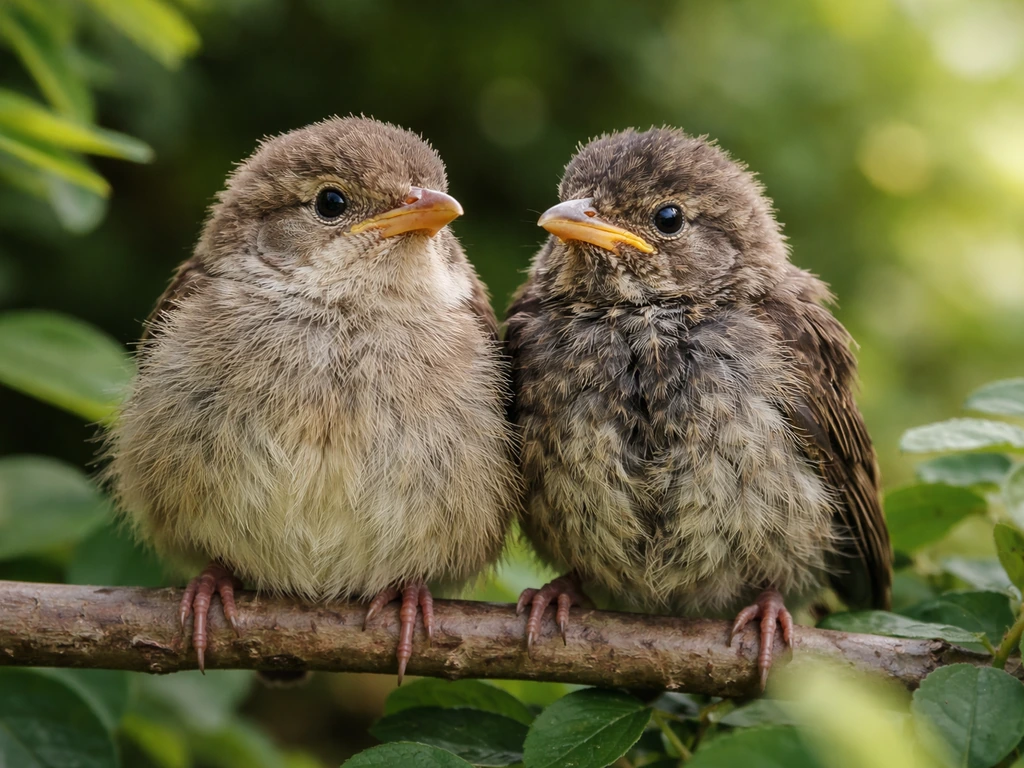
So every juvenile is technically immature, but not every immature bird is a juvenile. That one sentence clears up most of the confusion, but the details actually matter a lot if you're trying to figure out what you're looking at or whether a bird you found needs help.
What "juvenile" actually means in bird biology
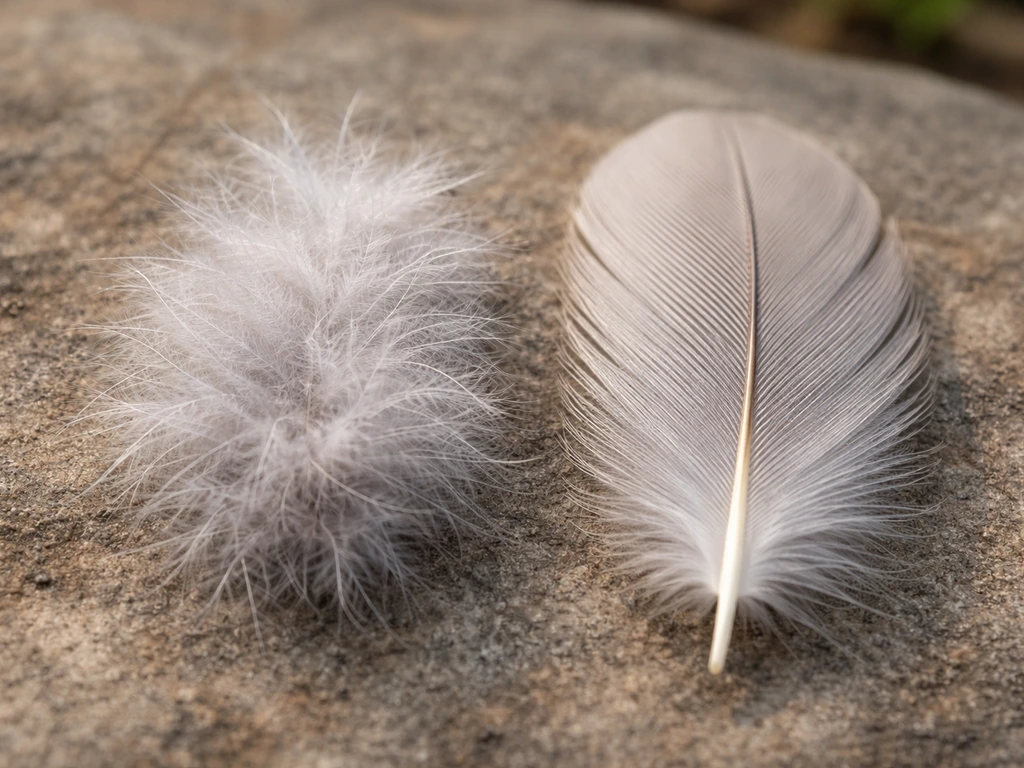
In strict biological terms, a juvenile bird is wearing its first coat of pennaceous (that just means proper, vaned) feathers. Before this, the bird had down. After the egg hatches, down keeps the chick warm while the flight and body feathers haven't grown in yet. The moment those first real feathers replace the down, the bird is technically in juvenal plumage. eBird defines it plainly as "a bird in its first plumage of non-downy feathers." That's a tight, specific window.
Juvenal plumage tends to look different from adult plumage in most species. Britannica describes it as often drab, streaked, or spotted. That's not accidental: those muted, broken patterns help young birds blend into nest material and leafy surroundings right when they're most vulnerable. The camouflage function is a genuine biological advantage, not just a developmental quirk.
Here's the slightly annoying part for anyone trying to use the word consistently: birders, field guides, and scientists don't all use "juvenile" the same way. In casual birding, you'll often hear the word applied loosely to any young-looking bird. In the scientific molt-plumage system, it means that exact first-feather stage only. Keep that in mind when you're reading a field guide vs. a research paper.
What "immature" actually means
Immature is the broader umbrella. eBird's definition is: "a bird in any non-adult plumage, including (but not limited to) juvenile plumage." So it covers the juvenile stage, but it also covers everything that comes after juvenal plumage until the bird finally looks like a proper adult. For a robin or a sparrow, that gap might be just a few months to a year. For a Bald Eagle, it takes about five years of progressively changing plumage before the bird shows that classic white head and tail.
The reason the immature period can stretch so long in some species comes down to molt cycles. Many birds go through a series of molts, each replacing old feathers with newer ones, and each cycle can bring them a little closer to adult appearance. Princeton ornithology resources describe how some long-maturing species go through several years of these intermediate plumages before the definitive adult look locks in. In raptors especially, HawkWatch International notes that birders often track "2nd-year" or "subadult" plumages, which are all still technically immature.
How to spot a juvenile bird in the field
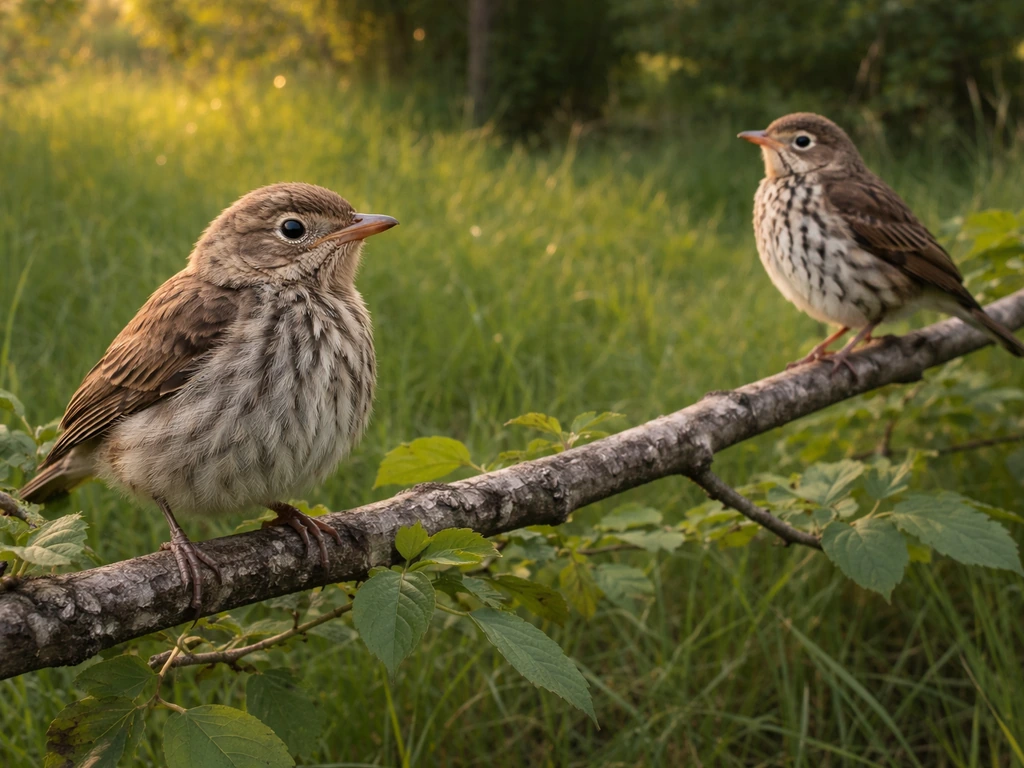
Juveniles are usually easy to pick out if you know what combination of cues to look for. If you want to get more specific, the same cues can help you tell if a bird is a fledgling rather than just any young juvenile. The tricky part is that the window is short in many small birds. A song sparrow, for example, might be in obvious juvenile plumage for only a few weeks before molting into something much more adult-like. So timing matters: late spring through mid-summer is when you're most likely to see freshly fledged juveniles in most of North America.
Plumage cues
- Streaky, spotted, or washed-out coloring compared to the adult of the same species, especially on the breast and back
- Fluffy or loose-looking feather texture, particularly around the head and flanks, because the feathers are fresh and haven't compacted or worn yet
- Pale or yellowish gape (the fleshy edge at the corner of the beak), which shrinks and darkens as the bird matures
- Short, rounded tail feathers with pointed tips, compared to the broader, more squared-off tail feathers of adults in many species
- Wing feathers that look uniformly fresh (same wear level across all flight feathers), because they all grew in at the same time
Body proportions
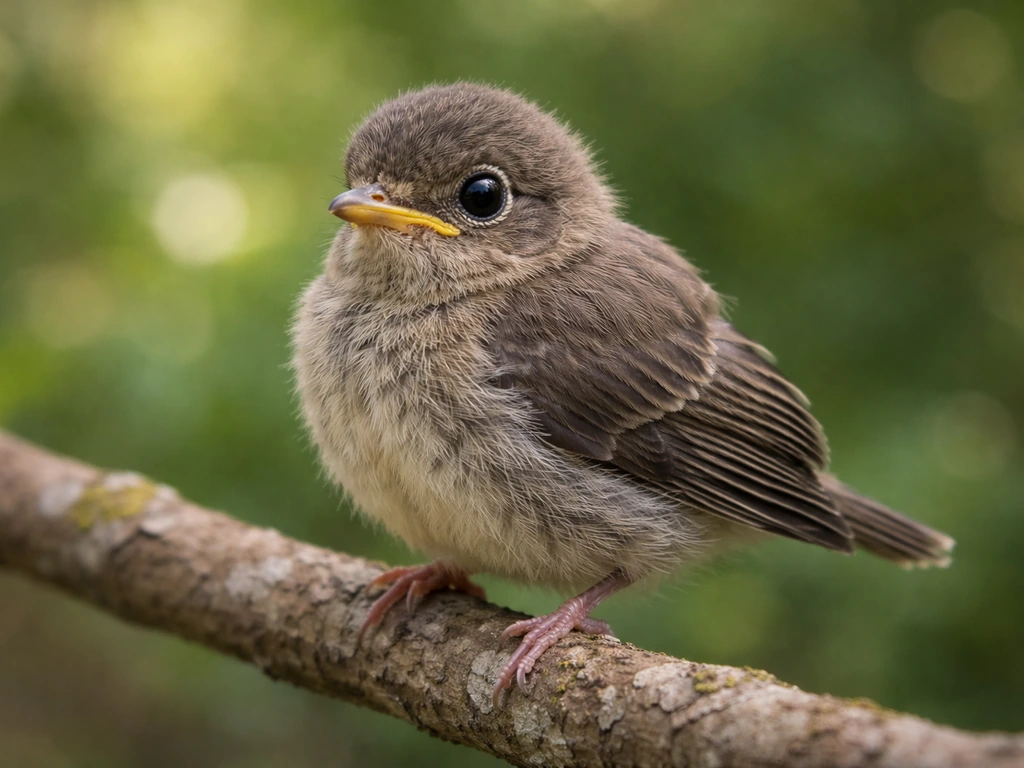
Juvenile birds often look slightly big-headed and big-eyed relative to their body, especially right after fledging when their skeleton is still filling out. The wings may look a touch short for the body, and the tail might not be fully grown. If you're looking at a bird on the ground that seems "almost right" but slightly off in proportions compared to what you're used to seeing, juvenile is a good working hypothesis.
Behavior cues
Behavior is honestly one of the most reliable juvenile indicators. Juveniles beg. They flutter their wings rapidly at adults and call with an insistent, often high-pitched peeping. They may look capable of flight but still follow adults around soliciting food. They're also noticeably less coordinated, landing awkwardly and sometimes just sitting on the ground looking confused. If a bird is doing all that and looks like a smaller or duller version of an adult nearby, you're almost certainly watching a juvenile.
How to spot an immature bird (past the juvenile stage)
Once a bird moves past the juvenile stage, it becomes harder to age precisely, and this is where "immature" as a category really earns its keep as a term. BTO describes a very common passerine pattern: juvenile body feathers get replaced within weeks of fledging, but the juvenile wing and tail feathers stick around until the bird's first complete molt the following year. That means for much of its first year of life, a bird can look mostly adult-like in body but still carry those original juvenile wing feathers from when it first fledged.
David Sibley's field notes make this practical: once young songbirds complete their late-summer molt into first adult-like plumage, aging them becomes genuinely difficult. The clues that remain are eye color (often duller or differently colored in first-year birds), the shape and wear of retained juvenile flight feathers, and sometimes subtle differences in how the tips of the tail or wing feathers look. That's why experienced birders spend a lot of time looking at wing feather edges and comparing old vs. new feather generations in the wing.
In larger, longer-maturing species, the immature stages are more visually obvious. An immature Bald Eagle is dark all over. An immature Red-tailed Hawk often lacks the brick-red tail that defines adults. These birds are physiologically capable of many adult behaviors but haven't completed the full developmental arc to breeding-ready adult plumage. The key point: immature birds may not yet be reproductively active even if they look mostly adult.
Why these two terms get mixed up so often
I'll be honest, I mixed them up for years. The confusion comes from two directions at once: birders using the terms loosely, and the fact that the terms genuinely overlap in meaning depending on context.
In casual birding conversation and most field guides aimed at general audiences, "immature" and "juvenile" are often used interchangeably for any young-looking bird. That's fine for informal identification, but it breaks down when you're trying to be precise. HawkWatch International makes this point clearly in their raptor terminology guidance: the scientific molt-plumage age-class system distinguishes juvenile, formative, first-basic, second-basic, and so on, while everyday birding shorthand just says "immature" for all of it.
Species differences make it worse. A juvenile American Robin looks distinctly spotty for only a few weeks. A juvenile Herring Gull stays brown and messy-looking for nearly four years. So saying "that bird looks juvenile" means something very different depending on whether you're watching sparrows in a hedge or gulls at a marina. The California Bird Records Committee documentation reflects this: definitive adult appearance can take anywhere from two years in most passerines to three or more years in some larger species.
The ornithological community has tried to address this with formal systems. The WRP (Wolfe-Ryder-Pyle) system used in banding and research assigns very specific age codes based on molt cycles rather than vague age labels. But that level of detail rarely trickles into everyday field use, so the muddle continues.
Side-by-side comparison of the two terms
| Feature | Juvenile | Immature |
|---|---|---|
| Definition | First coat of non-downy feathers only | Any non-adult plumage, including juvenile |
| Duration | Short (weeks in small birds, months in larger ones) | Can last months to several years depending on species |
| Plumage appearance | Often streaked, spotted, drab; uniformly fresh feathers | Variable; may look nearly adult but retain subtle immature traits |
| Typical behavior | Begging, wing-fluttering, following adults, uncoordinated | More independent, but may still lack full breeding behavior |
| Breeding status | Not breeding | Not yet breeding (by definition) |
| Examples | Freshly fledged robin with spotted breast | First-year Bald Eagle (dark plumage), second-year gull |
| Birding vs science usage | Scientific usage is strict; birding usage sometimes loose | Used as umbrella in both birding and science, but scope varies |
Quick decision guide for real sightings
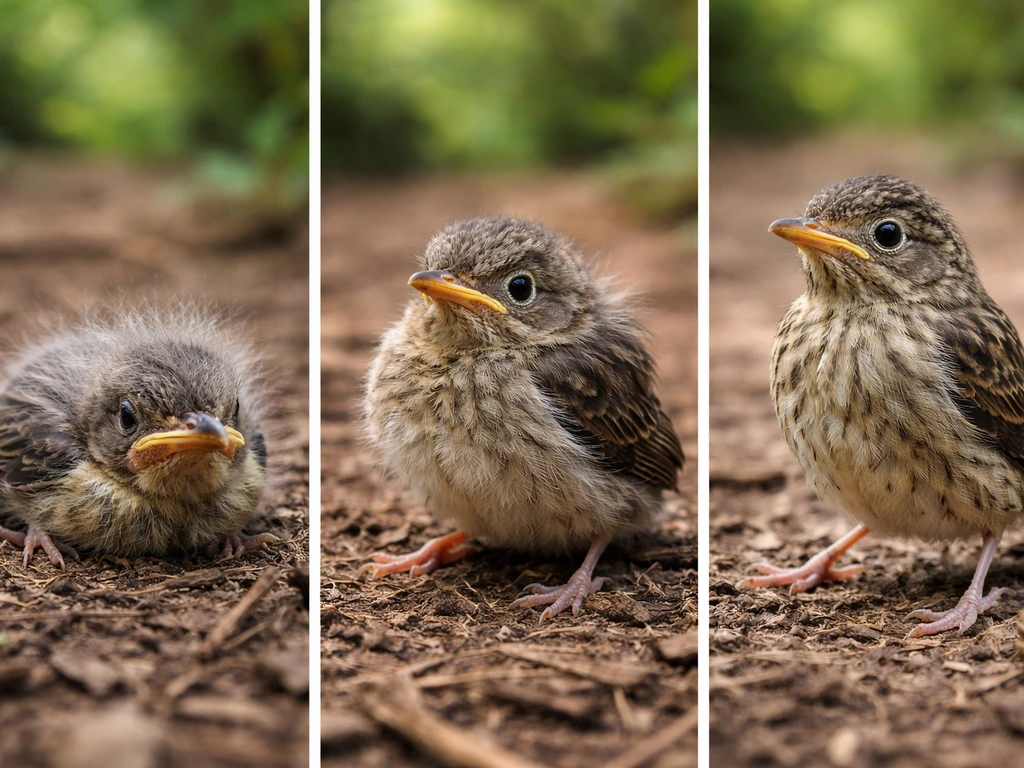
If you're standing in your yard or out on a trail and you want a fast working answer, run through this sequence:
- Does the bird have any down still visible, especially on the head? If yes, it's a nestling, not even juvenile yet. It genuinely needs its nest.
- Does it have a full set of feathers but look streaky, spotted, or dull compared to adults nearby? Is the gape still pale or yellowish? Is it begging or calling persistently at adults? That's a juvenile.
- Does it look mostly like an adult but something is slightly off: eye color a bit duller, wing feathers unevenly worn, tail feathers a mix of older and fresher? That's likely a first-year immature bird past the juvenile stage.
- Does it look adult in most respects but you know the species takes several years to mature (large raptors, large gulls, herons)? It may still be immature even if it looks largely adult-patterned.
- Is it on the ground but fluttering and hopping? If it has a full set of feathers, it's probably a fledgling doing normal fledgling things. This is a separate topic worth reading up on, as fledglings on the ground are almost always fine.
For found-bird scenarios where you're not sure of the age, focus less on nailing the exact label and more on whether the bird can function: can it stand, does it respond to your presence, does it have obvious injuries? That assessment matters more than whether you call it a juvenile or an immature.
What to do if you find a young bird
The most important thing to do first is nothing. I mean that seriously. Watch from a distance, preferably from inside if you're at home, and see whether a parent comes. The Wildlife Center of Virginia recommends watching for up to half a day before concluding a bird is truly orphaned. Parent birds are often nearby and won't approach if you're hovering.
When the bird probably doesn't need help
- It's fully feathered and hopping around on the ground (this is normal fledgling behavior, not an emergency)
- It flew into a window and is sitting stunned but otherwise looks intact (give it an hour in a quiet spot)
- Parents are clearly visiting it regularly, even if they're also keeping distance from you
- It's alert, reacting to your presence, and not showing signs of injury
When you should actually intervene
- The bird is featherless or has eyes closed (it's a nestling and needs to go back in its nest, or get to a rehabilitator fast)
- There is active bleeding, a visibly broken wing or leg, or the bird is dragging a limb
- It's been on the ground for hours with no parent visit and there's a known predator threat nearby
- You can confirm the parent is dead
- The bird is cold, limp, or unresponsive
The U.S. Fish and Wildlife Service advises that featherless birds with closed eyes are the main cases that clearly need immediate help. If the bird has feathers and seems physically fine, leaving it alone is usually the right call. Unless a fledgling is injured, Washington Department of Fish & Wildlife says to leave it where it is and only relocate safely if needed, otherwise contact a rehabilitator when appropriate. The Tufts Wildlife Clinic adds that if the bird is a nestling that fell from a known nest, placing it back is fine. The old myth that parent birds reject chicks after human touch is not true.
If you do need to handle the bird, use a clean cloth or lightweight gloves, keep it in a small, ventilated cardboard box in a warm and quiet spot, and do not offer food or water unless instructed by a rehabilitator. Audubon and the Washington Department of Fish and Wildlife both recommend contacting a licensed wildlife rehabilitator rather than attempting to raise or treat a young bird yourself. Your state wildlife agency website will have a list of permitted rehabilitators nearby.
A note on the biology behind why this matters for handling
Young birds in the juvenile stage are going through rapid feather development that's directly tied to thermoregulation. What you might notice during that period is behaviors like preening, which is one way birds help keep their feathers functional as they grow. Their ability to maintain body temperature depends heavily on how complete their feather coverage is. A juvenile with incomplete wing and tail feathers is also genuinely limited in flight capability, not just inexperienced.
Knowing where a bird is in its developmental timeline helps you understand how fragile it actually is: a true nestling or very fresh juvenile has much less physiological reserve than an immature bird that's been independent for months. That gap in resilience is real, and it's worth factoring in before you decide whether a bird can wait for help or needs it now.
FAQ
If a bird looks “almost adult,” should I call it juvenile or immature?
Use “immature” for the safe middle ground. “Juvenile” usually only fits the first non-down feather stage, so once the bird has gone through early feather replacement, “immature” better matches the broader non-adult plumage reality.
How can I tell the difference between a nestling and a juvenile if both look young?
Focus on feather coverage and the location/context. Nestlings are typically featherless or only partially feathered and cannot perch or hop normally, juveniles usually have enough feather growth to stand, hop, and beg, and they are often found near ground-level fledging spots.
Is it true that parent birds reject babies after humans touch them?
No. In general, myths about automatic rejection are not supported. The more reliable rule is observational, watch from a distance and see whether adults return, then contact a rehabilitator if the bird seems unfeathered or injured.
What’s the biggest mistake people make when trying to age “juvenile vs immature” in the field?
Relying on one cue, like “drab colors,” without checking timing or molt stage. Many species keep non-adult plumage for months or years, so it helps to compare multiple cues (feather retention on wings, tail, eye appearance, and behavior like begging).
Can I use wing and tail feather clues to age a bird without being an expert?
Yes, start with what looks old versus new. If part of the wing and tail looks retained from the fledgling stage while the body looks more adult-like, that pattern often signals an immature first-year bird rather than a true juvenile stage.
What should I do if I find a “begging” bird on the ground, but it has feathers?
Treat it as potentially capable of being cared for. Watch at a distance first, parent birds may be nearby and less likely to feed if you are hovering. Only intervene if it seems injured, stranded with no adults returning, or matches urgent criteria (for example, featherless with closed eyes).
Does “juvenile behavior” always mean the bird is truly a juvenile?
Not always. Begging and awkward landing are common in fledglings, but some immature birds still exhibit juvenile-like behavior early on. Pair behavior with feather timing cues (especially wing and tail development) before concluding it is in the very first plumage stage.
How long is “too long” to wait before getting help for a found young bird?
If adults do not return after a substantial watch period, escalate. A practical approach is to observe for hours from a safe distance, then contact a licensed wildlife rehabilitator sooner for injured birds, exposed eyes, or obvious weakness.
If a bird is fully feathered, is it automatically safe to leave it alone?
Usually it is safer to leave it alone unless there are clear problems. Full feathers do not guarantee health, so check for injuries, bleeding, inability to stand or move normally, and signs of being stranded away from cover or nest sites.
Do “immature” birds always lack breeding capability?
Often they are not breeding-ready yet even if they look close to adult. Plumage non-adulthood can coincide with immature reproductive readiness, especially in long-maturing species like many raptors.
Should I report the bird as “juvenile” or “immature” when submitting a sighting?
When uncertain, use “immature” or the closest age class your source expects, because “juvenile” is a narrower first-plumage label. If your platform supports more specific molt-based categories, choose the most conservative option that fits the cues you actually see.
Next Article
How Much Weight Can an Osprey Bird Carry: Numbers & Limits
How much weight can an osprey carry: typical prey 0.5–2 kg (≈30–100% body mass); anatomy, flight limits and evidence.