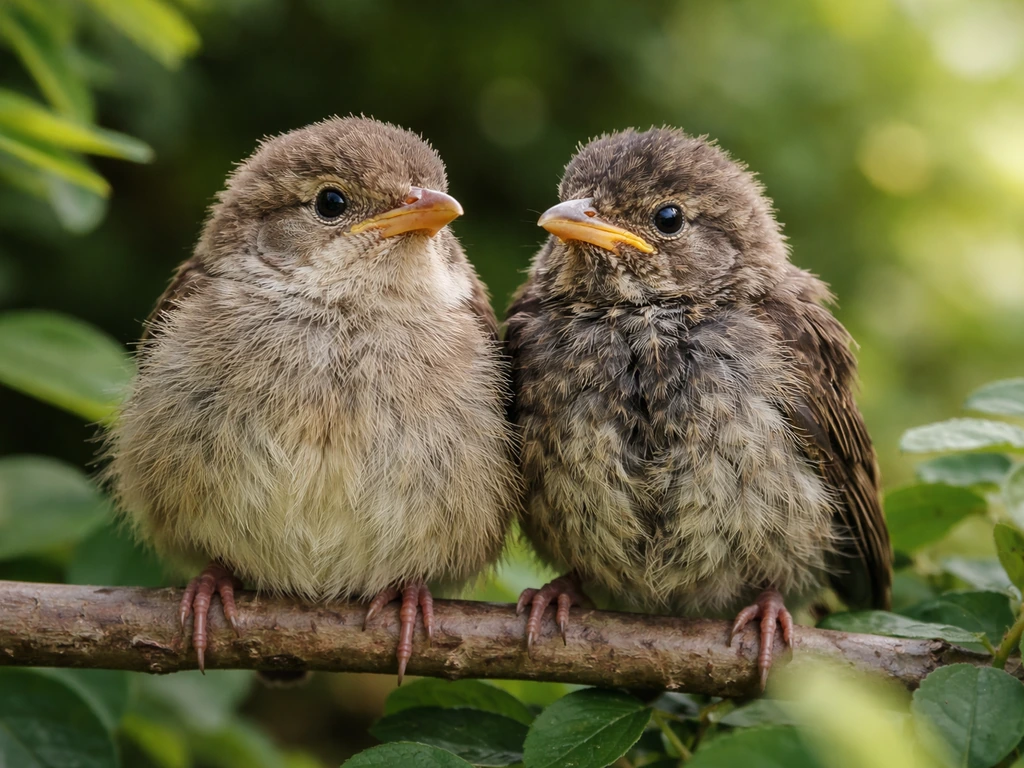
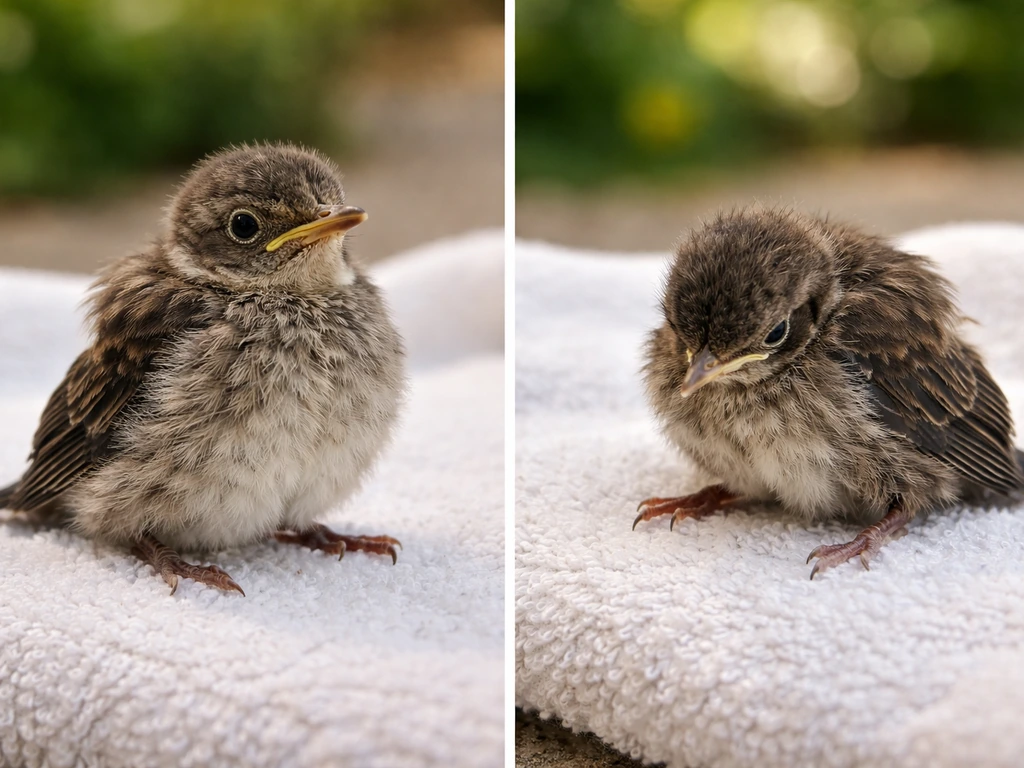
A fledgling is a young bird that has grown most of its feathers, has left the nest on its own, and is in the short awkward phase between nest life and full independence. Once the basics of caring for young birds are clear, it can also help to understand what is bird preening and why birds do it. If the bird you found is covered in feathers (even if they look a bit scraggly), can stand or hop, and has a short but visible tail, it's almost certainly a fledgling. A quick comparison like ripped rooster vs skinny bird can also help you decide whether a bird is genuinely underdeveloped or simply looks awkward for its stage. That means it's exactly where it's supposed to be, and the best thing you can do is blank" rel="noopener noreferrer">walk away and leave it alone. The parents are almost certainly nearby and still feeding it.
How to Tell If a Bird Is a Fledgling: Quick Guide

Fledgling vs nestling vs juvenile: the quick mental checklist
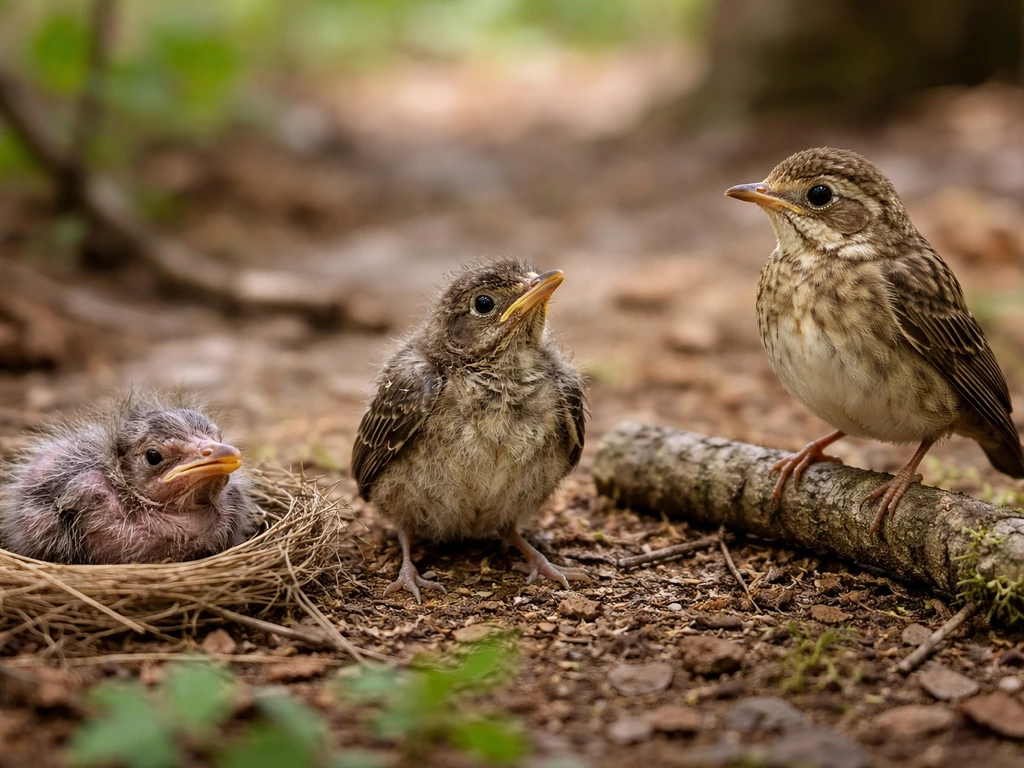
These three terms get used interchangeably all the time, but they describe genuinely different stages of bird development, and mixing them up leads to very different (and sometimes harmful) decisions. Here's how to think about them quickly.
| Stage | Feather coverage | Mobility | Should it be on the ground? |
|---|---|---|---|
| Nestling | Bare skin or sparse pin feathers (the waxy-sheathed early feathers) | None — can barely lift its head | No. Needs to go back in or near the nest. |
| Fledgling | Mostly feathered, short tail, may have some fluffy down at the neck or head | Hops, flutters, grips branches clumsily | Yes. This is totally normal fledgling behavior. |
| Juvenile | Full feather coat, though plumage may differ from adult coloring | Flies, even if not gracefully | Occasionally, but it should fly or flutter away when approached. |
The single fastest check: look at the feathers. No feathers or just a fuzz of down with visible pink skin? Nestling. Feathers covering most of the body with a stubby little tail nub? Fledgling. Full feather coat and reasonably coordinated? Juvenile or young adult. This three-second scan resolves most of the confusion before you even need to check anything else.
What to look for on the body: feathers, wings, and tail
Feather development is the most reliable physical marker, and once you know what to look for, it's obvious. A fledgling's body feathers (called contour feathers) have mostly grown in and replaced the soft natal down it was born with. The wings will have real flight feathers, called primaries and secondaries, though they may still be partially sheathed in those waxy pin-feather cases at the base. The tail feathers are typically the most telling: short, stubby, and obviously still growing. In many songbird species, the tail on a fledgling might be only a third to half the length it will eventually reach.
The head is often where down hangs on the longest. You'll sometimes see a fledgling that looks fully feathered from the body down but still has a tuft of fluffy baby down on the crown. That's completely normal and actually a helpful sign that you're looking at a fledgling rather than a juvenile. The beak may also still look slightly soft and wide at the corners, a feature called the gape, which is an adaptation that helps parents target food into the open mouth. A wide, fleshy gape combined with short-tailed feathered body is a nearly certain fledgling combination.
Compare the bird's overall body size to any nearby nest or to the species you think it is. Fledglings are often close to adult size in body length even before they can fly, which surprises a lot of people. A robin fledgling, for instance, might be almost as large as its parents but still stumbling around on the lawn. Size alone isn't a reliable indicator of readiness.
Movement and behavior signs: standing, hopping, calling, and coordination
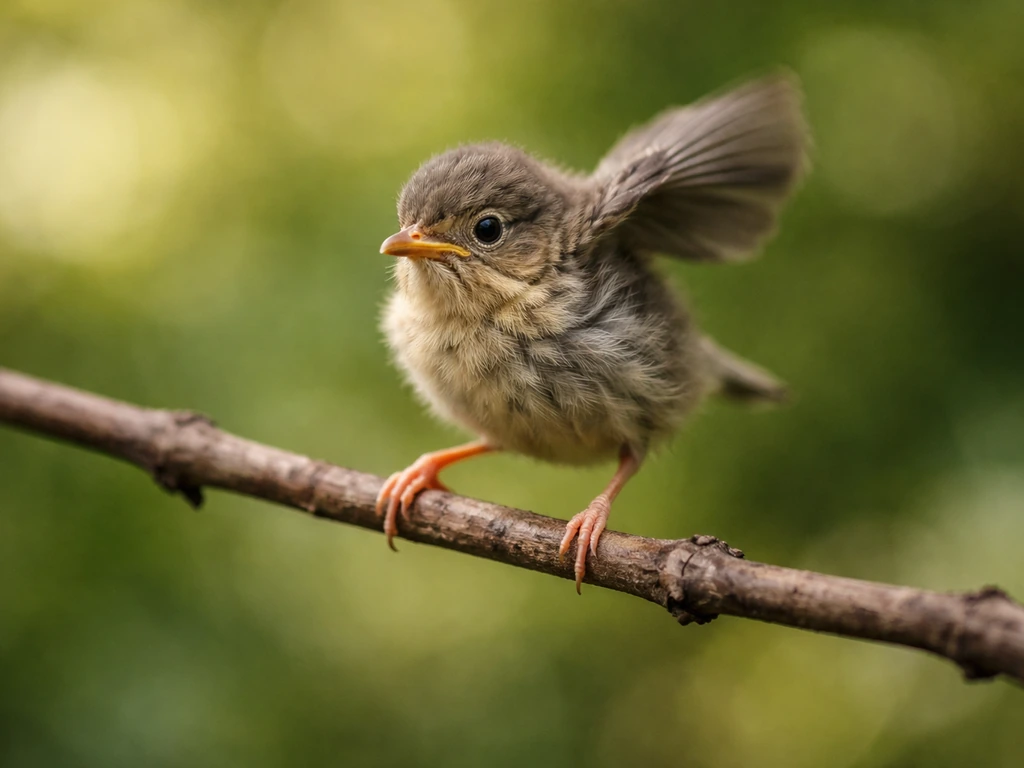
How a young bird moves tells you almost as much as how it looks. A fledgling can stand upright on its own legs, grip a branch or twig (even if it slips occasionally), and hop around with purpose. It won't be graceful. It will look confused and maybe a little panicked. But it moves. A nestling, by contrast, can barely support its own head and will thrash uselessly if placed on the ground.
Fledglings often make a persistent, repetitive call, usually a sharp chip or peeping sound repeated over and over. This is a contact call, and it serves a real biological function: it tells the parents where to bring food. If you hear a young bird calling loudly from a shrub or the base of a tree, that's a fledgling doing exactly what it's supposed to do. The parents hear it too, and they're responding. Your presence is actually disrupting that process, which is one reason the advice is always to back up and give the bird space.
Watch for wing-fluttering directed at nearby birds. Fledglings beg by quivering their wings rapidly and opening their beaks wide when a parent approaches. If you see this happen, you've just confirmed two things at once: it's a fledgling, and it is actively being cared for.
Where you found the bird matters: location, timing, and parent activity
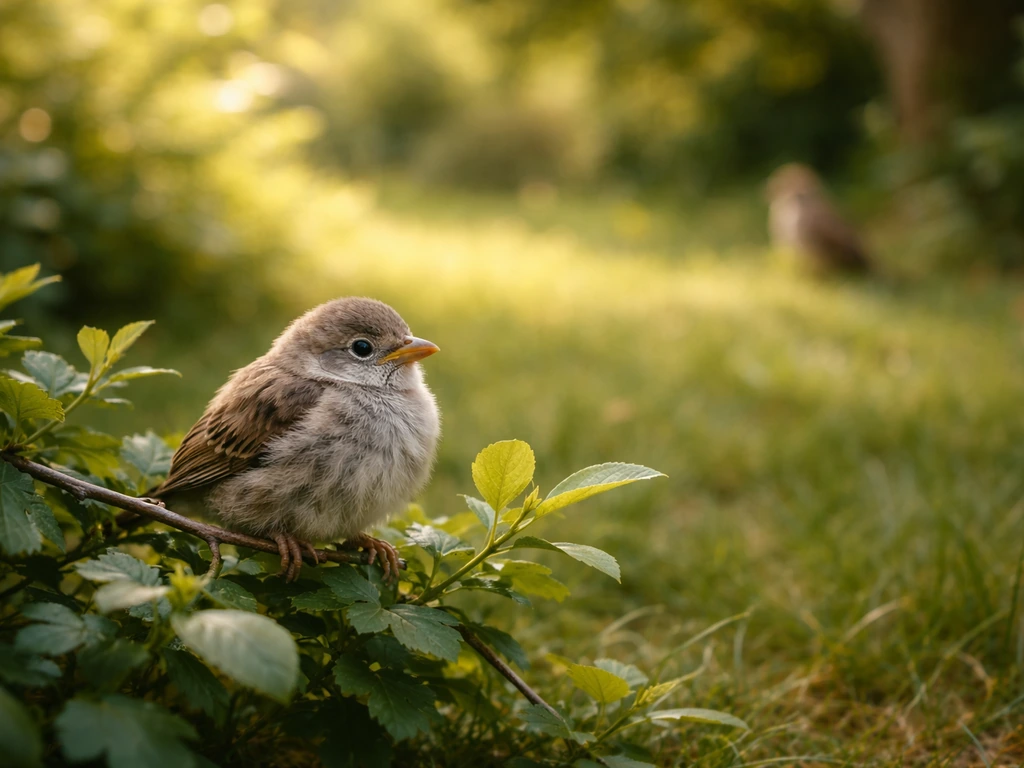
Context changes everything. A feathered young bird found in a backyard, under a shrub, or at the base of a tree during late spring or early summer is almost certainly a fledgling in the normal post-nest phase. Most songbirds go through this ground phase for somewhere between 2 and 5 days before they can fly well enough to stay off the ground. Finding one during this window is incredibly common, and most of the time the bird is fine.
If you found the bird inside a building, near a road, in the mouth of a cat or dog, or far from any trees or shrubs, that context changes the calculation. Location gives you information about whether the bird ended up somewhere by choice or by accident. Fledglings actively move toward cover and low vegetation. If the bird is somewhere that makes no ecological sense (in a parking lot, on a busy street, in a corner room), something has gone wrong.
Timing matters too. The main fledgling season in the Northern Hemisphere runs roughly from late May through early August for most songbird species, with some variation by region and species. If you're finding a grounded feathered bird in that window, fledgling is by far the most statistically likely explanation. Outside that window, ground-found young birds deserve more scrutiny.
One of the best field techniques available to anyone is also the simplest: back away quietly and watch from a distance for 20 to 30 minutes. Adult birds, which are far easier to identify than young birds, will almost always show up. They may bring food, make alarm calls nearby, or simply land close and watch. If you see adults responding to the young bird, you have your answer. The bird is being cared for, and your job is to leave it alone.
How to tell if it's likely injured or truly abandoned
This is the part that trips people up, because a healthy fledgling can look distressingly helpless. The key is to separate 'looks vulnerable' from 'is actually in trouble.' Most fledglings that look helpless are not injured and are not abandoned. But some are, and those need a different response.
Look for specific physical signs of injury or illness, not just general floppiness or stillness. A bird that is truly in trouble will often show one or more of the following:
- A visibly drooping or asymmetrical wing (not just held low, but clearly not folding normally)
- Inability to stand at all, even when placed upright gently on a flat surface
- Obvious wound, blood, or swelling on any part of the body
- Labored or open-mouth breathing with no obvious cause like heat
- Extreme lethargy and no response to nearby movement or sound
- Evidence of cat or dog contact — even if no wound is visible, bacteria from a puncture can be fatal without treatment
Abandonment is rarer than people think. Most bird parents will return to their young even after a human has touched or moved them. The myth that birds 'smell' human contact and reject their young is not supported by avian biology. Birds have a relatively limited sense of smell in most species, and parental instinct is strong. The real risk of intervention is not rejection by the parent, it's that moving the bird or attempting to care for it yourself delays proper treatment if it is actually injured.
The clearest test for abandonment is time plus observation. If you watch from a distance for at least an hour and no adult bird visits, approaches, or calls near the young bird, there may be cause for concern. But even then, adults often feed fledglings at intervals of 20 to 40 minutes, and your presence nearby can suppress their approach. Move further back before drawing conclusions.
What to do after identifying a fledgling: safe steps and when to get help
Once you've confirmed the bird is a fledgling and shows no signs of injury, the right action is almost always to leave it alone. NestWatch advises first confirming the bird is a fledgling, and then leaving it alone since it is often being cared for by parents nearby fledglings are not uncommon to look helpless, and once they’ve left the nest, they should generally be left alone. Move away from the bird, keep pets indoors or on a leash, and let the parents do their job. If the bird is in immediate physical danger from foot traffic or predators, you can gently move it a short distance to a nearby shrub or low branch, keeping it within the same general area so parents can still locate it by sound.
Do not attempt to feed or water a fledgling you plan to release. It's harder than it sounds to get the nutrition right, and well-meaning feeding attempts can cause choking or aspiration. Do not bring it inside your home unless the temperature is extreme or you've confirmed it's injured. A warm, confined space with no parental contact stresses the bird and interrupts the learning period it needs to develop normal behavior.
If the bird is injured (based on the signs listed above) or you have confirmed after extended observation that it is truly abandoned, contact a licensed wildlife rehabilitator. In the US, you can search for one through the National Wildlife Rehabilitators Association or your state's department of fish and wildlife. Many local humane societies and animal control agencies can also connect you with the right resource. Do not call a general veterinarian unless they have stated experience with wild birds, the care protocols are very different from domestic animals.
If there's a nestling situation (bare skin, no feathers, clearly fell from a nest), the approach is different: look for the nest nearby and, if you can reach it safely, return the bird to it. Parents will accept it back. If the nest is destroyed or unreachable, a rehabilitator is the right call. Understanding that distinction between nestling and fledgling, which connects closely to broader questions about how juvenile birds differ from immature birds at various developmental stages, is what makes the difference between helping and accidentally causing harm. Because juvenile birds and immature birds develop differently across stages, it helps to confirm which category the bird actually fits juvenile birds differ from immature birds.
The general rule that covers most situations: if it's feathered, hopping, and you don't see an obvious injury, put the phone down, back away from the bird, and give it 30 minutes. Odds are very good it's fine. If you are mixing up terms like weaning bird meaning with fledgling behavior, this quick check can help you decide whether the bird just needs space.
FAQ
Can a bird be a fledgling and still need help?
Yes, a grounded, feathered bird can still be hurt even if it looks like a fledgling. If you see blood, a crooked limb, a drooping wing that is not from normal stance, trouble breathing, a closed-eye hunching posture for long periods, or repeated inability to stand, treat it as injured and contact a licensed wildlife rehabilitator rather than assuming it is fine.
If I watch for a while and don’t see the parents, does that mean it’s abandoned?
Often, but not always. Some fledglings can be in the open even when parents are nearby, and adults may stay concealed. A more reliable check is whether you observe any adult activity (calls, wing-flutters, or food delivery) after you back away quietly for 30 to 60 minutes. If none occurs and the bird appears to be getting worse (more listless, unable to move), that is a stronger reason to intervene.
What if the bird looks feathered but it keeps ending up in my yard’s open areas?
More likely, you are seeing a “not-yet-fully-skilled flyer” stage or a bird temporarily using the ground for cover. However, a fledgling that is in a dangerous spot (busy road, inside an open garage with no escape routes, or repeatedly approached by pets) may need a short relocation to the nearest safe cover while keeping it close to the original area so parents can still find it by sound.
Should I offer food or water to a suspected fledgling?
Don’t use food or water as a first response. The risk is choking or aspiration, and even “correct” foods can be wrong for the species and age. If the bird seems uninjured, the best first step is to keep people and pets away and let parents feed. If the bird is injured or truly abandoned after extended observation, the rehabilitator can determine diet and treatment.
Is it ever okay to move a fledgling, and how far can I relocate it?
If you move it at all, keep it minimal and purposeful. Gently transfer it a short distance into nearby low vegetation or onto a low branch within the same general area, and do it quickly. Avoid carrying it long distances, changing its habitat, or placing it far from where it was calling, because that can separate it from the parents’ search area.
My bird can’t fly yet, so is it a nestling or a problem?
A common mistake is interpreting “can’t fly” as “abandoned.” Fledglings frequently spend several days on the ground while they build coordination, and they may look awkward even when healthy. Use the body and movement clues (mostly feathered with a short tail stub, able to stand or hop) and check for wing-fluttering and repeated contact calls when a parent is near.
What should I do if the weather is hot or cold?
In most cases, use temperature and safety as your guide. If it is feathered and uninjured, bringing it inside usually causes stress and cuts off parental care. Only bring it indoors if conditions are extreme (dangerously cold or heat) or if it is clearly injured. Otherwise, keep it shaded and undisturbed outdoors while you observe from a distance.
How can I tell the difference between a fledgling and a juvenile that still looks rough?
Yes. Some birds that appear “small and scruffy” can be later-stage juveniles, especially if only part of the plumage is developing or if lighting makes feathers look ragged. The tail is a helpful discriminator, plus the general coordination of movement. If you are unsure, the safest decision is to minimize disturbance and observe adult response after backing away.
What changes if a cat or dog was near the bird?
If the bird is hopping and calling from a shrub or near cover, it’s often behaving normally and may not be injured. If a cat or dog is involved, treat it with higher caution. Check for puncture wounds, lacerations, limping, or breathing difficulty. Even small injuries can worsen quickly, so contacting a rehabilitator is especially important after a pet interaction.
How long and how closely should I observe before deciding what to do?
A bird can call for parents and still look “quiet” at times, especially if adults are actively transporting food elsewhere. Instead of counting the number of calls, look for patterns like repeated contact calls, adult approaches, or wing-fluttering from the bird when a parent comes near. Combine that with a consistent observation window and distance.
Juvenile vs Immature Bird: How to Tell the Difference
Learn juvenile vs immature bird differences, ID cues, and what to do when you find a fledgling or first-year bird.