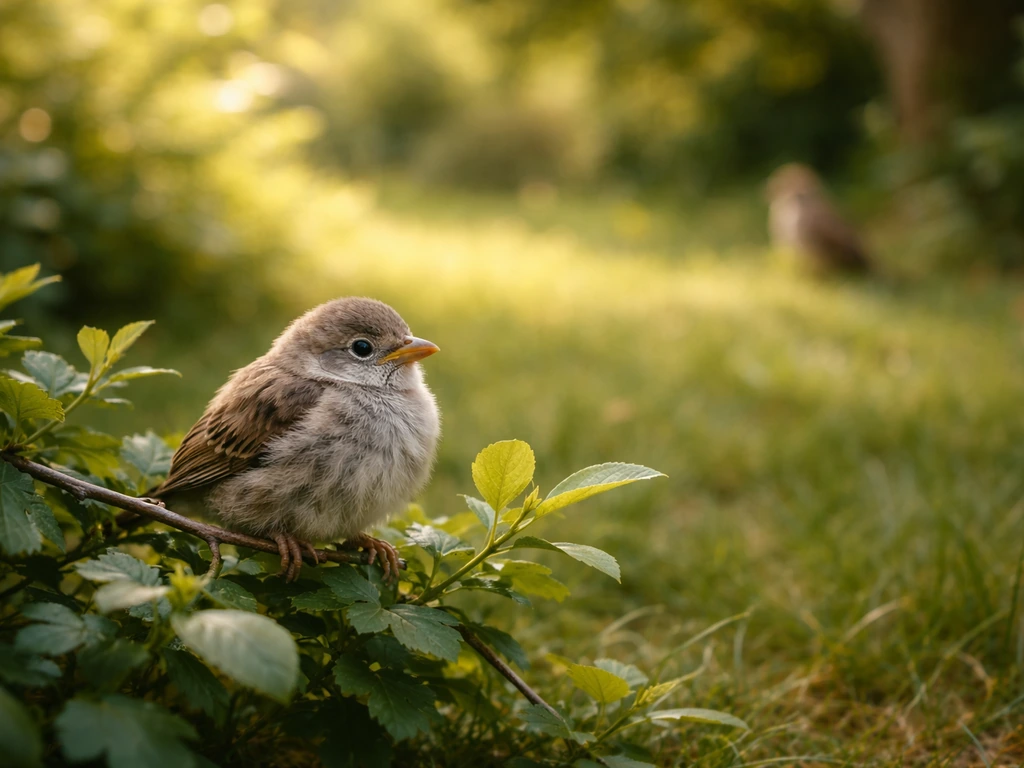
Bird preening is the process birds use to groom and maintain their feathers, using their beak to realign, clean, and condition each feather. It is not random fidgeting. It is a precise, biologically essential behavior that keeps feathers flight-ready, waterproofed, insulated, and free of parasites. Most birds preen daily, and healthy birds spend a significant chunk of their waking hours doing it.
What Is Bird Preening? Why Birds Groom Their Feathers

Marcus Chen
10 Jun 2026
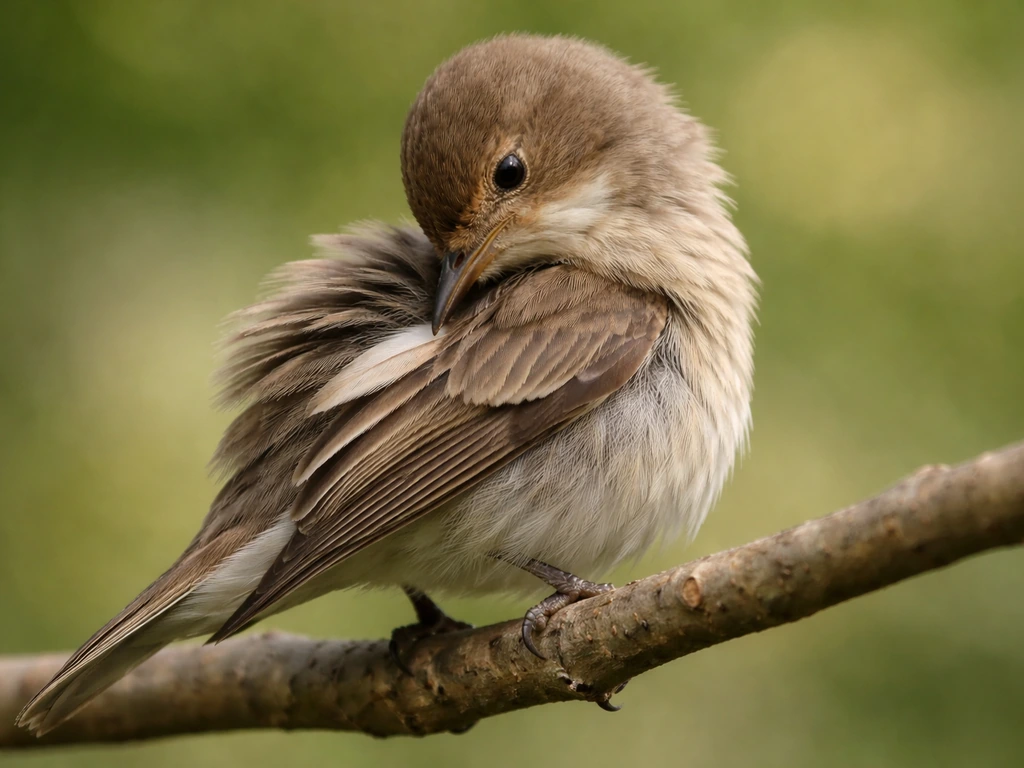
What preening actually means
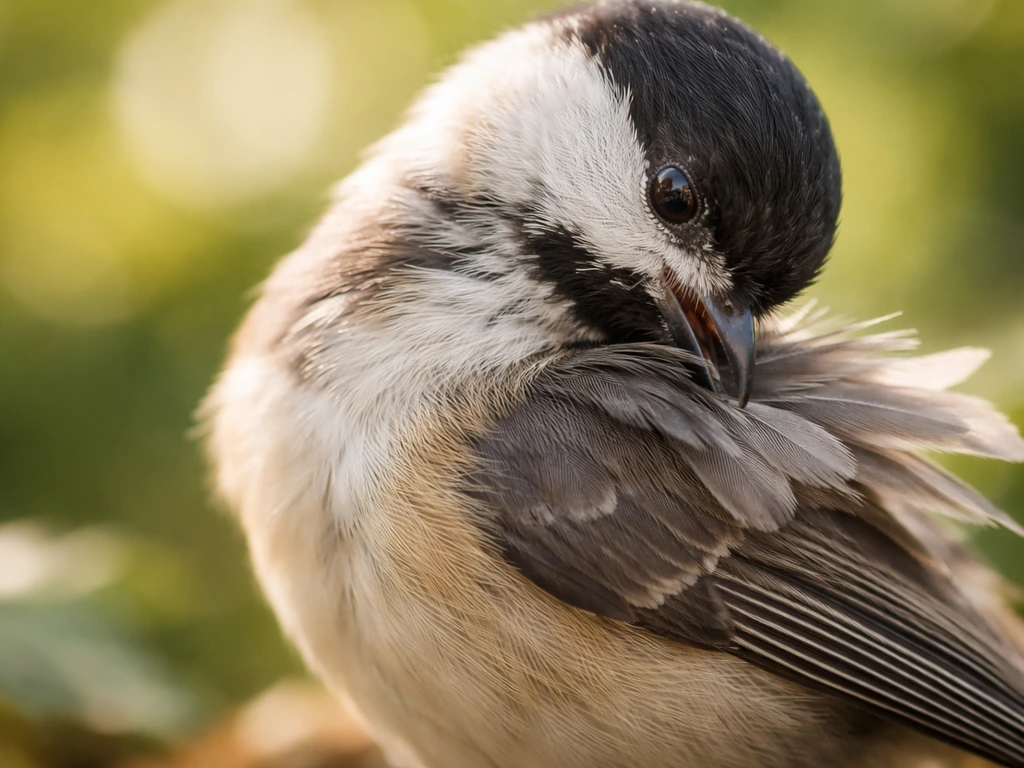
Preening means a bird is using its bill to manipulate individual feathers, one by one or in small groups, nibbling and stroking them back into shape. The beak realigns tiny structures called barbs and barbules, the interlocking filaments that zip a feather together like Velcro. When those filaments separate from normal wear or getting wet, the feather loses its aerodynamic and insulating properties. Preening physically rezips them. At the same time, the bird distributes oil from a gland near the base of its tail, which keeps the feathers supple and water-resistant.
Preening also happens alongside other feather-care behaviors like bathing, dust bathing, sunning, and a behavior called anting (where birds let ants crawl through their feathers). Purdue University’s veterinary guidance also notes that bathing methods such as container bathing or misting and spraying help support normal feather maintenance, and decreased preening can be a sign that the routine is not right. These are all related but distinct activities, and birds often do several of them in sequence. If you have a budgerigar or cockatiel, you have almost certainly watched them spend a large portion of the afternoon working through every feather systematically, sometimes pausing to nap and then picking back up again.
Why birds preen: it is more important than it looks
The short version: without preening, a bird's feathers stop working. Feathers serve multiple critical functions simultaneously, including providing lift during flight, trapping warm air close to the body for insulation, and shedding water so the bird does not get waterlogged. All of those functions depend on feathers being in near-perfect structural condition. Preening is how that condition is maintained.
- Waterproofing: Preening redistributes preen oil over the plumage, helping water bead off rather than soaking through. In waterbirds like ducks, this is especially critical. Birds nibble feathers back into a tightly interlocked position that physically resists water entry.
- Insulation: Properly aligned feathers trap air pockets that act as thermal insulation. Disrupted feathers lose that dead-air layer, which reduces the bird's ability to regulate its body temperature.
- Parasite control: Preen oil has antimicrobial and antiparasitic properties. It helps suppress feather-degrading bacteria, lice, and fungi that would otherwise break down feather structure over time.
- Debris removal: The beak picks out dust, dirt, shed skin cells, and anything else caught in the plumage.
- Structural maintenance: Each preening pass through a feather re-engages the barb and barbule hooks, restoring the feather's aerodynamic shape.
It is worth knowing that preen oil is not a static, one-size-fits-all product. Its chemical composition varies across species, and in at least some birds it changes seasonally or during life events like incubation. Research has also suggested preen oil may help protect nest eggs from microbial contamination, which hints that preening behavior has functional consequences beyond the individual bird's plumage.
The anatomy that makes preening work
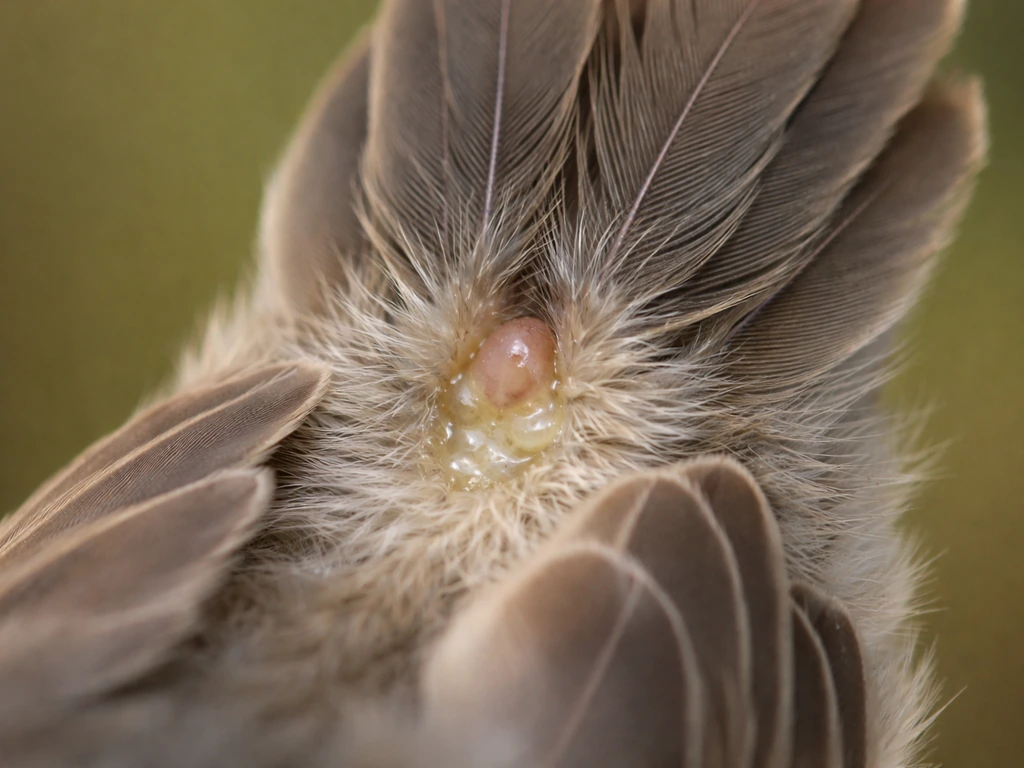
The uropygial gland (the preen gland)
The uropygial gland, usually just called the preen gland, is a bilobed sebaceous gland located on the upper side of the tail, between the last tail vertebrae and a structure called the pygostyle (the fused tail bones that anchor tail feathers). It produces a fatty, waxy secretion that exits through a small nipple-like papilla right at the base of the tail feathers. To collect the oil, a bird rubs its bill or the top of its head directly against that papilla, picks up a load of oil, and then systematically works it through the rest of its plumage.
Not every bird species has a uropygial gland, but most do. Among common pet birds, parakeets (budgerigars), cockatiels, canaries, many parrots, cockatoos, and finches all have one, as do waterfowl. The gland's secretion is primarily fatty acids and waxes, though the exact mixture varies by species. If you have ever seen your bird twisting its head to touch the base of its tail before launching into an extended grooming session, that is the oil-collection step in action.
Feathers and skin
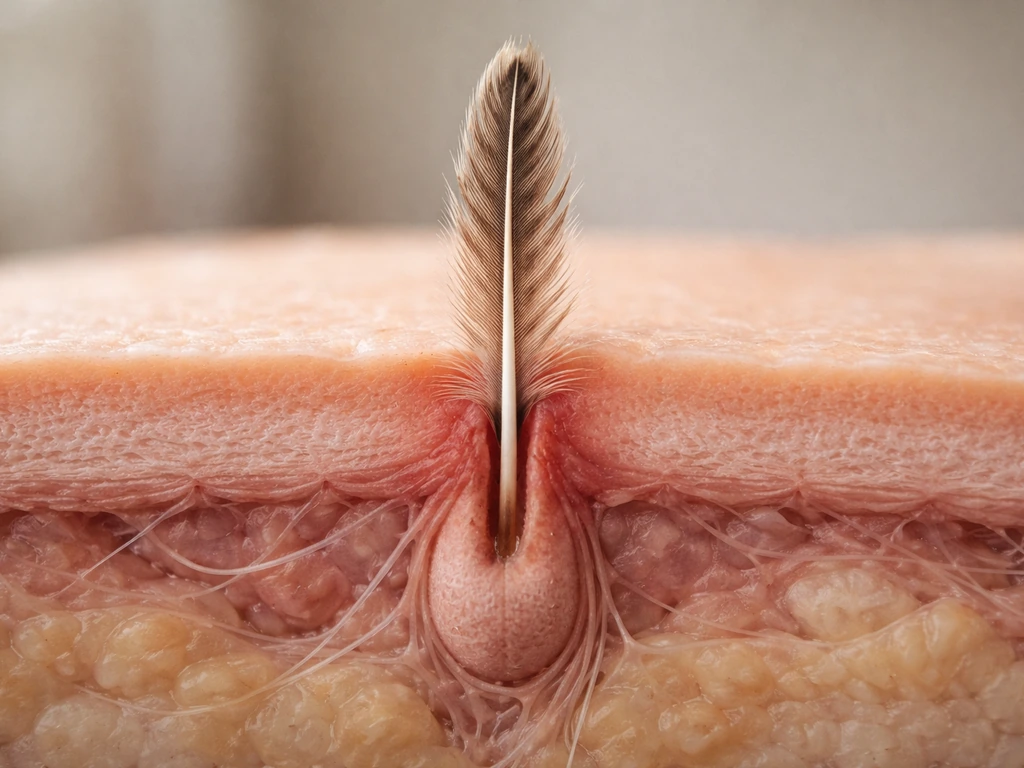
Each feather grows from a follicle in the skin, similar in concept to a hair follicle. The follicle is living tissue and can be a site of infection or inflammation if something goes wrong. The feather shaft itself is not living once it has fully grown, but the barbules that branch off the barbs do need to remain physically intact to interlock correctly. Preening keeps those interlocking structures engaged. Repeated trauma to the follicle from excessive picking can damage the follicle permanently, which is one reason that prolonged abnormal preening becomes a serious concern.
What normal preening looks like
Normal preening is methodical, calm, and appears throughout the day, often after eating, after bathing, or before napping. A healthy bird will work through sections of its body in a fairly consistent order, using the bill to stroke and nibble feathers from base to tip, occasionally collecting oil from the preen gland. You may also see the bird use its feet to scratch at areas the bill cannot easily reach, like the back of the head. Mutual preening (one bird preening another, called allopreening) is common in bonded birds and is a sign of a healthy social relationship, not a problem.
The feathers should look smooth and tight when the bird is at rest. The plumage should have a coherent, neat appearance overall. A bird that preens and looks good afterward is doing exactly what it should be doing.
When preening crosses into concerning territory
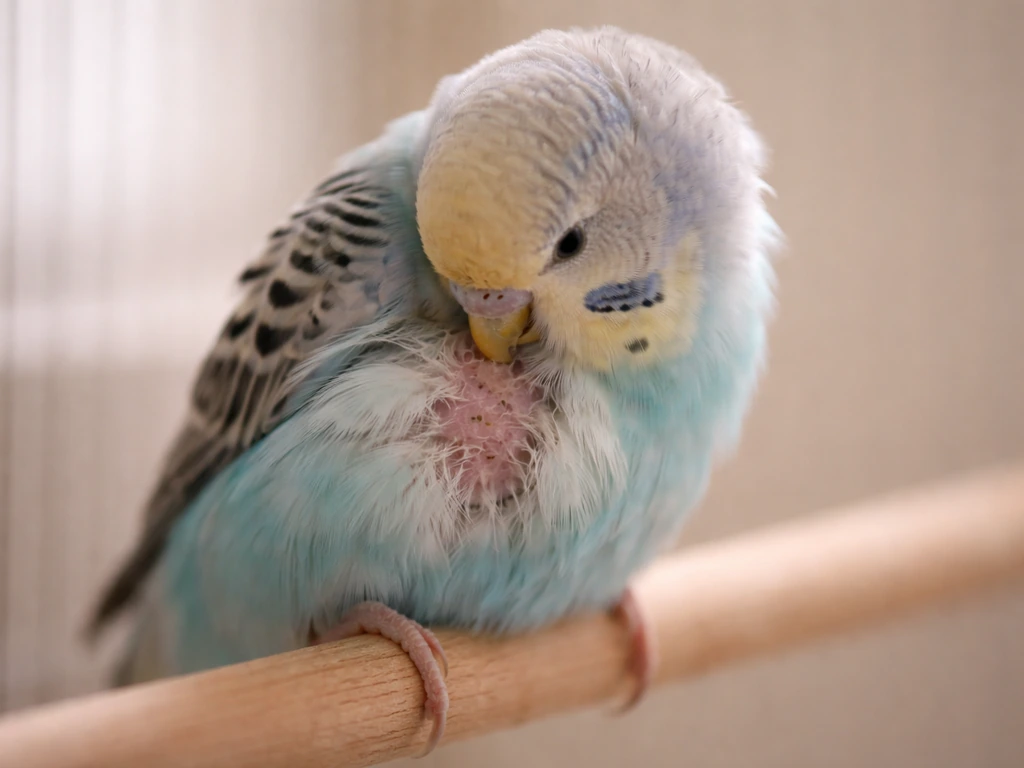
The line between normal preening and abnormal preening is not always obvious at first, and I will be honest, it took me a while to understand what I was actually watching. The clearest red flags are visible damage to the feathers or skin, or a change in how much and how intensely a bird is preening. Here are the warning signs worth taking seriously: In some cases, people compare specific bird behaviors, like ripped rooster versus skinny bird, to understand what changes might be health-related ripped rooster vs skinny bird.
- Broken or frayed feathers that do not recover after molting
- Bald patches or thinning areas anywhere on the body
- Skin that looks red, raw, scabbed, or has visible sores
- The bird chewing feathers down to stubs (as opposed to simply smoothing them)
- Restlessness, scratching, or visible agitation during or between preening bouts
- A decrease in preening, which can be just as concerning as an increase because it may indicate the bird feels too unwell to groom
- Changes in behavior like being quieter than usual or losing interest in food alongside changed preening habits
It helps to think of the spectrum this way: at one end is normal daily grooming, at the other end is full self-mutilation of feathers and skin. In between is a range of increasingly excessive behaviors that are collectively called feather-destructive behavior or feather plucking. Early intervention matters because once plucking becomes habitual, some birds continue the behavior even after the original cause has been addressed and resolved.
Common reasons preening becomes abnormal
Abnormal preening is almost always a symptom of something else, not the root problem. The causes are genuinely multifactorial, meaning several things can be happening at once, which is part of why diagnosis requires a veterinarian rather than guesswork. ScienceDirect Topics also describes feather-plucking as multifactorial and lists causes such as parasitism, hypersensitivity, external neoplasia, internal pain or granuloma, feather folliculitis, infectious dermatitis, and environmental irritants feather plucking causes can be multifactorial. That said, here are the most commonly implicated categories:
| Cause | What it looks like | Key detail |
|---|---|---|
| Ectoparasites (mites, lice) | Intense scratching, restlessness, feather damage at accessible spots | Red mites are sometimes detectable by placing a white sheet over the cage overnight and checking for tiny red spots in the morning |
| Dry skin from low humidity | Generalized itchiness, dull feather appearance, increased preening frequency | 40 to 50 percent relative humidity is the recommended range; heated or air-conditioned indoor air often falls well below this |
| Nutritional deficiency | Poor feather quality overall, sometimes combined with plucking | Seed-heavy diets often lack vitamins and minerals needed for healthy skin and feather growth |
| Bacterial or fungal infection | Localized feather damage, possible odor, skin changes at affected area | Folliculitis (infection of feather follicles) can drive persistent picking at one spot |
| Stress or psychological causes | Plucking that started with a life change (new bird, moved cage, schedule disruption) | The original stressor may have resolved by the time the bird reaches a vet, but the behavior persists |
| Pain or internal illness | Preening or plucking focused over a body cavity (chest, abdomen), lethargy | Birds sometimes pick at feathers overlying an area of internal discomfort |
| Allergies or hypersensitivity | Diffuse irritation, may worsen with environmental changes like new cleaning products or air fresheners | Environmental allergens are an underappreciated trigger |
Mite infestations in pet birds are actually less common than many people assume, but they do occur and are worth ruling out. In some contexts, people also use “weaning bird meaning” to describe what stage a young bird is in as it transitions from parental care to independent feeding. Scaly face and leg mites are more frequently seen in budgerigars than in most other parrots, so if you have a budgie showing crusty or scaly tissue around the beak, face, or legs alongside increased preening, that is a specific pattern worth flagging to a vet.
What to actually do if preening seems off
Husbandry checks you can do today
Before jumping to conclusions, run through the environmental basics. These are the controllable factors that directly affect feather and skin health and that commonly drive abnormal preening when they are wrong.
- Check your humidity. Use a basic hygrometer (they cost a few dollars) to measure the humidity where your bird lives. Aim for 40 to 50 percent. If your indoor air is drier than that, especially in winter or in heavily air-conditioned spaces, low humidity alone can drive skin irritation and excessive preening.
- Start or increase a bathing routine. Regular bathing, either with a shallow dish of water the bird can step into or misting with a clean spray bottle of plain warm water, actively encourages normal preening and can reduce excessive picking. Most sources recommend a few times per week at minimum, and some birds do well with daily misting. Use only water, no soaps or additives.
- Review the diet. If your bird is eating mostly seeds, that is a significant nutrition gap. Seeds are low in vitamin A and other nutrients essential for skin and feather health. Transitioning toward a balanced pelleted diet, supplemented with fresh vegetables, is one of the most impactful long-term changes you can make.
- Check for overnight mites. Drape a white sheet over the cage at night and check it in the morning for tiny red or brown specks moving around. This is a simple at-home screen that can provide a useful clue before a vet visit.
- Evaluate for recent stressors. Think back to when the preening change started. A new pet in the house, a moved cage, a change in your schedule, new cage materials, a recent molt, or a change in cleaning products are all worth noting and mentioning to a vet.
- Inspect the cage. Wooden perches and toys can harbor mites. If parasites are suspected, removing and replacing wooden items and thoroughly disinfecting the cage is part of managing the problem.
When to call an avian vet
Some situations need a professional, and it is better to make the call sooner than to wait and watch. See an avian veterinarian if you observe any of these:
- Visible bald patches, broken feathers that are not growing back, or skin damage of any kind
- Sores, scabbing, redness, or anything that looks like a wound on the skin
- Preening or picking that is clearly focused on one area of the body, especially the chest or abdomen
- Any change in behavior alongside the preening changes, like reduced appetite, lethargy, or unusually quiet behavior
- Suspected mites or other parasites that you cannot confirm or treat at home
- Feather plucking that has been going on long enough to become habitual, even if the bird seems otherwise healthy
An avian vet can rule out medical causes, including infections, internal illness, and parasites, before settling on a behavioral explanation. This matters because treating a stressed bird with enrichment when it actually has a skin infection will not fix the problem. And as a practical note: the longer feather-destructive behavior continues, the harder it can be to fully resolve even after the cause is treated. Some birds do continue to pluck mildly even after successful medical treatment, so early evaluation genuinely improves outcomes.
If you are also trying to understand more about how a bird's physical condition changes across its life, the stages of feather development and what distinguishes a fledgling from a juvenile or immature bird are connected topics worth exploring alongside this one. If you are trying to spot what age a bird is, this guide on how to tell if a bird is a fledgling can help you interpret feather and behavior cues. A bird's overall condition, including how much it preens and what its plumage looks like, is one of the clearest indicators of its health at any life stage. The phrase “weaning bird meaning” can also come up in discussions about growing up, though it is often used more loosely than “preening” in bird care contexts.
FAQ
Is preening always a sign of good health?
Not necessarily. Normal preening can look vigorous when a bird is molting, but if the bird leaves bare patches, preens to the point of skin injury, or the behavior ramps up suddenly, treat it as a health signal even if the bird otherwise seems active.
How can I tell the difference between extra preening and feather plucking?
Look for pattern and outcome. Normal grooming is calm and produces smoother, tighter feathers, while feather-destructive behavior often targets the same areas repeatedly, creates visible fraying or bald spots, and may include prolonged staring or obsessive biting rather than systematic grooming.
What role does molting play in preening behavior?
Molting can increase preening because new feathers itch and need alignment. If you see blood, scabs, broken feathers down to the skin, or a sustained increase that continues well beyond the molt, something else may be driving the behavior.
Can my bird preen less than usual and still be fine?
Sometimes, yes. Birds may preen less during very active periods, right after bathing, or if they are conserving energy. However, a consistently dull, rough, or fluffed coat when the bird is resting, or visibly poor feather alignment, suggests grooming needs attention.
Do all birds have the uropygial (preen) gland?
Most do, but not every species. If your bird lacks the gland or cannot access it comfortably, you may not see oil-collection behavior, and you will want to rely more on bathing habits and environmental support for feather condition.
How often should a pet bird preen?
Many healthy birds groom daily, sometimes frequently throughout the day. The useful check is not a single time number, it is whether preening results in intact, well-aligned feathers and whether the bird is otherwise normal in appetite, activity, and droppings.
Is it normal for my bird to preen after eating or before napping?
Yes. Timing like after meals, after bathing, or during transitions to rest is common. Preening that is paired with pacing, vocal distress, or hiding may point to discomfort rather than routine grooming.
Why does my bird sometimes use its feet during grooming?
Feet help reach areas the beak cannot, especially the back of the head or hard-to-access body sides. If foot-assisted grooming becomes frantic, causes toe skin irritation, or looks like repeated digging at one spot, consider checking for mite irritation, skin problems, or pain.
Should I provide bathing or is dry-only care okay?
Many birds benefit from regular bathing or misting because wet-dry cycles and dust disruption help condition feathers. If your bird is already preening excessively, experiment carefully and consult an avian vet if skin looks inflamed, because wrong bathing conditions can worsen irritation.
Can environmental factors like humidity or diet cause abnormal preening?
Yes. Low humidity can dry skin, drafts and cold can make birds over-groom for warmth regulation, and nutritional deficiencies can affect feather quality. Adjusting housing and diet can help, but persistent feather damage still warrants veterinary evaluation.
What should I do if I suspect mites?
Do not assume and treat blindly. Because some mite treatments can be risky if the cause is different, it is best to have an avian vet confirm with an exam and, when appropriate, skin or parasite testing before you start medication.
When is it urgent to see an avian veterinarian?
Go sooner if you see skin wounds, bleeding, scabs, swelling, labored breathing, weight loss, lethargy, or rapidly spreading bare patches. Also seek help if preening suddenly intensifies and continues for more than a short window, since earlier treatment improves the odds of fully stopping the behavior.
Can social preening (allopreening) affect my bird’s grooming?
Often it is normal, especially in bonded birds. But if your bird allows aggressive or rough handling, or if one bird seems stressed while being groomed, that social context can contribute to irritation and should be addressed by separating or adjusting the setup.
What are safe ways to help a bird stop feather-destructive behavior at home?
Focus on reducing triggers while you pursue diagnosis: ensure a consistent temperature, offer appropriate bathing/dust opportunities, provide enrichment that does not encourage obsessive target-spot behavior, and avoid punishment. If there is feather damage, veterinary care should lead, since untreated medical causes will keep the cycle going.
Next Article
How to Tell If a Bird Is a Fledgling: Quick Guide
Learn quick signs of fledglings: feathers, wings, tail, hopping vs crawling, flight readiness, and safe next steps.