Human hair is not a safe choice to offer wild birds for their nests. The biggest problem is entanglement: long, continuous strands of hair can wrap around nestling legs, wings, and necks, cutting off circulation and causing deformities or death. A 2026 study in Ecology & Evolution was the first to document multiple barn swallow nestling and adult mortalities caused specifically by human hair in nests. That finding, combined with chemical residue concerns from dyes, treatments, and persistent pollutants that hair can carry, puts human hair firmly in the "avoid" column according to the National Audubon Society, the National Wildlife Federation, and most wildlife rehabilitators. Birds do naturally weave mammal hair into nest linings and get real insulation benefits from it, but the geometry and chemistry of human head hair in particular creates risks that outweigh those benefits.
Is Human Hair Good for Bird Nests? Risks, Benefits & Tips

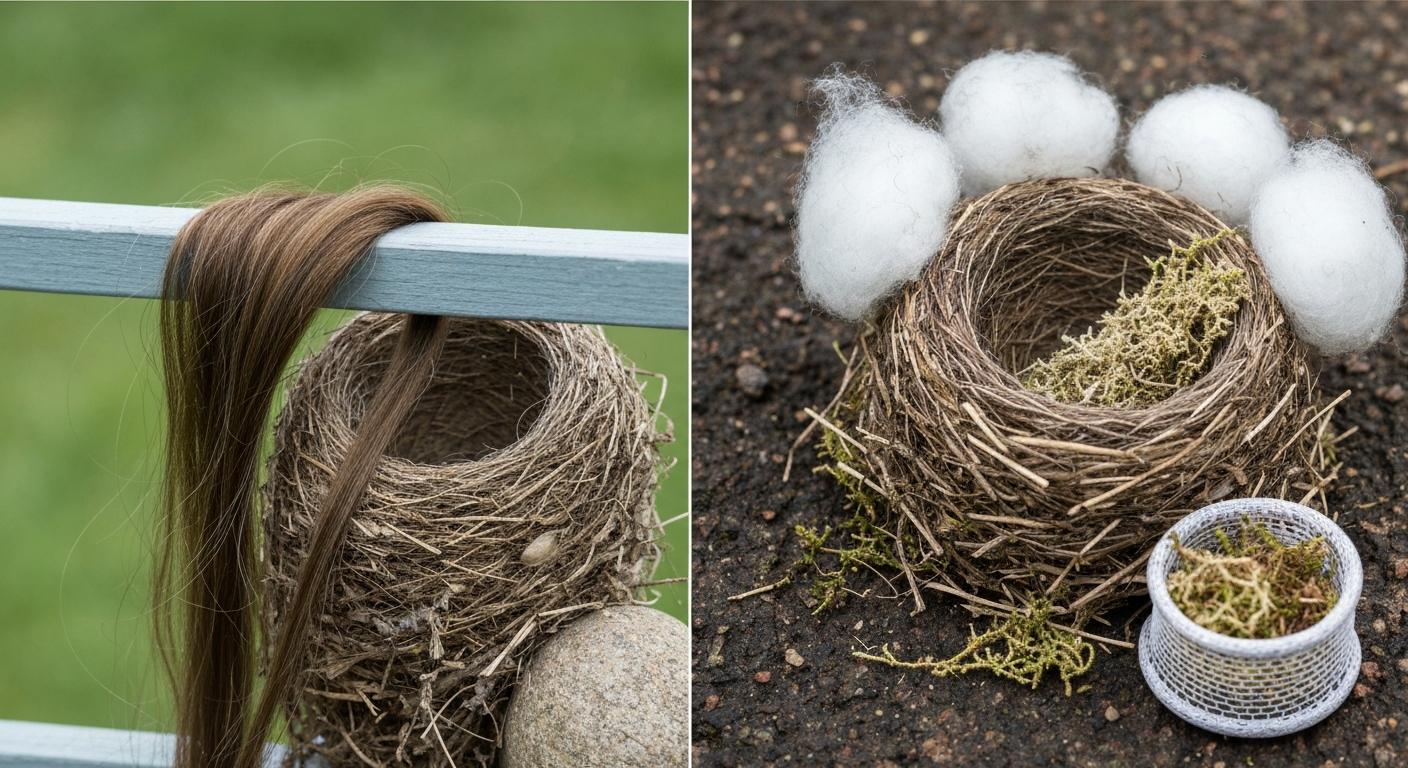
Why people assume human hair must be helpful
It's an easy intuitive leap. You clean your hairbrush, see a soft tangled clump, and think: that looks exactly like nest lining material. And honestly, you're not wrong about what birds are looking for. Wild birds, particularly the cavity-nesting tit species like blue tits and great tits, deliberately seek out mammal hair, fur, and wool to line the inner cup of their nests. The logic behind the instinct is sound: animal-derived materials (hair, fur, feathers, wool) have lower thermal conductivity than most plant materials, meaning they trap heat more effectively. Experimental tests on simulated nest walls confirmed that animal materials outperform plant fibers as insulators. So the underlying premise, that soft hair-like fiber helps keep a nest warm, is biologically accurate. The problem is that human hair specifically comes with a set of risks that dog fur or sheep's wool typically don't.
The real insulation benefits birds get from hair and fur
Nest lining isn't just comfort padding. It's a thermal regulation system, and for chicks that can't yet regulate their own body temperature, it's genuinely life-critical. Studies of blue tit nests found that nests with more feathers in the cup lining increased the probability of offspring surviving to recruitment. That principle extends to mammal hair and fur, which work similarly because of their fine, air-trapping fiber structure. The inner lining of a nest is essentially a microclimate manager: it keeps chick body heat in during cold nights and moderate temperatures during the day, reducing the metabolic burden on both the chicks and the brooding parent. In short, the insulative layer in a nest is a biological function, not decoration, and animal fibers are among the best natural materials for that job.
The entanglement problem: why hair geometry matters
Here's where it goes wrong. Human hair is long, smooth, and strong. A single strand can be 30 to 60 centimeters or longer, and unlike crimped wool or coarse dog fur, it doesn't break easily under tension and it doesn't grip and bind into a structure the way a fiber with more texture does. When a nestling moves around in the cup, a long strand can loop around a toe, a leg, or a wing. The more the bird moves, the tighter the loop draws. This is sometimes called "string foot" or constriction injury by wildlife rehabilitators, and it can lead to ischemia (loss of blood flow), tissue death, permanent deformity, or death if the chick can't be rescued. The 2026 Ecology & Evolution study on barn swallows documented this mechanism with human hair specifically. Earlier work on urban crows found similar outcomes from string and synthetic fibers. Longer strands hanging from nest rims or entrances also trap adult birds. The risk scales directly with strand length: a short snippet is far less dangerous than a full brush-cleaning clump.
Chemical residues in human hair: dyes, treatments, and persistent pollutants
This one surprised me when I first read about it. Human hair is actually a well-established matrix for biomonitoring toxic exposure precisely because hair absorbs and retains chemicals over time. Oxidative hair dyes contain compounds including parabens and para-phenylenediamine (PPD). Styling and treatment products add another layer of residues. And persistent chemicals like PFAS (per- and polyfluoroalkyl substances), which show up in countless personal care products and textile treatments, have been detected in hair and are known to bioaccumulate in birds and wildlife. Whether those residue levels in typical shed hair are high enough to cause measurable harm to a nestling is not definitively established, but the plausible exposure route is there, and it adds a precautionary reason to avoid the material.
Pet fur has a related but better-documented chemical risk. A 2025 study published in Science of the Total Environment analyzed blue tit and great tit nests lined with fur and found veterinary insecticides in every single nest tested: fipronil was present in 100 percent of nests, with imidacloprid and permethrin also common. The study directly linked these residues, traced back to topical flea and tick treatments applied to the pets whose fur ended up in the nests, to increased egg and chick mortality. This is a concrete, documented harm, not a hypothetical. It's relevant here because it shows that fur-type materials are not automatically safe just because they're natural, and it sets a useful standard for what "safe" fur or hair actually means.
How birds actually build nests and select materials
Birds don't just pile stuff up. Nest construction is a sophisticated, species-specific behavior that follows a layered architecture. Most passerine (perching bird) nests are built in distinct phases: a structural outer frame of coarser materials like twigs, grass stems, or bark strips, then a middle layer of finer vegetation or moss, and finally a soft inner lining of feathers, fine fur, plant down, or hair. The inner lining is where mammal hair typically gets incorporated, and it's chosen for exactly the thermal and tactile properties described above. Species that build enclosed or cavity nests tend to load up the inner lining far more heavily than open-cup nesters. Material choice is also active: birds will select, test, and reject materials based on properties we don't fully understand yet. Some species are documented to use materials with antimicrobial properties (certain aromatic plants) in ways that appear to reduce ectoparasite loads, though the research is still developing.
How nest material affects thermoregulation, chick development, and feather condition
Chicks hatch altricial in most songbird species, meaning they are helpless, often naked or barely downy, and entirely unable to regulate body temperature on their own. That ability, called endothermy, develops gradually over the first week or two of life. Until it does, the nest lining is doing the work of keeping the microclimate stable. A well-insulated nest reduces the amount of time a parent needs to brood the chicks directly, which frees up time for foraging. Better nutritional input from foraging leads to faster growth, better feather development, and higher survival rates. Feather development in particular is sensitive to nutritional stress in early life: poorly nourished chicks can produce structurally weaker feathers with fault bars (visible stress lines across the feather vane) that compromise flight ability later. So the insulative quality of nest lining has a real downstream connection to feather quality, something worth keeping in mind when thinking about nest material choices.
Moisture, hygiene, and parasite transfer in the nest
Nests accumulate fecal matter, food scraps, and moisture over the course of a brood cycle, creating warm, humid conditions that can support ectoparasites like mites (Dermanyssus species) and fleas (Ceratophyllus species). Hair and fur added to a nest can introduce parasites from the original source animal, and a damp nest environment helps those parasites persist. Human head lice are host-specific to humans and are not a meaningful risk to birds. But if the hair came from a source carrying other parasites or pathogens, the nest becomes a potential vector. High moisture retention in dense hair clumps can also promote fungal growth. The structural properties of hair mean it can compact over time into dense, moisture-retaining mats rather than maintaining the airy, insulative loft that makes animal fibers valuable in the first place.
What wildlife scientists and organizations recommend
The mainstream guidance from the National Audubon Society, the National Wildlife Federation, and most wildlife rehabilitation networks is consistent: do not intentionally offer long strands of human hair, yarn, string, or dryer lint as nesting material. See How to Offer Bird‑Nesting Materials in Your Garden (National Wildlife Federation guidance) for specific recommendations on safe nesting materials. The entanglement risk is the primary concern. Chemical residue concerns add a secondary precautionary reason. There is genuine scientific nuance here: birds incorporate mammal hair naturally and do get insulation benefits from it. The guidance isn't that hair in nests is inherently toxic or always deadly. It's that deliberately providing it, especially in the long, unmanaged strands that come from a hairbrush, creates a mechanical hazard that responsible gardeners and birdwatchers can easily avoid. The evidence from documented entanglement mortality, including the 2026 barn swallow study, is the grounding for that recommendation.
Safer alternatives to human hair
The good news is there are genuinely safe, effective alternatives that give birds the same insulative and structural benefits without the entanglement or chemical risk. The best options share a few properties: short fiber length, natural origin, no chemical treatments, and a texture that interlocks rather than forms continuous loops.
| Material | Benefits | Key requirements | Avoid if |
|---|---|---|---|
| Untreated sheep's wool (raw fleece clippings) | Excellent insulation, natural crimp reduces entanglement, moisture-wicking | Must be unwashed and undyed; no lanolin removers or pesticide dips | Treated with organophosphate dips or synthetic dyes |
| Pet fur (dog, cat, rabbit) | High insulation, naturally short and crimped in most breeds | Must come from a pet not recently treated with topical flea/tick products (fipronil, permethrin, imidacloprid) | Animal treated with ectoparasiticides in the past 6–8 weeks |
| Natural cotton or plant fiber (short snippets) | Readily available, no parasites, light | Cut into pieces under 5 cm; no synthetic blends or bleaching | Synthetic content, bleached or dyed cotton |
| Native seed floss / plant down (e.g., cattail, milkweed) | Naturally short-fibered, excellent thermal loft, zero chemical risk | Collect dry; leave loose rather than compacted | N/A — one of the safest options |
| Clean dry moss (sphagnum or similar) | Structural lining material, antimicrobial properties, moisture-buffering | Air-dry before offering; avoid collecting from polluted areas | Freshly collected from sites with chemical runoff |
If you want a single go-to recommendation: untreated raw sheep's wool clippings and native plant down are the safest, most biologically appropriate choices. They mimic what birds would naturally gather, without the length, smoothness, or chemical load of human hair.
How to prepare and offer safe nesting materials: step by step
- Choose a safe material from the list above. Raw wool, clean short pet fur from an untreated animal, dry moss, or native seed floss are all good starting points.
- Cut or break fibers into short pieces, ideally under 5 centimeters (about 2 inches). This single step removes most entanglement risk regardless of material type.
- Check for chemical treatments. If you're using pet fur, confirm the animal hasn't received a topical flea or tick treatment in the past six to eight weeks. If you're unsure, skip it.
- Air-dry any materials that might be damp. Moisture promotes mold and bacterial growth in the nest.
- Place materials in an open mesh holder (a suet-style wire cage, a loosely packed hanging basket, or a clean mesh bag) rather than leaving loose piles on the ground where they can blow into tangles.
- Mount the holder at a height of 1 to 2 meters, in a sheltered spot near cover like hedges or shrubs, so birds can approach safely but the material can't blow into long trailing strands.
- Put out small amounts at a time. Refresh weekly rather than loading a large supply that degrades or gets rained on.
- Never pack the holder so tightly that birds have to tug hard to extract material, as this can cause the material to pull out in long entangled clumps.
When and where to offer materials, and what timing matters
Timing matters more than most people realize. Most passerine birds in the northern hemisphere begin nest building from late March through May, with some species having second or third broods extending into July. Offering materials outside this window is mostly pointless, as birds won't be collecting nesting material. Start putting materials out from early March to catch the earliest nesters, and continue through late June for species with multiple broods. In the southern hemisphere, adjust for the austral spring, typically September through November.
Location matters too. Place material holders close to existing cover, hedges, dense shrubs, climbing plants, or woodland edges. These are the habitat types where most cavity and cup-nesting passerines breed. Avoid placing materials directly under or beside an active nest, as this can stress the nesting pair. A distance of 5 to 15 meters from known nest sites is a reasonable guideline. Remove any unused material at the end of the breeding season to prevent it from accumulating moisture and harboring mites over winter.
Quick do / don't checklist
| Do | Don't |
|---|---|
| Offer short (under 5 cm) pieces of untreated natural fiber | Offer long continuous strands of hair, string, or yarn |
| Use raw untreated wool, dry moss, or native seed floss | Use dryer lint (chemical residues, synthetic fiber contamination) |
| Collect pet fur only from animals not recently treated with topical flea/tick products | Use fur from a pet treated with fipronil, permethrin, or imidacloprid in the past 6–8 weeks |
| Present materials in a mesh holder that prevents tangling | Leave loose piles that can blow into long dangling tangles |
| Put materials out from early March through late June (northern hemisphere) | Leave materials out year-round or in winter when birds aren't nesting |
| Refresh materials weekly and remove unused stock after breeding season | Offer damp or moldy material |
| Check nearby nests periodically for signs of entanglement | Disturb active nests or place materials directly beside them |
| Err on the side of less material rather than more | Assume natural = automatically safe |
Common myths about hair and nest-building
"Birds have always used hair, so human hair must be fine." Birds do use mammal hair naturally, but they're selectively gathering short, coarse fibers from a grooming context (deer rubbing on bark, dog fur caught on a fence) rather than pulling out 50-centimeter strands from a pile. The geometry is completely different from what ends up in your hairbrush.
"If it's natural, it can't be harmful." The 2025 fipronil-in-nests study demolished this one pretty decisively. Natural materials, including pet fur, can carry synthetic chemical loads that are genuinely lethal to nestlings. Natural origin is a necessary but not sufficient condition for safety.
"Birds won't use something if it's dangerous." Birds show no documented behavioral avoidance of long hair or string in nest material. They actively collect it, particularly urban-adapted species. The harm comes from mechanics (a hair looping around a leg) that operates after the nest is built, not from anything the bird can detect or avoid during collection.
"Dryer lint is safe because it's soft." Lint is a mix of synthetic and natural fibers, often carrying detergent residues and fabric softener chemicals. It also compacts when wet, losing insulative value. It's consistently on the "avoid" list from Audubon and NWF.
"Human lice will transfer to the birds." Human head lice (Pediculus humanus capitis) are obligate human parasites and cannot complete their life cycle on birds. This specific concern is not founded. The real parasite risk comes from fleas or mites that might be present on animal-derived fur, not from human hair lice.
How nest material connects to feather health, oils, and molting
Feather condition in fledglings is tightly linked to what happens in the nest. Nestlings that experience chronic cold stress (from poor nest insulation) or nutritional shortfalls allocate energy away from feather production, which can result in structurally compromised feathers. The interaction goes deeper: the nest microclimate affects the preen gland (uropygial gland) activity in developing chicks, and the preen gland produces oils that are critical to feather waterproofing and structural integrity. A common question is whether products like coconut oil help feather condition, see guidance on 'is coconut oil good for bird feathers', but note that applying oils directly to wild birds is generally discouraged without veterinary or rehabilitator advice. A contaminated nest environment, including one with high ectoparasite loads exacerbated by chemical-laced fur, stresses chicks in ways that show up in feather quality at fledging. If you're interested in how oils affect feathers or why feathers sometimes fall out, those topics connect directly to the nutritional and environmental conditions the nest either supports or undermines.
Signs of problems to watch for, and what to do
If you're monitoring nest boxes or have a visible nest nearby, there are specific warning signs worth knowing. Entanglement sometimes shows up as a chick or adult stuck in a fixed posture, unable to move normally, or as a visible thread or strand wrapped around a leg or wing. Chicks with "string foot" may have a swollen, discolored, or bent toe or foot. Ectoparasite infestation can be harder to see but may present as unusually agitated or restless chicks, excessive scratching behavior in fledglings, or visible tiny moving dots (mites) in the nest material when you inspect an empty nest after fledging.
- If you see an entangled nestling or adult with a fiber wrapped around a limb, do not attempt to pull the strand yourself. Contact a licensed wildlife rehabilitator immediately. Attempts to remove embedded fibers without proper tools can cause additional injury.
- If chicks appear lethargic, have visible lesions, or seem far behind developmental milestones compared to nest-mates, note whether the nest contains unusual fibers and report this to your local bird banding or rehabilitation group.
- If you find an empty nest after the season and see significant synthetic or hair content, remove it carefully with gloves and dispose of it. Mites and fleas can persist in old nest material and reinfest the site the following year.
- Do not reuse nest boxes without cleaning them between seasons. Remove old nesting material, scrub with dilute boiling water (no chemical disinfectants), dry completely, and replace before the next spring.
- If you find a sick or dead nestling and suspect hair entanglement, photograph the nest and contact a local wildlife organization. Documented cases contribute to the scientific record, as the 2026 barn swallow study showed.
Species most affected: a quick reference
Not all birds are equally at risk, and understanding which species are most vulnerable helps calibrate concern. The entanglement risk is highest in species that incorporate long trailing fibers into exposed nest rims or suspension structures. Why do some bird species incorporate more anthropogenic materials into their nests than others? (Review article; PMC) reports that although such materials can offer signaling or structural benefits in some contexts, the majority of studies that reported entanglement documented harm Why do some bird species incorporate more anthropogenic materials into their nests than others? (Review article; PMC) reports that although such materials can offer signaling or structural benefits in some contexts, the majority of studies that reported entanglement documented harm.. Open-cup nesters like swallows, swifts, and certain finches that attach fibers to the outside of the nest or use them in pendulous structures are the most vulnerable. Cavity-nesters like tits and nuthatches, which pack hair and fur into an enclosed cup, show more of the insulation benefit and less entanglement risk, though chemical residue exposure still applies.
| Nest type | Examples | Entanglement risk | Insulation benefit from fur/hair |
|---|---|---|---|
| Open cup (exposed) | Barn swallow, house sparrow, American robin | High — strands remain exposed and can loop around limbs | Moderate |
| Cavity (enclosed box or hole) | Blue tit, great tit, nuthatch, bluebird | Lower — hair packed into cup less likely to trail | High — cavity-nesters heavily line inner cup |
| Pendulous / suspended | Penduline tit, some weaver finches | High — structural fibers under tension amplify loop risk | High if used internally |
| Cup in dense shrub | Dunnock, wren, chaffinch | Moderate — partially sheltered from wind tangling | High in inner lining |
Further topics worth exploring
The nest is only one part of the picture. How birds develop and maintain feathers, how oils from the preen gland protect feather structure, why feathers fall out during molting, and what makes a feather physically strong or fragile are all questions that connect directly to what happens in the nest during early life. Understanding the biology of feather structure helps explain why developmental conditions in the nest have lasting consequences for the bird's flight ability and thermoregulation throughout its life. For a focused explanation of feather texture and why feathers can sometimes feel like plastic, see why do bird feathers feel like plastic. Those topics sit right at the intersection of avian anatomy and physiology that makes bird biology genuinely fascinating, and each one adds a layer of context to what might otherwise seem like a simple question about whether to leave hair clippings outside. For a deeper explanation of feather structure and function, see our guide on how bird feathers work.
FAQ
Is human hair commonly found in wild bird nests?
Yes. Studies and nest dissections show many bird species incorporate mammal hair — including pet and sometimes human hair — into inner linings. Frequency varies by bird species, nest type and season; cavity‑nesting passerines often use hair or fur in cup linings for insulation.
What benefits can animal hair (including human hair) provide to nests?
Animal‑derived fibers generally trap air well and have lower thermal conductivity than many plant materials. When used as inner lining, these fibers can improve insulation and microclimate, helping eggs and chicks maintain temperature and sometimes improving offspring recruitment in species like blue tits.
What are the documented harms of offering human hair to birds?
Long continuous strands can entangle adult birds or nestlings, causing injury, deformities or death. Human hair can carry chemical residues from dyes, treatments or persistent pollutants (PFAS), and it can introduce parasite or pesticide residues (e.g., veterinary ectoparasiticides) that harm eggs or chicks.
Has human hair specifically been shown to cause bird mortality?
Yes. Recent peer‑reviewed studies and field reports document entanglement incidents and mortalities where human hair was implicated (e.g., barn swallows and urban finches). While not every piece of hair is dangerous, there is clear evidence of risk in some contexts.
Do birds use human hair differently than other animal hair or wool?
Birds do not distinguish hair species by human intention; they use available fibers similarly. However, risk depends on fiber geometry and placement: short loose fibers inside a cavity or cup are low‑risk and insulating, while long hanging strands attached to open‑cup or pendulous nests are high‑risk for entanglement.
Which nest types and species are at higher risk from long hair or string?
Open‑cup, pendulous or nests with exposed rims or entrances are higher risk because long fibers can hang free and tangle. Species that build pendulous or rim‑attached nests (some swallows, orioles, or urban finches) and nestlings that move around can be particularly vulnerable. Cavity‑nesters that tuck fibers into the inner lining face lower mechanical risk but may face chemical or parasite issues.
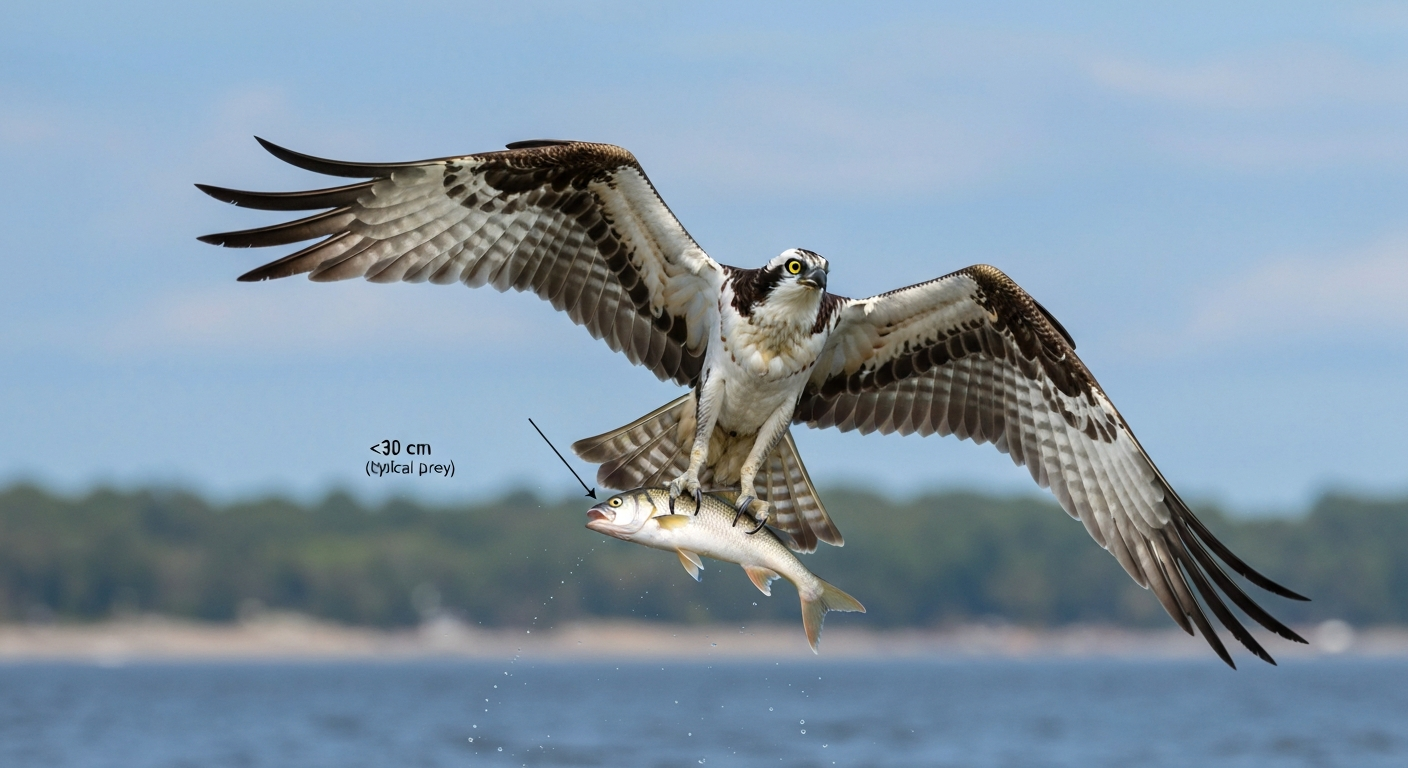
How much weight can an osprey carry: typical prey 0.5–2 kg (≈30–100% body mass); anatomy, flight limits and evidence.
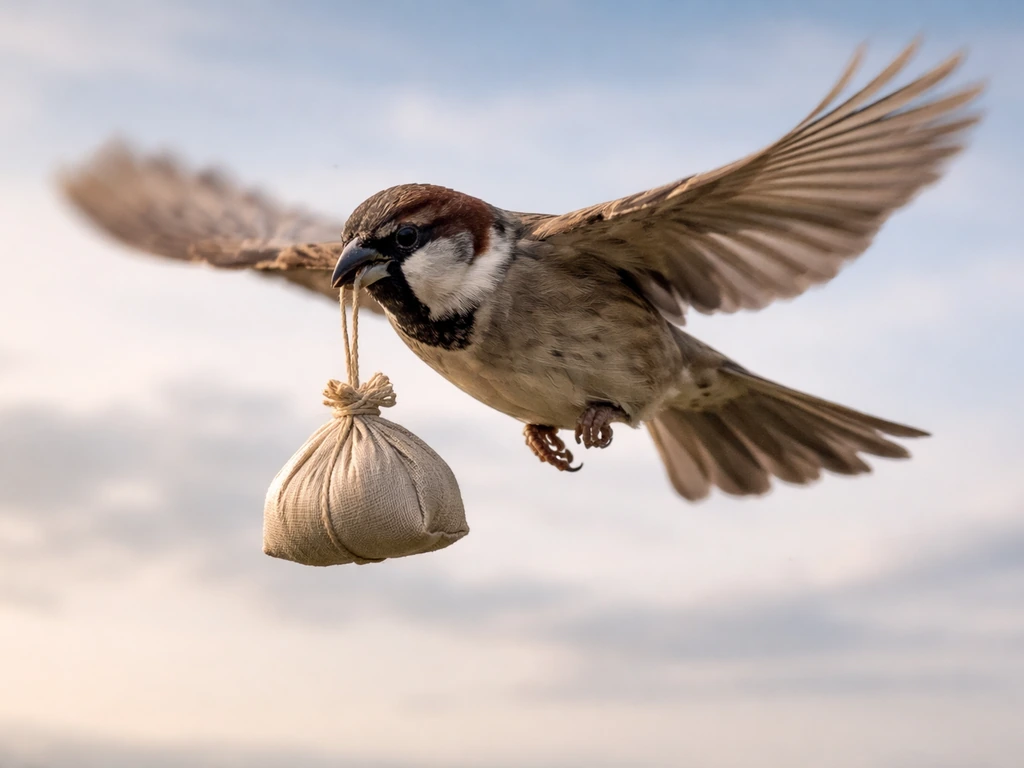
Realistic payload ranges for different birds plus a method to estimate how much weight they can carry safely.
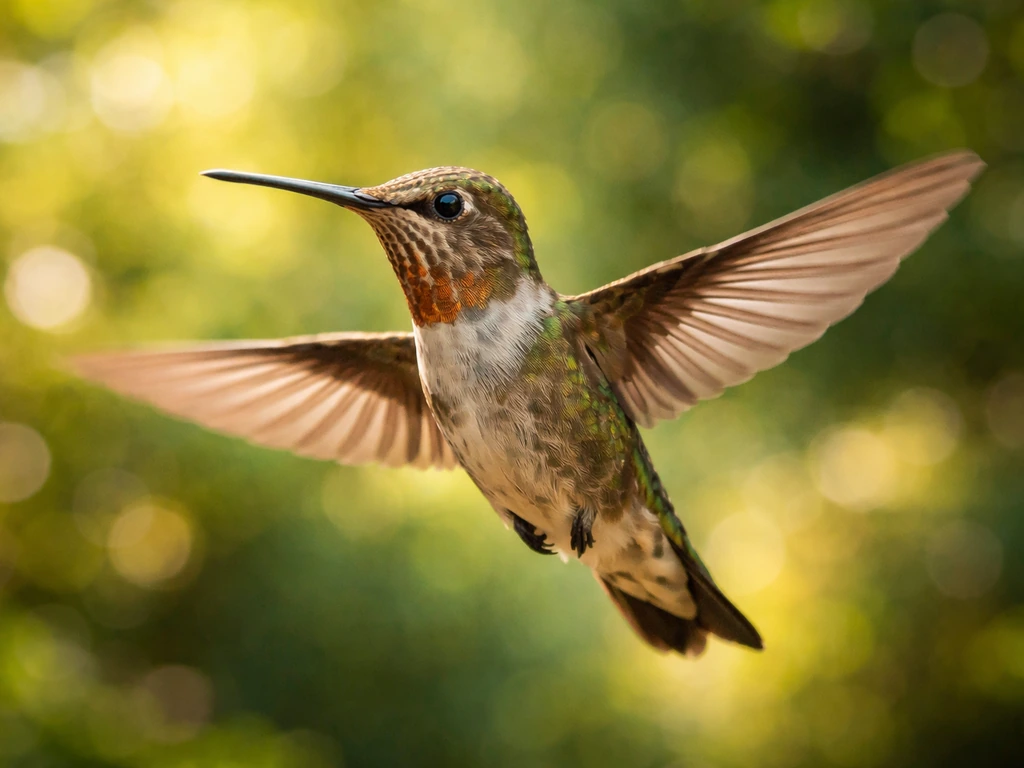
Explains which bird has the highest heart rate, how it’s measured, key contenders, and how to compare readings fairly.