
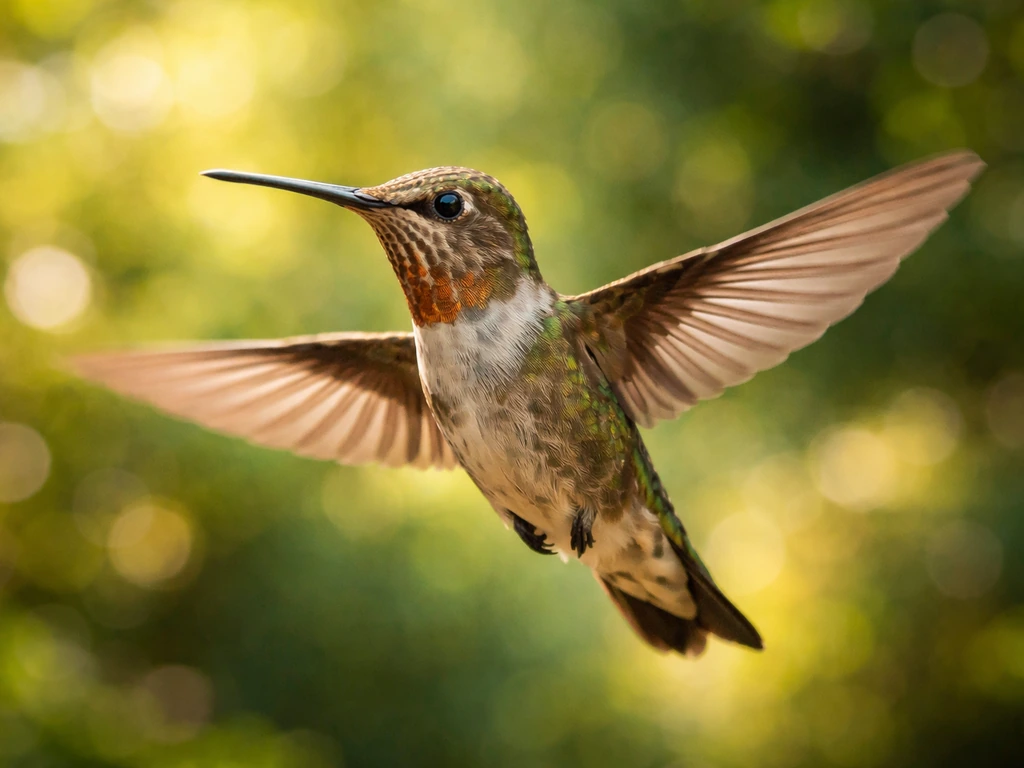
Hummingbirds win this one, and it's not particularly close. During active flight and feeding, hummingbirds have recorded heart rates up to 1,260 beats per minute, and some sources put the ceiling even higher, above 1,200 bpm during peak exertion. For context, a resting Herring Gull clocks in around 130 bpm, and even during sustained flight that same gull tops out near 625 bpm. Hummingbirds are operating in a completely different physiological league.
What Bird Has the Highest Heart Rate? Fastest Species Explained

Marcus Chen
3 Jul 2026
What 'highest heart rate' actually means
Before diving into species comparisons, it helps to nail down what 'highest' really refers to, because the answer genuinely changes depending on how and when you measure. A bird's heart rate isn't a single fixed number. It shifts constantly based on what the bird is doing, how hot it is, whether it's being handled by a researcher, and dozens of other variables.
The two most commonly reported values are resting heart rate (measured when the bird is calm and stationary) and active heart rate (measured during flight, feeding, or other exertion). The gap between those two numbers can be enormous. A bird that rests at 130 bpm can spike to over 600 bpm during sustained flight. That's not a malfunction; that's just how avian cardiovascular systems work under load.
There's also the handling problem. Studies using restrained birds tend to record artificially elevated baselines because the stress of capture and restraint drives heart rate up. Japanese quail research has specifically demonstrated this: restrained birds show meaningfully different heart-rate baselines than freely moving ones measured with radiotelemetry. So when you see a reported 'resting' number, it matters a lot whether the bird was calm in its natural environment or gripped in someone's hand.
The practical takeaway: when a study says a bird has a 'high heart rate,' always check whether that's resting, excited, or mid-flight, and whether it was measured in a lab, with telemetry on a free-ranging animal, or with an ECG recorder attached in the field. A 500g bird flying horizontally would still have a very different metabolic and cardiac demand than a hovering hummingbird a 500g bird is flying horizontally. Peak values are real, but they only mean something when you know the conditions that produced them.
The direct answer: hummingbirds have the highest recorded heart rates
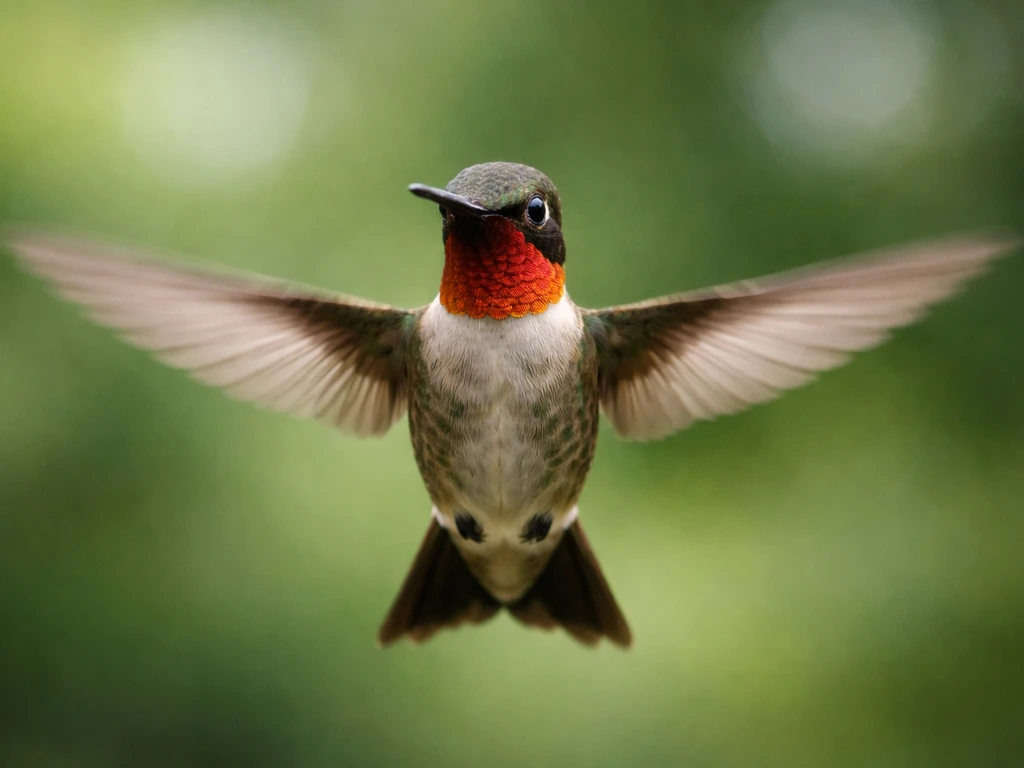
Multiple independent sources converge on hummingbirds as the record holders. Heart rates up to 1,260 bpm have been documented during active flight and hovering, and the Merck Veterinary Manual explicitly notes that hummingbirds can exceed 1,200 bpm during activity. The 1967 paper in The Auk on blue-throated and Rivoli's hummingbirds is one of the foundational primary sources behind these commonly repeated values, and the numbers have held up in subsequent energetics research.
To put that in physical terms: at 1,260 bpm, a hummingbird's heart is beating roughly 21 times per second. That's not a typo. It's a direct consequence of how hummingbirds generate energy. They hover using rapid wingbeats (typically 40 to 80 wingbeats per second depending on species), which demands extraordinary oxygen delivery to flight muscles, which in turn demands an extremely fast-pumping heart. The cardiovascular system is essentially running at full throttle during what looks like the bird just quietly sipping nectar.
There's a useful flip side to this: hummingbirds also experience some of the lowest heart rates recorded in birds. During torpor (a temporary hibernation-like state they enter on cold nights to conserve energy), heart rate drops to just a few beats per minute. The same species that tops the charts at 1,260 bpm can crash down to near-zero. That range is genuinely remarkable and makes hummingbirds one of the more physiologically extreme vertebrates on the planet.
Why heart rate varies so much across birds
There's a reliable biological rule at work here: smaller animals generally have faster heart rates. If you are also comparing speed claims, you may see discussions of which bird flies 60 miles per hour. This isn't coincidence. Smaller bodies have higher surface-area-to-volume ratios, lose heat faster, and need to run their metabolisms faster to stay warm and functional. That elevated metabolic rate requires faster oxygen delivery, which means more heartbeats per minute. Hummingbirds are among the smallest birds alive, so they sit at the extreme end of this curve.
Activity level is the other major driver. Heart rate is tightly linked to oxygen consumption, which rises sharply with physical effort. JEB has a perspective-style review linking hummingbird energetics to physiological state regulation, reinforcing that activity and feeding state drive changes in cardiometabolic parameters [Heart rate is tightly linked to oxygen consumption](https://journals. biologists.
com/jeb/article/223/20/jeb237800/226084/How-hummingbirds-cope-with-sugar-charged-lifestyle). Research on black-browed albatrosses has even established a direct fitted mathematical relationship between heart rate and oxygen consumption, confirming that bpm can be used as a reliable proxy for metabolic effort. When a bird flaps harder, its heart rate climbs. Cape gannet data shows this in real time: flapping flight produced 255.
5 bpm on average versus 217. 2 bpm during gliding, with near-instantaneous transitions each time the bird switched modes.
Ambient temperature matters too. Hummingbird research specifically documents how heart rate shifts alongside body temperature and breathing rate as environmental temperature changes. In hot conditions, birds may also face heat stress on top of exercise demands, which can push heart rate further. And even within a single species on a single day, heart rate swings widely depending on behavioral state. Gambel's white-crowned sparrows monitored continuously with telemetry showed activity-related heart rates ranging from about 440 to 900 bpm across different behavioral states.
Top contenders: who comes close to hummingbirds?

The title goes to hummingbirds under peak active conditions, but depending on what you're measuring, other small birds can approach surprising rates. Small passerines (the perching/songbird group) generally have high resting and active heart rates compared to larger species. Sparrows, for instance, can hit 700 to 900 bpm during high-activity bursts. Among larger birds, Herring Gulls during sustained powered flight reach around 625 bpm, which is high by any mammalian standard but still well below what hummingbirds do just hovering at a feeder.
Bar-headed geese are worth mentioning here, not because they have the fastest hearts, but because they're a fascinating cardiovascular case. These birds fly over the Himalayas at extremely high altitude, where oxygen is scarce. Their resting heart rate (pre-exercise in captive studies) averaged about 96 bpm. Interestingly, controlled research found that heart rate during exercise was not significantly affected by hypoxia in that study's conditions, suggesting flight effort, not low oxygen, is the primary driver of cardiac demand even at altitude. It's a great reminder that 'highest' depends on what question you're asking.
| Species | Resting Heart Rate | Active/Flight Heart Rate | Measurement Method |
|---|---|---|---|
| Hummingbirds (various) | ~250 bpm (alert rest) | Up to 1,260 bpm (hovering/flight) | Lab ECG, field physiology |
| Gambel's White-crowned Sparrow | ~440 bpm (low activity) | ~900 bpm (high activity) | Continuous radiotelemetry |
| Herring Gull | ~130 bpm (resting) | ~625 bpm (sustained flight) | Radiotelemetry, free-ranging |
| Cape Gannet | Not reported | 255 bpm (flapping) / 217 bpm (gliding) | Attached ECG recorder, field |
| Bar-headed Goose | ~96 bpm (pre-run rest) | Elevated during running | Lab ECG, controlled exercise |
| Black-browed Albatross | Variable with activity | Tightly linked to oxygen consumption | Implanted telemetry, calibrated |
How to compare studies fairly
Heart-rate comparisons across species look simple on the surface but can be genuinely tricky to interpret. A few things to watch for when you're reading claims or trying to sanity-check a number you found online.
- Restrained vs free-ranging: Heart rates measured in physically restrained birds are often inflated by stress. Studies using radiotelemetry or implanted recorders on free-ranging animals give cleaner baselines. The Japanese quail telemetry research is a good example of why this distinction matters.
- Lab vs field: Controlled lab conditions allow precise measurement but may not reflect peak physiological effort. Free-ranging studies (like the gannet ECG work or Herring Gull radiotelemetry) can capture real behavioral extremes.
- What ECG feature is being measured: Heart rate is typically derived from the interval between heartbeats on an ECG trace (R-R or S-wave intervals). Different methods and equipment can produce slightly different derived values, especially in field telemetry where signal quality varies.
- Activity state at measurement: A number reported without specifying 'resting,' 'flying,' 'feeding,' or 'excited' is hard to use. The same bird can vary by hundreds of beats per minute across those states.
- Sample size and species breadth: A study covering 19 species with 79 free-living individuals gives a different level of confidence than a single animal measured once. Look for studies with clear sample sizes and replication.
The broader principle is that heart rate is a proxy for metabolic effort. Research on albatrosses has formalized this mathematically, but it applies across species: faster heart rates mean higher oxygen consumption and greater metabolic demand. So 'highest heart rate' is really a question about which bird runs its metabolism hardest, which is why small, energy-intensive hummingbirds dominate the answer.
Heart rates across bird groups at a glance

Here's a rough sense of how heart rates scale across different bird types. These are approximate ranges, not precise species values, but they give useful context for where any single number fits in the bigger picture.
| Bird Group | Approximate Resting Heart Rate | Approximate Active/Flight Heart Rate |
|---|---|---|
| Hummingbirds | ~250 bpm (alert) | 800–1,260+ bpm |
| Small songbirds (sparrows, finches) | ~300–400 bpm | 500–900 bpm |
| Medium seabirds (gulls, gannets) | ~130–200 bpm | 400–625 bpm |
| Large seabirds (albatrosses) | Variable, moderate | Correlates tightly with exertion |
| Waterfowl (geese, ducks) | ~100–150 bpm | 200–400 bpm |
| Large birds of prey / wading birds | ~100–150 bpm | 200–350 bpm |
General-audience summaries suggest resting bird heart rates range from about 150 to over 600 bpm, and that flight can push rates above 1,000 bpm in small species. That same idea also applies to altitude and activity: the conditions a bird flies in help determine how high its physiology can push during flight how high a bird can fly. Those ranges are roughly consistent with the primary research, though the exact numbers shift depending on species, body size, and measurement method. The key pattern is clear: small body size and high activity both push heart rate up, and hummingbirds combine both to an extreme degree.
Where to verify and go deeper
If you want to confirm these numbers or dig into the primary data, a few routes are worth knowing about. The Merck Veterinary Manual's section on the avian cardiovascular system is a reliable, accessible starting point that explicitly addresses species-level heart-rate ranges including hummingbirds. It's written for veterinary professionals but readable without a biology degree.
For the scientific literature, the 1967 paper in The Auk on blue-throated and Rivoli's hummingbird physiology is the classic primary source behind many of the hummingbird heart-rate values you'll see repeated. The Journal of Experimental Biology and Physiological Zoology both have published hummingbird cardiovascular and energetics work that goes deeper on the mechanisms. PubMed searches for 'hummingbird heart rate,' 'avian cardiac telemetry,' or 'bird electrocardiography' will surface peer-reviewed sources quickly.
For methodology context, studies on free-ranging birds using implanted or attached ECG recorders (like the gannet and albatross work) explain clearly how heart rate is measured in real conditions and what the known limitations are. That context is useful when you're evaluating any claim about a 'record' heart rate: was it actually a peak measurement during verified high-intensity activity, or is it a number that got copied from source to source without the original conditions attached?
One honest caveat: the specific 'world record' hummingbird heart-rate values (around 1,260 bpm) appear consistently across energetics reviews, but pinning them to a single definitive primary study is harder than it sounds. The number is well-supported and widely cited, but if you need it for serious academic work, trace it back through the primary literature rather than relying on any secondary summary, including this one.
FAQ
When someone says a bird has the highest heart rate, what measurement should I assume they mean?
“Highest” depends on whether you mean true resting (calm, stationary, in its normal environment), voluntary activity, or peak exertion during a short burst. If the study reports only a single number, check whether it’s a baseline average, a maximum during a defined behavior, or a peak captured during handling or excitement.
Why do “resting” heart rate numbers sometimes look too high or inconsistent between sources?
Large spikes can come from stress, even if the bird later looks calm. If the number was collected while birds were restrained or being physically manipulated, “resting” can be inflated. Prefer telemetry or field ECG-style measurements on birds that are moving freely to compare across species.
Are the highest heart-rate values measured in the same way across studies?
Heart rate can be reported from different signals, like ECG-derived bpm versus pulse estimates, and recording equipment can add differences in timing and smoothing. If you’re comparing numbers across papers, look for whether bpm is from direct ECG, implanted devices, or inferred methods, since those can change reported peaks.
Does a hummingbird’s heart rate stay near the peak number the whole time it’s feeding?
Yes. During hovering versus fast forward flight, or feeding pauses versus continuous hovering, a hummingbird’s heart rate can move noticeably. The key is whether the reported value is tied to a specific behavioral state, like sustained hover, versus a mixed activity average.
Why might a hummingbird show a much lower heart rate than the “record” peak?
Torpor is the big exception where hummingbird heart rate can drop dramatically, even to just a few beats per minute. So if you measure at dawn or after chilling, you can get values that look like they contradict “record holders,” because the bird is in an energy-saving physiological mode.
Is the “highest heart rate” claim true for all hummingbirds or just certain species?
Do not treat the number as universal across every hummingbird species. Body size, wingbeat pattern, and typical activity differ across hummingbird species, so the ceiling reported for one species during peak conditions may not translate exactly to all hummingbirds.
Does peak heart rate automatically mean the bird is using the most oxygen or has the best endurance?
At any given bpm, the number is not a direct measure of oxygen delivery efficiency, and it’s not automatically a measure of endurance. The practical use is as a proxy for metabolic effort, but peak bpm can reflect short-term intensity, while sustained metabolism can be limited by different factors like temperature regulation.
How should I choose a single “best” heart-rate metric for comparing different birds?
If you care about practical “peak” performance, prioritize maximum bpm during verified high-intensity behavior and check the context (hovering, sprint flight, constrained vs free-ranging). If you care about general physiology comparisons, use resting or standardized baseline measures from minimally stressed birds.
What red flags suggest an online “record heart rate” number might be wrong?
If you’re seeing a number far above common hummingbird ranges, it could be a reporting issue like unit confusion, time-window mismatch (instantaneous bpm versus averaged bpm), or an artifact from the measurement setup. Cross-check whether the source specifies bpm units and the time window used to compute the maximum.
What’s the best next step if I need to verify the hummingbird heart-rate “record” for academic purposes?
If you want to verify a claimed record for research use, trace the citation chain back to original telemetry or ECG work and note the exact behavior and conditions. Secondary reviews are useful for orientation, but the “world record” feel often comes from multiple studies and repeated maxima that aren’t always tied to one single primary protocol.