A limbless prey for a bird is any animal the bird eats that has no paired legs or arms. That covers a surprisingly wide range of creatures: earthworms, slugs, snails, insect larvae, snakes, legless lizards, caecilians (those obscure worm-like amphibians), eels, and many elongated fish. If it wriggles without limbs and a bird can swallow it, it counts. I looked this up because I watched a robin yank an earthworm out of my lawn and thought, 'wait, does that worm technically have legs?' (It does not. Earthworms are limbless annelids. Solved that one fast.)
What Is a Limbless Prey for a Bird: Definition & Examples

Marcus Chen
23 Jul 2026
Why limbless prey matters if you're studying birds
Birds are built around what they eat, which is why understanding prey types unlocks a lot of avian anatomy and behavior. Limbless prey is a particularly interesting category because these animals often live underground, underwater, under leaf litter, or inside shells, all places that require specific bird equipment to reach them. The beaks, necks, feet, and digestive tracts of birds that eat earthworms look different from those that eat berries or seeds, and those differences are directly traceable to the mechanical problem of catching something long, slippery, and sometimes toxic. For learners of bird biology, this topic bridges anatomy (how is the bird built?), physiology (how does it digest a whole snake?), and ecology (what happens to soil nutrient cycles when birds remove worms?). It also comes up frequently in ornithology coursework, nature documentaries, and backyard watching, which is probably how you ended up here.
What actually counts as limbless prey
In zoology, 'limbless' describes animals that lack paired appendages, meaning no pectoral (front) limbs and no pelvic (back) limbs. That definition captures a surprisingly diverse roster of animals across several major groups. Among vertebrates, it includes all snakes (order Serpentes), multiple independently evolved squamate lineages that have lost external limbs (glass lizards, pygopodids, and the burrowing amphisbaenians), and caecilians (order Gymnophiona), which are a distinct group of roughly 200 species of tropical, burrowing amphibians that most people have never heard of. Among invertebrates commonly eaten by birds, earthworms (class Oligochaeta) and terrestrial gastropods (slugs and land snails) fit the definition cleanly, as do the legless larval stages of many flies and some beetles. Eels and elongated fish are not limbless in the strict vertebrate sense (they retain vestigial or functional fins), but they are functionally treated as elongate, limb-free prey by the birds that hunt them, and their capture and swallowing mechanics are similar enough to true limbless prey that they belong in this conversation.
How birds find and detect limbless prey
This is where avian sensory biology gets genuinely clever. Different bird species use different sensory channels depending on where their prey hides.
Touch and vibration sensing
Many worm-eating birds rely heavily on mechanoreception, the ability to detect vibrations and pressure in soil or substrate. Robins (Turdus migratorius and Erithacus rubecula) tilt their heads not just to look but to press one ear closer to the ground. Bill-tip organs, clusters of pressure-sensitive Herbst corpuscles in the bill tips of many shorebirds and thrushes, let birds probe soft soil and mud and detect the movement of a worm without actually seeing it. Kiwi (Apteryx spp.) carry this further: their nostrils open near the bill tip and they appear to detect earthworm chemicals directly from underground, combining smell and touch in soft substrates.
Vision and movement detection
For surface prey like snakes, slugs, or exposed larvae, vision dominates. Raptors hunting snakes, such as short-toed snake eagles (Circaetus gallicus), use long-range aerial scanning and can hover to spot movement in grass. Many passerines detect the sheen of a slug's mucus trail or the slight surface disturbance of an earthworm emerging after rain. Some birds, including certain herons, use visual lures or shadow-casting with their wings to reduce glare on water and spot elongate fish or eels below the surface.
Hearing
American woodcock (Scolopax minor) and related species have demonstrated sensitivity to substrate-borne sounds produced by earthworms moving through soil. While this is still an active area of research and scientists debate exactly how much birds rely on acoustic versus tactile cues when probing, field experiments with vibrating soil have confirmed that birds respond to worm-generated signals.
Common limbless invertebrate prey and which birds eat them
Earthworms
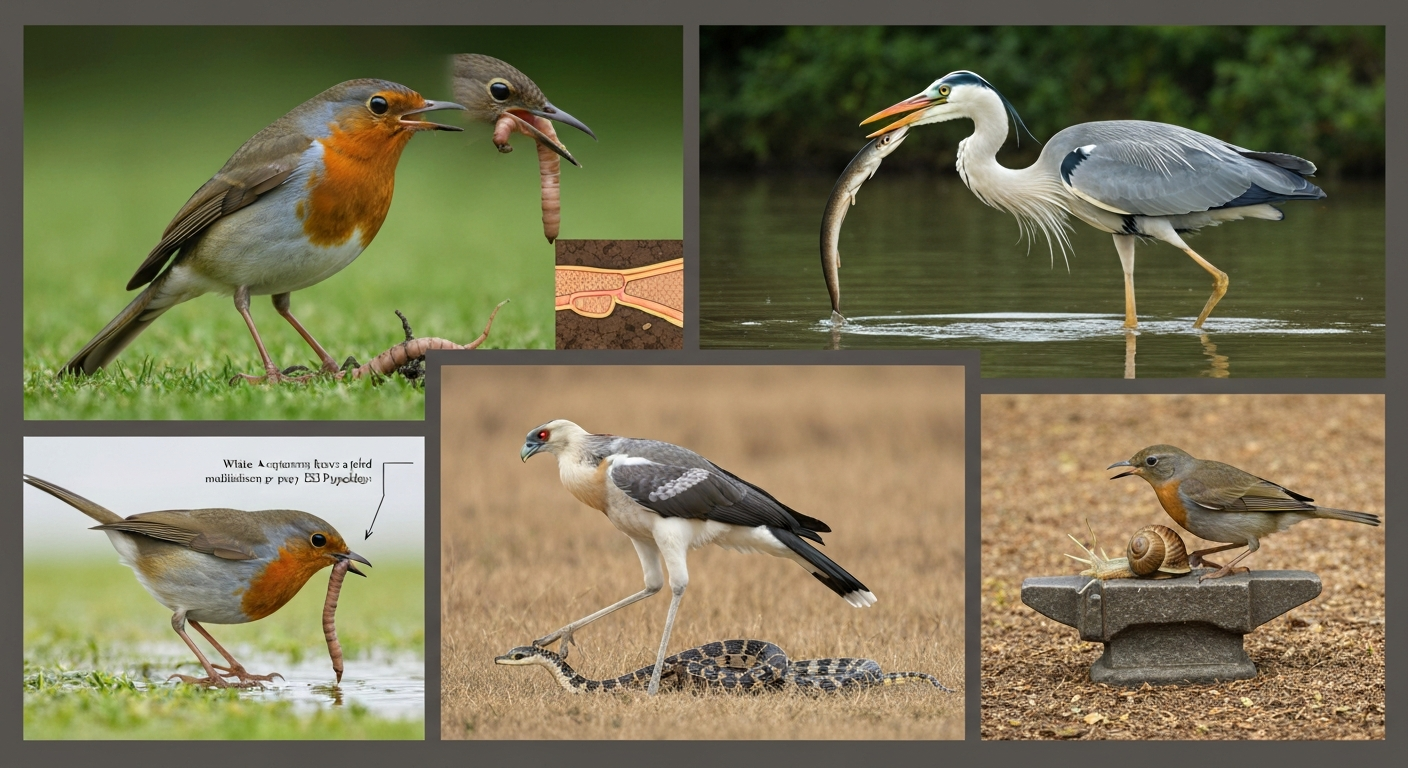
Earthworms (annelid worms, class Oligochaeta) are probably the most culturally recognizable limbless bird prey, the image of a robin tugging one from the grass is practically a symbol of spring. Globally, biological reviews of soil consumers identify birds as major predators of earthworms. Robins, blackbirds (Turdus merula), thrushes, starlings, American woodcock, and various gulls and waders all rely on earthworms seasonally or as year-round staples. The Fairy Pitta (Pitta nympha) takes this further: researchers documented a behavior called 'sundering,' where the bird holds an earthworm and pulls it apart against the substrate before feeding it to nestlings, a prey-preparation strategy specific to long, slippery, hard-to-manage prey.
Slugs and snails
Land gastropods (slugs have no external shell; snails do) are nutritionally valuable, especially for calcium. Song thrushes (Turdus philomelos) are the classic example: they pick up large snails and repeatedly smash them against a fixed stone, called an anvil, to crack the shell. Predation by Song Thrushes Turdus ericetorum on the Snails Cepaea hortensis and Arianta arbustorum (Journal of Animal Ecology, 1969) documents seasonal and size‑selective snail predation and the development of shell‑smashing behavior. This behavior is learned and develops gradually in young birds. Importantly, thrush anvil sites become hotspots for shell fragments that other bird species visit to collect calcium, particularly during breeding season when females need calcium for egg production. Starlings, some gulls, and even certain raptors also take gastropods opportunistically.
Insect larvae
Many fly larvae (maggots) and some beetle grubs are functionally limbless: their tiny, vestigial prolegs do not allow walking in the way an adult insect moves. Woodpeckers excavate rotting wood specifically to reach beetle grubs inside. Starlings probe grassland soil for leather-jackets (crane fly larvae). Many shorebird species take larval stages during the summer when adults are less available. For a bird, these larvae combine limblessness with soft-bodied vulnerability, making them easy to handle and swallow.
Common limbless vertebrate prey and which birds eat them
Snakes
Snakes are the most famous limbless vertebrate prey for birds. The Secretarybird (Sagittarius serpentarius) of sub-Saharan Africa is probably the iconic snake-hunter: it stomps on snakes with its powerful feet to subdue them before swallowing. Short-toed snake eagles and other Circaetus species are dedicated ophiophages (snake-eaters). Red-tailed hawks, secretary birds, roadrunners, and many large storks take snakes opportunistically. One honest note: diet studies on species famous for snake-eating often show that snakes form only a moderate fraction of their total prey; the reputation sometimes exceeds the reality.
Legless lizards and amphisbaenians
Legless lizards are not snakes. They represent multiple separate evolutionary lineages (glass lizards in Anguidae, pygopodid geckos in Australia, and the burrowing amphisbaenians) that have independently lost external limbs. Birds of prey, ground-foraging raptors, and some crows take legless lizards when they encounter them, typically treating them similarly to small snakes. Because many legless lizards are burrowers, birds usually encounter them when they surface, particularly after rain.
Caecilians
Caecilians (order Gymnophiona) are tropical, worm-like amphibians with no limbs at any life stage, which is unusual even among limbless vertebrates (many snakes had limbed ancestors, but caecilians have been limbless since early in their evolution). About 200 species are known. They live underground or in aquatic environments in tropical Africa, Asia, and the Americas. Raptors, storks, and herons in those regions do take caecilians, but because caecilians are so rarely observed above ground, this predation is not as thoroughly documented as snake predation. If you spot a tropical bird pulling something worm-shaped out of mud that seems too large to be an earthworm, it might be a caecilian.
Eels and elongated fish
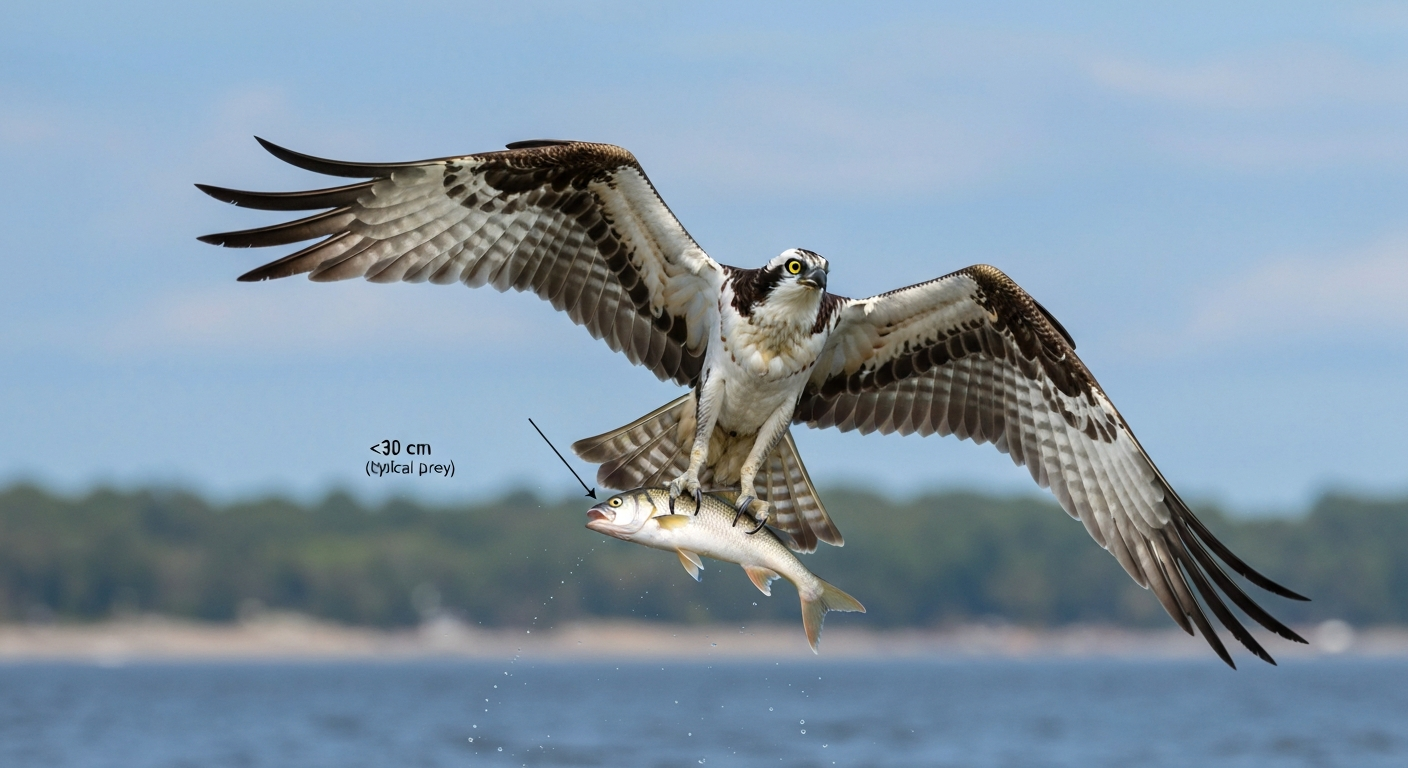
Herons, egrets, kingfishers, cormorants, ospreys, and many seabirds regularly catch eels and elongated fish that behave mechanically like limbless prey: long, muscular, and prone to wrapping around the predator's neck or bill. Great blue herons have been documented attempting to swallow eels that were too large and dying in the process (an extreme reminder that handling limbless prey has real risks). The swallowing mechanics for eels require a highly distensible esophagus and the ability to manage a prey item that may still be alive and writhing during ingestion.
A side-by-side look at the main prey types
| Prey type | Classification | Example bird predators | Main habitat encountered |
|---|---|---|---|
| Earthworms | Annelida (Oligochaeta) | Robin, blackbird, woodcock, starling, Fairy Pitta | Soil surface, grassland, woodland |
| Slugs | Gastropoda (shell-less) | Song thrush, starling, some gulls | Gardens, damp woodland, meadow |
| Land snails | Gastropoda (shelled) | Song thrush, snail kite, some raptors | Gardens, scrub, wetland edges |
| Insect larvae | Diptera, Coleoptera larvae | Woodpecker, starling, shorebirds | Soil, rotting wood, dung |
| Snakes | Serpentes | Secretarybird, short-toed eagle, roadrunner, stork | Grassland, savanna, scrub, forest edge |
| Legless lizards | Squamata (various lineages) | Raptors, corvids | Dry scrub, burrowing habitats |
| Caecilians | Gymnophiona | Tropical raptors, storks, herons | Tropical soil, stream edges |
| Eels and elongated fish | Anguilliformes and relatives | Heron, egret, kingfisher, cormorant, osprey | Rivers, lakes, estuaries, coast |
How bird anatomy is shaped for catching limbless prey
Bill shape and function
The bill is the primary tool, and the diversity of bill shapes among limbless-prey specialists tells its own story. Long, straight, probing bills (woodcock, snipe, kiwi) are built for pushing into soil and retrieving worms without surfacing. The bill-tip organ in these species is packed with mechanoreceptors, making the bill tip functionally like a fingertip. Herons have spear-shaped bills for striking at fish and eels with speed and precision. Snake-eating raptors have hooked bills for tearing prey after subduing it, but the initial capture is usually by foot. Song thrushes have general-purpose insectivore bills adequate for picking up snails but rely entirely on the anvil technique to actually access the flesh inside.
Feet and talons
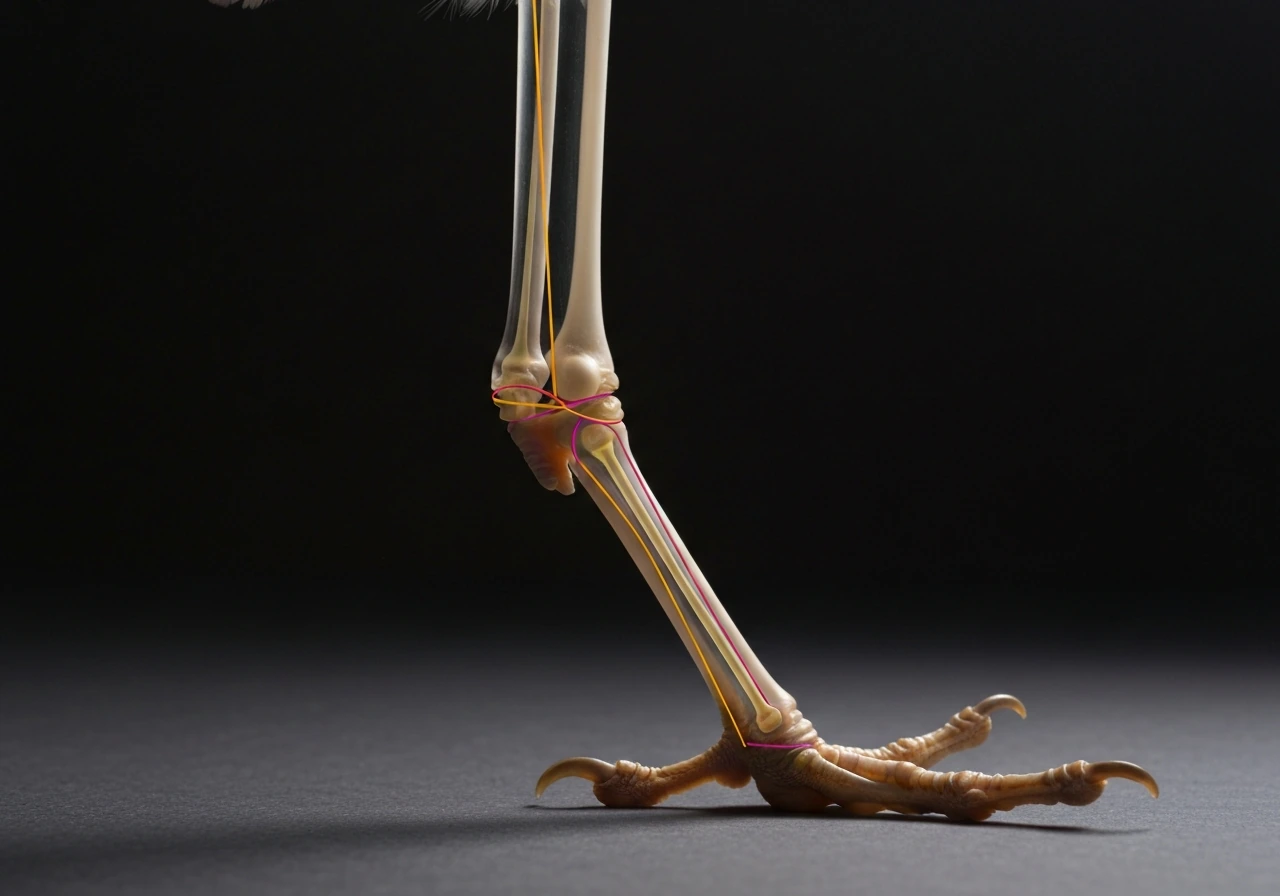
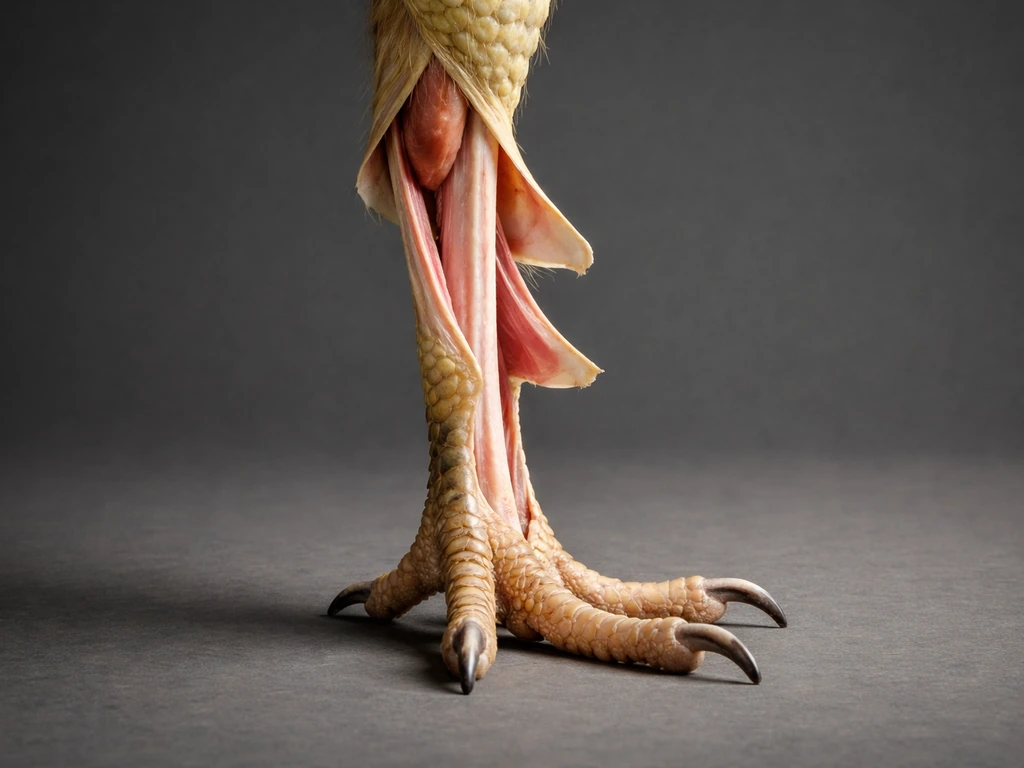
For snake hunters, feet are often more important than the bill in subduing prey. The Secretarybird's long, powerful legs deliver high-force stomping strikes (studies have measured strike force at roughly 195 newtons, delivered in under 15 milliseconds, too fast for a snake to react). Short-toed snake eagles have short, strong toes with rough, scale-like plantar surfaces that grip snakes securely. Kingfishers have specialized small feet used mainly for perching rather than prey manipulation; they rely instead on striking and bill control. For worm-eating passerines, foot structure relates more to ground-foraging locomotion than prey capture. See why are bird legs so skinny for more on leg morphology and how slim legs suit ground-foraging and hunting behaviors. The relationship between leg anatomy and feeding behavior is a theme worth exploring further if you are curious about how bird legs actually work mechanically.
Neck flexibility and throat mechanics
Swallowing a long, wriggling animal requires extraordinary neck and throat flexibility. Birds lack the ability to chew, so everything goes down whole or in large pieces. Avian cervical vertebrae (neck bones) are highly numerous compared to mammals (most birds have 11 to 25 cervical vertebrae versus the 7 found in almost all mammals), allowing the sinuous neck movements needed to maneuver a snake or eel headfirst down the esophagus. Herons can visibly accordion their necks while swallowing large eels. The esophagus itself is highly distensible, with elastic walls that can stretch far beyond their resting diameter.
Hunting tactics birds use for limbless prey
Probing
Probing is the defining foraging strategy for worm and soil-larva specialists. The bird drives its bill into soft ground, detects prey via mechanoreception, grasps it, and extracts it. The challenge is that earthworms grip their burrow walls with tiny setae (bristle-like structures), meaning the bird has to apply sustained tension rather than a single sharp tug. Robins and blackbirds do this with a characteristic head-tilt and slow backward shuffle. American woodcock probe repeatedly, sometimes over hundreds of insertions per hour.
Striking and ambush
Herons and egrets are classic ambush strikers: they stand motionless (or move with glacial slowness) and then unleash a neck-driven strike at fish, eels, or snakes. The strike uses the S-curve of the neck as a stored-energy spring. Kingfishers use a dive-strike from a perch or hover, hitting the water in a precise trajectory to minimize splash and maximize bill-on-fish accuracy. Roadrunners (Geococcyx californianus) actively chase snakes and lizards on the ground, using speed and repeated strikes to the head.
Stomping and pinning
The Secretarybird's stomping technique is the most dramatic example, but other large ground birds and some raptors also pin snakes and legless lizards before attempting to swallow them. Stomping immobilizes the prey and reduces the risk of a defensive bite. Some raptors repeatedly drop heavy prey from height onto hard surfaces, a behavior functionally similar to the thrush's anvil technique.
Impaling and tool use
Shrikes (family Laniidae) are well known for impaling prey, including small snakes and lizards, on thorns or barbed wire. This serves as both prey storage (a 'larder') and a handling aid, allowing the bird to tear pieces from prey it cannot hold firmly in its feet. The song thrush's anvil use is the best-documented tool-use-adjacent behavior specifically for limbless prey: while the bird does not carry a tool, it selects and repeatedly returns to specific stones as a working surface, which meets several behavioral criteria for proto-tool use.
Killing, handling, and swallowing: what happens after capture
Birds do not have hands, which makes killing and handling limbless prey considerably more complicated than it might look from a distance. Most songbirds kill earthworms or larvae by repeatedly striking them against a hard surface or by biting them. Worm-eating birds often 'sunder' large worms (tear them apart) before swallowing, as documented in the Fairy Pitta. For snakes, raptors use the bill to bite repeatedly at the head and neck region while pinning the body with the feet.
Swallowing goes head-first when possible. This is not accidental: swallowing a snake or eel tail-first risks the scales or skin folding the wrong way, which can cause the prey to jam. Birds orient prey in the bill and use rapid head-flicking and gravity-assisted neck movements to position it correctly. The esophagus stretches dramatically, and in some species the outline of the prey is visible from outside the bird's neck during swallowing.
Once swallowed, prey enters a two-part stomach. The proventriculus (glandular stomach) secretes acid and digestive enzymes that begin breaking down proteins and soft tissues. Clinical Anatomy and Physiology of Exotic Species (text on avian proventriculus/gizzard function) describes that the proventriculus secretes acid and digestive enzymes while the muscular gizzard grinds hard materials such as shell fragments and insect exoskeletons Clinical Anatomy and Physiology of Exotic Species (text on avian proventriculus/gizzard function) describes that the proventriculus secretes acid and digestive enzymes while the muscular gizzard grinds hard materials such as shell fragments and insect exoskeletons.. Prey then moves to the ventriculus, better known as the gizzard, a muscular chamber that grinds harder materials like shell fragments, insect exoskeleton, and even small bones. Birds that eat snails have notably powerful gizzards for crushing shell fragments. Birds that eat whole soft-bodied prey like earthworms or snakes have more distensible, less heavily muscled gizzards. Indigestible material, including snake scales, snail shell fragments, fur, and beetle exoskeleton, is compacted and regurgitated as pellets, a useful record of what the bird has eaten.
Risks birds face when eating limbless prey
Venom and defensive secretions
Venomous snakes are an obvious hazard. Birds that specialize in snakes, like the short-toed eagle or Secretarybird, have thick, scale-covered legs and feet that provide physical protection against bites. They also strike quickly and from angles that minimize bite exposure. Interestingly, some ophiophagous birds show partial tolerance to certain venom components, though they are not fully immune and a serious envenomation can kill or incapacitate them. For slugs and some insect larvae, skin secretions can be distasteful or mildly toxic, and birds learn by trial and error to avoid the most noxious species.
Physical injury
A large, muscular eel or snake can injure a bird during swallowing, either by biting as it goes down or by wrapping around the bird's neck. There are documented cases of herons dying after attempting to swallow eels that were too large to pass and that constricted or blocked the esophagus. Snakes can bite during foot-pinning, even briefly after being apparently subdued. Large earthworms can also puncture delicate bill tissues if gripped incorrectly, though this is a minor risk.
Parasites
This is an underappreciated risk. Snails and slugs are first or second intermediate hosts for digenetic trematodes (flukes), and birds that regularly eat gastropods can acquire these parasites. Studies directly link bird community composition to trematode recruitment in snail populations, showing the epidemiological connection runs both ways: the bird eats the snail and acquires the parasite, and the parasite's transmission depends on birds eating snails. Earthworms can carry helminth larvae, protozoa, and other parasite stages, some of which pass through the bird's digestive system harmlessly and some of which can infect the bird. Birds that eat large quantities of soil invertebrates generally have immune systems and digestive chemistries calibrated for this parasite load, but stressed or immunocompromised birds are more vulnerable.
The ecological role of birds eating limbless prey
When birds eat earthworms, they act as top-down regulators of soil invertebrate populations, which influences decomposition rates, nutrient cycling, and soil structure. A single song thrush can consume hundreds of earthworms in a season, representing a significant transfer of soil biomass up the food chain. When these birds defecate or die, nutrients that were locked in soil organisms re-enter above-ground ecosystems.
Birds eating snails exert direct pest-control pressure on garden and agricultural gastropod populations. Thrushes, starlings, and ducks in market garden settings measurably reduce slug and snail abundance. Song thrush anvil sites function as calcium recycling hotspots: shell fragments at anvil sites are visited by other bird species seeking dietary calcium, spreading the nutritional benefit of snail predation across the local bird community.
Snake predation by birds helps regulate snake population dynamics in grasslands and savannas, though this effect is more localized and species-specific than the broad suppression birds exert on invertebrate populations. In food-web terms, ophiophagous birds sit at the top of multi-link chains involving plants, rodents, and snakes, so their presence or absence cascades downward. Caecilian predation in tropical forest soils is less studied but likely plays a comparable role to worm-eating in temperate regions.
Watching birds hunt limbless prey: field observation and backyard tips
What to watch for
The single best time to watch birds catching earthworms is early morning after rain, when worms come to the surface and the soil is soft enough for probing. Watch for the robin's head-tilt, the blackbird's quick run-and-freeze pattern, and the starling's aggressive bill-open probing technique (called 'gaping,' where the bird drives its closed bill into soil then forces it open to widen the hole). Thrush anvil sites are easy to find: look for a flat stone or root with a scatter of smashed snail shells around it, then sit quietly nearby at dawn or dusk. If you find a banded bird while observing, learn how to identify bird leg bands to report sightings and aid research.
How to observe responsibly
- Keep a minimum distance of at least 5 to 10 meters when a bird is actively foraging; approaching too close will flush the bird and waste your time anyway.
- Never disturb an anvil site by moving or removing the stone; thrushes return to specific stones and displacement disrupts a learned behavior.
- If you find a heron or raptor attempting to swallow an oversized prey item and showing obvious distress, contact a local wildlife rescue rather than intervening yourself.
- Avoid handling earthworms or slugs and then touching your face; some parasites (particularly rat lungworm in slugs in some regions) can transmit to humans.
- Take notes or photographs from a distance rather than recording at close range, which can alter bird behavior.
Making your yard better habitat for limbless-prey hunters
- Reduce or eliminate pesticide and molluscicide (slug pellet) use: these kill the prey birds depend on and can poison birds directly through secondary poisoning.
- Leave a section of lawn unmowed or allow leaf litter to accumulate; earthworm populations are higher under undisturbed surface cover.
- Install a water feature even a shallow dish: herons and egrets will investigate, and damp ground nearby attracts worms and slugs.
- Place flat stones in the garden deliberately: thrushes will sometimes adopt them as anvil sites, which lets you watch the smashing behavior at close range.
- Avoid ground-applied insecticides before and during breeding season, when parent birds are collecting invertebrates for nestlings.
Conservation pressures on birds that eat limbless prey
Song thrush populations in the UK have declined significantly since the 1970s, and habitat loss, intensive agricultural land management, and pesticide use are among the leading drivers. The link to limbless prey is direct: agricultural practices that compact soil, drain wetlands, or apply molluscicides reduce earthworm and gastropod abundance, removing the food base that ground-foraging birds depend on. The song thrush is now a species of conservation concern in several European countries partly because of this prey depletion.
For snake-eating raptors, habitat fragmentation reduces both snake diversity and raptor hunting range. The Secretarybird has declining populations linked to grassland conversion and bush encroachment in sub-Saharan Africa, both of which reduce the open-ground conditions where it hunts. Caecilians, the least-known limbless prey group, face their own conservation pressures from deforestation and soil degradation in tropical regions, which may affect the bird species that depend on them, though quantitative data here is sparse.
Climate change adds another layer: shifts in soil moisture affect earthworm surface activity and distribution, potentially decoupling the timing of worm availability from bird breeding seasons. In regions experiencing drier springs, this mismatch could reduce nestling survival for species like song thrush and American robin that time breeding partly around peak earthworm availability.
More bird biology worth exploring
Understanding how birds catch and handle limbless prey connects naturally to several other areas of avian anatomy and locomotion. The feet and legs of worm-hunters, snake-stompers, and fish-strikers are structurally different in ways that reflect their prey, and the mechanics behind how birds walk, run, and balance on the ground while hunting all feed into how effective they are at reaching earthworms or chasing snakes. See how does a bird walk on the ground for details on bird gait, balance, and ground locomotion. If you are curious about the physical structure that makes all this possible, exploring what bird legs are made of, how bird legs work as mechanical systems, and how a bird walks and balances on the ground gives the anatomical grounding to make sense of the behaviors described here.
FAQ
What does “limbless prey” mean in the context of birds?
Limbless prey are animals lacking paired locomotor appendages (no functional pectoral or pelvic limbs) so they move by undulation, burrowing, crawling or crawling‑like locomotion. In diet and ecology contexts this includes many invertebrates (earthworms, slugs, snails, legless insect larvae) and several vertebrate groups that have lost external limbs (snakes, legless lizards and amphisbaenians, and caecilians), plus elongate fish or eel‑like fishes that present similar handling challenges.
Which invertebrate groups qualify as limbless prey for birds?
Common limbless invertebrate prey include earthworms (annelids), land and freshwater gastropods (snails and slugs), and many insect larval stages that lack walking limbs or appear worm‑like (e.g., many fly maggots and some beetle larvae). These taxa are widely eaten by ground‑foraging and generalist insectivorous birds.
Which vertebrate groups are considered limbless prey?
Among vertebrates, limbless prey include snakes (Order Serpentes), caecilians (Order Gymnophiona — burrowing amphibians), and several independent lineages of legless or near‑legless squamates (legless lizards, amphisbaenians and pygopodids). Some elongate fishes and eels are functionally similar in form and handling to limbless prey.
What bird species are known to eat earthworms, and how important are they in diets?
Many passerines and ground‑foraging birds take earthworms, often seasonally: robins, European blackbirds (Turdus merula), song thrushes (Turdus philomelos), starlings, some gulls and waders. Earthworms can be a major seasonal food source, especially during breeding when high protein and predictable prey supply matter.
Which birds regularly eat snails and slugs, and what special behaviors do they use?
Thrushes (e.g., song thrush), starlings, some corvids and certain waders and gulls take gastropods. Song thrushes famously use fixed “anvil” stones to smash snail shells; other species may peck, smash with the bill against substrate, or swallow smaller gastropods whole. Some raptors that take terrestrial prey will also eat large snails opportunistically.
What birds take snakes and other limbless vertebrates?
Large ground‑foraging birds and raptors take snakes: secretarybird (Sagittarius serpentarius) and some species of hawks, eagles and kites are notable snake predators. Many generalist predators (crows, some owls, herons) will take small snakes, legless lizards and caecilians when encountered. The proportion of snakes in diets varies widely by species and region.