Bird feathers are made almost entirely of keratin, the same tough structural protein found in your fingernails and hair. That single material does a remarkable amount of work: it forms the central shaft, the branching barbs, the tiny barbules that zip everything together, and the microscopic surface features that scatter light into iridescent blues and greens. Pigments from a bird's diet or metabolism get locked into that keratin framework during feather growth, and a thin coating of oil from the uropygial (preen) gland sits on top to handle waterproofing. In many cases, emu oil is produced by processing fat-rich tissues from emus, then filtering and refining the oil for use emu oil extraction. So when you hold a feather, you're essentially holding a precisely engineered keratin structure with pigment baked in and oil on the outside. A bird nest fern is a type of fern that forms arching fronds from a central cup and is often grown as a houseplant what is bird nest fern.
What Are Bird Feathers Made Of: Keratin and Structure

The core materials in a feather
The overwhelming majority of a feather is beta-keratin, a fibrous protein that polymerizes (links together into long chains) as the feather develops. It's lightweight, flexible enough to bend without snapping, and surprisingly strong. Scientists studying feather rachis and barbs under microscopes have found that the arrangement of keratin at the micron scale, meaning structures just a few millionths of a meter in size, accounts for a lot of the feather's mechanical performance. The same material that makes your nails hard becomes something completely different when it's organized at that tiny scale.
Beyond keratin, two other material categories matter: pigments and oils. Pigments, which researchers sometimes call biopigments, are colored compounds that sit inside the keratin structure of the feather itself. They're either made by the bird's own cells or acquired through food. Preen oil, secreted by the uropygial gland near the base of the tail, is a waxy mixture of fatty acids, esters, and diester waxes called uropygiols. The bird spreads this oil across its feathers during preening. It's not part of the feather's physical structure, but it's a key part of how feathers function day to day. These same “biological material engineering” ideas help explain why bird nest ferns grow on trees why bird nest fern grow on trees.
How the keratin builds the feather, from shaft to tiny hook
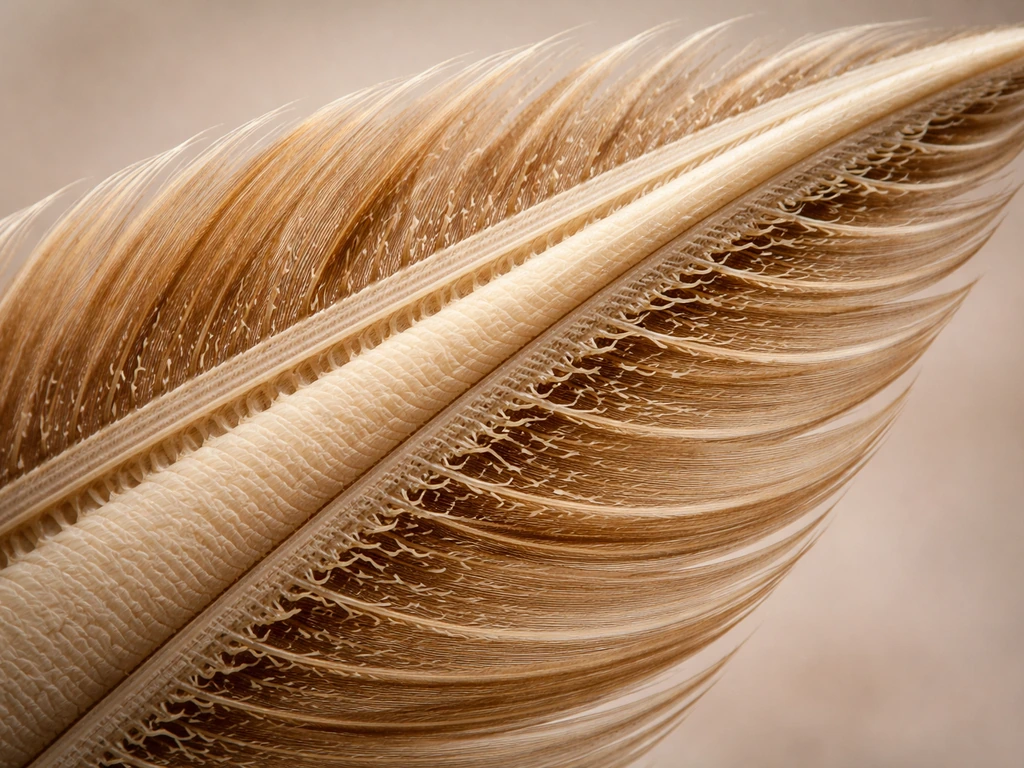
A feather has a clear hierarchy of parts, and it helps to visualize them from the center outward. The central shaft splits into two sections: the hollow base, called the calamus, which anchors into the skin, and the solid upper portion called the rachis. The rachis is the stiff spine you'd naturally grab if you picked up a large feather. Branching off both sides of the rachis are barbs, arranged in parallel rows. Each barb is itself a tiny rod of keratin. Then, branching off each barb are even smaller structures called barbules. That's three levels: rachis, barbs, barbules.
Here's where it gets clever. The barbules on one barb have tiny hooks along their edges, and those hooks catch onto the barbules of the neighboring barb like a zipper or velcro. The result is a flat, unified sheet called the vane. When you've ever ruffled a feather and then run your fingers along it to smooth it back out, you were literally re-engaging those hooks. You can try this at home: find a large contour feather, gently pull some barbs apart, and then pinch them together and draw your fingers upward. The vane snaps back into shape because the barbule hooks are re-interlocking. It's one of those moments where the biology becomes completely obvious once you see it.
What gives feathers their colors
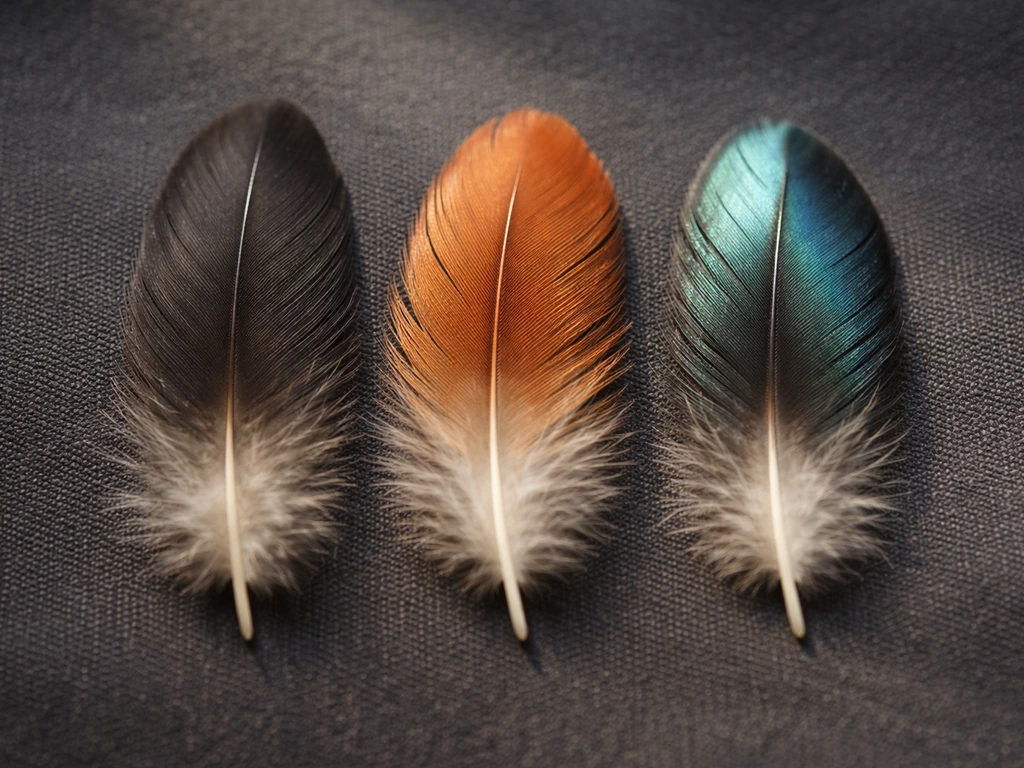
Feather color comes from two completely different mechanisms, and many birds use both at once. The first is straightforward pigmentation: colored molecules are physically deposited inside the keratin cells of developing feathers. The second is structural color: the physical arrangement of keratin, melanin, and air at the nanoscale bends and reflects light in ways that produce vivid colors with no pigment at all, or intensify pigment colors dramatically.
Pigment-based color
The three main pigment families in bird feathers are melanins, carotenoids, and porphyrins. Melanins produce blacks, grays, browns, and rusty reds, and birds make them internally. Carotenoids produce yellows, oranges, and reds, but here's the key thing: birds cannot synthesize carotenoids on their own. They have to get them through food. A flamingo's pink color, for example, comes from carotenoid-rich food. Some birds deposit dietary carotenoids directly into feathers; others metabolically convert them into different pigments called ketocarotenoids before deposition. Either way, what a bird eats directly affects what color ends up in its feathers. Porphyrins exist too but are far less common than melanins and carotenoids. During feather development, pigment cells called melanocytes pass melanin-containing packets (melanosomes) into the keratin-producing cells of the feather, where they get locked in place as the keratin hardens.
Structural color and iridescence
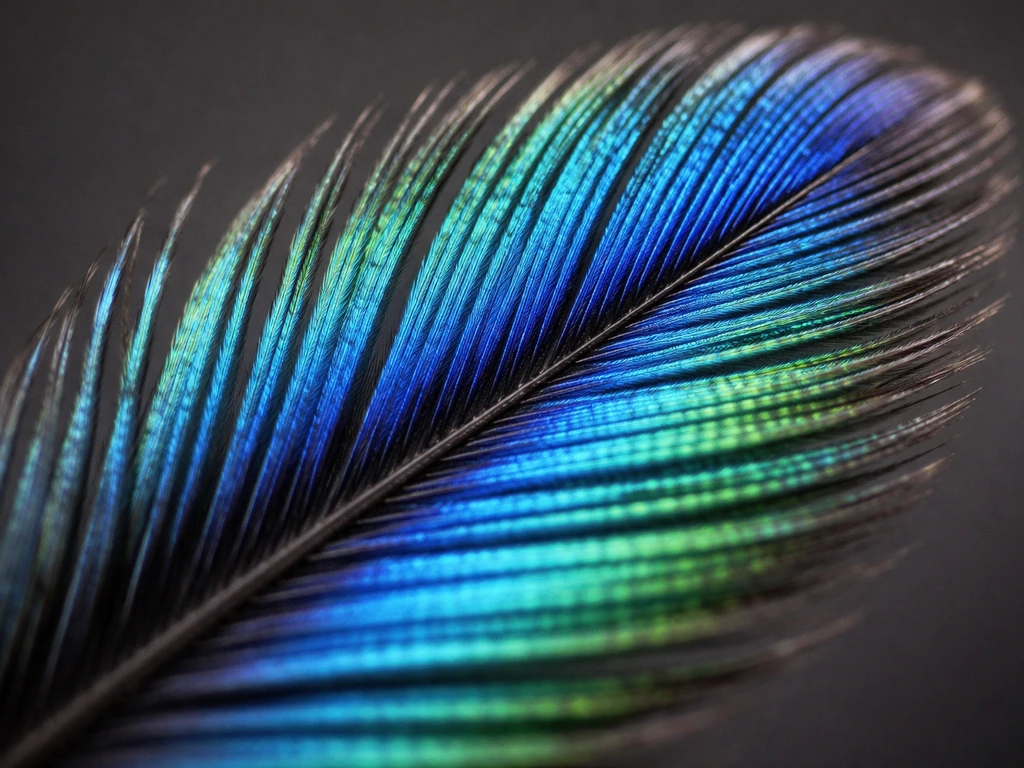
The iridescent blue of a hummingbird or the green shimmer of a grackle isn't really a pigment at all, or at least not only. It's a product of nanostructure. Inside the barbules of iridescent feathers, melanosomes (those melanin packets) are arranged in precise, repeating layers alternating with keratin and sometimes air pockets. Those layers act like a stack of thin films: light hits them, reflects at different angles from each layer, and the wavelengths that reinforce each other become the color you see. Change the angle, and you change which wavelengths reinforce, which is why iridescent feathers shift color as you move them. The thickness of the keratin and melanin layers, down to nanometers, determines which color gets amplified. Non-iridescent structural colors, like the matte blue of a bluebird, work through a slightly different mechanism where the nanostructure of the barb (not the barbule) scatters light in a way that produces a consistent color regardless of viewing angle. Scientists still debate the fine details of exactly how each architecture produces its specific optical effect, but the core idea is the same: structure and keratin together produce color without any dye.
How feather composition connects to water resistance and insulation
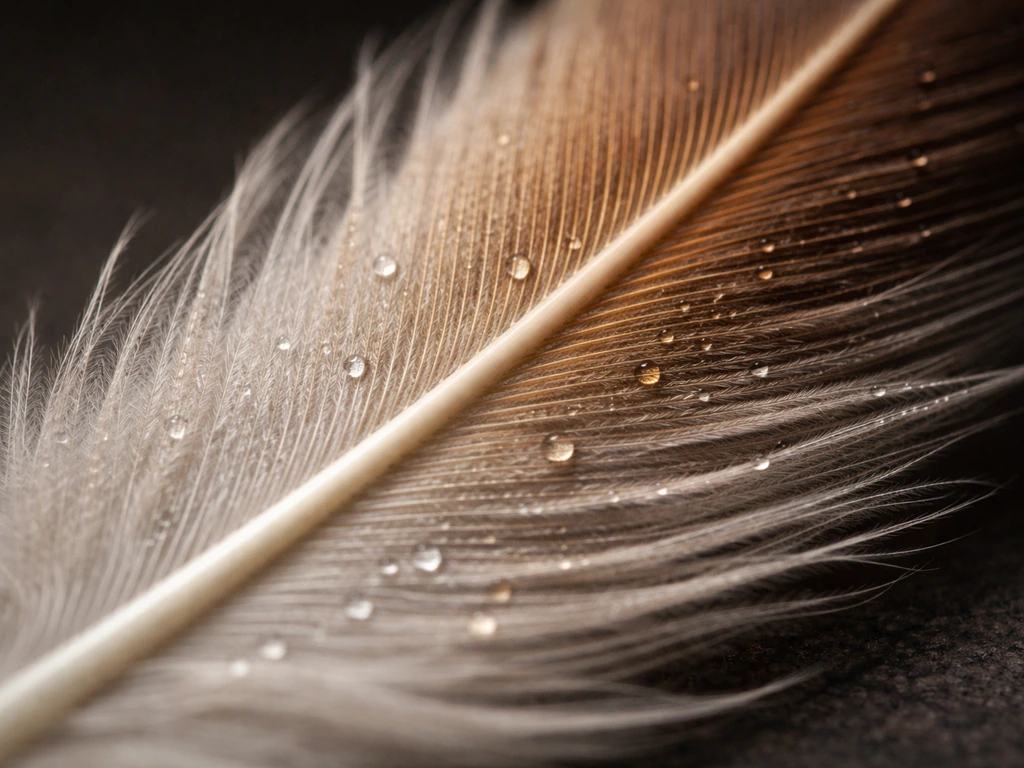
The interlocking barbule structure of outer (contour) feathers is what makes them water-resistant in the first place. When barbules are hooked together tightly, they form a dense vane with small gaps that water has difficulty penetrating. Add a coating of preen oil on top, and surface tension does the rest: water beads up and rolls off rather than soaking in. The preen oil itself is compositionally specific, not just any oil. It contains wax esters and fatty acids that are hydrophobic (water-repelling), and it also has antimicrobial properties that help protect the feather from bacteria and fungi that could degrade the keratin structure. If a bird stops preening, feather condition declines noticeably.
Insulation works through a different physical principle. Down feathers have loosely arranged barbules that don't interlock, so instead of forming a flat vane they create a fluffy three-dimensional mesh that traps air. Trapped air is a poor conductor of heat, meaning the bird's body warmth stays close to the skin. The keratin structure of down is designed to maximize surface area and loft while minimizing weight. When down gets wet and the keratin filaments mat together, that air space collapses, insulation drops dramatically, and the bird loses heat rapidly. That's why waterlogged birds look miserable and fluff up ineffectively.
Different feather types, different structures
Not all feathers are built the same way, even though they're all made of the same basic keratin material. The type of feather determines how that keratin is organized and how much of the vane-locking barbule architecture is present.
| Feather Type | Rachis | Barbule Structure | Primary Function |
|---|---|---|---|
| Contour feather | Long, solid, stiff | Hooked barbules, fully interlocking vane | Streamlining, waterproofing, outer shape |
| Flight feather (primary/secondary) | Long, very stiff, asymmetric | Tightly interlocking barbules, high vane rigidity | Generating lift and thrust in flight |
| Down feather | Short or absent | No hooks, barbules soft and loose | Thermal insulation, traps air |
| Filoplume | Thin, hair-like shaft | Few or no barbs/barbules | Sensory function, detects feather position |
| Semiplume | Present but small | Partially interlocking, partly fluffy | Intermediate insulation and shape |
Flight feathers deserve a special note. The rachis of a primary flight feather is under enormous mechanical stress during flapping, and its internal keratin architecture reflects that. The rachis has a foam-like medullary core surrounded by a denser cortex of tightly packed keratin fibers, giving it a high stiffness-to-weight ratio. The asymmetry of flight feathers, with a narrower leading edge vane and wider trailing vane, is also built into the keratin structure during growth and contributes directly to how air moves over the wing.
Where the keratin and pigments actually come from
Feathers grow from follicles in the skin, and the entire structure is built during a single growth cycle before the feather becomes a dead, fully keratinized structure with no living cells. During that growth window, the bird's body supplies amino acids (the building blocks of protein) to produce the keratin. Diet matters here: a bird eating a nutritionally poor diet, like a pet parrot on an all-seed diet, may not get enough amino acids or trace nutrients to build high-quality feather keratin. The Merck Veterinary Manual specifically flags nutritional deficiency from seed-heavy diets as a common cause of abnormal feather development in pet birds.
Pigment incorporation happens during that same growth window. Melanosomes are delivered into the feather-forming cells before keratinization locks everything in place. Carotenoids from the diet circulate in the bloodstream and get deposited in the barbules and barbs during growth. Once a feather is fully formed, you can't change its color by changing the bird's diet. The change only shows up after the next molt, when new feathers grow. This is why molt timing and feather condition are closely linked to a bird's annual nutritional cycle. A poor diet in the weeks leading up to molt can produce feathers with structural defects, stress bars (thin horizontal lines of weaker keratin), or faded pigmentation.
Molt itself is worth mentioning briefly here, since it's directly tied to feather composition. Because feathers are dead keratin structures after they finish growing, they can't repair themselves if they get damaged. The only way a bird gets new feathers is through molt, where follicles cycle through a new growth phase. How feathers grow back after damage or a molt cycle is its own detailed subject, but the material starting point is always the same: the follicle produces a new keratin structure from scratch. How feathers grow back after damage or normal molting is a common question, and the answer depends on the bird and the timing of its feather cycle.
Why this actually matters beyond biology class
Understanding what feathers are made of isn't just trivia. It has real practical implications for anyone keeping birds, watching birds, or trying to understand avian behavior.
- Flight performance is directly tied to feather integrity. Damaged barbules mean a broken vane, which disrupts airflow over the wing. A bird that can't re-zip its vanes through preening loses aerodynamic efficiency.
- Thermoregulation depends on feather structure staying intact. Matted or oil-saturated down loses its loft and its ability to trap air, leaving a bird vulnerable to cold.
- Feather condition in pet birds is one of the earliest visible signs of nutritional problems. Dull, brittle, or stress-barred feathers often indicate a diet that isn't supplying the amino acids and carotenoids needed for good keratin formation.
- Blood feathers, the newly growing feathers still supplied with blood vessels, are structurally different from mature feathers. They're actively producing keratin and are sensitive to damage. Cutting a blood feather can cause significant bleeding, which is why caution is critical during any wing trimming.
- Waterproofing is active, not passive. Because preen oil degrades over time and wears off, a bird that isn't preening regularly, whether due to illness, stress, or poor gland function, will gradually lose water resistance even if its feather structure is intact.
One of the best ways to internalize feather structure is to actually examine one. Find a large contour feather (a flight feather from a larger bird works great) and look at it in good light. Run your fingers against the grain to separate the barbs, then smooth them back together and watch the vane re-form. Hold it up to a light source and look for the subtle differences in the vane on each side of the rachis. If you have a magnifying glass, you can sometimes make out individual barbules. It's a surprisingly satisfying way to connect the biology to something you can actually see.
Feathers are also worth thinking about in terms of whether they're clean or contaminated, since the keratin surface and preen oil coating can absorb or trap environmental substances. In practice, that means you might wonder are bird feathers dirty and what kinds of contaminants can end up on the keratin surface. Whether feathers are dirty or safe to handle is a related question that goes a bit beyond their composition, and similarly, whether feathers are fully waterproof or just water-resistant is a nuance worth exploring separately. But the foundation for understanding both of those questions starts here, with knowing what the feather is physically made of and how those materials are organized.
FAQ
Are bird feathers made of the same material all the way through?
Most feathers are predominantly beta-keratin, but “feather” does not mean one uniform structure. Contour feathers have the tight vane-locking barbules for a smooth surface, while down feathers use different, loosely arranged barbules to trap air for insulation. That means the same primary material, keratin, is organized differently depending on the feather type.
Is feather color always from pigments made inside the feather?
No. Colors can come from pigment molecules deposited in growing keratin, and also from nanoscale arrangements of keratin and melanin that control how light is reflected. A feather can look vividly colored even if it contains relatively little pigment, especially for iridescent blues and greens.
If I change my bird’s diet, will existing feathers change color?
You generally cannot “fix” or recolor a fully grown feather by changing the bird’s diet. Pigment availability affects the feathers that are currently being grown in the follicle, then once the keratin fully hardens, color is effectively set until the next molt.
Are bird feathers completely waterproof?
Feathers can be water-resistant rather than fully waterproof. The vane structure and preen oil help prevent water from penetrating, but extended soaking or heavy contamination can still reach the surface and displace the oil layer.
Can birds repair damaged feathers once they are grown?
Because feathers are made from dead keratin after they finish growing, they do not regenerate or heal like living skin. Small cracks, stress bars, or damaged barbs generally persist until the bird molts and grows a new keratin structure from the follicle.
How does poor nutrition affect what feathers are made of?
Not exactly. Feathers are sensitive to nutrition during the growth window in the follicle because building high-quality keratin requires adequate amino acids and trace nutrients. A seed-heavy diet can contribute to abnormal development, which may show up as weak spots or uneven pigmentation after the next growth cycle.
Why do feather problems often show up around molt?
Molting is the main time when composition can change because that is when keratin and pigments are assembled. If a bird’s body is under nutritional or physiological stress leading into molt, the new keratin can be structurally weaker and pigments may appear faded compared with normal years.
What happens to feather performance if a bird stops preening?
Preen oil is a waxy, hydrophobic mixture that coats the feather surface and supports water beading, and it also has antimicrobial properties. If preening decreases (for example, due to illness or discomfort), water resistance often drops and feather condition can decline.
Can feathers pick up contaminants from the environment?
Yes, especially on the outer surface. The keratin and oil coating can trap environmental particles like dust, pollen, and other grime. Whether a feather is “safe to handle” depends on hygiene and possible contaminants, even though the underlying keratin composition is the same.
Why does a ruffled feather seem less water-resistant?
A loose, unaligned vane usually breaks the tight interlocking that forms the flat surface, so water resistance and smooth appearance drop. In practice, you may notice that a feather that stays fluffed and ruffled does not repel water as effectively as one that has re-formed the vane.
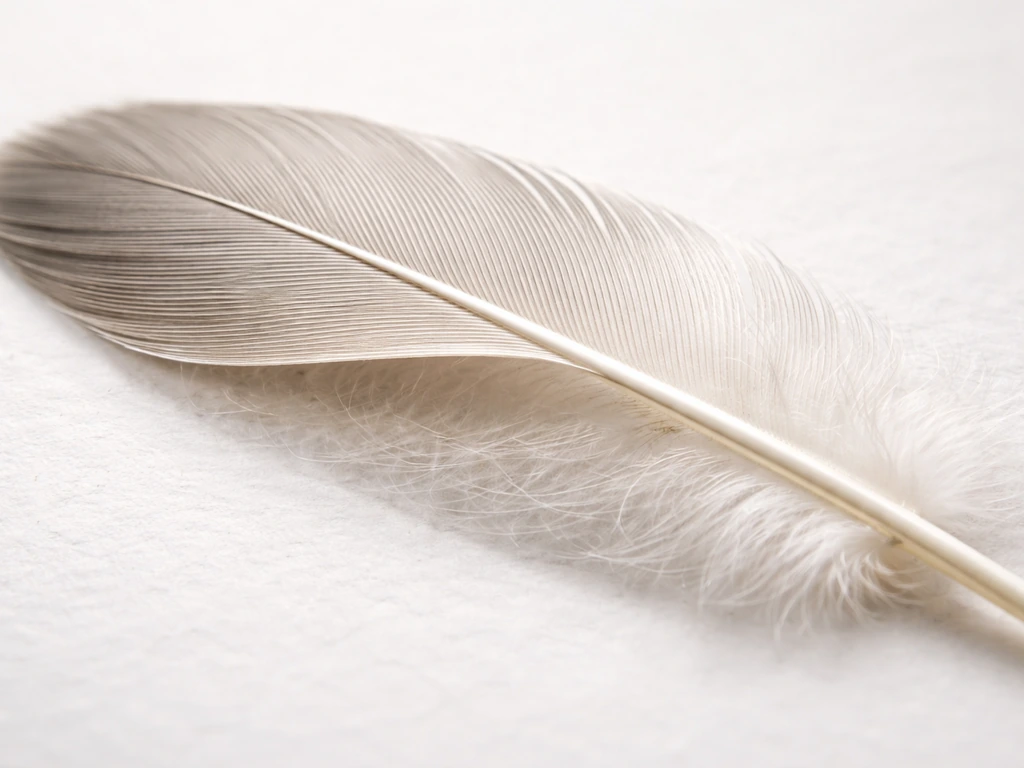
Are bird feathers dirty? Learn how clean wild feathers are, when cleaning is needed, and safe biology-friendly handling
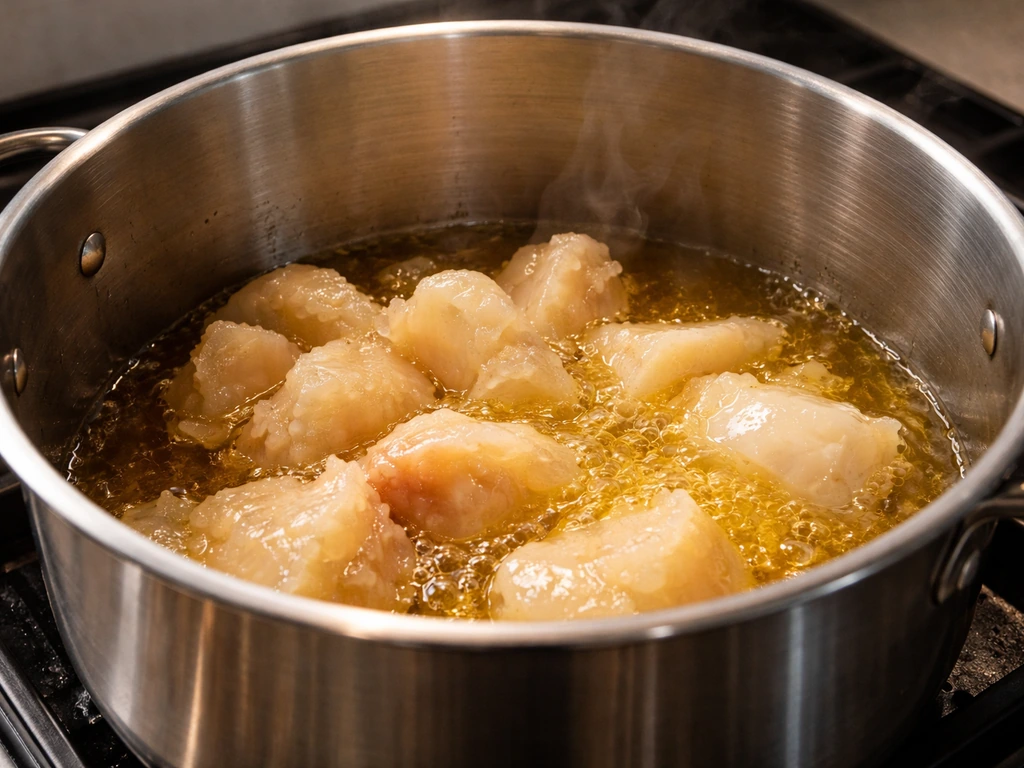
Learn step-by-step how emu oil is extracted from bird fat: rendering, separation, filtering, finishing, and storage safe
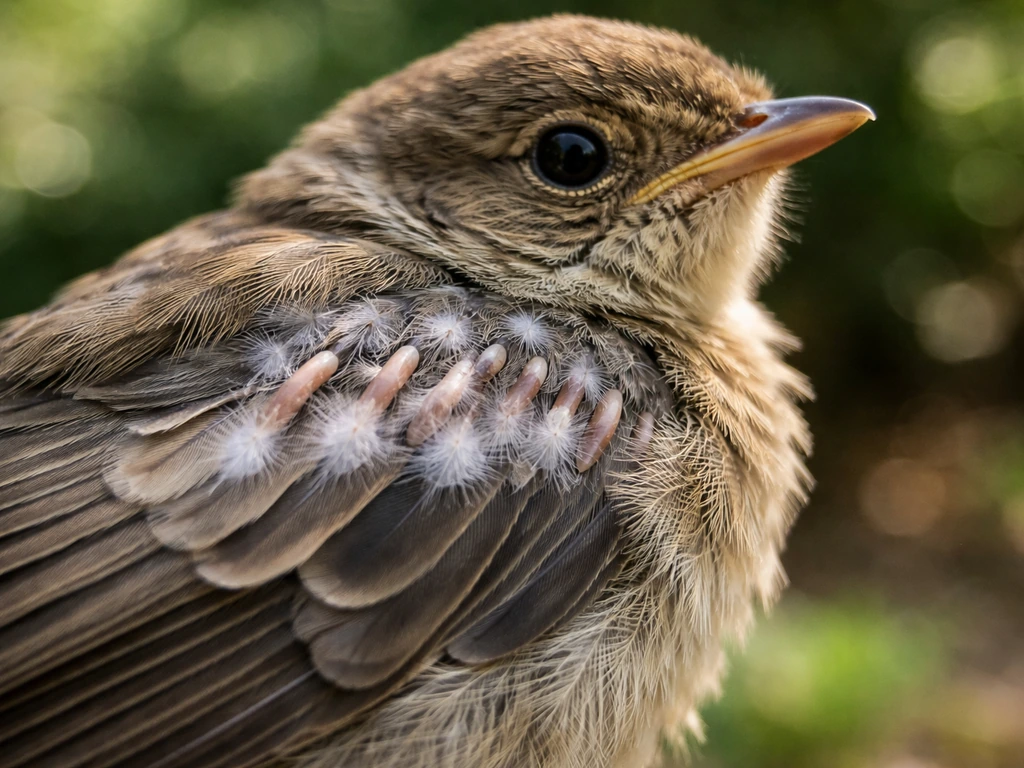
Explains if and how bird feathers, wings and tails regrow, comparing molting vs damage, timelines, and next steps.