
Emu oil comes from fat tissue harvested off the bird after slaughter, melted down through a heating process called rendering, and then filtered and refined until you have a clean, usable oil. That's the short version. The longer version involves understanding exactly where in the emu's body that fat sits, why the rendering temperature matters more than most people expect, and what the key quality checks are that separate good oil from oil that will go rancid in a month. Let's go through it step by step.
How Is Emu Oil Extracted From the Bird Step by Step

Marcus Chen
20 Apr 2026
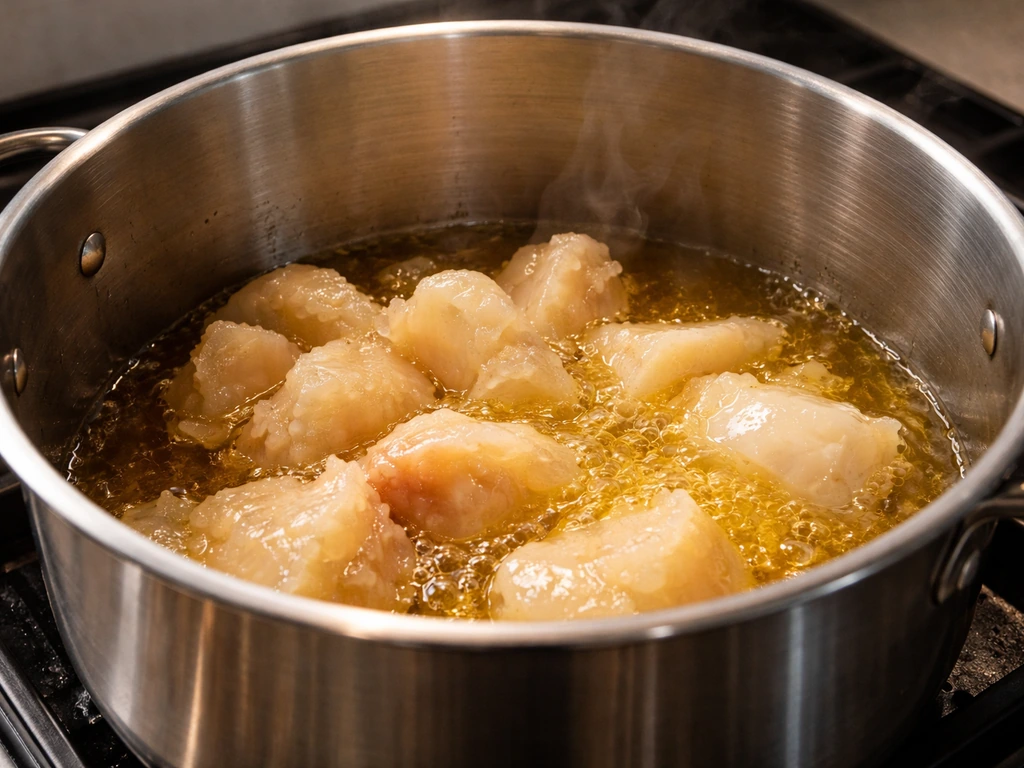
Where the fat actually comes from in an emu
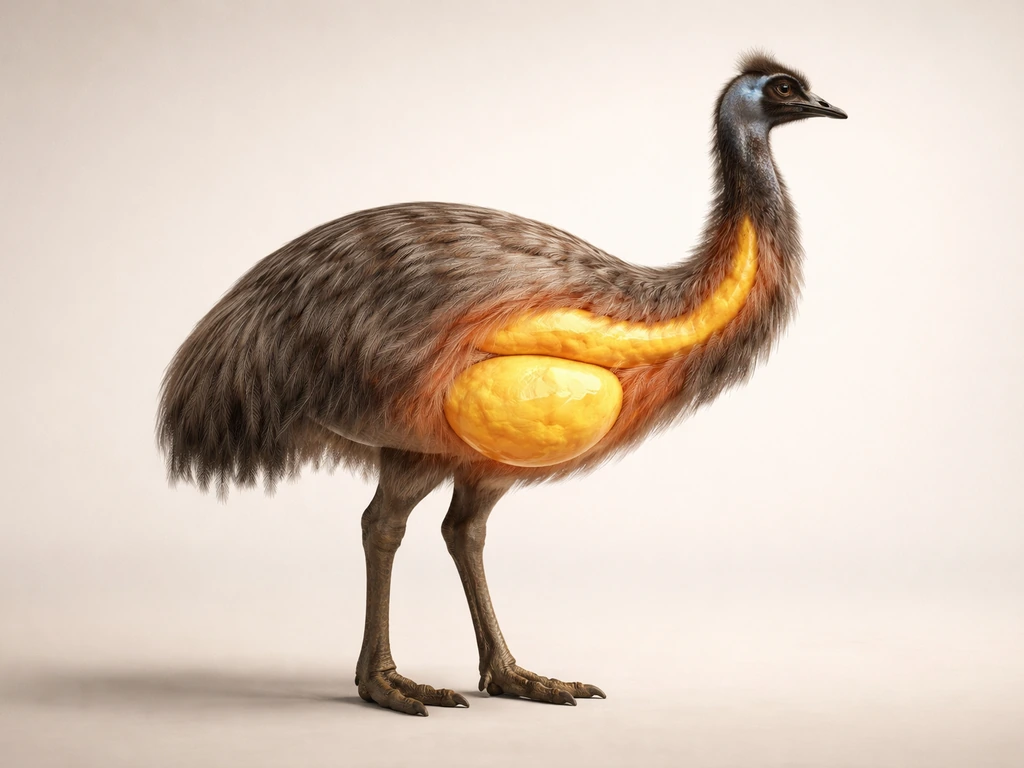
Emu oil doesn't come from muscle, blood, or feathers. It comes from two specific fat depots in the bird's body: subcutaneous fat (the layer of adipose tissue sitting just under the skin) and retroperitoneal fat (the fat packed around the internal organs in the abdominal cavity). These are the same types of fat compartments you'd find in most vertebrates, but emus deposit a particularly large and oil-rich store of fat, especially along the back, which is why the bird became commercially valuable in the first place.
The fat stored in these depots is rich in unsaturated fatty acids, which is what gives emu oil its known properties and also what makes it susceptible to oxidation if handled poorly. From a bird biology standpoint, this fat serves as an energy reserve, and emus can draw on it heavily during breeding seasons when they fast for extended periods. That's relevant to extraction because the fat composition can actually vary depending on the bird's age, sex, and season, which affects the final oil's fatty acid profile.
When the bird is processed, the fat is physically separated from the carcass: the thick subcutaneous layer is trimmed from under the skin, and the retroperitoneal fat is removed from the body cavity. These are the raw materials you're working with. If you are curious about the bird body’s other components, this is also adjacent to how bird feathers are built, and what bird feathers are made of. Everything after this point is about converting that raw adipose tissue into clean oil.
Handling and prep before you even start rendering
This is the step people underestimate the most, and it's where a lot of quality problems start. The moment the fat tissue is separated from the bird, it begins to degrade. Bacteria get to work, and oxidation starts. If you let blood, skin scraps, or muscle tissue contaminate the fat, you're already setting yourself up for high free fatty acid (FFA) levels in the final oil, which is one of the main quality failure points.
The practical goal during collection is to keep the fat tissue as clean, cold, and uncontaminated as possible. Trim away any muscle or connective tissue attached to the fat. Keep blood contact minimal. If you're not rendering immediately, the fat should be chilled or frozen quickly to slow bacterial activity. The processing environment should be clean, and anyone handling the tissue should follow basic food-handling hygiene because you're working with raw animal tissue that can carry pathogens.
The fat also needs to be broken up or macerated before rendering. Smaller pieces mean more surface area, which speeds up the heat transfer and makes the fat liquefy more evenly. You can cut it into chunks or run it through a grinder. Keeping pieces consistent in size helps avoid uneven heating during the next stage.
Rendering: turning raw fat into oil
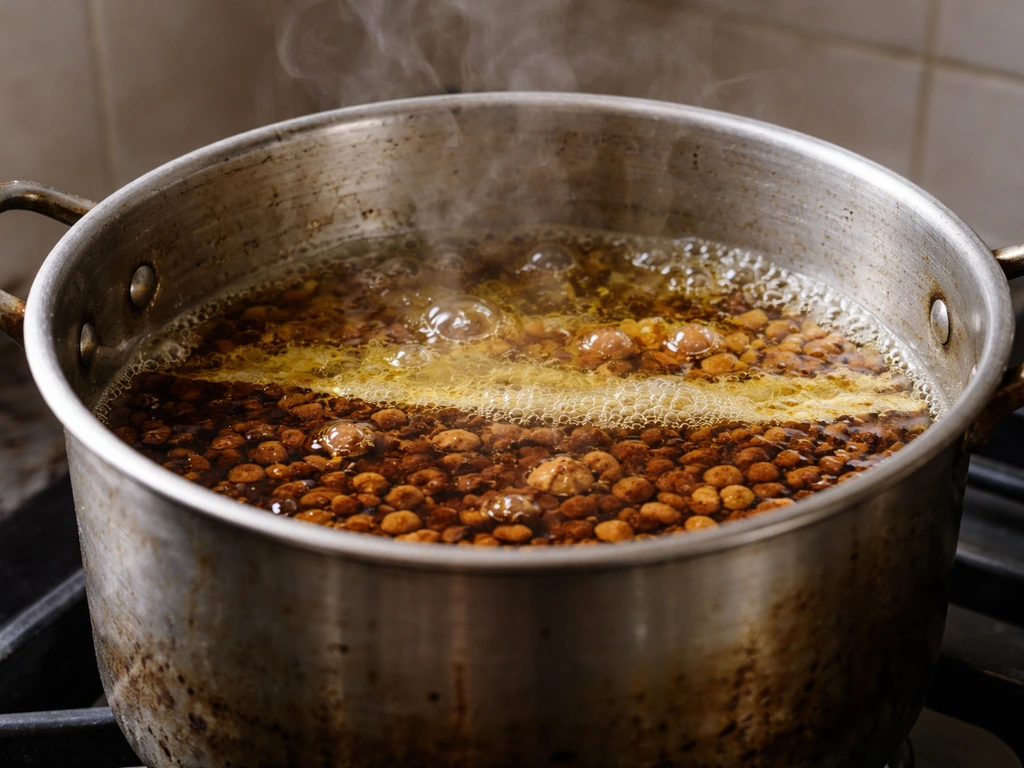
Rendering is the core of the process. It's simply the application of heat to separate the liquid fat (the oil) from the solid material (protein, connective tissue, water). There are two main approaches used in the broader rendering industry: wet rendering and dry rendering. Both work for emu fat.
Wet rendering
In wet rendering, the fat tissue is heated with water or steam. The heat causes the fat cells to release their oil while the protein in the tissue coagulates and separates. This is a gentler approach and tends to produce lighter-colored, milder-smelling oil, which is why it's often preferred for cosmetic-grade emu oil. The downside is that water introduces moisture that has to be carefully removed later, because residual moisture in the finished oil promotes microbial growth and hydrolytic rancidity.
Dry rendering
Dry rendering uses heat alone, no added water. The fat is cooked in a vessel, the oil melts out, and the solid protein material (called cracklings or greaves) is left behind. Dry rendering typically runs hotter. General batch cook temperatures for animal fats can reach 115 to 140°C, though lower-moisture fat loads are often handled closer to 105 to 125°C. For emu oil specifically, the temperature tradeoff is important: higher temperatures increase how much oil you extract from the tissue, but they also degrade the oil's quality. Unsaturated fatty acids are heat-sensitive, and pushing the temperature too hard oxidizes them, raises peroxide values, and can drive off quality.
The practical advice here is to use the lowest temperature that achieves full liquefaction and hold it for long enough to allow separation, rather than cranking the heat to rush the process. The fat is fully rendered when the solids look dry and slightly browned and the liquid fat runs clear. If the solids are still soft or the liquid looks milky or cloudy, you're not done yet.
Separating the oil from solids and water
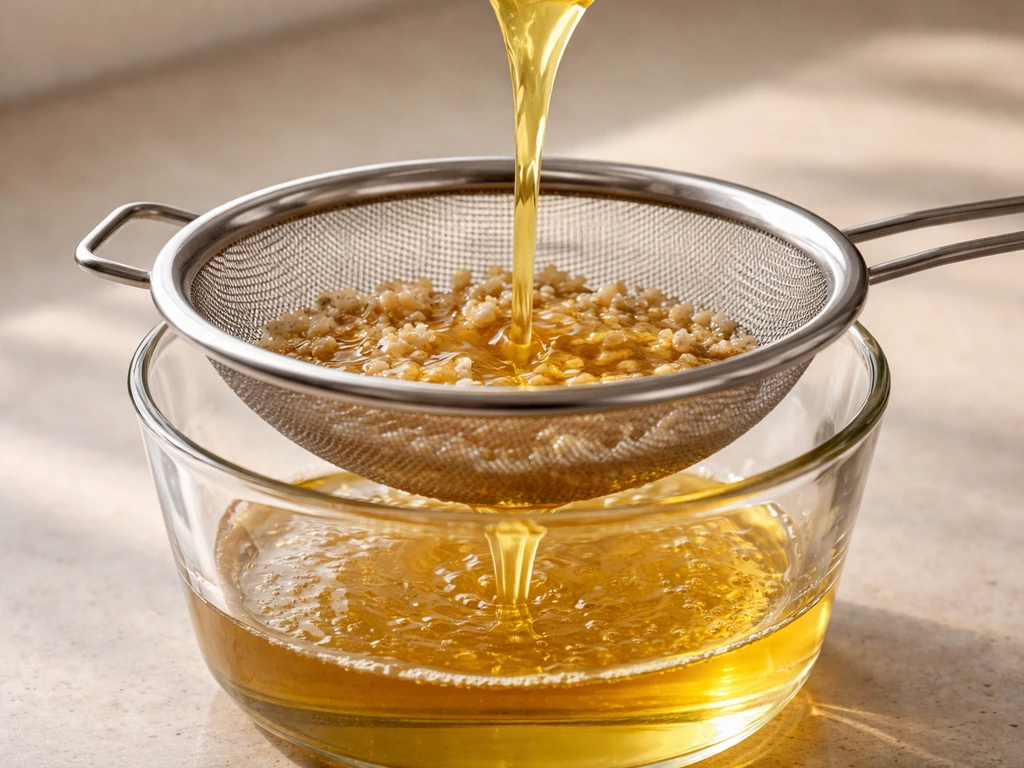
Once the fat has fully liquefied, you have a mixture of liquid oil, coagulated protein solids, and in wet rendering, water. These need to be separated. The basic steps are screening, settling, and skimming.
- Screen or strain the rendered liquid through a coarse filter or mesh to remove the bulk of the solid material (connective tissue, coagulated protein). This is the primary separation step.
- Allow the strained liquid to settle. Fat/oil floats. Water and fine sediment sink. If you used wet rendering, a distinct water layer will form at the bottom.
- Skim or drain off the oil from the top, leaving the water and sediment behind.
- For commercial-scale operations, a centrifuge or decanter is used at this stage to get faster, cleaner separation. At small scale, time and gravity can do the work if you're patient.
After this initial separation, what you have is crude emu oil. It's usable in that state, but it will still contain phospholipid-based gums, residual protein fragments, fine solids, and moisture. The next stage is about cleaning that up.
Filtering, finishing, and storing the oil properly
Crude emu oil goes through a refining process to produce a clean, stable, high-quality product. The key steps in finishing are degumming, fine filtration, and drying.
Degumming removes phosphorus-based gums and uncoagulated protein that remain suspended in the crude oil even after the primary separation. These contribute to cloudiness, reduce shelf life, and can promote oxidation. At commercial scale, this is done chemically (usually with water or a mild acid), but at artisan scale it's often handled through careful heating and settling cycles.
Fine filtration follows. The oil is passed through progressively finer filter media to remove remaining particulates. The target for finished, high-quality emu oil is that it be clear and brilliant at inspection temperature and completely free from settling or foreign matter. If your filtered oil is still hazy or shows sediment after sitting, it needs another filtration pass.
Moisture removal is critical. ISO 662:2016 is the international standard method for determining moisture and volatile matter content in animal and vegetable fats and oils Moisture removal is critical. The AEA (American Emu Association) trade standard sets moisture and volatile matter at a maximum of 0.05%. Even small amounts of residual water promote bacterial growth and hydrolytic breakdown of the oil into free fatty acids, which then oxidize into peroxides and eventually the compounds that make oil smell rancid. Warming the oil gently under low heat or vacuum helps drive off residual moisture after filtration.
For storage, finished emu oil should go into sealed, dark containers (glass or food-grade HDPE) with minimal headspace to limit oxygen exposure. Store cool, ideally refrigerated. Nitrogen flushing (displacing oxygen in the container with nitrogen gas) is used at commercial scale to further reduce oxidation during storage and shipping.
Safety, hygiene, and quality checks you actually need
If you're producing emu oil at any scale beyond purely personal use, hygiene controls aren't optional. You're working with raw animal tissue and producing an oil that may be applied to skin or consumed, so contamination has real consequences. Bird feathers are one of the contamination sources that can introduce debris and bacteria, so keeping the fat free from feather contact helps prevent dirty, degraded oil.
Bird feathers can take a long time to break down, and that slow decomposition can leave more debris and contamination risk during processing if feathers contact the fat. You might also wonder what bird feathers are made of, but understanding that material helps explain how feather contact can add debris to the oil Bird feathers are one of the contamination sources.
Whether feathers are waterproof also affects how easily moisture and debris can be transferred from the bird during processing bird feathers waterproof. Hygienic rendering standards (including the Australian Standard AS 5008, which covers rendering of animal products) frame this around identifying and controlling critical control points in the process, which is the same logic as HACCP food safety systems. The NSW Food Authority also notes that requirements are set out in Australian Standard [AS 5008-2007 Hygienic Rendering of Animals Products](https://www.
foodauthority. nsw. gov. au/industry/meat/rendering-plants), and highlights the food-safety skills needed for people handling rendered products.
Even if you're not formally certified, applying that thinking helps: where in the process can contamination enter, and what do you do to prevent or test for it?
The AEA trade standard (Rule 103) gives you concrete quality benchmarks for what finished, refined emu oil should look like analytically. These are the numbers to know:
| Quality Parameter | Maximum Limit | Why It Matters |
|---|---|---|
| Free Fatty Acids (FFA) | 0.1% by weight | High FFA signals hydrolytic breakdown, often from blood contamination or improper handling |
| Moisture / Volatile Matter | 0.05% | Residual water promotes microbial growth and further hydrolysis |
| Peroxide Value | 2.0 meq/kg | Measures oxidative damage; rising peroxides are an early rancidity signal |
| Odor / Flavor | Bland, no rancid or undesirable notes | Sensory check; rancid smell means FFA-to-peroxide-to-aldehyde breakdown has occurred |
| Appearance (at inspection temp) | Clear and brilliant, no foreign matter | Confirms filtration and settling were effective |
The iodine value for fully refined emu oil should fall in the 75 to 80 range, which reflects the characteristic fatty acid profile of authentic emu oil. This parameter is also used as an adulteration check, since blending with other oils shifts the iodine value outside that range.
The most common failure points in practice are: starting with contaminated or blood-soaked fat (drives FFA up immediately), rendering at too high a temperature (oxidizes the oil before it even reaches the bottle), leaving residual moisture in the finished oil (sets up rancidity during storage), and storing finished oil in clear containers or with too much headspace (light and oxygen are both enemies here). Catching these problems early is much easier than trying to fix degraded oil after the fact, because once FFA and peroxide levels climb, you can refine some of it out but you can't fully reverse oxidative damage.
What you need to get started
For a small-scale or artisan extraction, here's a realistic equipment list and a few practical decisions to make before you begin:
- A heavy-bottomed pot or jacketed vessel for rendering (stainless steel is preferred; avoid reactive metals)
- A thermometer that reads accurately in the 80 to 150°C range so you can monitor rendering temperature
- Coarse mesh or cheesecloth for the initial solid separation
- Fine filter paper or a filter press for the finishing filtration stage
- A separatory funnel or settling vessel for water/oil separation if using wet rendering
- Sealed dark glass or food-grade HDPE containers for storage
- Basic hygiene: gloves, clean surfaces, and separate tools that don't contact other raw animal products
The decision between wet and dry rendering comes down to your goals and equipment. Wet rendering is gentler on the oil's fatty acid profile and easier to control at small scale but requires careful moisture removal afterward. Dry rendering is simpler equipment-wise but demands tighter temperature control to avoid heat damage. For most small producers aiming for cosmetic-grade oil, wet rendering at moderate temperatures with thorough moisture removal afterward tends to give better results.
One thing worth knowing: the emu's biology makes it a particularly productive source of oil relative to its body size, but the quality of that oil is heavily tied to how the bird was raised, its seasonal condition, and how quickly the fat was processed after slaughter.
You can also see this same idea in other plants, like bird nest fern, which grow on trees when their living conditions let them access moisture and nutrients why bird nest fern grow on trees. Fat from a stressed or poorly conditioned bird, or fat that sat at room temperature for hours before processing, will produce noticeably lower-quality oil no matter how carefully you render and filter it.
The best oil starts with the best raw material, and that begins at the bird, not the pot. Bird feather growth and feather structure also follow a biology-driven cycle, which is why changes in health and season can show up across the bird's tissues.
If you have ever wondered why bird nest fern grow on trees, the answer comes down to how these ferns naturally cling to bark and use it as a support while staying in the right moisture and light conditions. You may also find related plant terms interesting, like what is bird nest fern, since these ferns have similar moisture and support preferences.
FAQ
What’s the biggest reason emu oil goes rancid quickly, even if the rendering looks successful?
Moisture and contaminants usually. If water or fine solids remain after refining, bacteria and hydrolytic breakdown can start, raising free fatty acids and later peroxide formation. Clear appearance and proper sealing are not enough if moisture levels were not driven low after filtration.
How cold should the fat be before rendering, and can I wait overnight?
Render as soon as possible, but if you must pause, chill or freeze the separated fat quickly after collection. Room-temperature holding should be avoided because bacterial activity and oxidation begin immediately, which then shows up later as higher free fatty acids and dull odor after storage.
Does wet rendering always produce a higher-quality oil than dry rendering?
Not always. Wet rendering tends to be easier on fatty acids, but the quality depends on how thoroughly residual water is removed during degumming, settling, and drying. If moisture removal is incomplete, wet-rendered oil can still rancid faster than well-controlled dry-rendered oil.
What signs tell me I didn’t render the fat fully?
If the solids are still soft or the liquid fraction looks milky or cloudy, rendering is typically incomplete. Fully rendered batches tend to leave dry, slightly browned solids behind, and the oil portion should run clear during separation.
Why does blood, skin, or small amounts of connective tissue matter so much?
They raise free fatty acid levels. Blood proteins and connective material can also contribute solids that are harder to remove cleanly, which increases the chance of cloudiness, sediment, and faster oxidation during storage.
Can I reuse leftover cracklings or greaves to extract more oil?
You may, but expect quality tradeoffs. Reprocessing can trap more fine solids and can also increase heat exposure, which may worsen oxidation. If you do it, keep temperatures conservative and refine and dry the extracted oil carefully before storage.
What’s the safest way to confirm the oil is truly dry enough before bottling?
Aim to remove residual moisture to very low levels using controlled warming and, when available, low-pressure (vacuum) drying. Visual checks are unreliable, because oil can look clear yet still contain enough moisture to drive hydrolytic rancidity over weeks.
How should I store emu oil to limit oxidation after extraction?
Use sealed, dark containers with minimal headspace, store cool (often refrigeration helps), and avoid frequent temperature swings that can create condensation. For commercial-scale protection, nitrogen flushing reduces oxygen exposure, which slows oxidation.
How can I tell if my filtration is good enough before refining further?
After filtration and settling, the oil should remain clear without sediment when left undisturbed for a short period. If it hazes or deposits solids, run an additional fine filtration pass before degumming and drying, so you do not trap particulates that later accelerate degradation.
Is it possible to rescue already oxidized emu oil?
You can sometimes improve appearance through further refining, but you cannot fully reverse oxidative damage once peroxide and off-odor compounds are formed. Preventing oxidation with correct rendering temperature, thorough drying, and oxygen-limited storage is far more effective than trying to fix aged oil later.
Next Articles

Does Bird Feathers Grow Back? Molting vs Damage Explained
Explains if and how bird feathers, wings and tails regrow, comparing molting vs damage, timelines, and next steps.
How Much Weight Can an Osprey Bird Carry: Numbers & Limits
How much weight can an osprey carry: typical prey 0.5–2 kg (≈30–100% body mass); anatomy, flight limits and evidence.

How Much Weight Can a Bird Carry Payload Limits Explained
Realistic payload ranges for different birds plus a method to estimate how much weight they can carry safely.