
Bird bones and dinosaur bones are not just similar, they are the same lineage of skeleton, separated by time and adaptation. Birds are living theropod dinosaurs, and their bones share the same fundamental chemistry (collagen fibers locked in a mineral called hydroxyapatite), the same basic microstructure, and even some of the same pneumatic air-filled cavities seen in large extinct theropods like T. rex. The differences that do exist come down to flight: modern birds evolved extreme hollowing, thin but dense cortical walls, and fused skeletal elements that non-avian dinosaurs never developed. So if you are trying to understand what separates a fossilized bird bone from a non-avian dinosaur bone, you are essentially asking what evolution added to an already dinosaurian skeleton to make it fly.
Dinosaur Bones vs Bird Bones: Key Differences Explained for Fossil Hunters

Why this comparison matters (and who it is for)
I got curious about this after staring at a museum display of Archaeopteryx next to a small theropod skeleton and genuinely not being able to articulate what was different about the bones themselves. If you are a student, an amateur fossil-hunter, or just someone who watches birds and wonders why their bones feel so light when you find one on the ground, this comparison is for you. It also matters practically: paleontologists need to distinguish fossil bird bones from non-avian dinosaur bones in the field and in the lab, and getting that wrong means misidentifying a specimen. The criteria they use, which range from visible shape clues to microscope thin-sections to chemical analysis, are the same tools that help anyone understand what makes bird bones structurally unique.
Birds are dinosaurs, so the bones start from the same blueprint
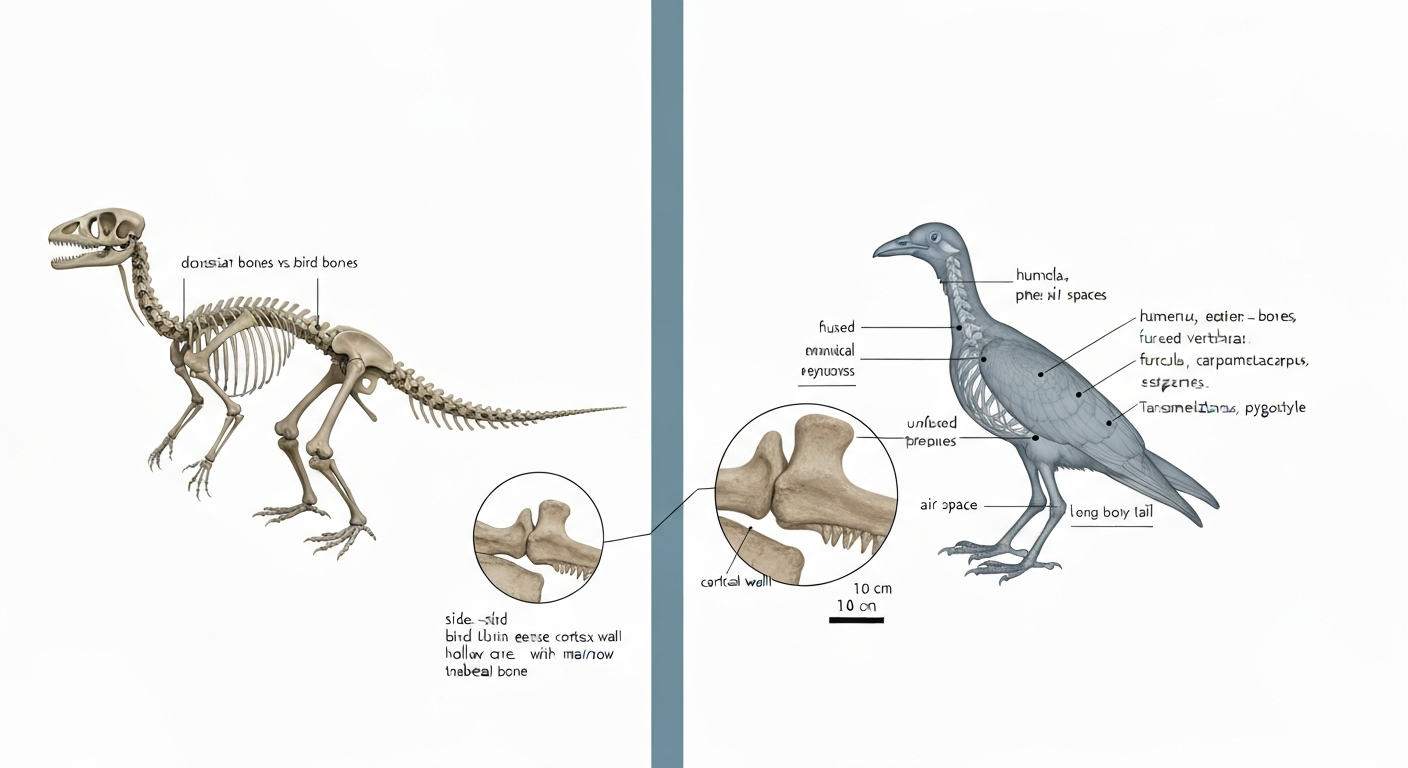
The scientific consensus, backed by decades of phylogenetic work, is that birds (Aves) sit nested inside Theropoda, specifically within a group called Maniraptora. That means the chicken in your backyard and T. rex share more recent common ancestry than T. rex does with, say, Stegosaurus. Archaeopteryx, the famous 150-million-year-old transitional fossil from Bavaria, shows this clearly: it has feathers and a wishbone (furcula) like a modern bird, but also unfused finger bones, teeth, and a long bony tail like a non-avian theropod. The bones in its wings are structurally intermediate between a small maniraptoran theropod and a modern bird wing.
This shared ancestry is why comparing dinosaur bones and bird bones is not like comparing, say, fish bones and mammal bones. You are comparing an ancestral design with a derived, heavily modified version of that same design. When you pick up a hollow bird bone and wonder how it holds together, the answer involves understanding what 200 million years of modification on a dinosaur skeleton looks like.
What bones are actually made of: the chemistry both groups share
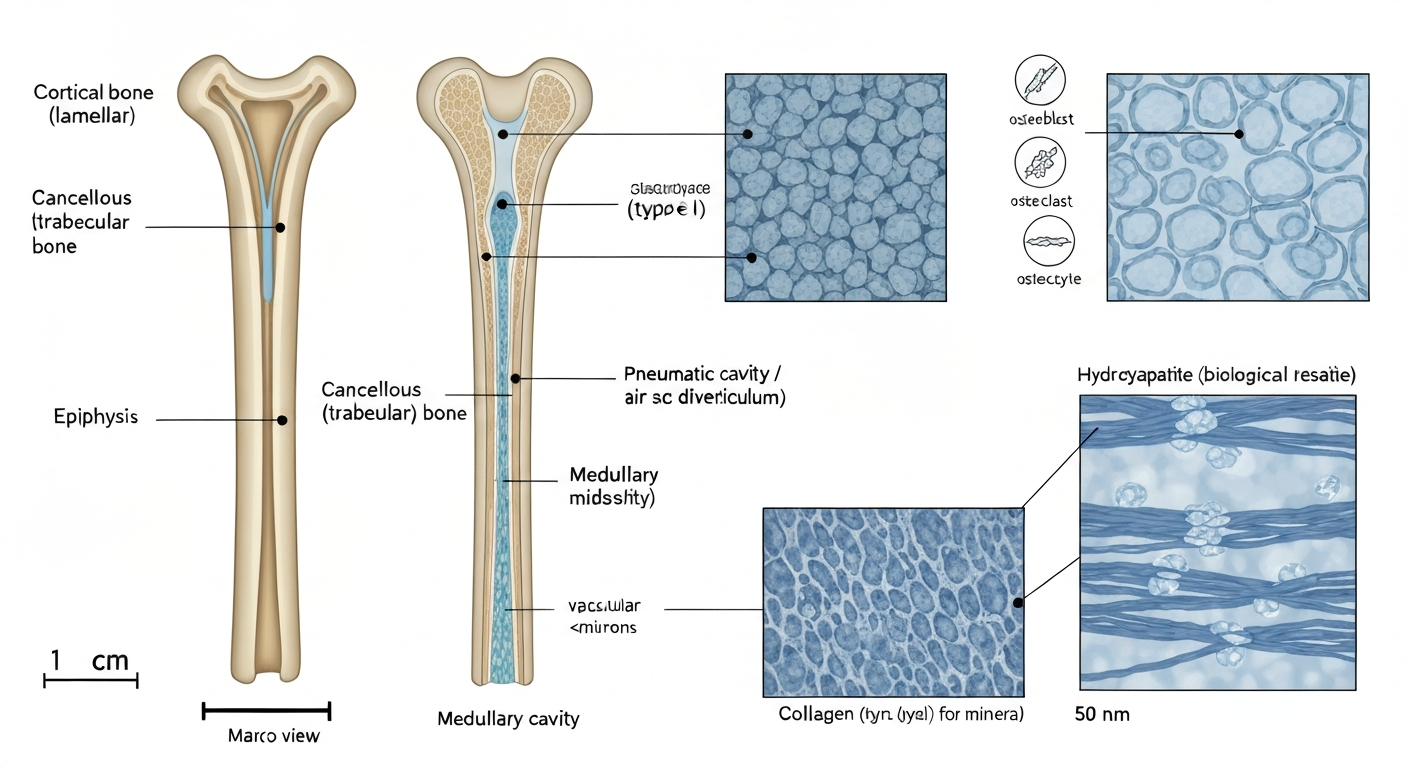
All vertebrate bone, whether from a pigeon, an Allosaurus, or a human, is a composite material built from two main components. If you want a concise answer to what are bird bones made of, bird bones are primarily hydroxyapatite (a calcium phosphate mineral) and an organic matrix of type I collagen, with water making up the remainder. About 60 to 70 percent of bone by weight is an inorganic mineral called hydroxyapatite, a calcium phosphate crystal that provides rigidity and compressive strength. The remaining 20 to 30 percent is organic matrix, mostly type I collagen, a fibrous protein that provides flexibility and tensile resistance. Water makes up the rest. The balance between these phases controls the mechanical behavior of bone: higher mineral content increases stiffness, while more collagen keeps bone from being brittle. This formula is the same in bird bones and dinosaur bones because it predates both groups by hundreds of millions of years.
What makes this fascinating from a paleontology standpoint is that collagen can, under exceptional preservation conditions, survive in fossil bone for tens of millions of years. Mary Schweitzer and colleagues reported flexible vessel-like structures and proteinaceous material consistent with collagen from a T. Soft-tissue vessels and cellular preservation in Tyrannosaurus rex (Science, 2005, M. Schweitzer et al.) documented flexible vessel‑like structures and proteinaceous material from a T. rex femur that reacted like collagen, supporting the possibility that molecular fragments can survive under exceptional taphonomic conditions. rex femur published in 2005 and 2007. The finding was controversial and scientists still debate whether these are genuinely original molecular fragments or products of contamination and diagenesis (the chemical changes bones undergo after burial). The honest answer is that extraordinary molecular preservation is real but rare, and every claim requires rigorous authentication. For modern bird bones, techniques like ZooMS (collagen peptide mass-fingerprinting using a method called MALDI-TOF mass spectrometry) can identify a bone fragment to a broad taxonomic group using its collagen protein signature, even from very small or degraded samples.
Inside the bone: microstructure, growth rings, and Haversian systems
If you cut a bone and look at it under a microscope, you see two main tissue types. Cortical bone (also called compact bone) is the dense outer shell. Cancellous bone (also called trabecular or spongy bone) is the inner lattice of thin struts that fills the interior of many bones. Both bird and dinosaur bones use this same two-layer architecture, but the proportions and details differ in meaningful ways.
Non-avian dinosaurs commonly show a tissue called fibrolamellar bone in their cortex: a fast-depositing, highly vascularized tissue that indicates rapid growth rates closer to modern birds and mammals than to reptiles like crocodilians. Within this tissue, paleontologists can read growth marks called LAGs (lines of arrested growth), which are like tree rings in bone and record seasonal slowdowns in growth rate. Later in an animal's life, secondary remodeling replaces primary bone tissue with Haversian systems (rounded packets of bone called osteons built around a central blood vessel canal), which appear as bull's-eye patterns in thin section. Modern birds also show Haversian remodeling, especially in weight-bearing bones of larger species. Finding these shared microstructural features in fossils is one reason scientists are confident non-avian theropods grew rapidly and were physiologically more like birds than like modern lizards.
Reproductive medullary bone: a shared feature with surprising fossil implications
Here is one I did not expect when I first looked into this. Female birds laying eggs build a temporary calcium reserve inside their bones called medullary bone (MB). It forms on the inner walls of the bone cavity (the endosteal surface) just before and during egg-laying, providing a rapid-mobilization calcium store for eggshell production. It has a distinctive woven, poorly organized microstructure quite different from the surrounding cortical bone, and it lines the interior of bones like the femur and tibia.
Researchers have now proposed an 11-criterion checklist to confidently identify medullary bone in fossil avemetatarsalians (the group that includes birds and their close relatives), because other bone conditions like pathological bone growth or normal endosteal infilling can look similar in cross-section. Medullary bone (MB) is a female, reproductively linked endosteal tissue in birds, and an 11‑criterion checklist has been proposed to diagnose MB in extinct avemetatarsalians. Medullary-bone-like tissue has been reported in some Mesozoic birds (including an Early Cretaceous enantiornithine, an extinct bird group) using combined histology and ground-section evidence. This matters for paleontology because confirming medullary bone in a fossil can reveal the sex of the individual and potentially its reproductive condition at death, information that is otherwise almost impossible to recover from skeletal material alone.
The flight adaptations that set bird bones apart
Pneumatic (air-filled) bones
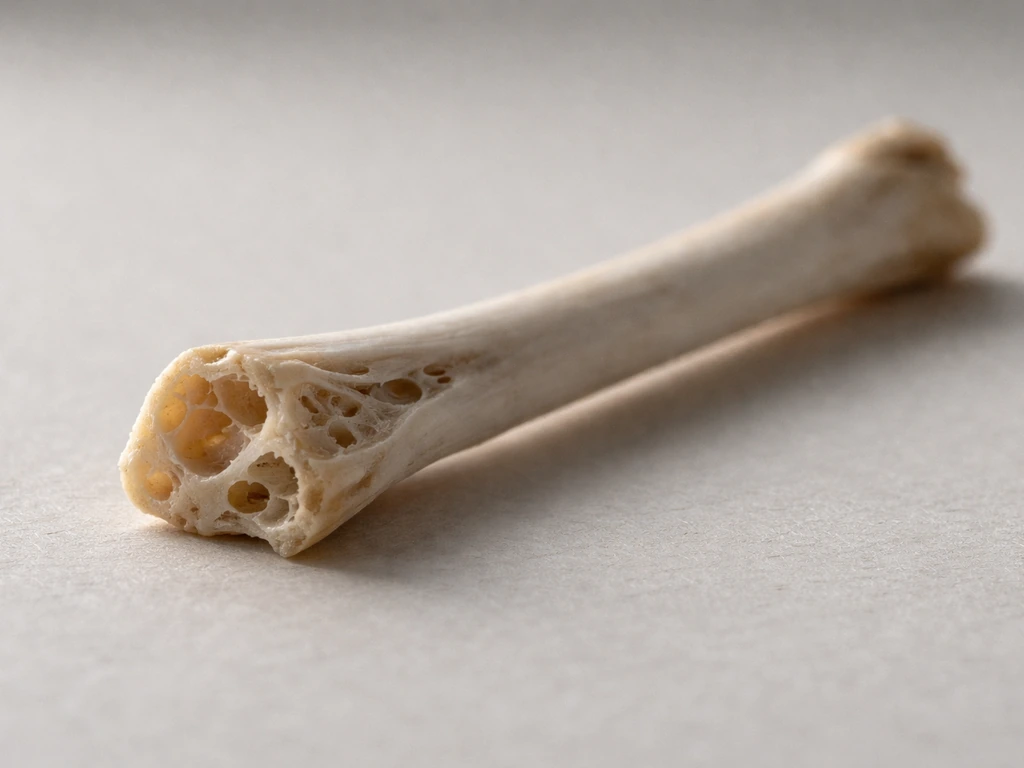
The single most distinctive feature of bird skeletons compared to most non-avian dinosaurs is postcranial skeletal pneumaticity (PSP): the invasion of bones by air-filled diverticula (outpouchings) connected to the respiratory air sac system. In modern birds, major bones like the humerus, vertebrae, sternum, and parts of the pelvis contain internal air spaces rather than marrow. Researchers use a measure called Air Space Proportion (ASP) to quantify how much of a bone's cross-sectional area is air versus tissue. The functional payoff is significant weight reduction without proportionally reducing structural integrity, because the remaining cortical shell can be mineralized to a relatively high density.
Importantly, pneumaticity is not exclusively a modern bird feature. Large non-avian theropods (including some sauropod dinosaurs) show pneumatic vertebrae, and this is one of the shared traits that supports the bird-dinosaur connection. However, the extent and distribution of pneumaticity in modern flying birds is far more pervasive than in any non-avian dinosaur. In fossil material, identifying true pneumaticity requires care: external openings in bone (pneumatic foramina) can be mimicked by vascular channels or taphonomic damage, and CT or micro-CT scanning is often needed to confirm genuine internal air cavities.
There is a mechanical tradeoff worth knowing. Experimental work on bird long bones shows that pneumatized bones, with their reduced cortical thickness, have lower measured bending strength than marrow-filled bones of comparable outer size. They are optimized for the loads of flight rather than for heavy compressive loading, which is a key distinction from the denser, more load-bearing bones of large non-avian dinosaurs.
Thin cortices and high mineralization: the density paradox
You might assume that hollow bones would have low bone mineral density, but studies have shown that bird cortical bone can actually have higher volumetric bone mineral density (vBMD) than comparable mammal bone, even when the overall bone is hollow and thin-walled. The walls themselves are packed tightly with mineral, giving high stiffness per unit mass. This is the material optimization that makes a bird wing bone both light and stiff enough to handle flight loads. The mechanical properties of bone scale with mineral content and porosity in a well-established way: more mineral means higher Young's modulus (resistance to deformation), and lower porosity also increases stiffness. Bird cortical bone achieves both in its wall material while the hollow core removes mass.
Fused bones unique to birds
Modern birds have several fused skeletal elements that are either absent in non-avian dinosaurs or represent far more extensive fusion than their ancestors showed. These fusions stiffen the skeleton against the forces of flight and landing.
- Furcula (wishbone): the fused paired clavicles that act as a spring during the flight stroke, storing and releasing elastic energy. Furculae appear in some non-avian theropods, but in modern birds they are robust and specifically shaped for flight mechanics.
- Synsacrum: a block of fused lumbar, sacral, and caudal vertebrae fused together along with the pelvis (ilium, ischium, pubis), forming a rigid posterior platform that supports landing impact and the muscles of the hindlimb.
- Pygostyle: the terminal fused tail vertebrae that anchor the tail feathers and associated muscles. Non-avian dinosaurs had long bony tails with many individual vertebrae; the pygostyle is a uniquely avian compression of this structure.
- Carpometacarpus: the fused wrist and hand bones of the wing, reducing degrees of freedom and stiffening the outer wing.
- Tarsometatarsus: the fused ankle and foot bones forming the characteristic long lower leg segment visible in most birds.
These fusions also matter for fossil identification. If you find a tarsometatarsus, a pygostyle, or a carpometacarpus in the fossil record, you are almost certainly looking at a bird. Non-avian dinosaurs do not have these specific fused configurations, so morphology alone is often enough for trained paleontologists to assign a fossil to birds versus non-avian theropods at a coarse level.
How non-avian dinosaur bones compare: density, robustness, and growth
Non-avian dinosaurs, especially larger theropods and ornithischians, had bones optimized for terrestrial locomotion and body support rather than flight mass reduction. Their long bones tend to be more robust with thicker cortical walls and, in large species, marrow-filled or cancellous interiors rather than air-filled cavities. Their bone histology commonly shows fibrolamellar tissue with rapid growth, but the overall bone geometry is designed to handle the compressive and bending loads of a body weighing hundreds to thousands of kilograms.
Growth patterns in non-avian dinosaurs varied considerably by body size and lineage. Small maniraptorans show faster, more bird-like growth rates, while larger ceratopsians and sauropods show extensive LAGs and evidence of slowed growth in maturity. In birds, rapid growth to adult size, along with extensive Haversian remodeling in larger species, is more consistent. Scientists still debate the exact growth rate comparisons across different dinosaur groups, so any blanket statement about 'dinosaur growth' needs to be qualified by which dinosaur.
Dinosaur bones vs bird bones: side-by-side comparison
| Feature | Modern Bird Bones | Non-Avian Dinosaur Bones |
|---|---|---|
| Evolutionary status | Living theropod dinosaurs (Aves) | Extinct non-avian dinosaurs |
| Chemical composition | ~60-70% hydroxyapatite, ~20-30% type I collagen | Same composition; original collagen rarely preserved |
| Cortical density (vBMD) | High in cortical walls despite hollow interior | Generally high in load-bearing bones; variable |
| Pneumaticity (air spaces) | Extensive in many species; connected to air sacs | Present in vertebrae of some theropods and sauropods; less extensive |
| Bone microstructure | Fibrolamellar primary; Haversian remodeling common | Fibrolamellar primary; LAGs and Haversian remodeling present |
| Growth marks (LAGs) | Present but often obliterated by rapid growth | Commonly preserved, especially in larger species |
| Medullary bone | Present in reproductive females | Reported in some extinct avemetatarsalians; rare |
| Fused elements | Furcula, synsacrum, pygostyle, carpometacarpus, tarsometatarsus | Some fusion in adult individuals; lacks avian-specific fusions |
| Overall robustness | Thin-walled but stiff; optimized for flight loads | Thicker-walled; optimized for terrestrial load-bearing |
| Fossilization potential | Lower (small, hollow, fragile; often not preserved) | Higher in larger species with denser, thicker bone |
Why fossil bird bones are harder to find than dinosaur bones
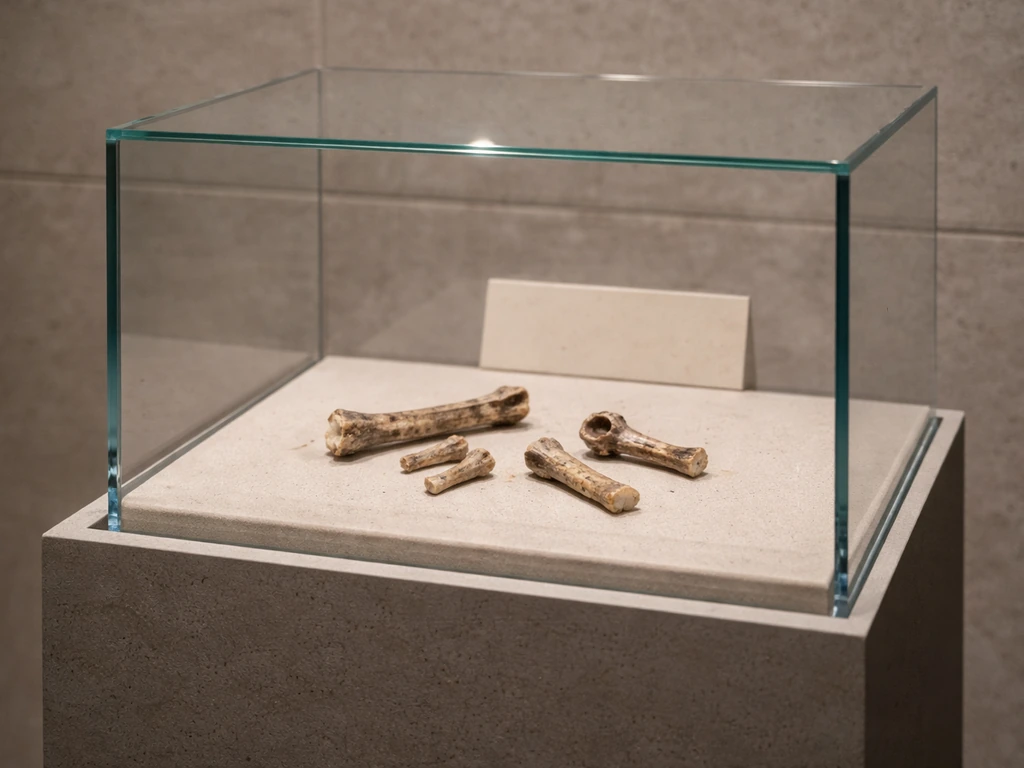
If you have ever tried to find bird bones at a fossil site, you know they are rare even when birds were abundant in that environment. The reasons tie directly back to the skeletal features described above. Hollow, thin-walled bones fragment easily after death and disarticulate quickly. Small body size means individual bones are tiny and easy to miss or lose in sediment. The chemistry is the same as other vertebrate bone, so there is no inherent reason bird bone would not mineralize during fossilization, but the physical fragility means fewer bones survive intact long enough to be buried in preserving conditions. If you wonder whether bird bones fossilize, the short answer is yes, bird bone can mineralize, but their hollow, thin-walled nature means they are much less likely to survive intact and be preserved than denser dinosaur bones, so taphonomic fragility is the main reason fossil bird remains are rare do bird bones fossilize.
Diagenesis (chemical changes during and after burial) also affects hollow bones differently from solid ones. Water moving through an air-filled cavity can dissolve and recrystallize the bone mineral (a process that replaces original hydroxyapatite with new mineral and destroys microstructural and molecular information). Raman spectroscopy, FTIR, and SEM-EDS imaging are the standard tools for mapping how much diagenetic overprinting a fossil bone has undergone, and they help scientists identify regions of a fossil bone where original biomineral might still survive.
How scientists tell fossil bird bones from non-avian dinosaur bones
This is where it gets practically useful for amateur fossil-hunters and students. For readers who arrived here from gaming searches, there is also a separate guide titled "is bird bones worth it fallout 76" that discusses the in-game value and uses of bird bones in Fallout 76. There is no single test. Instead, identification works through a layered approach, moving from gross morphology to microstructure to chemistry as needed.
- Morphology first: the overall shape of a bone is the fastest guide. Fused elements like a tarsometatarsus or pygostyle are diagnostic for birds. Proportions of limb bones, the shape of the furcula, and features of the shoulder girdle also differ recognizably between birds and non-avian theropods.
- Pneumaticity patterns: large external openings (pneumatic foramina) on vertebrae or long bones suggest pneumaticity, but you need CT or micro-CT to confirm the internal structure is genuinely air-filled rather than vascular or diagenetically altered.
- Bone histology: a thin section of the bone under polarized light microscopy can reveal cortical thickness, presence of fibrolamellar or lamellar-zonal tissue, LAG counts, and Haversian remodeling. Bird bones and small maniraptoran theropod bones can look similar here, but the combination with morphology usually resolves ambiguity.
- Size and wall thickness: bird bones tend to have very thin cortical walls relative to outer diameter. Large non-avian theropods have proportionally thicker walls.
- Chemical and proteomic analysis: ZooMS can identify collagen peptide signatures to broad taxonomic groups from very small samples, which is useful for fragmentary material from sites with both birds and dinosaurs present.
- Stratigraphic and contextual evidence: knowing the geological age and depositional environment of the site narrows possibilities considerably. Fossil birds become more common from the Cretaceous onward, but non-avian dinosaurs are also present until the end-Cretaceous extinction.
Fragility and strength: what this means for living birds and handling
A question I see come up often is whether bird bones are fragile and whether they break easily. If you want a focused discussion on whether bird bones are fragile, see the section titled "are bird bones fragile" for a concise explanation and practical handling advice. For a focused explanation of strength and fragility, see our guide on how strong are bird bones. The honest answer is: it depends on which bone, which bird, and what kind of force. If you're asking whether do bird bones break easily, see a short guide that explains which bones are most fragile, the typical forces that cause fractures, and handling precautions. Bird bones are not uniformly fragile. The cross-sectional geometry of wing bones, with their hollow core and dense cortical shell, is actually well-optimized for the bending and torsional loads of flight, as confirmed by biomechanical analyses of wing-bone cross-sections used to classify Archaeopteryx as a burst flyer. What bird bones are not optimized for is high compressive or impact loading from the wrong direction, which is why collisions, falls, and predator grabs cause fractures more easily than the stresses of normal flight.
For anyone handling birds (in rehabilitation, banding, or veterinary contexts), knowing which bones are pneumatized matters practically: a fractured pneumatized bone can allow air to escape into the subcutaneous space (subcutaneous emphysema), which is a medical concern separate from the fracture itself. The humerus is the most commonly pneumatized long bone in most bird species and is also one of the most frequently fractured in collision injuries.
What Archaeopteryx tells us about the transition
Archaeopteryx is the most studied transitional specimen for exactly this comparison. Analysis of its wing-bone cross-sectional geometry (using metrics like section modulus and polar moment of area, which measure resistance to bending and twisting respectively) placed it among short-burst flyers in a comparative dataset of modern birds. Its bones show some hollowing and pneumaticity, but less extensive than modern birds. Its furcula is present and robust. Its finger bones are unfused, unlike the carpometacarpus of modern birds. Its tail has individual vertebrae rather than a pygostyle. This mosaic of features shows the transition from non-avian dinosaur skeleton to modern bird skeleton was gradual and component by component, not a single evolutionary leap.
What to take away from all of this
Bird bones and dinosaur bones are built from the same molecular materials and share fundamental microstructural architecture because birds are dinosaurs. The differences are adaptations layered onto a dinosaurian skeleton over roughly 150 million years of flight-related evolution: more extensive pneumaticity, denser cortical walls on thinner shells, and a suite of fused skeletal elements that non-avian dinosaurs never developed. For fossil identification, no single criterion distinguishes bird bones from non-avian dinosaur bones reliably on its own. Morphology, pneumaticity confirmed by CT, bone histology, and chemical analysis work together to build a case. And for anyone watching birds today, the lightweight skeleton you can infer when a sparrow lands on a branch without bending it is the same evolutionary experiment that started in small feathered theropods in the Jurassic, and it is still running.
FAQ
Are birds actually dinosaurs?
Yes. The consensus from phylogenetic studies is that modern birds (Aves) are living theropod dinosaurs. Birds evolved from small, maniraptoran theropods, and many skeletal features (e.g., furcula, hollow bones, wrist joints) reflect that ancestry.
What are the primary chemical components of dinosaur and bird bones?
Both bird and dinosaur bones are composite tissues made mainly of mineral (≈60–70% by weight, primarily hydroxyapatite), organic matrix (≈20–30%, mostly type I collagen), and water. The mineral-to-organic ratio strongly influences stiffness, strength and toughness.
How does bone microstructure compare between non‑avian dinosaurs and birds?
Key microstructural features overlap but show differences tied to life history. Non‑avian dinosaurs commonly show fibrolamellar bone with high vascularity and cyclical growth marks (LAGs), later with Haversian remodeling. Birds have highly remodeled, often thin‑walled cortical bone, with distinctive cortical/cancellous patterns adapted for lightness and fast growth. Histology (thin sections) reveals these patterns and growth dynamics.
What is medullary bone and why is it important?
Medullary bone (MB) is a female, reproductive tissue deposited endosteally in modern birds when producing eggs; it serves as a temporary calcium reservoir. MB or MB‑like tissues have been reported in some fossil avemetatarsalians, and a checklist of criteria (origin, microstructure, chemistry, reproductive association) helps distinguish MB from pathological or normal endosteal bone.
What flight‑related bone adaptations do birds have that dinosaurs generally lacked or used differently?
Major flight adaptations in birds include pneumatic (air‑filled) bones invaded by air sac diverticula, extensive bone fusion (e.g., furcula, synsacrum, pygostyle), hollowing and thin cortices optimized for stiffness per unit mass, and specialized wing‑bone geometry. Some theropod dinosaurs had varying degrees of pneumaticity and bone fusion, but extant birds show extreme, integrated adaptations for powered flight.
Do bird bones fossilize as well as dinosaur bones? If not, why?
Bird bones fossilize less commonly. Causes include their smaller, thinner‑walled and more porous structure (higher surface‑area‑to‑volume), faster decomposition and transport bias, and taphonomic processes that favor preservation of denser, larger remains. Under exceptional conditions, bird bones do fossilize and can be well preserved.
What are bird bones made of: collagen and hydroxyapatite in pneumatic, medullary, fused structures, light but strong.
Are bird bones fragile? Lightweight yet strong bones use air spaces and internal support to resist flight forces.
Yes, some bird bones fossilize through mineral replacement, but hollow anatomy and decay make complete skeletons rare.