
Bird bones are not fragile in any meaningful mechanical sense. They are lightweight, yes, but research published in the Royal Society B shows that bird skeletons are, on average, stronger and stiffer relative to their weight than the skeletons of many mammals, including rodents. The "light equals fragile" assumption is a misconception worth clearing up, because the biology behind avian bones is actually a pretty elegant engineering story.
Are Bird Bones Fragile? How They Stay Strong for Flight

Marcus Chen
30 Jun 2026
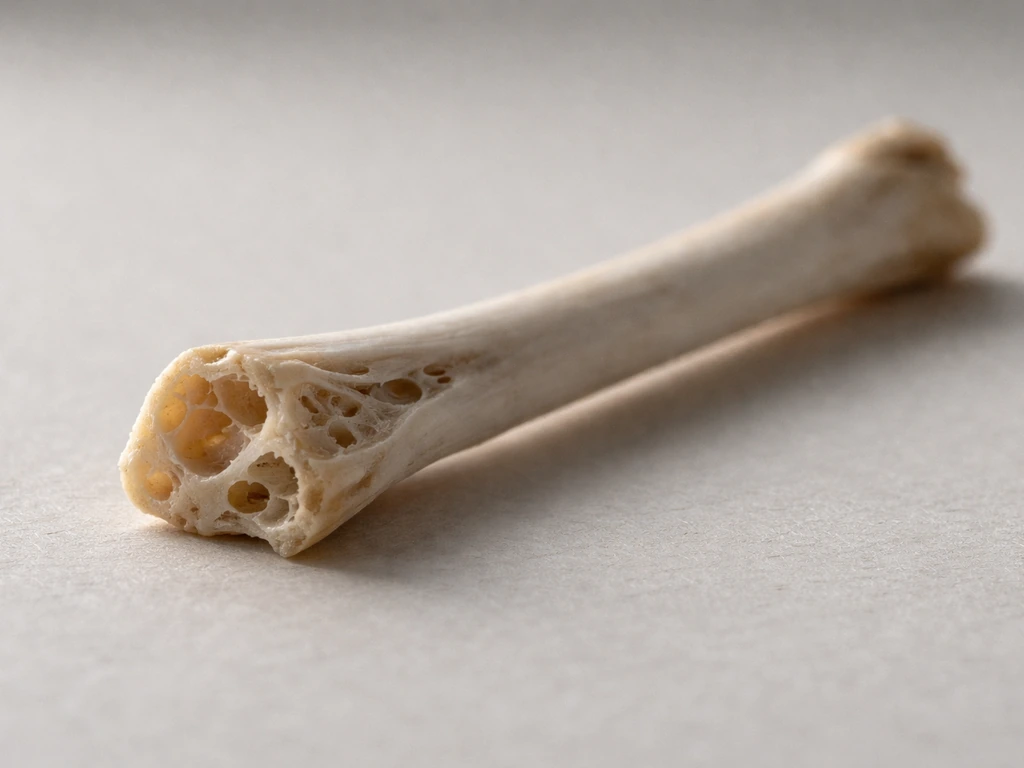
How bird bones are actually built
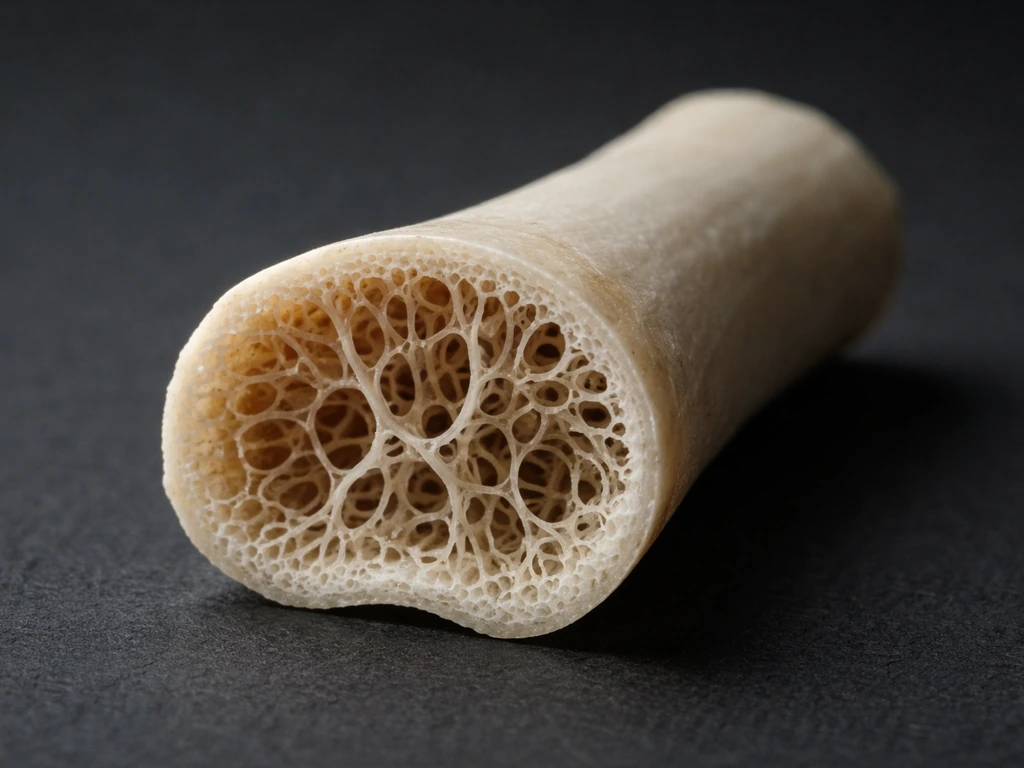
When most people imagine a bird bone, they picture something thin and hollow, like a dried-out straw that would snap under mild pressure. That's not quite right. Many bird bones are pneumatized, meaning they contain air-filled cavities connected to the respiratory air sac system rather than being packed with marrow. But those cavities aren't empty voids. Inside, many bird bones have internal struts and lattice-like structures called trabeculae (think of the foam-core interior of an airplane wing, not a hollow tube). This trabecular scaffolding distributes mechanical loads efficiently without adding unnecessary weight.
The trabecular lattice isn't random, either. Research on trabecular bone scaling across birds and mammals shows that the orientation and density of those internal rods and plates align with the directions a bone is most likely to be stressed. In a bird's wing bones, for instance, the internal architecture reflects the torsional and bending forces that occur during the flight stroke. So the skeleton is genuinely optimized for the job it does, not just lightened at the expense of strength.
It's also worth noting that not all bird bones are pneumatized. Long bones in the leg, for example, are often marrow-filled rather than air-filled, and marrow-filled bones tend to have greater cortical thickness and higher bending strength than their pneumatized counterparts. A study in the Journal of Evolutionary Biology confirmed that pneumatic long bones have lower cortical thickness and lower flexural stiffness than marrow-filled ones. So "bird bones" isn't a single category: some are air-filled and relatively thin-walled, others are denser and more conventionally strong.
What "weak" and "brittle" actually mean in bone mechanics
These two words get used interchangeably, but they describe different mechanical failures. A weak bone breaks under a relatively low applied force. A brittle bone fractures suddenly without much deformation first, the way glass snaps rather than bending. Most biological bone, including bird bone, sits somewhere in between: it can absorb some energy elastically before failing, and the combination of mineral (for stiffness) and collagen (for toughness) gives it fracture resistance that pure ceramic or glass would lack.
For bird bones, the real trade-off is between the cortical thinning that pneumaticity causes and the structural efficiency that the overall geometry and trabecular interior provide. Thin-walled pneumatic bones can be more vulnerable to sharp impact loads, and comminuted fractures (where the bone shatters into fragments rather than breaking cleanly) are reported more often in pneumatic bird bones than in compact mammalian long bones. But that's a specific scenario, not a blanket description of all bird bone behavior. A bone can have a thinner wall and still not be brittle in normal use if its geometry is tuned for the loads it routinely encounters.
Why birds handle flight stresses without constantly breaking
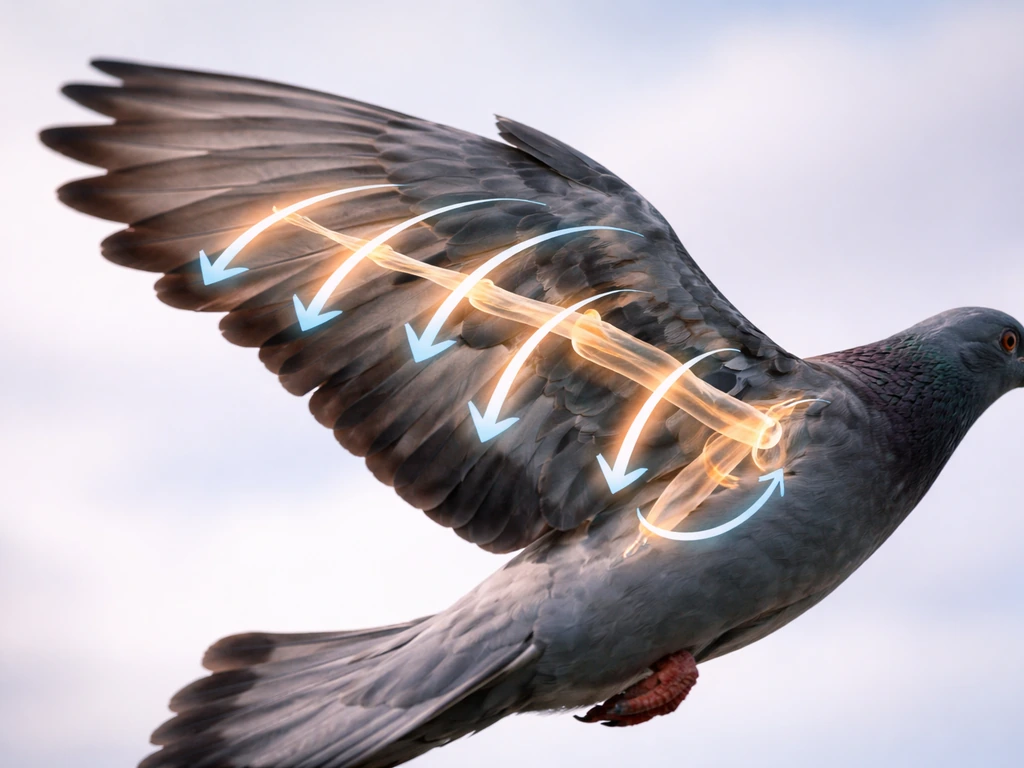
A pigeon in level flight generates forces on its wing bones that cycle thousands of times every day. The fact that this works without fractures happening routinely comes down to how the whole system is designed together, not just the bones in isolation.
- Bone microstructure in the forelimb varies with flight mode. Histological studies on homing pigeons show that the degree of lamellar bone organization in wing bones correlates with functional wing loading, meaning the internal tissue architecture is genuinely tuned during development for the stresses that particular bird experiences.
- Avian diaphyseal bone is mostly primary bone rather than heavily remodeled secondary bone, which research suggests may be optimized for specific loading directions like torsion during the wing stroke.
- The osteocyte network inside bone (cells embedded in tiny channels called lacunae and canaliculi) detects mechanical strain and triggers adaptive remodeling, so bones continuously adjust their structure in response to repeated loading rather than just passively tolerating it.
- Muscles, tendons, and the overall skeletal geometry all work together to share and redirect forces, so the bones themselves are never the only thing absorbing stress.
The upshot is that bird bones don't break under normal flight because the entire system, from tissue microstructure to muscle coordination, is co-adapted for those forces. Bone canaliculi are blank" rel="noopener noreferrer">channels that connect osteocytes and participate in nutrient and transport pathways, illustrating how microanatomy supports bone maintenance under functional loading. This is why it's misleading to judge avian bone strength in isolation without considering the context in which those bones operate. If you are asking whether bone-related perks like Bird Bones are worth it in Fallout 76, the best way is to compare how they change your carry and durability against your typical build is bird bones worth it fallout 76.
When bird bones do break: real-world scenarios
None of this means bird bones are unbreakable. In other words, the question do bird bones break easily depends on the kind of force involved and the bone type. Fractures absolutely happen, and the causes are mostly high-energy trauma events, not gentle handling.
- Collisions with human-made structures: window strikes, power line collisions, and vehicle impacts are among the most documented causes of fractures in wild birds. These involve sudden, high-force impacts that exceed what any bone architecture can absorb.
- Nest falls and ground impacts: particularly in young birds with incompletely mineralized bones, a fall from height can cause fractures that would be unlikely in an adult.
- Predator attacks: biting and grabbing forces from a predator are concentrated, high-energy loads applied at a single point, which is exactly the scenario thin-walled pneumatic bones handle worst.
- Improper handling in captivity: firm squeezing, especially around the keel or wing bones in small birds, can cause fractures. Avian veterinary guidance emphasizes that restraint technique matters because of the thinner cortices in many wing bones.
- Metabolic bone disease: in captive birds fed an unbalanced diet (calcium or vitamin D3 deficiency), bone mineral density drops and genuine brittleness can result. This is a health condition, not a baseline property of avian bone.
Veterinary sources also note that fractures in pneumatized bones are harder to treat than fractures in marrow-filled bones, partly because the air-sac connection can complicate infection risk and healing, and partly because thin cortices give less material for internal fixation hardware to grip. So while bird bones aren't fragile by default, fracture management is genuinely more complex in birds than in most mammals of comparable size.
How bird bone fragility compares to what you might expect
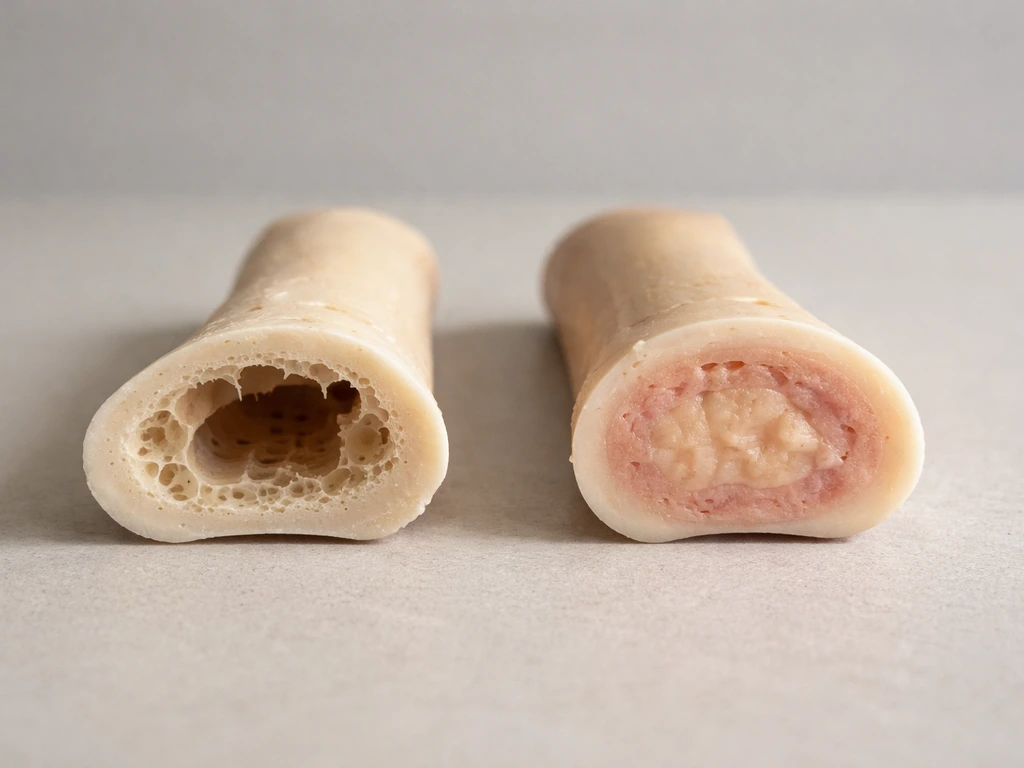
| Property | Pneumatic bird long bones | Marrow-filled bird bones | Typical small mammal bones |
|---|---|---|---|
| Cortical thickness | Relatively thin | Moderate to thick | Moderate |
| Bending strength | Lower than marrow-filled | Comparable to mammals | Moderate |
| Weight for size | Very light | Light to moderate | Heavier |
| Strength per unit mass | High (efficient geometry) | High | Lower than birds on average |
| Fracture type under impact | More prone to comminution | Cleaner fracture | Usually cleaner fracture |
| Fracture treatment complexity | Higher (air-sac involvement) | Moderate | Lower |
The key takeaway from this comparison is that pneumatized and marrow-filled bird bones behave differently from each other, and neither category maps neatly onto "fragile. In contrast, dinosaur bones are often discussed in terms of how their density, structure, and lifestyle would compare to bird bones under similar loading pneumatized and marrow-filled bird bones. " The trade-off is between mass reduction and impact resistance, not between fragile and sturdy as absolute categories.
Where to go next if you want to understand avian bone anatomy
If this topic has you curious (and honestly, once you start looking into it, it's hard to stop), there are a few directions worth exploring. Understanding what bird bones are actually made of, at the material level, gives you the foundation for everything else: the mineral-collagen composition, how it compares to reptile bone, and why the same basic building blocks produce such different mechanical outcomes depending on geometry and internal architecture. From there, the question of how strong bird bones are in quantitative terms, including specific studies on bending and torsion loads, gets a lot more meaningful once you know what you're measuring.
It's also worth knowing that bird bone structure connects directly to questions about their evolutionary history. The similarities between avian and non-avian dinosaur skeletal architecture, including pneumatization, are a big part of why paleontologists think about bird and dinosaur bones together, and there's a separate and genuinely interesting question about whether bird bones fossilize well (the short version: they can, but their thin walls and hollow structure mean the preservation odds are lower than for denser bone). This same bone structure also affects whether bird bones fossilize well, since thin walls and hollow cavities can reduce preservation. These connections make avian bone anatomy one of those topics where pulling on one thread keeps unraveling more.
For visual learners, museum natural history collections are underrated. A bird skeleton on display, especially a larger one like a raptor or wading bird, makes the trabecular structure and bone wall thinness much more concrete than any description. If you can access a university library, the Dumont Royal Society B paper on bone density and lightweight bird skeletons is approachable even without a heavy biomechanics background, and it directly addresses the fragility misconception in a way that's satisfying to read.
FAQ
Do bird bones feel fragile if you hold one?
They can feel delicate because many are thin-walled, but “feel” does not match real-world strength. Bird bones are engineered for repeated, species-specific loading, so they may tolerate cyclic forces well while still being vulnerable to a single high-impact blow (for example, a direct hit).
Are all bird bones equally strong, or do some parts break more easily?
Different bones and regions fail differently. Wing and leg bones can have different internal structures (pneumatized versus marrow-filled), and areas near joints or thin cortices may be more prone to splitting during trauma than the mid-shaft portions that align with typical flight loading.
Does pneumatization automatically mean the bone is brittle?
No. Pneumatization often reduces cortical thickness and can increase susceptibility to sharp impact loading, but brittle failure is not inevitable. A bone’s overall geometry, internal strut arrangement, and how the force is applied determine whether it fails cleanly, comminutes, or deforms first.
Why do bird fractures seem “more complicated” than mammal fractures?
Pneumatized bones can be harder to manage because the air-sac connections can increase infection risk and the thin cortical walls provide less solid purchase for internal fixation hardware. That means treatment may require different surgical approaches and more careful post-injury monitoring.
If birds can fly, why do they still break bones in accidents?
Flight strength does not cover every force scenario. High-energy trauma (falls, vehicle strikes, predator injuries) can exceed what the skeleton is tuned for, leading to fractures even in well-adapted bones. Also, collisions can produce force directions the internal trabecular architecture is less optimized to resist.
How can I tell the difference between a “low-force” weakness and “impact” vulnerability?
A low-force weakness would show up as frequent breakage under everyday contact, such as normal perching or grooming. Impact vulnerability shows up mainly after blunt trauma, where fracture patterns like comminution into fragments are more likely, especially in pneumatized bones.
Do bird bones recover or heal differently after injury?
They can. Bone healing depends on stability, blood supply, and infection control. Thin cortices and air-sac related complications in pneumatized bones can slow or complicate recovery compared with marrow-filled bones, which usually provide thicker material for fixation and fewer air-related infection pathways.
Are dinosaur and bird bone strength comparisons “fair”?
They are informative but not directly one-to-one. Even if both groups share pneumatization features, differences in size, loading style, and the exact distribution of thin versus thick regions mean “equivalent loads” may not translate cleanly between extinct taxa and living birds.
For the Fallout 76 reference in the article, is “bird bones” worth it for everyone?
It depends on whether your build needs survivability versus carry weight trade-offs. The perk’s value is most obvious if it meaningfully increases carry capacity without causing unacceptable durability loss in your typical combat encounters, so your preferred weapon type and armor setup should guide the decision rather than the perk name alone.
What’s a practical way to reduce risk when handling or transporting pet birds?
Avoid any situation that creates sudden impacts or twisting during restraint. Use gentle, supportive handling, reduce fall risk, and ensure transport containers prevent the bird from striking hard surfaces, because “impact load” is the scenario where thin-walled pneumatized bones are most vulnerable.
Next Articles
Do Bird Bones Fossilize? How and When They Preserve
Yes, some bird bones fossilize through mineral replacement, but hollow anatomy and decay make complete skeletons rare.

How Much Weight Can a Bird Carry Payload Limits Explained
Realistic payload ranges for different birds plus a method to estimate how much weight they can carry safely.
What Is the Highest Altitude a Bird Can Fly?
Find the highest documented bird flight altitude, how it’s measured, and the biology and flight mechanics behind extreme