
Yes, bird bones can and do fossilize, but it happens far less often than with larger, denser animals like dinosaurs or mammals. Their lightweight, often hollow bones make the whole process harder, but not impossible. The fossil record includes thousands of bird specimens, some preserving remarkably delicate detail, including internal bone tissue. The catch is that a very specific chain of events has to fall into place, and most of the time, it doesn't.
Do Bird Bones Fossilize? How and When They Preserve

Marcus Chen
22 May 2026
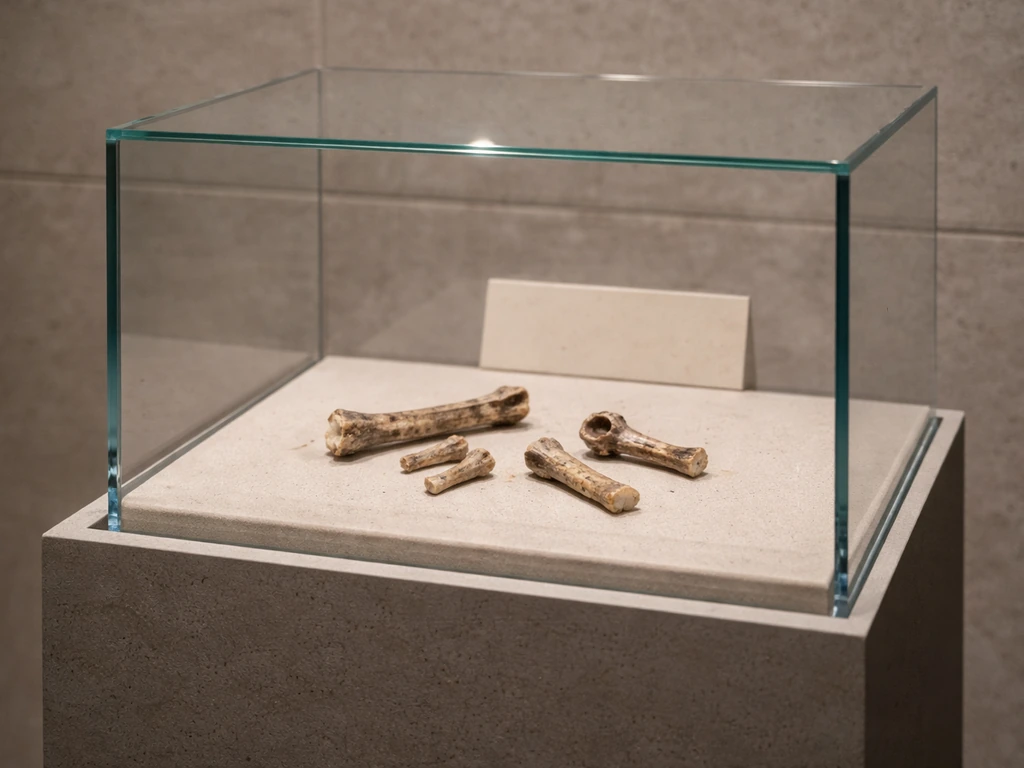
Why some bird bones make it and others don't
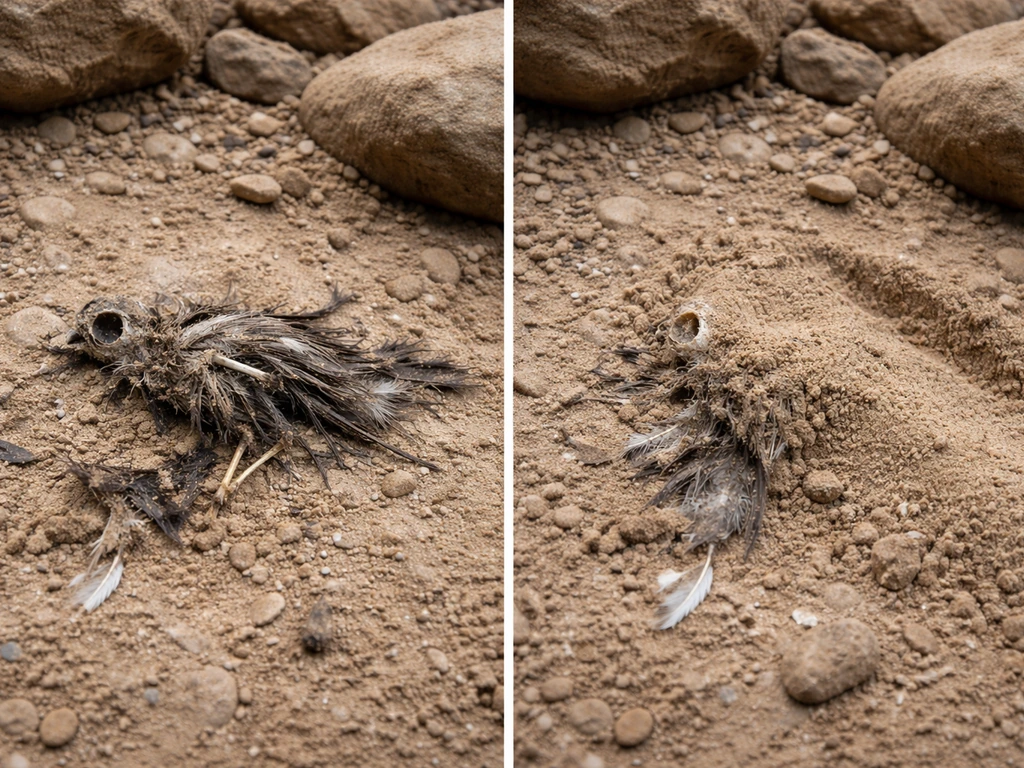
Fossilization is essentially a race between destruction and burial. For bird bones, destruction usually wins. Before a bone even has a chance to be buried, it has to survive scavenging, weathering, and physical breakage. Field experiments and comparative taphonomy research (taphonomy is the study of what happens to remains between death and fossilization) show that bird bones suffer more damage from carnivores and deteriorate faster from surface weathering than mammal bones in similar environments. Fractures, gnaw marks, and tooth punctures from scavengers are common, and what's left after that is often too fragmentary to preserve meaningfully. A broader avian fossil preservation analysis notes that, despite birds having hollow, lightweight remains, misconceptions that this alone prevents preservation are incorrect, and that most avian fossils are not preserved under ideal conditions; they commonly experience scavenging, disarticulation, decay, surface weathering, and only then burial and mineralisation bird bones often endure scavenging, weathering, and physical breakage before burial.
If a bird carcass does reach burial relatively intact, the next challenge is time and mineral access. Bone has to be buried quickly enough to slow decay, and then mineral-rich groundwater has to move through the sediment and into the bone's pores before the bone breaks down completely. When those conditions align, you get a real fossil. When they don't, you get nothing, or at best a fragment.
How bone structure affects the odds
Bird bones are built differently from most vertebrate bones, and that matters a lot for fossilization. Two features in particular shape the outcome: pneumaticity and overall bone density.
Pneumatic bones: hollow and air-filled
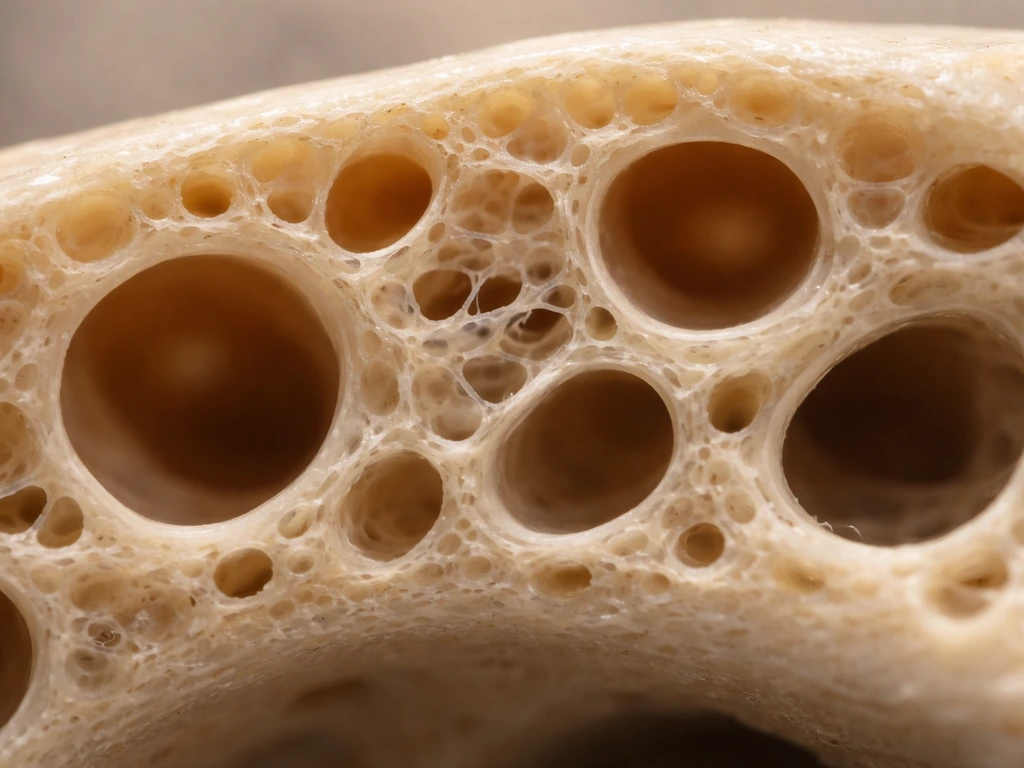
Many bird bones are pneumatic, meaning they contain internal air spaces connected to the respiratory system through small openings called pneumatic foramina. This is the same feature that makes birds lighter for flight. The air spaces vary within individual bones: for example, the head of a bone often has a higher proportion of air space than the shaft. When researchers study bird fossils using CT scanning, they measure something called Air Space Proportion to understand just how much of the bone was hollow versus solid. The more air space a bone has, the less solid mineral matrix there is to fossilize, which means pneumatic bones are generally harder to preserve. Because bird bones are often pneumatic and have less solid mineral matrix to fossilize, they are generally harder to preserve than denser bones, a detail that also helps explain why people wonder if do bird bones break easily. They're also more prone to collapse under sediment pressure before mineralization can occur.
Trabeculae and microstructure
Inside the hollow spaces of bird bones, there's a web of thin struts called trabeculae. This internal scaffolding provides structural strength without adding much weight, which is brilliant engineering for a flying animal but creates challenges for fossil preservation. These fine structures can collapse, get crushed, or dissolve before mineralization reaches them. That said, under exceptional conditions, even this delicate internal architecture can be preserved. A Nature Communications study found medullary bone tissue (a type of bone birds produce during egg-laying) preserved inside a 125-million-year-old fossil bird, confirmed through micro-CT and histology. It's rare, but it shows what's possible when conditions are just right.
Bone density and wall thickness
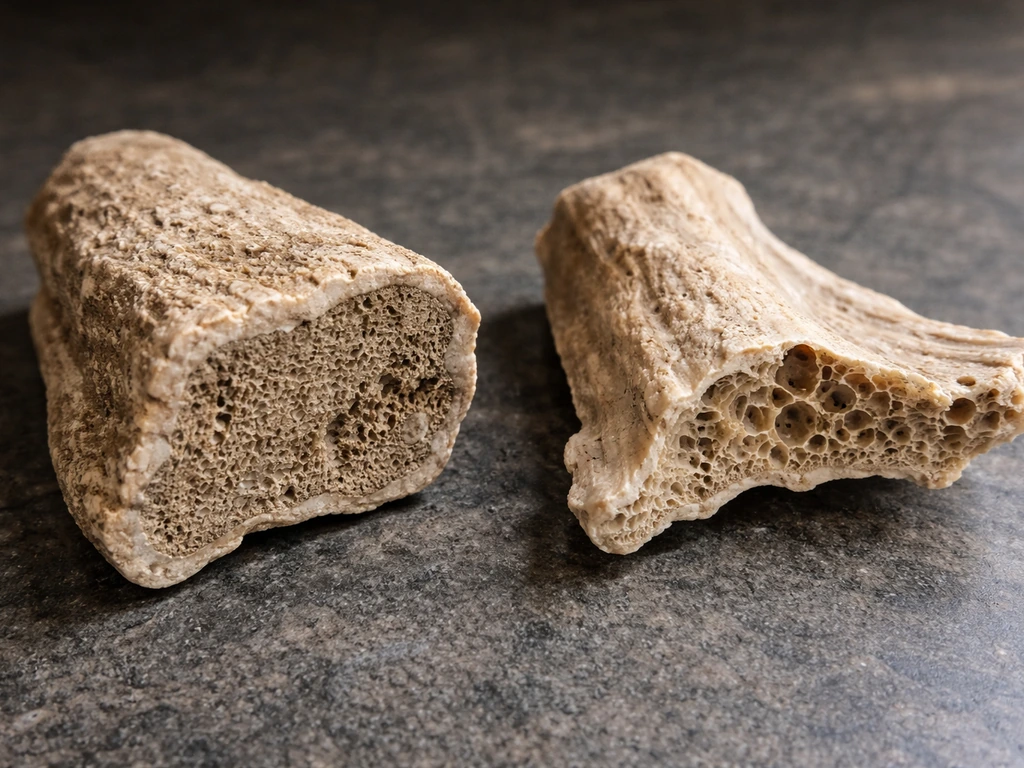
Denser, thicker-walled bones preserve better, full stop. Bird bones have relatively thin walls compared to many other vertebrates, which means less material to mineralize and more vulnerability to physical damage. Larger birds with proportionally denser bones tend to have higher representation in the fossil record than small songbirds, whose tiny, thin bones are almost never found fossilized. If you're looking at a bird fossil collection and wondering why there aren't more sparrow-sized specimens, this is exactly why.
What fossilized bird bones actually look like
Most people picture a complete, articulated skeleton when they think of fossils, but that's genuinely rare for birds. What you're far more likely to encounter are isolated fragments, usually individual bones like limb elements, a piece of a wing, or part of a skull, rather than a whole animal. This happens because bird skeletons disarticulate quickly after death, and individual bones scatter before burial can preserve them in position.
True mineralized bone fossils (where the original bone material has been replaced or infilled with minerals through a process called permineralization) look like dense, stone-like versions of the original bone. They're heavier than fresh bone and often have a slightly glassy or crystalline texture when broken. Silicification, where silica fills in or replaces the original material, is one of the most common permineralization pathways and is the same process that creates petrified wood.
In some cases, birds are preserved as impressions or compressions rather than mineralized bone. An impression fossil leaves an imprint or mould of the original structure in the surrounding rock without preserving the actual bone material. Compressions may retain a thin carbonized film of organic material. These are still valid fossils but give you less physical bone to study. Some of the most famous bird fossils, including specimens of the early bird Archaeopteryx, preserve feather impressions alongside actual bone, which is an extraordinary combination that required near-perfect burial conditions in fine-grained limestone.
The conditions that make fossilization happen
Fossilization isn't magic, it's chemistry and timing. Here's what actually has to go right:
- Rapid burial: The faster a carcass is buried under sediment, the less time scavengers and weathering have to destroy it. Environments like riverbanks, lake bottoms, coastal mudflats, and volcanic ash fields are good at burying remains quickly.
- Low oxygen after burial: Decay slows dramatically in low-oxygen (anoxic) environments. Fine-grained lake sediments or deep-water marine sediments are especially good at this.
- Mineral-rich groundwater: After burial, water carrying dissolved minerals like silica, calcium carbonate, or iron compounds has to move through the sediment and into the bone's pores. This is how permineralization happens, minerals gradually fill and replace the bone's original material.
- Time and geological stability: Fossilization is slow. True fossils are typically at least 10,000 years old, and most are millions of years old. The rock containing them also has to survive erosion and tectonic activity long enough to be found.
- The right sediment type: Fine-grained sediments like mudstone, limestone, and shale preserve detail far better than coarse sandstone or gravel, which tend to abrade and destroy delicate bones during and after burial.
These conditions have to overlap in the same place at the same time. That's genuinely rare, which is why the bird fossil record is sparse compared to, say, marine invertebrates with hard shells, or large land mammals. Most bird carcasses throughout history simply never hit this combination.
How to find or identify bird fossils in the field
If you're trying to spot bird fossils, or just understand what you might be looking at in a natural history collection, here are some practical things to keep in mind.
What to look for
- Focus on fine-grained sedimentary rock: mudstone, shale, and limestone are your best bets. Bird fossils found in coarser rock are unusual.
- Look for isolated, small elongated or tubular fragments, especially in lake or marine sediment outcrops. A fossilized bird limb bone is thin-walled and cylindrical, often much smaller and more delicate-looking than a mammal bone of comparable age.
- Check for characteristic hollow cross-sections if a bone is broken: pneumatic bird bones have visible internal chambers or a trabecular web, not solid marrow like many mammal bones.
- Pay attention to density and texture: fossilized bone is noticeably heavier and harder than fresh or weathered bone and doesn't absorb saliva the way fresh bone does (the old 'lick test' that fossil hunters use to distinguish bone from rock, though it's far from definitive).
- Bird fossils are often associated with aquatic or lakeside depositional environments. Sites like ancient lake beds or coastal lagoon deposits have historically produced the best avian fossil records.
Know the legal rules before you collect anything
This part is important and non-negotiable. On National Park Service lands, collecting any fossil is prohibited without a science permit. If you find something you think is a fossil in a national park, the right move is to photograph it, note the location as precisely as you can, leave it exactly where it is, and report it to a park ranger. The fossil does more scientific good in context than in a pocket.
On Bureau of Land Management lands, the rules are more nuanced. You can generally collect reasonable amounts of common invertebrate fossils and petrified wood for personal, noncommercial use, but vertebrate fossils (which include bird bones) require a permit regardless of where you find them on federal land. If you think you've found a unique vertebrate specimen on BLM land, leave it, photograph it, record the location, and contact the local BLM office. Private land is a different matter, but always get explicit permission from the landowner before collecting anything.
Don't rely on photos alone for identification
One genuinely useful caution: identifying a suspected fossil bone accurately from photos is very difficult, even for professionals. The USGS makes this point explicitly: accurate identification almost always requires examining the actual material in person. Ironically shaped rocks, mineralized wood, and weathered modern bone can all look convincingly fossil-like in a photograph. If you're not sure what you've got, take it to a local natural history museum, university geology department, or regional fossil club for an in-person look.
Misconceptions and edge cases worth knowing
Hollow bones don't automatically rule out fossilization
A common assumption is that because bird bones are hollow and lightweight, they simply can't fossilize. That's not accurate. The hollow spaces can fill with minerals during permineralization just like solid bone can. What hollow bones do is make the process less likely, not impossible. Because bird bones are often hollow and lightweight, they are frequently more fragile than the fossil record suggests. The fossil record contains plenty of examples of pneumatic bones from birds and their dinosaurian relatives preserving well enough to study in detail, including identifying their air-sac connections.
Subfossils are not the same as true fossils
If you find old-looking bird bones in a cave, peat bog, or dry desert shelter, they may be subfossils rather than true fossils. A subfossil is a remain where the fossilization process is incomplete, typically because the bones are too recent or the conditions haven't been right for full mineralization. Subfossil bird bones can be thousands of years old and scientifically valuable, but they're chemically closer to fresh bone than to rock. They look different from true fossils: they're often lighter in color, less dense, and more fragile. Distinguishing between a subfossil and a true fossil matters for interpreting what you've found.
Complete articulated bird skeletons are extremely rare
If you've seen a beautifully articulated complete bird fossil in a museum and assumed that's typical, it's very much not. Those specimens usually come from exceptional fossil sites called Lagerstätten, places with unusually perfect preservation conditions. The far more common reality is isolated, fragmentary elements, often just one or two bones from what was probably a complete animal. Most avian fossils in research collections are individual limb bones or skull pieces, not whole skeletons.
Impressions and carbonized films count as fossils too
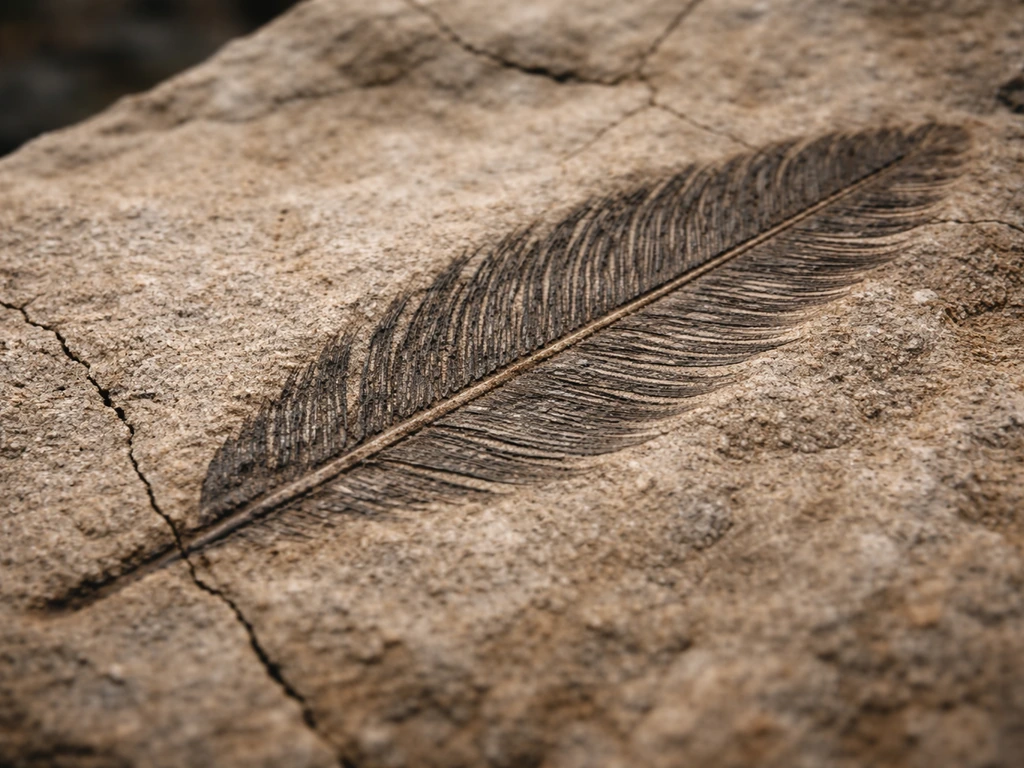
Not every avian fossil is mineralized bone. Impression fossils can preserve the shape of a bird bone or feather as a mould in surrounding rock without any original material surviving. These kinds of bird fossils can preserve the shape and structure of bones without keeping the original bone material Impression fossils. Carbonization (where organic material is compressed and reduced to a thin carbon film) can preserve soft tissue outlines. These are still fossils by definition, and in the case of birds, feather impressions have given paleontologists some of their most important clues about early avian evolution. Don't discount a specimen just because it doesn't include actual mineralized bone.
The connection to dinosaur bones
Birds are living dinosaurs, technically speaking, which means the same bone features that researchers use to identify pneumaticity in fossil bird bones also show up in non-avian dinosaur fossils. The internal cavities and pneumatic foramina that make bird bones lightweight are osteological correlates, meaning they leave recognizable structural signatures in fossil bone that paleontologists can identify and use to trace the evolution of the avian respiratory system deep into the Mesozoic. So bird bone structure, including those hollow spaces that make fossilization harder, is actually one of the most informative features in the entire vertebrate fossil record.
FAQ
How can I tell if a “bird bone” I found is a true fossil or just a subfossil?
True fossils are usually noticeably harder and denser than surrounding material, often with stone-like texture where they break. Subfossils tend to look closer to fresh bone, feel lighter, and can be more crumbly. If the piece scratches like bone or shows flexible residual structure, treat it as subfossil and get an in-person assessment.
Do bird bones fossilize better in some environments than others?
Yes. Mineral-rich, oxygen-restricted burial environments generally give the best odds for permineralization, because groundwater can replace minerals into pore spaces before decay finishes. By contrast, highly acidic settings or very dry, erosion-heavy landscapes often preserve at most impressions or leave only fragments.
If pneumatic bones are harder to preserve, can they still fossilize with internal detail like the air spaces?
They can, but it usually requires exceptional preservation, because delicate internal scaffolding and cavities must survive both physical compression and chemical breakdown. When internal structures are preserved, CT scans often show measurable differences in air-space proportions compared with hollow regions that collapsed or were dissolved.
Why do I mostly see isolated bird bone fragments, not complete skeletons, in collections?
Bird skeletons commonly disarticulate quickly after death, and lightweight bones can scatter before burial. Even when a carcass is rapidly buried, complete articulated preservation depends on burial fine-grain conditions and minimal disturbance afterward, which is rare outside special deposit sites.
Can bird fossils be real even if there is no mineralized bone material left?
Yes. Some bird fossils are impressions or compressions, which record the shape (and sometimes feather outlines) in the surrounding rock. These can still be scientifically valuable because paleontologists can study morphology from the mold, even without original bone chemistry surviving.
What’s the difference between permineralization and silicification for bird fossils?
Permineralization is the general process where minerals fill or replace pore spaces in bone. Silicification is one pathway where silica specifically infills or replaces tissues, which is why the resulting fossil can resemble petrified material and may fracture with a more glassy or crystalline look.
Are there “fossil-like” lookalikes that people commonly confuse with bird bones?
Yes. Mineralized wood, iron-rich concretions, and weathered modern bone can all mimic fossil bone in photos. A key practical step is to examine the surface in person for cutting marks, growth-like texture, and whether it breaks with a crystalline vs. bone-like internal structure.
If I find something on public land, can I just keep it if it looks small or common?
Usually not. The rules depend on the land manager, but vertebrate fossils (including bird bones) are typically treated as protected. The safest approach is to photograph, record precise location data, leave it in place, and contact the managing agency or ranger for guidance before taking anything.
Could an old-looking bird bone in a cave, peat bog, or dry shelter be a subfossil instead of a true fossil?
It can. Subfossils are common in some sheltered environments because they can be old enough to look “ancient” but not fully mineralized. If it appears too light, too fragile, or only partially darkened compared with typical mineralized bone, assume subfossil until tested or examined.
Are bird bones the only indicator of bird fossils, or can the same features indicate non-bird dinosaurs too?
The same structural signatures related to pneumaticity appear in many non-avian dinosaurs. So isolated hollow-bone fragments can be tricky to label as bird without context, like associated anatomy, locality, and comparative features. In practice, identifications rely on more than “hollow equals bird.”
Next Articles
How Much Weight Can a Bird Carry Payload Limits Explained
Realistic payload ranges for different birds plus a method to estimate how much weight they can carry safely.

What Bird Has the Highest Heart Rate? Fastest Species Explained
Explains which bird has the highest heart rate, how it’s measured, key contenders, and how to compare readings fairly.
What Is the Highest Altitude a Bird Can Fly?
Find the highest documented bird flight altitude, how it’s measured, and the biology and flight mechanics behind extreme