
An osprey cruises at roughly 50 to 61 km/h (about 30 to 38 mph) during normal travel and foraging flight. When it tucks into a hunting dive toward the water, speeds can push higher, but ospreys are not peregrine falcons, their dives are functional plunges aimed at grabbing fish, not high-speed aerial stoops. Expect to see an osprey moving at a moderate, steady pace most of the time, with brief bursts of committed diving that are impressive for their precision rather than their raw speed.
How Fast Does an Osprey Bird Fly? Speeds Explained

Marcus Chen
9 Jul 2026
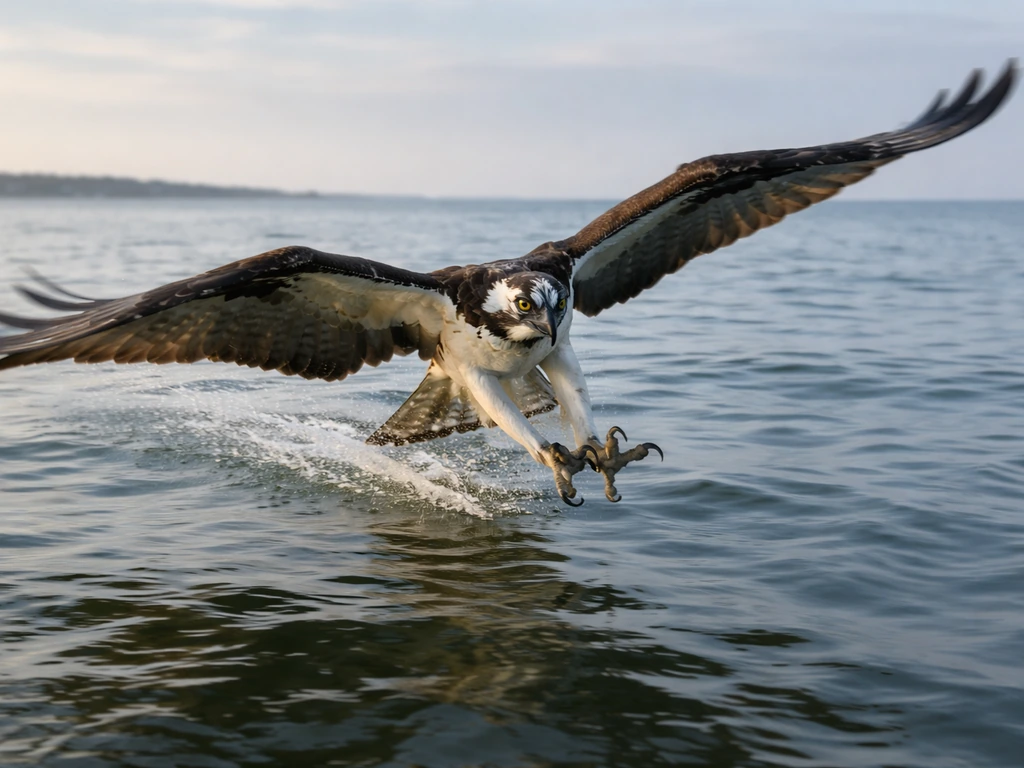
Typical osprey speed ranges: cruising vs hunting dives
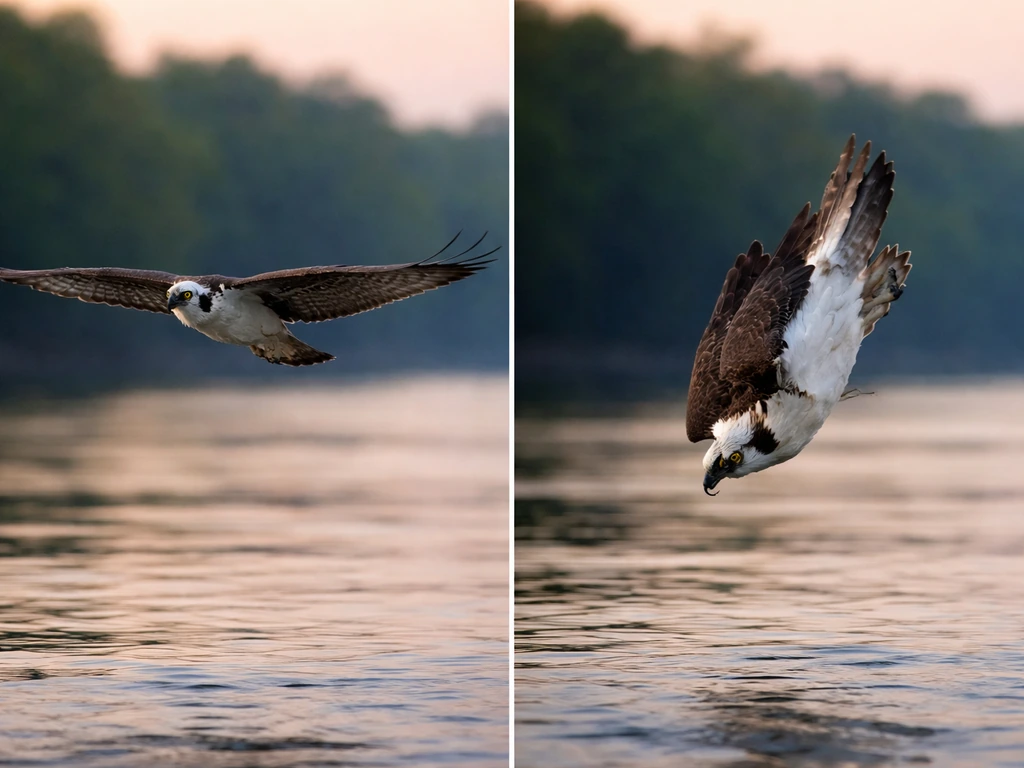
Telemetry data from GPS-equipped ospreys gives us the most reliable numbers for real-world flight speed. A USGS study on wintering North American ospreys reported a telemetry-derived average flight speed of 61 km/h (about 38 mph). Separate juvenile tracking data from a trans-oceanic migration study recorded average movement speeds closer to 21.6 km/h over long non-stop segments, much slower, which reflects the difference between a juvenile bird covering distance at a sustainable pace versus an adult commuting purposefully. A commonly cited educational estimate puts normal osprey cruising speed around 50 km/h (31 mph), which lines up well with what the telemetry data shows.
During a hunting dive, an osprey drops feet-first from heights of roughly 30 to 100 feet (about 9 to 30 meters) above the water. You might also wonder how high ospreys can fly overall, and that depends on conditions like wind and the bird’s age and behavior dives feet-first from heights of roughly 30 to 100 feet. The dive itself is shorter and less steep than a falcon's stoop, it's designed to hit a precise target at the surface rather than build maximum velocity. Dive speeds in these plunges are generally estimated to exceed cruising speed, but hard measured numbers for osprey dive speeds specifically are harder to pin down than for falcons, and scientists still rely heavily on estimates and behavioral descriptions rather than radar-measured velocities for this species.
| Flight Mode | Estimated Speed | Notes |
|---|---|---|
| Cruising / commuting | 50–61 km/h (31–38 mph) | Telemetry-derived from adult and wintering birds |
| Long migratory segments (juvenile) | ~21.6 km/h (13 mph) | Sustained average over long non-stop legs; reflects endurance pace |
| Hunting dive | Faster than cruise; exact figures not well-measured | Feet-first plunge from 9–30 m; precision-focused, not speed-focused |
| Hovering / wind-assisted stationary | Near zero ground speed | Used to spot prey before committing to a dive |
How an osprey actually flies: the mechanics behind the speed
Ospreys have long, narrow wings with a distinctive crook or bend at the wrist joint, a shape you'll recognize the moment you see one in the air. That angled wing profile helps reduce drag during forward flight and gives the bird a lot of control over lift, which matters when you're scanning moving water for fish and need to adjust altitude constantly. They're built for sustained, efficient travel over water rather than the extreme acceleration that something like a peregrine falcon is designed for.
In terms of wingbeat mechanics, birds modulate both the frequency and amplitude of their wingbeats to manage speed and power output. Research on wingbeat frequency across flight modes shows that birds increase wingbeat frequency and change amplitude as they transition between slow soaring, cruising, and powered climbing. For ospreys, you'll notice this in practice: a slow, deliberate flap while hunting over water, a faster and more purposeful stroke during commuting flight, and a wing-fold or partial retraction when committing to a dive. During the dive itself, reducing wing area lowers drag and lets gravity and momentum do more of the work.
The dive mechanics for plunge-diving birds involve distinct phases: initial approach, impact with the water surface, and a submerged phase where momentum carries the bird through the water column. Osprey dives involve a feet-first entry, unlike some plunge-diving seabirds that hit headfirst, which means the bird's posture during the dive is partly about protecting itself on impact and positioning its talons, not purely about maximizing speed. That design choice matters when you're trying to interpret why osprey dive speeds don't get discussed in the same breath as falcon stoops.
What changes how fast an osprey flies
Wind and altitude
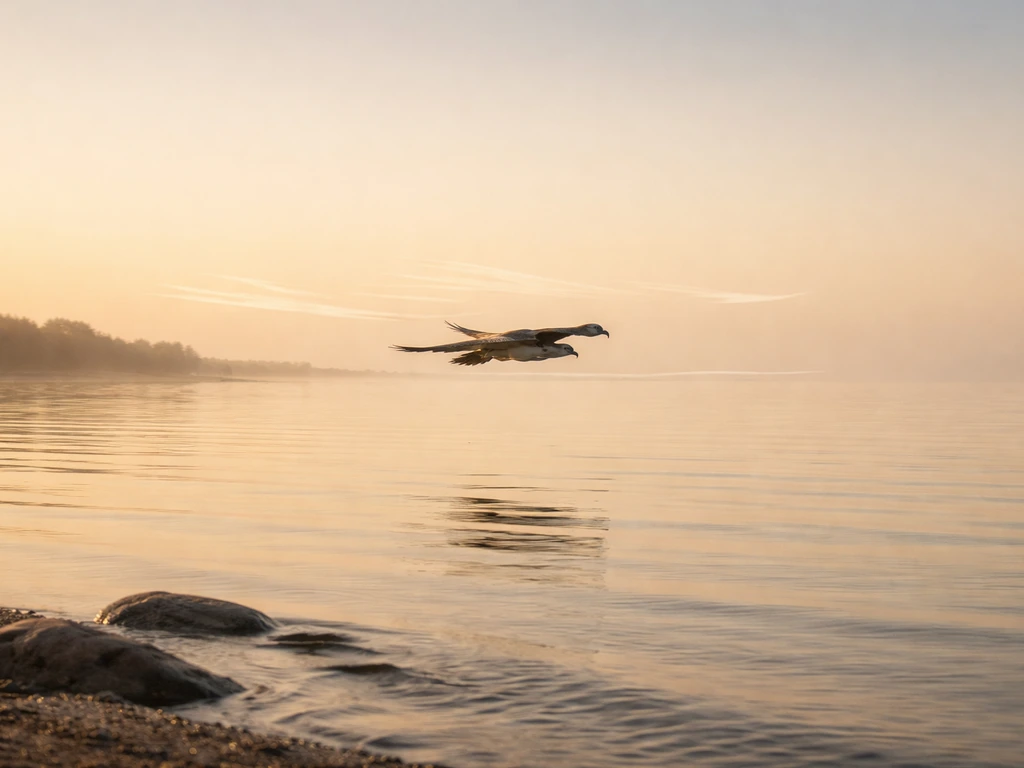
Wind is probably the single biggest variable. A tailwind during migration can push an osprey's ground speed well above its cruising airspeed, while a headwind can drop apparent speed significantly even when the bird is working hard. Research on wild bird flight has shown that atmospheric turbulence directly affects moment-to-moment acceleration, meaning even on a single flight the speed fluctuates constantly in response to air conditions. Altitude also matters: higher-altitude flight over open terrain or during migration involves different air density and typically different wind patterns than low hunting passes over a marsh.
Age, sex, and body condition
The juvenile migration speed data (averaging around 21.6 km/h) versus adult winter telemetry data (61 km/h) illustrates clearly that age makes a real difference. Juveniles are less efficient fliers, still developing muscle strength and honing their flight technique, and they often make longer, more energy-conservative trips. Adult females tend to be larger than males in ospreys, as in most raptors, which can affect both power output and how they manage the lift-drag tradeoff at different speeds. Body condition matters too, a bird that has been fasting or is in heavy moult will fly differently than one in peak condition.
Prey type and targeting
What the osprey is hunting affects how it flies before and during a dive. A large, slow-moving fish near the surface might prompt a quick, shallow angle of approach. A fish detected deeper or moving quickly might trigger a higher, more committed plunge. The bird spends time hovering or circling to lock in on a target before committing, and that pre-dive behavior directly determines the approach angle and entry speed. The motivation to feed, how hungry the bird is, how available prey is locally, also shapes how aggressively and quickly it flies between hunting spots. A bird that eats a spider is usually smaller and less specialized than an osprey, so its top running speed depends heavily on its species and body size how fast can a bird eating spider run.
Season and behavioral context
Telemetry studies tracking ospreys across seasons, including moult and wintering periods, show that flight behavior shifts significantly depending on what the bird is doing, foraging locally, commuting between roost and feeding sites, or making long-distance migratory movements. Speed during migration tends to be higher and more directional than during casual local foraging. Moult can temporarily affect wing shape and aerodynamic efficiency, which may slightly constrain top speed during that period.
What those speeds look like in the real world
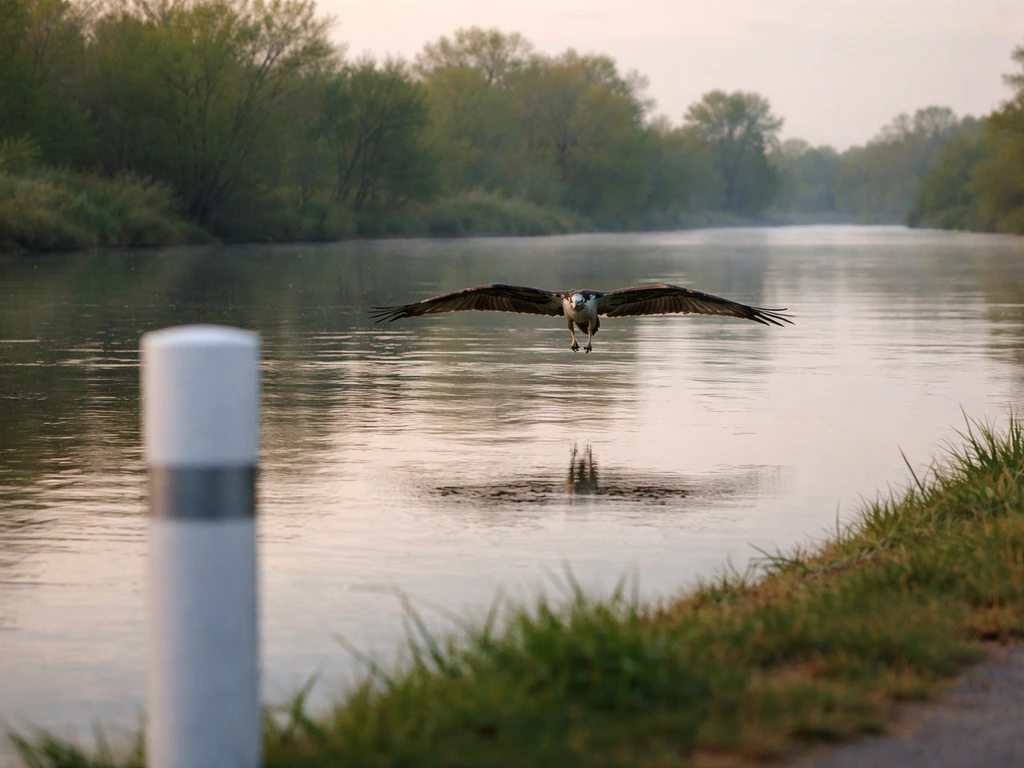
At 50 to 61 km/h, an osprey is moving at roughly the speed of a car on a quiet country road. If you're watching one cross a lake or river valley, it will cover about 800 meters (half a mile) in under a minute. That feels fast when you're tracking it with binoculars, but compare it to a car driving past at 60 km/h and you'll realize it's a measured, purposeful pace, not a blur.
The hunting sequence is where the behavior gets genuinely exciting to watch. An osprey will soar or hover at 30 to 100 feet, sometimes hanging nearly stationary in a headwind, then tuck its wings and drop. The dive happens quickly, the bird is in contact with the water within a few seconds of committing. It enters feet-first with talons forward, often submerging briefly before hauling itself and (hopefully) a fish back into the air. That foot-first plunge from under 100 feet is fundamentally different from a peregrine's multi-hundred-meter stoop, which is why osprey dive speeds are moderate rather than extreme. If you're specifically curious about sparrow bird top speed, it's a very different scale and hunting strategy than an osprey's dive oprey dive speeds.
How to observe or estimate an osprey's speed safely
You don't need special equipment to get a rough sense of how fast an osprey is flying. The most practical method is timing: if you know two landmarks (say, two dock posts 100 meters apart) and you watch an osprey pass between them, a rough count gives you a workable estimate. An osprey covering 100 meters in about 6 seconds is moving at roughly 60 km/h. It's not lab-quality data, but it gets you into the right ballpark and makes the telemetry numbers feel real rather than abstract.
Video is even better for this, especially slow-motion footage shot on a smartphone at a known distance. You can count frames and use the scale of a known object in frame to estimate size and distance. Birding groups and wildlife monitoring organizations use GPS telemetry and accelerometers for precision tracking, but for a casual observer at a nest platform or fishing lake, timing a bird across a measured distance works perfectly well.
One thing to keep in mind: always observe from a respectful distance, especially near active nests. Ospreys are legally protected in most jurisdictions, and flushing a bird off a nest for a better look or a closer photo is both harmful and illegal. Good binoculars or a spotting scope from 50 to 100 meters away will give you everything you need without disturbing the bird.
Osprey speed vs other raptors: keeping expectations realistic
Context helps here. The peregrine falcon is the speed benchmark for birds, Pennsylvania's Game Commission notes adults can exceed 200 mph (about 320 km/h) in a vertical hunting stoop, and Guinness World Records cites a similar figure as the fastest recorded bird dive. In level flight, peregrines average around 60 mph (about 96 km/h). A Reddit r/theydidthemath discussion treats typical peregrine falcon cruising speeds as an approximate community belief, comparing them to commonly used speed ranges rather than presenting scientific measurements. Radar observations of stooping peregrines in published research report average stoop speeds around 25 m/s (90 km/h) across real hunting events, which is more conservative than the extreme theoretical figures but still well above osprey cruising speed.
An osprey is not trying to be a peregrine. Its evolutionary niche is fishing, which requires precision, a controlled approach, a feet-first water entry, and the strength to haul a wet fish out of the water, not the extreme velocity of an aerial predator hunting birds in open sky. Comparing osprey dive speeds to peregrine stoop speeds is a bit like comparing a precision diver to a sprinter: different skills, different body designs, different speeds, all optimized for different jobs.
Among raptors broadly, ospreys fit somewhere in the moderate range: faster than a large soaring vulture during active flight, slower than a falcon in a stoop, and more comparable to a large buteo hawk in cruising speed. If someone claims an osprey reaches 150 mph in a dive, that's not plausible, that's peregrine territory, and even then it's the extreme upper end of a very specialized behavior. A peer-reviewed study of ideal falcon diving reports that top dive speeds could reach about 157 m/s at the upper bound, providing a useful reference point when considering what counts as plausible extreme performance in specialized raptor dives blank" rel="noopener noreferrer">extreme upper end of a very specialized behavior. Osprey dive speeds are real and impressive, but their credible range is a fraction of that figure.
The bottom line on osprey speed
Plan on 50 to 61 km/h as the realistic range for an osprey flying with purpose. A secretary bird, by contrast, is a terrestrial runner, so its top speed depends on ground conditions and its stride rather than aerial dive mechanics secretary bird run. Juveniles and birds in energy-saving mode will be slower. Hunting dives are faster than cruise but are short, steep, and precision-driven rather than speed-maximizing. The biology behind those numbers, long angled wings, variable wingbeat mechanics, feet-first dive design, all point to a bird that is built for efficiency and hunting accuracy over open water, not raw velocity. That's exactly what makes watching one hunt so satisfying: every movement is purposeful, and the speed is exactly what it needs to be.
FAQ
How fast does an osprey fly in level flight versus during a dive?
In level, foraging, or commuting flight, expect about 50 to 61 km/h. During a plunge dive, the osprey accelerates more than its cruise speed, but the jump is typically not as extreme as a peregrine stoop because the dive is optimized for feet-first entry and talon placement at the water surface.
Why does my “bird feels faster” impression not match the km/h numbers?
Your perception is usually affected by distance and direction. If the osprey is moving toward you or against wind, it can look quicker, and if it crosses farther away it can appear slower even when its airspeed is similar. Ground speed also changes with headwinds and tailwinds.
Do ospreys fly faster as they get closer to shore during hunting?
Often yes, but not in a simple linear way. They may hover or circle first to lock onto the fish, then speed up during the final approach as they adjust height and approach angle for a feet-first entry.
What’s the fastest credible osprey speed claim I should trust?
For cruising, 50 to 61 km/h is the realistic range supported by real tracking and common educational estimates. If you see claims like 150 mph for an “osprey dive,” treat them as confusion with peregrine territory, because osprey dives are precision plunges rather than maximum-velocity aerial attacks.
Are juvenile ospreys always slower than adults?
Generally, yes in long stretches of travel, juveniles often average around the low 20 km/h range over sustained segments. The exact speed still varies with wind and how direct their route is, but juveniles tend to be less efficient and more energy-conservative.
How much do wind and weather change an osprey’s speed over the ground?
Wind can change ground speed a lot even if the bird’s airspeed stays similar. Tailwinds raise the distance covered per minute, headwinds reduce it, and turbulence can cause small speed fluctuations during the same flight pass.
Do ospreys always dive feet-first, and does that affect speed?
Yes, ospreys are known for a feet-first water entry, which helps protect them on impact and positions the talons for grabbing fish. Because part of the behavior is survival and precision, it contributes to why their dive speeds are discussed as more moderate than falcon stoops that prioritize raw aerial speed.
How can I estimate an osprey’s speed myself more accurately?
Time it across a known distance between two fixed landmarks, then convert: speed (km/h) = (distance in meters ÷ time in seconds) × 3.6. Try to use a span of at least 100 meters so small timing errors don’t dominate your result.
Is there a difference in osprey speed at a nest compared with during migration?
Yes. At nesting areas they often move in shorter, less directional trips with more searching, hovering, and multiple local adjustments. During migration, flights tend to be more directional and sustained, so average movement speeds are usually higher.
Does molting affect how fast an osprey flies?
It can. During moult, changes in feather condition and flight efficiency may temporarily constrain performance, so speeds and climbing ability can be slightly reduced compared with a bird in peak condition.
Next Articles
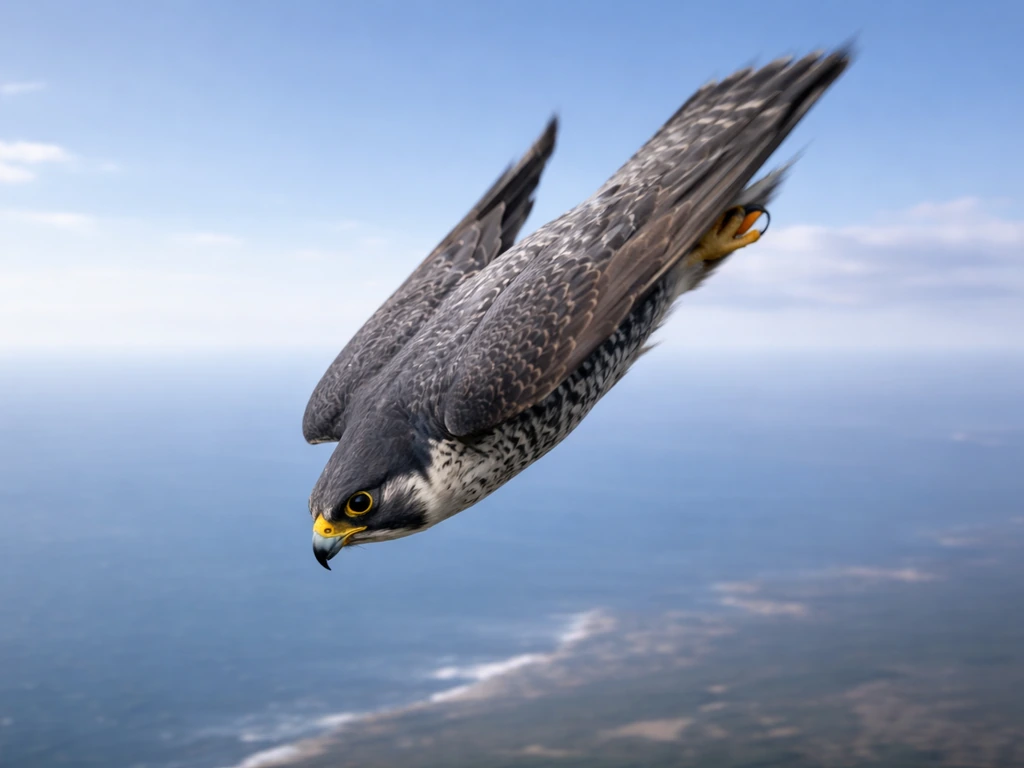
How Fast Is a Falcon Bird? Speeds, Stoops, and Facts
Realistic falcon speeds in level flight and hunting stoops, plus anatomy reasons and how to verify numbers by species.
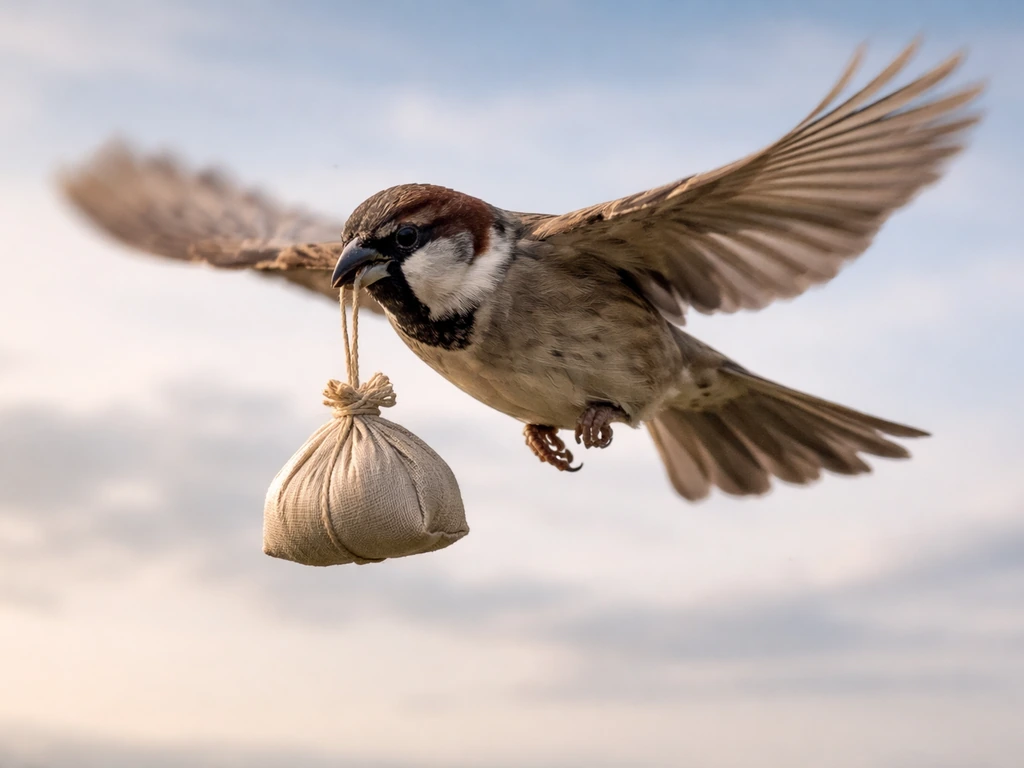
How Much Weight Can a Bird Carry Payload Limits Explained
Realistic payload ranges for different birds plus a method to estimate how much weight they can carry safely.
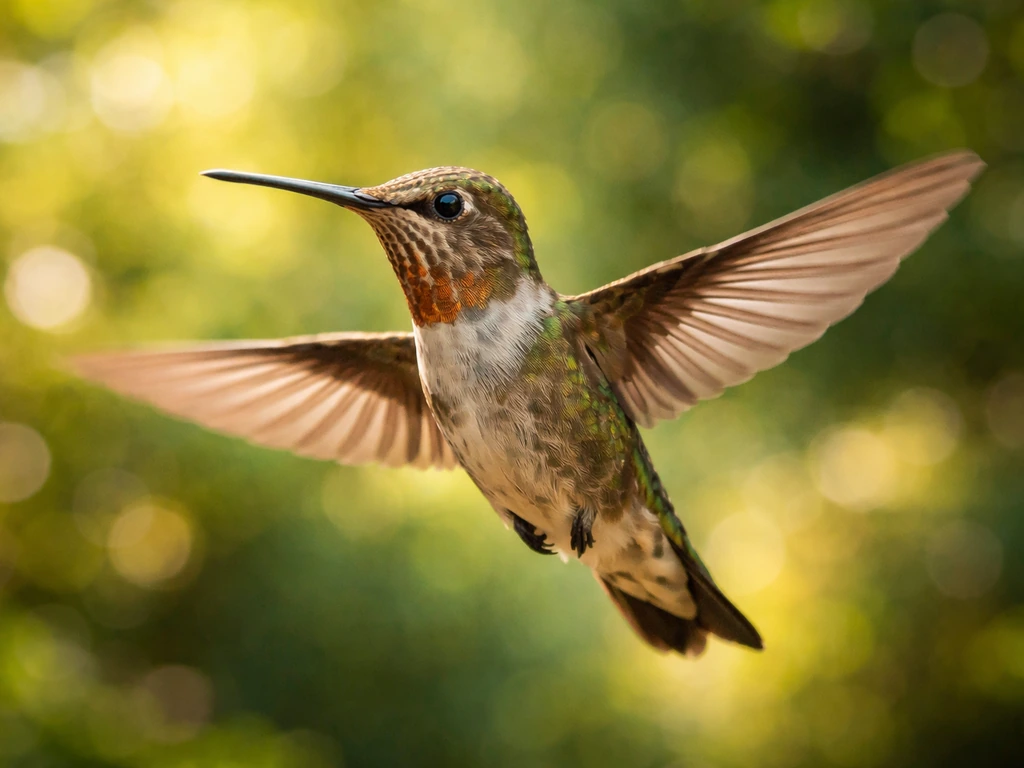
What Bird Has the Highest Heart Rate? Fastest Species Explained
Explains which bird has the highest heart rate, how it’s measured, key contenders, and how to compare readings fairly.