
The largest living bird by weight is the common ostrich, with adult males reaching about 2.75 meters tall and tipping the scales at over 150 kg. The longest wingspan on any living bird belongs to the Wandering albatross, officially recorded at 3.63 meters tip to tip. And the heaviest bird that can still get itself airborne is the Kori bustard, with males confirmed at up to 18.14 kg. So if someone asks you how big a bird can get, the honest answer is: it depends entirely on which measurement you care about. If you're really trying to answer what is the fattest bird, it comes down to which size measure you mean, like mass versus height big a bird can get.
How Big Can a Bird Get? Largest Birds by Weight and Wingspan

Marcus Chen
23 Jun 2026
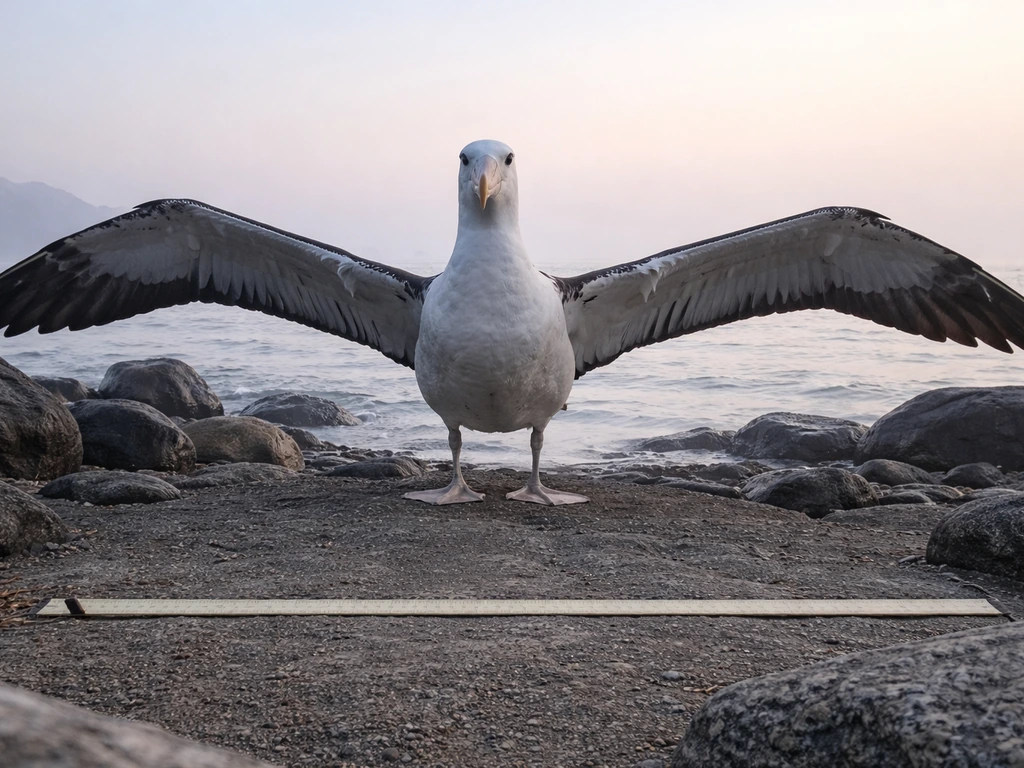
What 'big' actually means for a bird
This is the part people skip, and it's why bird size arguments go in circles. That same “what does big mean” puzzle is why people also ask how big a finch bird is in the first place how big is a finch bird. 'Big' in birds has four separate meanings, and the winner changes depending on which one you use.
| Measurement | What it captures | Record holder (living species) |
|---|---|---|
| Body mass (kg) | How heavy the bird is | Ostrich (over 150 kg) |
| Height (m) | How tall the bird stands | Ostrich (up to ~2.75 m) |
| Total length (m) | Beak tip to tail tip, laid flat | Ostrich (also wins here) |
| Wingspan (m) | Tip to tip across extended wings | Wandering albatross (up to 3.63 m) |
Wingspan is measured by laying a specimen flat on its back, grasping the wings at the wrist joints, and measuring between the longest primary feather tips on each side. It sounds simple but it matters: a bird with enormous wings can still be relatively lightweight, which is exactly what the albatross demonstrates. Meanwhile an ostrich is absurdly heavy and tall but has wings that are nearly useless for flight. Neither is 'bigger' in every sense, they just each hold a different record.
The actual record-holders, with real numbers
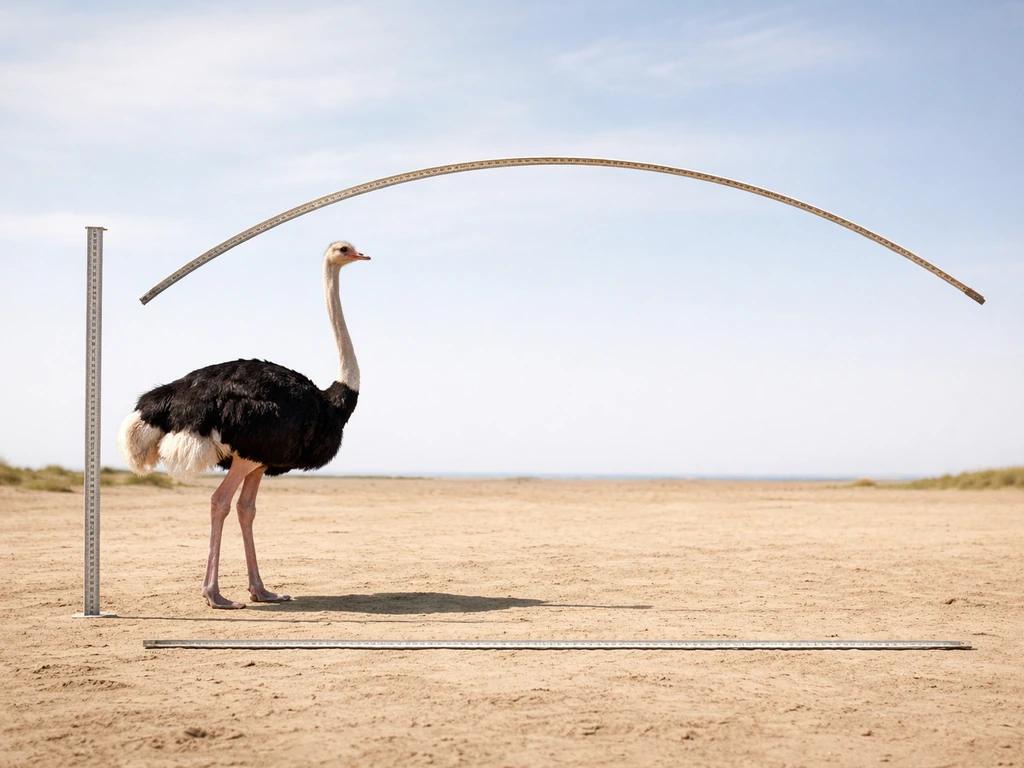
Heaviest living bird: the ostrich
The common ostrich (Struthio camelus) is the undisputed largest living bird by mass and height. Adult males can exceed 150 kg and stand nearly 2.75 meters tall. Females are noticeably smaller, which is worth keeping in mind because size comparisons often cite the male maximum without flagging the sex difference. A typical captive ostrich measured in energetics studies came in around 58 kg on average, with a range of roughly 36 to 75 kg, so the 150 kg figure represents a genuine giant, not a typical individual.
Largest wingspan: the Wandering albatross
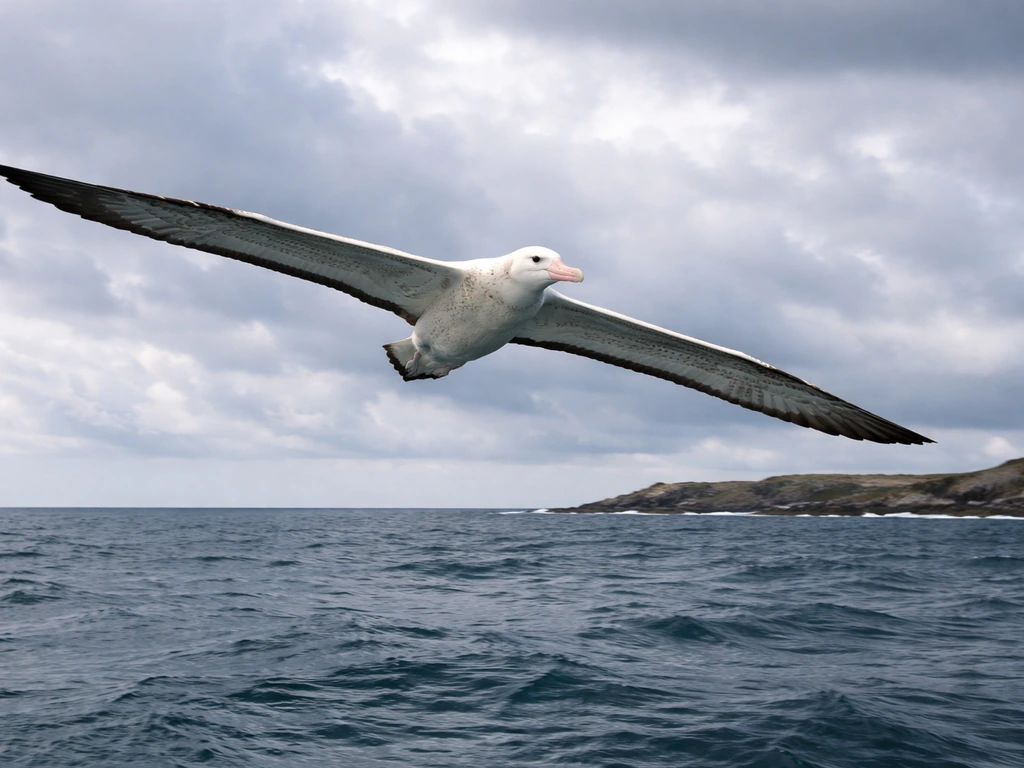
The Wandering albatross (Diomedea exulans) holds the official living-bird wingspan record at 3.63 meters, or about 11 feet 11 inches, according to Guinness World Records. Smithsonian and BirdLife International both cite approximately 3.5 meters as the standard figure. To put that in perspective, you could lay two average adults end to end and still not reach that span. The albatross earns this record through a body plan tuned almost entirely around effortless soaring over open ocean, not brute mass.
Heaviest flying bird: the Kori bustard
The Kori bustard (Ardeotis kori) is the heaviest animal that can still achieve powered flight. The largest confirmed specimen weighed 18.14 kg (about 40 lb), documented in 1936 and recognized by Guinness. Males typically range from about 10 to 19 kg, while females are much lighter at roughly 5.5 to 5.7 kg. Britannica flatly describes adult male Kori bustards as the world's heaviest living flying animals, and watching one take off, you'd believe it. They look like they have no business being airborne.
Other notable giants worth knowing
- Emu: the second largest living bird, a flightless ratite native to Australia, with typical body mass around 24 to 30 kg in measured captive populations
- Cassowary: described by San Diego Zoo as the heaviest bird in Australia and second heaviest in the world after the ostrich — a distinction complicated by emu comparisons depending on individual size
- Rhea and kiwi: also flightless ratites, much smaller but part of the same evolutionary group as ostriches and emus
- Andean condor: often cited for wingspan and soaring ability; competes with the albatross in sheer wing area, though the albatross holds the tip-to-tip record
One important note: Guinness and other record bodies treat extinct species separately from living birds. Prehistoric birds like Argentavis magnificens had estimated wingspans around 6 to 7 meters, and Vorombe titan weighed an estimated 860 kg, both would demolish every living record. But if your question is about birds alive today, those figures don't count.
How bird skeletons handle being large
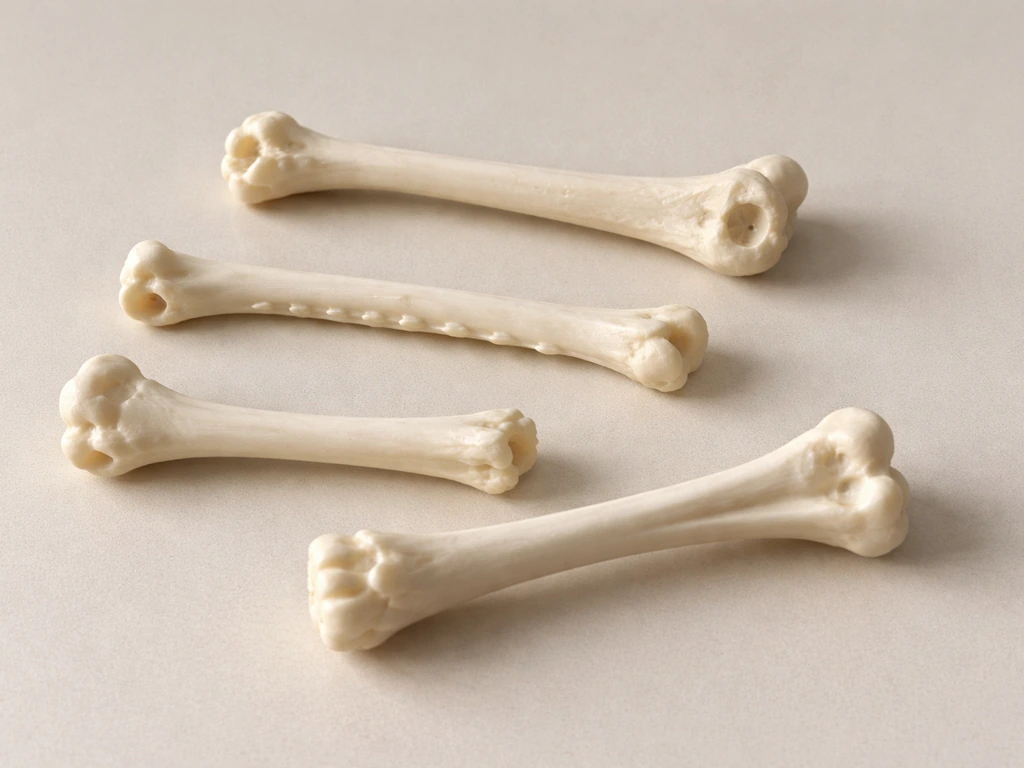
You might wonder why birds don't just keep growing. Part of the answer is structural: bird bones have to solve a difficult engineering problem. Research on avian long bones shows that hollow, circular-cross-section bones resist torsion (twisting forces) better than solid bones with elliptical cross-sections, independent of the actual bone tissue material. This is genuinely clever design, the hollow tube geometry gives you strength without piling on mass.
Studies analyzing humerus, ulna, and leg bones across dozens of species have quantified how cortical area and polar moment of area (a measure of resistance to twisting) scale with body mass. The short version is that bones can scale up, but the relationship isn't linear, heavier birds need disproportionately thicker bones to bear the load. Work on femoral cross-sections and breaking moments in large birds shows that as body mass climbs, structural demands on leg bones rise steeply, which is one reason the largest birds lean heavily on bipedal walking rather than any wing-assisted locomotion.
Even at the microscopic level, trabecular bone (the spongy lattice inside bones) scales allometrically across birds and mammals, meaning its architecture changes with body size in predictable but constrained ways. The system works well up to a point, but there are real limits to how much an avian skeleton can scale before the geometry stops delivering the necessary strength-to-weight payoff.
Feathers, wings, and the size ceiling for flight
Feathers are extraordinary structures, but they impose real constraints on maximum size in flying birds. Flight performance declines with increasing body size, that's not a rough generalization, it's backed by comparative research. The aerodynamic power a bird needs to stay airborne scales faster than the power its muscles can deliver as body mass grows. Measured muscle power outputs during flight range from roughly 60 to 150 watts per kilogram during cruising, spiking up toward 400 W/kg during takeoff. Flight metabolic rates can hit around 30 times basal metabolic rate. Bigger birds have to generate more lift per wingbeat while their muscles aren't proportionally stronger.
Wing shape matters enormously here. Two key metrics in flight biology are wing loading (body mass divided by wing area) and aspect ratio (wingspan squared divided by wing area). High wing loading means the bird needs more speed or more powerful wingbeats to generate enough lift. High aspect ratio (long, narrow wings) suits efficient soaring but makes takeoff harder. The Wandering albatross has extremely high aspect ratio wings that let it soar for thousands of kilometers using almost no flapping energy, but it needs a running start into the wind to get airborne at all. The inertial power needed for flapping also scales with body mass to roughly the 0.8 power, meaning every kilogram added makes flapping proportionally more expensive.
The Kori bustard at ~18 kg represents something close to the practical ceiling for a flying bird. Getting heavier than that means either committing to an extremely specialized soaring lifestyle or abandoning flight altogether.
How breathing and digestion cap bird size
Birds have one of the most efficient respiratory systems in the animal kingdom, and that efficiency is partly what allows large flying birds to exist at all. The avian lung-air sac system works by uncoupling ventilation from gas exchange: compliant air sacs pump air through rigid, non-expanding lungs (the parabronchi), maintaining nearly unidirectional airflow. This gives birds a thin blood-gas barrier, a large respiratory surface area, and high oxygen diffusing capacity, all of which support the sky-high metabolic rates that flight demands.
There's even a skeletal proxy for this: research on uncinate processes (small bony projections on bird ribs that help drive breathing movements) shows their length scales with resting metabolic rate. Longer uncinate processes correlate with higher oxygen delivery capacity. This tells us that respiratory anatomy and body size are tightly linked, bigger birds need proportionally more oxygen-delivery infrastructure, and at some point the system can't keep pace with the demands of powered flight.
Digestion adds another constraint. Birds process food fast relative to mammals because they need to keep body weight low and fuel turnover high. A truly enormous bird would need either a very large gut (which adds weight and bulk) or extremely energy-dense food sources available in abundance. Large flying birds typically eat high-calorie prey, fish, carrion, large insects, and even then, the Kori bustard's diet of mostly meat and large invertebrates reflects just how hard it is to fuel a nearly-20-kg flier. Bird-eating spider size comparisons use the same idea: relative scales matter, and a single number can hide huge variation.
Staying warm (or cool) when you're that large
Size and thermoregulation have a complicated relationship in birds. Larger bodies have a lower surface-area-to-volume ratio, which means they lose heat more slowly, an advantage in cold climates (Bergmann's rule shows up in birds too), but a challenge in heat. Feathers provide thermal insulation through an air layer whose depth is set by feather structure and the tiny muscles that control feather position. Radiation penetration through plumage also depends on feather microstructure, affecting how much solar heat actually reaches the skin.
Ostriches are a fascinating case here. Infrared thermography of large ratites shows that ostriches use their wings as thermoregulatory tools: spreading them increases convective heat loss from poorly feathered wing-pit skin. For a very large bird living in hot, arid environments, dumping excess heat is genuinely challenging, and the ostrich has partly repurposed wings it can't fly with into radiators. This kind of tradeoff, where a body part serves a secondary biological function once its original role is abandoned, shows up repeatedly in large birds.
Habitat and energy availability also shape maximum size. High-latitude environments favor larger bodies for heat retention but demand enormous caloric intake. Tropical and arid environments favor different size optima depending on food density. The very largest birds tend to live in environments where they either face minimal predation pressure (allowing gigantism) or have access to unusually reliable, high-energy food sources.
Why flightless birds get to be so much bigger
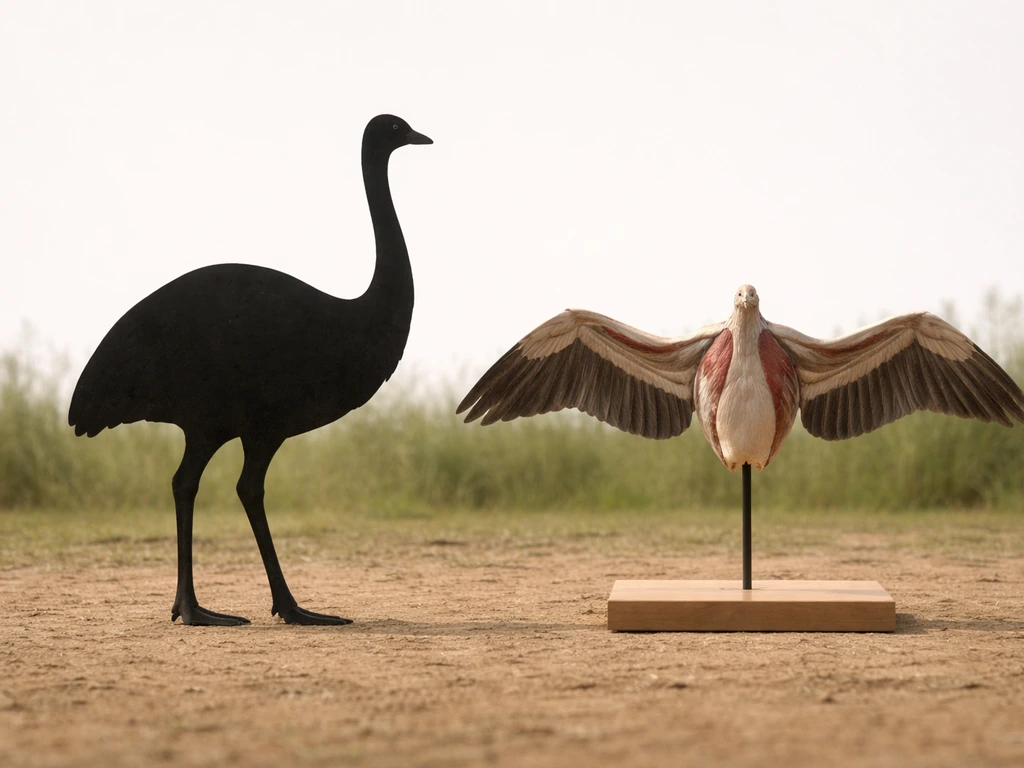
This is the core answer to why the ostrich blows past every flying bird in terms of mass. Once you drop the requirement to get airborne, the entire biomechanical and energetic ceiling lifts. Flightless birds (ratites) have a smooth, keel-free sternum, that flat breastbone lacks the ridge that anchors large flight muscles in flying birds. Without flight muscles eating up metabolic budget and body weight allocation, resources can go toward larger legs, bigger guts, and more mass overall.
Genomic and developmental research suggests that flightlessness evolved multiple independent times in ratites, meaning the ostrich, emu, cassowary, rhea, and kiwi likely each lost flight separately rather than inheriting it from one common flightless ancestor. That repeated pattern suggests there's a strong evolutionary pressure toward large body size once flight is abandoned, probably because ground-dwelling birds without flight need size and powerful legs for predator defense instead.
The comparison between flying and flightless birds makes the biomechanical constraint vivid. The Kori bustard struggles to get airborne at 18 kg and needs specific conditions to do so reliably. The ostrich sits at over 150 kg and runs at up to 70 km/h instead. That's not a coincidence, it's physics. If you want to understand why the heaviest flying birds cap out where they do, comparing them to the flightless giants is the clearest demonstration available.
How to interpret 'largest bird' claims correctly
A few things to watch for when you encounter size claims about birds. First, male vs. female size differences are enormous in some species, the Kori bustard female is roughly a third the mass of the male, and ostrich females are meaningfully smaller than males. Claims citing 'the largest specimen' are usually citing a large male. Second, record figures (like the 3.63 m albatross wingspan or the 18.14 kg Kori bustard) represent confirmed extremes, not typical individuals. You might be wondering about similar trivia for spiders, like how many eyes a goliath bird-eating spider has. Third, extinct bird records are in a completely different league, if a source starts talking about multi-meter prehistoric birds, it's comparing living and fossil species, which tells a different story about evolutionary possibility than about what's walking around today.
If you want reliable size data, Guinness World Records, Smithsonian, BirdLife International, and Britannica are the sources most consistently cited in the research literature. For body mass ranges across populations rather than single record specimens, academic databases like Animal Diversity Web give you a fuller picture of what a species actually weighs day to day.
Where to go from here
If this question pulled you into bird biology, there are some natural next steps worth exploring. The fattest bird question is closely related but distinct from the heaviest, fat reserves and mass aren't the same thing, and some birds fatten dramatically for migration. Wingspan comparisons get interesting when you start putting specific species side by side with concrete measurements rather than vague descriptions. And if you've run across the term 'goliath' in your search and aren't sure whether it means a spider or a bird, that's a genuine disambiguation problem worth sorting out, bird-eating spiders are a real and separate topic that occasionally collides with bird size searches. Bird-eating spiders also have their own habitat preferences, so if you're wondering where bird spiders live, it's worth looking at where they hunt and build webs.
The underlying biology connecting all these size questions is the same: bird anatomy is an elaborate set of tradeoffs between mass, structural strength, respiratory capacity, thermal management, and locomotion. Goliath-like bird-eaters would have to solve a very different problem too: whether they can trap prey efficiently enough to justify any web-building behavior do goliath bird-eaters make webs. Understanding where those tradeoffs break down is what explains both the giant albatross and the giant ostrich, and why no bird manages to be record-breaking in every category at once.
FAQ
If I want the biggest bird in the simplest way, should I use height, weight, or wingspan?
None of those alone gives the full answer. Height and mass can be misleading across sexes and lifestyles (for example ostrich males vs females), while wingspan can be large in lightweight soarers. If your goal is “how big” for comparison, pick one metric (mass for heaviness, wingspan for span) and state whether you mean maximum confirmed adults.
Are the record values for “largest” based on average birds or the single biggest individual?
Record numbers typically reflect an extreme, confirmed specimen. The article’s examples (like the heaviest confirmed Kori bustard and the maximum ostrich mass) are not typical day-to-day weights, so for “what size you’re likely to see,” you need a population range or an average from measured studies.
Do male and female birds have to be compared differently when talking about how big a bird can get?
Yes. Many large species show strong sexual dimorphism, meaning the top end often comes from males. If a claim does not specify sex, treat it as potentially apples-to-oranges, especially for species like bustards and ostriches where females can be much lighter.
Can a bird be record-sized for wingspan but not be among the heaviest birds?
Absolutely. Wingspan is more about aerodynamic design than total body mass. A bird can have long wings optimized for efficient soaring, yet still have a lower overall mass than a heavy, flightless species or a stockier flying bird.
Why do comparisons of “big” birds sometimes conflict between sources?
Common reasons are different measurement conventions (tip-to-tip wingspan versus other methods), different reference populations (a single specimen versus a typical adult range), and different record scopes (living birds versus all-time, including extinct species). Also, some sources round figures, so 3.63 m versus about 3.5 m can both appear depending on rounding.
If I’m asking “how big can a bird get,” do flightless birds change the answer?
They change the frame completely. Flightless birds can reach far higher mass limits because they do not need to support powered flight with a flight muscle and skeleton architecture. That is why ostriches dominate mass, even though the heaviest capable flyers are much lighter.
At what point does a bird stop being reliably able to fly if it gets heavier?
There is no single hard threshold, but the article points to a practical ceiling around the largest sustained flyers, with the Kori bustard around the extreme. Beyond that, the combined constraints (wing loading, takeoff demands, power needs, respiratory and skeletal scaling) tend to make reliable flight conditions harder to meet.
Do wingspan records require a special measurement technique to be fair?
Yes, wing measurements can vary if wings are not positioned consistently. The standard approach is measuring tip-to-tip across the longest primary feathers with the bird’s wings held in a comparable posture, so “casual” measurements or photos without consistent posture can distort comparisons.
Why do very large birds not eat differently just to become bigger?
Size is tied to energetic turnover limits. Birds must keep enough power coming in while also managing the weight and bulk costs of digestion. Very large flying birds typically rely on high-calorie, relatively energy-dense prey, so simply eating more volume is usually not enough to scale indefinitely.
How should I interpret claims about “prehistoric biggest birds” versus today’s birds?
Treat them as a different category. Extinct giants can have multi-meter wingspans or enormous masses, but those figures do not map cleanly onto the living-bird ceilings because body plans, ecosystems, and evolutionary constraints differ. If the question is about what is alive today, stick to living-bird record definitions.
What should I do if I come across “goliath” in search results for bird size?
First disambiguate whether the result is about a spider or a bird. “Goliath” is commonly used for the goliath bird-eating spider, which is not a bird and can produce very different “size” discussions. If you actually want birds, refine the query with terms like “wingspan” or “mass” plus a bird species name.
Next Articles
What Is the Fattest Bird? Mass and Fat Explained
Definitive answer to what is the fattest bird by mass vs fat percentage, with top candidates and how to verify.

Where Do Bird Spiders Live? Habitat and Range Guide
Learn where bird-eating tarantula-like spiders live, from forests to deserts, including habitat, shelter, and regions.

How Much Weight Can a Bird Carry Payload Limits Explained
Realistic payload ranges for different birds plus a method to estimate how much weight they can carry safely.