
Bird spiders live primarily in the tropical rainforests of northern South America, but depending on which species you actually mean, you might also find them in savanna grasslands, scrublands, or even semi-arid regions across South America, Africa, Asia, and Australia. The short answer is: warm, humid, and sheltered. The longer answer depends a lot on which "bird spider" you're picturing, because that term gets used pretty loosely.
Where Do Bird Spiders Live? Habitat and Range Guide

Marcus Chen
14 Apr 2026
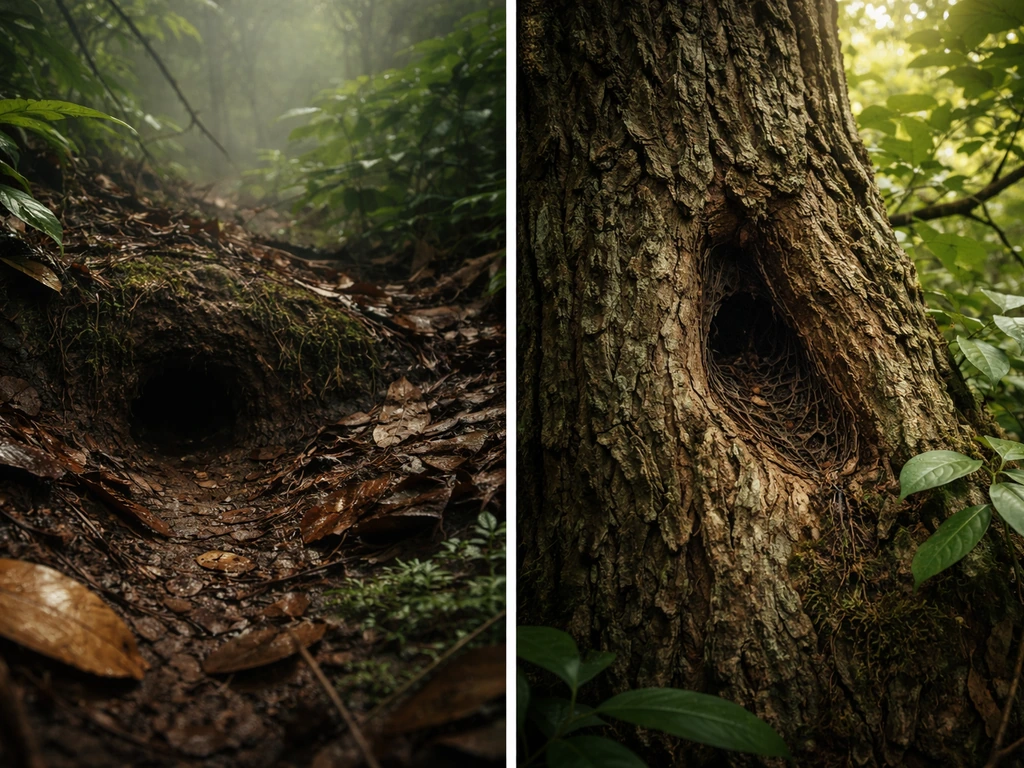
What people actually mean by "bird spider"
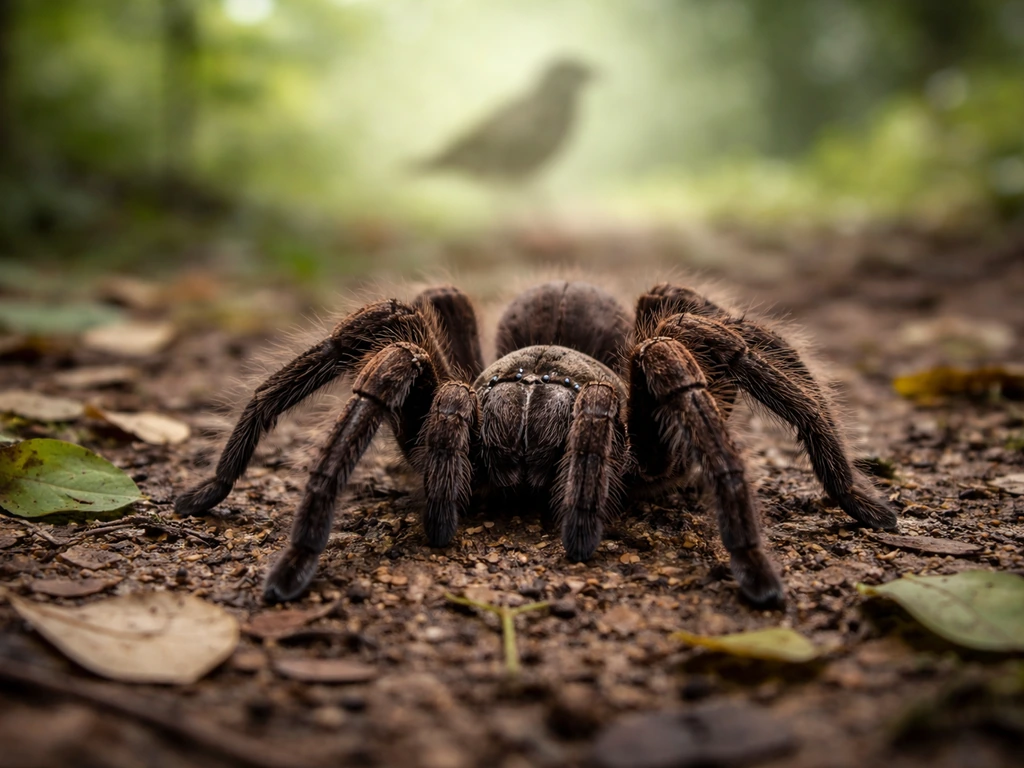
"Bird spider" is one of those common names that sounds specific but covers a pretty wide group. Most people use it to mean a large, tarantula-like predatory spider, the kind that looks like it could absolutely ruin your afternoon. In formal usage, it often points to the theraphosid family, which includes what most people would recognize as tarantulas. The most famous example is Theraphosa blondi, the Goliath birdeater, sometimes called the Goliath bird-eating spider.
The nickname has a surprisingly specific origin: an 18th-century engraving depicted a Theraphosa spider eating a hummingbird, and the image stuck so hard it became the common name for the whole group. In reality, these spiders don't regularly hunt birds as a diet staple, but they absolutely can, and that reputation has followed them ever since. The German word for this group, Vogelspinne, translates directly to "bird spider," and the genus name Avicularia is rooted in the same bird-related idea.
Related names like "bird-eating spider" or "birdeater" typically refer to large terrestrial theraphosids, especially Theraphosa species and Lasiodora parahybana (the Brazilian salmon pink bird-eater). If you've ever wondered do goliath bird-eaters make webs or hunt the way other spiders do, that question gets into some genuinely interesting behavioral territory too.
The main habitat types where bird spiders are found
Bird spiders occupy a wider range of habitats than most people expect. Here's how the main habitat types break down:
Tropical rainforest (the classic home)
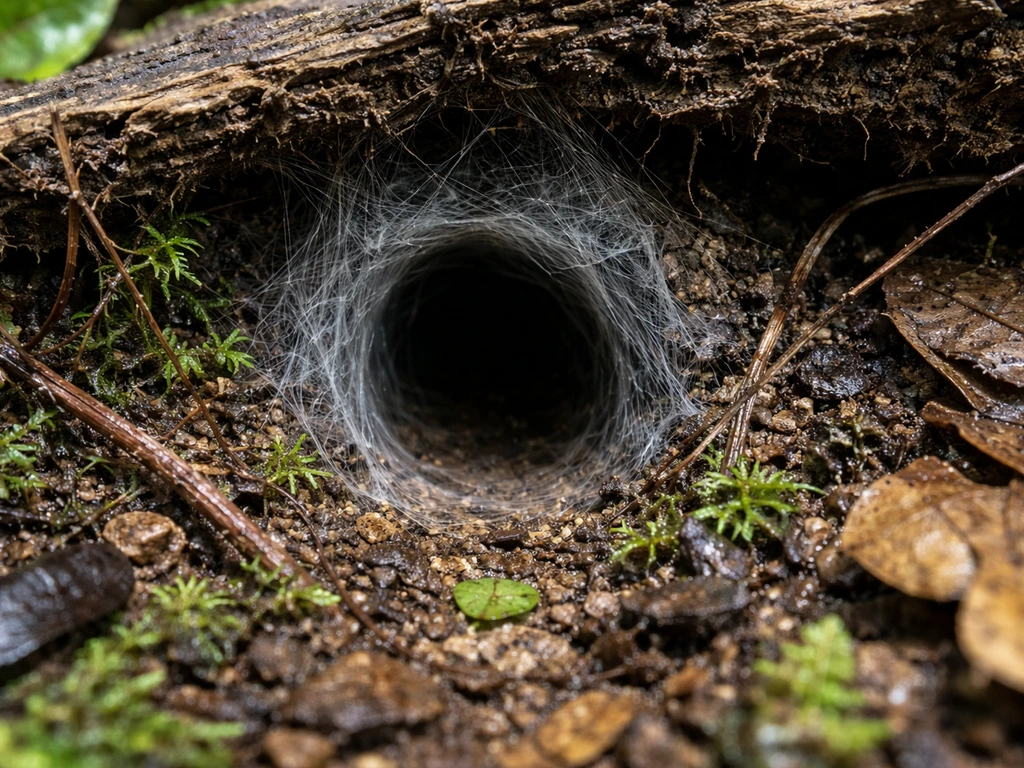
The Goliath birdeater lives in the rainforest regions of northern South America, including Venezuela, Brazil, Guyana, Suriname, and French Guiana. This is dense, humid tropical forest with high annual rainfall, thick leaf litter, and stable warm temperatures. This is probably the habitat most people picture when they hear "bird spider," and it's accurate for the most famous species. The forest floor here stays consistently warm and moist, which is exactly what these spiders need.
Burrows and ground cover
Most large bird-eating-type tarantulas are terrestrial burrowers. Instead of building a typical web, they live inside silk-lined burrows dug into soft soil, under logs, beneath rocks, or at the base of tree roots. The silk lining serves multiple purposes: it stabilizes the burrow walls, provides some humidity regulation, and acts as a sensory trip-wire to alert the spider to prey movement nearby. This is the opposite of what a lot of people imagine when they think of a spider's home.
Trees and elevated retreats
Not all bird spiders are ground-dwellers. Species in the genus Avicularia (the "pink-toe" tarantulas) are blank" rel="noopener noreferrer">arboreal, meaning they live up in trees, bromeliads, or dense vegetation in tropical forest environments. They build funnel-shaped silk retreats in branches or crevices rather than burrowing. If you've spotted a large spider up high in tropical vegetation, you may be looking at an arboreal species from this group.
Grasslands, savannas, and scrublands
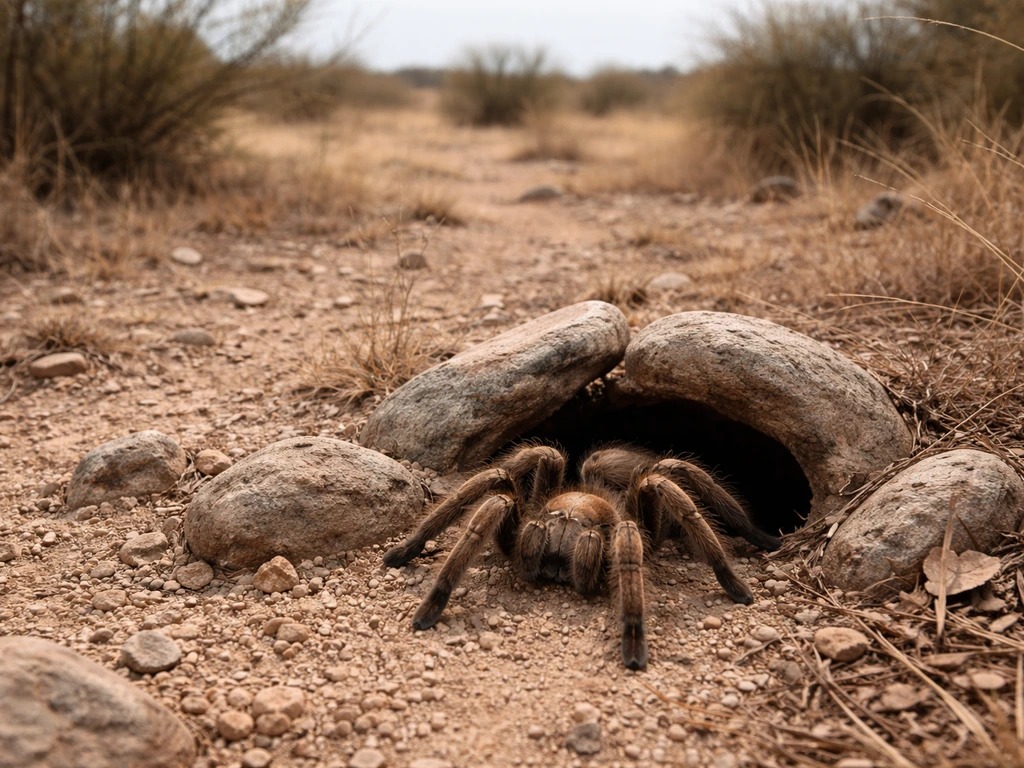
Several species in the broader theraphosid family live in drier, open environments: cerrado (Brazilian savanna), Chaco scrubland in Argentina and Paraguay, and open grassland habitat across parts of Africa. These spiders still burrow but tolerate lower humidity and wider temperature swings than their rainforest cousins. The Lasiodora parahybana, for instance, is found in northeastern Brazil, which includes both moist forest and drier transitional zones.
Desert-edge and semi-arid zones
Some theraphosids and related large spiders (such as species in the genus Pterinochilus in Africa, which are sometimes called baboon spiders or loosely grouped as bird spiders in local usage) live in quite arid conditions. They're expert burrowers, going deep enough underground to stay cool during the day and warm at night. Australia also has large theraphosid-like spiders (whistling or barking spiders, genus Selenocosmia) in dry woodland and semi-arid zones that sometimes get called bird spiders in local vernacular.
Alice Springs Desert Park also publicizes the barking spider, Selenocosmia stirlingi, as an Australian tarantula and notes its local natural history context Australia also has large theraphosid-like spiders (whistling or barking spiders, genus Selenocosmia) in dry woodland and semi-arid zones that sometimes get called bird spiders in local vernacular. .
Where in the world bird-eating spiders are found
The geographic range for large bird-eating-type spiders is essentially tropical and subtropical worldwide, with the heaviest concentration in South America. Here's a region-by-region breakdown:
| Region | Notable Species / Groups | Primary Habitat |
|---|---|---|
| Northern South America (Venezuela, Brazil, Guyana, Suriname) | Theraphosa blondi (Goliath birdeater) | Tropical rainforest, forest floor burrows |
| Brazil (northeast, cerrado) | Lasiodora parahybana (salmon pink birdeater) | Forest edge, savanna, transitional zones |
| Tropical South & Central America | Avicularia spp. (pink-toe tarantulas) | Arboreal, tropical forest canopy and mid-levels |
| Sub-Saharan Africa | Pterinochilus spp., Ceratogyrus spp. (baboon spiders) | Savanna, scrubland, semi-arid burrows |
| South and Southeast Asia | Poecilotheria spp. (ornamental tarantulas) | Tropical forest, tree hollows, arboreal retreats |
| Australia | Selenocosmia spp. (whistling/barking spiders) | Dry woodland, semi-arid regions, ground burrows |
South America is clearly the epicenter. If someone says "bird spider" without any other context, they almost certainly mean a South American theraphosid, most likely something in the Theraphosa or Lasiodora genera. Outside South America, the term gets used more loosely and often refers to locally large spider species that share similar size, behavior, and general appearance.
The microhabitat details: what conditions they actually need
Knowing the country isn't quite enough to picture where these spiders actually sit day-to-day. The microhabitat, meaning the specific small-scale environment they occupy, tells you a lot more.
- Humidity: Rainforest species like Theraphosa blondi prefer high ambient humidity, around 80-90%. They choose spots with moist substrate, near streams, in low-lying forest areas where moisture accumulates. Drier-habitat species tolerate much lower humidity but still seek the most sheltered microspots available.
- Temperature: Most prefer stable warmth, typically 24-30°C (75-86°F). They avoid temperature extremes by going deep into burrows during cold nights or hot midday periods. Elevation matters too: you won't find Theraphosa blondi at high altitude; they stay in lowland tropical zones.
- Cover and shelter: Thick leaf litter, fallen logs, root systems, and dense undergrowth are essential. These spiders need structure to anchor or conceal their burrow entrance. Open, exposed ground is a no-go.
- Proximity to prey: Their habitat range overlaps strongly with abundant insect, amphibian, and small vertebrate populations. Bird-eating spiders are opportunistic predators, and their location is always partly about food availability.
- Soil type: Soft, workable soil (not rocky hardpan) is preferred for burrowing species. Loamy forest floor or sandy savanna soil makes for easier digging.
Arboreal species like blank" rel="noopener noreferrer">Avicularia swap most of the above for vertical structure: they need trees, epiphytes (plants growing on other plants, like bromeliads), or dense vegetation where they can anchor a silk retreat and stay off the ground. They're also found in humid tropical environments but tend to be at higher elevation within the canopy.
How to figure out which "bird spider" you're actually asking about
This is where it gets practical. "Bird spider" is vague enough that before you can really nail down the habitat, you need to narrow down the species group. A few useful questions to ask yourself:
- Where are you, or where was the sighting? Location alone rules out most species. A spider in Queensland, Australia is almost certainly not Theraphosa blondi. A spider in the Venezuelan Amazon almost certainly is a South American theraphosid.
- Was it on the ground or up in vegetation? Ground level with a burrow nearby points to terrestrial species. Up in a tree or shrub in a tropical region points to arboreal species like Avicularia.
- How large was it? Body size is a huge clue. Theraphosa blondi can reach a body length of around 13 cm (about 5 inches) with a leg span up to 30 cm (nearly 12 inches). A bird-eating spider size comparison can help you calibrate what you're seeing against known species.
- What did it look like? Coloration, hair type (urticating hairs or not), and body shape all help. Theraphosa blondi is dark brown with reddish-brown hair. Avicularia species often have striking patterning and pink or colorful toe tips.
- Is it a captive or wild observation? If you're seeing it in a pet shop or someone's collection, the species is usually labeled and you can look it up directly.
If the spider you're trying to identify is genuinely large, it's worth understanding the broader size range of these animals. Knowing how big goliath bird eaters can get gives you a concrete benchmark: when a spider approaches or exceeds those dimensions, you're almost certainly looking at a large theraphosid rather than a common house spider or orb-weaver.
It also helps to know basic anatomy. How many eyes a goliath bird-eating spider has is a good example of a distinguishing feature: theraphosids have eight eyes arranged in a compact cluster near the front of the carapace, which looks very different from the eye arrangements of other spider families.
Practical next steps: locating and verifying sightings responsibly
If you're trying to find or verify a bird spider sighting, here's how to do it well without causing harm to the animal or yourself.
- Use iNaturalist or a regional field guide: For South American species, iNaturalist has thousands of verified Theraphosa and Avicularia observations with GPS coordinates, habitat notes, and community ID. This is your best free tool for matching your sighting to a known range.
- Contact local naturalist or arachnology groups: University biology departments in Brazil, Venezuela, and Colombia often have public-facing contacts or social media pages where you can share photos for ID. Don't underestimate local Facebook groups for naturalists in tropical regions, they're surprisingly active and accurate.
- Never handle an unknown large spider: Theraphosids have urticating hairs (barbed hairs they flick as a defense mechanism) that cause significant skin and eye irritation. Some have medically relevant bites. Observe without touching.
- Photograph from a safe distance: A clear photo of the dorsal side, the eye arrangement, and any visible color pattern is usually enough for an expert to narrow down the genus. Don't disturb or move the animal to get a better shot.
- Check local protected species lists: In some countries (Brazil, for example), collecting or disturbing certain large tarantula species is illegal. Know the regulations before you do anything beyond looking.
- For burrow sightings, mark the location and return: Bird spiders are often nocturnal or crepuscular (active around dusk). If you find a likely burrow (silk around the entrance is a giveaway), you can return at night with a red-light flashlight (red light is less disruptive to wildlife) for a better look.
One thing worth keeping in mind: the birds that share habitat with these spiders are well worth understanding in their own right. The same tropical forests that host Theraphosa blondi are full of small birds in tight ecological relationships with their environment. If you've ever wondered how big a finch bird is compared to a spider this size, the comparison is a bit unsettling. Small passerines in the Goliath's range really are within prey range for a full-grown specimen.
The same forests also host some remarkably large birds. Knowing how big birds can get as a group puts the bird-eating part of the name in context: even the Goliath birdeater can only realistically prey on small or juvenile birds, not anything approaching the upper end of avian size. And if you're curious about the most mass-heavy birds by comparison, looking at what the fattest bird is makes the spider's prey range feel even more constrained.
The bottom line on bird spider habitat
If you take one thing away: the core bird spider, Theraphosa blondi and its close relatives, lives in humid tropical rainforest in northern South America, inside silk-lined burrows on the forest floor. Beyond that flagship species, "bird spider" stretches across multiple continents and habitat types, from arboreal tropical forest to African savanna to Australian dry woodland. The habitat clues, humidity, ground versus tree level, soil type, and geographic location, are your best tools for identifying which species you're dealing with. Once you know that, the rest of the ecology falls into place quickly.
FAQ
Do bird spiders live in houses or buildings, or are they only outdoors?
Most bird spiders stay outdoors because their ideal conditions are tied to specific microhabitats (leaf litter, burrows, tree retreats, or dense vegetation). If you find one indoors, it is usually a wanderer, often coming in at night, or a juvenile may disperse after molting. Check door gaps, window screens, and outdoor clutter near entrances.
If I live in a region where bird spiders exist, what habitat clues should I look for on the ground?
For terrestrial types, look for silk-lined burrow openings, silk threads anchored to nearby rocks, logs, or root bases, and stable warm, moist leaf-litter zones. Burrows are commonly dug into soft soil and may have a subtle silk “trip-line” pattern rather than a visible web trap.
Can bird spiders survive in cold climates, or do they need tropical temperatures year-round?
They generally do best in warm conditions, but some burrowing species can tolerate wider swings by going deeper underground, where temperature is more stable. In places with cold winters, they are typically absent outdoors unless there is a warm protected microclimate (like heated structures or very sheltered slopes).
Are “bird-eating spiders” the same thing as bird spiders, and does that change where they live?
The labels overlap but are not identical. “Bird-eating spider” often refers to large terrestrial theraphosids (commonly Theraphosa or Lasiodora), while “bird spider” can be used loosely for similar-looking or similarly sized tarantula-like spiders in other regions. Habitat shifts accordingly, with terrestrial burrowers living on the forest floor and arboreal species living in trees or epiphyte-rich areas.
Do arboreal bird spiders ever come to the ground, and where would I find them then?
Yes, especially during dispersal, mating, or after molting. When they are on the ground, you are most likely to find them near trunks, bromeliads, dense vegetation, or climbing routes they use to reach their silk retreat. Long time-on-ground sightings are less common for arboreal species.
What’s the best way to tell if a sighting is an arboreal species versus a ground-burrowing one?
Location and structure matter. Arboreal species are often seen higher up in vegetation and have funnel-shaped silk retreats in branches or crevices. Ground-burrowers are more associated with silk-lined burrows near logs, rocks, or root bases, and you may detect silk anchoring points near the entrance.
Can “bird spiders” be misidentified as other large spiders in the same area?
Yes. People commonly confuse tarantula-like theraphosids with other large spiders, especially if only the body size or color stands out. Field IDs improve when you consider specific cues like eye arrangement (theraphosids have eight eyes in a compact cluster near the front) and whether the spider shows burrow behavior or a silk retreat strategy.
Are bird spiders active at night or during the day, and does that affect where you’ll spot them?
Many theraphosids are more noticeable at night because they hunt and move more under lower light. If you are trying to locate habitat, do not rely only on daytime searches, especially for burrowers that spend much of the day staying deep in silk-lined retreats.
Do bird spiders build webs, and where would you see that if they do?
They often do not resemble orb-weavers with capture webs. Terrestrial species typically rely on silk-lined burrows rather than an open web, while arboreal species make silk retreats in branches or crevices. If you see a spider with an “actual web” structure, consider that the animal may not be a true theraphosid or may be using a different silk system than people expect.
If I’m trying to confirm the species, is country alone enough to predict where it lives day-to-day?
No, country gives only a rough starting point. Microhabitat is the key, such as forest-floor humidity and leaf litter for rainforest burrowers, canopy and epiphyte presence for arboreal species, or soil and moisture tolerance for savanna and scrubland burrowers. Two places in the same country can still have very different habitat suitability.
Next Articles
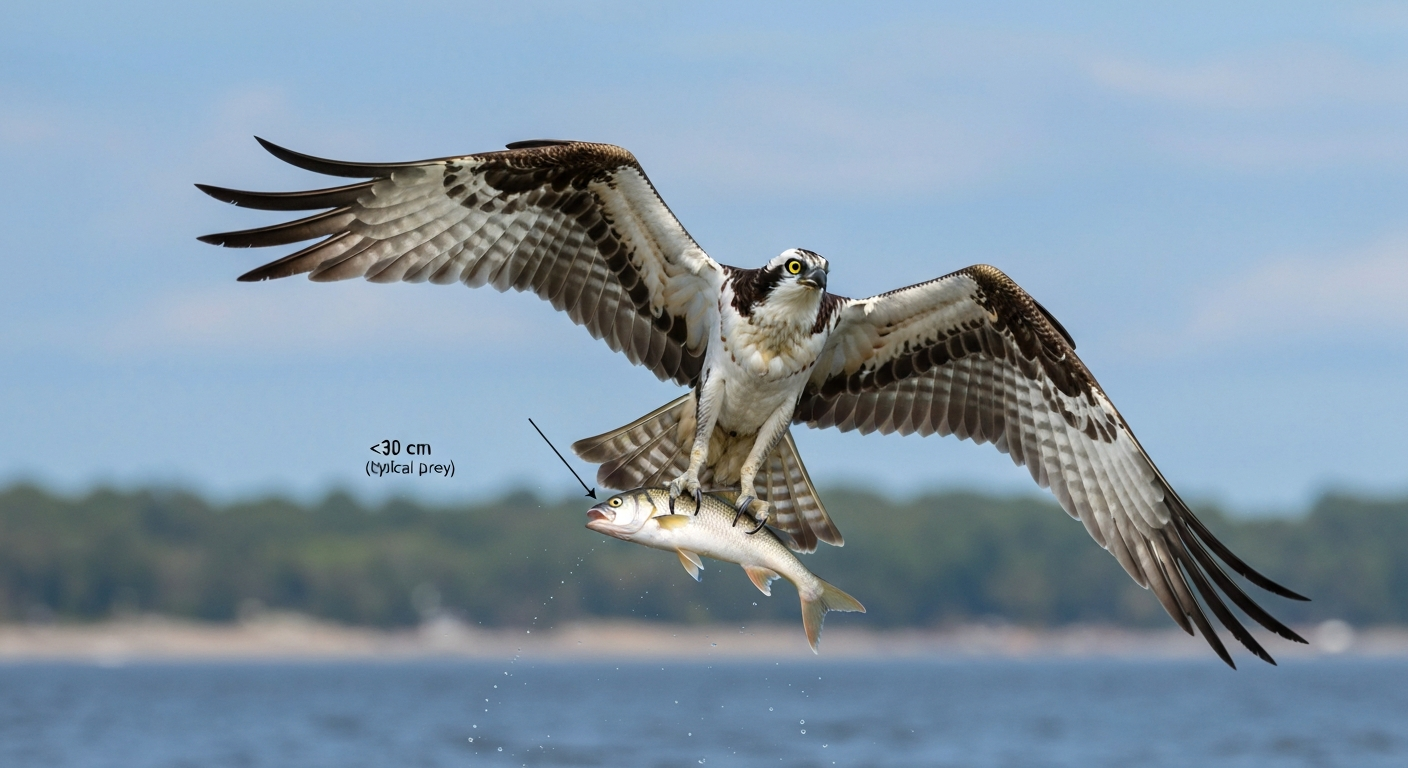
How Much Weight Can an Osprey Bird Carry: Numbers & Limits
How much weight can an osprey carry: typical prey 0.5–2 kg (≈30–100% body mass); anatomy, flight limits and evidence.
How Much Weight Can a Bird Carry Payload Limits Explained
Realistic payload ranges for different birds plus a method to estimate how much weight they can carry safely.
What Bird Has the Highest Heart Rate? Fastest Species Explained
Explains which bird has the highest heart rate, how it’s measured, key contenders, and how to compare readings fairly.