Most birds have around 80 chromosomes in their body cells, written as a diploid number of 2n = 80. That said, the exact number varies by species, and the range across documented birds runs roughly from 2n = 48 up to 2n = 112. If you want a single number to work with, 80 is your best starting point for a typical bird, but keep reading if you have a specific species in mind.
How Many Chromosomes Does a Bird Have? Key Numbers

Marcus Chen
13 May 2026
The typical bird chromosome count

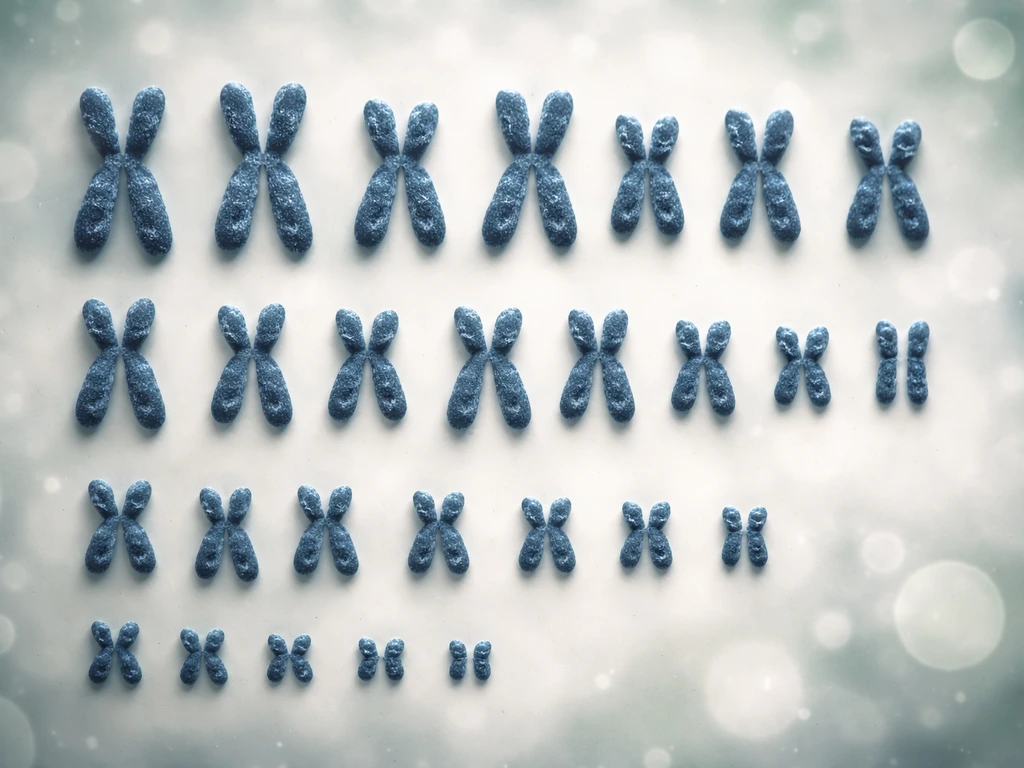
Among the bird species whose chromosomes have actually been studied and documented (roughly 12% of all known species), the vast majority have a diploid chromosome number between 76 and 82. BMC research on Common Swift and Eurasian Hobby karyotypes also describes bird karyotypes as generally conservative, with 2n about 78, 82 in most species and fundamental number (FN) typically about 80, 90 [the vast majority have a diploid chromosome number between 76 and 82](https://avianres. biomedcentral. com/articles/10.
1186/s40657-018-0096-7). The chicken (Gallus gallus) is the most-studied bird genetically, and it clocks in at 2n = 78, which puts it squarely in the typical range. The mallard duck sits around the same number. Scientists describe this as a "conserved" karyotype, meaning most birds have stuck close to the ancestral blueprint over millions of years of evolution.
The Bird Chromosome Database (BCD), which compiles cytogenetic data across avian species, currently holds chromosome data for over 1,095 bird species. Its entries consistently reflect that modal avian diploid number hovering near 80. So when someone asks generically "how many chromosomes does a bird have," 80 is the scientifically grounded answer, with the caveat that it is a typical value, not a universal one.
Why the number differs between species
Chromosomes can change over evolutionary time through rearrangements: fusions (where two chromosomes merge into one), fissions (where one splits into two), and translocations (where segments swap between chromosomes). These events shift the total chromosome count without necessarily changing the total amount of genetic material carried. In birds, this process is called chromosome reshuffling, and it explains why a monk parakeet (Myiopsitta monachus) ends up with 2n = 48 while a toucan (Ramphastos tucanus) reaches 2n = 112. Both are perfectly healthy, normal birds. Their chromosome counts just reflect different evolutionary histories.
Parrots, in particular, show some of the most dramatic karyotype diversity among birds, with recurrent chromosome rearrangements driving big swings in diploid number. By contrast, many songbirds and raptors stay very close to the ancestral near-80 layout. Think of it like a recipe that most chefs follow closely, but some bakers have combined or split steps over generations until the dish looks different on paper even though the ingredients are largely the same.
Diploid vs. haploid: which number are people usually asking about
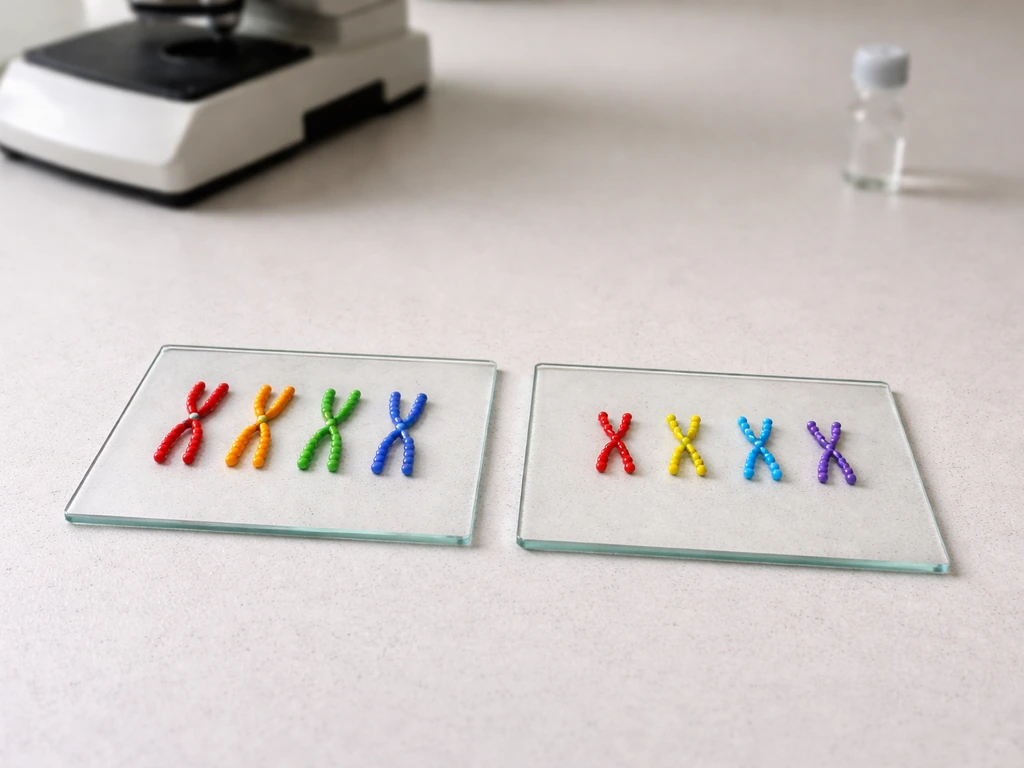
This is the terminology that trips people up most often, so it is worth a quick clarification. The diploid number (written as 2n) is the chromosome count in normal body cells, sometimes called somatic cells. Every regular cell in a bird's body, from a liver cell to a feather follicle cell, carries the full diploid set.
Small birds still follow the same diploid chromosome basics in their body cells, so the exact count depends on the species rather than just their size feather follicle cell. If you are asking about plumage instead, bird feathers vary widely by species and age, but most birds have thousands of feathers in total feather follicle cell.
The haploid number (written as n) is the count in sex cells (sperm or eggs), which carry only half the chromosomes so that fertilization restores the full set. So a chicken with 2n = 78 has a haploid number of n = 39. When people ask how many chromosomes a bird has, they almost always mean the diploid number.
When people ask how many wings does a bird have, they often want an easy factual answer like the diploid chromosome number explained above.
| Term | What it means | Example (Chicken) |
|---|---|---|
| Diploid (2n) | Full chromosome set in body cells | 2n = 78 |
| Haploid (n) | Half-set in egg or sperm cells | n = 39 |
| Chromosome pairs | The matched pairs within the diploid set | 39 pairs |
A bird's chromosomes also come in two structural categories: macrochromosomes (large, easily visible under a microscope) and microchromosomes (small, numerous, and tightly packed). Most of the diploid count in birds is made up of microchromosomes, which is actually unusual compared to mammals. Humans, for instance, have only large chromosomes and a diploid number of 46. Birds pack far more chromosomes into their cells, most of them tiny.
Bird sex chromosomes: the Z and W system
Birds don't use the X and Y system that mammals do. Instead, female birds are ZW (they have one Z and one W chromosome) and male birds are ZZ (two Z chromosomes). This is called female heterogamety, meaning it's the females who carry the mismatched sex chromosome pair, not the males.
The W chromosome in most bird species is much smaller than the Z and carries far fewer genes, with only a small region at the tip (called the pseudoautosomal region, or PAR) where the two chromosomes still exchange genetic material during cell division. In sex chromosome evolution, the W/Y-like chromosome is generally gene-poor and non-recombining except for the pseudoautosomal region (PAR), while the homologous Z/X-like chromosome shows biased inheritance in one sex.
In chickens, this Z-W divergence is estimated to have begun over 100 million years ago.
How to find the exact chromosome count for your specific bird
If you have a specific species in mind rather than birds in general, the most reliable place to look is the Bird Chromosome Database (BCD). It is a free, open resource that compiles cytogenetic data, including documented diploid chromosome numbers, for over a thousand bird species. You can search by species name and pull up the reported 2n value along with the source study.
For well-studied species like the chicken, you can also go to NCBI's genome pages or the Ensembl genome browser, which include full chromosome assembly details. These are more technically detailed resources, but useful if you need more than just the chromosome count. For most birds, though, the BCD is the fastest, most direct route.
- Search the Bird Chromosome Database (BCD) by species name for a documented diploid (2n) number.
- Cross-check with NCBI's genome assembly pages for major model species like chicken or zebra finch.
- Use Ensembl if you need chromosome-level detail like gene locations or Z/W assignments.
- If your species isn't in any database, look in peer-reviewed cytogenetics literature using a search like "[species name] karyotype" or "[species name] diploid chromosome number."
One honest caveat: because only about 12% of bird species have documented karyotypes, there is a real chance your specific bird hasn't been studied yet. In that case, the best fallback is to look at the known chromosome count for a closely related species in the same genus or family. Given how conserved avian karyotypes are, the number is likely to be close.
What chromosomes actually do in birds
Chromosomes are the structures that carry a bird's DNA, organized and packaged so it can be copied and passed on during cell division. Every chromosome is essentially a long strand of DNA wound tightly around proteins. The genes on those chromosomes control everything from feather color to organ development to immune responses. Feather types can vary by species and include differences in contour feathers, flight feathers, and down feathers types of feathers.
In birds, the genes involved in flight muscle development, feather structure, and the circulatory adaptations that support sustained flight are all sitting on those chromosomes. Much like how a bird's skeletal structure is fine-tuned for function, its chromosome architecture is also organized to support efficient cell division and gene regulation.
The microchromosomes in birds, which look like genetic noise under a microscope compared to the big macrochromosomes, actually tend to be gene-rich. That dense packing of useful genes in small chromosomes may be one reason birds have evolved and diversified so rapidly as a group. Scientists are still working out exactly why birds retained so many small chromosomes when most other vertebrates consolidated theirs over evolutionary time.
Species examples at a glance

| Bird | Diploid number (2n) | Notes |
|---|---|---|
| Chicken (Gallus gallus) | 78 | Most-studied avian genome; common reference species |
| Mallard duck | ~80 | Typical Anseriformes range |
| Monk parakeet (Myiopsitta monachus) | 48 | Unusually low for a bird; result of chromosome fusions |
| Toucan (Ramphastos tucanus) | 112 | Among the highest documented in birds |
| Vanellus chilensis (lapwing) | 78 | Typical passerine-range karyotype |
| Barbary partridge (Alectoris barbara) | 78 | Typical for Galliformes |
Bird biology is full of these kinds of structural surprises. Just as the number of bones in a bird's skeleton varies between species depending on fusion patterns and evolutionary pressures, chromosome counts follow their own pattern of conserved-but-not-identical variation. The underlying biology is consistent; the details shift species by species. Black Bird season 1 has 6 episodes in total.
FAQ
If a bird has about 80 chromosomes, is that the same as the number in every body cell?
Yes, for the diploid set. Somatic (body) cells in the same individual all carry the full diploid number 2n, while only sperm or eggs use the reduced haploid set (n) so fertilization restores 2n.
How many chromosomes would a bird have in its eggs or sperm?
Use half of the diploid number. For example, if a species has 2n = 80, its gametes typically have n = 40, since the haploid set is designed to combine back into the diploid set after fertilization.
Why do some birds show very different chromosome counts, like 2n = 48 or 2n = 112?
Those differences usually come from evolutionary rearrangements that change chromosome number, such as fusions and fissions, rather than from gaining or losing large amounts of DNA. The total genetic content can remain broadly comparable even when the count changes a lot.
Does a lower chromosome number mean the bird is “less complex” or has fewer genes?
Not necessarily. Chromosome number alone does not determine gene count or organismal complexity. Birds often have many microchromosomes that are gene-rich, so a species can have fewer chromosomes but still carry a lot of genetic information.
Are chromosome numbers the same in males and females of birds?
Often yes for the diploid total, but they can differ in the sex-chromosome composition. Birds use ZW females and ZZ males, so the X/Y-style mismatch is different, yet both sexes still follow species-specific diploid chromosome totals.
What is the most common mistake when people ask “how many chromosomes does a bird have”?
Most mix up diploid (2n, body cells) with haploid (n, gametes). If you see a number quoted without context, check whether it is explicitly a diploid karyotype (2n) or a sex-cell count (n).
Can I estimate a bird’s chromosome number from its size or species category (songbird vs raptor)?
Size is not a reliable predictor. The best pattern is phylogenetic and karyotype history, meaning nearby species in the same genus or family tend to have more similar chromosome counts than distantly related birds.
If my bird species is not listed in published studies, what should I do next?
Start with a closely related species in the same genus or family, then treat the estimate as tentative. Since only a minority of species have documented karyotypes, even “close relatives” can differ, but the avian trend toward conserved karyotypes makes the estimate useful as a first pass.
Where should I look if I need the chromosome assembly, not just the number?
If you need the detailed chromosome structures, gene order, or assembled sequences, genome resources like Ensembl or NCBI genome pages are more appropriate than databases that only report karyotype counts.
Do birds ever change chromosome numbers within a species, or is it fixed?
For a given species, the diploid chromosome number is typically consistent across individuals, but rare exceptions can occur depending on how different populations were sampled or how the karyotype was measured. If you see conflicting reports, check whether they refer to the same population or use the same cytogenetic methods.
Next Articles
How Many Feathers Does a Bird Have A Practical Guide
Explore realistic feather count ranges by species, wing parts breakdown, and how molt changes totals, with estimation st
How Many Bones Does a Bird Have Plus Wing and Leg Counts
See how many bones a bird has total, plus bone counts for wings and legs, and why species differ.
How Much Weight Can a Bird Carry Payload Limits Explained
Realistic payload ranges for different birds plus a method to estimate how much weight they can carry safely.