Most birds have somewhere between 120 and 200 bones, with the commonly cited ballpark being around 175 to 200 for many familiar species. You might also be wondering how many chromosomes a bird has, which is a different kind of count than the number of bones in its skeleton how many chromosomes does a bird have. But here's the honest truth: there is no single correct number that applies to every bird, and even counting the bones in one individual bird depends on how you handle fused skeletal elements. The skeleton of a pigeon looks very different from that of an ostrich, and both look different from a hummingbird. Once you understand why the count varies, the range starts to make a lot more sense.
How Many Bones Does a Bird Have Plus Wing and Leg Counts

Marcus Chen
30 Apr 2026
Why bird bone counts vary by species and individual
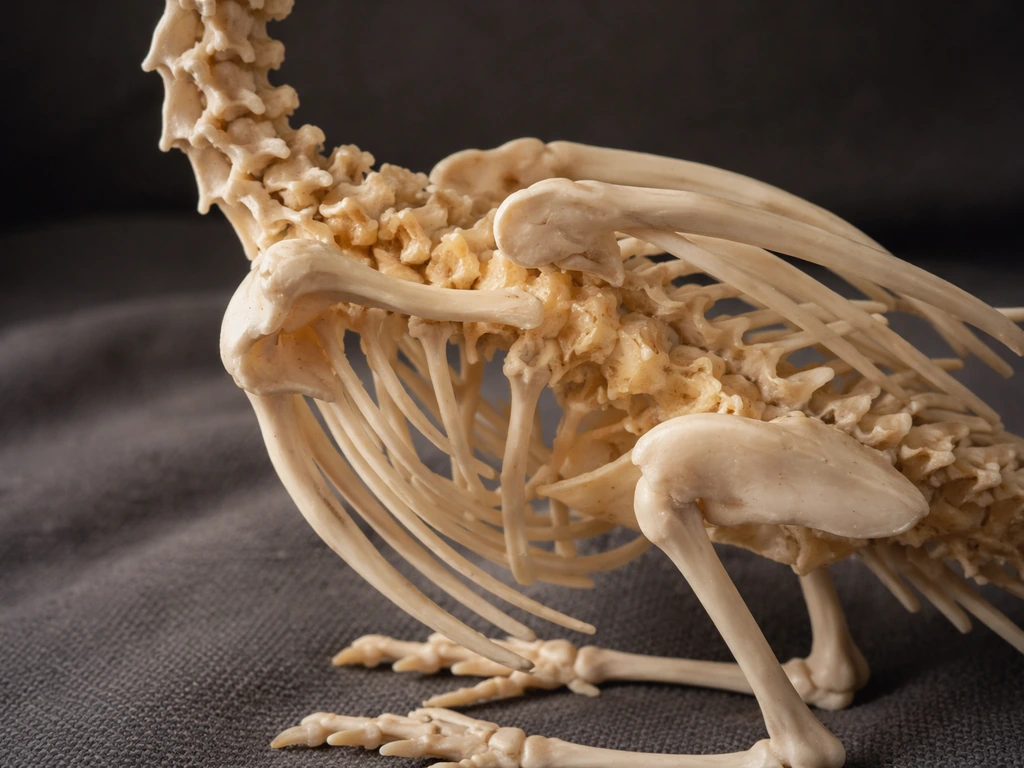
The biggest reason bird bone counts are slippery is fusion. Throughout a bird's development, what start as separate cartilage and bone elements gradually fuse into single rigid units. This is actually one of the things that makes birds so well-suited for flight. A more rigid skeleton transmits force efficiently and reduces the weight of extra joints and the muscles needed to control them. But it creates a headache when you're trying to count bones, because different researchers and anatomists may decide to count a fused complex as one bone or as several.
Take the synsacrum, for example. That's the large bony structure in a bird's lower back and pelvis region, and it's made from several vertebrae that have fused together along with the pelvic bones. Count it as one? Or count each original vertebra? Depending on your answer, the total for the whole skeleton shifts noticeably. The same question applies to the tarsometatarsus (the long bone in the lower leg), the blank" rel="noopener noreferrer">carpometacarpus (the fused hand bones in the wing), and the tibiotarsus (the upper long bone of the lower leg). All of these are composite structures, multiple original bones that have merged into one.
Species differences add another layer. Songbirds, for instance, often develop a structure called the notarium, which is a set of fused thoracic (chest) vertebrae that sits separately from the synsacrum. Not all bird species develop a notarium, and even among those that do, the number of vertebrae fused into it varies. That one variable alone can shift a species' bone total by several counts. So when you see a source confidently stating that birds have exactly 175 bones, it's worth asking: which bird, and how are they counting the fused parts?
What's inside a bird's wing
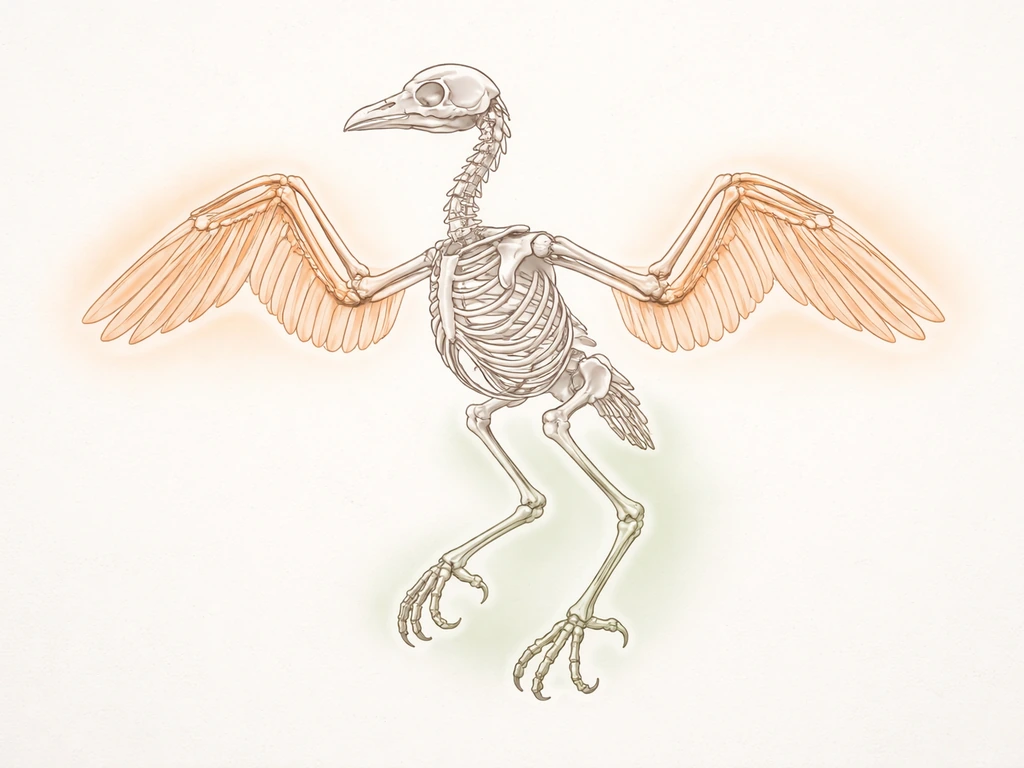
A bird's wing is anatomically equivalent to a human arm, which surprised me the first time I really thought about it. The same basic bone layout is there: a humerus (upper arm bone), a radius and ulna (forearm), and then the hand and finger bones. But in birds, the hand and finger region has been heavily modified and fused. Most of the wrist and hand bones have merged into a single structure called the carpometacarpus, and the number of finger bones is drastically reduced compared to your hand. Avian deflighting technique references also note that the wing skeleton includes the carpometacarpus and digits as key components.
In practical terms, a bird wing typically contains around 10 to 15 distinct countable bones depending on the species and counting method. Here's a rough breakdown of the major elements:
- Humerus: 1 bone, the main upper arm connecting the wing to the shoulder
- Radius and ulna: 2 bones running side by side in the forearm section, the ulna being the larger and the attachment point for the secondary flight feathers
- Carpometacarpus: 1 fused composite bone forming the 'hand' of the wing
- Alula bones: 2 to 3 small bones forming the little 'thumb' at the front edge of the wing, which helps control airflow at low speeds
- Remaining digit bones: 2 to 4 small phalanges depending on species
This is why the comparison 'bird wing equals human arm' is both accurate and misleading at the same time. The basic blueprint is homologous (shared evolutionary origin), but a bird's hand has been so dramatically restructured that you would never recognize it as a hand just by looking at it. The feathers, particularly the primary flight feathers attached to the carpometacarpus and digit bones, do the heavy lifting that fingers can't. If you're wondering how many types of feathers a bird has, the main categories differ by their job, like insulation, display, or flight control how many types of feathers does a bird have.
What's inside a bird's leg
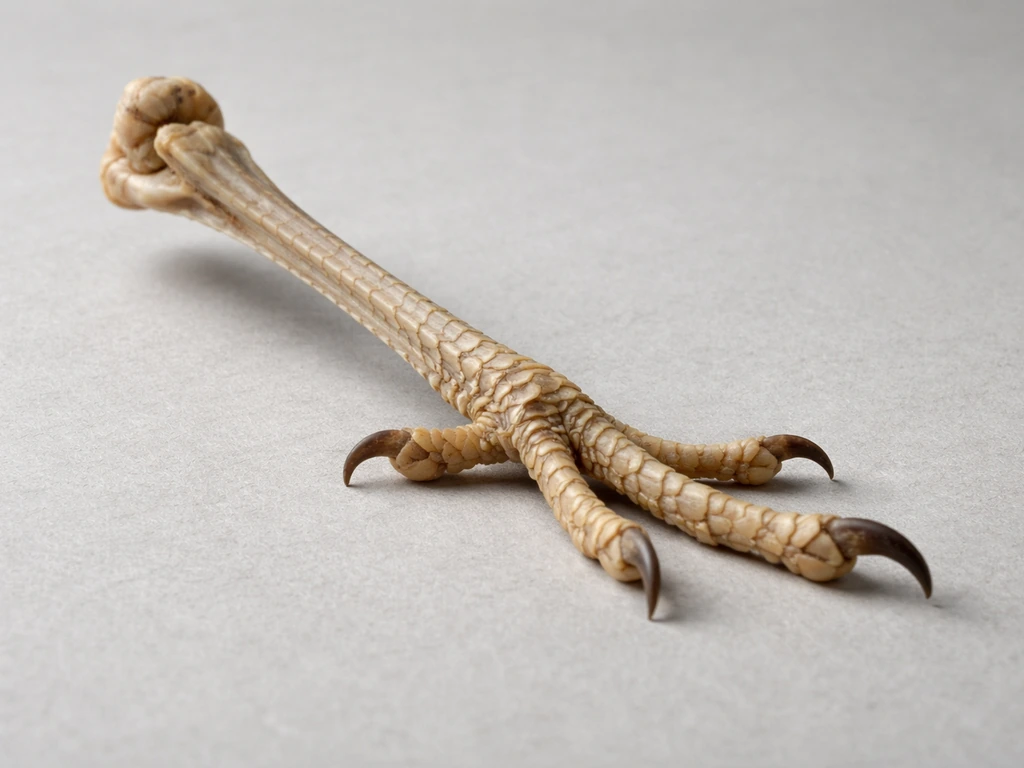
The bird leg is where things get really interesting, partly because what we casually call a bird's 'leg' doesn't line up with what anatomists call a bird's leg. That long backward-bending joint you see in the middle of a chicken's leg? That's actually the ankle, not the knee. The actual knee is tucked up under the feathers against the body, mostly hidden. Once you know that, the whole structure clicks into place.
A typical bird leg has the following main bones:
- Femur: 1 bone, the thigh bone sitting high and close to the body, rarely visible externally
- Tibiotarsus: 1 fused composite bone formed from the tibia and upper tarsal bones, this is the long visible 'lower leg' in most birds
- Fibula: a small, often reduced bone running alongside the tibiotarsus
- Tarsometatarsus: 1 fused composite bone, the long section between the ankle and toes, often mistaken for the lower leg
- Toe bones (phalanges): most birds have 4 toes, and each toe contains 2 to 5 phalanges following a consistent formula, giving roughly 14 to 16 total toe bones depending on species
Add it up and a typical bird leg contains somewhere in the range of 18 to 25 bones, again depending on species and whether you're counting each phalanx separately. Ostriches have only 2 toes per foot, which drops their count considerably. A chicken, which is often used as the standard teaching model in avian anatomy, has 4 toes on each foot and a full complement of phalanges. The specific phalangeal formula for a chicken foot is 2-3-4-5 (from the innermost to outermost toe), giving 14 phalanges per foot.
How to estimate the bone count for a specific bird
If you're curious about a particular species, the most reliable approach is to look up a species-specific osteology reference or a vetted museum skeleton description rather than a generic 'birds have X bones' article. For most domestic and common species, veterinary anatomy textbooks are your best bet. For wild species, natural history museums often publish skeletal descriptions, and university osteology courses frequently use annotated specimen lists that break down element counts.
For a quick practical estimate, the chicken model works well as a baseline for medium-sized birds. Chickens are extremely well-documented anatomically (for obvious agricultural reasons), and their skeletal element count comes in around 120 to 130 bones depending on how fused structures are tallied. From there, you can reason roughly as follows:
| Bird Type | Estimated Bone Count Range | Notable Skeletal Features |
|---|---|---|
| Small songbirds (sparrows, finches) | 120 to 150 | Notarium often present; lightweight skull; reduced hand bones |
| Medium birds (pigeons, chickens, crows) | 120 to 175 | Well-studied baseline; balanced fusion; 4-toed foot common |
| Large birds of prey (eagles, owls) | 150 to 200+ | Larger overall skeleton; more robust pelvic region |
| Flightless birds (ostriches, emus) | Varies significantly | Reduced wing elements; altered foot structure (2 to 3 toes) |
| Long-necked birds (herons, flamingos) | 175 to 200+ | More cervical vertebrae than most birds; adds to total |
One thing worth noting: birds with longer necks genuinely have more vertebrae. Swans, for example, can have up to 25 cervical (neck) vertebrae, compared to around 14 in a chicken. That difference alone adds over 10 bones to the total before you count anything else. So neck length is one of the fastest ways to predict whether a species will land at the lower or upper end of the range.
Bird bones vs human bones: clearing up the confusion
The most common misconception I ran into when first reading about this is that bird skeletons must be simpler than human skeletons because birds are smaller or seem 'lighter.' That's not quite right. Humans have around 206 bones as adults (we start with over 270 and many fuse during childhood). Birds have fewer total bones than infant humans but often have comparable or higher counts to adult humans, and their skeletons are in some ways more complex because of how precisely the fusion patterns are tuned for flight.
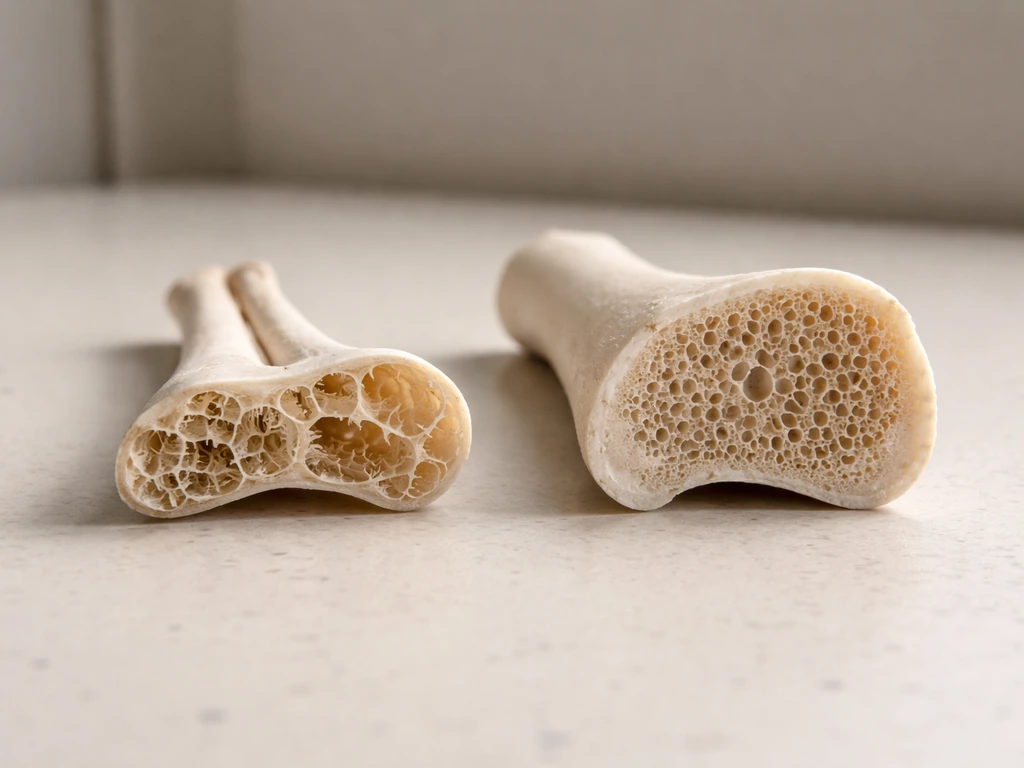
Another misconception is that hollow bones means fragile bones. Bird bones are hollow in the sense that many contain air sacs connected to the respiratory system, but the internal structure has a lattice of bony struts (called trabeculae) that maintain structural strength. A bird's humerus is actually quite tough relative to its weight, which it needs to be to handle the mechanical stress of flapping flight.
People also tend to assume the wing-to-arm comparison maps cleanly. It does in evolutionary terms, but functionally a bird wing bone does not move like a human arm bone. A bird's elbow and wrist are largely locked into position during the wingbeat cycle, with most of the angular movement happening at the shoulder. The carpometacarpus barely moves independently at all. So while the bones are homologous to your hand bones, calling them 'finger bones' and imagining them wiggling around the way yours do is a bit misleading.
If you find the skeletal side of avian biology this interesting, it connects naturally to other structural questions about birds: how many feathers cover that skeleton, how many types of feathers serve different functions, and how many wings (and what exactly counts as a wing) the average bird uses for flight. If you're wondering how many wings a bird has, the answer depends on how you define a “wing” in anatomical terms, since the wing includes the fused hand region and the flight feathers how many wings does a bird have. If you are watching Black Bird and want to plan your weekend, you might also be wondering how many episodes in Black Bird season 1 there are. For a bird, the feather count also varies widely by species, age, and how feathers are counted across the body how many feathers cover that skeleton. The anatomy all fits together once you start seeing the skeleton as the framework everything else hangs on.
FAQ
Why do different sources give different “total bone” numbers for the same bird?
Counting results depend on whether you treat fused elements as one bone or multiple original units. If you want a comparable number, look for the same counting convention used in the source (for example, whether a fused vertebral complex like the synsacrum is counted as one element or as its vertebrae components).
Does a bird have more bones when it is a chick than as an adult?
Yes, but it is not a simple “birds have fewer bones” rule. A bird that retains many unfused elements during development can have a higher count than an adult after fusion. When comparing to humans, remember birds also fuse through development, so age and life stage matter.
Is there a single exact number of bones that every bird has?
Birds do not have a universal bone total because fusion patterns vary by species and even by which skeletal complexes the author counts as separate. That is why the most responsible takeaway is a range plus species-specific context, not a single definitive number.
What is the difference between counting bones and counting skeletal elements?
A “bone” is a piece of anatomy, while “elements” are the units counted in a skeletal description. Some references count elements (which may match original bones), others count larger fused complexes as a single element, so totals can shift even when the specimen is the same.
How can I make a reasonable estimate for a specific bird without a full osteology table?
If the source lists a chicken phalangeal formula and a specific fused-tally method, you can translate that approach to other birds by adjusting two things that drive most of the change: the neck vertebra count and the toe phalanx pattern. Everything else often contributes less variation than those two variables.
What body region changes the bird bone total the most across species?
The cervical vertebrae count is a fast predictor, especially in long-necked species. Swans can have substantially more neck vertebrae than chickens, which can add more than ten bones to the overall total before you consider any other differences.
Do birds with fewer toes always have fewer leg bones?
Generally, yes. Species with fewer toes, or reduced toe digits, will have fewer phalanges and therefore fewer countable bones in the foot. Ostriches are a classic example because they have fewer toes than chickens.
Are hollow bird bones actually fragile bones?
Not always. “Hollow” refers to air-sac connections and internal lightening, but the bone still has internal reinforcement (trabeculae). So bone mass and fragility do not follow directly from the presence of air spaces.
Why do bird wing bone counts vary, even within the same species?
In most adult bird wings, the major countable change comes from how the hand and wrist region is fused into the carpometacarpus, and from whether the counting method separates distal finger elements or treats the carpometacarpus as one unit. That is the main reason wing bone totals tend to vary less than whole-skeleton totals but still differ between sources.
How should I compare a bird’s bone count to a human’s bone count fairly?
The article’s totals assume an adult-style skeletal counting approach. If you are comparing a bird to a human, make sure you compare adult birds to adult humans, or use a consistent life stage for both, because children have more bones before fusion.
Next Article
How Much Weight Can an Osprey Bird Carry: Numbers & Limits
How much weight can an osprey carry: typical prey 0.5–2 kg (≈30–100% body mass); anatomy, flight limits and evidence.