No, birds do not have fur. Not a single species. What looks soft and fuzzy on a bird is always feathers or down, never the hair-based fur that mammals grow. This is one of those questions that sounds almost too basic to ask, but it actually opens up a genuinely interesting comparison between two very different ways evolution solved the same problem: keeping a warm-blooded animal insulated, protected, and functional.
Does a Bird Have Fur? What Birds Have Instead

Marcus Chen
18 Apr 2026
Bird skin and what actually covers it
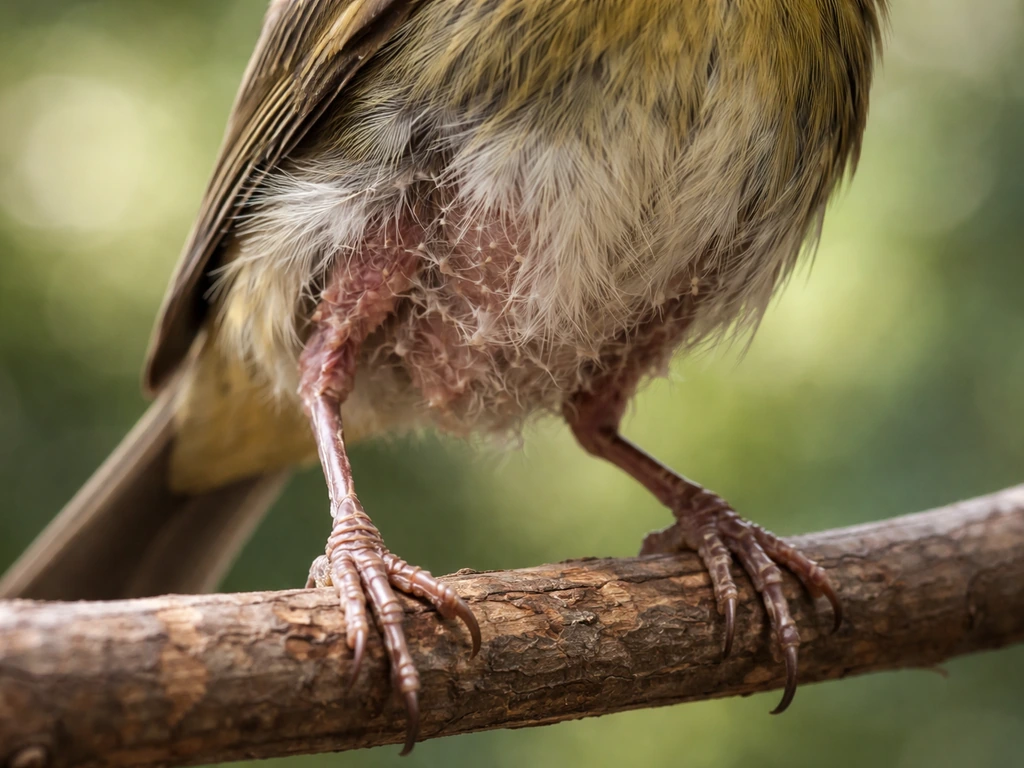
If you've ever held a bird or gotten close to one, you may have noticed its skin isn't uniformly covered the way a dog or cat is. That's because feathers don't grow all over a bird's skin surface in one continuous coat. Instead, they grow in specific tracts called pterylae, with bare patches of skin called apteria between them. You'd only really notice this if you parted the feathers and looked underneath, but it's a meaningful structural fact: bird skin is genuinely exposed in places, hidden under the surrounding feather overlap.
Bird skin also varies by body region. The lower legs and feet, for example, are covered not by feathers but by a tough, keratinized outer layer. This covering on bird feet is called the podotheca, and it includes the scaly structures you see on the fronts of legs and tops of toes. If you're curious about what the skin on bird feet is called and how it differs from the rest of the bird's integument, it's worth a closer look, because it shows just how varied a bird's outer covering really is.
What "fur" actually means, and why birds can't have it
Fur is biologically just hair, and hair is a mammal thing. Specifically, hair is a keratinized fiber produced by a structure in the skin called a hair follicle. Each follicle generates a continuous hair shaft that grows outward from the epidermis, the top layer of skin. When mammals shed, the old hair falls out and the follicle grows a new one. Fur is essentially a dense coat of these hair fibers across most of the skin surface.
Birds do have feather follicles, and here's where it gets a bit interesting: feather follicles and hair follicles are structurally similar enough that researchers have compared them in detail. They both cycle through growth and resting phases, and they're both anchored in the skin. But they evolved independently, and they produce fundamentally different structures. A feather follicle doesn't push out a continuous shaft of fiber. Instead, it grows a feather as a modular unit, complete with its own architecture, and when it's time to moult, the new feather pushes the old one out from beneath. So while the follicle concept is shared, the output is completely different.
The bottom line: fur requires hair follicles producing hair shafts. Birds have feather follicles producing feathers. Same skin-based anchoring concept, totally different biological product. You can think of it the way you might think about how bird skin compares to mammal skin more broadly: similar in some functions, very different in structure.
What birds actually have: feathers, down, and more
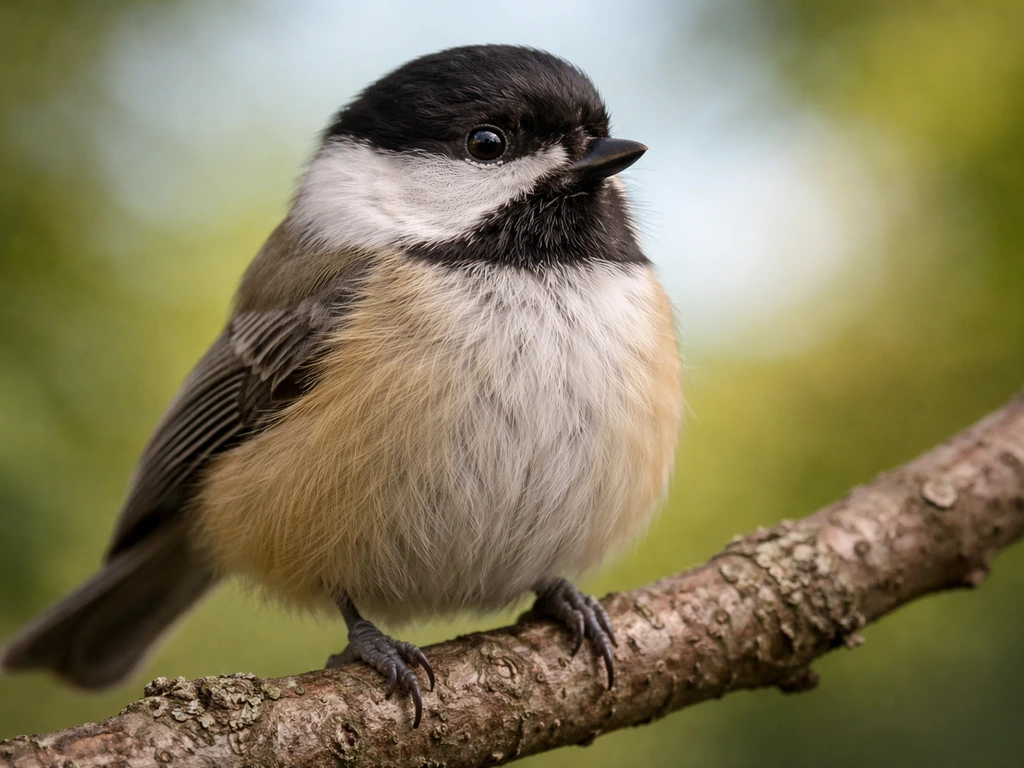
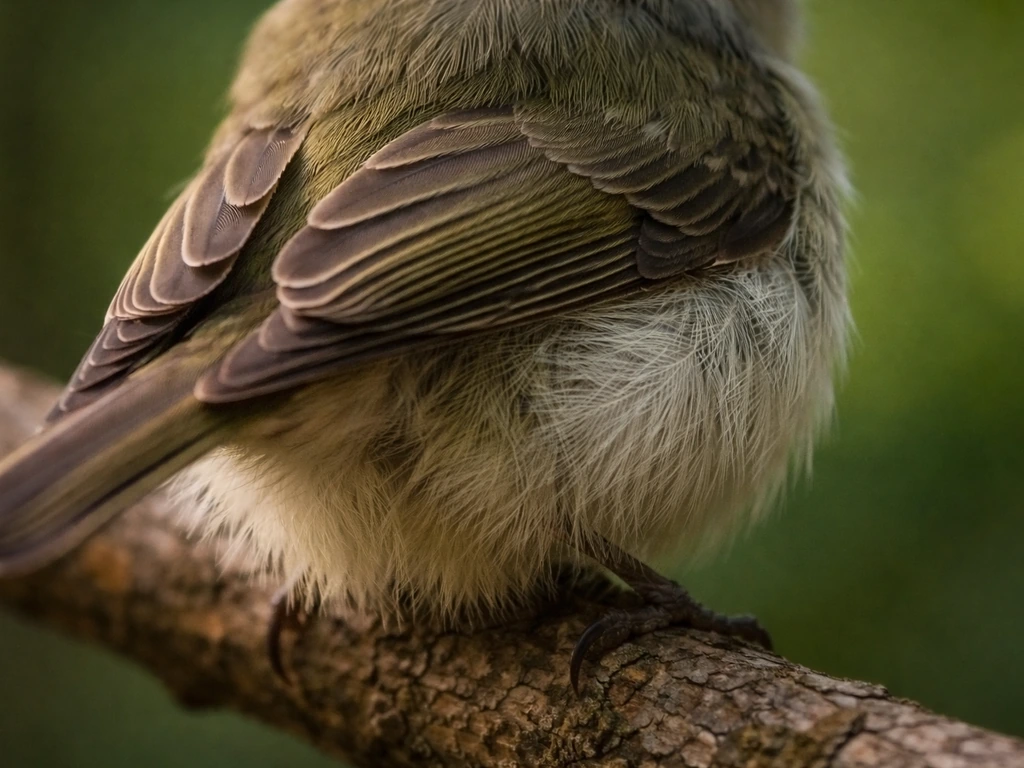
Birds have several distinct feather types, and understanding them makes it a lot easier to see why people sometimes mistake bird plumage for fur. Here's a quick breakdown of the main types:
- Contour feathers: the main outer feathers you see on a bird's body. They have a central shaft (the rachis), with barbs branching off it and barbules branching off the barbs. In many feathers, tiny hooks on the barbules zip adjacent barbs together to form a stiff, smooth vane. These provide protection, shape, and waterproofing.
- Down feathers: soft, fluffy feathers positioned under the contour feathers, close to the skin. They have flexible barbs and barbules that don't zip together, so they stay loose and trap air. This is what gives birds their insulating layer.
- Semiplumes: a middle-ground type, sitting structurally between down and contour feathers. They add volume and help with insulation and shape.
- Filoplumes: small, hair-like feathers with a thin shaft and a few barbs at the tip. They function more like sensory structures than covering feathers, detecting the position of nearby contour feathers.
- Bristles: stiff, specialized feathers often found around the face and eyes of certain bird species. They look almost like whiskers but are still feathers.
All of these are made of keratin, the same protein family that makes up mammal hair and reptile scales. But the architecture is what sets feathers apart: that rachis-barb-barbule system with interlocking hooks is something no mammal hair ever has. A single strand of mammal hair is a relatively simple fiber. A feather, even a tiny one, is a complex branching structure.
Do any birds have actual hair-like features?
This is where the edge cases come in, and I'll admit the first time I saw a Kiwi up close in photos, I genuinely thought I was looking at fur. Some birds really do look hairy. The Southern Cassowary, the Emu, and the Kiwi all have plumage that looks more like coarse fur or hair than anything resembling a typical bird feather. So what's going on?
In every case, what you're seeing is still feathers, just highly modified ones. Kiwi feathers, for example, are long, wispy, and lack the interlocking barbule hooks that give most feathers their structured vane. The result looks and even feels somewhat hair-like. Emus and Cassowaries have similarly loose-barbed feathers that droop and separate rather than forming a smooth surface. These are real feathers growing from real feather follicles. They just happen to look nothing like the crisp contour feathers on a robin or a hawk.
Filoplumes add another layer of confusion. Because they're so thin and hair-like in shape, with just a slender shaft and a tiny tuft at the tip, they can look almost exactly like a fine hair if you find one loose. But structurally, they're feathers: they grow from feather follicles, they're made of keratin in a feather-specific arrangement, and they serve a sensory function tied to feather positioning and preening, not warmth or covering.
There's also the broader question of whether birds have scales elsewhere on their bodies, which ties into this same theme of varied integument across the bird's surface. The short answer is yes, on the legs and feet, and it's another example of how birds use multiple covering types that aren't feathers and aren't fur.
How birds stay warm without fur
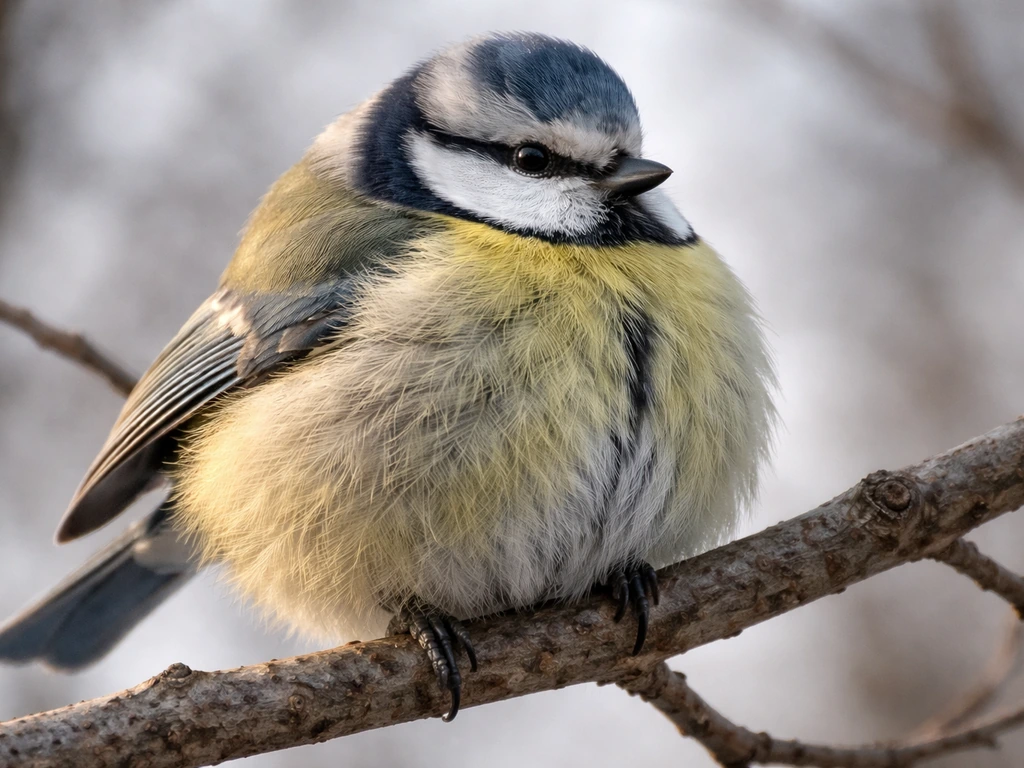
Mammals use fur to trap warm air near the skin and block cold air from getting through. Birds do the exact same thing, they just use a two-layer feather system instead. The inner down layer is the key: those loose, fluffy barbules create tiny air pockets right against the bird's body, and still air is one of the best insulators there is. The contour feathers on the outside then act as a weather barrier, keeping wind and moisture from collapsing that warm air layer.
One important caveat: down insulation only works well when it's dry. Wet down loses most of its ability to trap air and becomes far less effective. That's why waterproofing from contour feathers matters so much, and why many aquatic birds like ducks have such dense, tightly structured outer plumage.
Birds also actively manage their insulation through behavior. Fluffing up, for example, raises the contour feathers slightly, increasing the air space between the down layer and the outside world and improving heat retention on a cold day. Preening helps realign any displaced feathers, restoring that tight outer seal. Filoplumes actually play a role here: they act as sensory feathers that detect when nearby contour feathers have shifted out of position, prompting the bird to correct them.
It's also worth noting that bird legs are scaly, not feathered or furred, and their feet often lack the same insulation found on the body. Many species manage heat loss from their legs through a specialized blood-vessel arrangement called countercurrent heat exchange, where warm arterial blood heading into the foot warms the cold venous blood returning from it. No fur needed.
How to tell a feather from fur at a glance
If you find something soft and fluffy and aren't sure what you're looking at, here are the practical things to check:
| Feature | Feather | Mammal Hair / Fur |
|---|---|---|
| Central shaft | Yes, a rachis (main shaft) is almost always visible | No shaft; it's a single continuous fiber |
| Branching structure | Barbs branch from the rachis; barbules branch from the barbs | None; hair is a single strand with no branches |
| Interlocking hooks | Present in most contour feathers (zip the vane together) | Absent |
| Base / attachment end | Has a hollow quill (calamus) at the base | Tapers to a fine point at the root end |
| Overall shape | Symmetrical or asymmetrical vane, or loose tuft (down) | Simple fiber, round in cross-section |
| Texture when pulled apart | Barbs separate and can be zipped back together by running fingers along them | Just a single strand that doesn't re-zip |
The zip test is actually my favorite one to demonstrate to kids. Take a contour feather, pull the barbs apart with your fingers so the vane splits, then run your fingers from quill to tip along the feather. The barbule hooks re-engage and the vane zips back together. No mammal hair does anything remotely like that.
For down feathers or filoplumes, the shaft is still present even if subtle. A filoplume has a thin central shaft with a tiny cluster at the tip. A piece of down has a central point with loose barbs radiating from it. A strand of mammal fur is simply a fiber all the way through, with no branching and no quill.
The scaly texture on bird feet is another useful visual anchor for understanding how different parts of a bird's body are covered differently. Bird feet are scaly in the same way reptile skin is, which is a separate integument type entirely from either feathers or fur.
When to call in an expert
If you're trying to identify what's covering an unknown animal or bird specimen, and the basic feather checks above don't resolve your question, it's worth contacting a wildlife biologist, a natural history museum with a specimen collection, or a licensed wildlife rehabilitator. Rehabilitators are trained to identify and handle wild birds and can assess both the animal and what's covering it. If you've found an injured bird and are unsure about its species or condition, keep it in a quiet, dark space to reduce stress and reach out to a local wildlife rehabilitator or avian veterinarian as soon as possible. In the US, keeping a wild bird without proper permits is against the law regardless of the circumstances, so professional help is always the right call.
FAQ
Does a bird have fur if it looks fluffy like a mammal?
No. Even the fuzziest-looking birds are still covered by feathers (often down or highly modified feather types), not hair. If you can see a quill-like base, branching structure, or feather “zipping” when you separate and release barbs, that points to feathers rather than fur.
Why don’t birds have fur-like coverage all over their bodies?
Birds do not have a continuous fur coat, and the feather layout is patchy. Feathers grow in defined skin regions (pterylae) with exposed bare skin between (apteria), so you are not looking at one uniform layer like typical mammal fur.
What is the real biological difference between fur and feathers?
Feathers are still made of keratin, but their micro-structure is different from mammal hair. The hallmark is the vane system with interlocking hooks (barbule hooks), plus a modular feather build that molts as a unit, not a continuous shed-from-follicle hair shaft.
If birds are not furred, what actually keeps them warm?
In most cases, the “fluffy” look is down, the inner insulation layer. Down holds warmth by trapping air close to the skin, while contour feathers on top help keep wind and moisture from collapsing that trapped air layer.
What happens to a bird’s insulation if it gets wet?
Wet down loses much of its insulating ability because it can’t trap air as effectively. That is why many water-adapted birds rely heavily on a tight, structured outer layer to keep the down relatively dry.
Are birds ever covered with fur on their legs or feet?
Yes, but the legs and feet are an exception to the “feathers everywhere” idea. Bird legs and feet are typically covered by scaly, keratinized layers (like the podotheca on feet), which are not feathers and do not function like fur.
Could filoplumes be mistaken for fur?
Filoplumes are the main “looks like hair” culprit for many people. They are thin, hair-like feathers with a central shaft and a small tuft at the tip, and they act mainly as sensory feathers that help the bird manage feather positioning.
Why do some birds look hairy even though they do not have fur?
Sometimes. A Kiwi, Emu, or Cassowary can look coarse and hair-like because their feathers are modified to be loose or wispy and may lack the classic tight vane structure. The key clue is that they still originate from feather follicles and are made of keratin in feather architecture.
How can I tell feathers from fur on a real bird or specimen?
Look for the structural pattern, not just the feel. Fur is generally a single continuous fiber without a quill and without the hook-and-reengage vane behavior, while feathers have a recognizable quill plus barbs and a vane that can “zip” when separated and released.
What should I do if I find a bird and I’m not sure what covering it has or how to handle it?
If you find an injured bird or have an unknown specimen, the safest next step is to contact a licensed wildlife rehabilitator or an avian veterinarian, especially if you suspect it is wild. Keeping wild birds without required permits is generally illegal in the US, and professionals also help confirm species and proper handling.
Next Article
How Much Weight Can an Osprey Bird Carry: Numbers & Limits
How much weight can an osprey carry: typical prey 0.5–2 kg (≈30–100% body mass); anatomy, flight limits and evidence.