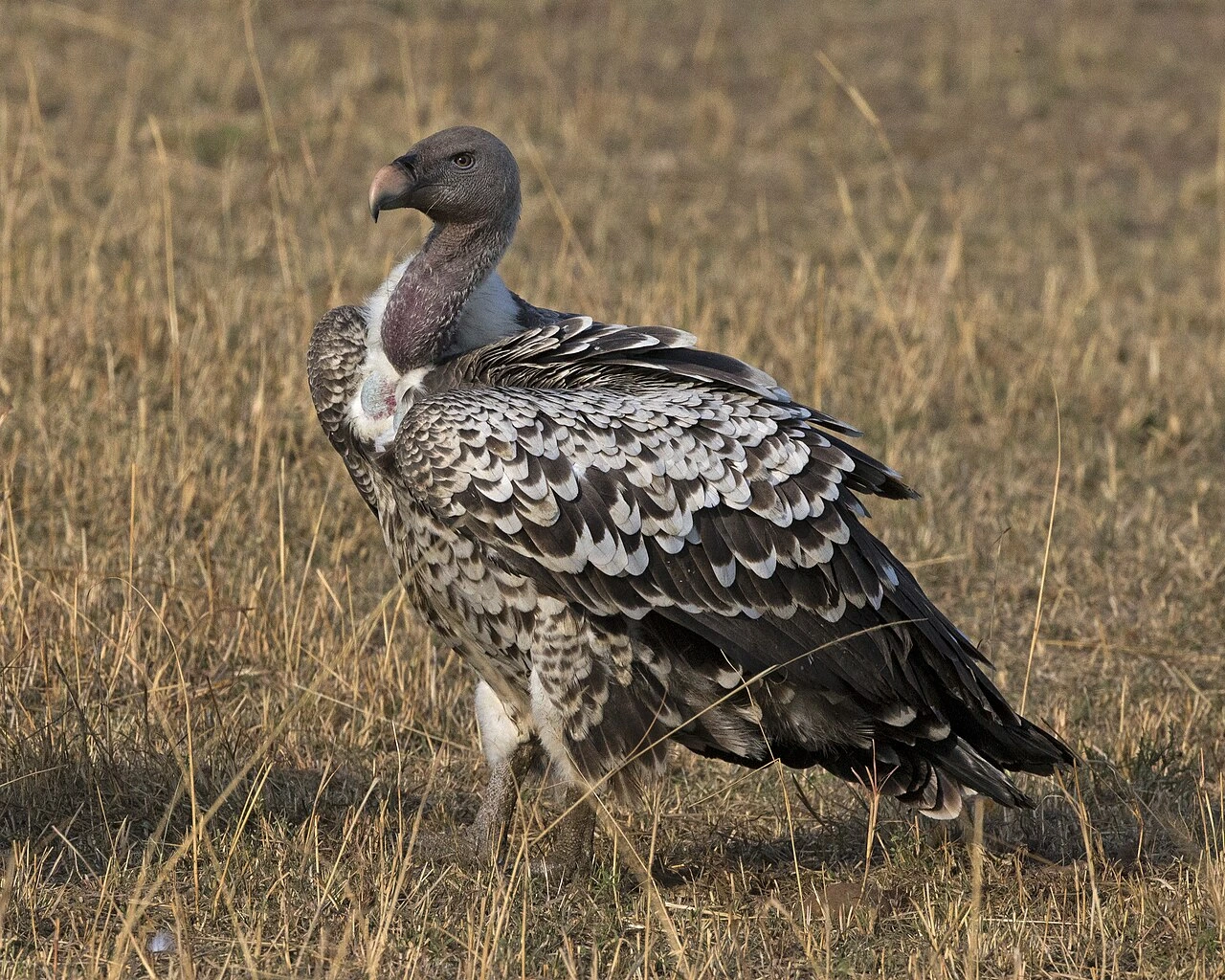
Yes, birds absolutely have a backbone. This isn't even a close call in biology. Birds are vertebrates, which by definition means they have an internal skeleton built around a vertebral column (the spine). That column is made up of individual bones called vertebrae, and it partly encloses the spinal cord running from the brain down into the tail. If you've ever wondered whether all those feathers were hiding something bony underneath, they are. A lot of it, actually.
Does a Bird Have a Backbone? Bird Spine Explained

Marcus Chen
17 Apr 2026
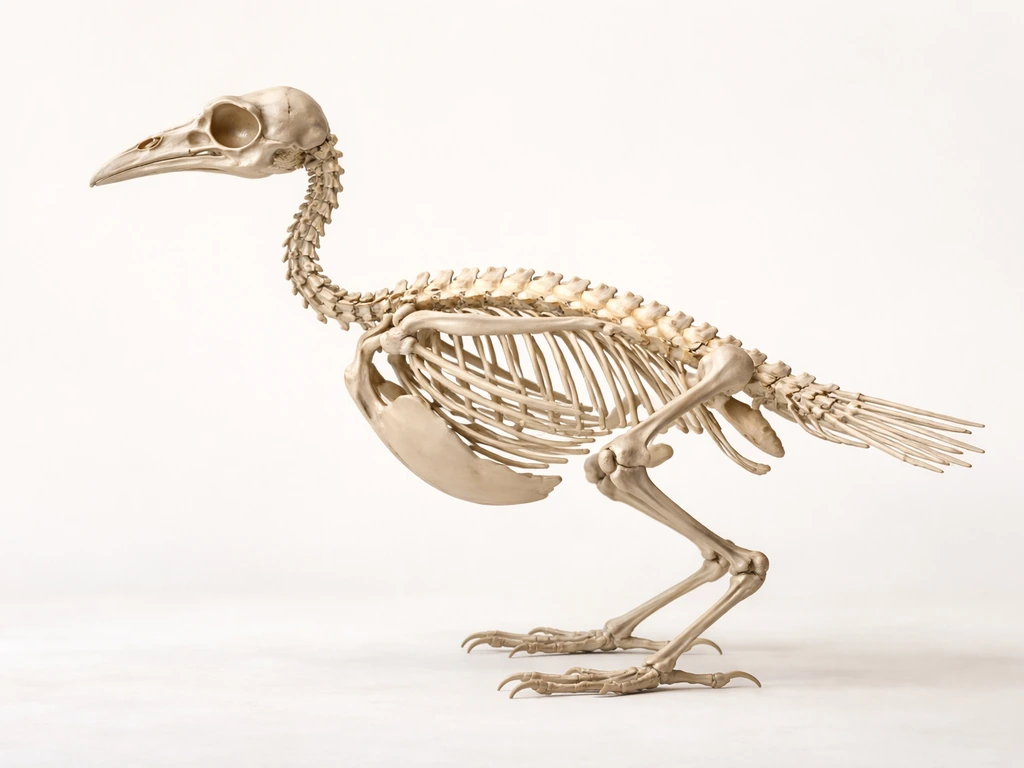
I get why the question comes up. Birds look so different from mammals that it's easy to assume their insides work completely differently too. But once you understand how a bird's skeleton is actually arranged, it starts to make a lot of sense, especially when you connect the dots between the spine and everything a bird does: standing upright, beating its wings, balancing in a tree, steering in flight.
The short answer: birds are vertebrates with a real spine
Birds belong to the class Aves, and Aves sits squarely within the vertebrates. Every vertebrate, from fish to frogs to humans to hawks, has a backbone. The American Museum of Natural History defines vertebrates as animals that have a backbone (spine) and an internal skeleton. Birds check both boxes. Their spinal column is composed of stacked vertebrae running from the base of the skull all the way to the tip of the tail, and their central nervous system runs through it, just like yours does.
What makes birds interesting is not whether they have a backbone, but what that backbone looks like compared to other vertebrates. It's been heavily modified for flight, balance, and efficiency, and some parts look almost nothing like what you'd expect if you've only ever seen a human or dog skeleton. But modified is not the same as absent.
How a bird's spine is actually laid out
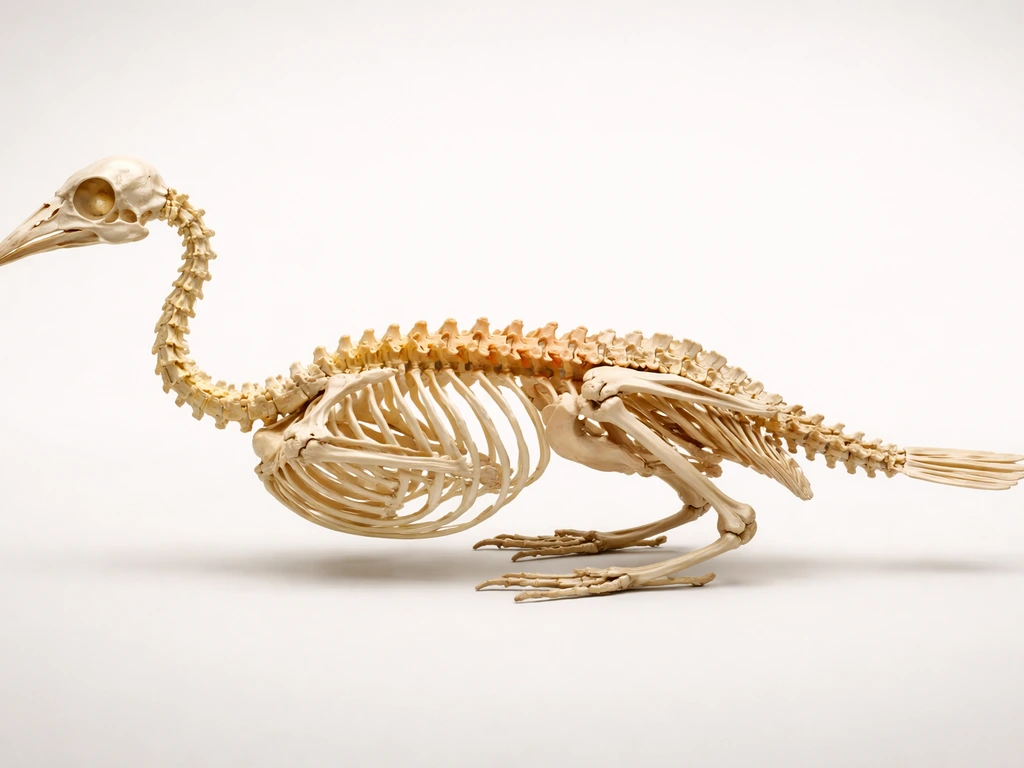
If you want to understand whether a bird has a spine in the same sense as other animals, it helps to walk through the actual vertebral regions from head to tail. The general structure goes like this:
- Cervical vertebrae (neck): Birds have a surprisingly long and flexible neck, supported by anywhere from 13 to 25 cervical vertebrae depending on the species. That's why owls can swivel their heads so dramatically and why herons can strike at fish with such precision.
- Thoracic vertebrae (chest): These vertebrae bear the ribs, which connect forward to the sternum (breastbone). The thoracic section anchors most of the flight and respiratory apparatus.
- Synsacrum (lower back/pelvis region): This is where birds really diverge from mammals. Multiple posterior thoracic vertebrae, lumbar vertebrae, sacral vertebrae, and some anterior caudal vertebrae all fuse together into one solid structure. The pelvis is fused to it as well, creating a rigid core platform.
- Free caudal vertebrae (tail base): A few unfused vertebrae sit just behind the synsacrum, allowing some tail movement.
- Pygostyle (tail tip): The last several caudal vertebrae are fused into a single blunt structure called the pygostyle, which anchors the long stiff tail feathers and the muscles that control them.
That progression from flexible neck to rigid fused core to tail anchor reflects exactly what a flying animal needs: the ability to look around freely, a locked-in central frame to handle the stresses of wingbeats, and precise tail control for steering and braking.
If you want to go deeper on the specific question of whether a bird has vertebrae and how they compare to vertebrae in other animals, that's worth exploring in more detail. The short version is: yes, and they're structurally fascinating.
What the backbone actually does for a bird
Flight mechanics start at the spine
A bird's thoracic vertebrae do more than just hold the spine together. They bear pairs of complete ribs (a dorsal vertebral rib and a ventral sternal rib) that connect to the sternum, forming the ribcage. That ribcage is the anchor point for the pectoral muscles, which are the massive chest muscles that power the downstroke of the wings. Without a sturdy vertebral column tying the ribcage together, flight would be mechanically impossible.
Those ribs also carry something called uncinate processes, which are small bony projections that extend posteriorly from most vertebral ribs. These processes improve the mechanical leverage of muscles involved in moving the ribcage during breathing and during wing motion. In high-demand birds, coupling thorax movement to air exchange is a serious performance issue, not just a structural footnote.
The furcula (wishbone), which connects the two shoulder joints at the front, works alongside the vertebral column to form a structure called the triosseal canal. A tendon runs through this canal to power the upstroke of the wing. So while the furcula often gets singled out as the interesting part of bird anatomy, it's functioning as part of a broader skeletal system that starts with the spine.
The synsacrum and why rigidity matters
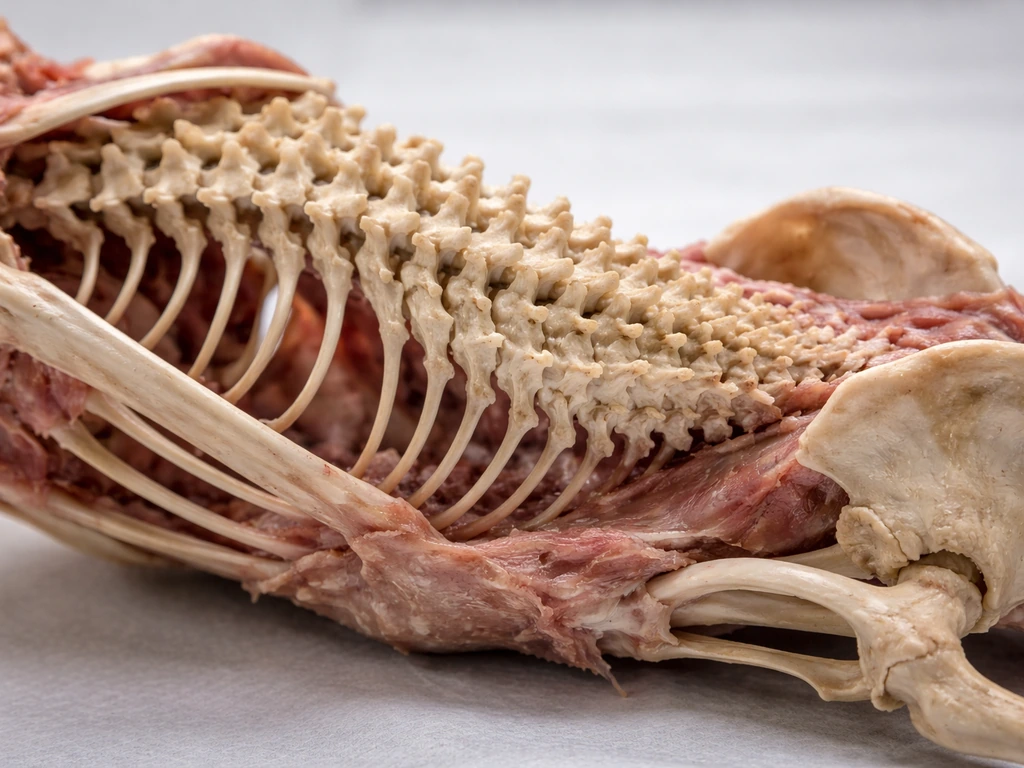
The fused synsacrum is one of the most functionally important structures in the whole avian skeleton. During flight, a bird's wings generate enormous forces on the torso. If the lower spine and pelvis could flex freely (like yours can), all that energy would be wasted on bending the body rather than driving forward motion. The rigid synsacrum locks everything in place, distributing load efficiently across the entire pelvic framework.
Some birds also have a partial fusion in the upper thoracic region called a notarium, where the first few thoracic vertebrae fuse together to prevent the front of the thoracic column from bending downward under the stress of the wingbeat. This isn't present in all birds and varies by lineage, but where it does appear, it reflects the same principle: strategic rigidity where loads are highest.
Balance, posture, and the tail
The pygostyle at the tail end of the spine isn't just a structural oddity. It's the anchor for the long, stiff tail feathers that birds use to steer, brake, and maintain stability during flight. Without those fused caudal vertebrae providing a firm attachment point, precise tail control would be compromised. On the ground, the entire vertebral column works with leg muscles to hold a bird upright in that characteristic perching or standing posture.
What makes bird skeletons different (but still definitely a backbone)
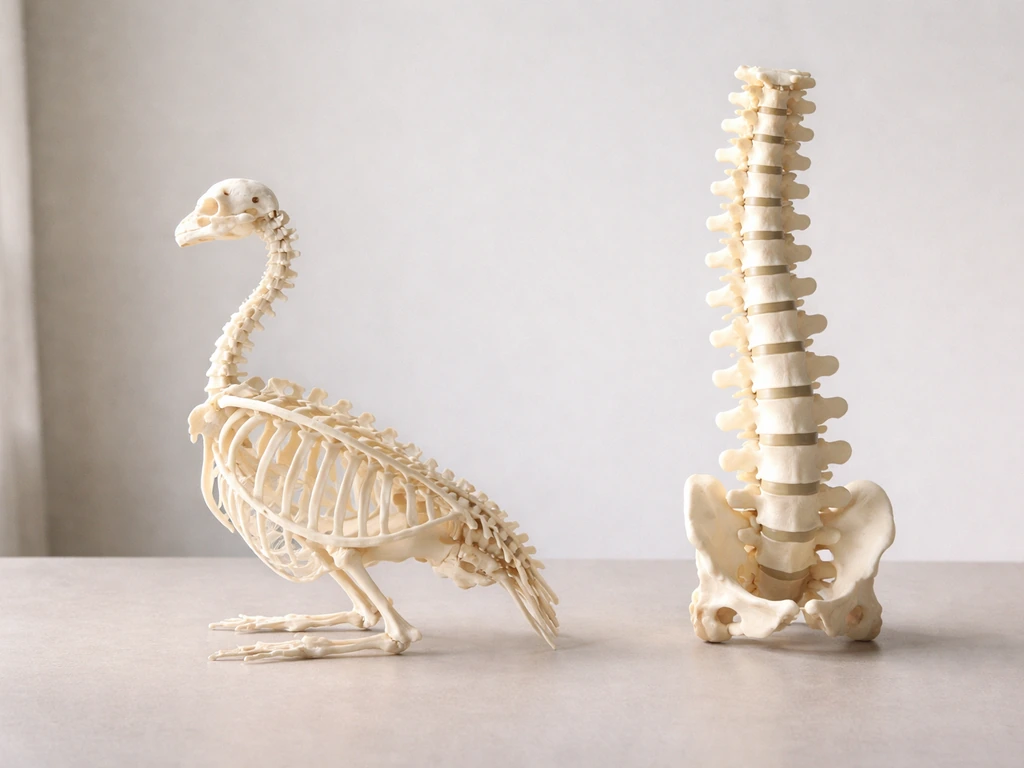
The big picture of what type of skeleton a bird has really comes down to two major adaptations: lightweight bones and strategic fusion. Both of these are modifications of a standard vertebrate skeleton, not replacements for it.
Hollow and pneumatic bones
Many avian bones are pneumatic, meaning they're infiltrated by extensions of the bird's air sac system. Instead of being filled with marrow the way mammal bones are, pneumatic bones contain air, which dramatically reduces their weight. Larger flying birds tend to have greater pneumaticity than small ones. It's a trade-off between lightness and strength, and birds have evolved it to a remarkable degree.
That said, not all bird bones are hollow or marrow-free. If you've ever heard debate about whether bird bones have marrow, the answer is nuanced. Female birds actually deposit a special type of tissue called medullary bone into the marrow cavities of bones like the femur and proximal tibiotarsus during the egg-laying cycle, using it as a calcium reserve for shell production. So bird bones are neither fully hollow nor fully marrow-filled; it depends on the specific bone, the species, and the bird's reproductive state.
Wings are still built on bones
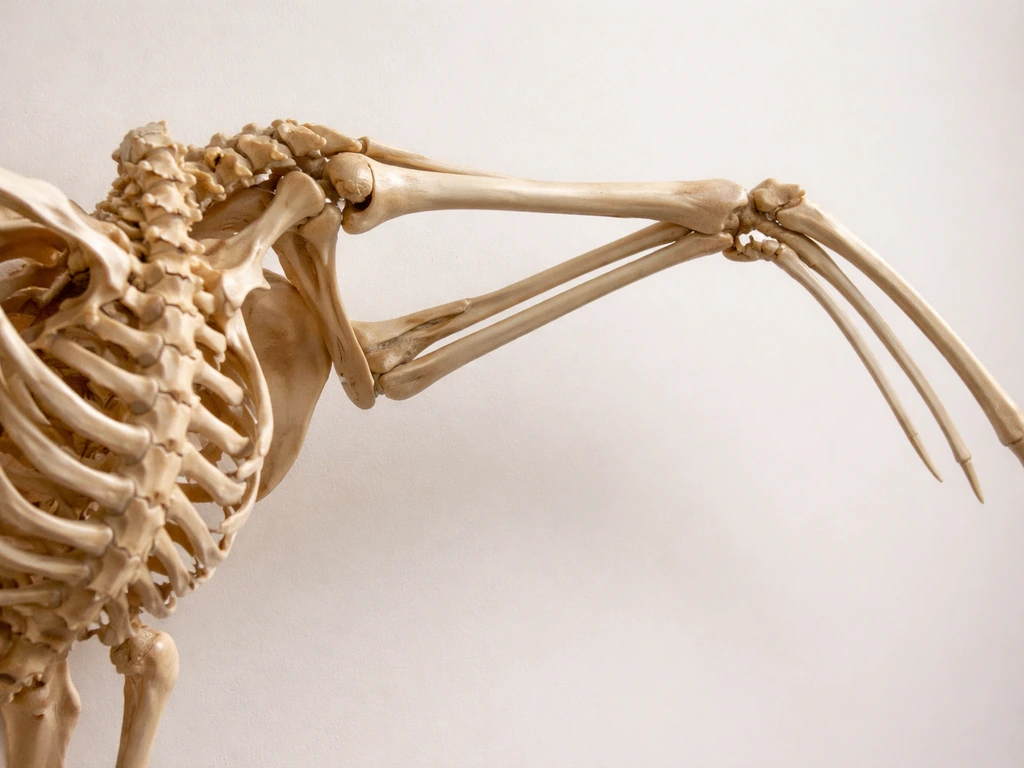
Speaking of surprises, bird wings do have bones, a full modified forelimb skeleton including a humerus, radius, ulna, and fused wrist and hand bones. This bony framework is what feathers attach to, and it connects to the pectoral girdle, which in turn connects to the thoracic vertebrae. The whole system is a chain from spine to wingtip.
Fused vs. free: a side-by-side look
| Spinal Region | Condition in Birds | Key Function |
|---|---|---|
| Cervical (neck) | Free and highly mobile | Head turning, striking, feeding |
| Thoracic (chest) | Partially fused in some species (notarium) | Rib attachment, wing/respiratory muscle anchor |
| Synsacrum (lower spine + pelvis) | Fully fused multi-vertebrae structure | Rigid platform for flight load distribution |
| Free caudal vertebrae | A few unfused segments | Limited tail movement |
| Pygostyle (tail tip) | Fully fused terminal vertebrae | Tail feather anchor for steering and balance |
Common misconceptions worth clearing up
"Feathers mean no bones"
This is the most common confusion, especially for young learners. Birds are covered in feathers, which completely hide their skeletal structure. But feathers are a surface feature. They're made of keratin (the same protein as your fingernails) and grow from the skin, not from cartilage or bone. The defining trait of a bird is having feathers, but that says nothing about whether it has a backbone. It does. Every bird does, without exception.
"Lightweight means barely any bones"
Birds do have lighter skeletons than comparably sized mammals, but "light" doesn't mean "minimal." The bird skeleton is actually highly structured, with fused regions, uncinate processes, a keeled sternum, and a complete vertebral column from neck to tail. You can see this clearly in any museum bird skeleton display. The bones are thin-walled and sometimes pneumatic, but they're absolutely present and they're doing a lot of work.
"The fused parts aren't really a spine"
Some people, once they learn about the synsacrum and pygostyle, assume these fused structures don't count as a "real" backbone. But fused vertebrae are still vertebrae. The synsacrum is formed from actual vertebral bones that happened to grow together during development. The spine in birds is continuous from skull to tail; it's just that different regions have different degrees of flexibility depending on what the bird needs mechanically.
A couple of things you can actually check
If you want a practical, at-home way to get a feel for bird skeletal anatomy, there are a few accessible options. The safest and easiest is to find a chicken or turkey carcass after a meal and gently feel along the midline of the back. You'll feel the individual thoracic vertebrae and the fused synsacrum as a solid ridge. You can also feel the keel (the breastbone ridge), which is the anchor point for the flight muscles and attaches to the thoracic ribcage that connects to the spine.
If you're handling a live bird (your own pet bird, for example), exercise proper caution. Place your hands gently on either side of the body, keep the wings folded in their natural closed position, and avoid any forceful pressure. Because the thoracic and lumbar vertebrae in birds are largely fused, you won't feel the kind of spinal flexibility you would in a cat or dog, which is normal and expected, not a sign of injury. That rigidity is by design. Palpating toward the keel along the midline gives you a rough sense of the skeletal midline without pressing on sensitive areas.
For a more detailed visual check without handling a live bird, natural history museum exhibits are genuinely excellent. Many display articulated bird skeletons that make the full vertebral column visible from every angle. You can see the cervical vertebrae stacked in a long S-curve, the locked synsacrum, and the compact pygostyle at the tail. It makes the whole "yes, birds have a backbone" answer immediately obvious.
One more thing worth knowing: the skull
The vertebral column doesn't exist in isolation. It connects at the top to the skull, which is also a fascinating and highly specialized bony structure. If you're curious about whether birds have a skull, the short answer is yes, and it's worth understanding how it fits into the rest of the skeleton. Interestingly, some researchers have also looked at structural proteins in nest materials and found that bird nests can contain collagen, which is the same structural protein found in vertebrate bone and connective tissue. It's a small reminder that the biology of birds runs deep even into the materials they build with.
The bottom line
Birds have a backbone. Full stop. It's a complete vertebral column running from the base of the skull to the tail, made up of cervical vertebrae, thoracic vertebrae, the fused synsacrum, a few free caudal vertebrae, and the pygostyle. The spine supports posture, anchors the ribcage and flight muscles, stiffens the torso against wingbeat forces, and controls the tail. The bones are lighter than mammal bones and some are pneumatic, but they are bones, they are present, and they are doing exactly what a vertebrate spine is supposed to do.
If you want to keep going from here, understanding how the different fused regions developed and vary between bird lineages opens up a genuinely interesting window into avian evolution. The fusion patterns in a hummingbird spine are not the same as those in an albatross, and those differences reflect very different flight demands. That's where bird anatomy stops being a simple yes/no question and starts being a story about how structure follows function.
FAQ
Are birds the only animals with feathers that still have a spine?
Bird feathers can be confusing, but feathers are a skin feature, they do not replace the skeleton. Any true bird (class Aves) has a complete vertebral column, even though many regions are fused and some bones are lightened.
If a bird’s lower back feels stiff, does that mean its spine is damaged?
Usually no. Many birds have largely fused lower spine and pelvic vertebrae, so they do not bend the way mammals do. Reduced flexibility is normal for flight-related rigidity, though severe swelling, deformity, or reluctance to perch can still indicate injury.
Do all birds have the same fused parts, like the synsacrum and notarium?
They share the general concept, but the exact pattern can vary. The synsacrum is broadly important across birds, while a notarium is not present in every species, so the “map” of fusion differs between lineages.
Is the pygostyle considered part of the backbone, or is it just a tail structure?
It counts as part of the vertebral column. The pygostyle is formed from fused caudal vertebrae, so it is not an extra cartilage-like attachment, it is vertebra-derived bone that anchors tail feathers and supports steering.
Can a bird have a backbone even if it cannot bend its neck much?
Yes. Neck flexibility depends on how the cervical vertebrae are built and how the bird uses its head. Even birds with relatively limited neck motion still have individual cervical vertebrae forming the spine.
How can I tell the spine from the ribcage when looking at a skeleton?
The spine runs along the midline from the skull to the tail. The ribcage surrounds it, ribs attach to specific thoracic vertebrae, and the sternum forms the front anchor. In a museum display, follow the midline ridge first, then trace ribs outward.
Do birds have vertebrae in their wings, or are wing bones separate from the spine?
Bird wings have bones, but not vertebrae in the wing itself. The wing skeleton is a modified forelimb that connects to the shoulder girdle, and the shoulder girdle connects back to the thoracic vertebrae through the pectoral region.
Are bird bones “hollow” enough that there is no real spine structure inside?
No. Even if some bones are pneumatic, the vertebral column is still made of real vertebrae and supports the spinal cord. The “hollow” part mainly affects bone marrow content and weight, not whether the spine exists.
If a bird’s backbone is continuous, why do different vertebral regions look so different?
Birds have the same basic blueprint, stacked vertebrae, but different regions are specialized. You get flexible neck vertebrae, a more reinforced and rib-bearing thoracic region, and then fused structures toward the pelvis and tail for strength and control.
Next Article
What Is the Highest Altitude a Bird Can Fly?
Find the highest documented bird flight altitude, how it’s measured, and the biology and flight mechanics behind extreme