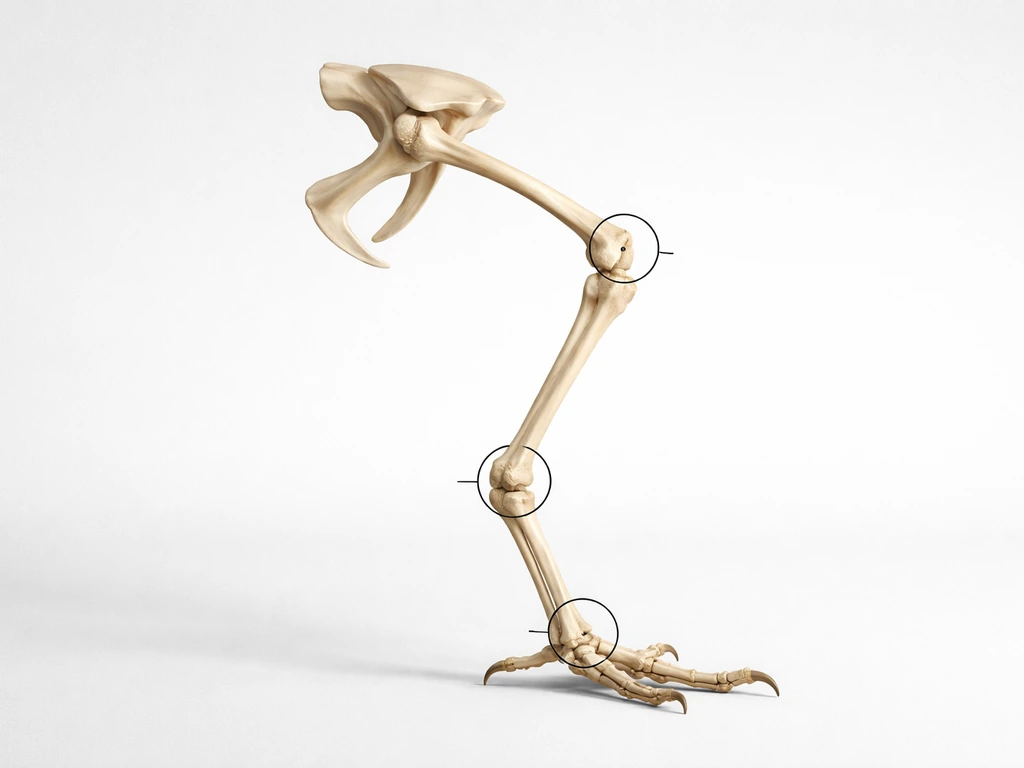
The alula bone sits at the leading edge of a bird's wing, right at the wrist-to-hand junction, projecting forward and slightly upward like a tiny thumb. It is not part of the main wing surface or the trailing edge where the big flight feathers are. It sticks out from the front of the wing near where you would feel a small bony bump just ahead of the carpometacarpal joint, which is the fused "hand" region of the wing skeleton. If you were looking at a bird from above in flight, the alula is that small cluster of feathers you might notice poking off the leading edge, roughly one-eighth of the way along the wing from the wrist outward.
Where Is the Alula Bone Located in a Bird

Marcus Chen
8 Jun 2026
What the alula actually is
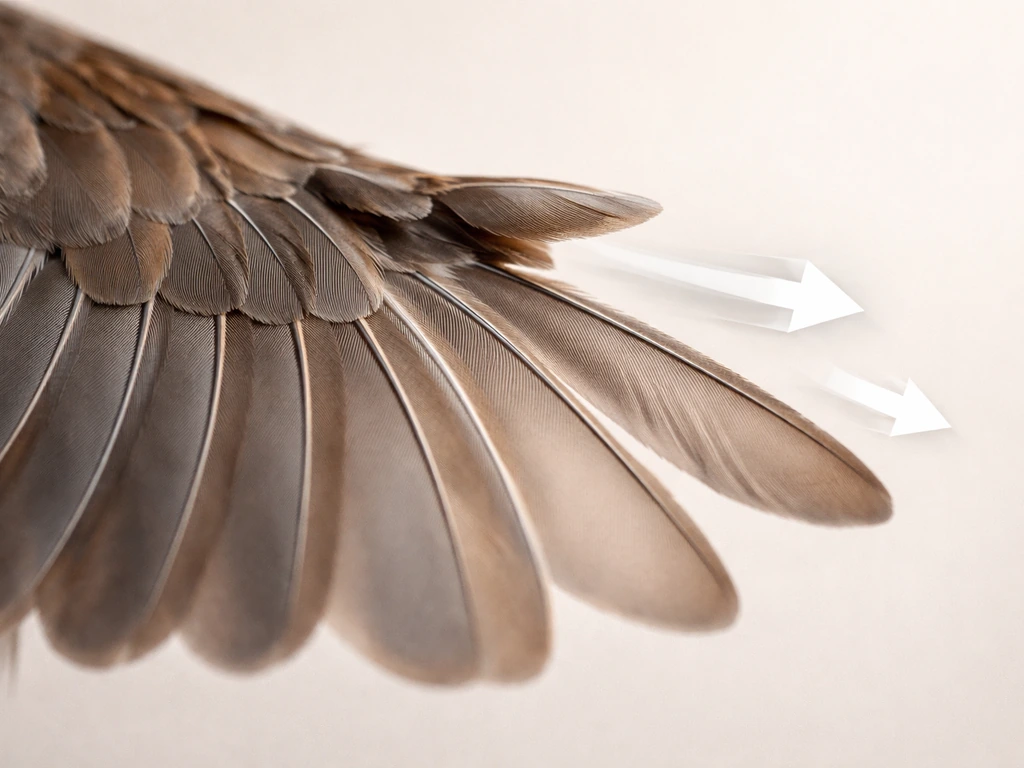
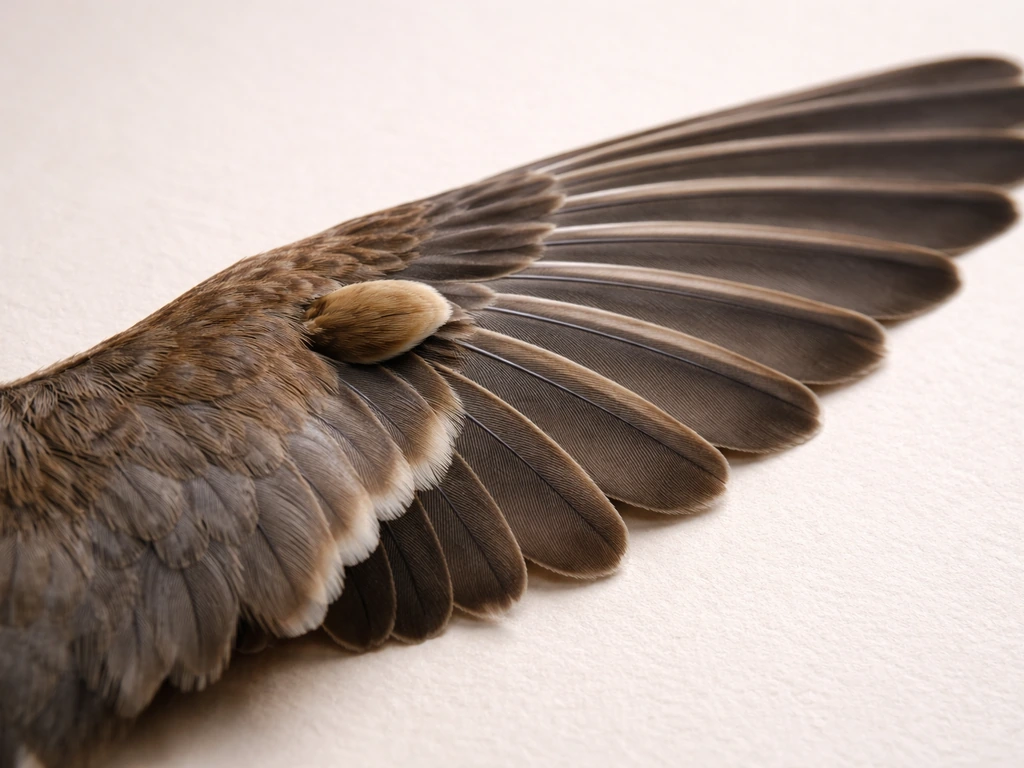
The alula (also called the bastard wing, which is a much more dramatic name for something so small) is a freely movable projection on the front edge of a bird's wing. Think of it as a miniature wing-within-a-wing. It carries a small group of flight feathers, typically three to five, though reports range from two to six depending on the species. These are short, stiff feathers that can spread away from the wing surface when the bird needs extra lift control.
The key word here is "freely movable." Unlike most of the bird's hand bones, which are fused together into that rigid carpometacarpus, the alula is attached to a digit that the bird can actually move independently. That mobility is the whole point. It lets the bird deploy the alula like a tiny adjustable flap when conditions demand it.
Exact anatomical location on the wing
If you imagine a bird's wing laid out flat, the skeleton goes shoulder to elbow (humerus), elbow to wrist (radius and ulna), then wrist into the hand region. The "hand" in a bird is drastically modified compared to yours. Most of those finger bones are fused into the carpometacarpus, a single stiff structure that anchors the primary flight feathers. The alula is not part of that fused block.
The alula attaches to the first digit, the bird's equivalent of a thumb, which articulates at the leading edge of the proximal (near) end of the carpometacarpus. So anatomically: it is at the cranial (front-facing) aspect of the carpometacarpal joint, projecting forward along the leading edge of the wing. It sits proximal to the main primary feather group and closer to the wrist than to the wingtip.
The bones that make up the alula
The alula is built around the alular digit, sometimes called digit I or the first digit. This digit typically has two phalanges, which are essentially two small finger bones. They are small compared to the major digit (digit II or III depending on which numbering system you are reading) that anchors the main primary feathers on the fused hand region.
To put it plainly: the alula's skeleton is two small finger-like bones projecting off the front of the carpometacarpal joint. They are not fused to anything else, which is precisely why the bird can raise and angle them independently. The feathers attach to these phalanges just like primary feathers attach to the main hand bones, only much smaller in scale.
When you look at a wing skeleton in a natural history museum display, the alular digit appears as a short, stubby bony protrusion angling forward off the front edge of the carpometacarpus. It is easy to miss the first time because it looks almost like a stray fragment, but once you know it is the "thumb," it clicks into place immediately. (Ask me how many times I walked past one before I finally noticed it.)
How to spot the alula on a real bird or specimen
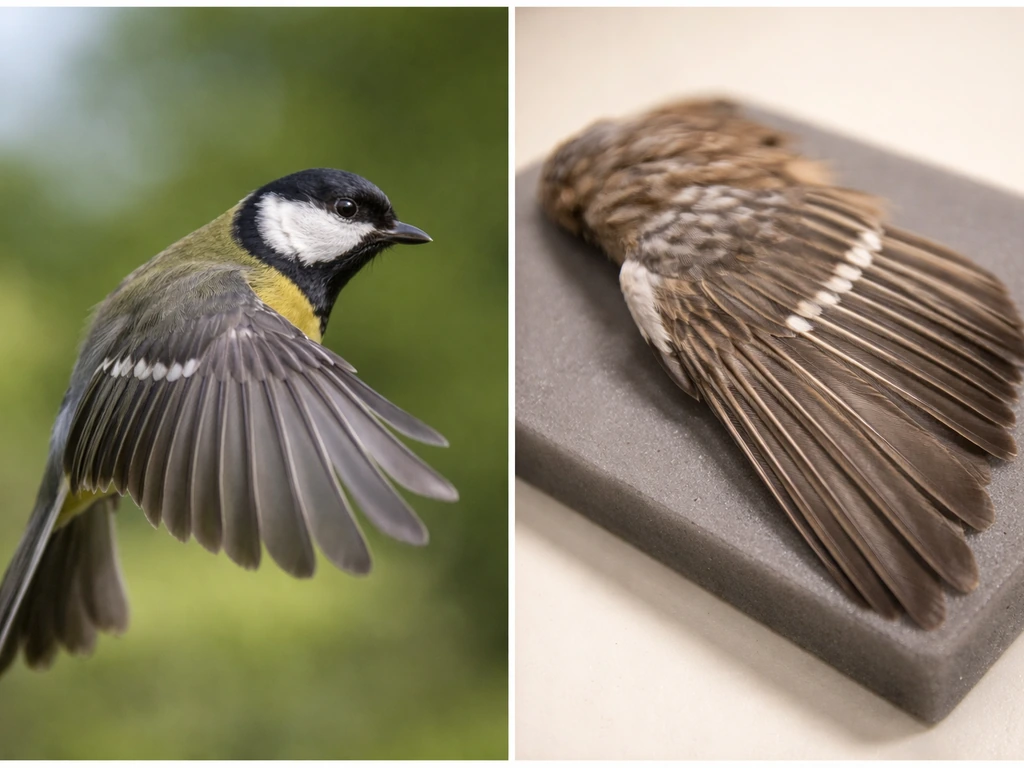
On a live or freshly observed bird, the alula is easiest to see when the bird is landing or flying slowly, because that is when it deploys the structure. You will notice a small fan of feathers lifting slightly upward and forward off the leading edge of the wing, separate from the main flight feathers. It appears just inboard of the wingtip, roughly at the "bend" of the outer wing.
On a prepared museum specimen or a study skin, look along the leading edge of the wing toward the outer-mid section. The alula feathers are noticeably shorter and stiffer than the primaries and they emerge from a small raised point on the leading edge rather than from the flat underside or upper surface. They are not secondary feathers (those are along the trailing edge near the body), and they are not the primary coverts (which lie flat over the primary bases). The alula feathers stick out forward, not backward.
A quick checklist you can actually use:
- Find the bend in the outer wing where the wrist joint would be.
- Run your eye forward to the leading (front) edge of the wing at that bend.
- Look for a small cluster of two to six short, stiff feathers projecting forward and slightly upward from that leading edge.
- Confirm it is separate from the primary feathers, which run along the hand and project backward/outward.
- On a skeleton, look for a stubby two-bone digit pointing forward off the front of the carpometacarpus.
Why the location matters: how the alula works in flight
The alula's position on the leading edge is not accidental. It functions as a high-lift device specifically because it sits at the front of the wing where airflow first makes contact. During slow flight or landing, a bird raises its alula slightly upward and forward, which creates a narrow slot between the alula and the main wing surface. That slot accelerates airflow over the wing and delays stall, letting the bird fly at steeper angles of attack without losing lift.
More recent aerodynamic research adds another layer to this: the alula appears to act as a vortex generator. When deployed, it produces a small but energetic swirling vortex behind it that suppresses flow separation over the wing surface. Scientists have captured this with digital particle image velocimetry, and the effect shows up clearly at high angles of attack, both before and after the point where a flat wing would stall. There is still some debate over exactly which mechanism dominates, slot effect or vortex generation, but both depend on that precise leading-edge location. If the alula were anywhere else on the wing, it simply would not work the same way.
Think of it as the bird's answer to the leading-edge slats on a commercial aircraft. Those slats are mounted on the front of the wing for exactly the same aerodynamic reason. Birds evolved the alula tens of millions of years ago and engineers essentially reinvented the concept independently. That parallel still amazes me every time I think about it.
Clearing up the common mix-ups
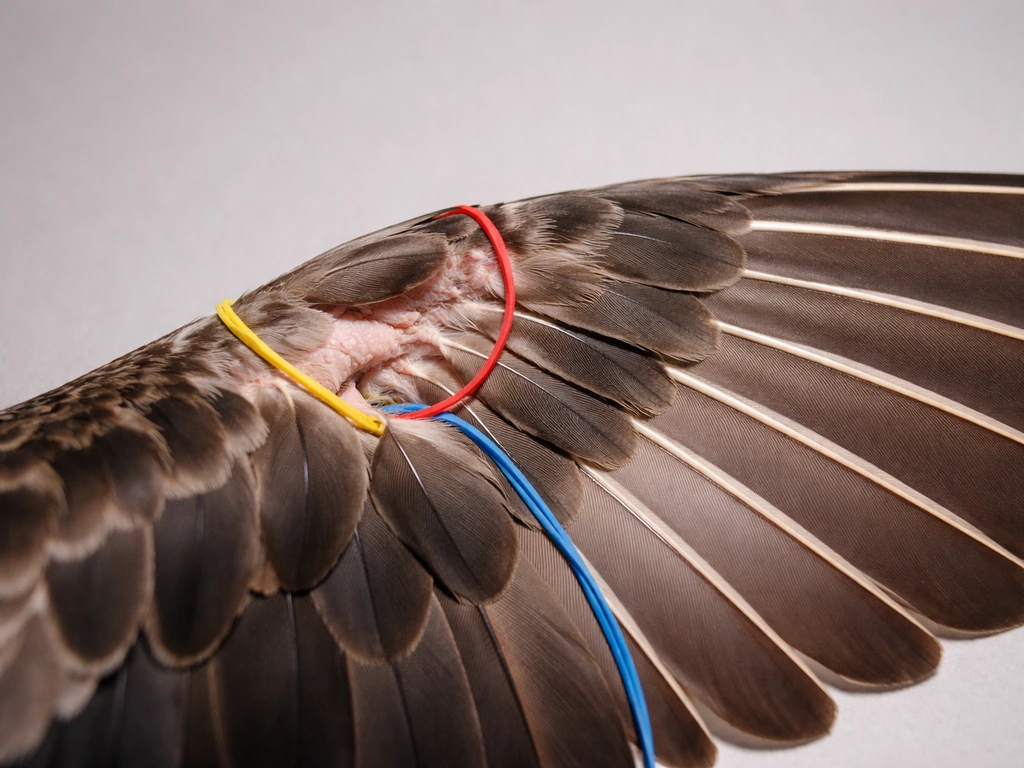
The alula gets confused with several other wing structures, and the confusion is understandable because bird wing anatomy packs a lot of parts into a small space. If you were instead wondering about a rhinolith, that is a very different kind of bird condition involving the nasal passage, not the wing structure described here. Here is a quick breakdown of what the alula is not:
| Wing Structure | Where It Is | How It Differs from the Alula |
|---|---|---|
| Propatagium / patagium | Skin membrane along the leading edge from shoulder to wrist | Soft tissue, not a bony digit or feather group; no independent movement |
| Carpometacarpus (the hand) | Fused bone block forming the outer hand region | Rigid, fused structure that anchors primary feathers; the alula attaches to its front edge but is not part of the fused block |
| Primary feathers | Trailing edge of the outer hand, tip of the wing | Run backward off the fused hand, much larger, not on the leading edge |
| Wing coverts | Overlapping feathers covering the base of flight feathers on upper and lower surfaces | Lie flat and do not project forward; not independently deployable |
| Carpus (wrist joint) | Bony joint between the forearm and hand region | A joint, not a digit or feather group; the alula is just distal to it on the leading edge |
The most common mix-up is treating the entire wrist-hand region as one thing and not realizing the alula is a separately movable first digit projecting off the front of that region. Another frequent confusion is mistaking the alula feathers for small primary coverts, since both live in roughly the same zone of the wing. The tell is direction: alula feathers point forward off the leading edge, coverts lie back over the feather bases.
It is also worth noting that the alula is distinct from structures like the pneumatic bones found in the main wing skeleton, or the femur (thigh bone) tucked up inside the body, or lamellae in the beak. If you are also mapping bird limb bones like the femur (thigh bone), the thigh of the bird contains what bone is a useful related reference to keep straight.
Pneumatic bones are found in many birds, helping keep their skeleton lightweight for flight. Lamellae in the beak are located on the inside surface of the bill, helping with how the bird grips or filters material. Wing skeleton anatomy connects in interesting ways across the whole bird, but the alula is specifically a hand-region, leading-edge, thumb-digit structure. Once you anchor it there, the rest of the confusion falls away pretty quickly.
The fastest way to remember it
The alula is your bird's thumb, sitting at the front edge of the wing right at the wrist-to-hand transition, made of two small finger bones and covered by a few short stiff feathers. If you are wondering what bone that “drumstick” is in a bird, it refers to the alula’s thumb-like digit with its small finger bones. It points forward. It moves independently. It shows up when the bird needs to slow down or climb steeply. If you can picture someone sticking their thumb out from the leading edge of an outstretched hand, you have the right mental image. Start there and everything else about the alula, its bones, its feathers, and its function, follows naturally.
FAQ
Is the alula always in the exact same spot on every bird species?
Yes. In most birds the alula projects from the leading edge near the cranial side of the wrist-to-hand region, but the exact “how far out” can shift with wing length and how the wing is folded. In field view, it is often clearest when the bird is landing, hovering briefly, or flying slowly because it angles the alula upward rather than keeping it flush.
How can I tell the alula from nearby wing feathers in photos?
Look for a small fan or raised cluster of short, stiff feathers on the front edge of the wing, separate from the main primary feathers. The key giveaway is that it sticks forward and up when deployed, rather than lying flat over the feather bases (coverts) or projecting from the rear/trailing edge (secondary feathers).
Why is the alula hard to spot when a bird is flying quickly?
When birds hold the wing tightly or in fast flight, the alula may appear nearly flush against the leading edge, making it easy to miss. The alula becomes more obvious as the bird reduces speed because it is deployed to create a higher-lift airflow pattern at steep angles.
What bones make up the alula, and how many finger-like segments are there?
The alular digit is the thumb-like first digit, and it is typically represented by two small phalanges. You can think of the alula as two tiny finger bones that are not fused to the larger, rigid hand structure, which is why the whole projection can pivot independently.
Is the alula made of primaries, secondaries, or coverts?
No. The alula is not a normal part of the main primary feather group, and it is not among the secondary feathers on the trailing edge. It also is not a covert, which mostly lies flat over the bases of other wing feathers instead of projecting outward as a separately movable tuft.
If it is near the wingtip, how do I avoid confusing the alula with other distal feathers?
Use the leading-edge geometry: the alula sits on the front edge near the wrist-hand junction, proximal to where the outer primaries dominate. If what you are seeing is far out near the wingtip but on the trailing edge, it is more likely a different feather set than the alula.
What motion confirms that I’m actually seeing the deployed alula?
The “raise-and-angle” movement matters. If you only see a static bony bump with no upward and forward motion, you might be looking at a different leading-edge structure or a non-deployed alula. For live birds, confirm by checking whether the small tuft moves as the bird changes speed or pitch.
What is the most common mistake people make when locating the alula on a wing skeleton?
In anatomy work, the alula can be mistaken for the entire wrist-hand complex, or you might assume the whole region is one rigid unit. The practical correction is to treat the first digit (alular digit I) as the independently movable element attached to the leading edge at the carpometacarpal joint.
Does the alula appear differently when a bird is perched versus flying?
If your bird is perching, preening, or otherwise folding the wings, the alula may not be visible in the way it is during flight because the wing shape changes what part of the leading edge is exposed. For observation or identification, prioritize landing sequences or moments of slow, controlled flight.
Next Article
The Thigh of the Bird Contains What Bone? Femur Guide
Bird thigh proper is the femur; learn how bird leg bones differ from human thigh and how to identify it on diagrams.