The thigh of a bird contains the femur. That's the same bone name as in humans, and it sits in exactly the same relative position: between the hip joint and the knee. What trips most people up is that the visible "leg" on a live bird or a roasted chicken doesn't map neatly onto human anatomy the way you'd expect, so the femur ends up being harder to spot than you'd think.
The Thigh of the Bird Contains What Bone? Femur Guide

Marcus Chen
16 May 2026
What people actually mean when they say "bird thigh"
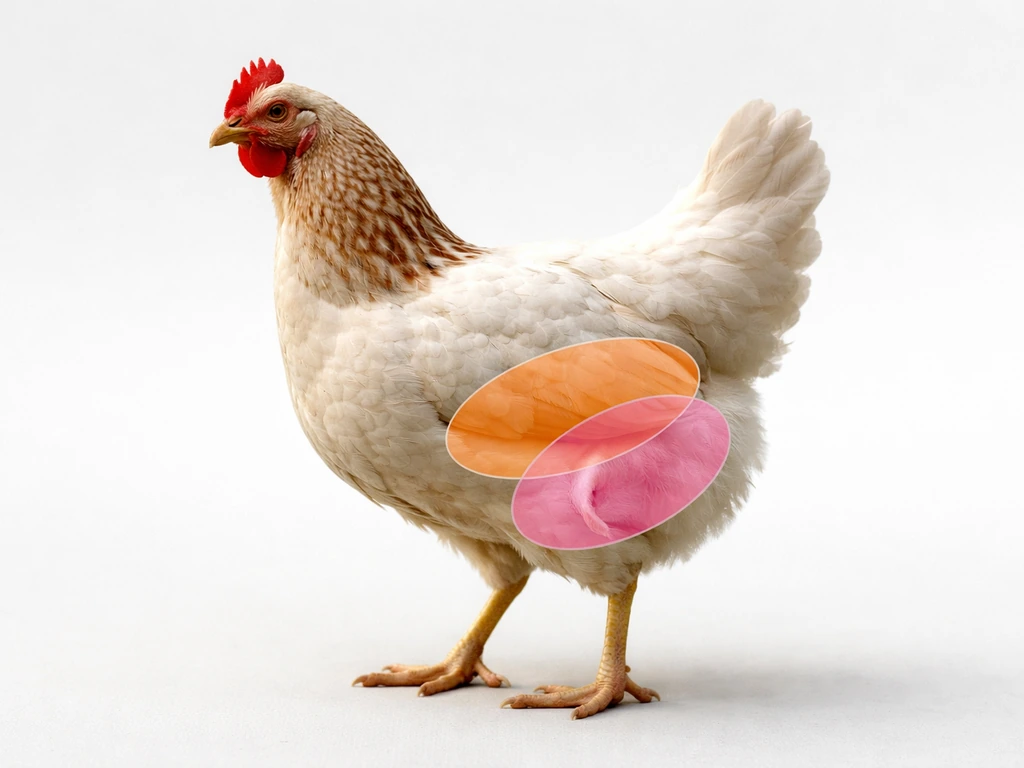
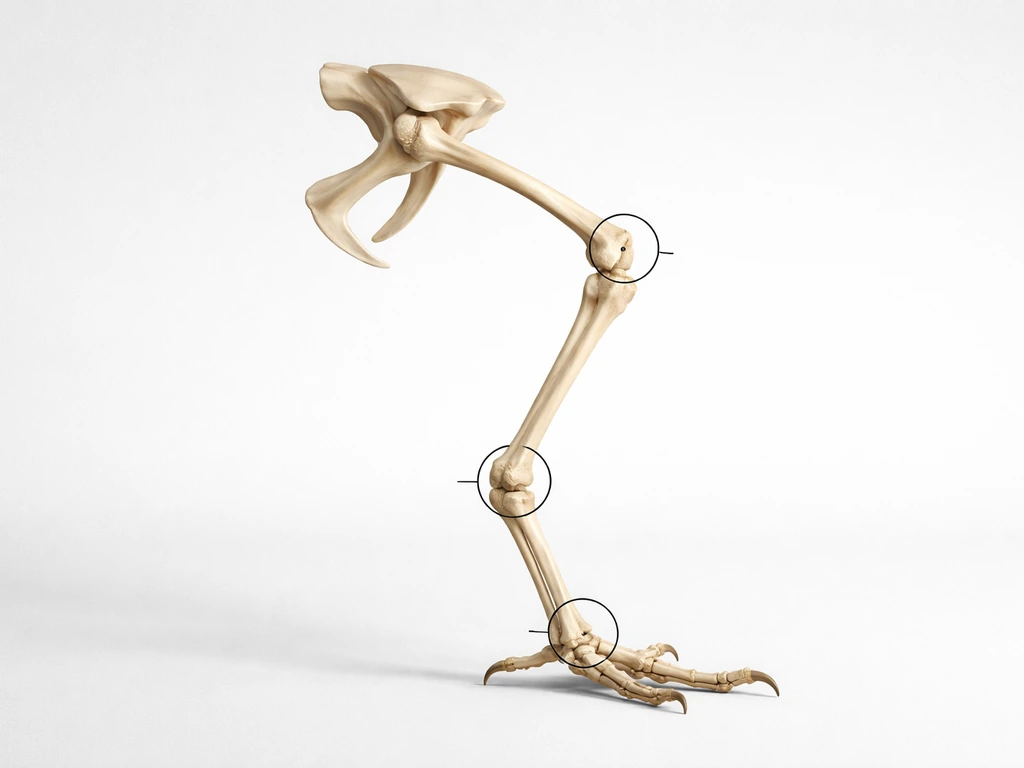
When you look at a standing bird, the leg appears to start around mid-body and end at the foot. But the segment most people visually treat as the "upper leg" or thigh is often not the femur at all. The femur is tucked in close to the body, nestled against the pelvis, and almost completely hidden under feathers. What's visible as the upper part of the leg in most birds is actually the tibiotarsus (the shin), not the thigh. The true thigh, the segment that contains the femur, is the short, stocky region pressed against the body between the hip and that forward-pointing knee joint.
A simple way to think about it: the thigh is the feathered, fleshy lump sitting right at the top of the leg where it meets the body. It doesn't extend very far. Below that hidden knee, the long visible portion that leads down to the foot is the lower leg and foot complex, not the thigh.
The bones of the bird's leg, top to bottom
Bird leg anatomy has more named bones than most beginners expect, and each one occupies a distinct segment. Here's the full lineup from hip to toe:
| Bone | Common name | Location in the leg |
|---|---|---|
| Femur | Thigh bone | Hip to knee (the true thigh) |
| Tibiotarsus | Shin bone | Knee to ankle joint (the long visible lower leg) |
| Fibula | Side of lower leg | Runs alongside the tibiotarsus, much reduced in birds |
| Tarsometatarsus | Foot/ankle bone | Ankle joint to the base of the toes |
| Phalanges | Toes | Tips of the foot |
Notice that the tibiotarsus is actually a fused bone: the tibia has grown together with the upper tarsal (ankle) bones into one long element. Likewise, the tarsometatarsus is the metatarsal foot bones fused with the lower tarsal bones. Birds have simplified and fused a lot of the small bones that exist separately in human feet and ankles, which is part of why the leg looks so different to us.
The femur itself is described by most avian anatomy resources as a relatively short, stout bone compared to the tibiotarsus below it. Its upper end (the proximal end) fits into the hip socket, called the acetabulum, on the pelvis. Its lower end connects to the tibiotarsus at the knee joint. Wikipedia's bird anatomy notes that at the knee joint, the femur connects to the tibiotarsus, the fibula, which is on the side of the lower leg blank" rel="noopener noreferrer">femur connects to the tibiotarsus at the knee joint.
How to actually find the thigh bone on a diagram or specimen
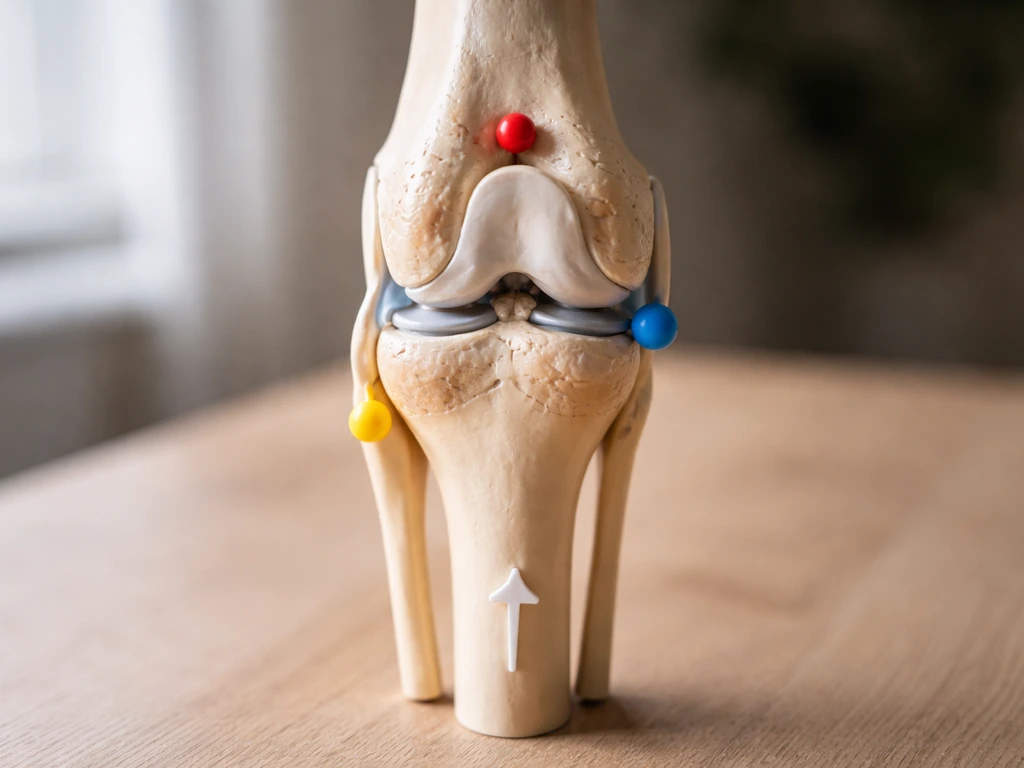
The most reliable landmark is the knee joint. In birds, the knee points forward, not backward as people sometimes assume. What looks like a "backward knee" on a heron or flamingo is actually the ankle joint. Once you find the true knee, the femur is everything above it going up into the body. The tibiotarsus is everything below it going down toward the foot.
On a labeled diagram, you can use a simple A-B-C framework. Think of it like this: point A is the hip (where the femur meets the pelvis), point B is the knee (where the femur meets the tibiotarsus), and point C is the ankle (where the tibiotarsus meets the tarsometatarsus). The femur occupies the A-to-B segment. The tibiotarsus fills the B-to-C segment. Below C is the tarsometatarsus and then the toes.
On a live bird, you can sometimes feel the knee joint by gently pressing in where the upper leg meets the visible lower leg. In many birds the knee joint flexes when the bird crouches, and you can watch it move forward. The femur is the bone sitting behind that joint, pressed against the body.
The misconception that trips almost everyone up
Here's the one that even biology students get wrong: in culinary terms, the "drumstick" on a chicken is what anatomists call the crus or lower leg, specifically the tibiotarsus region. The "thigh" in cooking roughly corresponds to the correct anatomical thigh (femur area). But people often mentally extend "thigh" down too far, treating the whole visible upper portion of the leg as thigh when much of it is actually shin.
One educational labeling guide put it plainly: blank" rel="noopener noreferrer">the drumstick is "often wrongly called the thigh." If you've ever looked at a bird skeleton and thought the thigh looked impossibly short, that's because you were probably expecting it to include the tibiotarsus too. The femur really is that short, stubby bone tucked up against the pelvis.
There's also a naming overlap worth flagging. Some anatomy resources, especially veterinary ones, note that in poultry the term "drumstick" is sometimes applied to the femur in casual usage, flipping the confusion in the other direction. When you're reading bird anatomy materials, it's worth checking whether the author is using culinary terms or strict anatomical ones, because they don't always match up.
The clean rule: femur equals thigh equals the bone between the hip and the knee. Tibiotarsus equals shin equals the bone between the knee and the ankle. If you keep those two landmarks (hip joint and knee joint) in mind, you won't misplace the femur.
Quick ways to remember and label it correctly
A few practical memory anchors that actually work when you're looking at a diagram or a museum specimen:
- The femur is always the bone touching the pelvis. If a bone connects to the hip socket (acetabulum), it's the femur, full stop.
- The knee joint in birds points forward. Find the forward-flexing joint and you've found the bottom of the femur.
- If the bone you're looking at is long and obvious and makes up most of the visible leg, it's probably the tibiotarsus, not the femur.
- On any labeled bird skeleton diagram, count segments from the hip down: segment one (hip to knee) is the femur, segment two (knee to ankle) is the tibiotarsus.
- Think of the chicken thigh you'd order at a restaurant: the meat closest to the body, with that short curved bone, is the femur region. The drumstick below is the tibiotarsus region.
If you're working through a bird anatomy worksheet or diagram, it also helps to compare it to human anatomy first. In humans, you can clearly see and feel the full length of the femur because it runs the visible length of the thigh. In birds, the femur is almost entirely concealed by the body, so you have to infer its position from the joints at either end rather than by looking at a visible limb segment.
Why the femur matters beyond just its name
The femur isn't just anatomically interesting, it's mechanically important. Major leg muscles originate along or near the femur and drive the movements that allow birds to walk, run, perch, and in many species, assist with flight posture and balance. One large muscle group, the femorotibialis, originates along the front surface of the femur and inserts into the patella (kneecap) and patellar tendon, controlling extension at the knee joint. Other muscles connect the femur to the hip, controlling leg swing during walking and running.
Because most of the heavy leg musculature is clustered high up near the body (close to the femur and hip), birds keep their center of mass forward and low during flight. This is part of what makes bird locomotion so efficient. A leg built with heavy muscles at the top and light, tendon-driven lower segments is mechanically better for both walking and flying than a leg with mass distributed evenly all the way down. The femur, short as it is, sits at the center of this muscle concentration.
The femur also shows up in conversations about pneumatic bones, which are bones with air-filled cavities connected to the respiratory system. The lamellae are located in the bird's beak, specifically within the bill surface where they help with feeding where are the lamellae located on a bird. In some bird species, the femur is among the bones that show pneumatization, meaning air sac diverticula extend into the bone itself. Pneumatic bones are found in many bird species, and the pattern of which specific bones pneumatize can vary pneumatization. Not every femur in every species is pneumatic, and scientists note that pneumaticity varies considerably across bird groups, but it's worth knowing that the thigh bone can sometimes be hollow and air-connected in ways that the lower-leg bones may not be. A rhinolith in a bird is another curiosity related to bird anatomy, involving a mineral deposit that forms inside the nasal passages pneumatic bones. This connects to a broader pattern of how birds have lightened their skeletons for flight in ways that are still being studied.
If you want to keep exploring avian leg and bone anatomy, the tibiotarsus (the shin bone directly below the femur) and the tarsometatarsus (the fused foot segment below that) are natural next stops. And if you're curious about bone structure more broadly, the question of which bird bones are pneumatic and why opens up a fascinating window into how avian respiration and the skeleton work together. Related to that, the drumstick bone (tibiotarsus) is worth looking at in its own right, since it's the bone most often confused with the femur in everyday descriptions. The alula bone, sometimes called the bird’s “thumb” wing, helps control airflow at the front edge of the wing during slow flight.
FAQ
Is the femur always the same length relative to the tibiotarsus in all birds?
No. The femur is generally short and stout, but its visible proportion can change by species, body posture, and how much of the upper leg is covered by feathers or skin. In some birds with very upright stances, the femur looks longer because the knee angle exposes more of the upper limb segment.
How can I tell the femur from the tibiotarsus on a real bird carcass or dissection?
Use the joints, not the outer shape. The femur is the bone segment between the hip socket and the forward-pointing knee joint, while the tibiotarsus starts at that knee and extends down to the ankle. If you can locate the knee joint clearly, everything above it is femur, everything below it is tibiotarsus.
Why does the “upper leg” look backward or misplaced compared with human leg anatomy?
Because the bird knee and ankle are oriented differently than people expect. The joint people assume is the knee is often actually the ankle, making the femur appear tucked and the lower long bone look like the thigh. The landmark test is still hip-to-knee for femur.
Does the term “drumstick” always refer to the tibiotarsus in every context?
In everyday cooking it usually does, but naming can vary in veterinary or educational materials. Some sources describe different portions as “drumstick” informally, so it helps to confirm whether the author is using culinary cuts or strict anatomical labels.
Are birds’ “thigh” meat cuts guaranteed to be only femur tissue?
Not necessarily. Meat yield and how butchers separate tissue can include mixed material near the hip and knee, where cartilage, connective tissue, or attached muscle groups may be present. For strict anatomy, focus on bone identification by joints rather than the food label.
What if a diagram labels the knee the wrong way, how do I avoid confusing the femur?
Check whether the knee joint is drawn pointing forward. If the diagram makes the “knee” look like a backward human knee, it may be depicting the ankle instead. Re-anchor the labeling using the A-to-B-to-C method (hip joint to knee joint to ankle joint) to confirm the femur segment.
Can the bird femur be pneumatic (air-connected) in some species?
Yes, in some bird groups the femur can be among the bones that pneumatize through air sac diverticula, but it is not universal. If you are studying skeletal variation, expect species-dependent differences, and do not assume all femurs are hollow.
If I’m comparing a bird skeleton to a human skeleton, what is the most common mistake?
Assuming the visible upper limb segment is equivalent to the human thigh. In birds, that visible segment often corresponds to the tibiotarsus, while the femur is largely concealed and identified by the hip and knee joints.