
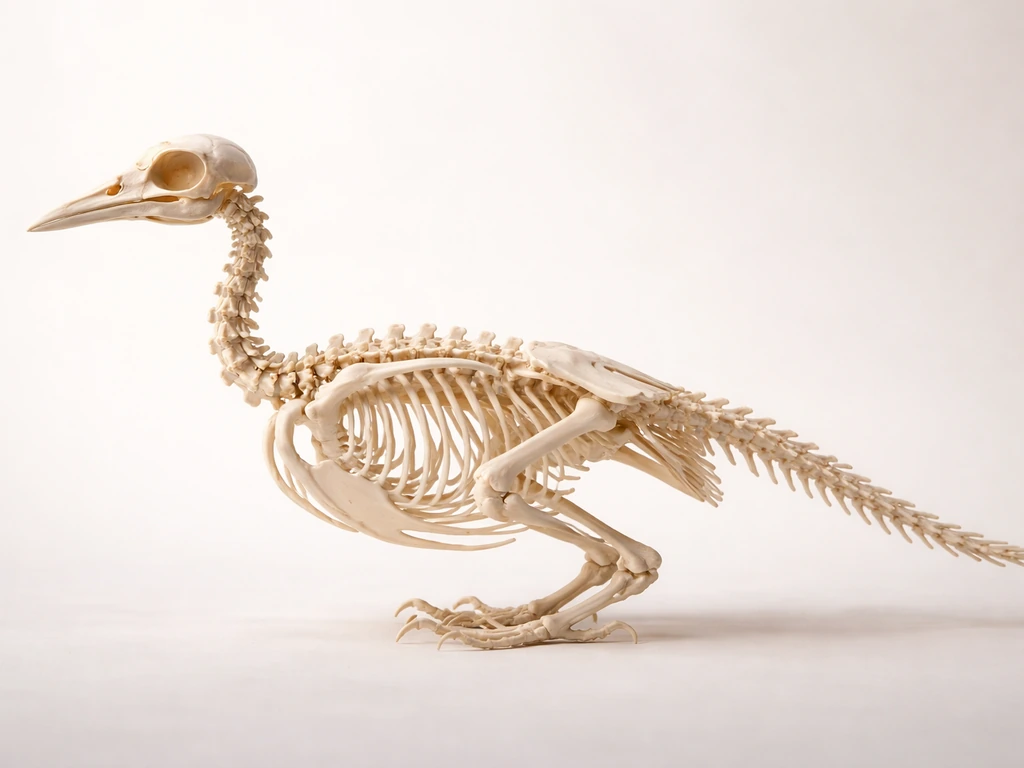
Yes, birds absolutely have vertebrae. Every bird species, from a hummingbird to an ostrich, has a vertebral column (a spine) made up of individual bones called vertebrae. Birds are vertebrates, which means a bony backbone is one of the defining features of the group. What makes birds interesting is that their vertebrae are heavily modified compared to most other animals, with several regions fused together to support flight, posture, and tail feather control. In a bird skeleton, those modified vertebrae form key parts of the spine that support flight posture and the tail feathers vertebrae are heavily modified.
Does a Bird Have Vertebrae? Bird Spine Explained

Marcus Chen
19 Jun 2026
Vertebrae vs vertebral column: clearing up the terms
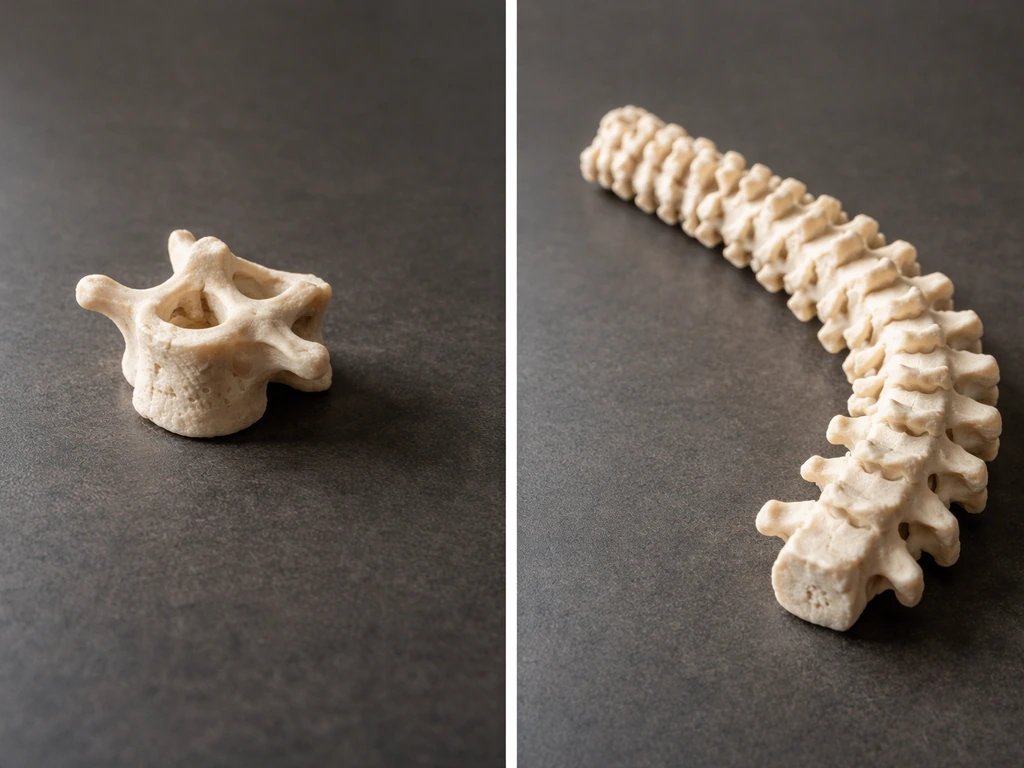
This trips people up more than it should, so let's sort it out quickly. A vertebra (singular) is a single bone, one disc-like segment of the backbone. Vertebrae (plural) is just what you call more than one of them. The vertebral column, also called the spine or backbone, is the full chain of those individual vertebrae running from the base of the skull down to the tail. So when someone asks 'does a bird have a vertebrae,' they're really asking whether birds have a vertebral column, and the answer is yes. Birds do have a vertebral column, so the correct answer to whether a bird has a spine is yes.
If you've been wondering about the difference between a bird's vertebral column and its backbone, those terms mean the same thing. And if you've seen the related question about whether a bird has a backbone or a spine, you're covering the exact same anatomy from a different angle. If you are also wondering about whether birds have a backbone or a spine, the answer is the same anatomy viewed from a different angle.
Where the spine fits in the bird skeleton
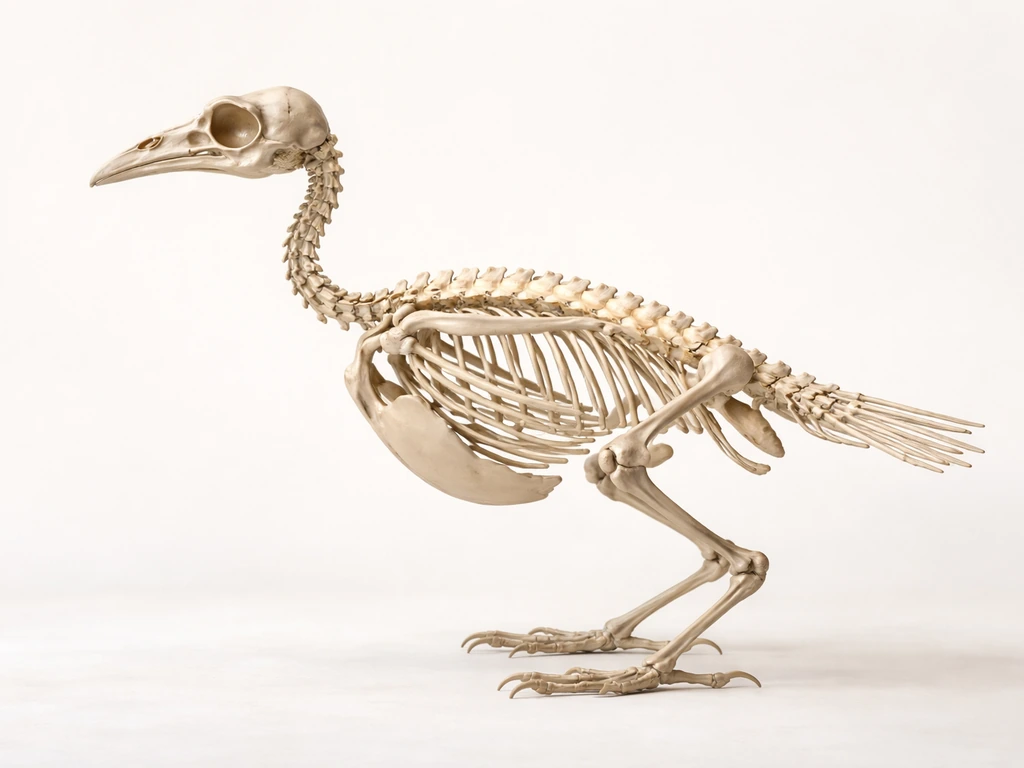
Picture a bird skeleton from beak to tail. Right in the center, running along the top of the body like a ridgeline, is the vertebral column. It's the structural backbone that everything else plugs into. The skull attaches at the top.
The ribs angle outward from the thoracic (chest) vertebrae and connect down to the sternum (breastbone). The legs and pelvis anchor to a fused region of lower vertebrae.
The wings don't attach directly to the spine, but the muscles that power them connect to the sternum and shoulder bones, which are all supported by the vertebral column underneath. Do bird wings have bones? Yes, the wing skeleton includes several distinct bones that connect to the shoulder girdle and support movement during flight.
Bird skeletons also include a skull, a full rib cage, and wing bones, all of which are covered in related anatomy topics worth exploring if you're mapping out the full structure. But the vertebral column is the central axis that holds the whole skeleton together. While collagen is common in connective tissues, the key point is that a bird nest is made from material like saliva and plant fibers, not collagen-rich animal tissue bird nest collagen.
How bird vertebrae are modified for flight
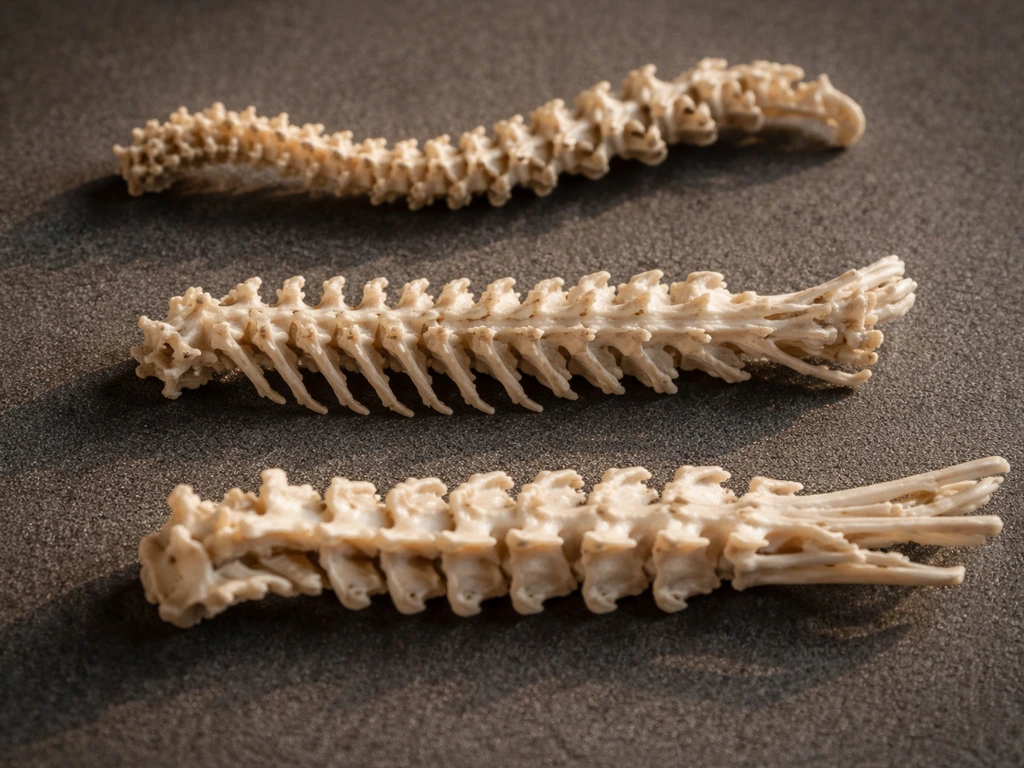
This is where birds get genuinely interesting. A bird's vertebral column is divided into distinct regions, and each region looks quite different from what you'd expect if you're used to thinking of a human or dog spine.
| Region | Location | Key Feature |
|---|---|---|
| Cervical vertebrae | Neck | Highly mobile — birds have more neck vertebrae than mammals (up to 25 in some species) |
| Thoracic vertebrae | Chest (5–10 bones) | Each bears a pair of ribs that connect down to the sternum; some are partially fused |
| Synsacrum | Lower back and pelvis | Multiple vertebrae fused together; the pelvis is also fused to it for strength |
| Free caudal vertebrae | Proximal tail | A short run of separate (unfused) tail vertebrae |
| Pygostyle | Tail tip | Last few caudal vertebrae fused into one bony unit that supports tail feathers |
The thoracic region and rib cage
The thoracic vertebrae, roughly 5 to 10 of them depending on species, each have a pair of ribs attached. Those ribs connect down to the sternum via a second set of rib segments, creating a rigid chest cage. Birds also have small bony projections on their ribs called uncinate processes: backward-pointing hooks that overlap the next rib and help stiffen the rib cage. This stiffness matters because a flexible chest would be a problem when powerful flight muscles are pulling hard against the sternum. The major flight muscles (the pectoralis and supracoracoideus) originate right on the sternum and keel, so the whole thoracic structure, vertebrae, ribs, uncinate processes, sternum, works as one integrated unit for flight.
The synsacrum: a fused lower spine
Behind the thoracic vertebrae, the spine doesn't stay flexible. Instead, several vertebrae fuse together with the sacral and some lumbar-equivalent bones to form a single structure called the synsacrum. The pelvis is fused to this too. The result is a very rigid lower body, important for birds because they land on two legs and need that pelvic region to be rock solid when absorbing impact and supporting posture on a perch.
The tail end: why bird 'tail bones' look so different
After the synsacrum, there are a few free caudal (tail) vertebrae that still move independently, this is the proximal part of the tail, closest to the body. Then the spine ends in the pygostyle, which is formed by the fusion of the last several caudal vertebrae into one single bone. If you've ever seen a chicken's 'pope's nose' or the fluffy tail base of a turkey, you're looking at the area supported by the pygostyle. It anchors the tail feathers and the muscles that fan and control them.
This is a big departure from most other vertebrates. A dog, a lizard, or a mouse has a long tail made of many separate, mobile vertebrae stacked one after another. A bird's tail is functionally compressed: a short mobile section, then one fused terminal bone. It's a trade-off that reduces weight while still giving birds precise tail feather control for steering and braking during flight.
How to spot the vertebral column on a bird diagram or skeleton
If you're looking at a labeled bird skeleton diagram, the kind you'd find in a biology textbook or museum display, the vertebral column is the easiest structure to trace once you know the landmarks. Here's what to look for, working from top to bottom:
- Cervical vertebrae: a long chain of bones forming the neck, often quite pronounced in birds and clearly separated from the skull
- Thoracic vertebrae: the upper back region where you'll see ribs branching outward on both sides; some diagrams show the partial fusion here
- Synsacrum: a wide, solid-looking fused block in the lower spine area; the pelvis is usually shown attached directly to it
- Free caudal vertebrae: a short run of small bones just beyond the synsacrum
- Pygostyle: the terminal stub at the very end of the spine, sometimes shown as a small flat or pointed bone
Many labeled diagrams use different shading or colors to distinguish these regions, which makes the transition from mobile cervical vertebrae to the rigid synsacrum pretty obvious visually. If you're using a museum skeleton exhibit, say, at a natural history museum, look at a large bird like a hawk or heron. The neck vertebrae alone are impressive. Then trace your eye down the back toward the pelvis, and you'll see that rigid fused block before the tail stub.
One thing that catches beginners off guard: the bird's head is usually tilted at an angle in mounted skeletons, which can make the cervical vertebrae look like they curve forward rather than straight down the back. If you're also wondering what bird skulls are like, the same diagrams can help you spot how the head bones are shaped and fused does bird have skull. That's normal. Birds have far more neck vertebrae than humans do, and those vertebrae are shaped to allow the head to rotate dramatically, which is why owls can turn their heads so far without moving their bodies.
Good next steps for learning more
If this sparked more questions about bird bones, which honestly is how it went for me when I first started digging into avian anatomy, here are some practical ways to keep going.
Useful search terms for beginners
- Bird vertebral column diagram (pulls up clearly labeled skeleton images)
- Avian skeleton labeled (gives you the full bone-by-bone breakdown)
- Synsacrum bird anatomy (specifically for the fused lower spine)
- Pygostyle function birds (covers the tail bone and feather connection)
- Bird rib cage uncinate processes (if you want to go deeper on the thoracic structure)
- Vertebrate vs invertebrate basics (helpful if you want the bigger-picture context of why having vertebrae matters at all)
Reliable reference resources
For labeled diagrams, Fernbank Science Center publishes a clear bird skeleton image with all the major regions marked, it's one of the most beginner-friendly visual references out there. The Animal Diversity Web (hosted by the University of Michigan) covers vertebrate classification and gives solid context for why birds fall into the vertebrate group. OpenStax's Anatomy and Physiology textbook (freely available online) has a good general primer on what a vertebral column is and how individual vertebrae form a continuous spine, useful if you want to understand the concept before applying it specifically to birds. Britannica's bird anatomy pages cover the skeleton in straightforward terms, including the synsacrum and rib cage structure.
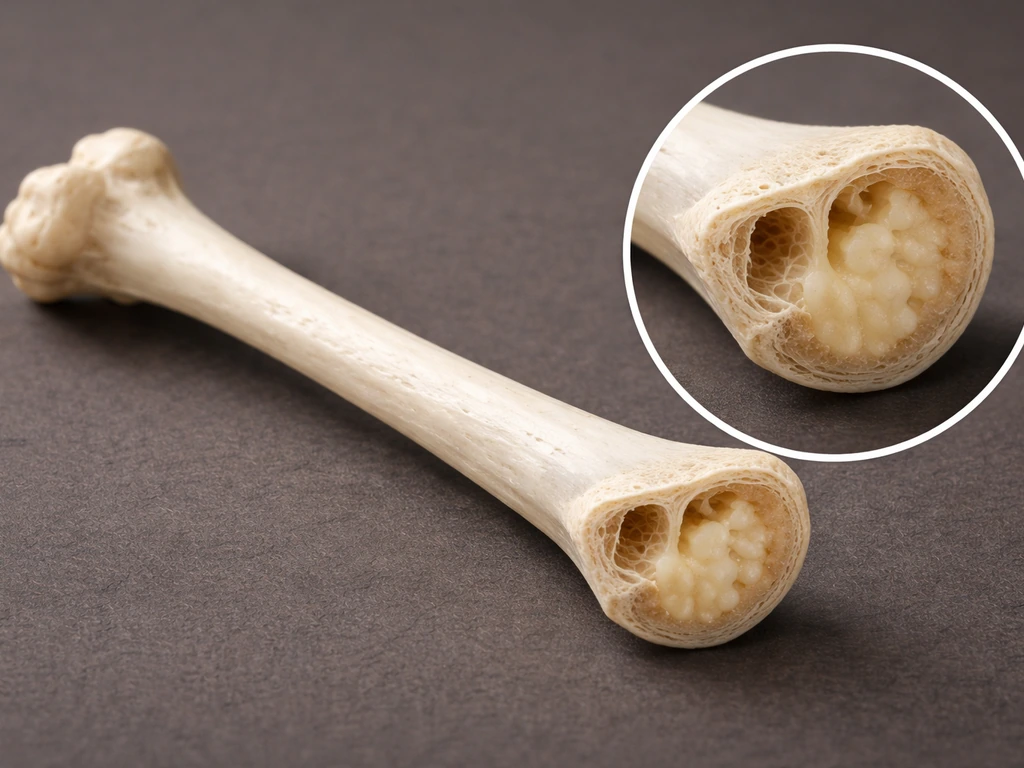
The topic connects naturally to a few other questions worth exploring: whether bird bones have marrow (they do, though some are hollow and air-filled), what's inside bird wings in terms of bone structure, and what type of skeleton birds have overall. Each of those fills in a different piece of the same picture, all roads lead back to the vertebral column as the central axis holding it together.
FAQ
Does a bird have vertebrae, even in the tail where the bones look fused?
Yes. Birds still have vertebrae in the tail region, but many of the caudal vertebrae fuse together to form the pygostyle (the single terminal bone that anchors tail feathers).
Are bird vertebrae different from human vertebrae in shape or only location?
They are both different. Birds have the same basic idea of stacked vertebral bones, but their vertebral column regions are reorganized, with multiple areas fused to create a stiffer structure for flight and posture.
How many neck vertebrae does a bird have compared with a human?
Most birds have more neck vertebrae than humans. The exact count varies by species, but the difference helps birds rotate their heads widely using specialized neck vertebrae.
Do birds have a backbone all the way from the skull to the tail?
Yes. The vertebral column runs from the base of the skull down the back, continuing through the synsacrum and into the tail region, where it ends at the pygostyle.
If someone asks “does a bird have vertebrae or ribs,” which answer is correct?
Both are correct in different ways. Vertebrae are the spine bones, ribs are part of the chest cage attached to thoracic vertebrae, so birds have vertebrae that connect to ribs forming a rigid thorax.
Do birds have the same number of sacral vertebrae as other animals?
Not in the same way. Birds have a synsacrum that forms from fusion of sacral and some lumbar-equivalent bones, so the “count” is less useful than recognizing the fused block.
Are birds’ tail movements controlled by many separate bones?
Only partly. There is a short, more mobile proximal tail with free caudal vertebrae, but the terminal part is compressed into the pygostyle, so the tail is not made of long, fully independent vertebra stacks like many mammals.
In a mounted skeleton, why can the neck vertebrae look oddly curved forward?
It is usually an artifact of how the specimen is positioned (the head tilt and mount angle). The cervical vertebrae are designed for motion, but the display orientation can make them look less “straight down” than in life.
Do birds have vertebrae in the wings too?
They do not have a spine-like vertebral column in the wings. The wings have their own bones (in the arm and hand regions), while the vertebral column provides the central body support that wing muscles attach to.
If a bird’s spine is fused in parts, does that mean it cannot bend at all?
No. Birds have fused regions for stiffness (especially in the chest and lower back), but they still have flexible segments in the neck and some parts of the tail, so they can bend and move those areas.
Next Articles
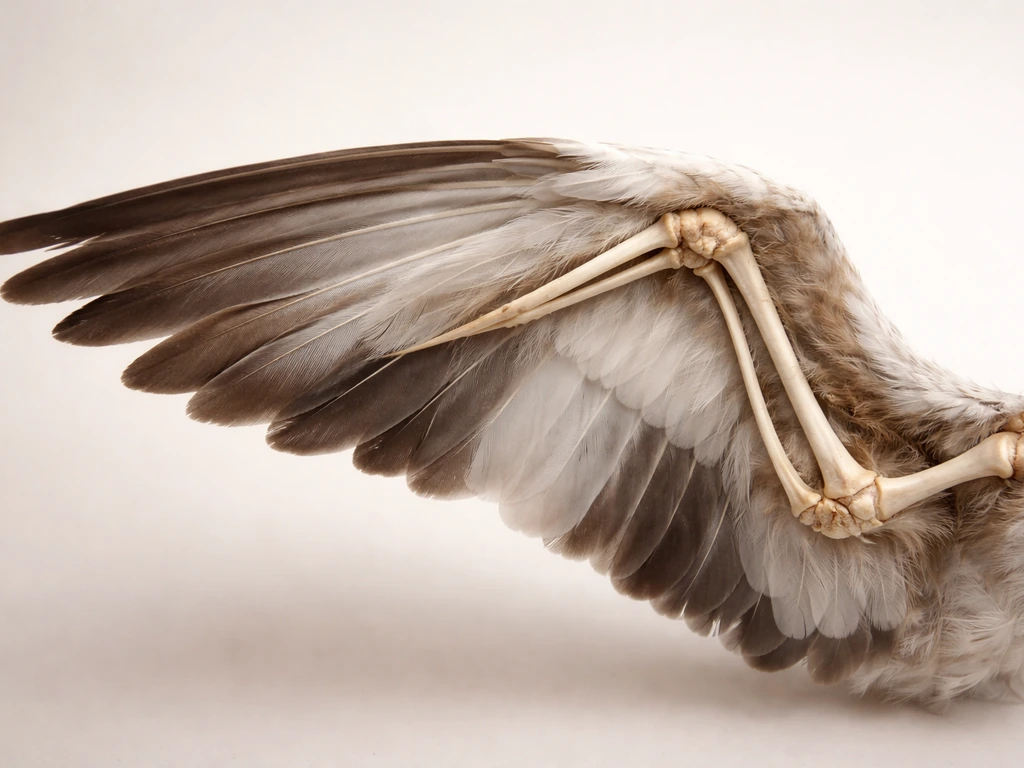
Do Bird Wings Have Bones? Bird Wing Anatomy Explained
Yes, bird wings have bones. Learn which bones form joints and support feathers and flexible flight surfaces.
Do Bird Bones Have Marrow? What’s Inside and Why It Matters
Yes, bird long bones have marrow in the medullary cavity, but many are hollow or pneumatic for lightweight flight.
Does a Bird Have a Backbone? Bird Spine Explained
Yes. Birds are vertebrates with a backbone of vertebrae that supports posture and flight with lightweight, adapted bones