
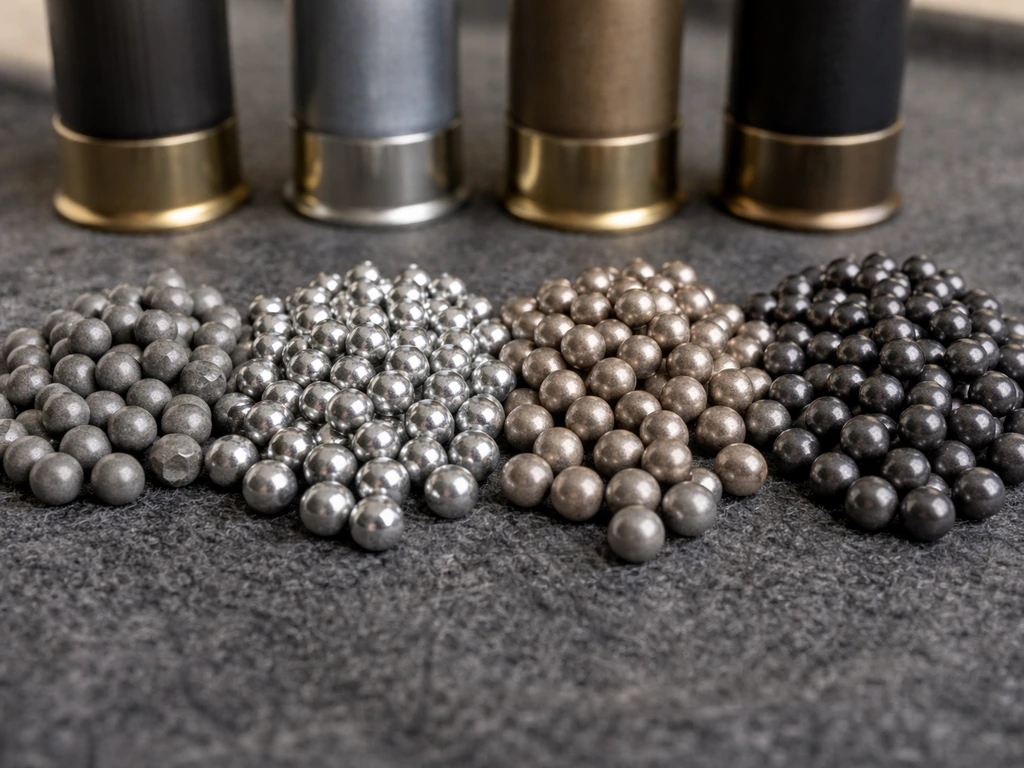
Most birdshot pellets today are made of lead, steel (iron/carbon alloy), bismuth-tin, or tungsten-based composites. Lead is still the most common material in upland and small-game loads, while steel dominates waterfowl hunting because federal law requires non-toxic shot for migratory birds. The exact material in your box depends on the load, the manufacturer, and what regulations apply where you're hunting.
What Is Bird Shot Made Of? Pellet Materials and Options

Marcus Chen
6 Jul 2026
First things first: "bird shot" as ammunition, not biology
If you landed here expecting something about bird droppings, bird litter, or any biological material from birds, this isn't that article. "Birdshot" (often written as one word) is a type of shotgun ammunition, specifically a shell loaded with many small pellets designed to bring down birds in flight. The word "shot" here means projectile pellets, not anything organic. It's the stuff that comes out of a 12-gauge or 20-gauge shotgun when you pull the trigger. Once you know that, everything else about composition makes a lot more sense.
A standard shot cartridge is a single round of shotgun ammunition loaded with dozens to hundreds of small spherical pellets rather than one bullet. The smaller the pellet size number (like #8 or #9), the smaller and more numerous the pellets. Larger numbers like #2 or BB are bigger and fewer. Size aside, though, the material those pellets are made of is what drives performance, legality, and safety, and that's where the real variation lives.
What the pellets are actually made of
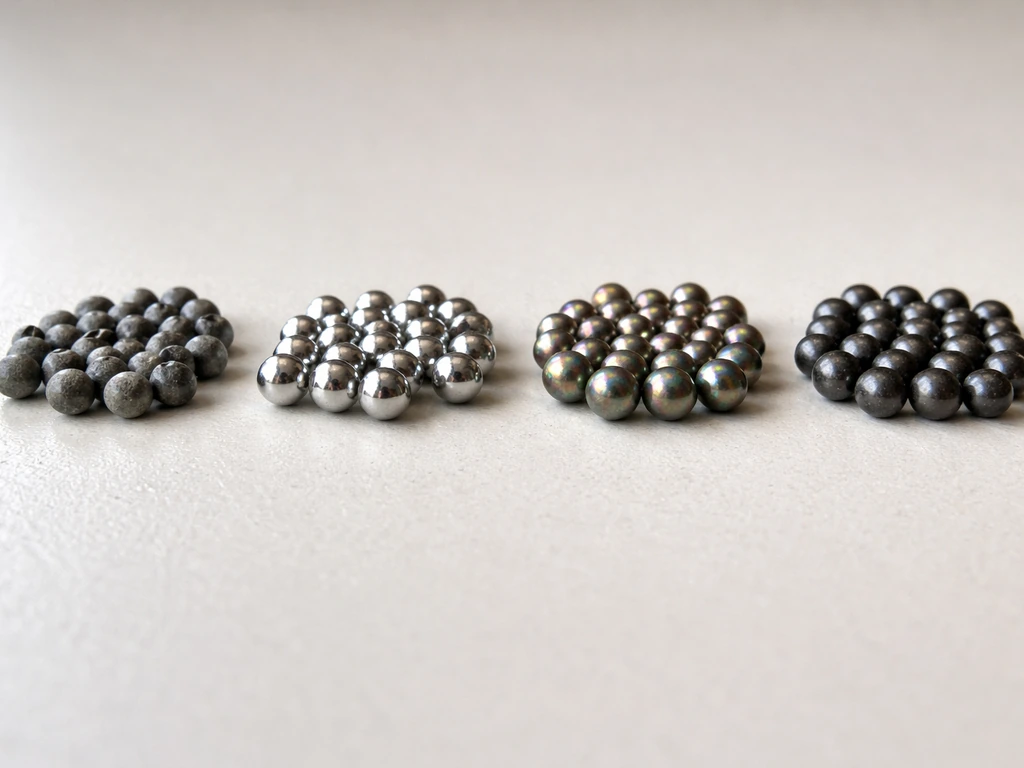
Lead has been the go-to pellet material for over a century. It's dense, malleable, relatively cheap, and it deforms on impact in ways that transfer energy efficiently. Most upland bird loads (pheasant, quail, dove, grouse) and small-game loads you find at a sporting goods store are still loaded with lead pellets. They're cast or swaged into near-perfect spheres and sometimes hardened slightly with a small percentage of antimony.
Steel shot is the dominant alternative today. If you want the best bird flesher results, choose the right pellet material for your goal and your equipment, then verify it against the load information on the box. The pellets are made by cutting soft iron/steel wire into segments and tumbling them into spheres. Because iron is less dense than lead (about 30% less dense by volume), steel pellets need to be larger in diameter to carry the same downrange energy. That's why you'll see charts advising hunters to go up one or two shot sizes when switching from lead to steel.
Bismuth-tin is the premium lead-analog alternative. Bismuth pellets are dense enough to closely match lead's ballistic performance at similar sizes, they're safe for older shotguns with fixed chokes that can't handle hard steel, and they're cast in molds much like lead. The tradeoff is cost: bismuth loads are noticeably more expensive than steel.
Tungsten-based composites are a category rather than a single material. Products labeled HEVI-Shot, tungsten-matrix, tungsten-polymer, or tungsten-nickel-iron are all different formulations. Some suspend tungsten powder in a polymer binder that cures into a pellet; others are true metal alloys. Ingredients can include tungsten, nickel, iron, bismuth, tin, zinc, copper, and even polyethylene. These are often denser than lead, which means smaller pellets carrying more energy, but they're also the most expensive option on the shelf.
| Material | Density vs. Lead | Common Use | Cost Level | Choke Compatibility |
|---|---|---|---|---|
| Lead | Baseline (high) | Upland, small game | Low | Most chokes |
| Steel (iron/carbon) | ~30% less dense | Waterfowl (federally required) | Low-moderate | Steel-rated chokes only |
| Bismuth-tin | Close to lead | Waterfowl, vintage guns | High | Most chokes including fixed |
| Tungsten composites | Equal to or denser than lead | Waterfowl, turkey | Very high | Varies by specific product |
How pellet material changes how the shot actually behaves
Density is the single biggest variable. A denser pellet retains velocity better over distance, which means more energy at 40 yards compared to a lighter pellet of the same size. This is why lead and bismuth can be effective at ranges where steel pellets of the same number would be running out of steam. How far a 12-gauge bird shot load effectively travels depends heavily on pellet size, shot material, and the choke you’re using. If you're curious about maximum effective range differences between load types, the physics of pellet density is the core reason.
Hardness matters for the shotgun itself, not just the target. Steel is significantly harder than lead. When steel pellets are pushed through a tightly constricted choke, they don't compress the way lead does, and the choke can be damaged or deformed. That's why manufacturers specifically rate chokes for steel shot and why hunters using bismuth (which is softer) have more flexibility with older guns. If you're ever uncertain whether your shotgun can handle a specific pellet material, contacting the manufacturer or a gunsmith is the smart move.
Pattern density also shifts with material. Because steel is less dense, you shoot larger pellets of steel to match lead's energy, which changes how the pattern spreads. Tungsten composites, being denser, can use smaller pellets that still hit hard, which can tighten patterns. None of this is magic; it's just physics driven by what the pellets are made of.
Lead-free alternatives and what drives them
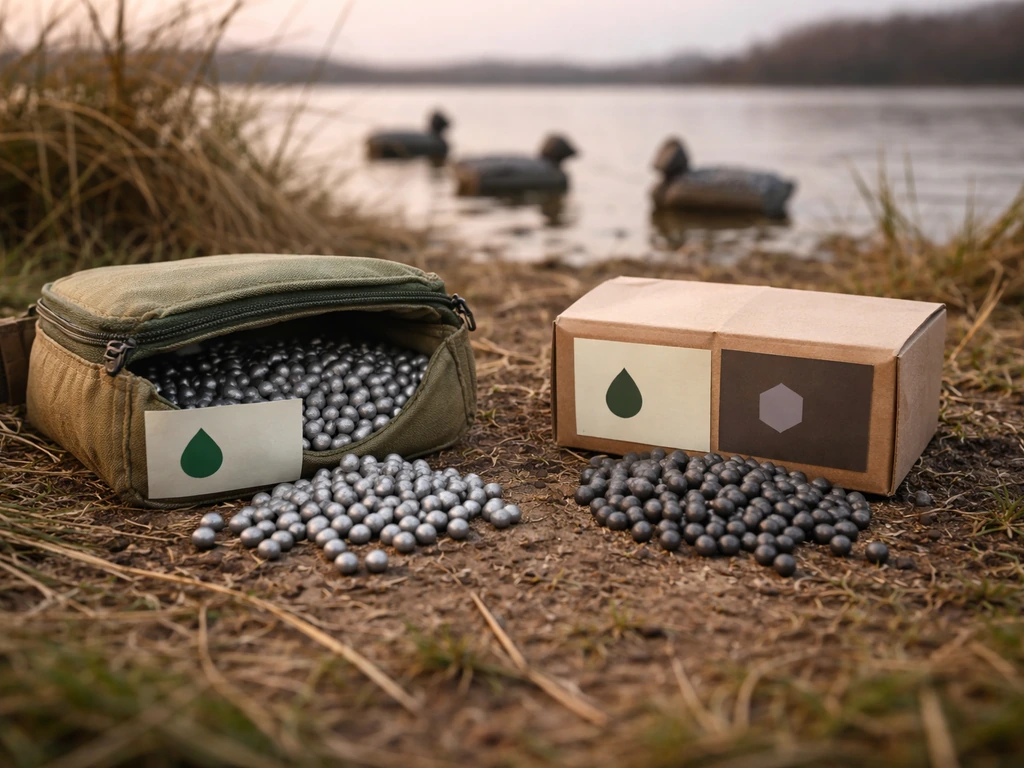
The U.S. Fish and Wildlife Service (USFWS) banned lead shot for waterfowl hunting nationwide in 1991. Since then, a formal approval process determines which non-toxic shot types hunters can legally use on migratory birds. Approved materials as of today include steel, bismuth-tin, tungsten-iron, tungsten-polymer, tungsten-matrix, tungsten-nickel-iron, tungsten-tin-bismuth, tungsten-bronze-iron, and tin. This list has grown over the years as manufacturers developed new formulations and submitted them for testing.
Some states extend non-toxic shot requirements beyond waterfowl to other species or specific areas, so the list of when you need lead-free ammo keeps expanding in some regions. The practical takeaway: if you're buying a box of shotgun shells for ducks or geese, it's non-toxic by law. If it's for pheasant on private upland land, lead is still common, though individual states and hunting areas may have their own rules.
Cost is a real factor. Steel shot prices have dropped over the decades to the point where they're not dramatically more expensive than comparable lead loads. Bismuth and tungsten loads, though, can run two to four times the price of lead. That price gap is real and worth knowing before you assume all non-toxic shot is interchangeable.
Health and environmental considerations worth knowing
Lead shot left in the environment persists and gets ingested by wildlife. Waterfowl and shorebirds pick up spent pellets from lake and marsh sediment, mistaking them for grit. Once in a bird's gizzard, lead pellets dissolve slowly under acidic conditions, and the bird absorbs the lead directly into its bloodstream. Scavenging raptors like bald eagles can be exposed secondarily by eating carcasses or gut piles containing lead fragments. This is a real, well-documented exposure pathway, not a theoretical concern.
For people handling ammunition, the main exposure pathways are ingestion and inhalation of lead dust or particles. The CDC has linked firearm use to measurably elevated blood lead levels in some users, primarily from primer residue and handling lead shot. Practical risk reduction is straightforward: wash hands thoroughly after handling lead shot or spent shells, avoid eating or drinking at the range, and don't use lead loads in enclosed spaces without adequate ventilation.
Children are more vulnerable to lead than adults because their bodies absorb a higher proportion of ingested lead. Keeping lead ammunition stored out of reach of children and not allowing kids to handle loose lead shot is basic but important. Non-toxic alternatives eliminate this particular concern entirely.
Bismuth and tungsten composites are generally considered environmentally safer than lead, which is the primary reason they received USFWS approval. That said, "non-toxic" in a regulatory context means non-toxic to wildlife at environmental exposure levels, not that these materials are completely inert in every scenario. For practical purposes as a hunter or ammunition buyer, the approved non-toxic alternatives are meaningfully safer for the environment than lead.
How to figure out exactly what's in your specific box
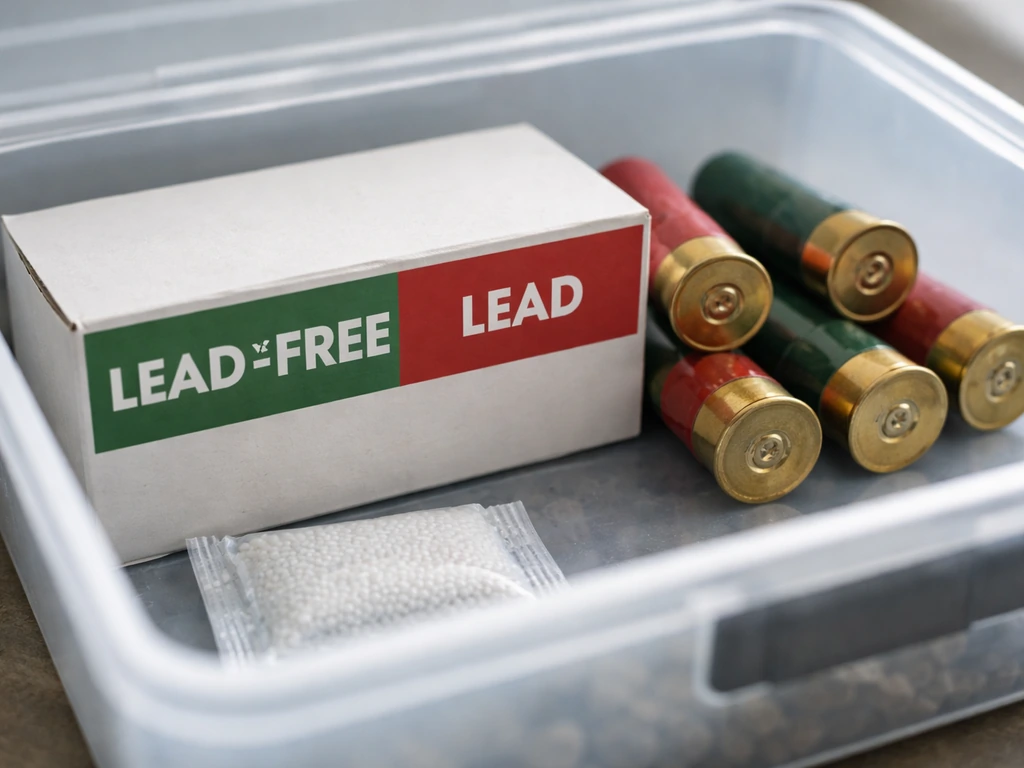
The box label is your first and best resource. Every commercial shotshell box is required to identify the shot material. Look for terms like "lead shot," "steel shot," "bismuth," or brand-specific names like HEVI-Shot. If the box says "non-toxic," that's a legal designation meaning it's one of the USFWS-approved materials, but you still want to read the fine print to know which one.
The headstamp on the brass base of the shell can also carry identifying information. SAAMI defines the headstamp as numerals, letters, and symbols stamped into the cartridge head to identify the manufacturer, gauge or caliber, and other relevant data. It won't always specify pellet material, but it will confirm the gauge and sometimes the load type, which you can then cross-reference with the manufacturer's product specs online.
If you have loose pellets with no packaging, a magnet is the fastest field test. Steel shot is ferromagnetic and will stick to a strong magnet. Lead, bismuth, and tungsten composites generally won't. The USFWS explicitly recommends the magnet test as a quick way to confirm whether a pellet is iron/steel-based. It's not a perfect all-material identifier, but it immediately separates steel from the other materials.
- Read the box label: the shot material must be printed there on legal commercial loads.
- Check the headstamp on the shell base for manufacturer and gauge, then look up the specific load on the manufacturer's website.
- Use a magnet: steel pellets stick, lead and bismuth do not.
- Weigh the pellets if you have a precision scale: lead is denser than steel, so a given pellet size in lead will be heavier than the same size in steel.
- Look for a color code or band on the shell hull: some manufacturers use colored hull markings to distinguish lead from non-toxic loads.
When in doubt, the manufacturer's Safety Data Sheet (SDS) is the most authoritative material composition document you can access. For example, HEVI-Shot’s SDS lists component ranges including tungsten, bismuth, tin, nickel, iron, zinc, copper, and polyethylene, showing that some HEVI-Shot pellets are composite formulations rather than a single metal. These are publicly available for most commercial ammunition brands and list the exact chemical constituents by percentage, including any polymer binders or coatings in composite pellets.
Storing and handling birdshot based on what it's made of
General SAAMI guidance applies to all shotshell ammunition: store in a cool, dry location away from heat sources, flames, and strong oxidizers. The cardboard box the shells come in is genuinely useful packaging, not just marketing, because it protects the shells from moisture and physical damage that can affect crimping and powder integrity. Most shotshells store reliably for decades under proper conditions.
Lead shot specifically warrants a few extra habits. Don't store loose lead shot in open containers in areas where children or pets have access. Handle spent lead shells at the range with the same hygiene awareness you'd apply to any lead product: wash hands before eating or touching your face. Lead shot can also leave residue on surfaces, so range bags that hold lead loads are worth cleaning periodically.
Steel shot loads can be more sensitive to moisture than lead because iron corrodes. If you're storing steel loads long-term, keeping them in a low-humidity environment matters more than it does for lead. Bismuth and tungsten composite pellets are generally corrosion-resistant, but their shells are still subject to the same moisture concerns at the powder and primer level.
Always use the correct ammunition for your specific shotgun. For many bird hunters deciding between a 20 gauge and a 12 gauge, the right choice is also about matching the gauge and pellet load to your shotgun's intended use and choke 20 gauge vs 12 gauge for bird hunting. SAAMI explicitly lists "use the correct ammunition" as a core firearm safety rule. Steel shot requires a shotgun with steel-rated chokes; using steel shot in a fixed full-choke gun designed for lead can damage the choke and potentially the barrel. Before switching pellet materials, a quick check with your gun's manufacturer or a qualified gunsmith is worth the five-minute call.
FAQ
If I buy a box labeled for “non-toxic” birdshot, how can I tell exactly what material it is?
Many boxes list “steel,” “bismuth,” or a brand formulation like HEVI-Shot, but some also specify the pellet material only after the gauge and shot size. If the wording is unclear, check the exact product name on the box label and match it to the manufacturer’s load description, since two different loads with the same shot number can use different pellet materials.
Do two birdshot loads with the same shot size (#7, #8, BB) perform the same if the materials differ?
Yes, you can have the same pellet size number using different materials, for example #7 steel versus #7 lead. The density difference is why “#7” does not guarantee the same energy, pattern, or effective range across materials, so you should compare both the shot size and the stated pellet material.
If I switch from lead to steel, can I keep the same shot size and choke settings without changes?
No. Shot size charts often assume a specific material family, and switching materials can change both how hard the pellets hit and how they pattern through your choke. A practical step is to run a patterning session at your intended distance, because chamber and choke geometry can amplify differences in pellet deformation and spread.
Are older shotguns always safe to use with steel or tungsten-based birdshot?
Not always. Some older shotguns have choke systems that are compatible with steel only up to specific markings (like “steel proof” or “steel-rated”), and others are safe only with softer non-toxic pellets such as bismuth. The safest decision aid is to follow the shotgun maker’s choke rating, not just the age of the firearm.
Can I always identify birdshot material with a magnet when I have loose shells?
A magnet is reliable for separating steel from non-iron materials, but it will not distinguish among lead, bismuth, and most tungsten composites that do not strongly attract a magnet. If you need higher certainty, the best next step is the ammunition SDS or the manufacturer’s product spec for that exact SKU.
What’s the practical difference between using steel versus bismuth in a fixed choke shotgun?
Fixed-choke shotguns can be more restrictive, because the pellets have to survive the constriction without excessive hardness and deformation issues. Bismuth is often chosen for these guns because it tends to be softer than steel, but you still want to confirm choke compatibility with the manufacturer or gunsmith before firing.
Does “non-toxic” mean I do not need to worry about hygiene or exposure after handling or shooting?
“Non-toxic” in the regulatory context means approved for wildlife exposure at environmental levels, it does not mean you can skip normal lead-like hygiene if you are handling residues or dusty components. If you are using non-lead pellets, you still should avoid eating while at the bench and wash hands after handling any shotshells, especially after firing indoors or in enclosed spaces.
What storage mistakes most often ruin steel or other birdshot loads over time?
For long-term storage, the shell’s contents matter, but so does the container. Keep shells in their original box or another airtight, moisture-resistant container, rotate stock, and avoid storing where temperature swings can cause condensation. Steel is the most sensitive to moisture-driven corrosion risk at the pellet level.
If my favorite load is out of stock, can I replace it with a similar-looking box from a different brand?
You generally should not. Pellet material affects how pellets deform and how tightly they pattern, so swapping materials can reduce hit probability even if the target looks similar. The next step is to confirm the exact load details, then pattern your firearm with the new ammunition before hunting.
Can I reload birdshot using steel, bismuth, or tungsten pellets interchangeably with lead reloading recipes?
For reloading, you need to verify both your brass, powder, wad, and the pellet material your components are intended for, because different shot hardness can change required crimp and wad fit. Also, many “non-toxic” pellets are heavier per pellet size, which can affect payload consistency and pressure considerations, so use published load data for that exact pellet material.
How do I handle situations where state rules allow lead but the hunting area still requires non-toxic shot?
Yes, sometimes. Even within a state, some public lands, reservoirs, or waterfowl areas can require non-toxic shot under local rules, even if upland hunting elsewhere permits lead. Before you buy or carry ammo, verify the specific property rules for the day and area you plan to hunt.
Next Articles

How Much Weight Can a Bird Carry Payload Limits Explained
Realistic payload ranges for different birds plus a method to estimate how much weight they can carry safely.

What Bird Has the Highest Heart Rate? Fastest Species Explained
Explains which bird has the highest heart rate, how it’s measured, key contenders, and how to compare readings fairly.

What Is the Highest Altitude a Bird Can Fly?
Find the highest documented bird flight altitude, how it’s measured, and the biology and flight mechanics behind extreme