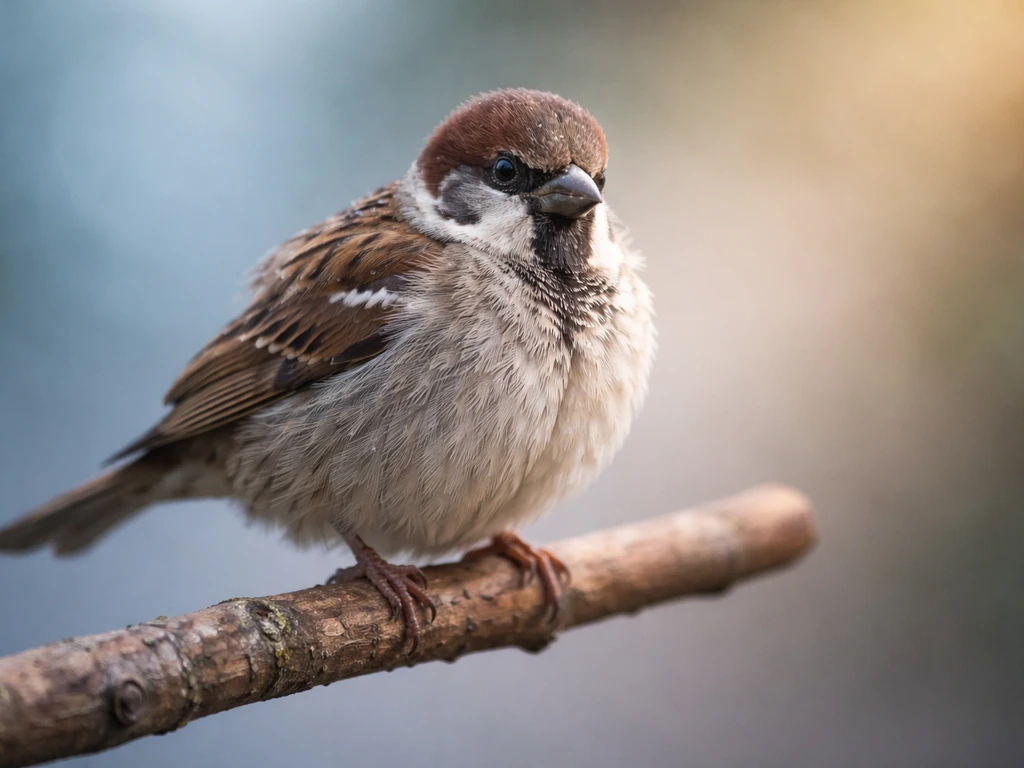
Most birds run a core body temperature somewhere between 40°C and 43°C (104°F to 109°F), which is noticeably hotter than a healthy human's 37°C (98.6°F). The exact number depends on the species, the time of day, what the bird is doing, and how you're measuring it. So if you've ever touched a bird and thought "wow, that's warm," you weren't imagining it.
What Is the Body Temperature of a Bird? Normal Ranges

Marcus Chen
11 Jun 2026
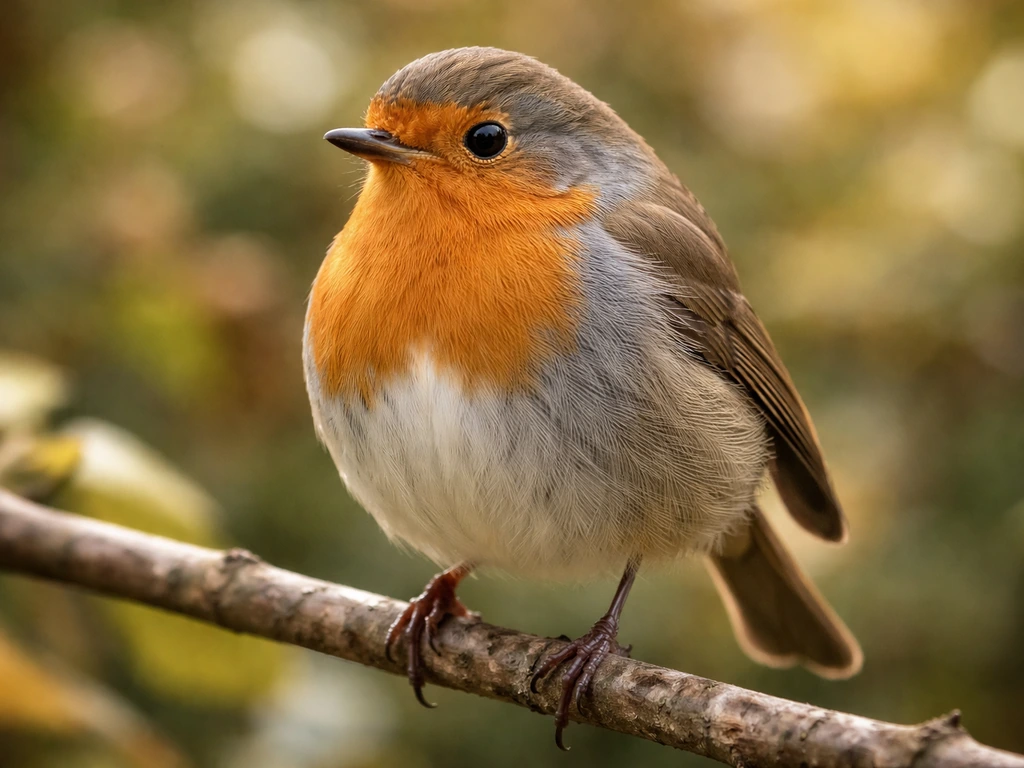
Typical core temperature ranges for common birds
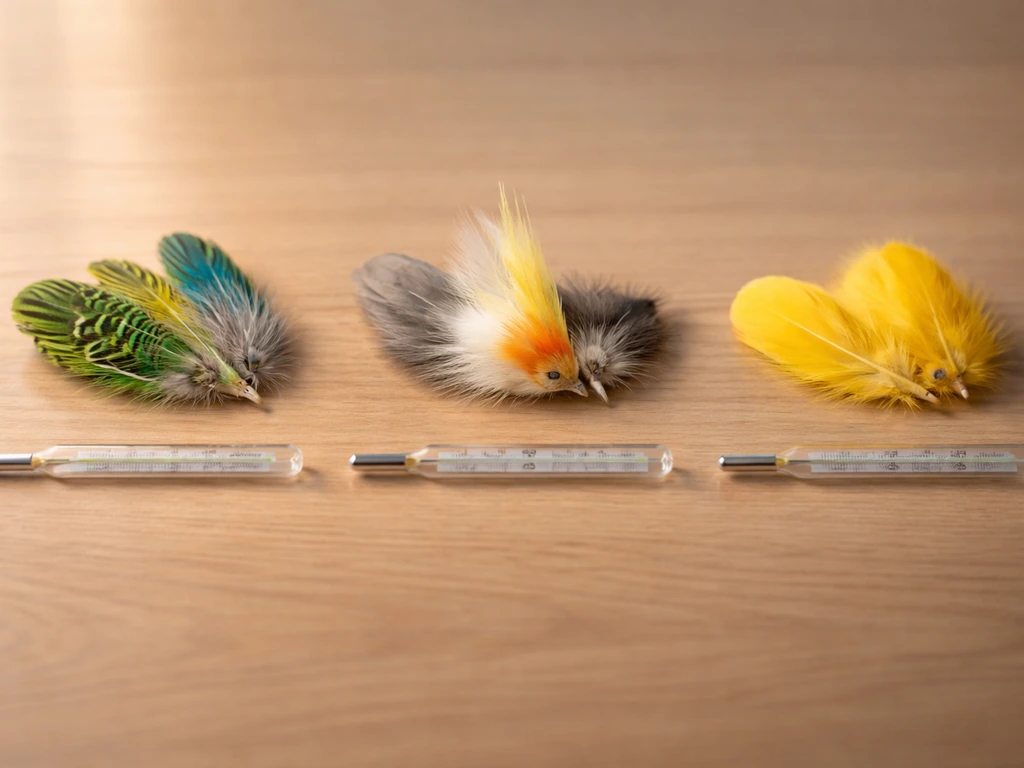
Avian body temperatures are genuinely higher than those of most mammals, and the ranges are tighter than you might expect within a healthy individual. Here's how some well-studied species stack up:
| Species | Average / Typical Range (°C) | Average / Typical Range (°F) |
|---|---|---|
| Budgerigar (parakeet) | 41–42°C (avg ~41.8°C) | 105–108°F (avg ~107.1°F) |
| Chicken (daylight/active) | 40.6–43.0°C | 105.0–109.4°F |
| Pigeon / Dove | ~41.8°C | ~106.6°F |
| Pet birds (general resting) | ~39–41°C | ~103–106°F |
Notice that chickens have a surprisingly wide published range (40.6–43.0°C). That width reflects real biological variation across measurement times, activity levels, and ambient heat conditions, not measurement error. The tighter "resting" figure you'll see in clinical bird care guides, roughly 39–41°C (103–106°F), is used as a baseline before any hands-on veterinary procedure, because a stressed or active bird can run hotter. A healthy fully feathered chicken at rest typically falls around 105–107°F (40.6–41.7°C), which aligns neatly with the budgerigar and pigeon numbers.
One thing that genuinely surprised me when I first looked into this: some wild birds can tolerate core temperatures pushing 48–49°C (118–120°F) during extreme heat, without dying. That's context-dependent and species-specific, not a target range for pet birds. For any bird you're monitoring at home, treat anything above 43°C (109°F) as a red flag worth acting on.
Why the number isn't the same for every bird
Even within a single species, body temperature isn't a fixed number. It shifts throughout the day in a predictable cycle called a circadian rhythm. Pigeon research tracked this precisely: core temperature dipped to around 41.4°C during rest phases and climbed to about 42.9°C during active periods, all within a normal 24-hour window. That's nearly a full degree and a half of swing in a healthy bird.
Several factors push that number up or down:
- Species and body size: Smaller birds tend to run slightly hotter relative to body mass because of their higher metabolic rates.
- Age: Chicks and hatchlings are not yet fully capable of regulating their own temperature and depend heavily on a parent or supplemental heat source.
- Activity level: A bird that has just been flying, handled, or startled will have a meaningfully higher core temperature than one quietly resting.
- Ambient temperature: Hot environments push core temperature up; cold environments challenge the bird to maintain it.
- Time of day: Active daytime hours produce higher readings than overnight rest phases.
- Health status: Infection can drive temperature up (fever), while severe illness, starvation, or cold exposure can push it dangerously low.
This is also why comparing your bird's temperature to a single published number can mislead you if you don't account for context. A budgie that reads 42.5°C right after being handled and is otherwise acting normally is probably fine. The same number in a bird that's sitting puffed at the bottom of the cage is a different story entirely.
What "body temperature" actually means in a bird
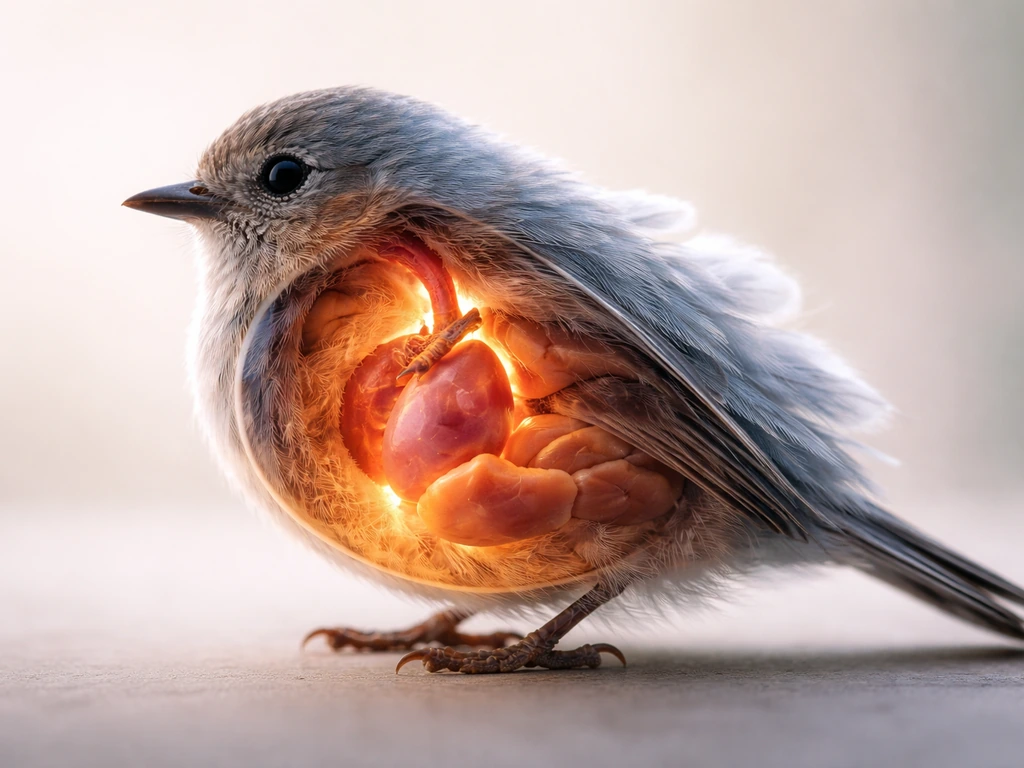
When scientists and vets say "body temperature," they mean core temperature: the temperature deep inside the body cavity, near the organs. This is distinct from surface temperature, which is what you'd pick up by touching a feathered bird or pointing an infrared thermometer at its back.
Feathers are extraordinarily effective insulation. The surface of a bird's plumage can be close to ambient air temperature even when the bird's core is running at 41°C. This is intentional biology, not a flaw. It means any measurement you take from outside the feathers will read lower (sometimes dramatically lower) than true core temperature, and you shouldn't interpret that as hypothermia.
Even skin-level infrared readings from less insulated areas (the cloaca surface, the axillary area under the wing, the tympanic membrane near the ear) still underread core temperature by a few tenths of a degree compared to an internal cloacal thermometer. Research comparing these sites confirmed that the different measurement locations consistently produce different numbers, so the method you use matters as much as the number you get.
If you're trying to understand how a bird's feathers and body covering work together as a thermal system, that topic connects closely to the broader question of what covers the bird's body and how those structures function physiologically. The body of a bird is covered with feathers that act as insulation and directly influence how heat is measured and regulated. Understanding the body covering of a bird also helps explain how feathers insulate heat and how to interpret temperature measurements correctly.
How birds keep their temperature stable
Birds are endotherms, meaning they generate their own body heat internally through metabolic processes rather than relying on the sun or environment to warm them. This is the same basic strategy mammals use, but birds run it at a higher set point and with some uniquely avian tools.
Cooling down when it's hot
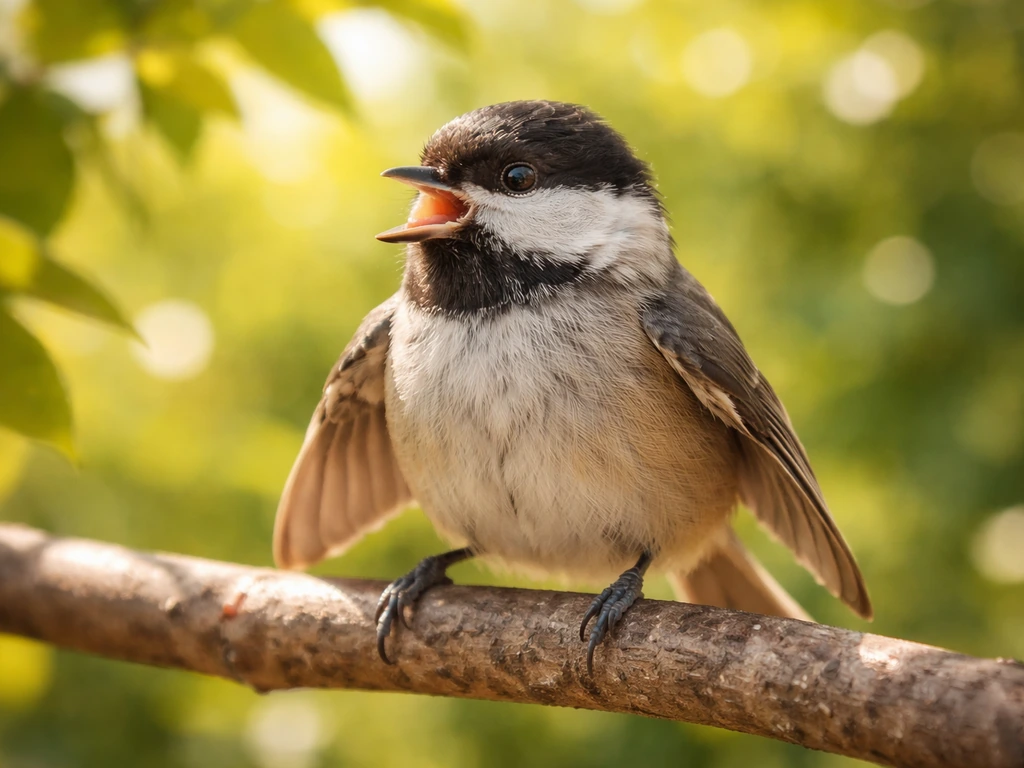
Birds can't sweat. Instead, they lose excess heat in a few specific ways. Panting is the most obvious: they rapidly increase their breathing rate and volume, pushing more air over moist respiratory surfaces and losing heat through evaporation. A related behavior called gular fluttering involves rapid vibration of the moist throat membranes while the mouth is open, essentially a more efficient version of panting that some bird groups (like cormorants and pelicans) are especially good at. Both mechanisms let birds dump heat without losing excessive water through the skin.
Behaviorally, birds seek shade, orient their bodies to minimize sun exposure, spread their wings to increase surface area, and drink more water. Feather position matters too: holding feathers tight against the body reduces the insulating air layer and allows more heat to escape.
Staying warm when it's cold
When ambient temperature drops, birds do the opposite: they fluff their feathers to trap a thicker layer of insulating air close to the skin, reducing heat loss to the environment. They also increase metabolic heat production, huddle with other birds when possible, and reduce activity. Hummingbirds take a more dramatic approach, dropping into a state called torpor overnight, where both body temperature and metabolism fall sharply to conserve energy. That's a fascinating edge case in avian thermoregulation and worth understanding as its own topic.
For more detail on the full physiology of how birds handle temperature extremes, the topic of bird temperature regulation covers these mechanisms in depth.
How to measure a bird's temperature (and do it safely)
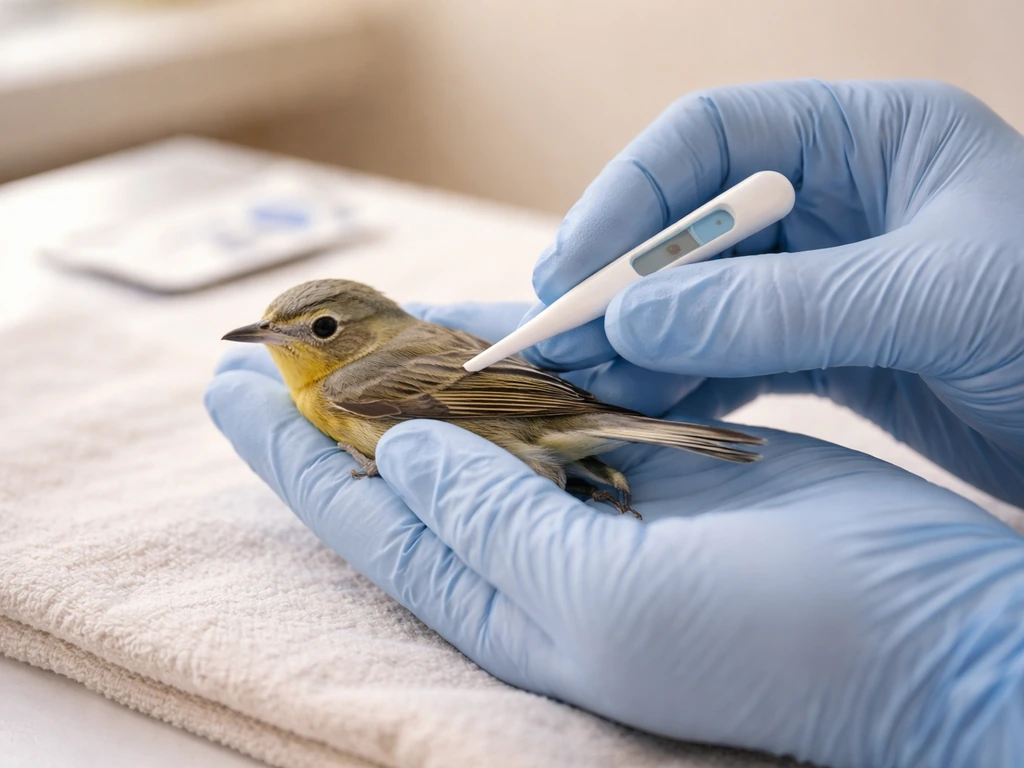
The most accurate accessible method is cloacal thermometry: inserting a lubricated digital thermometer a short distance (typically 1–2 cm) into the cloaca (the bird's combined digestive/urinary/reproductive opening). This is what vets use because it gets closest to true core temperature. That said, it requires proper technique, a calm or restrained bird, and some experience. Done wrong, it causes stress and potentially injury.
For at-home monitoring, a non-contact infrared thermometer aimed at the cloacal skin or axillary area (the "armpit" under the wing) is a lower-stress alternative. Just keep in mind that it will read a few tenths of a degree lower than true cloacal temperature, and feathers will affect readings from any surface measurement. If you're using a standard digital thermometer in the cloaca, hold it in place for the full measurement time the device requires (often 30 to 60 seconds for a digital thermometer; rushing produces false low readings).
A few things that will skew your reading:
- Recent handling or stress: A frightened bird will read higher than its true resting temperature. Give the bird a few minutes to settle before interpreting the number.
- Measurement site: Cloacal (internal) reads highest and most accurately. Cloacal skin, axillary, and tympanic readings all run slightly lower.
- Hot or cold ambient environment: A bird that's been sitting in direct sunlight or in a very cold draft will have a core temperature shifted in that direction.
- Feather insulation: Any measurement taken over feathered skin underestimates core temperature significantly.
- Thermometer not held long enough: Pulling the thermometer out too early gives a falsely low reading.
If you have a budgerigar specifically, normal cloacal temperature runs about 41–42°C (105–108°F) by research guidelines, with some individual readings up to 41. For budgerigars, CCAC guidelines report an average rectal temperature of 41.4°C with a range of 41, 42°C (105, 108°F). 8°C being perfectly typical. The related topic on budgie body temperature goes into species-specific detail if that's the bird you're monitoring. The exact body temperature of a budgie typically falls in a narrow, species-specific range when the bird is healthy and at rest budgie body temperature.
When to worry about abnormal temperature
A single temperature reading is rarely enough to judge a bird's health on its own. Context and clinical signs matter far more than the number. Here's a practical framework for interpreting what you measure.
Signs that something is wrong
- Sitting puffed up and fluffed at the bottom of the cage (classic sign of a sick or cold bird, regardless of measured temperature)
- Rapid open-mouth breathing without obvious heat stress (panting without being in a hot environment can indicate respiratory or systemic illness)
- Resting respiratory rate outside normal range: small birds (under 300g) should breathe 30–60 times per minute at rest; larger birds (400–1,000g) closer to 15–30 times per minute
- Lethargy, loss of balance, or unresponsiveness
- Temperature below 39°C (102°F) in a bird not in torpor (a sign of hypothermia or severe illness, especially in chickens where cloacal temperature below 40°C is considered abnormal at rest)
- Temperature above 43°C (109°F) in a bird that is not actively exercising and is not a species known for extreme heat tolerance
What to do next
If your bird is reading outside normal range and showing any behavioral signs of illness, contact an avian veterinarian. If overheating or temperature concerns are suggested by a bird's behaviors, the Association of Avian Veterinarians also recommends contacting an avian veterinarian for evaluation contact an avian veterinarian. Not just a general vet if you can avoid it: birds mask illness until they can't anymore, and an avian vet will have the training to interpret temperature alongside other signs correctly. The Association of Avian Veterinarians is a good starting point for finding a qualified practitioner.
For a bird that seems cold and lethargic, moving it to a warm (not hot) environment (around 29–32°C or 85–90°F ambient) and contacting a vet is the right immediate step. Do not attempt forced feeding or water, and minimize handling, which adds stress and energy expenditure the bird can't afford.
For a bird showing heat stress signs (panting heavily, holding wings out, appearing disoriented in a hot environment), move it to a cooler shaded area with good air circulation, offer fresh water, and seek veterinary guidance if it doesn't recover quickly. Heatstroke in birds can escalate fast.
The honest bottom line: body temperature is one data point, not a diagnosis. A bird that reads 42.1°C and is alert, eating, and vocalizing normally is almost certainly fine. A bird that reads 40.5°C and is sitting fluffed at the cage bottom is probably sick. Watch the bird, not just the thermometer.
FAQ
What should I consider “normal” if I don’t know my bird’s species?
Use the broad healthy core range (about 40–43°C), then judge the reading by context, a single late-day number after activity can run higher, and a “normal” number in a puffed, lethargic bird is still suspicious.
Is it true that a bird’s temperature changes during the day?
Yes. Expect a circadian swing, so compare your bird to its own baseline if possible, take measurements at the same time of day and note activity level (resting vs. recently handled).
If my infrared thermometer reads low, does that mean the bird is hypothermic?
Not automatically. Surface and even cloacal-adjacent skin readings often underread core temperature by a few tenths of a degree, and feathers can make surface readings near ambient even when the core is normal.
What is a practical “danger” threshold at home?
If you’re measuring core temperature or a close approximation, treat sustained values above 43°C (109°F) as a red flag, and contact an avian vet urgently if the bird also shows heat-stress behaviors (panting, wing spreading, disorientation).
Can a bird’s temperature be high just because it was recently handled?
Yes. Handling can trigger stress and activity, which raises core temperature, if the bird settles and returns to its usual range within a short period, the initial spike is more likely situational than disease-related.
How long should I take a cloacal digital thermometer reading to avoid errors?
Hold the thermometer in place for the device’s full required time (often 30 to 60 seconds for common digitals), rushing can produce falsely low readings and make a normal bird look abnormal.
Are there situations where measuring temperature is not worth doing at home?
If your bird is very stressed, actively struggling, or you cannot measure safely, focus on observable signs and environment control instead, forcing repeated measurements can worsen condition and confound the data.
What should I do if my bird seems cold and lethargic but the room is also cool?
Move it to a warm, not hot, environment (about 29–32°C ambient) with minimal disturbance, avoid direct overheating (like heat lamps pressed close), and contact an avian vet if it does not improve promptly.
Is torpor a cause of low body temperature in birds?
Some species, including hummingbirds, can enter torpor with a sharp drop in body temperature and metabolism overnight, if you find low readings at the normal “rest” period and the bird otherwise seems calm, it may be torpor rather than illness, but any abnormal daytime lethargy warrants veterinary advice.
If I get a single abnormal temperature reading, how should I decide next steps?
Don’t rely on one number. Repeat only if it can be done calmly and safely, but prioritize behavior (fluffed posture, breathing effort, appetite, vocalization) and use temperature as supporting evidence to guide urgent veterinary action.
Next Article
Bird Temperature Regulation: How Birds Stay Warm or Cool
Learn bird temperature regulation: heat loss and gain, feather insulation, behavior to stay safe in cold heat and humidi