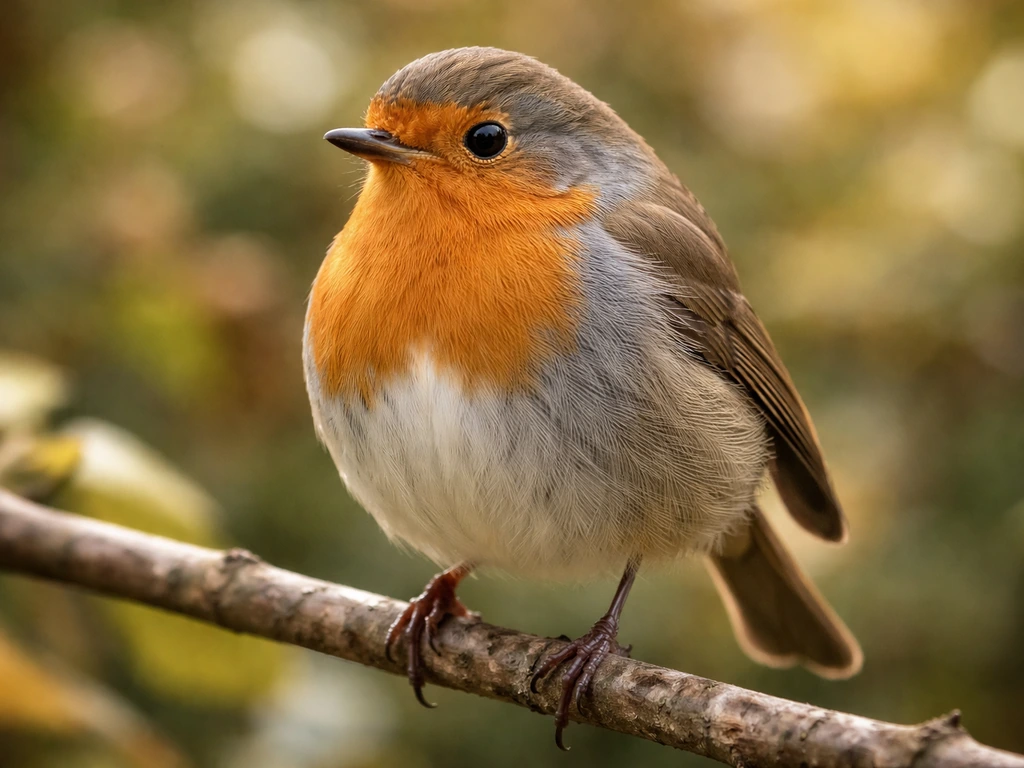
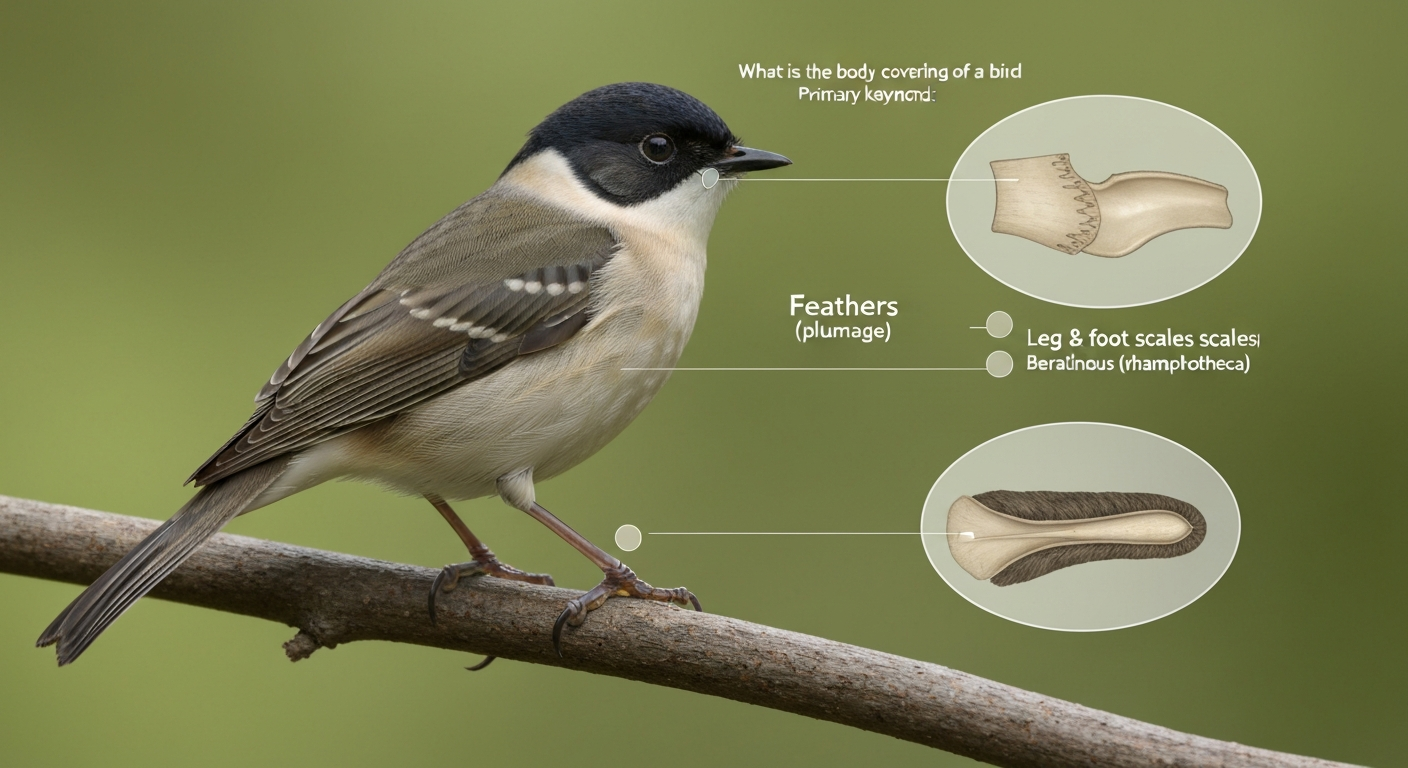
The body covering of a bird is feathers, plain and simple. In short, the body of a bird is covered with feathers, scales, and a rhamphotheca. But that is only part of the story. Birds also have tough, overlapping scales on their legs and feet (a feature they share with their reptilian ancestors), and a hard keratinous sheath called the rhamphotheca that covers the beak. Together, these three elements make up the avian integument: the complete outer covering of a bird's body. For a concise summary of what the body of the bird is, see the related overview on avian body coverings. Most people fixate on feathers, and honestly, feathers deserve the attention. But the scales and beak sheath are just as fascinating once you start looking.
What Is the Body Covering of a Bird: Feathers, Scales, Beak

Marcus Chen
22 Jul 2026
Feathers, scales and a beak sheath: the full picture
When ornithologists talk about avian body coverings, they use the word integument to describe everything derived from the skin's outer (epidermal) layer. The dominant component is plumage, the full complement of feathers distributed across the bird's body in defined feathered tracts called pterylae, separated by bare patches called apteria. Feathers cover roughly 80 to 90 percent of the body surface in most species.
The legs and feet carry scales instead of feathers. These are reticulate (mosaic-patterned) or scutellate (tile-like) cornified plates that protect limbs from abrasion, grip perches, and in wading birds, resist moisture and mud. The claws at the tip of each toe are essentially extensions of the same cornified tissue. Then there is the beak sheath: the rhamphotheca. This is a continuous layer of hardened protein (more on which protein shortly) that coats the bone of the upper and lower bill. It is not just a cap it grows continuously, wears from the tip, and varies enormously in texture, color, and shape across species.
A quick comparison helps put this in context. Mammals rely on fur (composed of alpha-keratin filaments) and a layer of fat for insulation and protection. Reptiles use overlapping beta-keratin scales. Birds uniquely combine a feather system that does the heavy lifting for insulation, flight, and display, with vestigial scales on the lower limbs, a carryover from their dinosaurian lineage. No other living animal group has anything structurally equivalent to a feather.
What feathers are actually made of
Every feather, from a hummingbird's iridescent throat patch to a chicken's fluffy breast down, is built from keratin. Specifically, avian feathers rely overwhelmingly on beta-keratins, also called corneous beta-proteins (CBPs). Genomic and proteomic analyses confirm that β‑keratins (corneous β‑proteins) are the predominant structural proteins in feathers, scales, and the rhamphotheca Genomic and proteomic analyses confirm that β‑keratins (corneous β‑proteins) are the predominant structural proteins in feathers, scales, and the rhamphotheca.. These are small proteins, roughly 10 to 25 kilodaltons in size, that assemble into beta-pleated-sheet filaments, a structure that is stiffer and more resistant to compression than the alpha-keratin found in mammal hair. The beak sheath, claws, and leg scales are all made of the same CBP-based material, which is why a bird's beak feels more like a fingernail than a tooth.
The classic fully developed feather is called a pennaceous feather, and its architecture is worth understanding step by step. At the base is the calamus, or quill: the hollow, translucent tube anchored in a follicle in the skin. This extends upward into the rachis, the solid central shaft that runs the length of the feather. Branching off the rachis on both sides are barbs, which together form the flat surface of the feather called the vane (there is a vane on each side of the rachis). Each barb in turn carries tiny side branches called barbules, and here is where the magic of feather engineering happens: the barbules on one side of a barb carry small hooks called hooklets or hamuli, and these latch onto the smooth barbules of the neighboring barb, effectively zipping the vane into a nearly airtight, flexible surface. If a feather gets ruffled, the bird preens it back into place, re-zipping those tiny hooks. You can actually do this yourself with a fallen feather: pull the barbs apart and then stroke them back together.
| Feather part | What it is | Function |
|---|---|---|
| Calamus (quill) | Hollow basal tube in follicle | Anchors feather in skin; channels blood during growth |
| Rachis (shaft) | Solid central stem above skin | Structural spine that supports the vane |
| Barbs | Side branches off the rachis | Form the two vanes of the feather |
| Barbules | Tiny branches off each barb | Create the interlocking surface of the vane |
| Hooklets (hamuli) | Microscopic hooks on barbules | Zip neighboring barbs together for an airtight vane |
| Vane | The flat surface on each side of rachis | The aerodynamic/insulating working surface |
The seven main feather types
Not all feathers look like the classic quill-and-vane design above. Birds carry several distinct feather types, each doing a different job. I remember being surprised the first time I read that the fluffy down under a goose's contour feathers and the long primary flight feathers on its wing are both called feathers, they look almost nothing alike.
Contour feathers
Contour feathers are the outermost, most visible feathers that define the bird's shape and color. They are the classic pennaceous type described above, with a well-developed interlocking vane. They cover the body, wings, and tail, and form the sleek outline you see on a perched songbird. Their color patterns produce camouflage, species recognition markings, and in many species, the brilliant display colors used during courtship.
Flight feathers: remiges and rectrices
Within the contour category, the flight feathers deserve separate attention because of their specialized asymmetry and rigidity. The wing flight feathers are called remiges. They divide into primaries, which attach to the bones of the hand (manus) and drive propulsion, and secondaries, which attach to the ulna and contribute lift. Most birds have 9 to 12 primaries and 6 to 32 secondaries depending on species. The tail flight feathers are called rectrices; most birds have 12 of them, and they function as a rudder and brake. Remiges and rectrices are asymmetric in cross-section, with a narrower leading vane and wider trailing vane, which is critical for generating aerodynamic forces.
Down feathers
Down feathers have a very short or absent rachis and barbs that spread outward in all directions without interlocking hooklets, creating a fluffy, three-dimensional structure that traps large volumes of still air. They sit under the contour feathers and provide the primary insulation layer. Duck and goose down is the same thing: an exceptionally efficient thermal buffer. Newly hatched chicks of many species (like ducks and shorebirds) are covered in natal down from the moment they hatch.
Semiplumes
Semiplumes are intermediate in structure: they have a visible rachis like a contour feather but their barbs are loose and fluffy like down, without fully interlocking hooklets. They sit at the boundary between the contour feathers and the down layer, adding insulation and helping with the smooth external shape of the bird. They are easy to overlook because they are hidden under the outer feathers.
Filoplumes
Filoplumes are hair-like feathers that are almost invisible unless you look closely at a plucked bird. They consist of a very thin rachis with a small tuft of barbs only at the tip. Their primary role is sensory: they sit near the base of contour feathers and detect movement, vibration, and feather position, feeding information to mechanoreceptors in the skin. When a bird adjusts its feathers in response to wind or during flight, filoplumes are part of the feedback system making that possible.
Powder-down feathers
Powder-down feathers are one of the more unusual variants. Instead of being shed during molt, they grow continuously and disintegrate at their tips into a fine, waxy powder. Birds that possess them, including herons, egrets, tinamous, and some parrots, spread this powder through the plumage during preening. The powder acts as a waterproofing and cleaning agent, and in herons it helps manage the slimy residue from fish. Not all birds have powder-down patches; their presence or absence is actually useful in bird classification.
Bristles
Bristles are stiff, spine-like feathers with a rigid rachis and few or no barbs. They appear most prominently around the mouth (rictal bristles) in flycatchers and nightjars, where they are thought to help funnel insects toward the mouth or to function as tactile sensors. They are also found around the eyes and nostrils of some species as a form of physical protection.
| Feather type | Structure | Location on bird | Primary role | Example species |
|---|---|---|---|---|
| Contour | Full pennaceous vane with hooklets | Outer body surface | Shape, color, protection | Nearly all birds |
| Remiges (flight feathers) | Asymmetric, stiff pennaceous | Wing (hand and forearm) | Powered flight and lift | Eagles, swallows, sparrows |
| Rectrices (tail feathers) | Stiff pennaceous, often asymmetric | Tail base | Steering and braking | Woodpeckers, peacocks |
| Down | No rachis; loose fluffy barbs | Under contour feathers | Thermal insulation | Ducks, penguins, newborn chicks |
| Semiplume | Short rachis with loose barbs | Margins of pterylae | Supplemental insulation | Herons, ducks |
| Filoplume | Hair-like; tiny barb tuft at tip | Near contour feather bases | Sensory/proprioceptive | Most birds |
| Powder-down | Continuously growing; tips disintegrate | Defined patches on body | Waterproofing/cleaning powder | Herons, some parrots |
| Bristle | Stiff rachis, few or no barbs | Around mouth and eyes | Tactile sensation; insect capture | Nightjars, flycatchers |
Scales on legs, feet, and the horny beak sheath
Look at a chicken or a pigeon's leg and you will see something that looks unmistakably reptilian: overlapping cornified scales. These are called podotheca (the collective scale covering of the foot and lower leg). Two main patterns occur: scutellate scales, which are large, flat, and tile-like, typically on the front of the tarsometatarsus (the main leg segment); and reticulate scales, which are irregular and pebbled, usually on the sides and back of the foot. Both types are composed of the same beta-keratin proteins as feathers. Their primary job is mechanical protection and grip, and in water birds they resist abrasion from rocks, sand, and prolonged immersion.
The rhamphotheca is the formal name for the keratinous sheath over the bill. It is a layered, continuously replaced cornified structure that grows from the base of the bill and wears at the tip through use. Histological and proteomic studies confirm it is dominated by CBPs (corneous beta-proteins) and alpha-keratins in the underlying epidermal layers. It is not one rigid cap: the upper rhamphotheca (rhinotheca) covers the upper bill, and the lower rhamphotheca (gnathotheca) covers the lower jaw. In parrots and raptors, the rhamphotheca is thick and hard enough to crush seeds or tear prey. In ducks, it is softer and contains sensory pits. The bill of a bird is essentially the animal's all-purpose tool, and the rhamphotheca is what makes it durable enough to function.
What these coverings actually do: six core functions
Flight
Remiges and rectrices are not just attached to a wing, they are aerodynamic surfaces engineered at the microscale. The asymmetric vane of a primary feather creates differential pressure during the downstroke. The hooklet system keeps the vane intact under aerodynamic load. Even small damage to primary feathers measurably reduces flight efficiency, which is why birds spend significant time preening and why molt timing matters so much.
Insulation
Down and semiplume feathers trap a layer of still air close to the skin. Still air is one of the best thermal insulators known. The depth, density, and condition of the plumage layer determine how much heat the bird retains. In cold conditions, birds fluff their feathers to increase plumage depth and the volume of trapped air, which is exactly what you see a cold sparrow doing on a winter branch. Thermal measurements show that plumage resistance to heat loss depends heavily on plumage depth and drops dramatically when the feathers are wet or compressed by wind.
Waterproofing
Waterproofing in birds is primarily a structural property of feather microarchitecture. The geometry of interlocking barbules creates a surface that resists water penetration through capillary repulsion, essentially the same principle as a tightly woven Gore-Tex fabric. Uropygial (preen gland) oil contributes to feather suppleness and maintenance, and in waterfowl the gland is particularly well developed. However, research has made clear that the oil alone is not the waterproofing agent; the physical structure of the feather does most of that work. Some species (including ostriches and some parrots) have reduced or absent uropygial glands and still maintain functional plumage.
Camouflage and color
Feather coloration comes from two sources: pigments deposited in the feather during growth (melanins for blacks, browns, and yellows; carotenoids for reds and oranges, which most birds must obtain from their diet), and structural colors produced by nanostructural arrangements of melanosomes and keratin in the barbule cortex. The iridescent blues and greens of hummingbirds, peacocks, and starlings are structural colors, produced by thin-film interference or coherent scattering at the nanoscale. The pattern of colors across the plumage creates camouflage in ground-nesting species, disruptive patterns that break up body outline, and species- or sex-specific signals.
Display and communication
Some feathers exist almost entirely for social signaling. Peacock tail coverts (the famous 'tail' fan), birds-of-paradise plumes, and the elongated crest feathers of egrets during breeding season all demonstrate how far feather morphology can be pushed by sexual selection. Even everyday behavioral signals (a crest raised in alarm, feathers sleeked in submission, plumage fluffed in greeting) rely on voluntary control of feather position via small skin muscles called arrector pili muscles attached to each follicle.
Sensory roles
Filoplumes and bristle feathers serve direct mechanosensory functions. Filoplumes detect subtle feather movement, giving the bird real-time feedback about wind conditions, feather alignment, and aerodynamic state. Rictal bristles around the mouth likely detect prey movement and help guide capture in aerial insectivores. Scientists still debate the precise sensory role of some bristle types, so this is one of those areas where honest uncertainty is the right answer.
Feathers and temperature regulation: how it all connects
Birds are endothermic (warm-blooded), meaning they generate their own body heat metabolically and must maintain a stable core temperature regardless of the environment. Their plumage is the primary tool for doing that. Understanding this connection is genuinely important whether you keep pet birds or just watch them outside, which is why it links closely to the broader question of how birds regulate body temperature. See a focused explanation of bird temperature regulation for details on the physiological mechanisms and behaviors birds use to maintain core temperature.
In cold conditions, a bird fluffs its contour feathers, increasing the insulating air layer trapped by the underlying down. In hot conditions or during exercise, birds sleek their feathers tight against the body to reduce insulation, expose unfeathered areas like the underside of the wings, and rely on panting (birds cannot sweat effectively). Thermal imaging studies on molting penguins have shown that losing flight feathers during a synchronous catastrophic molt dramatically increases heat loss from the body surface, confirming just how critical intact plumage is to thermal management.
Most birds maintain a core body temperature roughly between 39°C and 44°C (102°F to 111°F), which is higher than the human normal of 37°C. For more details on typical bird body temperatures, see what is the body temperature of a bird. The exact range varies by species, time of day, and activity level. Small birds tend toward the higher end of that range. A healthy budgerigar (budgie), for example, maintains a normal body temperature of approximately 40°C to 42°C (104°F to 108°F). If you notice a pet budgie sitting fluffed up and hunched for extended periods, it is often a sign the bird is trying to conserve heat because it is unwell, which is worth knowing if you keep parakeets.
| Bird group | Approximate body temperature range | Notes |
|---|---|---|
| Most passerines (songbirds) | 40°C – 44°C (104°F – 111°F) | Small body size, high metabolic rate |
| Domestic chicken | 40.6°C – 41.7°C (105°F – 107°F) | Well-studied baseline |
| Budgerigar (budgie) | 40°C – 42°C (104°F – 108°F) | Common pet species reference |
| Pigeons/doves | 40°C – 42°C (104°F – 108°F) | Widely used in physiology research |
| Ducks and waterfowl | 39°C – 41°C (102°F – 106°F) | Lower end partly due to counter-current heat exchange in legs |
| Ostriches (ratites) | ~38°C – 39°C (100°F – 102°F) | Largest birds; lower mass-specific metabolism |
Feather condition directly affects how efficiently a bird manages this temperature range. A bird with damaged, worn, or waterlogged plumage loses heat far faster than one with intact, well-maintained plumage. This is why molt timing is so tightly tied to the breeding and migration calendar: birds cannot afford to be without functional insulating feathers at the wrong time of year.
How birds keep their feathers in working order
Preening
Preening is the single most important feather maintenance behavior. A bird uses its bill to run individual feathers through from base to tip, re-zipping separated barbule hooklets back together and removing dirt, parasites, and dead skin debris. Birds typically preen for 10 to 30 minutes a day on average, and many social species engage in allopreening (mutual preening of hard-to-reach areas like the head). Watch any parrot or finch for a few minutes and you will see this constantly.
Uropygial gland oiling
Most birds have a uropygial (preen) gland at the base of the tail, a bilobed gland that secretes a waxy, oil-like substance. The uropygial (preen) gland produces waxy/oily secretions used in preening; its size, chemistry and presence vary among species (well-developed in many waterfowl; reduced or absent in some parrots and ostriches) and these differences influence feather condition and microbial dynamics, Uropygial gland, ScienceDirect Topics (encyclopedic summary of primary literature) Uropygial gland — ScienceDirect Topics (encyclopedic summary of primary literature). During preening, birds collect this secretion on their bill or head and work it through the feathers. The oil keeps feathers supple, reduces feather wear, and in waterfowl contributes to the overall water-management system of the plumage. Interestingly, the uropygial gland is absent or vestigial in some species, including ostriches, emus, and certain parrots, without apparent disaster to their plumage quality. Scientists are still working out the full range of functions this gland serves, including its potential role in chemical signaling.
Bathing and dust bathing
Water bathing loosens debris and ectoparasites from the plumage and is followed almost immediately by an intensive bout of preening. Dust bathing, common in sparrows, quail, and chickens, uses fine soil particles to absorb excess preen oil and smother feather lice and mites. Some birds, like certain starlings, use smoke bathing or even place ants in their plumage, behaviors thought to use the formic acid from the ants as a natural antiparasitic treatment, though this is still debated.
Molting: the reset button
No amount of preening can repair a truly worn feather shaft. Birds solve this with molt: the systematic replacement of old feathers with new ones grown from the same follicle. Most birds molt at least once a year. Many molt twice, producing distinct breeding and non-breeding plumages. The sequence of molt (which feathers drop and regrow in what order) is highly species-specific and often asymmetric, so that a bird is never completely unable to fly. Waterfowl are a notable exception: ducks undergo a synchronous wing molt where all flight feathers drop at once, leaving them flightless for several weeks.
Practical tips for birdwatchers and pet bird owners
- Watch for feathers that look frayed, dull, or have holes: these are stress bars (faults in the barbule structure caused by nutritional deficiency or illness during feather growth) and are a useful health indicator.
- A bird that is fluffed up and inactive for extended periods is likely trying to conserve heat and may be unwell: intact, sleek plumage held normally is a basic sign of good health.
- Pet birds (especially parrots and finches) benefit from regular access to shallow water for bathing: a dish 1 to 2 cm deep, changed daily, is sufficient for most small species.
- Never apply human hair products, cooking oils, or cosmetic sprays to bird feathers: these can damage the barbule microstructure and interfere with waterproofing.
- Birdwatchers can use plumage condition as a field clue: worn, bleached, or symmetrically missing flight feathers indicate a bird in active or completed molt, useful for ageing birds in hand.
- In outdoor wild birds, oiled plumage (from pollution) is a serious emergency: contaminated birds lose waterproofing and thermoregulation simultaneously and need immediate specialist care.
- If you keep a budgie or parrot and notice excessive feather chewing, bare patches, or abnormal molt timing, consult an avian vet rather than waiting: feather-destructive behavior and abnormal molt can signal nutritional, environmental, or health issues.
FAQ
What is the body covering of a bird (simple definition)?
The bird’s body covering, called the integument or plumage, is the skin plus its cornified epidermal derivatives: primarily feathers (plumage), the keratinous rhamphotheca (beak sheath), claws, and the overlapping scales on legs and feet. In everyday language this is usually called a bird’s feathers, but anatomically it includes all those structures.
What are feathers made of and what is their microstructure?
Feathers are made mainly of corneous β‑proteins (β‑keratins or corneous beta‑proteins) arranged in a laminated cortex and filament bundles. A typical pennaceous feather has a proximal calamus (quill) embedded in the follicle, a rachis (shaft), and two vanes made of barbs. Each barb bears barbules; many barbules have tiny hooklets (hamuli) that interlock to 'zip' the vane into a contiguous surface. Electron microscopy shows the detailed barb/barbule geometry and melanosome patterns that determine strength and colour.
What types of feathers and other coverings do birds have?
Major feather classes: - Contour feathers: body outline and streamlining. - Flight feathers (remiges): primaries and secondaries on the wing for lift and thrust. - Tail feathers (rectrices): steering and braking. - Down (plumulaceous): soft, fluffy feathers for insulation. - Semiplumes: intermediate between down and contour; add loft and shape. - Filoplumes: hair‑like sensory feathers associated with vane feathers. - Bristles: stiff tactile feathers around bill/eyes in some species. - Powder‑down: specialized disintegrating feathers that produce a fine, water‑resistant powder in some birds (e.g., herons, some parrots). Other coverings: - Rhamphotheca: the cornified keratin sheath of the beak. - Leg/foot scales and claws: overlapping keratin scales and claw sheaths.
What are the core functions of the body covering?
Functions of the integument/plumage include: - Flight and aerodynamics (wing and tail remiges/rectrices). - Insulation: down and semiplumes trap still air to reduce heat loss. - Waterproofing: vane/barbule structure plus preen‑oil and powder‑down reduce wetting. - Camouflage and crypsis: coloration and patterns hide birds from predators or prey. - Display and signalling: bright feathers, crests and structural colours used in mating and communication. - Sensory roles: filoplumes and facial bristles provide tactile feedback. - Protection: mechanical shield, UV defence, and barrier to microbes.
How do bird coverings help regulate body temperature? What are typical avian body temperatures?
Plumage regulates temperature by trapping a layer of still air close to the skin (thermal insulation); birds adjust insulation by depressing or fluffing feathers, tucking unfeathered parts, or changing posture. Wind and wetting reduce insulation; preening and waterproofing help maintain thermal function. Typical avian core body temperatures are higher than mammals, commonly between about 38°C and 42°C (100–108°F) depending on species. Example: the budgerigar (Melopsittacus undulatus) averages around 40–41°C (≈104–106°F). Feather condition and plumage depth/density are key determinants of effective thermal resistance.
How are feathers maintained and replaced (molting)?
Maintenance: regular preening zips barbs/barbules together and spreads preen oil from the uropygial gland; birds also sun, dust‑ and water‑bathe to remove parasites and recondition plumage. Molting: birds periodically replace worn feathers in species‑specific patterns—sequential molts (e.g., primaries replaced one by one), synchronous molts (many feathers shed together), or partial molts. Molt timing is often seasonal and linked to breeding and migration; during molt birds may temporarily lose flight capability or insulation depending on which feathers are shed.
Next Article
What Is the Body Temperature of a Bird? Normal Ranges
Typical bird core temperature ranges, why readings vary, and how to measure safely and know when to worry.