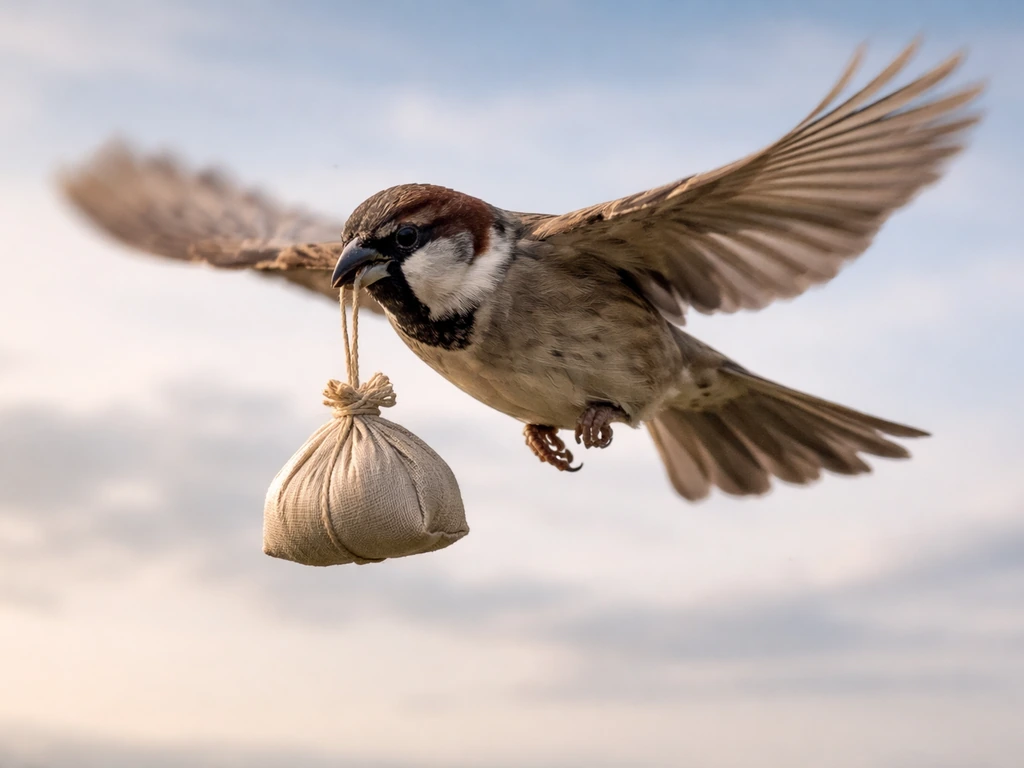
Birds keep their internal temperature remarkably stable, typically somewhere between 40 and 42°C (104–108°F), by constantly balancing heat they produce internally against heat they gain from or lose to their environment. They do this using a layered toolkit: high metabolic heat output, insulating feathers, specialized blood flow in their legs, and behavioral tricks like panting, fluffing, and standing on one leg. When those tools are pushed past their limits, birds show it fast, and that is when you need to act.
Bird Temperature Regulation: How Birds Stay Warm or Cool

Marcus Chen
20 May 2026
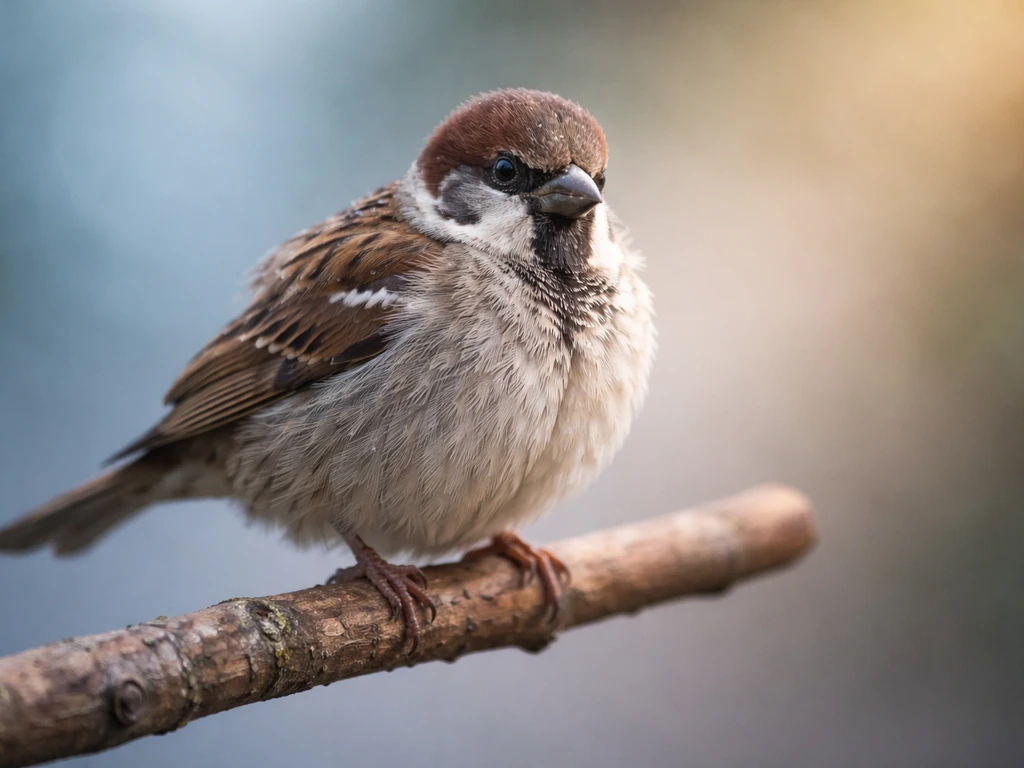
How birds stay warm in the first place
Birds are endotherms, meaning they generate their own body heat internally rather than relying on the sun like a lizard does. The fancy term for maintaining a stable core temperature is homeothermy, and birds are very good at it. Within what physiologists call the thermal neutral zone, a bird can maintain its core temperature without burning extra energy: heat production and heat loss are roughly balanced. Push ambient temperature above or below that zone, and the bird has to actively work to compensate.
What counts as a dangerously high or low core temperature varies by species, but the typical avian range sits around 40–42°C. That is already warmer than a healthy human. If you want a closer look at the numbers across species, including smaller birds like budgies, the core temperature question is worth its own deep dive because the range is surprisingly wide, roughly 37.7–43.5°C across all birds.
Where the heat actually comes from: metabolism and thermogenesis
Birds run a high-speed metabolism compared to most animals their size, and all that cellular activity produces heat as a byproduct. Under normal conditions, that metabolic warmth is enough to hold core temperature steady. When it gets cold, though, birds need to crank up heat production deliberately, and they do it in two main ways.
Shivering thermogenesis
Shivering is exactly what it sounds like: rapid, involuntary muscle contractions that produce heat without doing useful mechanical work. In birds, the pectoralis (the big flight muscle on the chest) is the primary shivering site. Research on red-winged blackbirds found that pectoralis shivering is a first-line cold defense in both nestlings and adults. You might notice a cold bird look slightly puffy and subtly quivering, which is this mechanism in action.
Non-shivering thermogenesis
Mammals have a specialized tissue called brown adipose tissue (brown fat) that generates heat without shivering. Birds mostly lack this. What birds may have instead is a muscle-based version of non-shivering thermogenesis, where calcium cycling in the muscle fibers (specifically a protein called SERCA) generates heat without visible muscle contractions. Scientists are still actively debating how significant this mechanism is in birds, so I'd call this an honest area of ongoing research rather than settled fact. What is settled: when it gets extreme, shivering does the heavy lifting.
Feathers, skin, and the insulation story
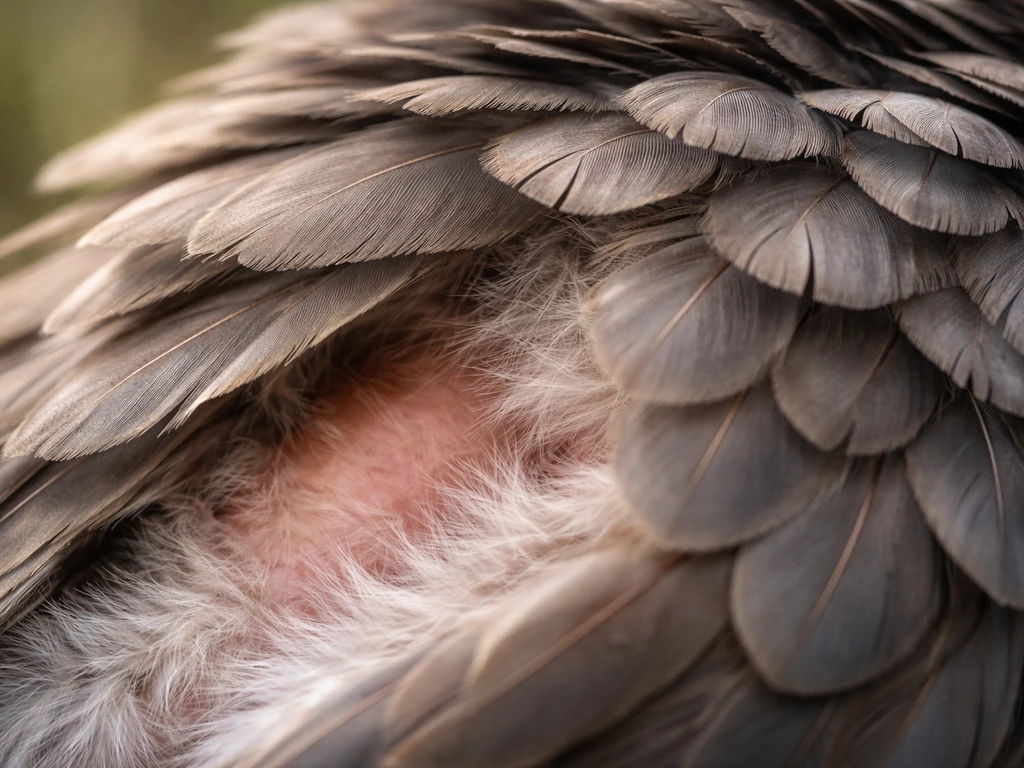
Feathers are the bird's primary insulation layer. Their real magic is in trapping still air close to the skin, because still air is an excellent insulator. The depth of that air layer is controlled by tiny muscles at each feather follicle, which let the bird adjust feather angle on the fly. When a bird "fluffs up" in cold weather, it is actively deepening that trapped air layer, and studies show birds can roughly double or even triple their insulation value when fully puffed compared to sleek plumage.
Wind and rain are serious threats to this system. Wind forces air through the feather layer, collapsing that insulating pocket. Rain is worse: water penetrating feathers increases thermal conductivity and can cause rapid heat loss. In the British Waterfowl Association’s Wet Feather guidance, they note that wetting and loss of plumage integrity reduce insulation and increase the risk of heat loss water penetrating feathers increases thermal conductivity and can cause rapid heat loss. If you have ever watched a wet bird look visibly miserable, that is real physiological stress, not just discomfort. Waterfowl handle this better because their plumage has structural and oily properties that resist water penetration, but even then, truly soaked plumage matters. Birds that lose feathers (from molting, injury, or feather disease) face heightened hypothermia risk because the insulating barrier is physically compromised.
The body covering question connects directly here: the structure of a bird's plumage, including the down layer underneath and the contour feathers on top, works as a system. A bird's skin itself plays a role too, but it is a fairly thin, mostly featherless (between follicles) surface that relies almost entirely on the feather layer above it for thermal protection.
The clever plumbing in a bird's legs and feet
Here is something I genuinely had to look up: birds like ducks and herons can stand barefoot on ice for hours without freezing. They do it using a countercurrent heat exchanger built right into their legs. Warm arterial blood flowing down toward the cold foot runs alongside cool venous blood flowing back up, and heat transfers directly between those vessels before the cold blood ever reaches the core. By the time blood gets to the foot, it is already cooled significantly, so the bird does not waste core heat warming its toes, and by the time that blood returns to the body, it has been pre-warmed, protecting core temperature.
Birds also use behavior to reinforce this. Standing on one leg and tucking the other into belly feathers cuts the exposed unfeathered surface in half. Sitting down and covering both legs entirely is the maximally conservative option you will often see small birds do on very cold days. These behaviors are not random: they are calculated heat-saving moves.
In hot conditions, the opposite happens. Birds can dilate blood vessels in their legs and feet (vasodilation) to deliberately dump heat to the environment through those unfeathered surfaces, turning the legs into a kind of radiator.
How birds cool down when it gets hot
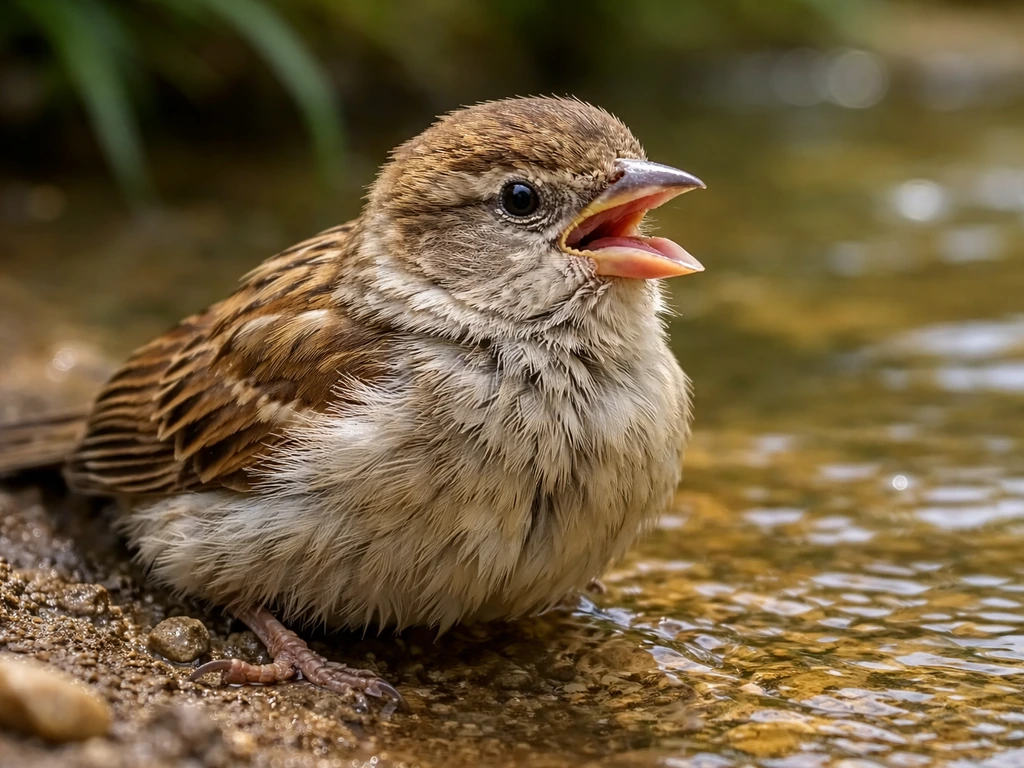
Birds cannot sweat the way humans do, so evaporative cooling has to happen through other routes: the respiratory tract and the mouth. Two main mechanisms handle this.
Panting
Open-mouth breathing in a heat-stressed bird increases airflow over moist surfaces inside the mouth and airways, promoting evaporation and heat loss. If you see a bird panting on a hot day, it is working. This is normal cooling behavior, not immediately alarming, though it does cost water and energy. Watch for whether the bird looks alert and is in a shady, reasonable environment. If it is lethargic and panting in an unavoidably hot space, that is a different situation.
Gular fluttering
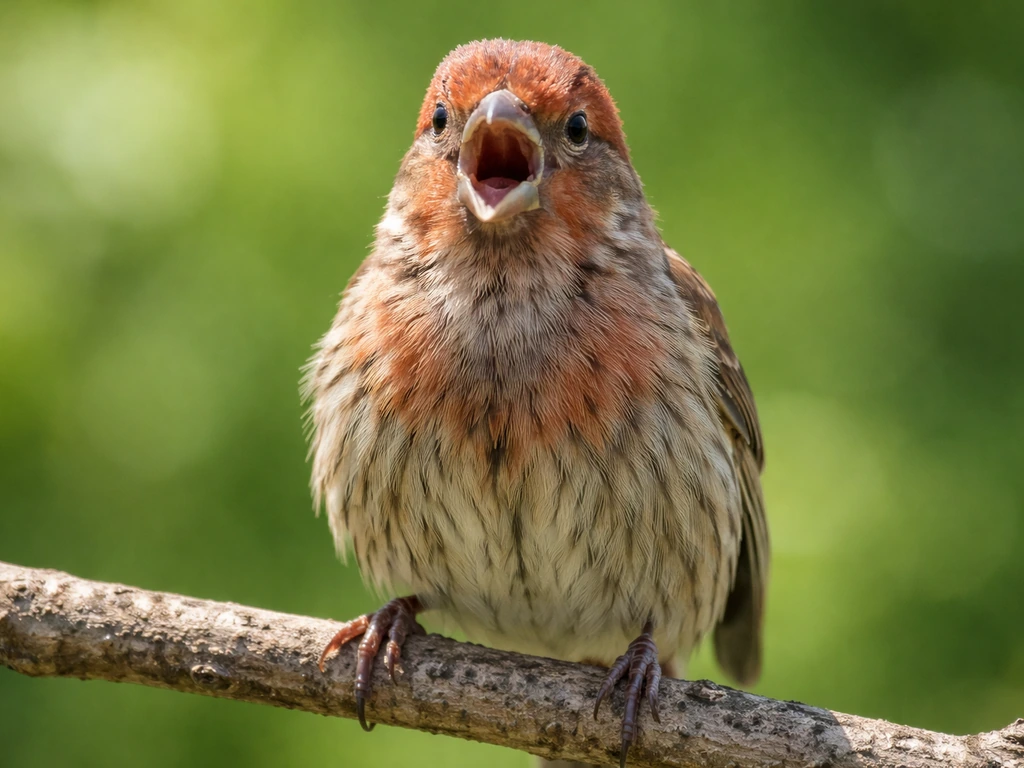
Gular fluttering is a step beyond panting: the bird rapidly vibrates the moist membranes of its throat (the gular area) while holding its mouth open, dramatically increasing evaporation from that surface. You see it commonly in herons, cormorants, and some nocturnal birds. It is mechanically distinct from panting, in that it targets the throat specifically rather than driving whole-body ventilation. Both serve the same goal: getting heat out through evaporation.
Behavioral cooling
Birds are also active behavioral thermoregulators. In the heat, you will see them seeking shade, spreading wings away from the body to expose more surface area, orienting their body to minimize sun exposure, and bathing. In the cold, they do the opposite: face into or away from wind strategically, tuck extremities, and seek sheltered spots. All of this is real, intentional thermoregulation, not random fidgeting.
When a bird is struggling: how to tell and what to do right now
Recognizing thermoregulatory stress early matters a lot because both overheating and chilling can become emergencies quickly.
Signs of overheating
- Open-mouth panting that does not stop even after moving to shade
- Wings held away from body or drooped
- Lethargy, weakness, or inability to perch properly
- Unresponsiveness or seizures in severe cases
If you see a bird showing these signs, move it immediately to a cool, shaded, quiet space. Do not blast it with ice water or stick it in front of an air conditioner on full power, because rapid temperature swings create their own problems. The goal is gradual, controlled cooling. Offer water but do not force it. Call a wildlife rehabilitator or avian vet right away. Heat stroke is a genuine emergency and these birds deteriorate fast.
Signs of chilling or hypothermia
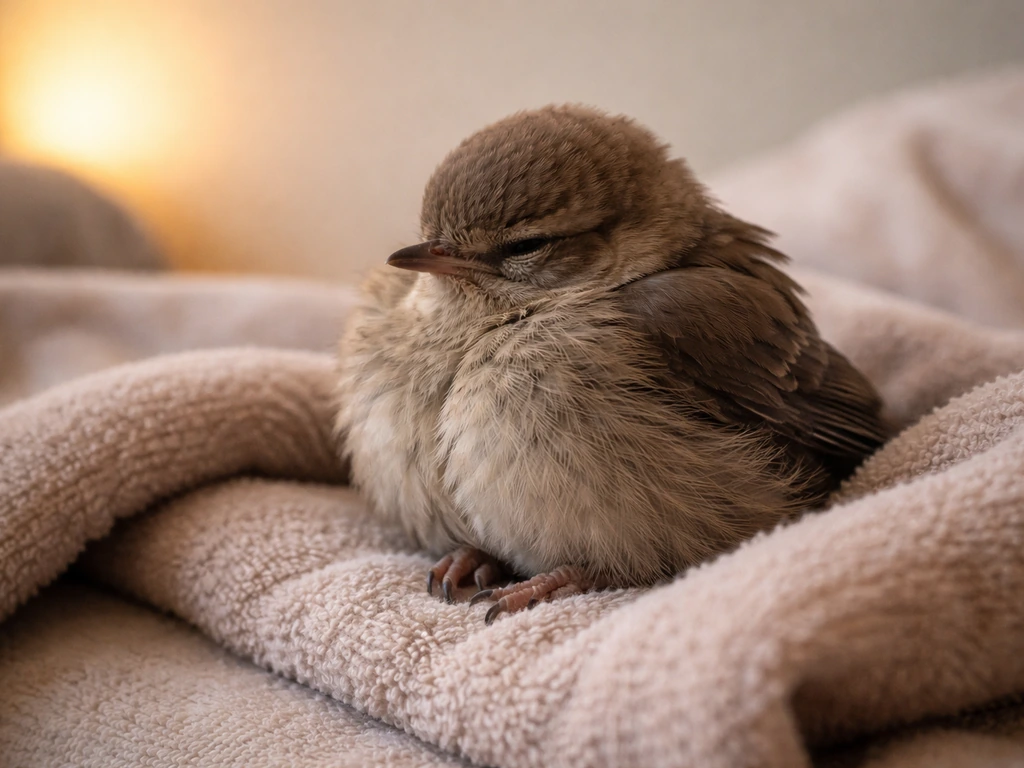
- Prolonged, intense fluffing that does not relax in a warm space
- Shivering or trembling
- Reduced movement or hunched posture with eyes partially closed
- Cold feet and legs to the touch
- In nestlings: stillness, coldness, and not responding to touch
For a chilled bird, warmth is the priority. Move it indoors. For wild birds or orphaned nestlings, the Merck Veterinary Manual guidance is clear: most orphans cannot regulate their own temperature and need supplemental heat immediately. A heating pad on its lowest setting under half the enclosure (so the bird can move off heat if needed) is a practical first step. Aim for a warm but not hot environment, roughly 30–32°C (86–90°F) for nestlings, a bit lower for adults. Keep humidity moderate. Then contact a licensed wildlife rehabilitator.
For captive or companion birds
The American Association of Avian Veterinarians recommends keeping sick or stressed companion birds in a warm, quiet environment, around 29–32°C, while you arrange veterinary care. Avoid drafts, direct fans, or excessive humidity. If a bird has feather loss from any cause, its hypothermia risk goes up substantially, so err warmer. During or after procedures like anesthesia, birds lose heat very rapidly, which is a known clinical risk: providing a heat source during recovery is standard care, not optional.
In your backyard
For wild birds visiting a yard, the most useful things you can do are: provide shade and fresh water in summer (and keep water from freezing in winter), avoid placing feeders in spots that trap heat with no nearby cover, and if you find a bird that looks acutely distressed in extreme weather, contact a local wildlife rehabilitator before intervening beyond basic shelter, because handling wild birds without a permit is regulated in many places.
Why thermoregulation looks different across species and life stages
Not all birds thermoregulate equally well, and that matters for how you read their behavior and what support they need.
| Group | Thermoregulatory ability | Key vulnerability | Practical implication |
|---|---|---|---|
| Altricial nestlings (e.g., songbird chicks) | Very limited at hatch; develops gradually | Hypothermia without brooding parent | Need external heat source if orphaned |
| Precocial chicks (e.g., ducks, shorebirds) | Better at hatch but still dependent | Still chilled by cold rain or wind | Can move but still benefit from brooding |
| Adult passerines (small songbirds) | Good but limited by small body mass | Rapid heat loss in cold wind/rain | Fluffing and shelter-seeking are key |
| Waterfowl and Arctic-adapted species | Excellent countercurrent heat exchange | Oiled or damaged plumage collapses insulation | Plumage integrity is critical |
| Large tropical species | High heat tolerance but poor cold tolerance | Cold snaps in captivity | Sensitive to ambient temperature drops |
| Sick or post-anesthetic birds | Compromised regardless of species | Rapid heat loss under stress | Supplemental heat always required |
Nestlings of altricial species like sparrows or robins are essentially poikilothermic (unable to regulate their own temperature) at hatch. Their thermogenic systems come online gradually over the first couple of weeks of life, which is why a parent bird brooding a nest looks like she is just sitting there but is actually functioning as a critical heat source. Pull that heat away suddenly and a nestling chills in minutes.
At the other end, birds adapted to Arctic and Antarctic environments have pushed countercurrent heat exchange and insulation to impressive extremes. Emperor penguins are the obvious example, but even common waterfowl like mallards show the same basic leg and foot plumbing that lets them stand on ice with no apparent discomfort. These adaptations are structural and cannot be recreated by behavior alone, which is why species range and local climate still constrain where birds can thrive.
The bottom line is that bird temperature regulation is a whole-system effort: metabolism, feathers, blood flow, behavior, and environment all work together. Understanding how those pieces fit gives you a much clearer picture of when a bird is coping fine versus when it is telling you something has gone wrong.
FAQ
How can I tell if a bird’s temperature regulation problem is truly an emergency, not just normal cool-weather behavior?
A bird that is “cold” to the touch may not be in danger, because much of its insulation and leg countercurrent heat exchange keeps core temperature stable. The better warning signs are behavior changes (weakness, inability to stand, excessive fluffing with drooping), slow response, open-mouth breathing at moderate temperatures, or panting with lethargy.
Do nestlings and adult birds respond differently to cold or heat when it comes to temperature regulation?
Yes, young birds are a special case. Altricial nestlings can chill within minutes if their brooding parent is disturbed, while many adults can buffer cold for longer using metabolic heat plus feather lofting. If you find a nestling, prioritize immediate, stable warming and keep it covered, not actively cooled or “tested” with temperature checks.
What should I do differently if the bird has missing, damaged, or wet feathers?
Do not assume a bird’s species can handle the weather just because it is “feathered.” Feather loss from molting timing, injury, feather mites, or illness can sharply reduce insulation, raising hypothermia risk even in mild temperatures. If you see bald patches, broken shafts, or clumped wet feathers, treat the bird as higher risk and aim for warmer, calmer recovery conditions.
Is panting always a sign of overheating, or can it be normal bird behavior?
“Panting” can be normal at very high temperatures, but what matters is context and severity. Normal panting usually comes with alert behavior and access to shade, while concerning cases involve drooping posture, inability to perch, excessive lethargy, or panting combined with hot, enclosed surroundings. If it is actively worsening or showing weakness, treat it as overheating urgency.
Why shouldn’t I cool an overheated bird quickly with ice water or direct blasting airflow?
Avoid rapid or extreme cooling methods, like ice water baths or placing the bird directly in front of a strong air conditioner. Sudden temperature shifts can trigger additional stress and can worsen shock risk. Use gradual, controlled cooling (shade, moderate airflow at a distance, calm environment) and provide water without forcing swallowing.
If some birds can stand on ice, does that mean they never overcool or get frost-related problems?
Countercurrent leg heat exchange helps birds on cold surfaces, but it does not prevent core hypothermia if the bird’s overall insulation is compromised, or if the bird is wet, exhausted, or exposed for too long. Also, very small birds with higher heat loss per body mass may still chill even with “ice-ready” feet.
How important is water during overheating, and should I force a bird to drink?
For heat-stressed birds, dehydration can be a primary limiting factor, since they rely on evaporative cooling routes other than sweating. Offer water in a way that lets the bird choose (shallow dish), but avoid forcing drinking. If the bird cannot hold posture or seems unable to swallow safely, focus on cool shelter and veterinary help rather than repeated attempts to hydrate.
What does gular fluttering mean, and is it more serious than regular panting?
Gular fluttering is targeted throat evaporation and can look dramatic, often seen in some waterbird types. Still, treat it as heat stress when it occurs alongside mouth open breathing and reduced normal activity. The key decision aid is whether the bird can move normally and whether it has immediate access to shade and a reasonable temperature environment.
How can I tell the difference between normal heat-saving behavior (fluffing, one-leg stance) and worsening thermoregulatory stress?
Yes. A bird can look like it is “resting” but be actively conserving heat through behavior. If it is cold-adapted, it may tuck legs, fluff, and remain still, which can be a normal strategy. Look for combinations of signs, such as fluffing plus weakness or unresponsiveness, rather than one behavior alone.
What’s the safest “do-it-now” help I can provide for wild birds without handling them?
In many cases, you can reduce risk without handling by improving the environment: provide shade and fresh water in summer, keep winter water from freezing, and offer sheltered cover during cold snaps. If a bird is severely distressed in extreme weather, contact a licensed wildlife rehabilitator before doing hands-on interventions, since permits and local rules vary.
Do temperature regulation issues apply differently to pet birds compared with wild birds?
Companion birds have narrower tolerances and are often affected by indoor drafts, overheated rooms, or overly dry conditions. If they are sick or stressed, their temperature regulation can be less reliable, so you may need to adjust room temperature and reduce humidity extremes while you arrange veterinary guidance.
Next Article
How Much Weight Can a Bird Carry Payload Limits Explained
Realistic payload ranges for different birds plus a method to estimate how much weight they can carry safely.