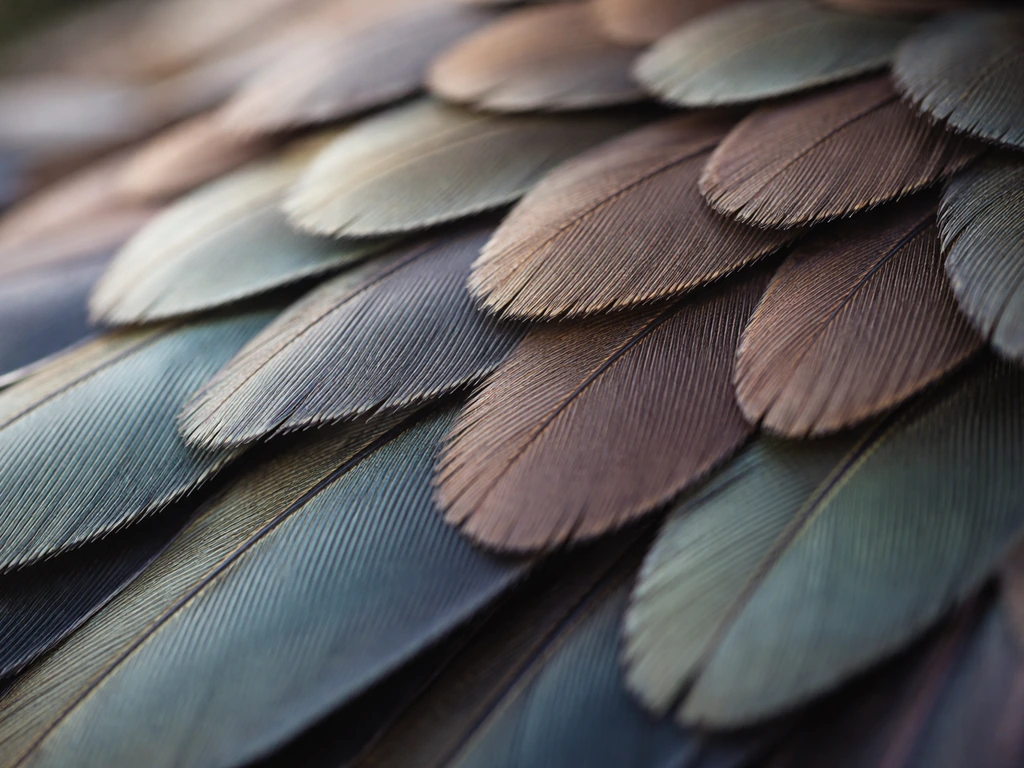
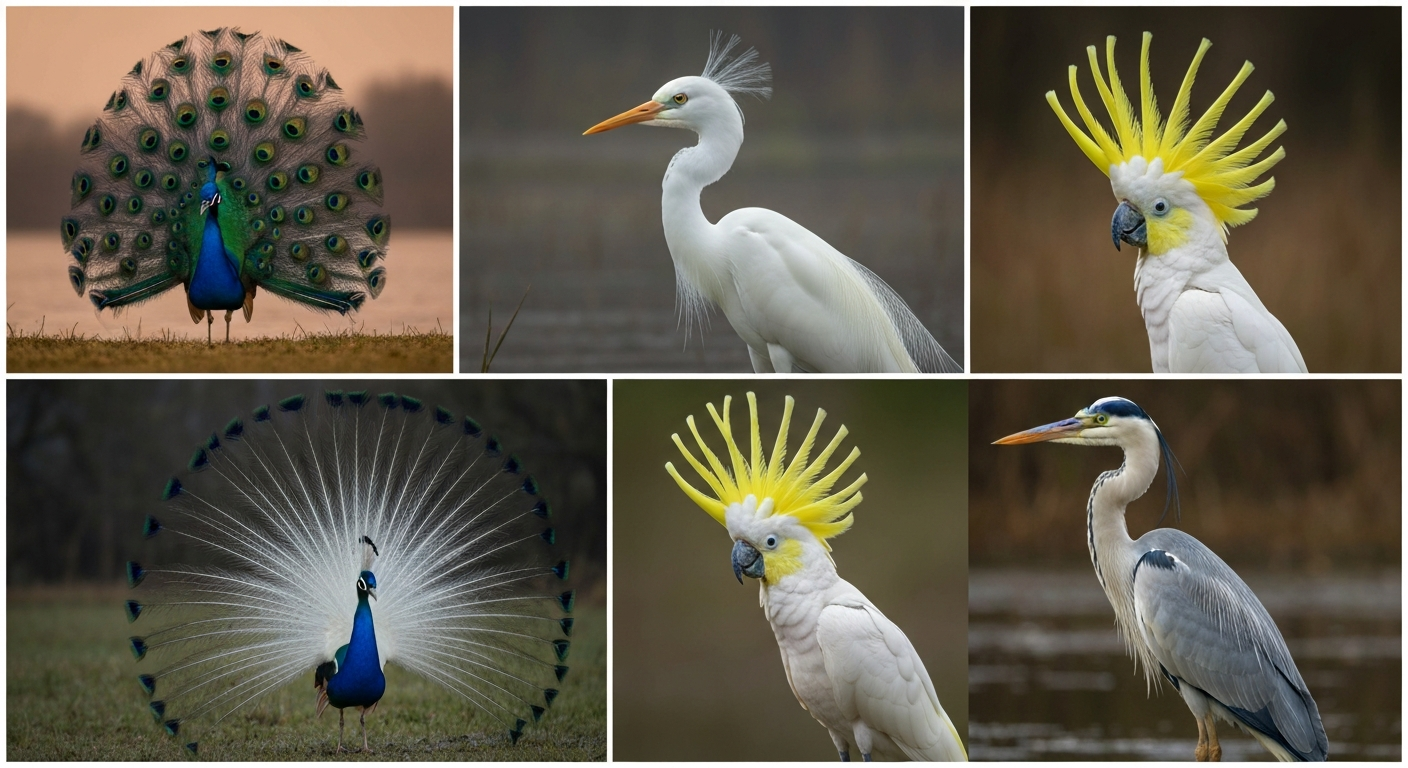
A plume on a bird is an ornamental or showy feather, though the word is also used loosely to mean any feather at all. In practice, ornithologists use "plume" to describe elongated, modified feathers that serve display purposes rather than flight or insulation. Think of the long, lacy aigrettes of a Great Egret, the sweeping train of a peacock, or the dramatic crest of a Sulphur-crested Cockatoo. These are plumes: feathers shaped by sexual selection and social signalling more than by aerodynamics or warmth.
What Are Plumes on a Bird: Definition, Types, and Uses Today

Marcus Chen
24 Jul 2026
What exactly counts as a plume?
The word comes from the Latin "pluma," meaning feather, and dictionaries still treat it as a straight synonym for any feather. In everyday birdwatching, though, "plume" usually points to something special: a feather that stands out visually, whether through length, colour, or unusual structure. Ornamentally elongated feathers on the head (crests), nape, back, breast, or tail all get called plumes. Breeding plumage, that temporary burst of vivid or elaborate feathering adults grow before mating season, is essentially a whole-body plume event.
Importantly, "plume" is not a separate feather class in the technical taxonomy of avian integument. Ornithologists classify feathers into defined types based on anatomy and function, and plumes are modifications within those existing types rather than a category of their own. A peacock's train feather is structurally an elongated upper tail covert (a modified contour feather). An egret aigrette is a modified back feather with loosened, wispy barbs. The term "plume" describes what a feather looks like and what it does socially, not where it sits in the anatomical family tree.
The full cast of feather types (and where plumes fit in)
To understand plumes, it helps to run through the main feather types quickly. I had no idea how many there were until I started looking this up, and the variety is genuinely surprising.
| Feather Type | Structure | Main Function | Plume Connection |
|---|---|---|---|
| Contour feathers | Pennaceous (stiff, interlocking vane) over a soft base | Body shape, waterproofing, minor insulation | Most ornamental plumes are elongated or modified contour feathers |
| Remiges (flight feathers) | Long, stiff, aerodynamically asymmetric vanes on wings | Powered flight and gliding | Rarely plumes; occasionally modified for display (e.g., some hummingbirds) |
| Rectrices (tail feathers) | Stiff, paired tail quills | Steering, braking, balance | Sometimes elongated for display (e.g., lyrebirds), but peacock 'tail' is actually coverts, not rectrices |
| Semiplumes | Partial vane with a prominent rachis, fluffy tip | Insulation, body contour fill | Some ornamental plumes resemble overgrown semiplumes |
| Down feathers | Fluffy, no stiff rachis, no interlocking hooklets | Thermal insulation (especially in nestlings and waterfowl) | Not typically plumes; function is warmth, not display |
| Filoplumes | Hair-like, tiny barbs only at tip | Sensory — detect movement and position of adjacent feathers | Not plumes; too small and hidden to serve display |
| Bristles | Stiff rachis, few or no barbs | Sensory, eye protection (e.g., eyelash-like), prey capture | Not plumes; functional not ornamental |
The key structural difference between down and semiplumes on one side, and plumes on the other, comes down to the barbule hooklets. Down feathers lack the tiny hooks (called hamuli) that zip neighbouring barbules together into a solid vane. Plumes, being modified pennaceous or semiplume feathers, may retain partial vane structure or may have deliberately loose, unzipped barbs for aesthetic effect, as in egret aigrettes.
Anatomy of a plume: how a feather is actually built
Every feather starts with the calamus, the hollow quill base that anchors into the skin follicle. Above that sits the rachis, the central shaft running the length of the feather. Branching off the rachis are barbs, and branching off each barb are even smaller barbules. In a flight feather or ordinary contour feather, the barbules on each barb interlock with those of the next barb via tiny hook-like structures called hamuli, effectively creating a stiff, coherent blade of feather vane. High-resolution microscopy has shown these interlocking structures behave something like a microscale version of hook-and-loop fastener material.
In ornamental plumes, this interlocking is often reduced or absent. Egret aigrettes, for instance, have barbs that splay freely, giving them that soft, feathery cloud appearance. Peacock train feathers retain a partial vane but have elongated barbs that spread around the iconic eyespot, creating a structural arrangement that can actually vibrate at specific frequencies during courtship rattling, which researchers have confirmed plays a role in multimodal signalling to females.
Common plume forms you'll recognise
- Crests: upright tufts of modified feathers on the crown, seen in cockatoos, hoopoes, and Royal Spoonbills. Often erected or flattened as a mood signal.
- Aigrettes: long, lacy back or breast plumes grown during breeding season, most famously in egrets and herons. These were the feathers that nearly wiped out several egret species during the Victorian millinery trade.
- Trains: the peacock's famous 'tail' display structure, made of greatly elongated upper tail covert feathers rather than the true tail quills underneath.
- Nape plumes: elongated feathers at the back of the neck, seen in species like the Grey Heron and some cormorants during breeding season.
- Ear tufts: not actually ears or tufts of hair, but clusters of elongated head feathers in owls like the Great Horned Owl, used primarily for communication rather than hearing.
- Breeding body plumes: flushed or elongated body feathers grown seasonally across the chest, flanks, or back in species like Little Egret, Snowy Egret, and various herons.
Where on the body do plumes appear?
Plumes tend to cluster in locations that maximise visual impact during display behaviour. The head and crown are obvious spots: a crest is visible from almost any angle. The back and scapular region (above the wings) is another common site, since a bird displaying on a lek or in a tree will often be seen from above. The nape, breast, and flanks host plumes in species where close-up courtship postures put those areas in direct view of a potential mate. Extended tail or covert plumes, like those in peacocks and lyrebirds, are visible during full frontal or side-on display postures.
It is worth noting that plumes are not uniformly distributed across the skin surface. Feathers in general grow from specific regions called feather tracts (pterylae), with bare patches of skin (apteria) between them. Ornamental plumes develop from follicles within these same tracts, just with modified growth programmes during breeding cycles.
What plumes actually do for birds
Sexual selection and mate choice
This is the big one. For a concise overview of what purpose do feathers serve for a bird, see the related article titled "what purpose do feathers serve for a bird.". The evolutionary driver behind most elaborate plumage is sexual selection, where one sex (usually females in birds) evaluates and chooses mates partly based on ornamental traits. Classic research on peafowl showed that females prefer males with more elaborate trains and more eyespots. Similar patterns have been documented across dozens of species, from manakins in Central American forests to birds-of-paradise in New Guinea. The logic is that a male producing a structurally perfect, brightly coloured plume despite the metabolic cost and predation risk of carrying it around is advertising genuine genetic or physiological quality.
Species recognition and social signalling
Plume patterns also help birds identify members of their own species, which matters for avoiding costly mistakes in mate choice or territorial disputes. Crest position, colour patterns on ornamental feathers, and even the acoustic effects of plume vibration (as demonstrated in peacock feather resonance studies) all carry species-specific information. Crests in particular serve as real-time mood indicators, with raised versus flattened positions communicating alarm, aggression, or receptivity.
Thermoregulation and aerodynamics: minor roles
Plumes do not contribute meaningfully to insulation or powered flight. Their loose barb structure and often asymmetric or elongated form make them poorly suited for trapping air (insulation) or generating aerodynamic lift. Some research has shown display feathers can create secondary mechanical effects, like vibrations during display rattling, but these serve signalling rather than locomotion. For experimental evidence that display feathers can vibrate and resonate to produce multimodal signals, see Biomechanics of the peacock’s display: How feather structure and resonance influence multimodal signaling, PMC Biomechanics of the peacock’s display: How feather structure and resonance influence multimodal signaling — PMC. If anything, very large plumes like the peacock's train create a slight aerodynamic drag cost, which is precisely the point from a sexual selection perspective: a bird that can still function while hauling around that structure is advertising its fitness.
The feathers that actually cover and protect a bird's body
If plumes are the flashy extras, contour feathers are the workhorses covering most of a bird's visible surface. Contour feathers have a stiff, interlocked pennaceous (vaned) region at the tip that creates the smooth, streamlined outer surface you see, and a softer, downy plumulaceous region at the base that sits close to the skin and traps warm air. Every visible feather on a bird's body, wings, and tail, including the wing coverts and the feathers that give a robin its characteristic shape, is a contour feather.
Contour feathers serve as the first line of weather protection: their overlapping arrangement sheds rain and blocks wind the way roof tiles do. Waterfowl take this further, with contour feathers so tightly structured and preen-oil-coated that water beads off entirely.
Which feathers keep birds warm
The feathers responsible for thermal insulation are down and semiplumes, not contour feathers or plumes. Down feathers sit closest to the skin, hidden beneath the outer contour layer. Because they lack the interlocking hooklets that form a vane, their barbs splay out into a three-dimensional fluffy structure that traps a large volume of still air relative to feather weight. Still air is an excellent insulator, which is why a thin layer of down keeps a bird warm at temperatures that would be dangerous without it. See which feathers keep the bird warm for a focused discussion of down and semiplumes.
Semiplumes occupy a middle ground: they have a visible central rachis like a contour feather but soft, unzipped barbs like down at the tip. They fill gaps between contour feathers and contribute to both insulation and body shape. In very cold environments, like Arctic waterfowl or penguins, the density and coverage of the down layer is extraordinary.
Down feathers in detail: which birds produce it and where it's found
On a bird's body, down sits in the apteria (bare skin regions between feather tracts) as well as at the base of contour feathers across the breast, belly, and flanks. Waterfowl, penguins, and many seabirds have particularly dense down layers as a biological adaptation to water and cold. Nestlings of many species hatch covered in natal down before their juvenile contour feathers grow in, which is why baby birds look so fluffy and helpless compared to adults.
Humans have harvested bird down for insulation in bedding and clothing for centuries. Commercial down in most jackets and duvets today comes from farmed domestic geese (derived from Greylag ancestry) and domestic ducks. For more on down feathers, in particular down feathers from what bird are used commercially, see the entry on geese, ducks, and eiderdown (f41f7736-19fd-4f05-a534-b9a346e920b2). Fill power, the measure of how much volume one ounce of down occupies, is the standard industry quality metric tested by laboratories like IDFL.
The most prized natural down in the world is eiderdown, harvested from the nests of the Common Eider (Somateria mollissima). Female eiders pluck their own breast down to line their nests, and traditional harvesting in Iceland and parts of Canada collects this lining after the ducklings have left, without harming the birds. Global production is tiny, measured in just a few tonnes annually, and authentic eiderdown commands very high prices precisely because it cannot be farmed at scale. Eiderdown clusters have a unique structure that allows them to interlock and resist clumping, making it a genuinely different product from goose or duck down, not just a marketing claim.
Feather loss and replacement: molting versus something going wrong
I used to assume any bird missing feathers was sick. Turns out, most of the time it's just molting, which is a completely normal and necessary process. Many birds periodically lose feathers during molt, they literally "lose feathers like a bird might" as old feathers are shed and new ones grow in. Birds cannot repair damaged feathers: once a feather is grown, it is a dead structure. The only way to replace it is to shed it and grow a new one from the follicle. This process is called molt (or moult), and every bird does it on a species-specific schedule.
Molt timing is tightly coordinated with breeding and migration cycles. The system ornithologists use to name molts, the Humphrey-Parkes system, labels plumages by what precedes them (a "prealternate molt" produces the bright alternate/breeding plumage; a "prebasic molt" produces the basic/non-breeding plumage). So when a male American Goldfinch turns bright yellow in spring, it has gone through a prealternate molt, selectively replacing dull winter feathers with vivid breeding ones. This is a scheduled, controlled process, not a sign of illness.
Normal molting produces clean, intact whole feathers and follows a predictable sequence that avoids leaving a bird unable to fly or thermoregulate. What does indicate a problem is patchy, irregular bald patches, shredded or frayed feathers outside of normal wear, or feathers missing from unusual locations at the wrong time of year.
Non-molt causes of feather loss
- Feather mites and chewing lice: specialist ectoparasites that inhabit specific feather tracts and can damage or destroy feather structure. Recent ecology research confirms diverse, feather-specialist mite communities across passerine species.
- Mite species like Dermanyssus and Ornithonyssus: blood-feeding mites that stress birds and can cause feather quality decline as a secondary effect of heavy infestations.
- Bacterial or fungal folliculitis: infection of the feather follicles, producing abnormal or absent feather growth from affected sites.
- Nutritional deficiencies: protein or vitamin A shortfalls during molt lead to weak, structurally abnormal feathers (stress bars) or incomplete replacement.
- Feather-destructive behaviour: a recognised condition in captive birds, particularly parrots, where the bird itself damages or removes feathers compulsively. The underlying causes range from stress to underlying disease.
- Avian alopecia: patchy or diffuse feather loss from non-parasitic, non-molt causes, sometimes linked to viral infections, toxins, or unknown factors.
The practical takeaway: if you find a single feather on the ground, that is normal. If you observe a bird with large bald patches, visibly damaged feathers across multiple tracts, or behavioural signs of distress, something beyond routine molt is probably going on.
Feathers evolved from reptilian scales, and that matters for understanding plumes
The statement that bird feathers are modified reptilian scales is broadly supported by evolutionary and developmental biology, though the full picture is more nuanced than it first sounds. See the quiz item 'bird feathers are modified scales question 4 options true false' for a simple true/false check of this idea. Evo-devo research shows that feathers and scales both develop from the same type of skin tissue and share some molecular signalling pathways, which points to a common developmental origin. The idea that modern feathers are simply flattened scales that got more complex is the old view. The current model, developed largely from Richard Prum's developmental work, proposes that feathers evolved through a series of hierarchical stages: starting with a simple hollow filament, adding branching, then a rachis, then interlocking barbules, building up the full pennaceous feather in steps.
Fossil evidence backs this up beautifully. Cretaceous and Jurassic fossils including Anchiornis huxleyi, Archaeopteryx, and Microraptor preserve feathers at multiple stages of this developmental sequence. Anchiornis fossils described by Xu and colleagues in 2009 even preserve three-dimensional plumage patterns, showing that detailed, coloured plumage existed in non-avian theropod dinosaurs before powered flight evolved. This means feathers served insulation and likely display functions long before any bird took to the air, which puts ornamental plumes in an interesting evolutionary context: the display role of feathers may be just as ancient, or older, than the flight role.
For plumes specifically, this evolutionary background suggests that elaborate feather ornamentation is not a late refinement bolted onto an otherwise practical system. It is baked into the deep history of feathers themselves. Sexual and social signalling through feather display is an old trick.
Spotting plumes in the field: practical notes
You do not need to be a trained ornithologist to identify plumes on a bird you're watching. A few simple rules help. First, look for feathers that are longer than the surrounding ones in the same body region and serve no obvious structural function, they're not flight feathers, and they don't form the smooth body outline. Second, look for feathers that are visibly deployed during social interactions: raised crests, fanned tail coverts, or fluffed breast plumes almost always indicate display behaviour. Third, note the time of year. Many plumes are seasonal, appearing in spring before breeding and absent or replaced by plain feathers in autumn. A male Great Egret in late winter will be growing those lacy back aigrettes; by late summer they'll be gone.
Binoculars help enormously with distinguishing plume structure from a distance. The looseness of egret aigrette barbs, the shimmer on a peacock eyespot, or the upright posture of a cockatoo crest are all visible at reasonable distances with even modest optics. If you are photographing birds, plumes photograph especially well in the soft light around dawn and dusk when breeding displays are most active.
A quick comparison of all the main feather types
| Feather Type | Key Structural Feature | Primary Function | Insulation? | Flight role? | Ornamental/Plume potential? |
|---|---|---|---|---|---|
| Contour | Pennaceous tip, downy base, interlocking hooklets | Body shape, weather protection | Partial (base only) | Wing and tail coverts support wing | Yes, frequently modified as ornamental plumes |
| Remiges (flight) | Long, stiff, asymmetric vane | Powered flight | No | Primary role | Occasionally (e.g., hummingbird tail streamers) |
| Rectrices (tail) | Stiff, paired, symmetric or asymmetric | Steering, balance | No | Secondary role | Sometimes (lyrebird, long-tailed widowbird) |
| Semiplumes | Rachis present, barbs loose and fluffy | Insulation, body fill | Yes | No | Can resemble plumes; occasionally ornamental |
| Down | No stiff rachis, all fluffy barbs, no hooklets | Thermal insulation | Primary role | No | No |
| Filoplumes | Hair-like, barbs only at tip | Sensory (feather position detection) | No | No | No |
| Bristles | Stiff rachis, minimal barbs | Sensory, eye/nostril protection | No | No | No |
| Ornamental plumes | Modified contour/semiplume, often elongated or loose-barbed | Display, mate choice, species recognition | Minimal | Minimal or negative (drag) | Primary purpose |
Where to go from here
Plumes sit at the intersection of feather anatomy, evolutionary biology, and animal behaviour, which makes them one of the more interesting entry points into understanding how birds work. If you want to dig deeper, the questions of which feathers cover the body, which ones keep birds warm, and where down is specifically located on a bird's skin are all worth exploring in their own right. Understanding molt cycles and the terminology behind them is also genuinely useful for anyone trying to age or identify birds in the field, since the same species can look dramatically different depending on which plumage it's currently wearing. And if you've ever wondered whether feathers really are modified scales at the genetic level, that rabbit hole into avian evo-devo is a fascinating one.
FAQ
What is a "plume" on a bird?
In everyday and ornithological use, "plume" can mean either a single feather or a group of showy/ornamental feathers. Technically, there is no separate anatomical class called "plumes" in feather taxonomy; most plumes are simply modified pennaceous (vaned) feathers or elongated semiplumes/filoplumes used for display (examples: crests, aigrettes, peacock "train" coverts).
How do plumes differ from other feather types (contour, flight/remiges, rectrices, down, semiplumes, filoplumes, bristles)?
Feather types differ by structure and function: remiges (wing flight feathers) and rectrices (tail feathers) are stiff, asymmetric and load‑bearing for flight; contour feathers form the body outline with a vaned distal region and a downy proximal region; down and semiplumes are plumulaceous (fluffy) and optimized for insulation; filoplumes are hairlike sensors associated with vaned feathers; bristles are stiff, sensory or protective bristles around the bill and eyes. "Plumes" are not a separate functional class — they are usually pennaceous or modified contour/semiplume feathers exaggerated in length, coloration or shape for display rather than flight or insulation.
What is the basic anatomy of a feather and which parts are important for identifying plumes?
A feather has a central shaft composed of the calamus (quill) and rachis; from the rachis grow barbs, which branch into barbules; hooklets on barbules interlock to form a vane. Plumes used for display often show elongated rachises and long barbs or reduced barbule hooklets (so they look more ornamental or loose). Look for exaggerated length, bright or patterned vanes, and placement in showy tracts (crest, nape, upper tail coverts) to recognize plumes.
Where on a bird's body do plumes commonly occur?
Common locations for ornamental plumes include crests (head), nape and neck feathers, elongated upper tail coverts (e.g., peacock train), wing or shoulder coverts (aigrettes in egrets), and specialized flank or back feathers during breeding. The precise tracts vary by species.
What are the main functions of plumes?
Primary functions are visual and acoustic/social signaling: mate attraction (sexual selection), species and individual recognition, and courtship displays. Plumes generally play a limited role in thermoregulation or aerodynamics; many are structurally unsuited to provide significant insulation or sustained lift, though some display feathers can have secondary aerodynamic or vibratory roles during displays.
How do plumes contribute to sexual selection and species recognition?
Elaborate plumes can signal health, genotype or condition to potential mates and rivals. Empirical studies (e.g., peafowl, egrets, manakins) link greater ornament elaboration with higher mating success. Distinctive plume patterns and colors also help birds recognise conspecifics and advertise species identity at a distance.
Next Article
Bird Feathers Are Modified Scales: True or False
True: bird feathers are keratinized epidermal growths, modified skin structures homologous to reptile scales.