
Nature selects bird beak phenotypes through a straightforward but powerful chain: genetic differences between individuals produce measurable variation in beak shape and size, those beak differences lead to real differences in how well birds can feed and survive, and birds that feed better tend to reproduce more. Over many generations, the genetic variants linked to better-performing beaks become more common in the population. That is natural selection acting on a phenotype, and bird beaks happen to be one of the clearest examples biologists have ever found. Why do bird beaks differ so much? A big reason is that different beak shapes help birds handle different foods and conditions, so natural selection favors different traits in different environments.
How Nature Selects Bird Beak Phenotypes: A Step-by-Step Guide


What a phenotype actually means for a bird beak
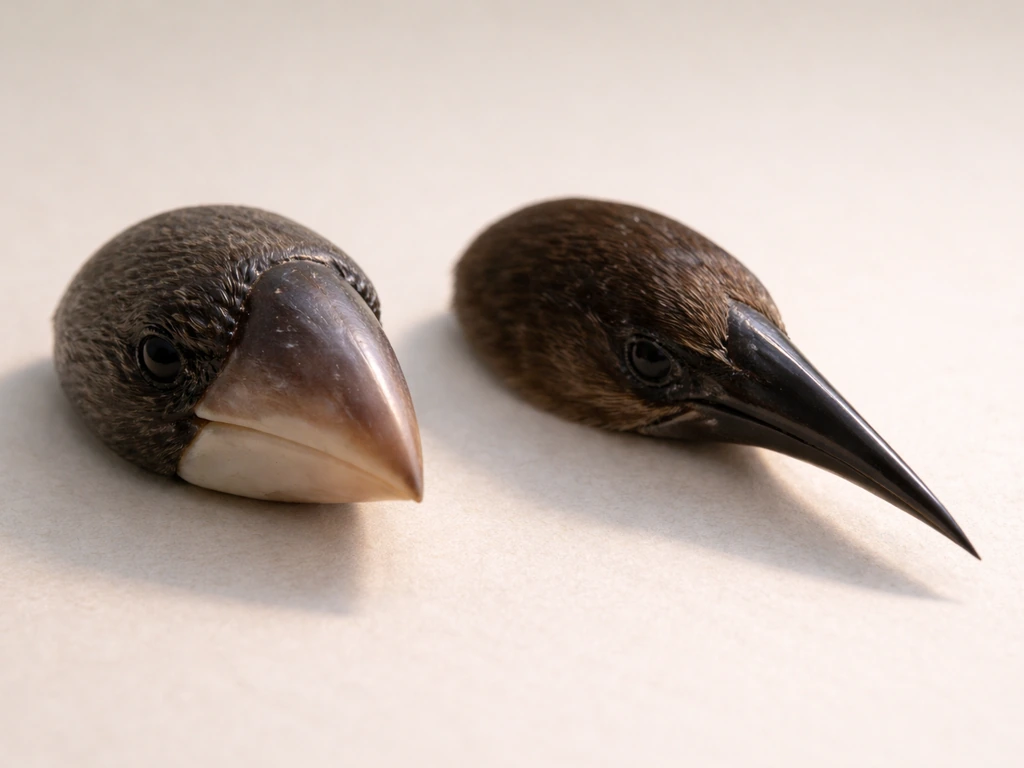
A phenotype is simply any observable characteristic of an organism: its shape, size, color, behavior, physiology. It is everything except the raw DNA sequence itself. For a bird beak, the relevant phenotypic traits are things you can measure with calipers: beak depth (how tall the beak is top to bottom), beak width (side to side at the base), and beak length (tip to skull). Researchers on Darwin's finches have been quantifying beaks along exactly those three dimensions for decades, and those measurements turn out to have real consequences for how well a bird can crack a seed, probe a flower, or catch an insect.
It is worth being clear about what selection actually acts on. Selection does not act on genes directly. It acts on phenotypes, on the physical beak in front of you. Genes matter because they influence which phenotype gets built, but what the environment 'sees' and either rewards or penalizes is the beak itself. If a deeper beak lets a finch crack harder seeds during a drought, that bird survives. If it carries genes that tend to produce deep beaks, those genes get passed on. That genotype-to-phenotype-to-fitness connection is the whole engine.
Where beak variation comes from in the first place
Natural selection can only work if there is variation to work with. Fortunately for finches (and for biologists studying them), beak shape varies quite a lot within and between species. That variation comes from two main sources: genetic differences and developmental effects.
On the genetic side, specific genomic regions have been linked to beak differences. Two loci get mentioned constantly in the literature. A roughly 240-kilobase haplotype containing the ALX1 gene is strongly associated with beak shape variation across Darwin's finches, including variation within a single species, the medium ground finch (Geospiza fortis). A separate region containing the HMGA2 gene is associated with beak size, and it varies systematically among finch species with different beak sizes. These are not the only genetic contributors, but they illustrate that beak phenotype has a real, measurable genetic architecture, not just a vague hereditary basis.
On the developmental side, beak shape differences arise because different regulatory molecules are active at different times and strengths during embryonic development. Researchers found that Darwin's finch beak shape can be broken into two developmental modules: one module (involving a protein called BMP4) mostly controls beak depth and width, while another module (involving calmodulin, or CaM) mostly controls beak length. These two modules can vary somewhat independently, which is part of why finch beaks can be short and deep, long and narrow, or many combinations in between. That modularity is a big part of how so much beak diversity evolved from a common ancestor.
Heritability: the part people skip but really shouldn't

Variation alone is not enough. For selection to change a population over time, the trait has to be heritable, meaning offspring have to resemble their parents more than they resemble random individuals. Heritability (usually written as h²) is the proportion of phenotypic variation in a population that is due to additive genetic differences. A heritability of 1.0 means offspring perfectly predict parents; a heritability of 0 means the trait is entirely environmentally determined and selection cannot move it.
Beak traits in Darwin's finches have been measured using midparent-offspring regression, where you plot the average of both parents' beak measurement against the offspring's measurement. The slope of that regression estimates heritability directly. Studies on Geospiza fortis have found substantial heritabilities for beak depth, width, and length, meaning a meaningful fraction of the variation you see between individuals is due to their genes, not just what they ate last month. This is what makes selection effective: when a deep-beaked bird survives and reproduces, its offspring tend to have deeper beaks than average, so the trait actually shifts in the population.
One honest caveat: heritability estimates are not fixed properties of a trait. They depend on the population and environment being studied. Maternal effects (things the mother contributes beyond her DNA, like egg size or incubation behavior) can inflate parent-offspring resemblance in ways that do not reflect purely genetic inheritance. Researchers studying Darwin's finches have explicitly flagged this issue when comparing father-offspring versus mother-offspring heritability estimates, and it is a real complexity worth knowing about.
The selection mechanism itself: how a beak shape becomes a fitness difference
Here is where the rubber meets the road. A bird with a particular beak shape either handles its available food efficiently or it does not. In ground finches, beak depth and width together determine bite force. Wider, deeper beaks allow greater jaw muscle force and can handle harder, larger seeds.
Longer, more slender beaks are better for probing. Biomechanical studies confirm this directly: beak and head dimensions predict bite force, and bite force predicts which seeds a bird can actually access. The different types of bird beaks are adaptations that match how a bird feeds, moves, and survives in its particular habitat. Beak morphology also connects to fracture risk, because a beak optimized for hard seeds experiences different mechanical stresses than one optimized for soft food.
When food is abundant and diverse, a bird with a less-than-ideal beak can still get by. But when conditions get hard, say during a drought when only large, hard seeds remain, beak performance starts to determine survival directly. Birds whose beaks cannot generate enough bite force to crack the remaining food starve. This is not metaphorical: the classic 1977 drought study on Daphne Major documented exactly this, with nonrandom survival among Geospiza fortis individuals based on beak size. Survival was not random. The birds with deeper beaks survived at higher rates. That nonrandomness is selection.
Survival is only half the story. Reproductive success matters too. A bird that survives but cannot attract a mate or raise chicks does not pass on its genes. In many finch species, beak shape is also involved in song production and mate recognition, so selection on feeding performance and selection on social signals can both act on the same structure simultaneously. This is worth keeping in mind when thinking about why beaks are what they are.
The ecological drivers that actually create selection pressure
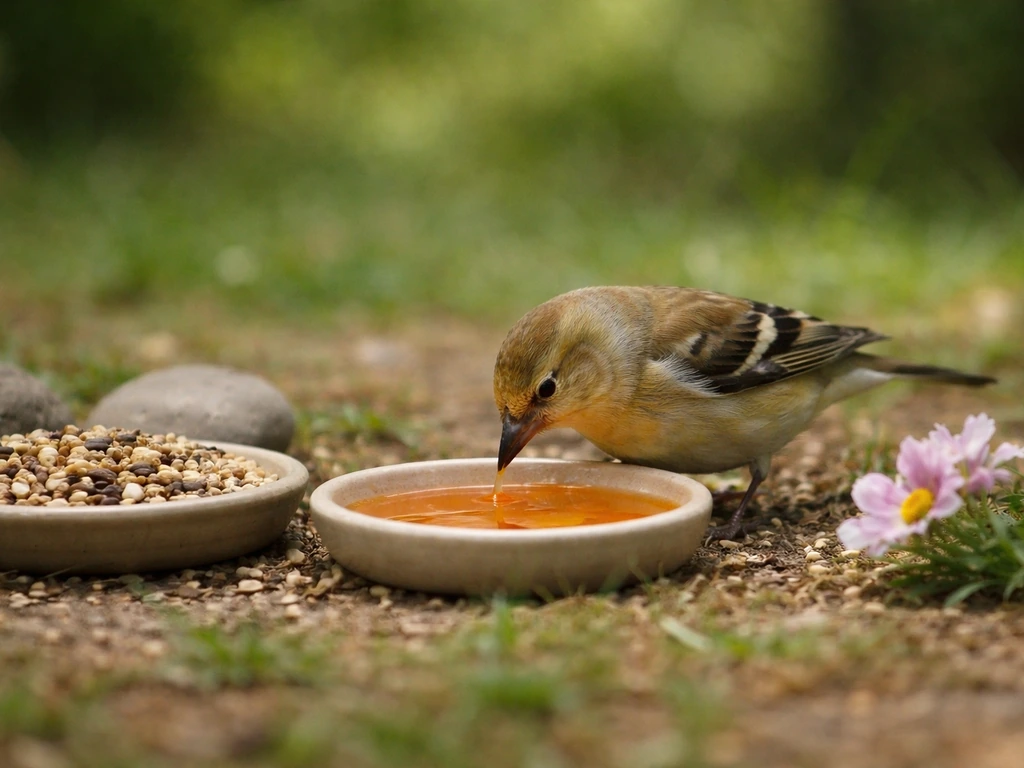
Selection does not happen in a vacuum. Specific ecological conditions are what translate a beak difference into a fitness difference. The main drivers are diet, feeding mechanics, habitat, and competition.
- Diet type: Seed-cracking requires a strong, deep beak. Nectar-feeding rewards a long, curved beak that fits a flower's shape. Insect-probing under bark favors a strong, pointed beak. When the available food shifts, the beak that was 'good enough' may no longer be.
- Feeding mechanics: It is not just what the bird eats but how it handles food. Force transmission through the beak, fracture risk when biting hard objects, and reach when probing all depend on beak geometry in ways that can be predicted from physics and confirmed with measurements.
- Habitat: A bird living in dense forest has different feeding opportunities than one on an open lava field. Habitat constrains which food types are available, which in turn determines which beak shapes get rewarded.
- Competition: When two species with similar beaks occupy the same habitat, they compete for the same food. This creates what biologists call character displacement, where selection favors individuals whose beaks differ from the competitor's beak, because those individuals access food the competitor cannot. This is documented in Darwin's finches and is part of why sympatric species tend to have more divergent beaks than allopatric ones.
The drought scenario is such a clean example precisely because it collapses all this complexity into one brutal filter: only large, hard seeds remain, only birds with the right beak survive, and the ecological pressure is clear and measurable. Real ecological selection is usually messier and more gradual, but the logic is the same.
How selection adds up over generations: from individual survival to population change
One selection event does not make an evolutionary change. What matters is what accumulates over generations. The standard quantitative genetics prediction is simple: the response to selection (how much the population mean shifts) equals the heritability multiplied by the selection differential (how different the survivors are from the original population). If heritability is moderate and selection is strong, the population mean can shift noticeably within just a few generations.
At the genetic level, this shows up as changes in allele frequencies at the loci that influence beak shape. When deep-beaked birds survive a drought and reproduce, the haplotypes associated with deeper beaks (like certain variants at ALX1 or HMGA2) become more common in the next generation. Over many cycles of selection, those haplotype frequencies can shift substantially, and the population's average beak dimensions shift with them. This is evolution by natural selection in the most concrete sense.
Selection does not always push in one direction. Studies on Geospiza fortis on Daphne Major found recurrent directional selection for increased beak depth and body size during multiple mortality events, but also found that beak width was repeatedly selected to decrease. And in years when the environment produced a bimodal food supply (lots of small seeds and lots of large seeds, with few medium ones), disruptive selection operated, favoring both small-beaked and large-beaked birds over intermediate ones. The direction and form of selection depends entirely on what the environment is doing at the time.
The evidence: Darwin's finches and what modern studies confirmed
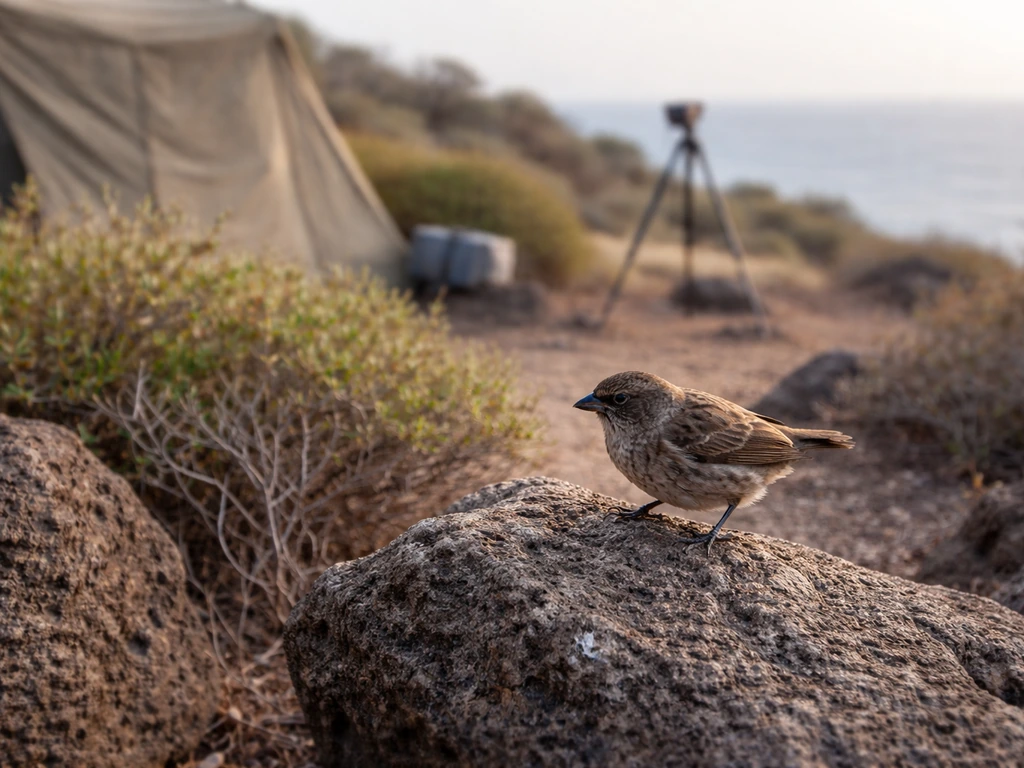
Darwin's finches are the textbook example for a reason. The Galápagos Islands acted as a natural experiment: a founding finch population arrived, spread across islands with different food environments, and diversified into over a dozen species with dramatically different beak forms. But the real scientific payoff came from long-term fieldwork and, later, genomic studies.
Peter and Rosemary Grant's decades of work on Daphne Major provided direct real-time evidence of natural selection on beak traits. The 1977 drought study is the landmark: they documented that Geospiza fortis individuals with deeper beaks survived at higher rates than shallow-beaked individuals when the seed supply narrowed to large, hard seeds. This was not a modeled prediction; it was observed in individually banded birds. Follow-up work showed that beak depth was heritable, that survivors' offspring had deeper beaks than the pre-drought average, and that the population's mean beak depth measurably increased. That is a complete, observed cycle of selection.
Modern genomic studies added the molecular layer. Whole-genome sequencing across Darwin's finch species identified the ALX1 haplotype as a major contributor to beak shape diversity, and the HMGA2 region as a major contributor to beak size. RAD-sequencing studies using genome-wide association approaches identified tens of thousands of SNPs (single-nucleotide polymorphisms) across the genome, with outlier SNPs clustered near these and other candidate loci. This connects the field observations directly to the genetic architecture: selection during the 1977 drought was not acting on a mysterious black box; it was changing the frequencies of real, identifiable genetic variants.
What selection is not: drift and plasticity
Not every change in a population's beak phenotype is natural selection. Two other forces can produce beak changes, and confusing them with selection is an easy mistake to make.
Genetic drift
Genetic drift is random change in allele frequencies due to chance sampling, not fitness differences. In a small population, a few individuals might happen to have unusual beaks simply because they were lucky enough to survive a storm or a predator, not because their beaks were superior. Over time, random drift can shift population means just as selection can, but the changes are not directional and not tied to performance. Distinguishing drift from selection requires showing that survivors were nonrandomly different from non-survivors in a way that correlates with their functional performance. The Daphne Major drought studies did exactly this: survival was nonrandom and predicted by beak dimensions, which rules out pure drift as the explanation.
Phenotypic plasticity
Phenotypic plasticity is the ability of a single genotype to produce different phenotypes in different environments. A bird raised on a hard-seed diet during development might grow a slightly different beak structure than it would have on a soft-seed diet, even with identical DNA. This matters because it means not every beak difference you observe between populations reflects a genetic difference.
If two populations live in different environments and develop differently, their beaks could diverge without any change in allele frequencies at all. Plasticity can be adaptive (the induced phenotype happens to be better for the environment), but it is not selection. Selection requires heritable genetic variation, differential survival or reproduction, and transmission of the favored variants to the next generation.
Fitness consequences such as survival can be analyzed in relation to genetic diversity and inbreeding in Darwin's ground finches, helping separate neutral variation from environment-driven effects survival or reproduction. Plasticity involves none of those steps.
| Mechanism | What changes | Is it heritable? | Requires fitness differences? | Example in beak context |
|---|---|---|---|---|
| Natural selection | Allele frequencies shift because some phenotypes survive and reproduce better | Yes | Yes | Deep-beaked Geospiza fortis survive drought; deep-beak alleles increase in frequency |
| Genetic drift | Allele frequencies shift randomly due to chance | Yes (changes are genetic) | No | Small founding population on an island happens to carry only certain beak-shape variants |
| Phenotypic plasticity | Phenotype changes within an individual's lifetime or due to developmental environment | No (the change itself is not inherited) | No | A bird raised on hard food develops slightly denser beak tissue without any genetic change |
How to reason through selection on any trait
Once you understand the Darwin's finch story, you can apply the same logic to any bird trait. Part B asks whether selection can act on bird beaks in the same way it acts on other traits, tying the evidence back to the selection mechanism part B can selection act on bird beaks. The checklist is short but each step matters.
- Is there variation? Can you measure meaningful differences in the trait between individuals in the population? For beaks, the answer is almost always yes.
- Is the variation heritable? Do offspring resemble their parents for this trait more than they resemble random individuals? Heritability estimates from parent-offspring regressions answer this directly.
- Does the variation affect fitness? Do individuals with certain trait values survive longer, reproduce more, or both? This requires actual data on survival and reproduction, not just a plausible story.
- Is the fitness effect tied to the trait's function? Can you connect the beak shape to a feeding performance difference that explains why one variant survives better? Biomechanical data on bite force, seed handling, or probe depth make this concrete.
- Does the population change over time in the predicted direction? After a selection event, does the population mean shift toward the favored phenotype? Do the underlying allele frequencies change?
If you can answer yes to all five questions with data, you have a strong case for natural selection. If one step is missing, you need to either gather more evidence or consider whether drift or plasticity could explain the pattern instead. Real studies on Darwin's finches satisfy all five steps, which is exactly why they are so convincing.
For anyone wanting to go deeper, connecting beak anatomy to function is the natural next step. Understanding what beak shapes actually are (the full range of forms across bird families) and why beaks differ between species in the first place gives the comparative foundation that makes selection studies interpretable. The functional biology, including how beak structure translates into feeding mechanics, is what makes the fitness differences real rather than abstract. Evolution does not operate on abstract measurements; it operates on physical structures doing physical work.
FAQ
If beak shape differs among birds, does that automatically mean natural selection is happening?
Nature selects beak phenotypes only when (1) there is heritable variation in beak shape or size and (2) different beaks lead to different survival or reproductive output in that environment. If beaks differ but the differences are not passed to offspring (low heritability), or if performance differences do not translate into fitness differences, then selection will not produce consistent evolutionary change.
Does selection on beak shape have to be directly tied to the main food resource?
Selection does not require a trait to be used for the exact resource driving the selection. For example, a drought may select for seed-cracking ability, but beak dimensions can also be correlated with other factors like foraging efficiency or handling time. In practice, researchers test selection by checking whether survivors are nonrandomly different from those that die, and whether the difference aligns with measurable functional performance.
If droughts are rare or conditions vary a lot, will beaks still evolve?
Beaks can evolve through natural selection even if the exact environmental pressure changes across years. What matters is that, over generations, individuals with certain beak phenotypes consistently leave more offspring under the varying conditions. That can still happen with fluctuating selection, as long as different environments do not always favor the same phenotype in a perfectly canceling way.
How can you tell whether beak differences are genetic (selection) or developmental (plasticity)?
Phenotypic plasticity can muddy the picture. If birds develop different beaks depending on diet or other conditions, differences between populations may look like evolutionary change even when allele frequencies stay the same. A key test is to track offspring raised under comparable conditions, or use breeding designs that separate maternal and genetic contributions.
Why don’t beak traits always evolve in the same direction over time?
You can have selection without a one-directional trend. In some settings, the intermediate beak performs worst (disruptive selection) while extremes perform best, or a trait can be selected to increase in one component (like depth) but decrease in another (like width). The direction and form of selection depend on the distribution of available foods and the functional trade-offs among beak dimensions.
If beaks are polygenic, how can we know selection is acting on beak phenotypes?
Selection can act on a phenotype even if you cannot name a single “beak gene.” Beak traits are typically polygenic, with many variants contributing small effects, plus regulatory differences during development. Whole-genome and QTL mapping help identify genomic regions enriched among individuals with extreme phenotypes, but the biological target is still the functional structure (the beak) and its effects on fitness.
Is survival data alone enough to prove natural selection on beaks?
If a study finds nonrandom survival based on beak measurements, that strengthens selection evidence, but it is not the whole story unless you also show transmission to the next generation. Heritability estimates and parent-offspring resemblance tests connect the phenotype differences in adults to changes expected in allele frequencies and population averages.
What is the most common reason heritability estimates for beaks might be misleading?
Maternal effects can inflate apparent heritability because offspring resemblance may reflect how mothers provision eggs or influence incubation, not only inherited alleles. A practical way to reduce confusion is to compare father-offspring and mother-offspring estimates, and ideally use cross-fostering or designs that account for early developmental environment.
How do you distinguish genetic drift from selection in beak evolution studies?
When population size is small, drift becomes more influential, especially for traits with limited genetic variation. Drift can move allele frequencies and shift mean phenotypes even without performance-based survival differences. The most convincing approach is to show that beak extremes have different fitness outcomes, not just that means changed.
Can beak evolution be driven by mate choice as well as feeding performance?
Selection on beak shape can coexist with selection on behavior and social signaling, because the same beak can affect multiple fitness components. For instance, if beak morphology influences song production or mate recognition, then sexual selection can strengthen or counteract natural selection. Researchers often interpret results by considering multiple fitness pathways rather than assuming one-to-one mapping with feeding alone.
Can birds change beaks during a generation without genetic evolution?
Yes, beak changes can occur without long-term allele-frequency change if the trait is strongly environment-induced at development. This is why experiments that rearing offspring in controlled diets matter. If offspring raised in the same conditions still resemble their parents’ beaks, genetic inheritance is more likely; if not, plasticity is a stronger candidate explanation.
What is the fastest way to evaluate whether nature selects a different bird trait the same way?
To apply the Darwin’s finch logic to another bird trait, you can use a simple checklist: demonstrate measurable phenotypic variation, establish that the variation affects function, show that survival or reproductive success differs across phenotypes in the relevant environment, and demonstrate heritability with evidence that offspring resemble the selected phenotype. If any step fails, selection is less supported.