
A bird's gizzard is the muscular second stomach that physically grinds food into smaller pieces before it moves into the intestines. Think of it as a biological rock tumbler: thick, powerful muscle walls squeeze and churn whatever the bird has swallowed, breaking it down mechanically the way teeth would in most other animals. It sits in the lower abdomen, nestled between the proventriculus (the chemical, enzyme-producing stomach that comes first) and the duodenum (the start of the small intestine). Every bird has one, though its size and strength vary enormously depending on what that species eats.
What Is a Gizzard in a Bird? Function, Location, and Food

Marcus Chen
4 May 2026
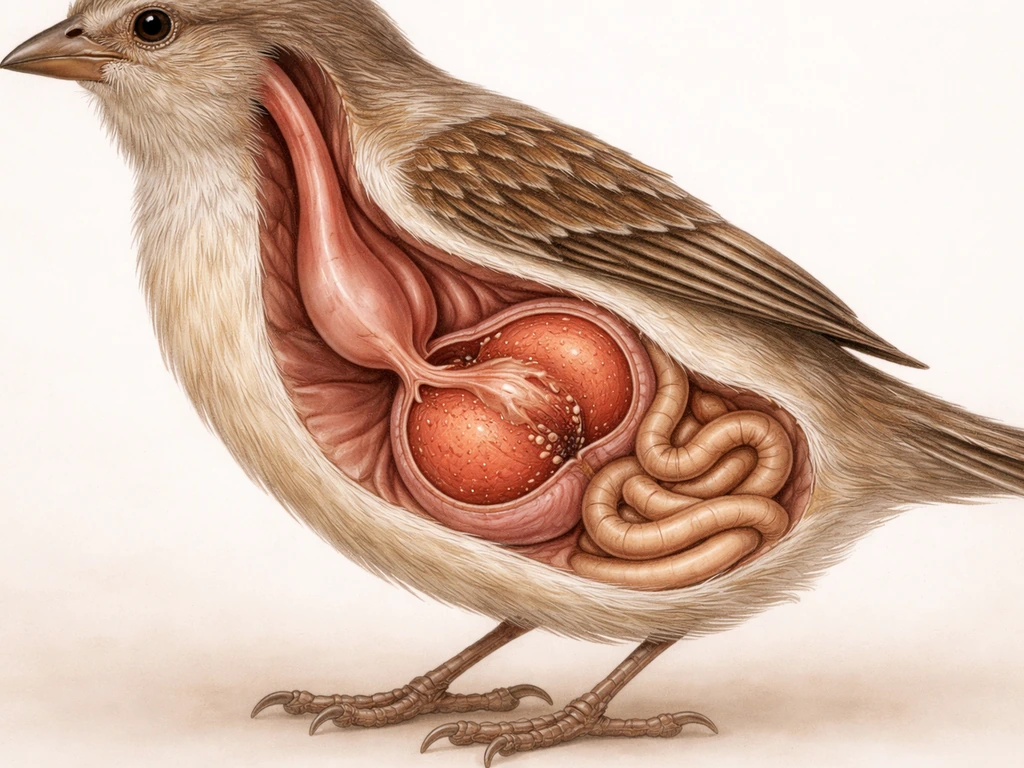
Where the gizzard fits in the bird's digestive tract
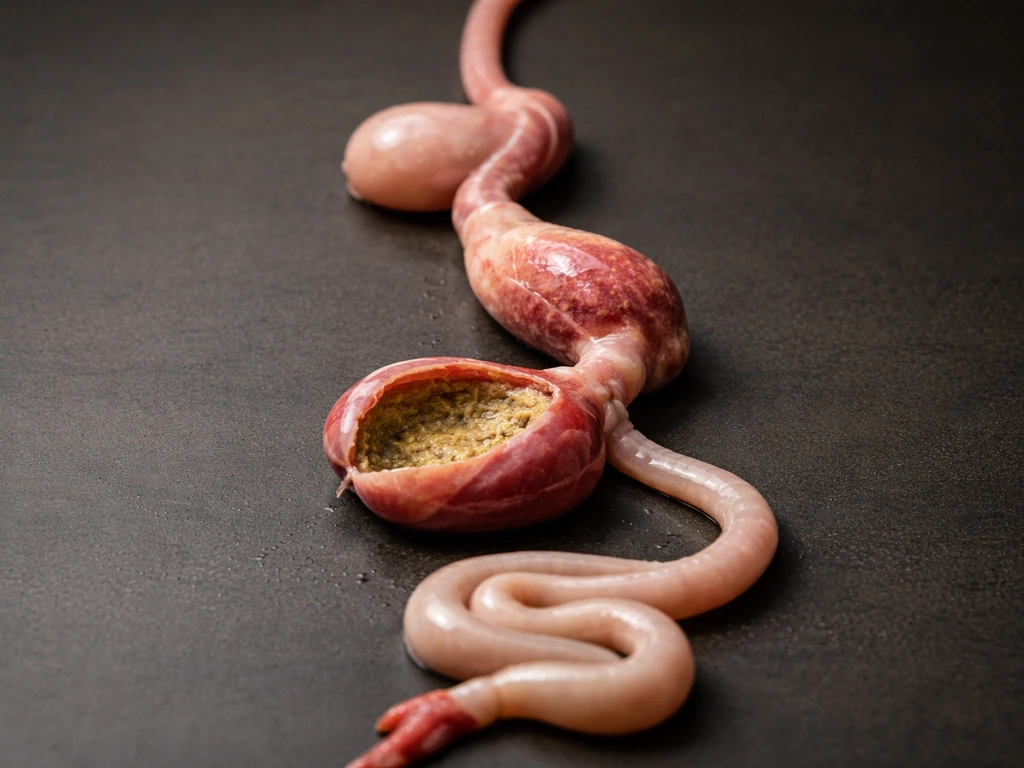
Birds have what's sometimes called a "compound stomach," split into two distinct chambers that handle digestion in sequence. Food travels down the esophagus and hits the proventriculus first. This is part of the overall digestive system of a bird, where food moves from one organ to the next in sequence esophagus. That's the glandular stomach, and it does the chemical work: secreting gastric juices and enzymes that start breaking food down.
A scientific review of the avian stomach compartments notes that the proventriculus secretes hydrochloric acid and pepsinogen. From there, the partly softened food moves into the gizzard, also called the ventriculus.
After the gizzard does its grinding, the resulting digesta empties into the duodenum, which is the upper stretch of the small intestine where bile and more digestive enzymes finish the job.
So in anatomical order it goes: esophagus, crop (in many species), proventriculus, gizzard, duodenum, small intestine, large intestine, and then the cloaca, which is the shared exit point for digestive, urinary, and reproductive waste. Male and female birds can differ in their anatomy and how the cloaca functions, so cloaca-related traits may not be identical between sexes. The gizzard is firmly in the middle of that chain, sitting posterior to the proventriculus and anterior to the intestines in the bird's lower abdominal cavity.
What the gizzard actually does
The gizzard's job is purely mechanical. It doesn't secrete digestive enzymes or acids. Instead, its thick muscle walls contract rhythmically, squeezing and rotating the food against itself and against any grit or small stones the bird has swallowed. The result is that seeds get cracked, hard insect exoskeletons get broken up, and fibrous plant material gets macerated into smaller particles that enzymes downstream can actually work on. It's basically doing the job your molars do, except it's happening inside the torso rather than in the mouth.
The lining of the gizzard, called the koilin layer or cuticle, is a tough, keratinized membrane that protects the powerful muscles from being abraded or damaged by the sharp-edged food and grit being churned inside. This lining regenerates regularly, which is helpful given the beating it takes in seed-eating birds.
The structure: big muscles and swallowed grit
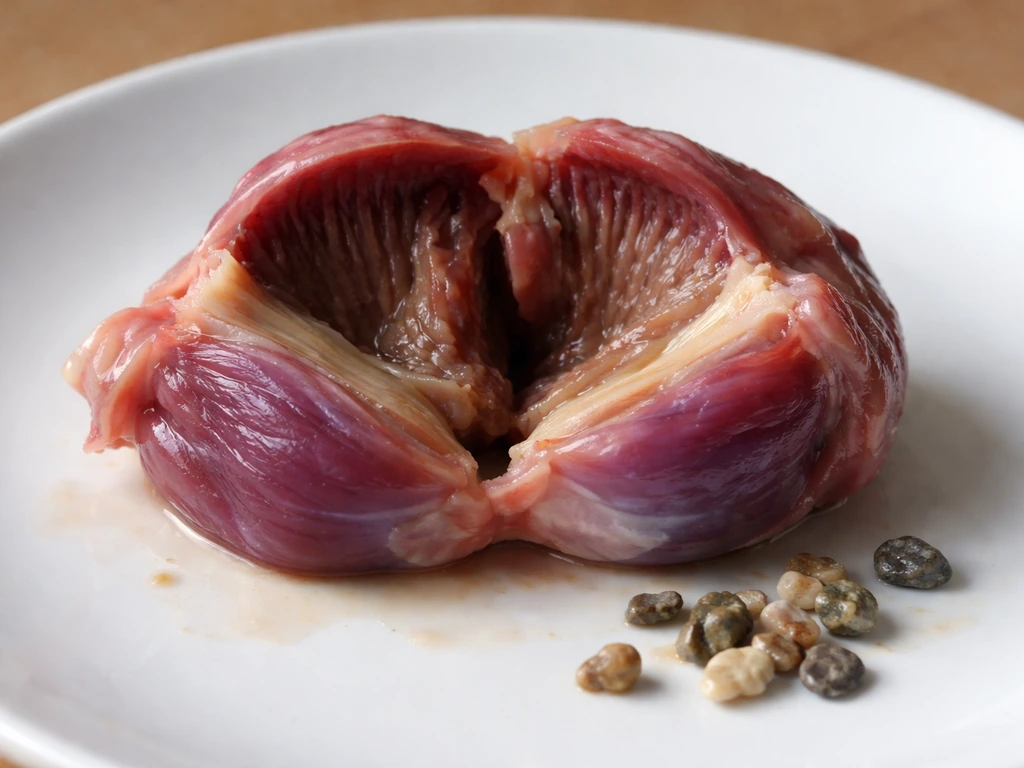
Open up a fresh chicken gizzard (which you can do easily since they're sold at most grocery stores) and you'll immediately notice how dense and fibrous the walls feel compared to other muscle tissue. That's because the gizzard is made of exceptionally thick bands of smooth muscle, far more developed than in any other part of the digestive tract. In a chicken, the grinding pressure generated by those muscles can be substantial, enough to crack open whole corn kernels that would slip right through without further processing.
Grit is the other half of the equation. Birds intentionally swallow small stones, sand grains, or hard particles and hold them in the gizzard, where they act as grinding media, similar in principle to the ball bearings inside an industrial mill. The gizzard muscles press food against these rough-edged particles, increasing the grinding efficiency significantly. Research confirms that the physical properties of the grit matter more than color or shape: hard, rough particles do the job better than smooth or soft ones. Birds on seed-heavy diets actively seek out grit because without it, mechanical breakdown in the gizzard is noticeably less effective, which can lead to impaction in severe cases.
Gizzards are not one-size-fits-all
Here's something that genuinely surprised me when I first read about it: gizzard size and wall thickness scale tightly with what a bird eats. It makes complete sense once you think about it, but it's one of those elegant examples of form following function in avian anatomy.
| Diet type | Gizzard characteristics | Grit use | Example birds |
|---|---|---|---|
| Seed/grain eaters (granivores) | Very thick, heavily muscled walls; tough koilin lining | Regular and important | Chickens, sparrows, finches, pigeons |
| Insect eaters (insectivores) | Moderately muscled; less thick | Moderate, for cracking exoskeletons | Robins, swallows, warblers |
| Fruit eaters (frugivores) | Thinner walls, less muscular | Little or none needed | Many tropical species, some thrushes |
| Meat eaters (raptors) | Strong but built for tearing/compressing rather than seed grinding | Minimal | Hawks, owls, eagles |
| Nectar/pollen feeders | Reduced, softer structure | Generally not used | Hummingbirds, some parrots |
The takeaway here is that the gizzard is a highly adaptable organ. A sparrow that needs to crack open sunflower seeds has a gizzard built like a vice grip. A hummingbird sipping flower nectar all day has almost no need for that kind of grinding power, so its gizzard is comparatively soft and underdeveloped. Male and female swallow birds may differ slightly in diet and nesting behavior, which can influence how much grinding their gizzards need. Diet drives the anatomy, sometimes even within the lifetime of an individual bird as its diet shifts seasonally.
How this compares to human digestion
Humans have a single stomach that handles both chemical and mechanical digestion at the same time. Stomach acid (hydrochloric acid) breaks food down chemically while the stomach walls churn and mix everything together physically. Birds have split those two jobs into separate organs: the proventriculus handles the chemistry, and the gizzard handles the mechanics. It's a more modular system, and in seed-eating birds it's considerably more powerful at mechanical breakdown than a human stomach could ever manage.
Another key difference is teeth. Humans (and most mammals) do a lot of mechanical work before food ever gets to the stomach. Birds have no teeth at all, so the gizzard is essentially compensating for the entire chewing process that happens in a mammal's mouth. The difference between male and female thrush birds is mostly about behavior and appearance, not the core digestive role the gizzard plays gizzard is essentially compensating. That's why the gizzard in a grain-eating bird needs to be so muscular: it's doing double duty, completing a task that in other animals would be divided between the jaw and the stomach.
When gizzard problems are worth worrying about
If you keep backyard chickens, ducks, or a pet parrot, the gizzard is one of the internal organs most likely to cause a real health problem. The two main issues are impaction and ventriculitis (inflammation of the gizzard). Impaction happens when indigestible material, too much coarse fiber, inappropriate grit, or a foreign object gets stuck and blocks normal throughput. Ventriculitis can be caused by bacterial, fungal, or parasitic infections, and in severe cases it's been documented alongside significant weight loss and lethargy in poultry.
The tricky part is that birds hide illness very well. By the time obvious symptoms appear, the problem has often been developing for a while. Here are the signs that should prompt a call to an avian vet:
- Chronic or rapid weight loss without an obvious dietary cause
- Persistent loss of appetite or complete refusal to eat
- Abnormal droppings: watery, discolored, bloody, or almost absent
- Vomiting or regurgitation that isn't normal courtship/crop behavior
- Lethargy, fluffed feathers, or difficulty perching
- A visibly swollen or distended abdomen
Practical prevention for birds in your care comes down to a few basics: make sure seed-eating birds always have access to appropriately sized grit (insoluble grit like granite chips, not oyster shell which dissolves), avoid offering large amounts of fibrous material birds can't process, and don't let them access potential foreign objects like wire, staples, or plastic fragments. If you're unsure whether your specific bird species needs grit, it's worth checking with an avian vet, because as the table above shows, not every bird benefits from grit and some can actually be harmed by it.
The culinary side: gizzards as food
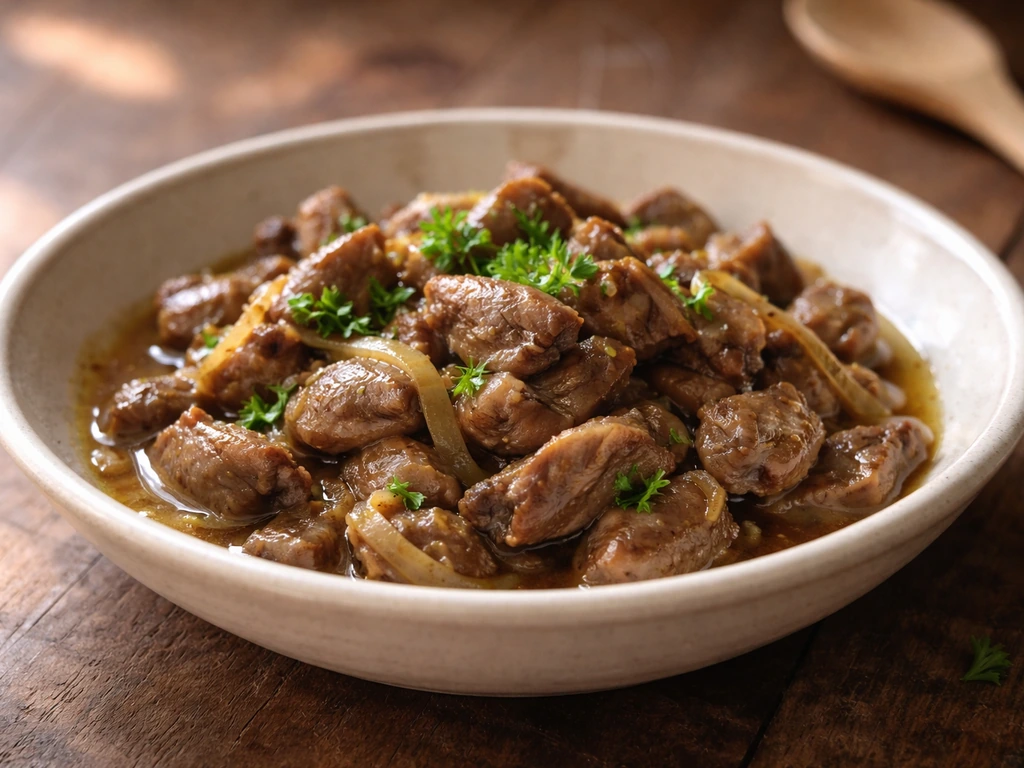
When a recipe or a restaurant menu mentions "chicken gizzards," it's literally referring to this same organ: the ventriculus, or muscular stomach, from a domestically raised chicken. You'll often find gizzards included in the giblet pack stuffed inside a whole raw chicken, alongside the heart, liver, and neck. They're the dense, dark-colored, roughly heart-shaped pieces with a visible pale lining on the inside (that's the koilin layer being trimmed off during processing, though some gizzards come pre-cleaned).
Because of how muscular the tissue is, gizzards need longer cooking times than regular chicken meat to become tender. They're popular fried, braised, or slow-cooked in many cuisines worldwide, from Southern US fried gizzards to West African stews. Nutritionally they're high in protein and iron, and relatively low in fat.
On food safety: the USDA and FDA both specify that all poultry, including giblets like gizzards, must reach a minimum internal temperature of 165°F (74°C) before eating. Since gizzards are dense muscle and often cooked whole or in chunks, use a meat thermometer rather than guessing by color. Undercooked poultry organ meat carries the same bacterial risks as undercooked chicken breast, mainly Salmonella and Campylobacter, so hitting that temperature is non-negotiable.
The bigger picture of avian digestion
The gizzard is just one piece of a digestive system that's genuinely fascinating when you look at it as a whole. Birds evolved a solution to not having teeth that turns out to be remarkably efficient: outsource the grinding to an internal organ that can be as powerful as the diet demands. A seed-cracker can have a gizzard that operates like a hydraulic press. A fruit eater barely needs to grind at all. That kind of dietary flexibility, baked into the anatomy itself, is a big part of why birds have managed to colonize nearly every habitat and food niche on earth.
If you want to understand the full picture of how birds process food, the gizzard connects directly to everything else in avian digestion: from the gullet and crop at the top of the system, through the proventriculus and gizzard in the middle, all the way to the cloaca at the end. For example, where a female bird’s cloaca sits can vary slightly by species, but it is always the shared opening for waste and reproduction.
If you are wondering about the gullet specifically, it’s the part of the throat that carries food down toward the crop and stomach chambers gullet on a bird. Each organ has a specific role, and the gizzard's job, pure mechanical grinding, is probably the most unique part of the whole process compared to how digestion works in mammals like us. To understand how sex is determined in birds, you also need the sex chromosome complement of male birds.
FAQ
Do all birds have a gizzard, and will it always be well developed?
Yes, all birds have a gizzard, but its size and muscle strength vary a lot. Nectar- and fruit-eating birds typically have a smaller, less forceful gizzard than seed- or insect-eating species because they need less mechanical breakdown.
What happens to food if a bird does not have enough grit?
Without appropriate grit, the gizzard cannot grind effectively, especially for seed-heavy diets. This can slow digestion and increase the risk of impaction in severe cases, since indigestible material can accumulate instead of breaking down.
Is oyster shell the right type of grit for birds that need grit?
Usually no. Oyster shell is calcium carbonate and can dissolve, which means it does not function well as a grinding medium. For grit intended to grind, use insoluble grit appropriate for the bird species, and confirm with an avian vet if you are unsure.
Can birds use sand from outside as grit?
Sometimes, but it is risky because outdoor sand can contain contaminants or the wrong particle size. If you provide grit, it is safer to use commercially prepared insoluble grit or grit recommended for your bird type and locally appropriate husbandry conditions.
How can I tell if a bird’s gizzard is inflamed versus just full or processing food?
Inflammation often comes with systemic signs like reduced appetite, lethargy, weight loss, or abnormal droppings, not just a temporary slower digestion after a meal. Because symptoms can be subtle early, persistent changes should be checked by an avian vet rather than waited out.
What foods commonly lead to gizzard impaction in pet birds?
Large or hard foreign material (string, plastic, staples), too much coarse fibrous material, and feeding indigestible items are common causes. Even if something is “food-like,” portion size and texture matter, since the gizzard can only process what it can mechanically break down.
Do chicks and juvenile birds need grit too?
It depends on species and diet. Many young birds start with softer foods and gradually shift diets, so grit needs may increase over time. If you provide grit to a juvenile, use species-appropriate guidance rather than assuming they need it immediately.
Is the gizzard the same thing as the stomach in everyday terms?
It is part of the “stomach complex” in birds, but birds do not have a single stomach like mammals. The proventriculus handles chemical digestion, then food goes to the gizzard for mechanical grinding, and both must work in sequence for efficient digestion.
Why do some gizzards look pale inside, and is that safe?
That pale lining is the koilin layer (a keratinized protective cuticle). In processed gizzards it may be partially trimmed, and any remaining koilin is generally removed during preparation or cooking, but cleanliness and safe handling still matter.
How do I cook chicken gizzards safely if I want them tender?
Cook them longer than typical chicken meat because they are dense muscle. Also use a meat thermometer and cook to the poultry safety standard (165°F or 74°C internal temperature), since organ meat can carry the same bacterial risks as other poultry if undercooked.
Can a diet change affect a bird’s gizzard over time?
Yes. Gizzard structure and muscle development align with what the bird eats, and birds can shift grinding needs seasonally. If you change a bird’s diet, do it gradually so the digestive system can adapt rather than suddenly switching between seed-heavy and nectar-heavy foods.
Next Articles
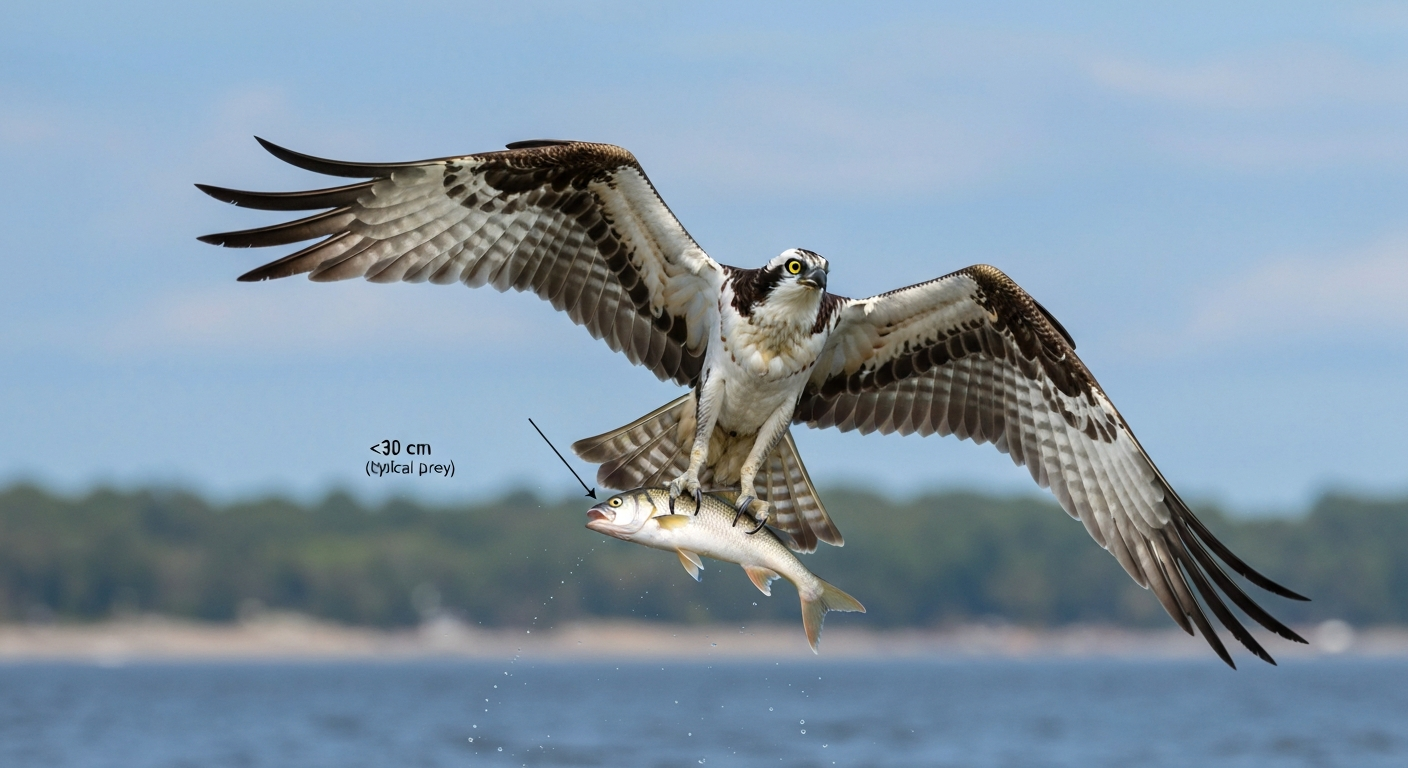
How Much Weight Can an Osprey Bird Carry: Numbers & Limits
How much weight can an osprey carry: typical prey 0.5–2 kg (≈30–100% body mass); anatomy, flight limits and evidence.
How Much Weight Can a Bird Carry Payload Limits Explained
Realistic payload ranges for different birds plus a method to estimate how much weight they can carry safely.

What Bird Has the Highest Heart Rate? Fastest Species Explained
Explains which bird has the highest heart rate, how it’s measured, key contenders, and how to compare readings fairly.