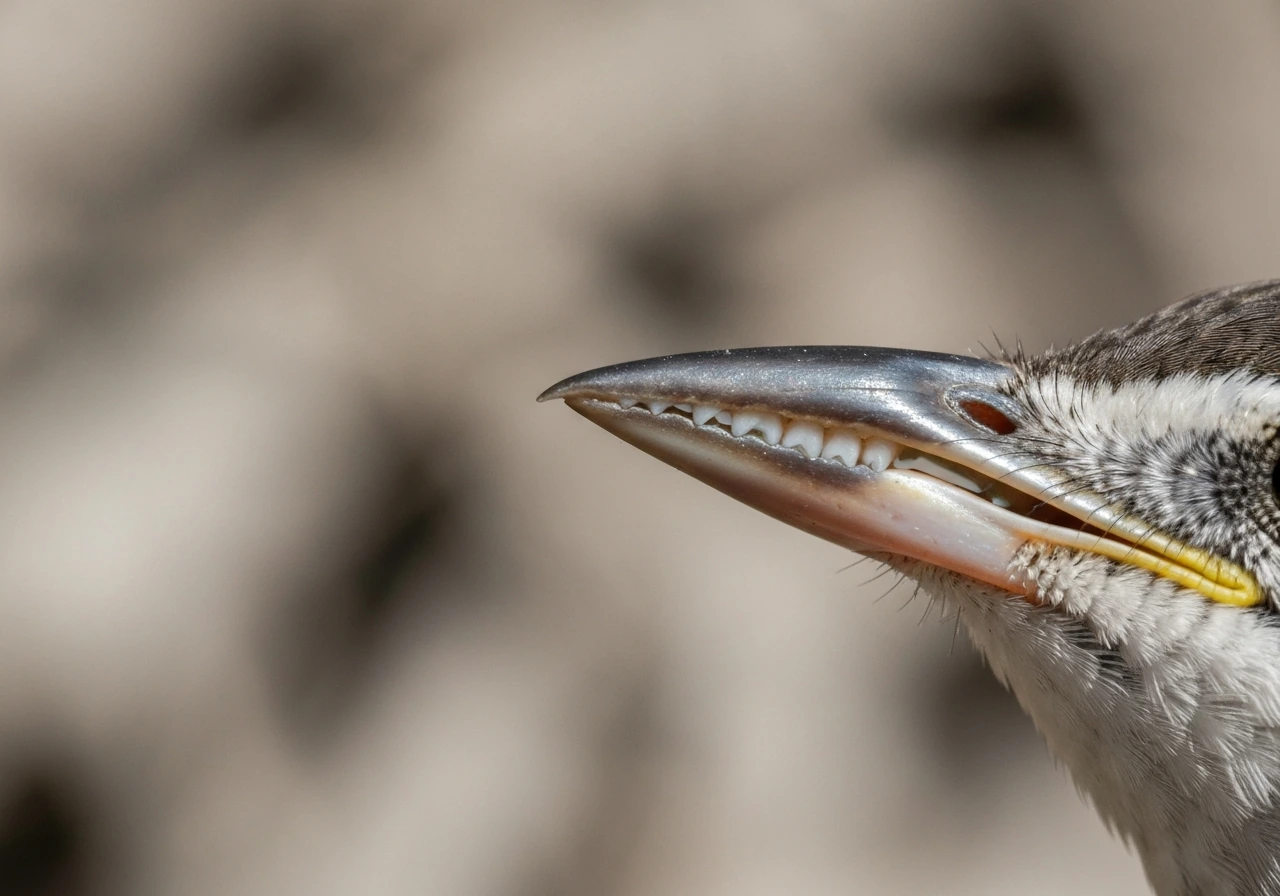
The bird most commonly said to clean crocodile teeth is the Egyptian plover (Pluvianus aegyptius), sometimes called the "crocodile bird" precisely because of this claim. You'll see that name everywhere, from encyclopedias to wildlife blogs. But here's the thing: the actual tooth-cleaning behavior has never been captured on video or confirmed by direct scientific observation. What's really going on is a mix of ancient myth, plausible biology, and a story that's been repeated so many times it started to feel like fact.
What Bird Cleans Crocodile Teeth? Egyptian Plover Explained

Marcus Chen
6 May 2026
The bird behind the legend
The Egyptian plover is the species you're looking for. Britannica equates it directly with the term "crocodile bird," and the U.S. Fish & Wildlife Service maintains an official species profile for Pluvianus aegyptius that confirms it as the animal tied to this story. It's a small, striking shorebird native to tropical Africa, and its nickname alone tells you how deeply the tooth-cleaning idea has stuck.
The story goes back a long way. Herodotus, writing in ancient Greece around 440 BCE, described a small bird called the "trochilus" that would walk into a crocodile's open mouth and eat leeches from inside. Aristotle, Pliny, and Aelian repeated versions of the same account. Over centuries, naturalists tried to match the trochilus to a real species, and the Egyptian plover became the leading candidate, though scientists today consider that identification uncertain. The myth stuck to the bird even as the evidence for the behavior itself kept coming up short.
Myth vs. what's actually happening biologically
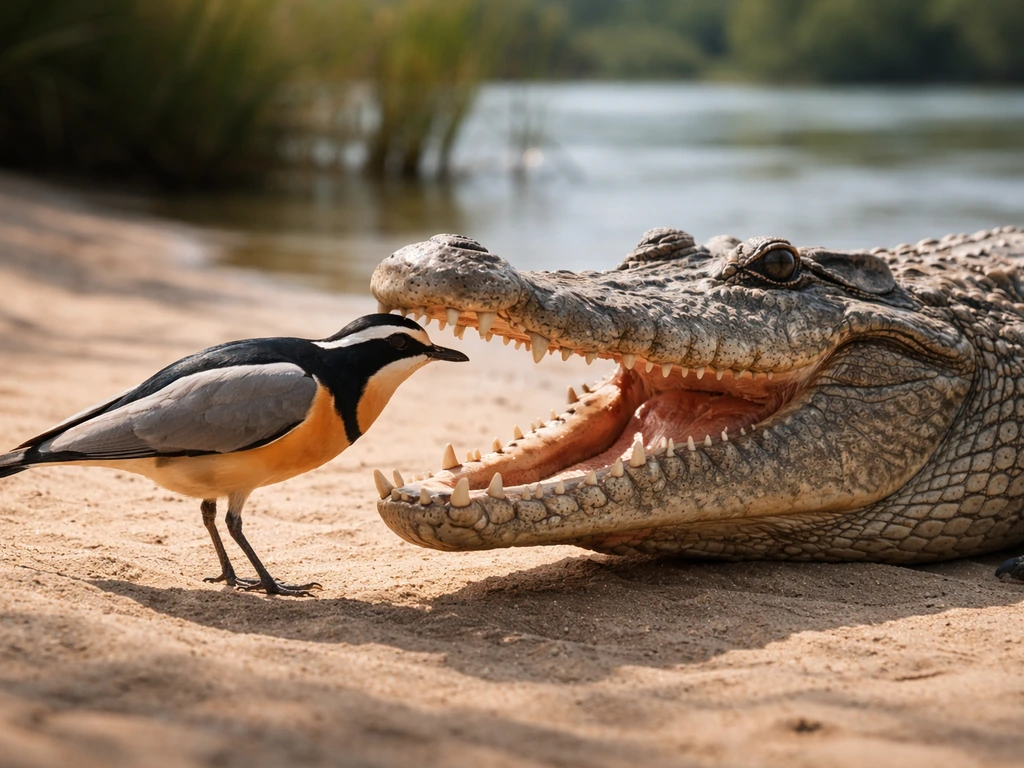
Here's where I had to recalibrate my expectations when I first looked into this properly. The "tooth cleaning" framing implies a regular, reliable mutualism, meaning the bird routinely cleans the crocodile's teeth and both animals benefit predictably. That's a tidy story, but it doesn't hold up under scrutiny. No researcher has documented the behavior with video or photos taken in the field. This includes the common claim about “tooth cleaning,” which is not confirmed by direct observation. The famous image that circulates online showing a plover inside a crocodile's mouth? The photographer's own website describes it as a digital reconstruction of the Herodotus myth, not a real wildlife photograph.
What's biologically plausible is something messier and more opportunistic. Egyptian plovers forage around rivers and sandbars, and Nile crocodiles use the same habitat. A bird that feeds on insects, scraps, and invertebrates near a large reptile resting on a sandbar isn't performing a dental service. It's just foraging near a large, warm thing that might have food around it or on it. The "cleaning" interpretation is a narrative layer added by humans, not a documented ecological role.
Some scientific papers do discuss the crocodile-plover relationship as a topic worth examining, and the idea of a mutualism-like interaction isn't completely dismissed. But the current weight of evidence treats the "tooth cleaning" as a fable rather than a confirmed behavior. Britannica notes that while a mutualistic association is possible, the specific tooth-picking behavior has not been observed in modern times the current weight of evidence treats the "tooth cleaning" as a fable rather than a confirmed behavior. Honest unknowns matter here: it's not impossible that some opportunistic foraging near a crocodile's mouth occasionally happens, but it's not the regular service the myth describes.
What the Egyptian plover actually eats and how it forages
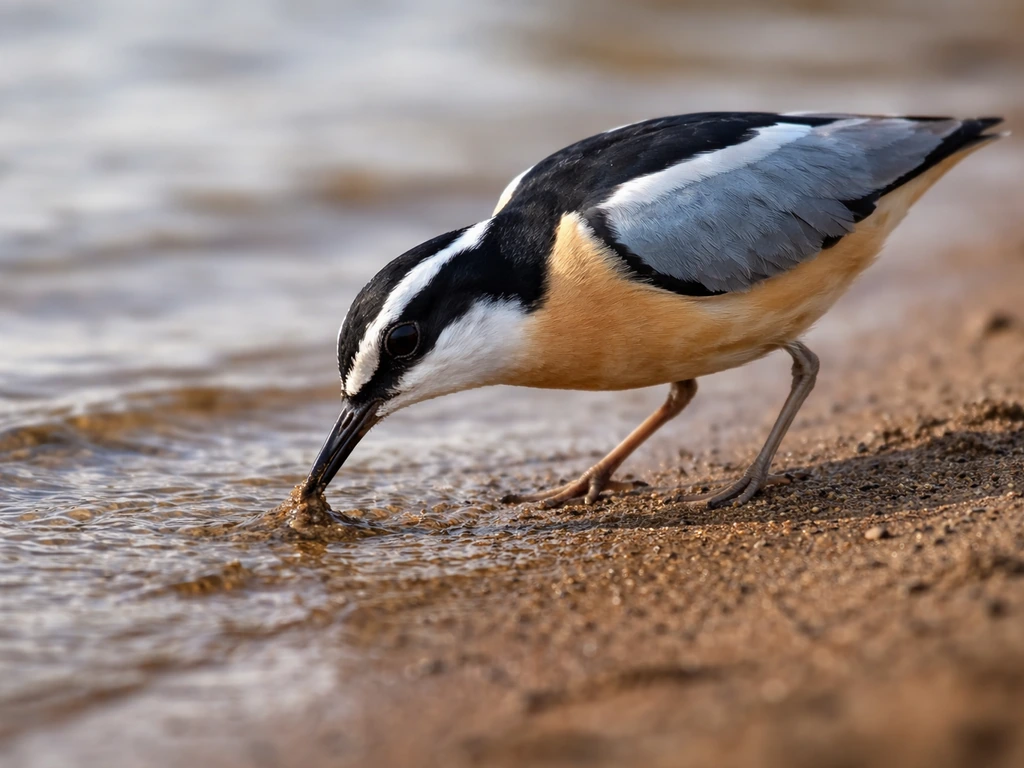
The Egyptian plover's real diet is insects and small invertebrates. It forages by surface-picking and by probing its bill into damp sand near river edges. That probing behavior is worth understanding because it's the biological bridge between reality and the myth. A bird that picks small things off surfaces and probes into crevices could, in theory, grab food scraps from around a crocodile's mouth without that being an intentional cleaning service. It's just what the bird does everywhere: look for small food items in damp, textured surfaces.
Modern bird biology tells us that bill-tip sensitivity plays a real role in this kind of foraging. Birds that probe and pick use mechanosensory pits at the tip of the bill to detect and manipulate small prey at close range, which makes fine-grained foraging like this genuinely effective. The Egyptian plover's bill is shaped for exactly this kind of work, not for scraping plaque like a dental hygienist, but for picking up small, mobile food items from irregular surfaces quickly.
How to recognize the Egyptian plover and where to find it
If you want to actually see this bird, you need to be in the right part of Africa. The Egyptian plover's range runs across tropical sub-Saharan Africa, from Senegal and Gambia in the west across to Ethiopia in the east, and south to the Democratic Republic of Congo and northern Angola. It follows major river systems, particularly the Nile Basin historically, though it went locally extinct in Egypt itself in the early twentieth century.
The bird is visually unmistakable once you know what to look for. It has bold black-and-white patterning on the head and breast, a blue-gray back, and warm peachy-buff underparts. At around 19 to 21 centimeters long, it's a small shorebird, but its coloring makes it stand out sharply against sandy riverbanks. You'd find it on exposed sandbars and gravel banks along large rivers, often in pairs or small groups, running quickly along the water's edge in the way that small waders do.
The overlap with Nile crocodiles (Crocodylus niloticus) is geographically real. Nile crocodiles range from Sudan and regional tributaries through much of sub-Saharan Africa, including the Okavango Delta in Botswana and the Olifants River in South Africa. Where the plover's range and the crocodile's range overlap, the same sandy riverbanks that crocodiles use for basking are exactly the kind of habitat plovers forage in. That's why sightings of the two together are entirely plausible, even without any tooth-cleaning going on.
What you'd actually observe step by step
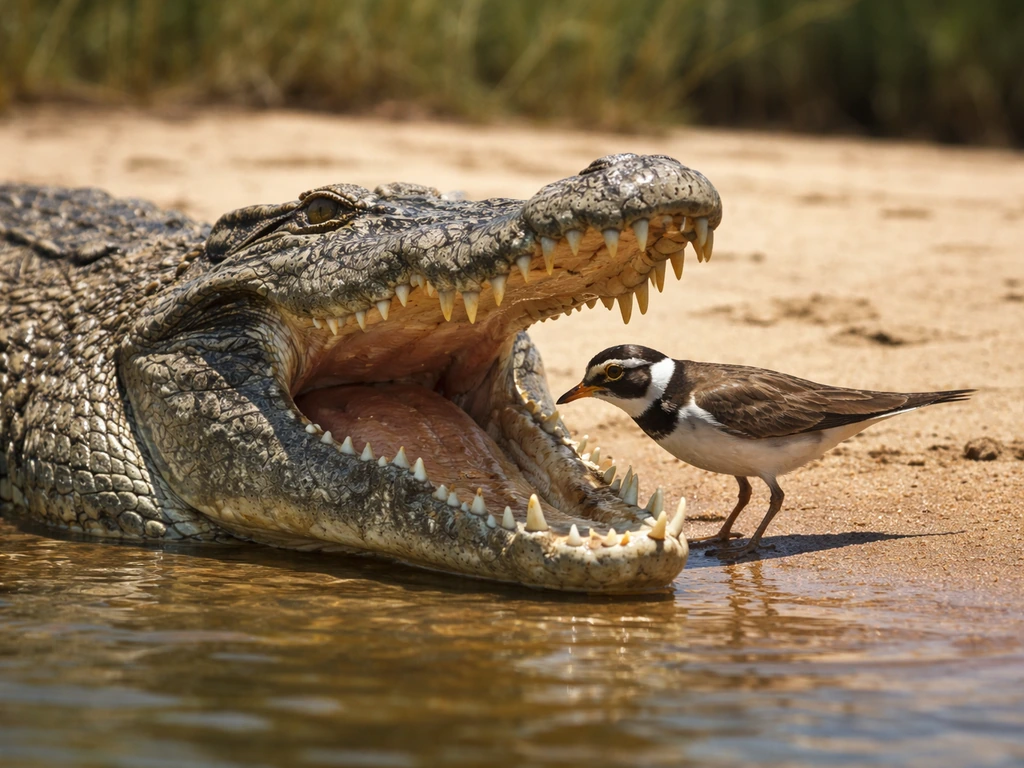
If you were watching a real crocodile-plover interaction, here's roughly what the sequence would look like in practice.
- A Nile crocodile hauls out onto a sandbar and basks with its mouth open. Open-mouth basking is thermoregulation, not an invitation to birds.
- An Egyptian plover foraging nearby notices the crocodile as a potential source of flies, food scraps, or invertebrates disturbed by the reptile's movement.
- The bird approaches cautiously, picking at insects or debris on or near the crocodile's body, moving quickly and staying alert.
- If the bird gets close to the mouth area, it's most likely picking up insects or scraps attracted to the crocodile's body heat or food remains, not scraping teeth.
- The crocodile tolerates the bird's presence rather than snapping at it, which is consistent with the crocodile gaining nothing but also losing nothing by ignoring a small bird.
- The plover moves on when the food source is exhausted or when it's disturbed, with no formal "cleaning service" completed.
That's the realistic version. The dramatic version where the crocodile opens wide, the bird hops inside, methodically cleans every tooth, and then the crocodile lets it walk out safely has no documented basis. It makes sense as a story because it's tidy and satisfying, which is exactly why Herodotus wrote it down and why we're still repeating it today.
A quick comparison: what's real versus what's myth
| Claim | What the evidence actually shows |
|---|---|
| Egyptian plover cleans crocodile teeth regularly | No video or photographic documentation exists; described as a fable in modern sources |
| The bird enters the crocodile's open mouth | No field-confirmed observations; famous images are digital reconstructions |
| Both animals benefit from the interaction (mutualism) | Plausible in theory but not confirmed; the interaction is better described as opportunistic foraging near a large reptile |
| The bird eats insects and food scraps near crocodiles | Biologically consistent with the plover's real foraging behavior: surface-picking and bill-probing for invertebrates |
| The crocodile tolerates the bird | Plausible; crocodiles ignore many small animals that pose no threat or competition |
How to fact-check this and where to look next

If you want to verify any of this yourself, a few starting points will get you to credible information quickly. Search for "Pluvianus aegyptius" (the Egyptian plover's scientific name) rather than "crocodile bird" when you're looking for biology, because the common name pulls up a lot of myth-heavy content. The Wikipedia article on the Egyptian plover and the separate article on the Trochilus (the legendary crocodile bird) both do a reasonable job of separating the ancient story from the modern species account.
For species range and identification, the Cornell Lab of Ornithology's Birds of the World database is the gold standard. A distribution map attributed to that source exists on Wikimedia Commons if you want a quick visual of where the plover actually lives. Britannica's entry on the "crocodile bird" is also useful because it gives you the common-name framing alongside the scientific taxonomy, which helps you understand how the two got tied together.
For the historical side of the story, look up the "trochilus" passage in Herodotus' Histories, Book II. It's the primary source for the whole myth and it's surprisingly short. Reading it directly gives you a much better sense of what Herodotus actually claimed versus how the story ballooned into a full mutualism narrative over the following two thousand years.
Keywords worth searching if you want to go deeper: "Egyptian plover foraging behavior," "Nile crocodile epibiont birds," "crocodile plover mutualism evidence," and "Trochilus Herodotus crocodile bird identification." If you're interested in the broader biology of how birds interact with large animals through beak structure and feeding adaptations, the related questions of what birds have teeth, which birds have the strongest bite force, and which bird breaks its beak all connect to the same themes of avian bill function and feeding ecology. If you meant a factual answer to what bird has teeth, it generally points to misconceptions about birds using bills rather than true teeth what birds have teeth.
The bottom line is that the Egyptian plover is the bird you're thinking of, and the association with crocodiles is real enough in terms of shared habitat. But the "cleaning teeth" part is a very old story that modern biology hasn't been able to confirm. That's actually a more interesting answer than the myth, because it tells you something true about how natural history gets written and rewritten over centuries. If you also wonder which bird breaks its beak, you can approach it the same way by checking whether the claim is documented or just repeated as a story.
FAQ
Is the Egyptian plover definitely the bird that cleans crocodile teeth?
It is the most commonly named match, but the key point is that the specific “regular tooth cleaning” behavior has not been directly documented. Treat the identification as plausible historically and ecologically, not confirmed as a routine dental service.
What evidence would count as proof that tooth cleaning happens?
You would want field observations that show the bird entering the mouth, making contact with teeth or gum tissue, and repeated instances across time, ideally with time-stamped photos or video taken in situ. A single staged image or a one-off claim is not enough to establish a reliable behavior.
Why does a mouth- or tooth-related story spread even without recordings?
Ancient accounts can be compelling and later writers may repeat them as if they were confirmed. Over centuries, the lack of verifiable observation gets replaced by a “tidy mutualism” narrative, especially when the birds and crocodiles share the same river sandbar habitat.
If it is not cleaning teeth, what is the bird likely doing around crocodiles?
Most likely it is foraging, picking insects or small invertebrates from surfaces near basking crocodiles, or probing damp sand for prey. The crocodile is more of a bystander than a partner in a consistent cleaning routine.
Could crocodiles be benefitting in any other way besides tooth cleaning?
A plausible alternative is incidental food removal, like insects startled by crocodile activity, or small prey attracted to carcasses or leftovers near reptiles. These would be opportunistic and harder to label as a consistent mutualism, so you would need repeated, well-documented cases to argue it.
How can I tell an Egyptian plover from similar shorebirds on river sandbars?
Focus on the stark black and white head and breast pattern plus the blue-gray back and warm peachy-buff underparts. Their run-along-the-edge wader behavior on exposed sandbars is another clue, but exact ID benefits from checking local guides for lookalikes in the same range.
Are there any credible videos or photos that show the bird inside a crocodile’s mouth?
Common images that circulate online are often not true wildlife footage, and some creators explicitly describe them as reconstructions. If you cannot verify the source as an on-site observation, assume it is not reliable evidence of tooth cleaning.
Does the answer change if the “trochilus” in Herodotus is a different species?
Yes. The historical “trochilus” identification is uncertain, so even if the myth is anchored to an Egyptian plover-like bird, you still cannot conclude that the modern species performs the specific tooth-cleaning routine described by later retellings.
Where should I look if I want a real chance of seeing Egyptian plovers near crocodiles?
Look in tropical sub-Saharan river systems with exposed sandbars where both species overlap. In practice, that means major river basins and sections where crocodiles bask and shorebirds forage along the water’s edge.
What is the safest takeaway if I hear “crocodile bird” used as a fact?
Use it as a shorthand for the long-running story, not as proof. The grounded takeaway is shared habitat overlap makes interactions plausible, while the specific dental-cleaning mechanism remains unconfirmed as a regular, documented behavior.
Next Article
What Bird Has Teeth? Do Any Birds Have Real Teeth?
No modern birds have true teeth. Learn tooth-like beak ridges, hooks, serrations, and how to identify the bird.