
Many birds can swim, but not all of them do it well, and the difference comes down to anatomy. Birds with webbed feet, waterproof feathers, and denser bones are built for water. Birds without those features, like herons or robins, might wade or splash, but they're not true swimmers. So the real question isn't just "can birds swim" but "which birds, and how well", and that's where things get genuinely interesting.
Can Bird Swim? Which Birds Can and How to Tell

Marcus Chen
12 May 2026
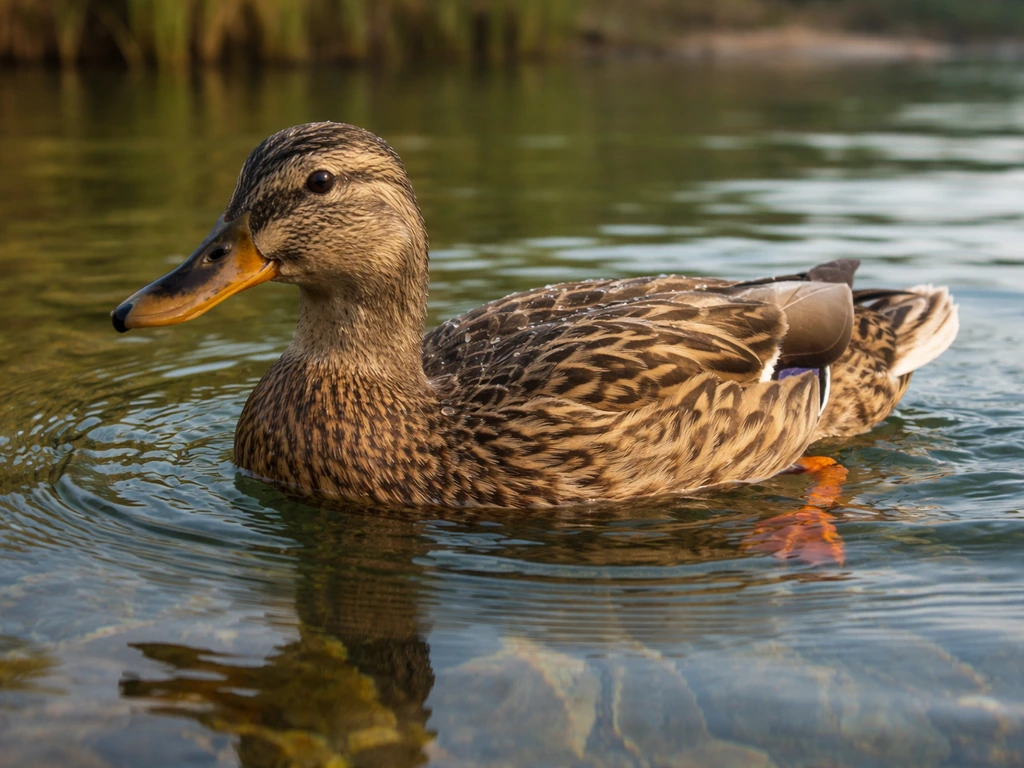
What swimming actually looks like in birds
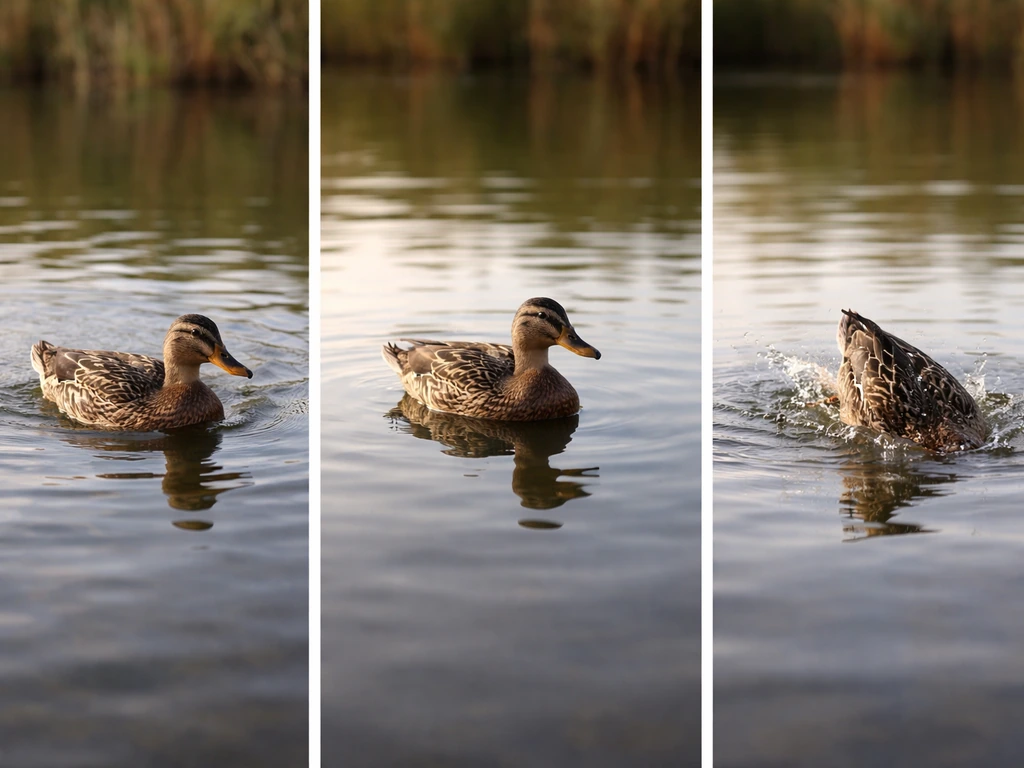
"Swimming" covers a lot of ground in the bird world. It's not one behavior but three fairly distinct ones: paddling at the surface, floating, and diving underwater. A mallard paddling across a pond is swimming. So is a loon that disappears beneath the surface and reappears 30 meters away. A heron standing belly-deep and occasionally drifting forward to stab a fish is doing something closer to wading-with-floating, which some ornithologists actually classify as "swimming feeding" even though the bird isn't propelling itself like a duck.
The key distinction worth keeping in mind: surface paddling and underwater diving are different specializations. Ducks and geese are excellent surface swimmers. Loons and grebes are elite divers. Cormorants sit in an interesting middle spot, they swim low in the water with their bodies mostly submerged, then dive to chase fish, though their feather waterproofing works differently from ducks (more on that below). Knowing which type of swimming a bird is built for tells you a lot about whether it will handle water confidently or panic.
The body features that make swimming possible
Three main physical features determine how well a bird handles water: foot structure, feather waterproofing, and bone density. In general, bird bones that are denser tend to make swimming easier because they affect how buoyant the bird is in water bone density. They work together, and a bird that scores high on all three is usually a strong swimmer.
Feet and webbing
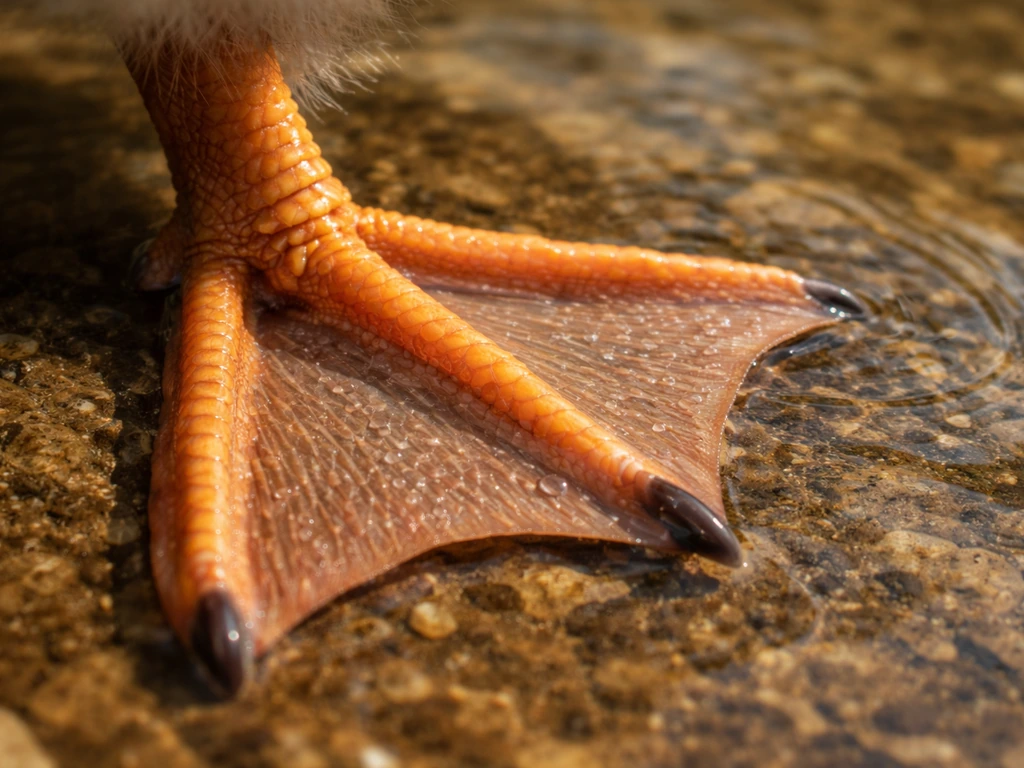
Webbing between the toes increases surface area, which gives a bird more thrust per stroke in water, the same basic principle as a swim fin. Ducks, geese, swans, loons, gulls, and terns all have palmate feet (webbing connecting the front three toes). Pelicans and cormorants go further with totipalmate feet, where webbing connects all four toes. Grebes take a different route entirely: instead of full webbing, each toe has lobed flaps along the sides, which fold back on the recovery stroke and fan out on the power stroke, a surprisingly efficient design. Herons have very slight webbing that's more useful for standing on muddy riverbanks than for propulsion. Songbirds have essentially none.
Feather waterproofing
Bird feathers are naturally water-repellent to some degree because of their microscopic structure, but the uropygial gland (the small oil gland at the base of the tail, sometimes called the preen gland) adds another layer of protection. Birds rub their bill over the gland, collect the oil, and distribute it across their feathers during preening. This is especially critical for aquatic birds: the uropygial gland is best-developed in species like petrels, pelicans, and ospreys, birds that spend serious time in or near water. Ducks' feathers shed water so effectively that the water literally beads and rolls off. Cormorants are the famous exception: they have much less preen oil than ducks, so their feathers actually get wet when they dive. That sounds like a disadvantage, but it reduces their buoyancy, which makes diving easier. The trade-off is that cormorants have to stand with wings spread after swimming to dry out, which is that pose you've definitely seen and probably wondered about.
Bone density and air sac control
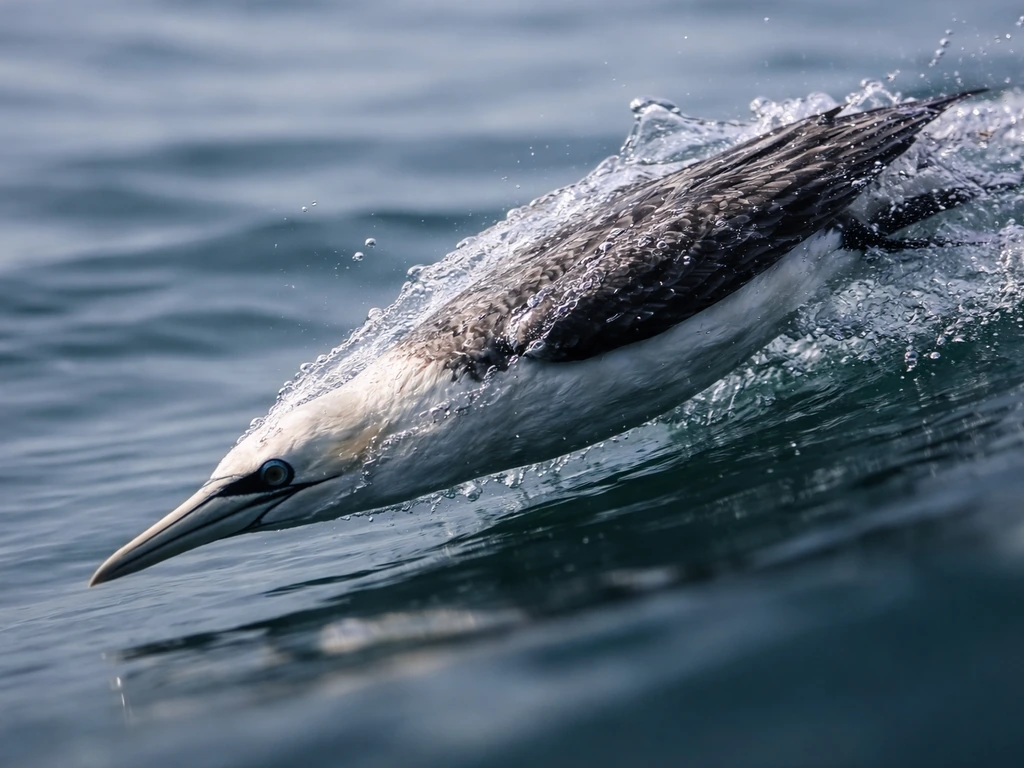
Most birds have hollow, air-filled bones connected to a system of air sacs, which reduces weight for flight. This is actually a buoyancy problem for diving birds, hollow bones make you float when you want to sink. Diving specialists solve this differently. Loons, for example, have denser, marrow-filled bones rather than hollow ones, which makes them less buoyant and much better suited to diving. A common loon weighs around 8 to 12 pounds and has comparatively small wings for its body size, all of which contributes to its ability to submerge efficiently. Grebes take a behavioral approach: they can squeeze air out of their feathers and compress their internal air sacs, effectively deflating themselves to sink on demand, which is why pied-billed grebes can vanish beneath the surface almost like a submarine. Swimming birds can also do the reverse, trapping more air in waterproof feathers to float higher when they want to rest on the surface.
Birds that swim well: the top candidates
If you want to watch birds that are genuinely good at water, these are the groups to look for:
| Bird Group | Swimming Style | Key Adaptations |
|---|---|---|
| Ducks, geese, swans (waterfowl) | Surface paddling and floating | Palmate webbed feet, excellent uropygial gland waterproofing, moderate bone density |
| Loons | Deep diving, foot-propelled | Dense/solid bones, large webbed feet set far back on body, streamlined shape |
| Grebes | Diving and surface swimming | Lobed toes, ability to compress air sacs and feathers for controlled sinking |
| Cormorants and anhingas | Underwater pursuit diving | Totipalmate feet, reduced preen oil allows feather wetting for lower buoyancy |
| Penguins (for reference) | Underwater "flying" | Wing-propelled rather than foot-propelled, extremely dense bones, no flight capability |
| Gulls and terns | Surface floating and short dives | Palmate feet, good waterproofing, light enough to float easily |
Loons and grebes are worth singling out because their whole body plan is organized around aquatic performance. Their legs are positioned far back on the body, which is ideal for underwater propulsion but makes walking on land awkward and slow. That's a real anatomical trade-off: optimized for water, penalized on land. It's a good reminder that swimming ability in birds isn't a bonus feature, in these species, it's the primary design goal.
Birds that struggle in water (and why)
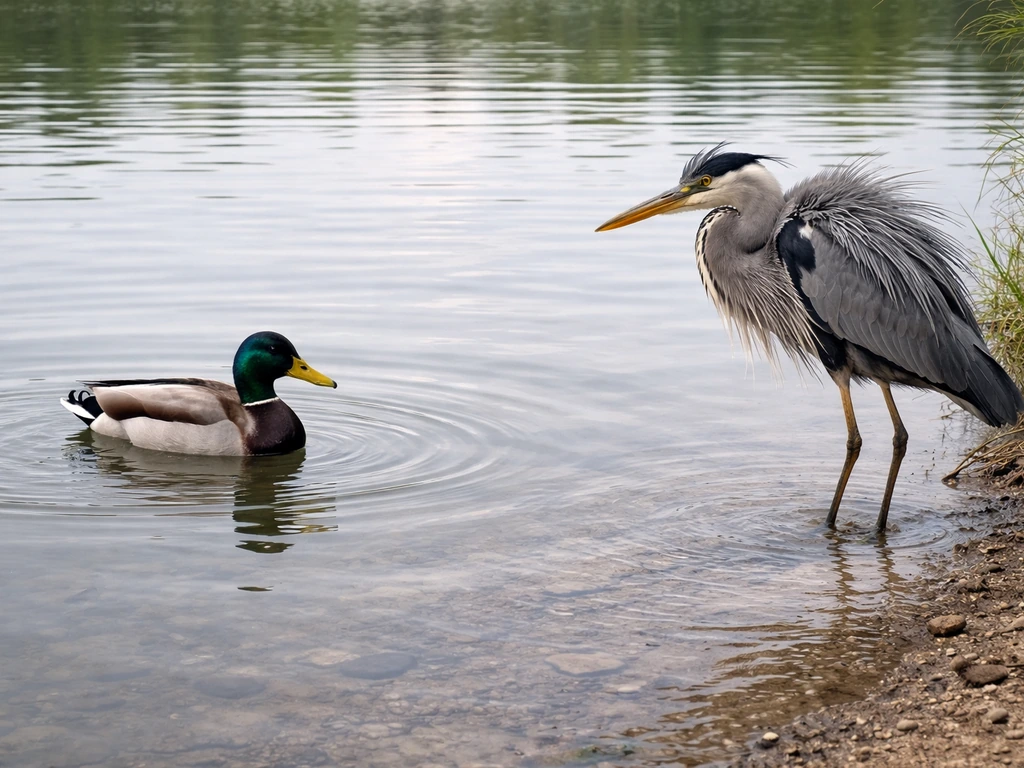
Wading birds like great blue herons can enter water, float briefly, and even perform what researchers call "swimming feeding", drifting forward to pick up prey, but they aren't efficient swimmers. Their slight toe webbing isn't designed for propulsion, and their long legs are built for standing in shallow water, not paddling. A heron in deep water is working much harder than it wants to and will get out as soon as possible.
Songbirds, raptors (with the notable exception of ospreys, which are specialized fish hunters), and most terrestrial birds have essentially no aquatic adaptations. They can splash around in a birdbath and some will bathe in shallow streams, but sustained swimming or submersion would quickly waterlog their feathers, chill their bodies, and exhaust them. Their hollow bones make them buoyant in a way that's hard to overcome without the specialized muscles and body control that diving birds have developed over millions of years of evolution. The bones in a bird are hollow, which helps reduce weight, but it can make staying afloat harder in some situations.
The connection to bone structure is worth noting here: the same hollow, pneumatized bones that make flight birds so light and efficient in the air (a topic closely tied to how bird skeletons are built overall) actively work against them in water. If you want to go even deeper into why some birds struggle, the bones of a bird are part of the same anatomy checklist that affects buoyancy and swimming. It's a genuine trade-off baked into their anatomy.
How to assess a specific bird's swimming ability right now
You can make a pretty accurate assessment of any bird's swimming ability by checking five things, most of which you can observe from a distance or identify from a photo:
- Look at the feet. Are the toes webbed? Full webbing (ducks, geese, loons, gulls) or lobed toes (grebes) are strong indicators of swimming ability. Long, unwebbed toes (herons, storks, most songbirds) suggest a wader or terrestrial bird.
- Check where the legs are positioned on the body. Legs set far back (loons, grebes, diving ducks) indicate a foot-propelled diver. Legs centered or forward on the body are more typical of surface swimmers or non-swimmers.
- Consider the bird's size and weight relative to its wings. Heavy-bodied birds with small wings (loons, diving ducks) are denser and better for diving. Light birds with large wings are built for flight and tend to float high rather than dive.
- Watch the feather behavior in water. Does water bead and roll off immediately (like a duck)? That's a well-waterproofed bird. Does the feather appear to darken or mat when wet? That bird's waterproofing may be limited, like a cormorant, or absent, like most terrestrial birds.
- Observe the bird's posture in water. A bird sitting high on the surface with most of its body above water is using buoyancy to float — typical of waterfowl. A bird riding very low, with its back nearly at water level, is denser and likely a stronger diver. A bird that looks uncomfortable and is actively trying to reach shore is probably not a water bird.
Safety and care if a bird and water are involved
If you've found an injured bird near water, or you're involved in any kind of wildlife situation involving birds and water, a few things really matter for the bird's safety.
Don't assume all birds can handle water
Even birds that normally swim can drown if they're injured, exhausted, or have damaged waterproofing. Wildlife rehabilitation guidelines caution that birds should not be given pools deeper than about two inches unless they are confirmed aquatic species that are healthy and fully waterproofed. A bird that looks like it's floating might actually be struggling to stay up.
Waterlogged feathers are a medical emergency
When a bird's feathers lose their water repellency, from oil contamination, illness, or stress, the bird can become waterlogged extremely quickly. Water reaches the skin, body temperature drops, and hypothermia sets in fast. blank" rel="noopener noreferrer">International bird rescue organizations specifically warn that oiled birds cannot simply be washed and returned to water: they go through a multi-stage rehabilitation process to restore waterproofing before any cold-water exposure. International Bird Rescue notes that oiled birds should not be washed immediately by well-meaning people, and that aquatic birds must be perfectly waterproof prior to release or they will not survive blank" rel="noopener noreferrer">oiled birds cannot simply be washed and returned to water. The principle holds for any bird with compromised feathers. If you find a bird that is wet to the skin, keep it warm and dry first, and contact a licensed wildlife rehabilitator.
Stress and temperature during handling
Captured or handled birds are under significant physiological stress. If a bird is cold, a heating pad on low (covered with a towel so the bird isn't in direct contact) can help stabilize it while you arrange proper care. Avoid offering water in a way that could get into the feathers, a wet, cold, stressed bird deteriorates quickly. Keep the bird in a dark, quiet, ventilated container to reduce stress until you can hand it off to someone with the right training and permits.
Don't encourage non-swimming birds to enter deep water
This sounds obvious, but it's worth stating: if you're watching a bird and you're not sure whether it swims, don't test it by herding it toward water. A songbird, raptor, or wading bird that ends up in water over its depth can drown. The behavioral signals to watch for are clear enough, a bird that moves confidently toward water and enters without hesitation is probably comfortable there. A bird that avoids water, looks startled when its feathers get wet, or tries immediately to climb out is telling you exactly what you need to know.
FAQ
Can birds swim even if they do not have full webbing on their feet?
Yes, but it usually means paddling or wading, not true sustained swimming. A bird that keeps its head above water and stays mostly on the surface is more likely paddling, while a bird that repeatedly submerges is showing diving specialization.
If a bird can swim in general, will it be safe in water of any temperature and depth?
Some species can handle more water than others because of feather condition, oil gland output, and body control. If a bird’s feathers become soaked, even a typically aquatic species can become unsafe and may need rescue or rehab rather than “just letting it swim.”
What should I do immediately if I find a bird floating or partially submerged?
If you find a bird wet, the safest first step is to keep it warm, dry, and low-stress before offering any water. Do not assume a “floating” bird is fine, because buoyancy can mask exhaustion or injury, and waterlogged feathers can worsen cooling quickly.
Why shouldn’t I test whether a backyard bird can swim by putting it in a birdbath?
Songbirds and most terrestrial birds can get in shallow water briefly, but they are more vulnerable to chilling and feather waterlogging. A good rule is to avoid testing them in water deeper than their normal bath area, and if they show reluctance or distress, back off right away.
Why do cormorants often get wet and then dry with wings spread?
Cormorants are a common exception that looks like a problem but is actually part of their strategy. They get wetter than ducks when diving, then dry by standing with wings spread, so their ability to submerge does not depend on staying “dry-looking.”
How can I tell if a bird that is on the water is comfortable versus in trouble?
In many cases, distress is visible through behavior and posture, not just motion. Watch for frantic paddling, repeated attempts to climb out, inability to keep balance, lethargy, or signs of chilling (weak, tucked posture) even if the bird seems to float.
What’s the biggest reason an oiled bird can’t just “wash off and swim again”?
Oiled or contaminated feathers reduce water repellency, and that can change the bird’s buoyancy and heat loss so fast that a bird may not recover on its own. Wildlife rehab typically treats waterproofing restoration as part of the process, not just rinsing.
Can an injured aquatic bird drown even if it usually swims well?
Yes, because stress and fatigue can impair thermoregulation and coordination. A healthy aquatic bird may manage cold water better, but an injured or stressed swimmer can drown even in places where it normally would paddle safely.
Next Articles
Are Bird Bones Hollow? What Makes Them Lightweight
Bird bones are partly hollow and air-filled via air sacs for flight, but not every bone is hollow the same way.
How Much Weight Can a Bird Carry Payload Limits Explained
Realistic payload ranges for different birds plus a method to estimate how much weight they can carry safely.
What Is the Highest Altitude a Bird Can Fly?
Find the highest documented bird flight altitude, how it’s measured, and the biology and flight mechanics behind extreme