
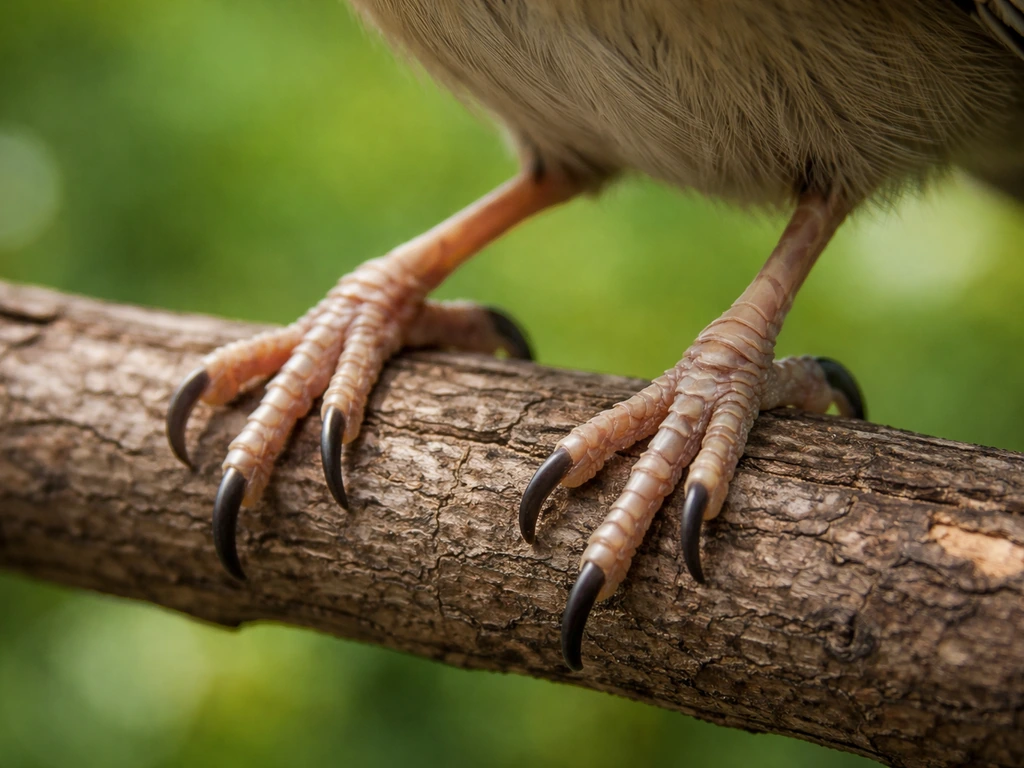
Most birds have four toes. Three point forward and one points backward, and that backward-pointing toe is called the hallux. This setup, called anisodactyl arrangement, covers roughly three-quarters of the world's bird species, including basically every backyard songbird you've ever watched hop around a feeder. If you're looking at a perched robin, sparrow, or finch and trying to count, four is your answer.
How Many Toes Does a Bird Have? Counting and Variations

Marcus Chen
27 Apr 2026
Why the number isn't always four
Here's where it gets interesting. Four is the default, but evolution has trimmed, fused, or rearranged toes in quite a few bird lineages depending on how they move and where they live. Ostriches, for example, are didactyl, meaning they have just two toes. Some shorebirds are tridactyl, showing only three clearly functional forward-facing toes with the hind toe either greatly reduced or raised so high up the leg that it barely makes contact with the ground. Emus sit in the three-toe camp too.
The logic behind these reductions is pretty straightforward once you think about it. A bird that runs fast across open ground doesn't need a grasping hind toe the way a bird that clings to branches does. Losing digits reduces weight and increases stride efficiency. Meanwhile, birds like woodpeckers and parrots went a different direction entirely, with two toes forward and two back (called zygodactyl), which gives them a vice-like grip on vertical surfaces. Owls and cuckoos share this arrangement too. Habitat and lifestyle drove these differences, and they've been accumulating over millions of years of avian evolution.
There's even a bird called the three-toed parrotbill (Paradoxornis paradoxus) where the outer toe is reduced to a tiny, clawless stub fused to the middle toe, making it functionally a three-toed bird within a family where four-toed members are the norm. So even within a single bird family, toe count isn't always locked in.
What actually counts as a toe (and what doesn't)
This is the part I personally got wrong when I first started looking at bird anatomy diagrams. A bird's leg has several distinct sections, and it's easy to miscounting by including the wrong one. Here's a quick way to think about it: the toe is the digit, the bony finger-equivalent that sticks out from the foot and ends in a claw. It is not the long scaly section running up from the toes toward the knee-like joint, which is actually the tarsometatarsus, a single fused bone that forms the upper part of the foot structure. That section is sometimes casually called the "tarsus" or the "shank," and it looks like an extra leg segment, but it is not a toe.
The tarsometatarsus is actually a bone unique to birds (and some of their dinosaur relatives), formed by the fusion of several foot and ankle bones into one rigid structure. When you count toes, you count only the digits, the jointed segments that radiate out from the base of that tarsometatarsus and each end in a claw. The claws themselves are not separate toes either. One toe equals one digit plus its claw.
- Tarsometatarsus (the long scaly "shank" between the foot and the lower joint): not a toe
- Digits/phalanges (the jointed segments spreading out from the foot base): these are the toes
- Claws (the sharp curved tip at the end of each digit): part of the toe, not a separate toe
The main toe arrangements and what they're good for
Once you know four is the usual number, it helps to know the most common ways those four toes can be arranged. Different layouts serve wildly different purposes, so recognizing them tells you something real about how that bird lives.
| Arrangement | Toe orientation | Examples | Main advantage |
|---|---|---|---|
| Anisodactyl | 3 forward (digits 2, 3, 4), 1 back (digit 1/hallux) | Sparrows, robins, hawks, eagles | Gripping branches and perching |
| Zygodactyl | 2 forward (digits 2 & 3), 2 back (digits 1 & 4) | Woodpeckers, parrots, owls, cuckoos | Climbing vertical surfaces, gripping |
| Syndactyl | 3 forward (partly fused), 1 back | Kingfishers | Digging nest burrows, stability |
| Palmate (webbed) | 3 forward toes connected by webbing, 1 small back toe | Ducks, gulls, many waterbirds | Swimming and paddling |
| Tridactyl | 3 forward, no functional hind toe | Emus, many shorebirds | Fast running, walking on soft ground |
| Didactyl | 2 toes only | Ostriches | High-speed running on open terrain |
One thing worth flagging: in photos, webbed toes on ducks or similar waterbirds can look like one solid mass at the front of the foot. The webbing connects three forward-facing toes (digits 2, 3, and 4), so the individual digits are still there underneath, you just can't easily see where one ends and the next begins. This trips people up when they're trying to count from a photo.
How to count toes on a real bird or photo
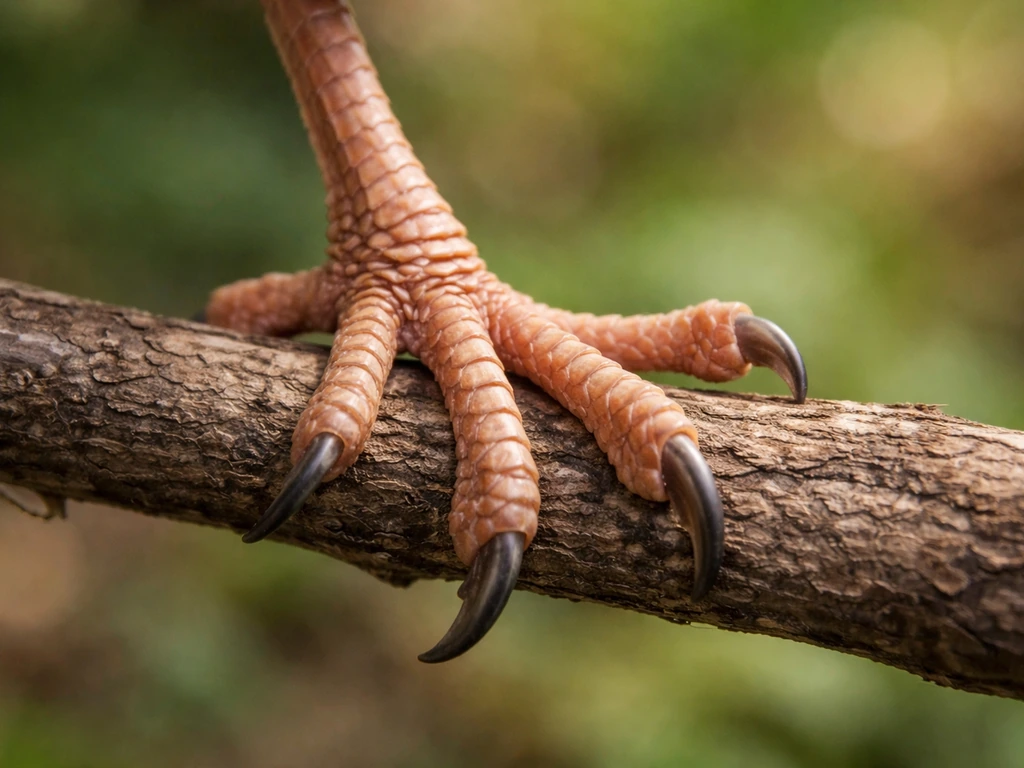
Audubon actually lists toe count as a legitimate field identification tool, so this isn't just trivia. If you want to count accurately, here's what to look for.
- Start at the base of the tarsometatarsus (the scaly upright section of the lower leg). Do not count that section itself.
- Look for the digits radiating outward from the base of the foot. In a perched bird, three will point forward and one will point backward in most species.
- Count each jointed segment that ends in a claw as one toe. Don't count the claw as a separate toe.
- Check for the hind toe specifically. The hallux (digit 1, pointing backward) can be small and partially hidden, especially in shorebirds or ground-running species. Look carefully at the back of the foot before concluding there are only three toes.
- In photos, if webbing is present, trace the outline carefully. You should be able to see the three separate claw tips at the front even when the bases are fused by webbing.
- If a toe orientation looks odd, consider that some birds (like owls) can rotate a toe to shift from zygodactyl to a more anisodactyl-looking position, so a bird with four toes might appear to have three forward from a certain angle.
What to expect from familiar bird types
To make this concrete, here's what the toe situation looks like across groups most people actually encounter.
Backyard songbirds (sparrows, robins, finches, starlings)
These are all passerines, the perching birds, and they are the poster children for the standard four-toe anisodactyl setup. Three toes forward, one back, all well-developed and great for gripping branches. If you watch one land on a twig, you can actually see the tendons automatically flex the toes closed around the branch. Count four toes every time on these.
Raptors (hawks, eagles, falcons, ospreys)
Also four toes and anisodactyl in most cases, but built for serious gripping force rather than just perching. Ospreys are a fun exception in that they can rotate one of their outer toes backward, giving them a two-and-two grip on slippery fish. So while the default is four toes, the arrangement is somewhat flexible in use.
Woodpeckers and parrots
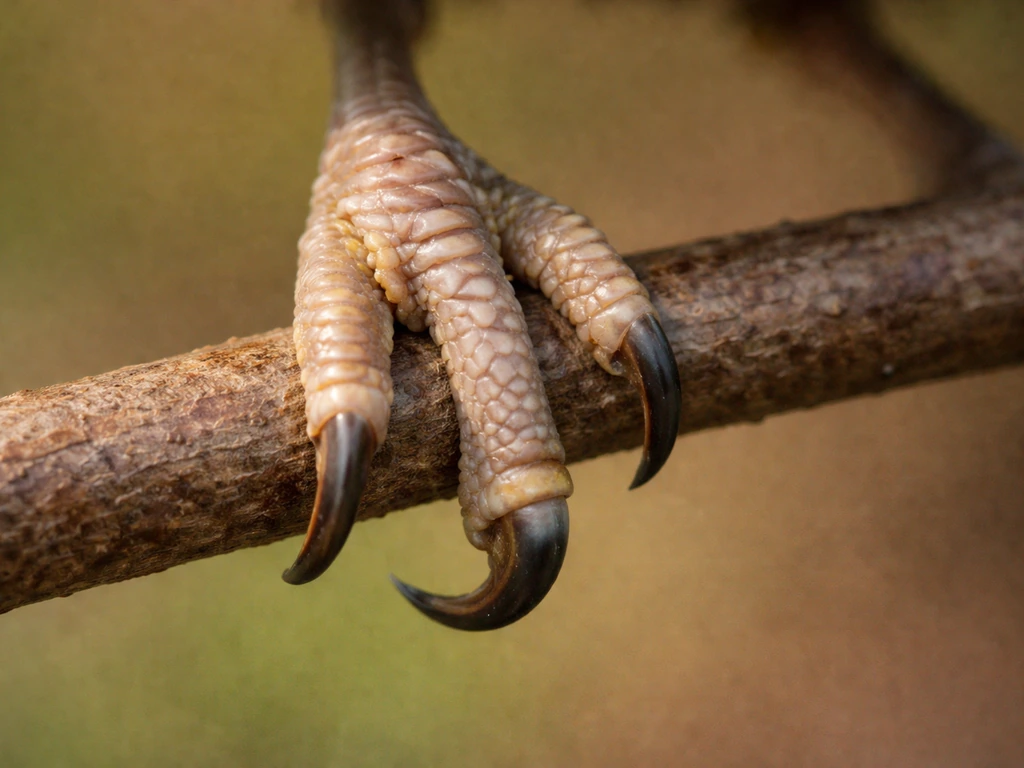
Still four toes, but arranged zygodactyl: two forward, two back. Wikipedia describes zygodactyl as two toes facing forward (digits 2 and 3) and two facing back (digits 1 and 4) zygodactyl: two forward, two back. On a woodpecker clinging to a tree trunk, this symmetrical grip makes perfect sense. You won't lose count here, it's still four, just distributed differently.
Ducks, geese, and gulls
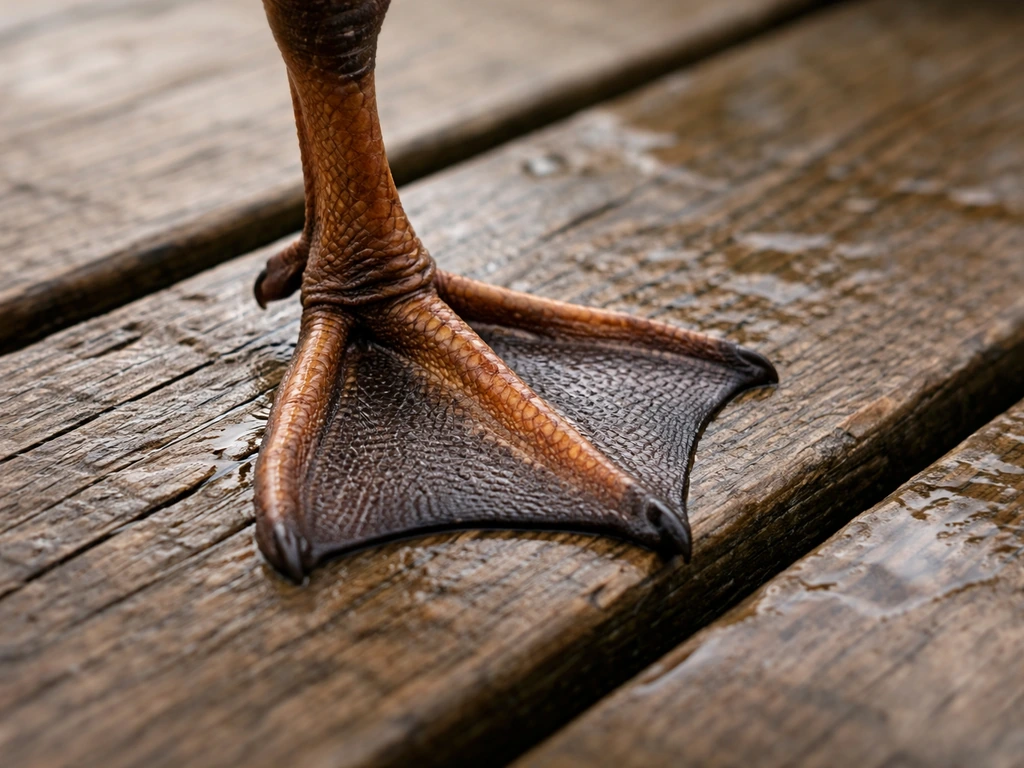
Four toes again, but with webbing connecting the three forward-facing ones. The hind toe is present but small and sits higher up. When a duck is standing on a dock, the hind toe is often barely visible from the front. Count four if you look carefully, though visually the webbed front three dominate.
Shorebirds and waders
This group shows the most variation in everyday birding. Many shorebirds have the hind toe reduced so significantly that it's raised well above the other toes and doesn't reach the ground, making them functionally tridactyl even if they technically still have the digit. Some, like the sanderling, genuinely have only three toes. When you're looking at a shorebird, don't assume four; check what's actually there.
Kingfishers
Four toes, but with a syndactyl arrangement where the second and third front toes are partly fused together for much of their length. Up close it looks like the foot has fewer toes than it does because two of them share a base. Again, four is the number, just a different shape.
Ostriches and emus
The genuine outliers. Ostriches have two toes. Emus have three. These are real evolutionary reductions, not tricks of angle or webbing. These birds run rather than perch or climb, and extra digits would slow them down.
The reliable takeaway
If someone asks how many toes a bird has and you need a single answer, say four, with three pointing forward and one pointing back. Bird toe count is closely related to the basic question, how many legs does a bird have, so you can use these same bird anatomy basics to avoid counting mistakes. If you also mean claws specifically, remember that each toe ends in a claw, so claw count typically matches toe count. How many beaks does a bird have depends on the species, but most birds have one beak. That covers the majority of bird species you're ever likely to see. When you spot something that looks like fewer than four, check for a reduced or raised hind toe before concluding it's genuinely absent, because that hind toe has a habit of hiding. And if you're curious about a specific bird, its foot type (anisodactyl, zygodactyl, palmate, and so on) will tell you not just how many toes it has but a lot about how it actually uses them.
Toe count is closely tied to the broader anatomy of the bird's foot and leg, which connects naturally to other structural questions: how the leg bones are arranged, how many claws are present (one per toe, for what it's worth), and how the whole limb functions together in flight, perching, and locomotion. If you're also wondering about legs on a specific species, see how many legs does a jacana bird have as a related question to this general counting approach. If you found yourself wondering about toes, chances are the rest of avian foot anatomy is going to be just as surprising.
FAQ
Does a bird’s toe count always match its claw count?
Yes, for most birds toe count is the same as the number of visible claws, because each digit ends in a claw. The main exception is when a claw is obscured by angle, webbing, or a toe that sits higher off the ground (common in some shorebirds), making it look like a toe or claw is missing.
When I look at a bird, what part of the foot should I count as toes?
In most field photos you should count toes based on where the clawed digits attach to the front of the foot, not on the scaly “shank” section up toward the joint. If you see what looks like extra segments, ignore them, those are part of the tarsometatarsus and not digits.
Can a bird’s stance or grip make it seem like it has fewer toes than it does?
Don’t assume the toe number from how the bird is gripping. Some species can reposition the outer toe, and some perching birds flex toes tightly around a branch so only the front or back digit is obvious at first glance. If you are unsure, look for the claw tips and for whether there is a distinct digit pointing back.
How can I tell the difference between a truly three-toed bird and a four-toed bird with a hidden/reduced toe?
Yes. Some shorebirds can have a reduced hind toe that stays lifted, so the foot can appear “three-toed” even when the digit technically exists. The practical rule is to count only toes that are actually positioned as digits with clawed ends you can identify, and look for whether the hind toe contacts the ground.
How do I count toes on ducks and other birds with webbed feet in photos?
Webbing can make the front toes look like a single structure, but the digits are typically still there under the web. Use side views when possible, and focus on the separate claw tips rather than the webbed skin in front.
If a bird is zygodactyl, what’s the easiest way to count its toes without miscounting?
For woodpeckers and some other climbing birds, zygodactyl means two toes forward and two back. You can count four, but the “back” toes are still distinct digits with claws, so look for the rear-facing pair rather than trying to force a “three forward, one back” pattern.
Are there any birds where the toe number is genuinely different from four?
If the species is an ostrich or emu, the toe reduction is real: ostriches are didactyl (two toes) and emus are tridactyl (three toes). For any bird that perches, climbs, or runs in a way that doesn’t match those extremes, start by checking for an anisodactyl or zygodactyl arrangement before concluding it has fewer digits.
What should I do if two of the toes look fused or partly joined in an image?
Sometimes the toe looks like it is fused to another (for example, syndactyl cases). In that situation, the toes may share a base or appear partially joined along the length, but you can still count digits by identifying separate claw ends or separate digit attachment points at the toe base.
Next Articles
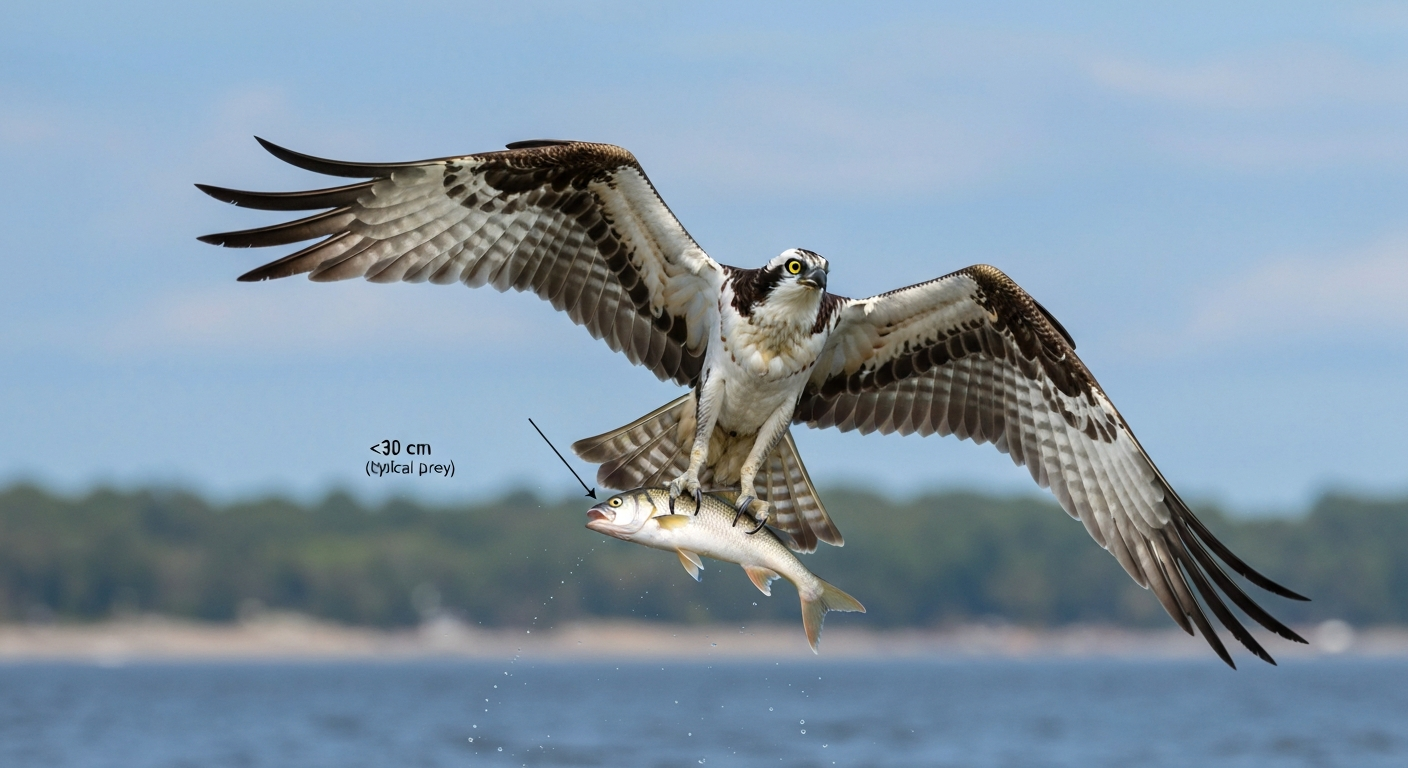
How Much Weight Can an Osprey Bird Carry: Numbers & Limits
How much weight can an osprey carry: typical prey 0.5–2 kg (≈30–100% body mass); anatomy, flight limits and evidence.

How Much Weight Can a Bird Carry Payload Limits Explained
Realistic payload ranges for different birds plus a method to estimate how much weight they can carry safely.
What Bird Has the Highest Heart Rate? Fastest Species Explained
Explains which bird has the highest heart rate, how it’s measured, key contenders, and how to compare readings fairly.